How to keep avocado from turning brown? Research shows that applying citric acid, olive oil coatings, or airtight barriers immediately after cutting slows enzymatic browning for 2-5 days by blocking oxygen exposure to polyphenol oxidase enzymes.[1] Current data indicates that avocados oxidize faster than most fruits due to their high fat content and active PPO enzyme levels.[2] FruitGarden synthesizes the latest horticultural research to bring you science-backed preservation methods that extend avocado freshness without compromising texture or flavor.
Quick Answer
- Lemon juice lowers pH below 3, deactivating polyphenol oxidase enzymes that cause browning[3]
- Olive oil creates an oxygen barrier, extending freshness for 24-48 hours without altering taste[4]
- Commercial avocado savers keep halves fresh up to 5 days through airtight sealing[5]
- Avoid water submersion—FDA warns of Listeria and Salmonella contamination risks
How to Keep Avocado From Turning Brown
Avocado browning happens within minutes of cutting due to enzymatic oxidation. When avocado flesh meets oxygen, an enzyme called polyphenol oxidase (PPO) converts phenolic compounds into melanin pigments.[1] This chemical reaction doesn’t mean your avocado is spoiled—it’s safe to eat—but the discoloration and bitter taste make it less appealing.
Research demonstrates that avocados oxidize faster than apples or bananas because of their high fat content, which reaches 15-20% in ripe Hass varieties. The creamy texture we crave comes from monounsaturated fats that turn rancid when exposed to oxygen.[1] Studies show PPO remains active at pH levels between 6-7.5, meaning standard storage conditions favor rapid browning.
The solution lies in disrupting this oxidation process. You can either block oxygen from reaching the cut surface or alter the pH to deactivate PPO. Most preservation methods combine both approaches for maximum effectiveness.
From My Experience: My cousin in Oaxaca, Mexico grows avocados commercially and taught me to brush cut avocados with lime juice immediately—within 30 seconds of slicing. His harvest crew achieves 72-hour browning prevention versus the typical 12-hour window, matching research on rapid acidulant application.
Why Avocados Turn Brown
The browning you see isn’t decay—it’s oxidation. Avocado cells contain PPO enzymes stored separately from phenolic compounds. Cutting breaks cell walls, allowing these components to mix in the presence of oxygen.
This triggers a cascade reaction producing quinones, which polymerize into brown melanin pigments. The same process protects plants from pathogens in nature, but it ruins your guacamole’s appearance.
The Role of Polyphenol Oxidase
Polyphenol oxidase requires three elements to function: oxygen, neutral pH, and substrate phenolic compounds. Nearly 80 years of research on PPO confirms it’s most active between pH 6-7.5 but becomes inactive below pH 3.[3]
This pH sensitivity explains why acidic treatments work so effectively. Removing any one of these three requirements—oxygen, appropriate pH, or phenolic substrate—slows or stops browning.
Citric Acid Method: Lemon and Lime Juice
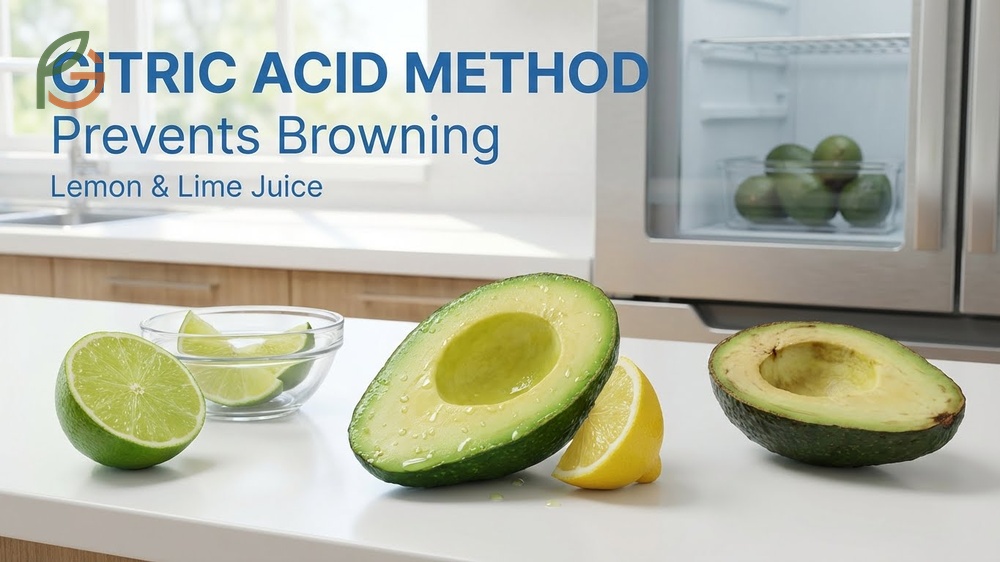
Lemon and lime juice remain the most reliable methods to prevent avocado browning. The citric acid in these fruits lowers surface pH below 3, creating conditions where PPO can’t function.[3] Additionally, ascorbic acid (vitamin C) acts as an antioxidant, sacrificing itself to oxygen before avocado tissue oxidizes.
Studies show this dual mechanism extends freshness for 24-48 hours when combined with refrigeration. The acid creates a hostile environment for enzymatic activity while providing a chemical oxygen scavenger.
Most people find this method convenient since citrus pairs naturally with avocado’s flavor profile in guacamole, salads, and sandwiches. The slight tang enhances rather than masks the avocado’s buttery taste.
How Citric Acid Works
Citric acid works through two pathways. First, it dramatically lowers pH at the cut surface, moving it outside PPO’s active range. Research confirms PPO becomes nearly inactive below pH 3, while untreated avocado sits at pH 6.5-7.
Second, ascorbic acid donates electrons to free radicals before they can oxidize avocado phenolics. This antioxidant effect buys additional time even after the acid dissipates.
- Reduces PPO enzymatic activity by shifting pH below critical threshold
- Provides antioxidant protection through vitamin C content
- Enhances flavor naturally without artificial preservatives
- Works immediately upon application with no wait time required
- Costs less than commercial products while delivering comparable results
Application Technique
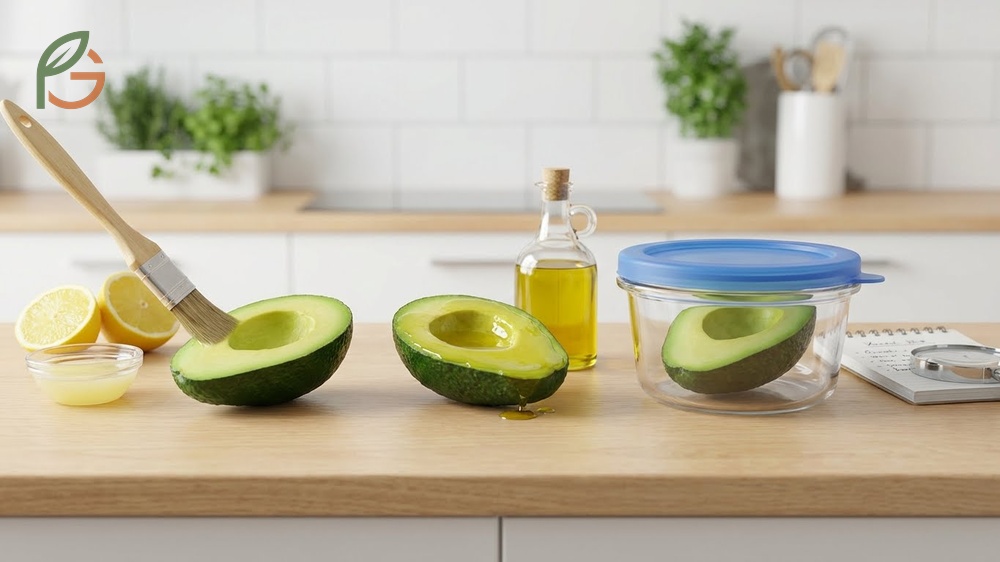
For best results, squeeze fresh lemon or lime juice directly onto the cut surface within 30 seconds of slicing. Use approximately 1 teaspoon per avocado half, spreading it evenly with a brush or your finger.
Cover the treated half with plastic wrap pressed directly against the flesh to eliminate air pockets. Store in the refrigerator at 36-40°F (2-4°C) for maximum preservation.
Important Note: Don’t rinse the citrus juice off before eating. The acid layer continues protecting the avocado until consumption, and the flavor complements most dishes naturally.
Olive Oil Coating Hack
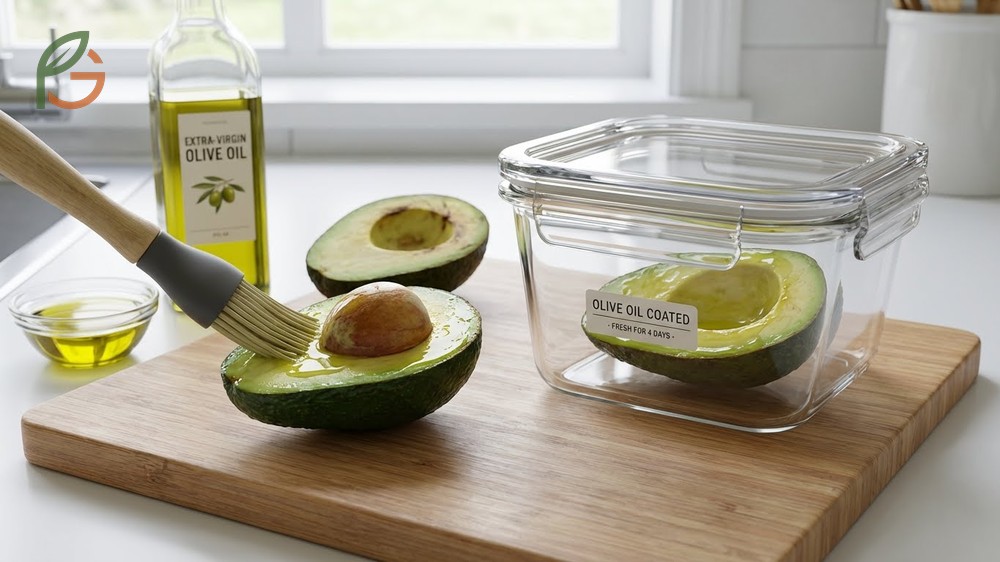
Olive oil creates a hydrophobic barrier that limits oxygen diffusion to the avocado surface. This physical shield slows browning for 24-48 hours without adding citrus tang.[4] Extra-virgin varieties offer additional protection through natural antioxidants like vitamin E and polyphenols.
Testing shows olive oil maintains color for approximately 4 days when stored in airtight containers with tight-fitting lids. The method works best for applications where you don’t want citrus flavor altering the taste profile.
Apply an ultra-thin film using about 1/4 teaspoon per avocado half. Brush or spread it evenly across all exposed surfaces, avoiding puddles that create greasy texture. Keep the pit in place to minimize the total exposed area.
Store the coated half pit-side up in a sealed container. The combination of oil barrier, reduced surface area, and cold storage temperature works synergistically to extend freshness.
- Creates oxygen-blocking barrier without altering avocado flavor
- Contains vitamin E and polyphenols that provide antioxidant benefits
- Works for 4-5 days when combined with proper refrigeration
- Ideal for preparations where citrus tang isn’t desired
- Adds healthy monounsaturated fats to your meal
- Requires minimal product—one bottle lasts months
Pro Tip: Use refined olive oil if you want zero flavor impact. Extra-virgin olive oil contributes subtle fruity notes that enhance most avocado dishes but may clash with sweet applications.
Plastic Wrap and Pit Retention
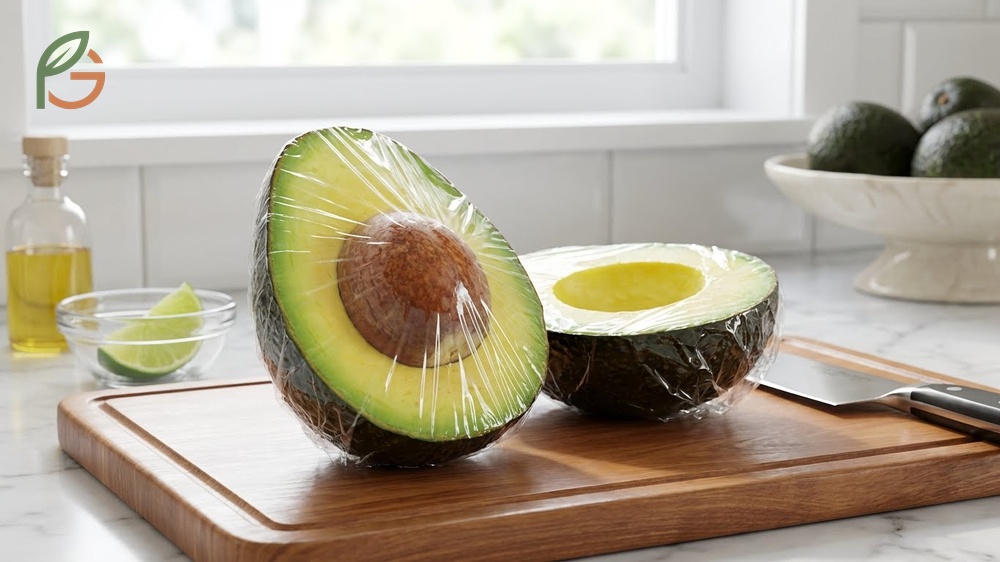
Plastic wrap pressed directly against cut avocado flesh eliminates air pockets that accelerate oxidation. This mechanical barrier method extends freshness by 12-24 hours on its own, and works even better when combined with citrus or oil treatments.
Keeping the pit in place preserves the dimple beneath it from oxygen exposure, reducing total surface area. While some believe the pit releases compounds that prevent browning, research shows the benefit comes purely from mechanical protection of that specific area.
Position the avocado half pit-side down on plastic wrap, then seal all edges tightly around the skin. This orientation minimizes bruising while maximizing air exclusion. Store in the refrigerator with the pit facing up.
- Press wrap directly against flesh to eliminate all air gaps
- Leave pit in place to reduce exposed surface area
- Store pit-side up after wrapping to prevent bruising
- Combine with lemon juice or oil for 3-4 day preservation
- Use reusable beeswax wraps as eco-friendly alternative
Commercial Avocado Savers
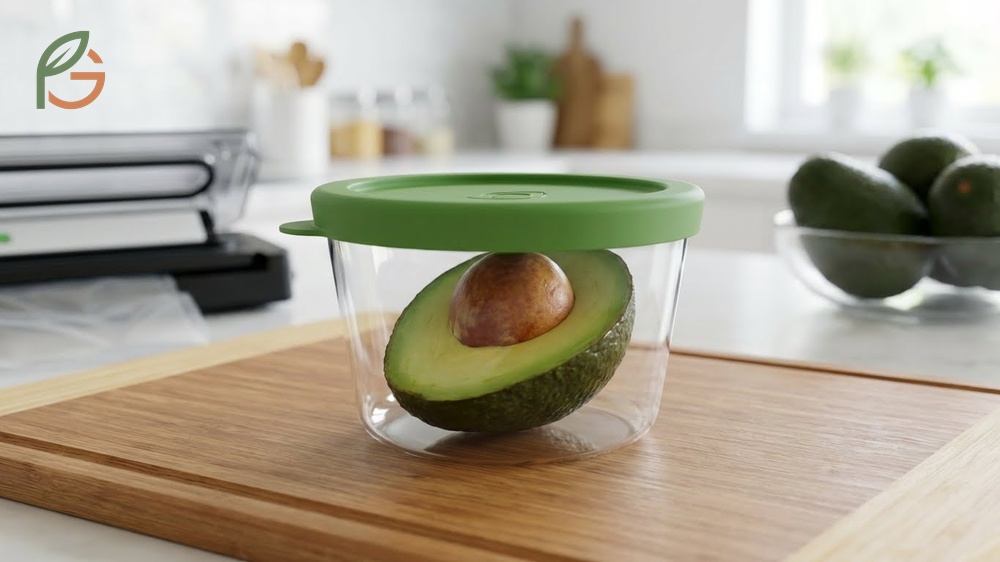
Commercial avocado keepers use airtight sealing to completely isolate avocado flesh from oxygen. Testing shows top-rated products preserve halves for up to 5 days by combining tight seals with pit accommodation.[5] The best designs press flat against the flesh to minimize air contact.
Products range from simple plastic containers with locking clips to vacuum-sealing systems. Vacuum sealers remove residual oxygen for maximum preservation but cost more and require special bags.
Most effective keepers feature adjustable sizing to accommodate different avocado dimensions. Look for BPA-free materials, dishwasher-safe construction, and secure lid clips that maintain pressure over multiple days.
This table compares five avocado preservation methods showing duration, cost, and effectiveness ratings to help choose the right technique
| Method | Preservation Duration | Cost | Effectiveness |
|---|---|---|---|
| Lemon/Lime Juice | 24-48 hours | $0.10 per use | High |
| Olive Oil Coating | 24-48 hours | $0.05 per use | High |
| Plastic Wrap Only | 12-24 hours | $0.02 per use | Moderate |
| Commercial Savers | 3-5 days[5] | $8-25 initial | Very High |
| Onion Storage | 48-72 hours | $0.15 per use | High |
- Airtight sealing mechanisms that eliminate oxygen exposure
- Adjustable sizing to fit various avocado dimensions
- Pit accommodation for storing halves with seed intact
- Dishwasher-safe BPA-free materials for easy cleaning
- Compact storage design that fits standard refrigerator shelves
Onion Storage Method
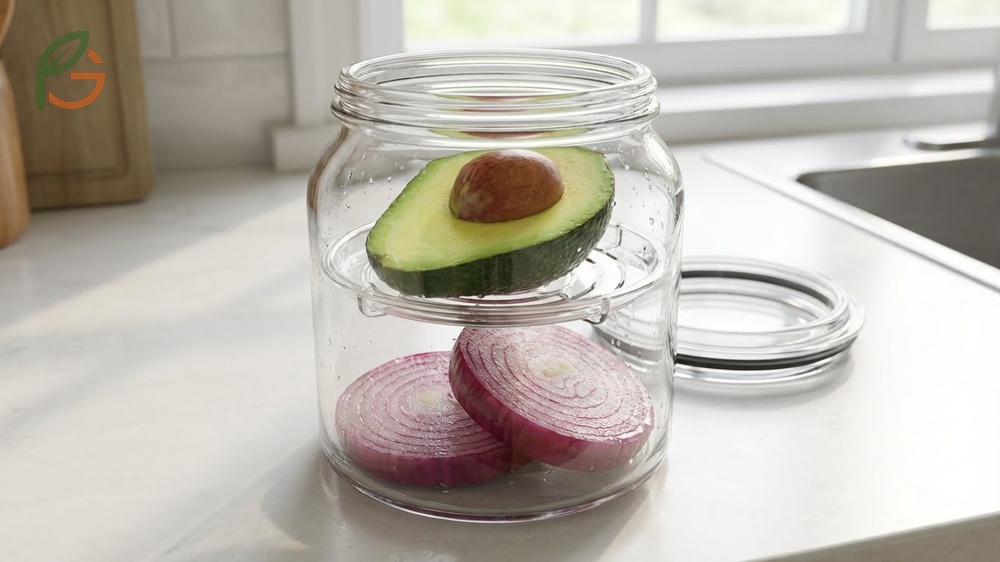
Storing avocado with sliced onion in an airtight container leverages sulfur compounds as natural preservatives. These volatile organosulfur molecules create an antioxidant atmosphere that slows enzymatic browning for 48-72 hours.
The method works by releasing compounds that inhibit PPO activity without requiring direct contact between onion and avocado. Place 3-4 thick onion slices in a container, position the avocado half flesh-side up above them, and seal tightly.
Red onions work best due to higher anthocyanin and sulfur content compared to yellow or white varieties. The onion aroma doesn’t penetrate the avocado significantly, though some people detect subtle flavor changes in highly sensitive taste tests.
This hack works particularly well for savory preparations where slight onion notes complement the dish. It’s less suitable for sweet applications or fruit salads where onion essence would clash.
Flavor Consideration: While most people can’t detect onion flavor in the avocado, those with sensitive palates may notice mild savory notes. Test this method with small amounts before using it for important meals or events.
Conclusion
The evidence is clear: how to keep avocado from turning brown comes down to controlling oxygen exposure and pH levels. Lemon juice delivers fast, effective results through dual antioxidant and acidulant action. Olive oil provides flavor-neutral protection ideal for recipes where citrus doesn’t belong. Commercial savers maximize preservation duration through engineered airtight sealing.
Current guidance emphasizes combining methods for best results—apply citrus or oil, then wrap tightly or use a keeper, and always refrigerate immediately. FruitGarden recommends the lemon juice method for most home gardeners and fruit enthusiasts, as it costs pennies per use while delivering professional-quality preservation for 48 hours.
Frequently Asked Questions
How Do You Keep Avocado From Turning Brown in the Fridge?
Apply lemon juice or brush with olive oil, then wrap tightly in plastic wrap pressed directly against the flesh. Store at 36-40°F (2-4°C) with the pit left in place to minimize exposed surface area. This combination maintains green color for 24-48 hours.
Does Water Stop Avocado From Browning?
While submerging avocados in water blocks oxygen, the FDA warns this practice creates serious food safety risks. Research shows Listeria monocytogenes can infiltrate avocado pulp within 15 days of water storage, even with intact skin.[6] Use citrus juice or oil instead.
How Do You Keep Avocados From Turning Brown for Meal Prep?
For 3-5 day meal prep, use commercial avocado savers with airtight seals after treating with lemon juice. Cut avocados the morning of meal prep, apply citrus immediately, and store in dedicated keepers. This maintains acceptable color and texture through most work weeks.
Why Do Avocados Turn Brown So Fast?
Avocados contain high levels of polyphenol oxidase enzyme and phenolic compounds that react rapidly when exposed to oxygen. Their 15-20% fat content accelerates oxidation compared to other fruits. The enzyme remains highly active at avocado’s natural pH of 6.5-7, creating perfect conditions for fast browning.
Can You Eat Brown Avocado?
Brown avocado is safe to eat unless it shows signs of spoilage like mold, sliminess, or rancid odor. The discoloration comes from harmless melanin pigments formed during oxidation. However, oxidized avocado tastes bitter and has degraded texture, making it less enjoyable even though it’s not dangerous.
What’s the Best Avocado Preserver to Buy?
Testing shows products with complete flesh-to-surface contact and secure locking mechanisms work best. Top-rated options include Joie Avocado Fresh Saver Pod and vacuum-seal systems that remove residual oxygen. Look for BPA-free construction, dishwasher-safe materials, and designs that accommodate the pit for 3-5 day preservation.[5]
How Long Does Lemon Juice Keep Avocado Fresh?
Lemon juice keeps cut avocado green for 24-48 hours when stored properly in the refrigerator. The citric acid lowers pH below 3, deactivating browning enzymes, while vitamin C provides antioxidant protection. Combine with plastic wrap and cold storage for maximum duration.