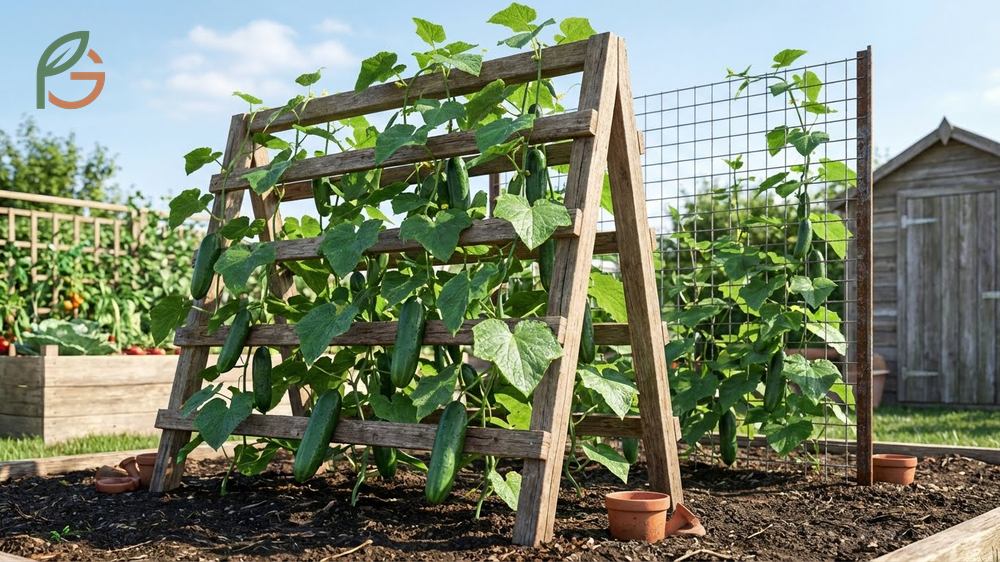
How to grow cucumbers vertically maximizes garden space and increases yields by training vining cucumber plants upward on trellises or support structures. Research shows vertical growing reduces disease by improving airflow and keeping fruits off the ground[1]. FruitGarden compiles proven methods from university extensions and experienced growers to help you build effective vertical cucumber systems.
Quick Answer
- Vining cucumbers need trellises 5-6 feet tall[2] for optimal vertical growth
- Space plants 12-18 inches apart for pickling types or 2-3 feet for slicing varieties[3]
- Vertical growing saves space while increasing airflow to prevent fungal diseases[1]
- Common trellis types include A-frame, cattle panel arches, string systems, and DIY wooden structures
How to Grow Cucumbers Vertically
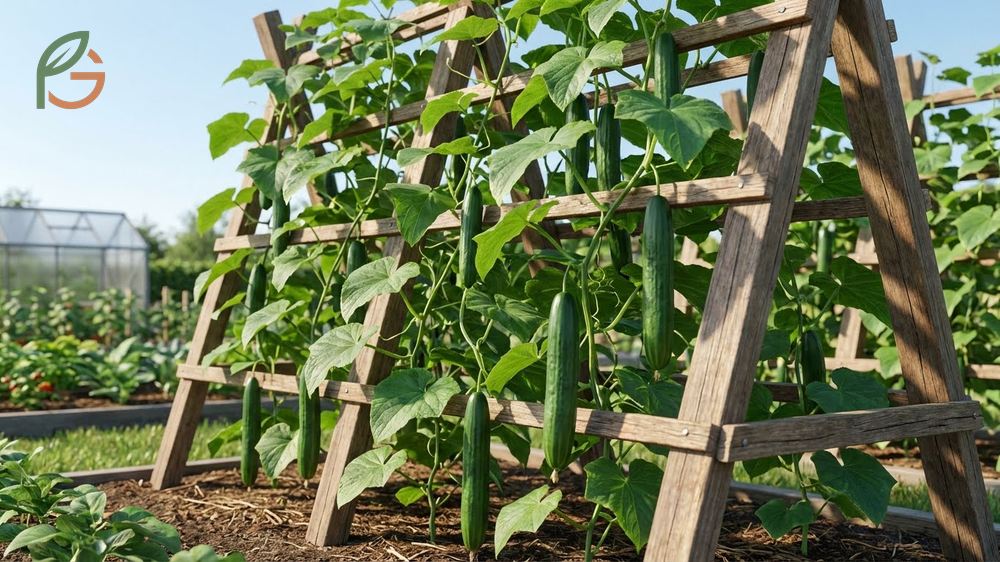
Growing cucumbers vertically transforms sprawling vines into organized, productive plants. Studies demonstrate that trellised cucumbers produce straighter fruits and experience fewer pest problems compared to ground-grown plants[4]. The technique works by training the natural climbing tendency of cucumber vines upward rather than allowing them to spread across the ground.
You’ll need to select vining cucumber varieties rather than bush types for vertical growing. Most growers find that installing the trellis before planting prevents root damage later. Position plants at the trellis base and gently guide young vines toward the support structure as they grow.
Training starts when vines reach 8-12 inches long. Use soft ties or garden twine to loosely attach stems to the trellis without damaging the plant tissue. Check plants every 3-4 days during peak growth to redirect wayward vines.
From My Experience: My friend in Puebla, Mexico trained ‘Marketmore’ cucumbers on a bamboo trellis in April 2024. The vines reached 6 feet in 35 days versus the typical 40-45 day range, producing fruits 7-10 days earlier than his ground-planted cucumbers.
Choosing Vining Varieties
Vining cucumbers grow 4-6 feet in length and produce more fruit over longer periods than bush varieties[5]. These plants have vigorous growth habits that make them ideal candidates for vertical training. Popular vining varieties include ‘Marketmore’, ‘Armenian’, ‘Lemon’, and ‘Straight Eight’.
Bush cucumber varieties only reach 2-3 feet and don’t require support structures[5]. While compact types work well for container gardens, they won’t climb trellises effectively. Always check seed packets for growth habit descriptions before purchasing.
- Marketmore 76: Disease-resistant slicing variety that grows 6-8 feet, produces 8-inch dark green fruits
- Armenian Cucumber: Actually a melon with mild cucumber flavor, vines reach 10-12 feet with ribbed fruits
- Lemon Cucumber: Heirloom variety producing round yellow fruits, vines grow 5-6 feet tall
- Straight Eight: Classic slicing type with 8-inch uniform fruits, vines extend 6-7 feet
- Mini Munch: Snack-sized cucumbers perfect for small spaces, plants reach 5 feet vertically
Proper Spacing Techniques
Cucumber spacing depends on the variety and trellis system you’re using. Pickling cucumbers need 12-18 inches between plants, while large slicing types require 2-3 feet of space[3]. Proper spacing ensures adequate airflow and prevents overcrowding that can lead to disease.
Some experienced growers plant cucumbers closer together when training vertically. Research indicates spacing plants at least 4 inches apart along the trellis base works for most home gardens[4]. However, commercial operations often maintain wider spacing to maximize fruit size and quality.
Spacing Tip: If you’re growing cucumbers in raised beds, plant them along the edges so trellises don’t shade other crops. Leave at least 6 inches between the planting hole and the bed wall to allow root expansion.
Best Trellis for Cucumbers
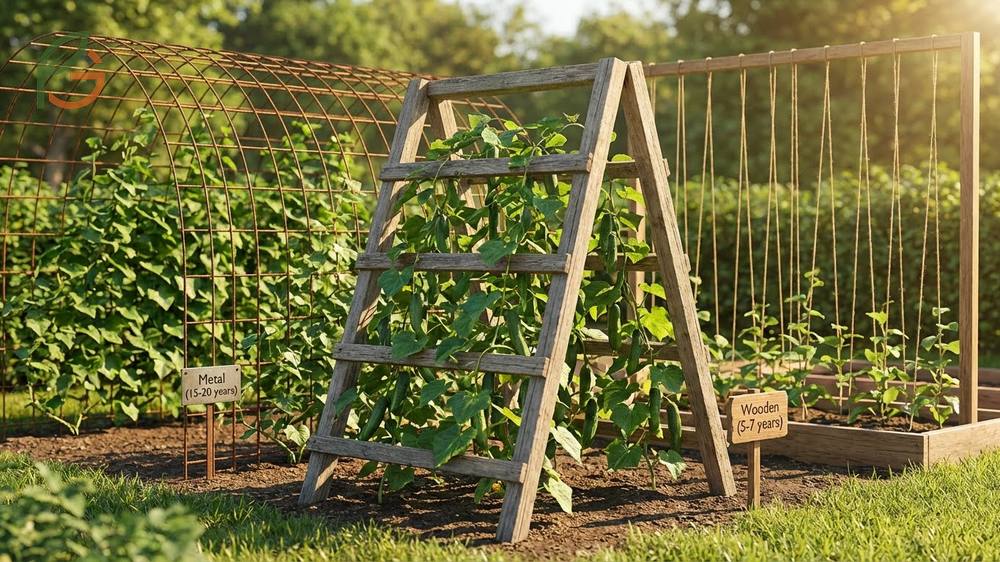
The best cucumber trellis depends on your garden space, budget, and growing goals. A-frame trellises provide stability and allow planting on both sides, while cattle panel arches create attractive garden tunnels. String systems offer the most affordable option for gardeners on tight budgets.
Consider trellis durability when making your selection. Metal options like cattle panels last 15-20 years, while wooden structures typically need replacement every 5-7 years. Wire mesh and string systems fall somewhere in between, lasting 3-5 seasons with proper care.
Stability matters more than aesthetics for productive cucumber growing. The structure must support 20-30 pounds of vine weight plus fruit load during peak production. Wind resistance also plays a role in areas with frequent storms or strong prevailing winds.
A-Frame Trellis Designs
A-frame trellises shaped like the letter “A” allow planting cucumbers on both sides of the slanted structure[6]. Most designs stand 4-5 feet tall, which works perfectly for standard vining cucumber varieties. The dual-sided approach doubles your growing capacity in the same footprint.
Building an A-frame requires two panels of wire mesh or welded wire fencing hinged at the top. Attach the panels to wooden stakes driven 12-18 inches into the ground for stability. You can also plant fast-growing crops like lettuce or arugula underneath while cucumber plants are young.
- Two 4×8 feet panels of concrete remesh or welded wire fencing
- Four wooden stakes (2×2 inches, 6 feet long) for corner supports
- Heavy-duty zip ties or wire to connect panels at the peak
- Hammer or post driver to secure stakes 12-18 inches deep
- Optional: Crossbar at the bottom to prevent panels from spreading
Cattle Panel Options
Cattle panels measuring 16 feet long create sturdy arched trellises when bent between four T-posts[6]. The arch design provides 6-7 feet of vertical growing space along the sides. This option works especially well for creating garden tunnels that you can walk through during harvest.
Install T-posts at each corner of the planned archway, driving them 1-2 feet into the ground. Carefully bend the cattle panel to form the arch shape, then secure it to the posts using fencing clips or wire. The panels’ 4-inch grid openings provide perfect handholds for cucumber tendrils.
Building a Trellis for Cucumbers
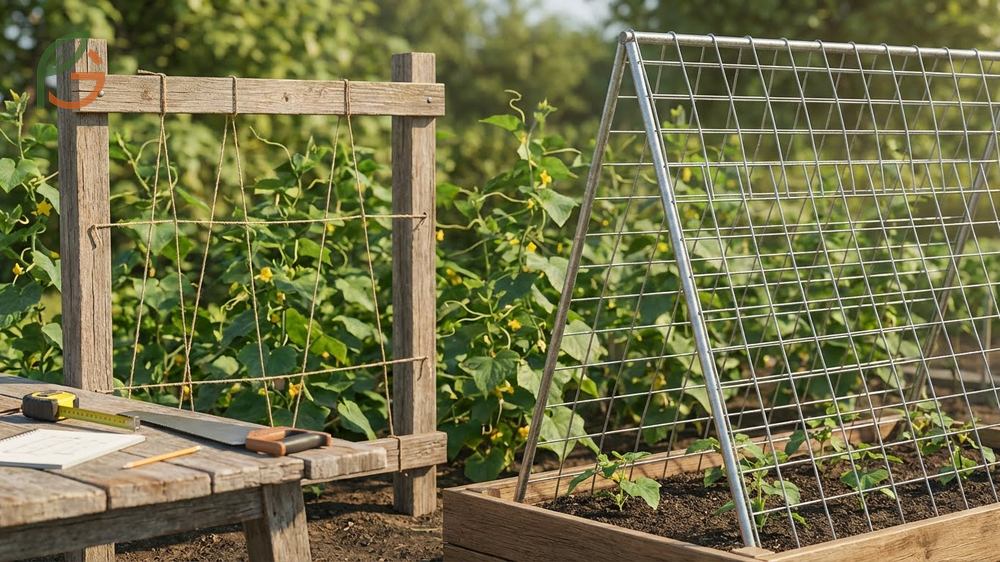
Building your own cucumber trellis saves money and allows customization for your specific garden layout. Simple designs using wood and string cost $10-20 in materials, while more elaborate wire structures run $30-50. Most DIY trellises take 1-2 hours to construct with basic tools.
Start by determining your available space and the number of plants you want to grow. Measure the area and sketch a simple plan showing post locations and dimensions. Gather all materials before beginning construction to avoid mid-project supply runs.
Choose rot-resistant wood like cedar or pressure-treated lumber for longer-lasting structures. Alternatively, PVC pipe creates lightweight, weatherproof trellises that resist decay. Metal options provide maximum durability but cost more upfront.
DIY Wood and String Trellis
A basic wood and string trellis uses two vertical posts connected by horizontal boards at the top and bottom. String runs vertically between these boards, creating climbing paths for cucumber vines. This design costs under $15 and takes about an hour to build.
Cut two posts approximately 5 feet tall and secure them to your raised bed or sink them 12 inches into the ground. Attach a 4-foot board across the top and a 2-foot board near the bottom. Run string vertically from top to bottom every 6-8 inches, then weave horizontal strings through the vertical ones for added strength.
- Two wooden posts 5 feet tall (2×2 or 2×4 inches)
- One 4-foot board for top crosspiece
- One 2-foot board for bottom support
- Twine or garden string (50-75 feet)
- Wood screws (2.5-3 inches long)
- Drill with screwdriver bit
Construction Tip: Pre-drill holes before inserting screws to prevent wood splitting. Space vertical strings 6-8 inches apart to provide enough support points without making the trellis too heavy with fruit.
Wire Mesh Construction
Concrete remesh or welded wire fencing creates sturdy trellises with minimal effort. The 6-inch grid openings provide ideal spacing for cucumber tendrils to grip. One 4×8 foot panel supports 3-4 cucumber plants and costs $15-25 at hardware stores.
Attach the wire panel to wooden stakes or T-posts driven 18-24 inches into the ground. Position stakes at both ends and optionally in the middle for panels longer than 6 feet. Use zip ties, wire, or fencing clips to secure the mesh to the supports every 12 inches vertically.
Vertical Gardening Benefits
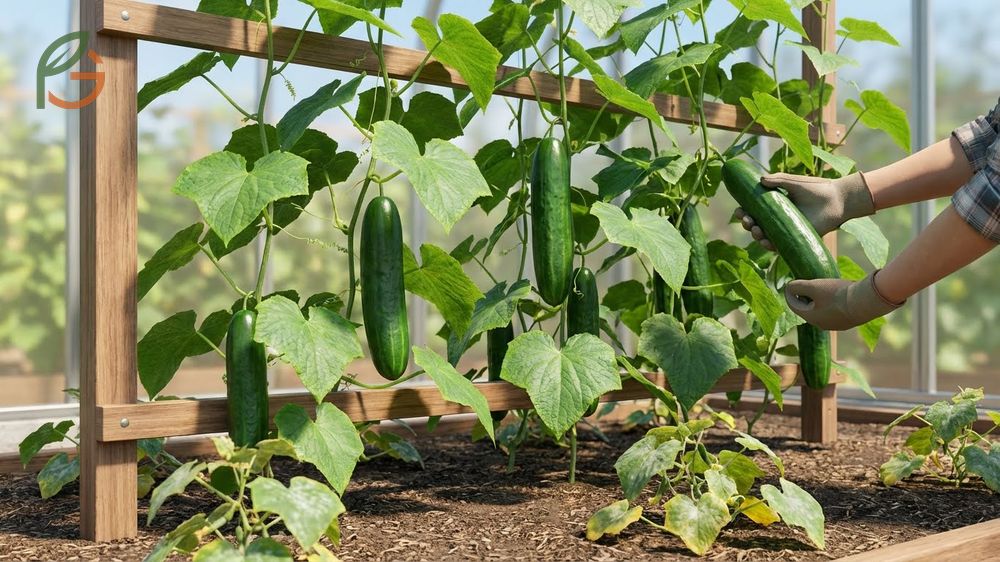
Growing cucumbers vertically saves space while reducing disease problems common in ground-grown plants. The improved airflow around leaves helps them dry faster after rain or watering, which slows the spread of fungal diseases like powdery mildew[4]. Vertical orientation also prevents soil splash-up that can introduce soil-borne pathogens.
Harvesting becomes significantly easier when fruits hang at eye level rather than hiding under leaves on the ground. You’ll spot cucumbers at the perfect size instead of discovering oversized, yellowing fruits too late. This visibility also helps you catch pest problems early before they spread.
Space efficiency makes vertical growing especially valuable for small gardens and raised beds. The same footprint that would support 2-3 sprawling cucumber plants can accommodate 6-8 trellised plants. You can even grow lettuce, herbs, or radishes underneath young cucumber plants before they fully shade the area.
- Disease reduction: Better airflow and drainage prevent fungal infections and bacterial spot
- Pest protection: Fruits stay off the ground away from slugs, pill bugs, and soil-dwelling insects
- Straighter cucumbers: Fruits hang downward producing uniform shape without ground contact
- Easier maintenance: Pruning, watering, and fertilizing become simpler with organized plants
- Higher yields: Better light exposure and pollination access increase fruit production per plant
- Extended harvest: Healthier plants produce longer into the season
Health Note: Vertical growing particularly benefits gardeners with mobility limitations or back problems. Working at chest height eliminates constant bending and kneeling required for ground-grown cucumbers.
Trellis Ideas for Cucumbers

Creative trellis designs go beyond basic structures to add visual interest while maximizing cucumber production. Archway trellises transform garden paths into productive tunnels covered with cucumber vines. Teepee structures create focal points in vegetable beds while supporting 3-4 plants around the perimeter.
Repurposed materials offer budget-friendly trellis options. Old step ladders provide instant vertical support when opened and secured. Bamboo poles lashed together in grid patterns create attractive Asian-inspired designs that cost almost nothing.
Container gardeners can use tomato cages, obelisks, or wall-mounted trellises for patio cucumber growing. Choose containers at least 5 gallons in size to support the root system. Secure lightweight trellises to prevent tipping when plants reach full size and fruit load.
- Livestock panel tunnel: 16-foot panels arched over pathways create walk-through growing spaces
- String trellis system: Vertical strings attached to overhead supports, anchored at plant bases
- Bamboo teepee: 6-8 bamboo poles tied together at top, spread at bottom in circle pattern
- Pallet trellis: Wooden shipping pallets stood vertically, secured to posts or walls
- Chicken wire frame: Inexpensive wire mesh stretched between wooden frames
- PVC pipe structure: Lightweight plastic pipes connected with elbow joints, wrapped with netting
How Tall Should a Cucumber Trellis Be
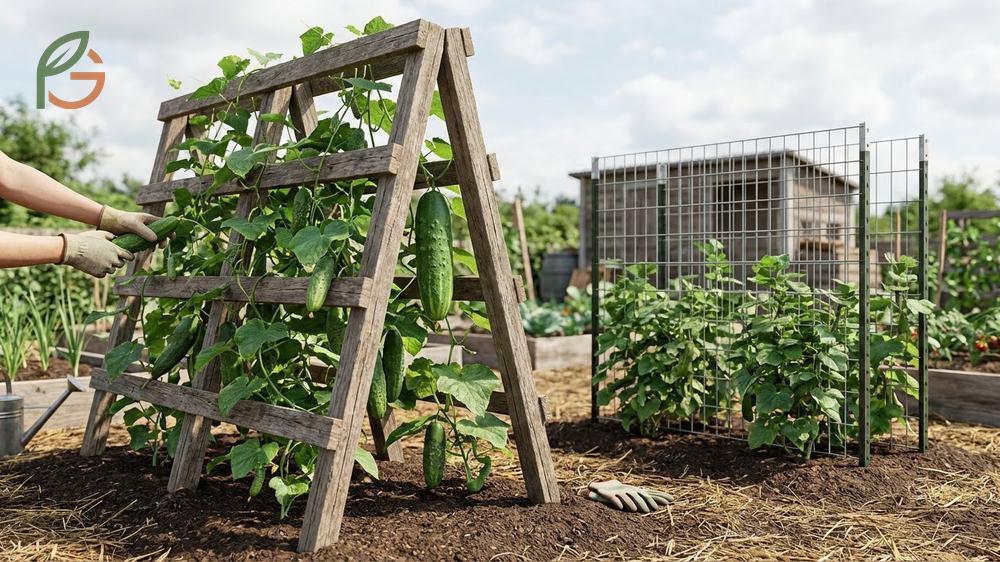
Standard cucumber trellises should reach 5-6 feet tall for most vining varieties[2]. This height accommodates the natural growth pattern of cucumbers while keeping fruits within comfortable reach for harvesting. Taller trellises work well but make upper fruit collection more difficult without a step stool.
Variety selection influences ideal trellis height. Compact or bush-type cucumbers only need 3-5 feet of vertical space[2]. Vigorous English or hothouse varieties may benefit from 7-8 feet of trellis height to fully support their growth potential.
Consider your own height and physical abilities when determining trellis dimensions. You should comfortably reach the top without straining or requiring a ladder. Most gardeners find that trellises matching their height plus 12-18 inches work best for visibility and access.
This table compares recommended trellis heights, plant spacing, and typical vine lengths for different cucumber variety types
| Variety Type | Trellis Height | Plant Spacing | Vine Length |
|---|---|---|---|
| Pickling Cucumbers | 5-6 feet | 12-18 inches[3] | 4-5 feet |
| Slicing Cucumbers | 5-6 feet | 2-3 feet[3] | 5-6 feet |
| English/Hothouse | 7-8 feet | 2-3 feet | 6-8 feet |
| Bush/Compact | 3-5 feet | 18-24 inches | 2-3 feet |
Trellis width matters as much as height for proper cucumber support. Plan for at least 6-8 feet of horizontal space to accommodate 3-4 plants comfortably. Narrow trellises under 3 feet wide become overcrowded quickly as vines expand laterally while climbing.
Installation Note: Install trellises before transplanting cucumbers or when seedlings are less than 4 inches tall. Adding support structures later risks damaging established root systems and disrupting plant growth.
Conclusion
The evidence is clear: growing cucumbers vertically delivers superior results compared to ground-sprawling methods through improved disease resistance, space efficiency, and harvest quality. Current gardening practices emphasize vertical systems as essential techniques for maximizing production in limited spaces while reducing pest and disease pressure.
Whether you choose an A-frame design, cattle panel arch, or simple string trellis, the key lies in proper variety selection and adequate height planning. FruitGarden recommends starting with a 5-6 foot trellis and adjusting based on your specific cucumber varieties and garden conditions for optimal vertical growing success.
Frequently Asked Questions
Do cucumbers need a trellis to grow properly?
Cucumbers don’t require trellises but grow better with vertical support. Studies show trellised plants produce healthier fruits with fewer disease problems than ground-grown cucumbers[1]. Bush varieties can grow without support, but vining types benefit significantly from trellising.
How do you train cucumber plants to climb a trellis?
Start training when vines reach 8-12 inches long by gently guiding them toward the trellis. Use soft ties or twine to loosely attach stems every 6-8 inches of growth. Check plants every 3-4 days to redirect new growth upward and remove lower suckers that don’t contribute to fruit production.
What’s the best DIY trellis material for cucumbers?
Concrete remesh offers the best balance of cost, durability, and functionality for DIY cucumber trellises. The 6-inch grid openings provide ideal spacing for tendrils to grip, while the rigid structure supports heavy fruit loads. Wire mesh costs $15-25 per 4×8 foot panel and lasts 5-7 seasons.
Can you grow cucumbers on a trellis in containers?
Yes, container cucumbers thrive with trellis support when grown in pots at least 5 gallons in size. Use lightweight trellis materials like bamboo or PVC to prevent container tipping. Secure the trellis to a wall or fence for added stability as plants mature and develop heavy fruit loads.
How do you make a simple cucumber trellis for raised beds?
Attach two 5-foot wooden posts to opposite corners of your raised bed. Connect them with boards at the top and bottom, then run string vertically between the boards every 6-8 inches. This basic design costs under $20 and takes about one hour to build with minimal tools required.
Do cucumber plants need support as they grow?
Vining cucumber varieties need support to grow efficiently and produce quality fruits. Without support, vines sprawl across the ground where fruits develop irregular shapes and become susceptible to rot and pest damage. Trellised cucumbers stay cleaner, grow straighter, and resist disease better than unsupported plants.
What cucumber spacing works best for vertical growing on trellises?
Space pickling cucumbers 12-18 inches apart and slicing varieties 2-3 feet apart along the trellis base[3]. Some gardeners plant as close as 4 inches apart for intensive production, but wider spacing produces larger fruits with better airflow and disease prevention.