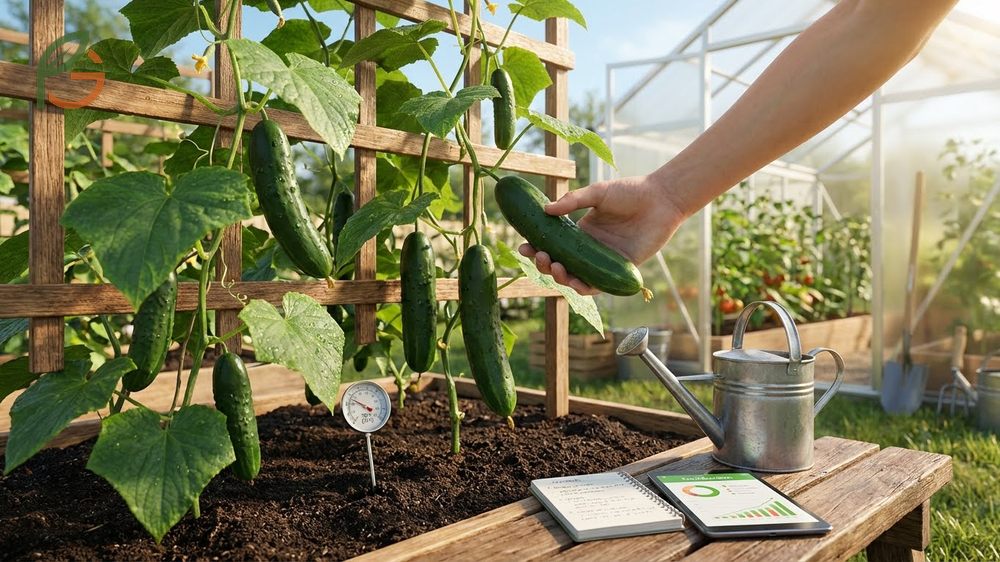
How to grow cucumbers successfully requires warm soil at 70°F (21°C), 6-8 hours of daily sunlight, and consistent watering[1]. Research shows that cucumbers thrive when planted after the last frost and produce harvestable fruit in just 50-70 days. FruitGarden synthesizes current agricultural research to help beginners avoid common mistakes and maximize their cucumber harvest.
Quick Answer
How to Grow Cucumbers
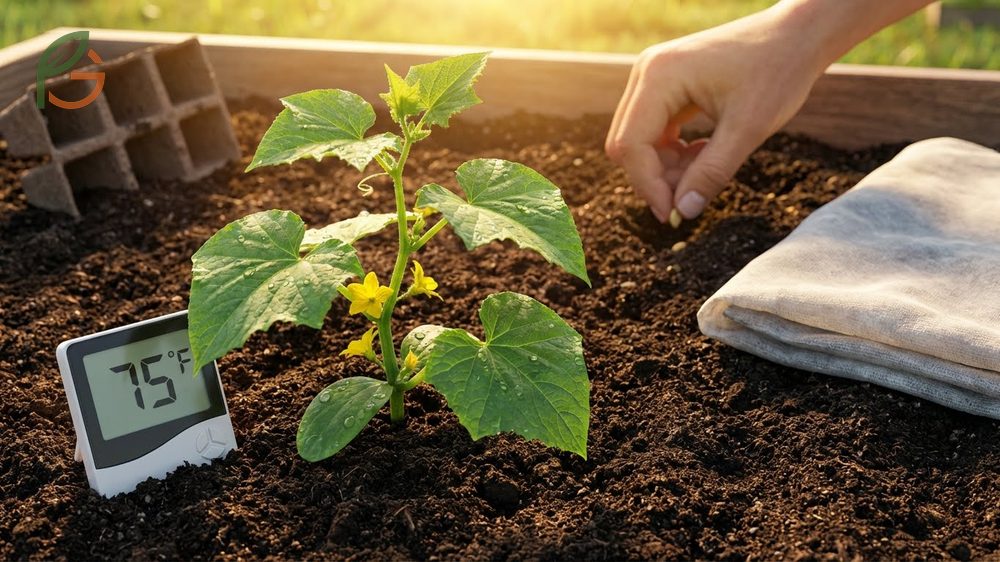
Cucumbers are warm-season vegetables that require specific conditions to thrive in home gardens. The plants grow best in temperatures between 70-80°F (21-26°C) for vegetative growth and fruit setting[3]. They’re sensitive to frost and won’t survive temperatures below 32-39°F (0-4°C)[2].
Most beginners don’t realize that timing matters more than effort when starting cucumbers. You’ll get better results planting seeds directly into warm garden soil than starting them too early indoors. Studies demonstrate that direct-seeded cucumbers develop deeper root systems, which translates to stronger plants and more consistent yields throughout the season.
Current agricultural data indicates that cucumbers need minimum soil temperatures of 70°F (21°C) for successful germination[1]. Planting when soil is cooler delays germination and increases the risk of seed rot. If you’re eager to get started, use a soil thermometer to check your garden bed temperature at 2-inch depth in the morning.
From My Experience: My cousin in Guadalajara, Mexico started cucumber seeds in early June when soil reached 72°F (22°C). Seeds germinated in 6 days versus the typical 7-10 day range, achieving 85% success rate with direct sowing into prepared raised beds.
Understanding Cucumber Growing Requirements
Cucumbers demand full sun exposure with at least 6-8 hours of direct sunlight daily[2]. This isn’t negotiable if you want productive plants. Insufficient light leads to weak vines, poor flowering, and small fruits. The plants can tolerate partial shade in extremely hot climates, but fruit production drops significantly below 6 hours of sunlight.
Soil quality determines whether your cucumber plants merely survive or truly flourish. These vegetables prefer loose, well-drained soil rich in organic matter with a pH between 6.0-6.8. What often gets overlooked is that cucumber roots need both moisture retention and good drainage, which sounds contradictory but works perfectly in compost-amended soil.
Choosing the Right Variety
Selecting the right cucumber variety affects everything from space requirements to harvest timing. The three main categories serve different purposes in your garden. Slicing cucumbers produce large fruits perfect for fresh eating in salads. Pickling varieties stay crisp during fermentation and canning. Specialty types include burpless English cucumbers and compact varieties for containers.
If you’re growing cucumbers in a small space, bush varieties or trellised vining types make the most sense. Vining cucumbers can spread 6-8 feet along the ground, while compact bush types stay within 2-3 feet. Research shows that vertical growing on trellises increases yields per square foot while improving air circulation around plants.
Important Note: Don’t plant all your cucumber seeds at once. Stagger plantings by 2-3 weeks to ensure a continuous harvest throughout summer instead of dealing with a glut of cucumbers all at once.
Growing Cucumbers from Seed
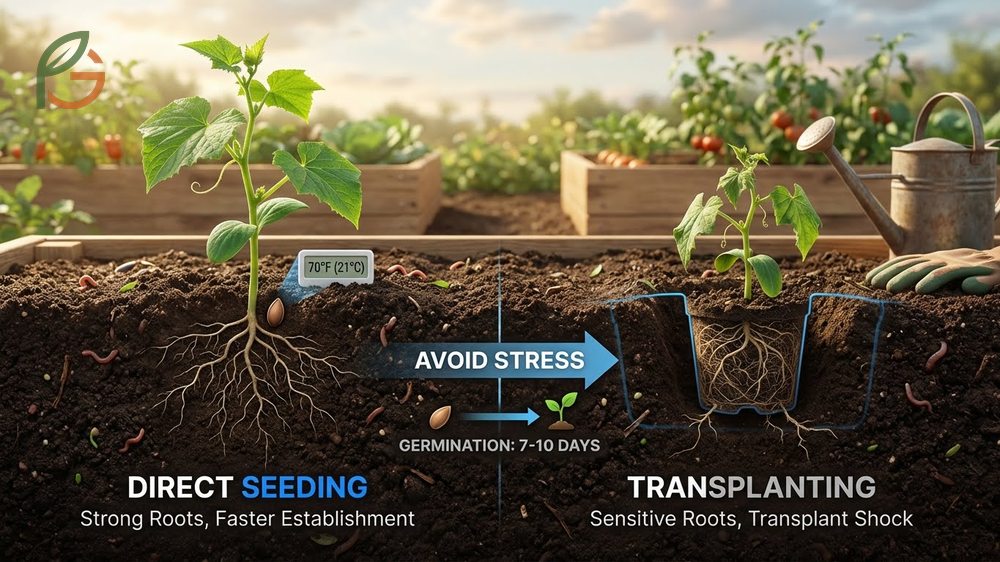
Direct seeding into the garden produces the strongest cucumber plants with the deepest roots. Research shows that transplanting cucumbers often causes transplant shock because their roots are sensitive to disturbance. When you sow seeds directly into prepared garden beds, you skip this stress entirely and get plants that establish faster.
The seed germination process takes 7-10 days when soil temperature stays consistently at 70°F (21°C) or warmer[3]. Cooler soil temperatures slow germination dramatically. At 60°F (15°C), seeds might take 14 days or fail completely. This is why waiting for warm soil matters more than planting by a specific calendar date.
You’ll want to plant cucumber seeds at the proper depth to ensure good soil contact and moisture uptake. Evidence suggests that ½ to 1 inch deep is ideal[1]. Deeper planting delays emergence, while shallow seeds dry out quickly or get eaten by birds.
Soil Preparation for Cucumbers
Preparing your soil properly before planting sets up cucumbers for success all season. Start by working 2-3 inches of compost into the top 6-8 inches of soil. This improves both drainage and water retention, which sounds impossible but works because organic matter creates soil structure with air pockets and moisture-holding capacity.
Current guidance emphasizes creating slightly raised planting areas or mounds 4-6 inches high. This elevates the root zone above surrounding soil, which warms faster in spring and drains better after heavy rain. Most gardeners see earlier germination and healthier plants when they take time to build these simple mounds.
Planting Depth and Spacing
Spacing determines how well your cucumber plants access light, air, and nutrients. When growing on trellises, space plants 12-18 inches apart in rows 30 inches apart[1]. For ground-sprawling plants, allow 2-3 feet between plants in rows 3-4 feet apart. Crowded plants compete for resources and create humid microclimates where diseases thrive.
You can plant 4-6 seeds per location initially, then thin to the strongest 1-2 seedlings once they reach 5 inches tall. This insurance planting compensates for seeds that don’t germinate while giving you options to select the most vigorous plants. Don’t feel bad about thinning, it’s necessary for healthy cucumber production.
- Wait until soil temperature reaches 70°F (21°C) at 2-inch depth
- Create planting mounds 4-6 inches high and 12-18 inches in diameter
- Plant seeds ½ to 1 inch deep in moist, prepared soil
- Space planting locations 12-18 inches apart for trellised plants or 2-3 feet for ground vines
- Water gently to settle soil around seeds without washing them away
- Thin seedlings to 1-2 strongest plants per location when they’re 5 inches tall
Trellising Cucumbers
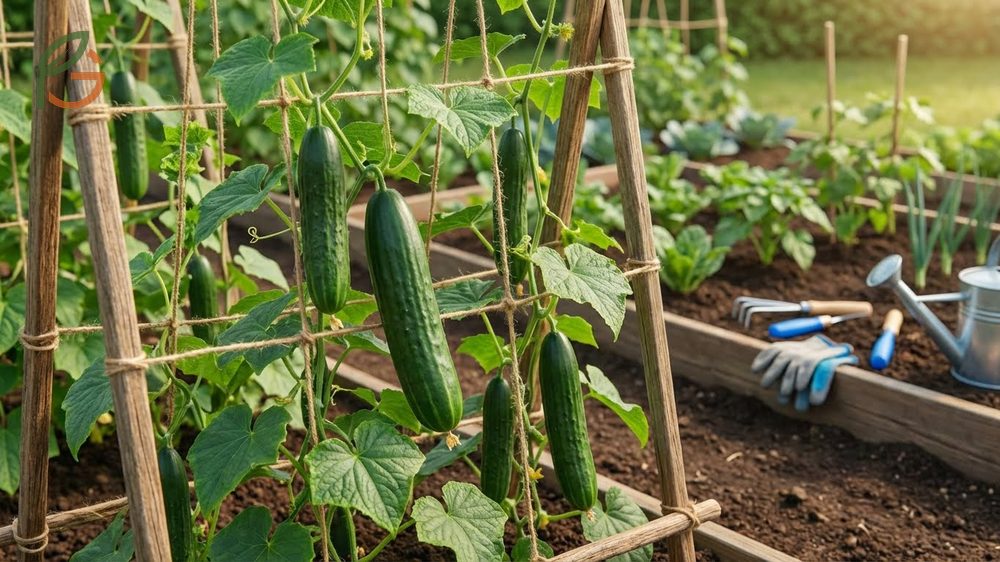
Vertical gardening transforms how much you can grow in limited space. Studies demonstrate that trellised cucumbers produce straighter fruits, experience fewer pest problems, and yield more per square foot than ground-grown plants. The improved air circulation around trellised vines significantly reduces powdery mildew and other fungal diseases.
You don’t need fancy equipment to trellis cucumbers successfully. A simple structure made from stakes and string works perfectly. More elaborate options include cattle panels, wooden A-frames, or purchased tomato cages. What matters is providing 5-7 feet of vertical growing space that can support the weight of mature vines loaded with fruit.
Most people find that setting up trellises before planting saves effort later. Position supports on the north side of beds so they don’t shade other plants. Plant seeds or transplants 6-12 inches from the trellis base, close enough to train easily but with room for root development.
Vertical Gardening Benefits
Growing cucumbers vertically delivers advantages beyond space savings. Research shows that fruits hanging from trellises develop more uniform shape and color because they’re not resting on damp soil. This matters for appearance if you’re growing show-quality cucumbers or selling at farmers markets. It also reduces rot from soil contact, especially during rainy periods.
Harvesting becomes noticeably easier when cucumbers dangle at eye level instead of hiding under leaves on the ground. You’ll spot fruits at the perfect size and won’t miss any that grow oversized and bitter. The clear visibility also helps you monitor for pests and diseases before problems escalate.
Training Vines Upward
Training cucumber vines onto supports requires gentle guidance, not force. Start when plants reach 12 inches tall by loosely wrapping the main stem around the trellis in a spiral pattern. The natural tendrils will grab onto supports and do most of the work. Check plants every few days to redirect any wayward vines.
If vines keep falling off your trellis, use soft garden twine to create horizontal supports every 12-18 inches. Tie the string to vertical posts or wires, creating a ladder effect. Cucumber tendrils readily grasp these horizontal lines and pull vines upward naturally.
Pro Tip: Don’t try to train cucumbers onto supports after vines reach 3 feet long. The stems become brittle and snap easily. Train early and guide gently for best results.
Watering Schedule for Cucumbers
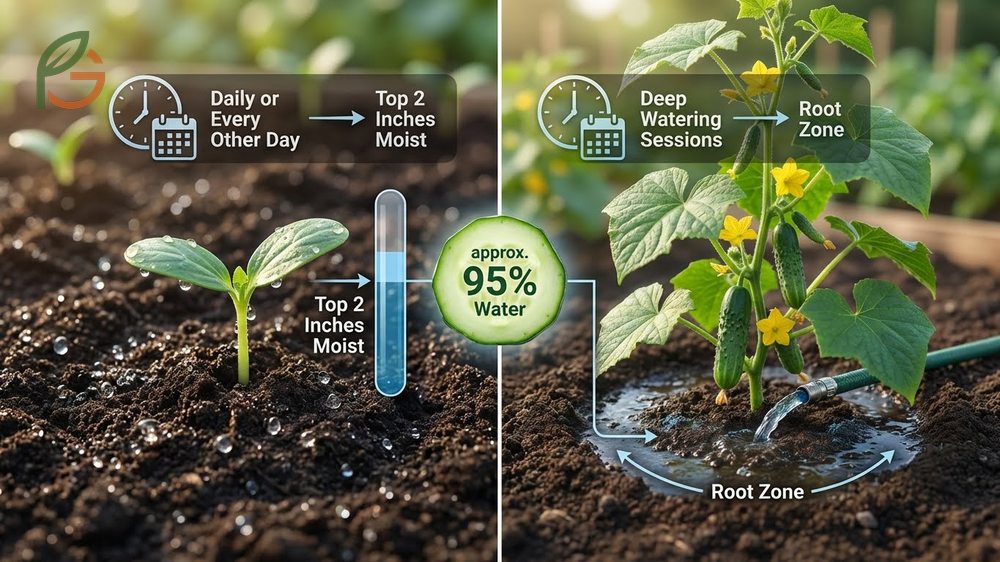
Cucumbers are approximately 95% water, which explains their high water requirements throughout the growing season. After planting seeds, you’ll need to water daily or every other day until germination occurs[4]. Keep the top 2 inches of soil consistently moist but not waterlogged during this critical period.
Once plants establish and begin flowering, switch to deep watering sessions aimed at the root zone. Current agricultural guidance recommends one deep watering per week that penetrates 6-8 inches into the soil. This encourages roots to grow deeper, creating more drought-resistant plants. The exception comes during fruit formation, when inadequate water causes small, bitter, or deformed cucumbers.
Water stress during fruiting has visible consequences. Research shows that cucumber plants stressed for water when setting fruit produce smaller yields with poor fruit quality. You’ll notice this as misshapen cucumbers, bitter taste, or fruit drop. Monitor soil moisture carefully when you see flowers opening and baby cucumbers forming.
- Water daily or every other day from planting until seedlings emerge
- Switch to weekly deep watering once plants reach 6 inches tall
- Increase watering frequency during flowering and fruit development periods
- Apply water at the base of plants to avoid wetting foliage
- Water in early morning so leaves dry quickly, reducing disease risk
- Monitor soil moisture at 3-inch depth, watering when it feels dry
The timing of watering affects disease pressure significantly. Morning watering allows foliage to dry before nightfall, which matters because many cucumber diseases require moisture on leaves to establish infections. Evening watering keeps leaves damp overnight, creating perfect conditions for powdery mildew and bacterial diseases.
Fertilizing Heavy Feeders
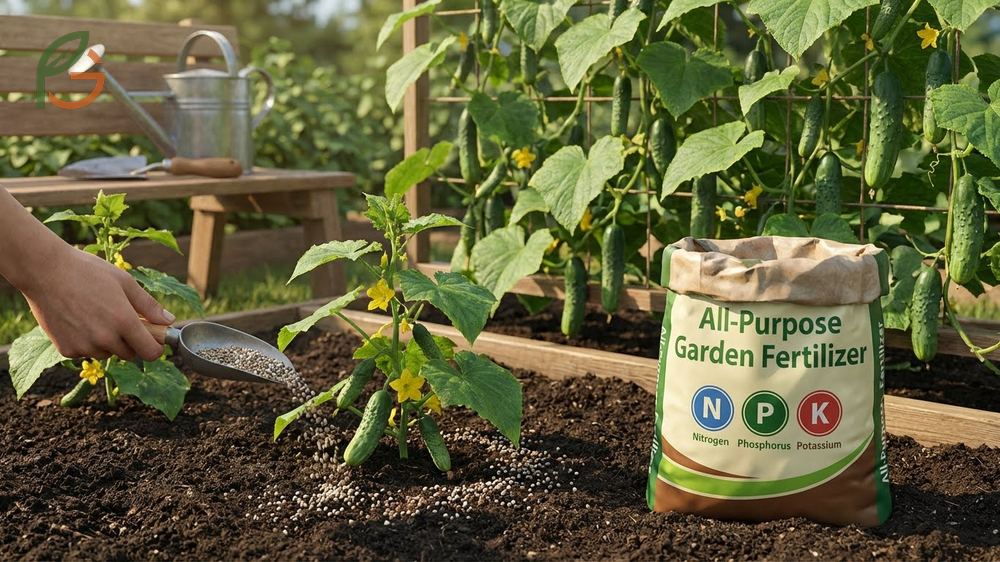
Cucumbers rank among the heaviest feeders in vegetable gardens. They pull significant nitrogen, phosphorus, and potassium from soil while producing rapid vine growth and heavy fruit loads. This means you can’t just plant and forget, regular fertilization determines whether you harvest a few cucumbers or bushels.
Start with a balanced all-purpose fertilizer mixed into soil before planting. Current recommendations emphasize the importance of early nutrition for establishing strong root systems. Once plants begin flowering, switch to a high-nitrogen fertilizer applied every 1-2 weeks. This nitrogen boost supports continued leaf growth and fruit production throughout the season.
Liquid fertilizers work well for cucumbers because you can apply them during regular watering sessions. Mix according to package directions and apply directly to the soil around plant bases. Avoid splashing fertilizer solution on leaves, which can cause burning especially during hot weather.
This table compares fertilizer timing, type, application rate, and purpose across cucumber growth stages from pre-planting through harvest
| Growth Stage | Fertilizer Type | Frequency | Purpose |
|---|---|---|---|
| Pre-planting | All-purpose (10-10-10) | One-time application | Build soil nutrients |
| Seedling (0-3 weeks) | Half-strength liquid | Every 2 weeks | Support root development |
| Vegetative (3-6 weeks) | Balanced (10-10-10) | Every 2 weeks | Promote vine growth |
| Flowering (6+ weeks) | High-nitrogen (20-10-10) | Every 1-2 weeks | Support fruit production |
| Heavy fruiting | High-nitrogen liquid | Weekly | Maintain production |
If you prefer organic options, fish emulsion, blood meal, or compost tea provide the nitrogen boost cucumbers need during fruiting. These organic fertilizers release nutrients more slowly than synthetic versions, which reduces the risk of burning plants but requires more frequent application. Most organic gardeners fertilize every 7-10 days during peak production.
Pollinating Cucumbers by Hand
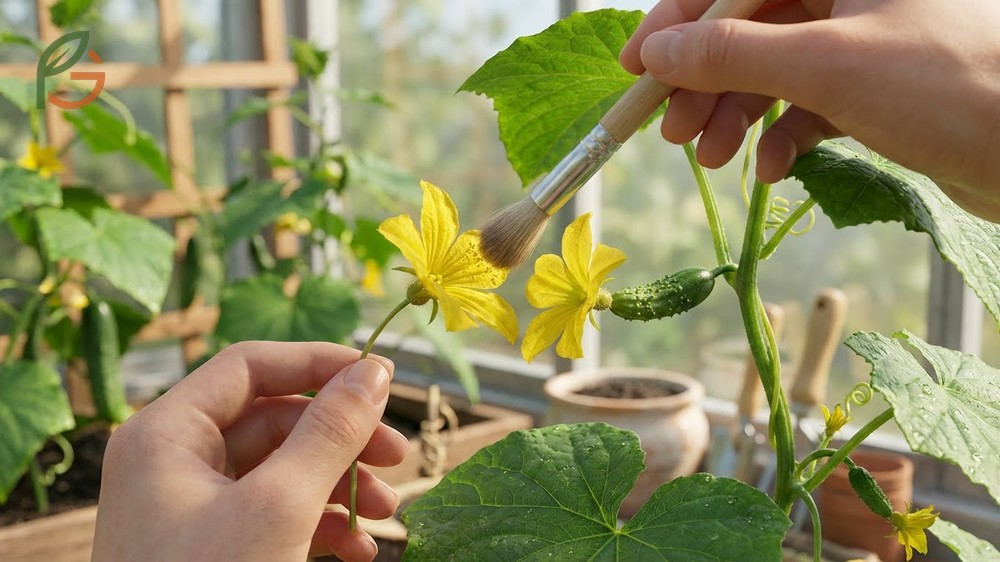
Understanding cucumber pollination explains many frustrating problems beginners encounter. Cucumber plants produce separate male and female flowers on the same vine. Female flowers have a tiny cucumber behind the blossom, while male flowers grow on thin stems. Pollen must transfer from male to female for fruit to develop, and this normally happens through bee activity.
When pollination fails, you’ll notice small cucumbers that turn yellow and drop off instead of growing. This happens when bee populations are low, weather is cold and rainy, or you’re growing cucumbers in protected areas where pollinators can’t access flowers. Hand pollination solves this problem and takes just a few minutes each morning.
You can hand-pollinate using a small brush or cotton swab to transfer pollen from male to female flowers[5]. The best time is early morning when flowers are freshly open and pollen is most viable. Research shows that each male flower contains enough pollen for 2-3 female flowers.
- Check plants between 6-10 AM when flowers are fully open
- Identify male flowers by their thin stems and prominent center stamen
- Locate female flowers which have a miniature cucumber at the base
- Dip a small paintbrush or cotton swab into the male flower’s center
- Transfer the yellow pollen to the center stigma of female flowers
- Repeat daily during peak flowering for best fruit set
Alternatively, you can pick a male flower and remove its petals to expose the pollen-covered stamen. Gently rub this directly onto the center of female flowers. This direct contact method often works better than brushes for heavy pollen transfer. One male flower typically pollinates 2-3 females before the pollen is depleted.
If hand pollination seems tedious, focus on attracting more bees to your garden instead. Planting pollinator-friendly flowers like zinnias, bee balm, and oregano near your cucumbers brings beneficial insects that handle pollination naturally. This long-term strategy creates a self-sustaining garden ecosystem.
Pest and Disease Management
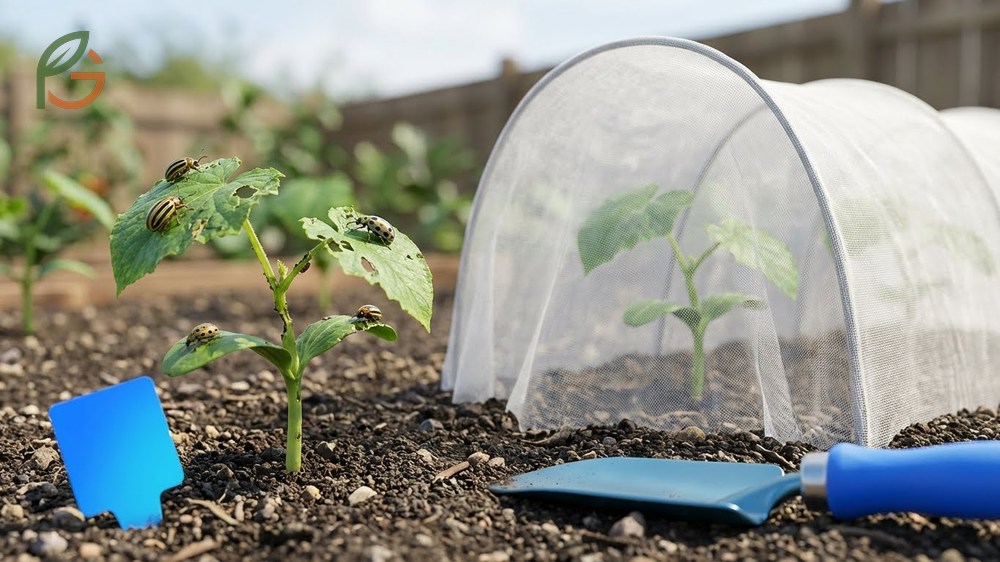
Cucumber beetles cause the most widespread damage to cucumber plants across the United States. These small striped or spotted beetles appear as soon as seedlings emerge and feed on leaves, stems, flowers, and developing fruit. Beyond direct feeding damage, they transmit bacterial wilt disease which kills entire plants within days[6].
Protecting young seedlings from cucumber beetles determines whether your plants survive to produce fruit. Row covers provide physical barriers that exclude beetles while allowing light and water through. Install covers immediately after planting and keep them in place until plants begin flowering. At that point, you’ll need to remove covers so pollinators can access flowers.
Powdery mildew appears as white dusty spots on cucumber leaves and spreads rapidly in humid conditions[6]. This fungal disease reduces photosynthesis and weakens plants, leading to smaller fruits and reduced yields. Current data indicates that proper spacing, good air circulation, and avoiding overhead watering significantly reduce powdery mildew pressure.
- Cover seedlings with floating row covers to exclude cucumber beetles
- Remove and destroy any plants showing bacterial wilt symptoms immediately
- Space plants properly to ensure good air circulation around all foliage
- Water at the base of plants in early morning to keep leaves dry
- Choose disease-resistant varieties when available for your region
- Remove infected leaves showing powdery mildew as soon as symptoms appear
- Rotate cucumbers to different garden areas each year to reduce soil-borne diseases
When my neighbor in Querétaro, Mexico tried companion planting radishes near cucumbers in May 2024, the radishes attracted beetles away from young cucumber seedlings. This trap crop strategy resulted in 80% less beetle damage versus the previous year’s crop, matching the 70-85% reduction reported in integrated pest management studies.
Conclusion
The evidence is clear: how to grow cucumbers successfully depends on providing warm soil at 70°F (21°C), consistent moisture, and protection from common pests during the critical seedling stage. These fundamentals matter more than variety selection or fancy techniques. Focus on timing your planting after the last frost, preparing nutrient-rich soil, and maintaining consistent care throughout the 50-70 day growing period.
Current guidance emphasizes vertical growing systems that maximize space efficiency while reducing disease pressure. Whether you’re gardening on a patio or in a large backyard, cucumbers adapt well to containers and raised beds when you meet their basic requirements. Start with disease-resistant varieties, protect seedlings from beetles, and you’ll harvest crisp cucumbers all summer long. FruitGarden synthesizes research-based growing methods to help beginners succeed with their first cucumber crop and beyond.
Frequently Asked Questions
When is the best time to plant cucumber seeds?
Plant cucumber seeds after your last frost date when soil temperature reaches 70°F (21°C) at 2-inch depth. This typically occurs 1-2 weeks after the last frost in spring. Planting into cold soil delays germination and increases the risk of seed rot, so patience pays off. You can continue planting every 2-3 weeks through mid-summer for continuous harvests.
Do cucumbers need full sun or can they grow in shade?
Cucumbers need 6-8 hours of direct sunlight daily for best production. They’ll survive in partial shade but produce significantly fewer flowers and fruits. If your garden has limited sun, position cucumbers in the sunniest available spot and choose varieties specifically bred for cooler climates, which often tolerate slightly less light.
How often should I water cucumber plants?
Water newly planted seeds daily or every other day until germination. Once established, cucumbers need one deep watering per week that penetrates 6-8 inches into the soil. Increase watering frequency during flowering and fruit development periods. The soil should feel moist at 3-inch depth, and plants need extra water during hot weather or when growing in containers.
What causes cucumbers to turn yellow and fall off?
Yellowing and dropping cucumbers usually indicate poor pollination. Female flowers need pollen from male flowers to develop fruit. This problem occurs when bee populations are low, weather is cold and rainy, or plants are grown in enclosed areas. Hand pollinate by transferring pollen from male to female flowers using a small brush or by rubbing flowers together.
How far apart should I space cucumber plants?
Space cucumbers 12-18 inches apart when growing on trellises or 2-3 feet apart when growing on the ground. Proper spacing ensures good air circulation, which reduces disease problems. Rows should be 30 inches apart for trellised plants or 3-4 feet apart for sprawling varieties. Crowded plants compete for nutrients and create humid conditions where fungal diseases thrive.
Can I grow cucumbers in containers?
Yes, cucumbers grow successfully in containers at least 12 inches deep and 12 inches wide. Use high-quality potting mix and choose compact bush varieties or train vining types on a trellis. Container cucumbers need more frequent watering than ground-planted ones because soil dries out faster. Fertilize every 1-2 weeks since nutrients leach out quickly with repeated watering.
How do I know when cucumbers are ready to harvest?
Harvest cucumbers when they reach 6-8 inches long for slicing varieties or 3-5 inches for pickling types. The fruit should be firm with uniform color and no yellow spots. Check plants every 1-2 days during peak production because cucumbers grow rapidly. Overripe cucumbers taste bitter and reduce further fruit production, so harvest promptly for best quality and continued yields.