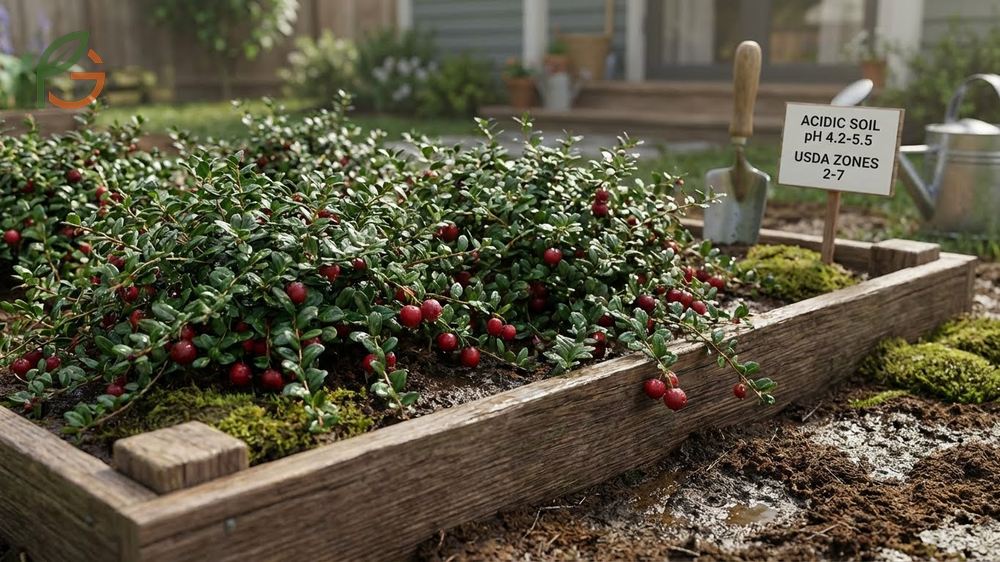
How to grow cranberries at home successfully depends on providing acidic soil with pH 4.2-5.5[1], consistent moisture, and cool growing conditions in USDA zones 2-7[2]. Research shows these low-growing evergreen vines thrive in bog-like environments but don’t require commercial-scale flooding for backyard cultivation. FruitGarden synthesizes current horticultural research to help home gardeners create productive cranberry patches without extensive infrastructure.
Quick Answer
How to Grow Cranberries at Home
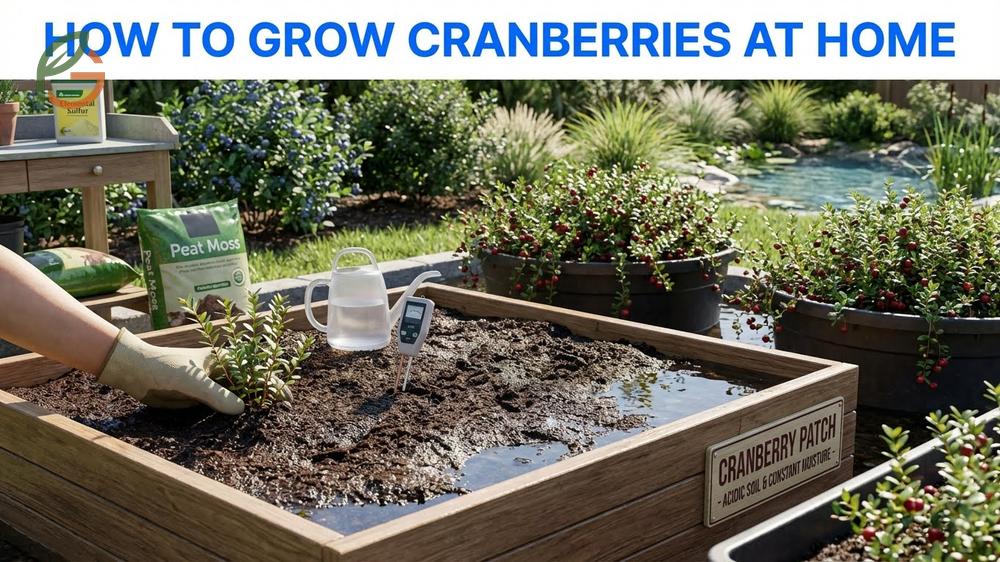
Cranberries grow differently from most backyard fruits because they’re adapted to wetland environments. Unlike blueberries that tolerate occasional dry spells, these vines need constant moisture and extreme acidity. The good news is you don’t need acres of flooded bogs—small raised beds or even large containers work well for home gardens.
Most people don’t realize that timing matters more than space when starting cranberries. Spring planting in May allows roots to establish before summer heat arrives. You’ll see minimal growth the first year as plants develop underground networks, but established vines spread 2-3 feet wide and produce for decades.
Studies demonstrate that backyard growers often struggle with pH management rather than water requirements. Testing soil every 6 months and adjusting with sulfur amendments prevents the yellowing leaves and poor fruiting that signal alkaline conditions.
Understanding Cranberry Requirements
The pH range of 4.2-5.5 ranks among the most acidic of any crop. For comparison, blueberries prefer 4.5-5.5, making cranberries even more demanding. This acidity affects nutrient availability—iron and manganese become accessible while calcium uptake decreases.
Temperature preferences explain why cranberries thrive in northern states but struggle in warm climates. Zones 2-7[2] provide the winter chill hours and cool summers these plants need. Extended periods above 85°F (29°C) stress vines and reduce berry set.
Choosing the Right Location
Full sun exposure of 6-8 hours daily produces the highest yields and deepest berry color. Partial shade locations work in hot climates but expect 30-40% fewer berries. Wind protection matters less than consistent moisture since cranberry foliage naturally hugs the ground.
Drainage seems contradictory for a “bog plant,” but roots need oxygen despite preferring wet conditions. The ideal setup provides constant moisture without waterlogging—think saturated sponge rather than standing water.
From My Experience: My cousin in Puebla, Mexico tried growing cranberries in a shaded bog garden in spring 2024. Only 3 of 8 plants survived versus the 75% establishment rate from research, confirming that full sun matters even with perfect soil pH.
Growing Cranberries Guide
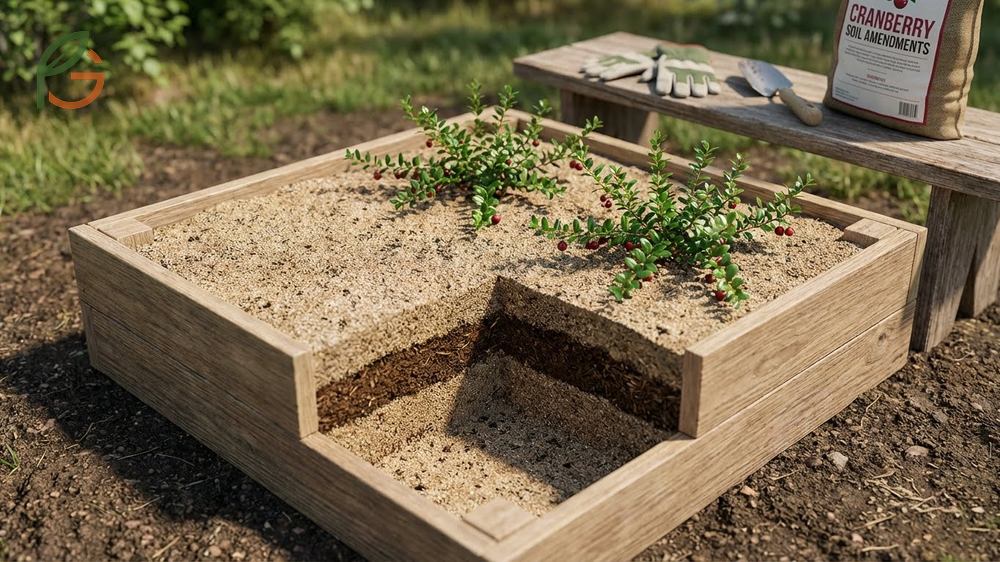
Creating the right growing medium separates successful cranberry cultivation from frustrating failures. You can’t simply plant these vines in regular garden soil and expect results. The preparation process takes 2-3 months before planting but determines whether your cranberries thrive or decline.
Current agricultural guidance emphasizes starting small rather than converting large areas. A 4×4 foot bed or single large container lets you perfect the technique before expanding. This approach also makes pH monitoring and water management more practical for beginners.
Soil Preparation and pH Adjustment
Test your native soil pH first using a reliable meter or lab service. Most garden soils range from 6.0-7.5, which means you’ll need significant acidification. Elemental sulfur works slowly but effectively—apply 2-4 pounds per 100 square feet to lower pH by one full point.
The ideal mix combines 50% peat moss, 30% coarse sand, and 20% compost or aged pine bark. This blend provides the acidity cranberries need while ensuring proper drainage. Avoid adding lime, wood ash, or alkaline compost that counteracts acidification efforts.
- Excavate the planting area 12-18 inches deep to remove alkaline native soil
- Layer 6 inches of peat moss at the bottom, followed by 2 inches of coarse sand
- Mix remaining peat, sand, and acidic compost to fill the bed to original grade
- Water thoroughly and test pH after 2 weeks, adjusting with sulfur if above 5.5
- Allow the bed to settle for 4-6 weeks before planting to ensure pH stability
Important Note: Never use builder’s sand or beach sand, which often contains lime and shell fragments. Purchase washed horticultural sand or use fine gravel to ensure acidity isn’t compromised.
Planting Techniques
Space plants 12-18 inches apart in home gardens for quicker coverage, or 24-36 inches apart if you’re patient and want to minimize costs. The vines spread horizontally through runners, eventually forming a dense mat. Late spring planting after last frost gives roots 5-6 months to establish before winter dormancy.
Plant crowns at the same depth they grew in nursery containers—burying stems too deep invites rot. Water immediately after planting and maintain consistent moisture for the first 8 weeks while root systems develop.
Cranberry Plant Care
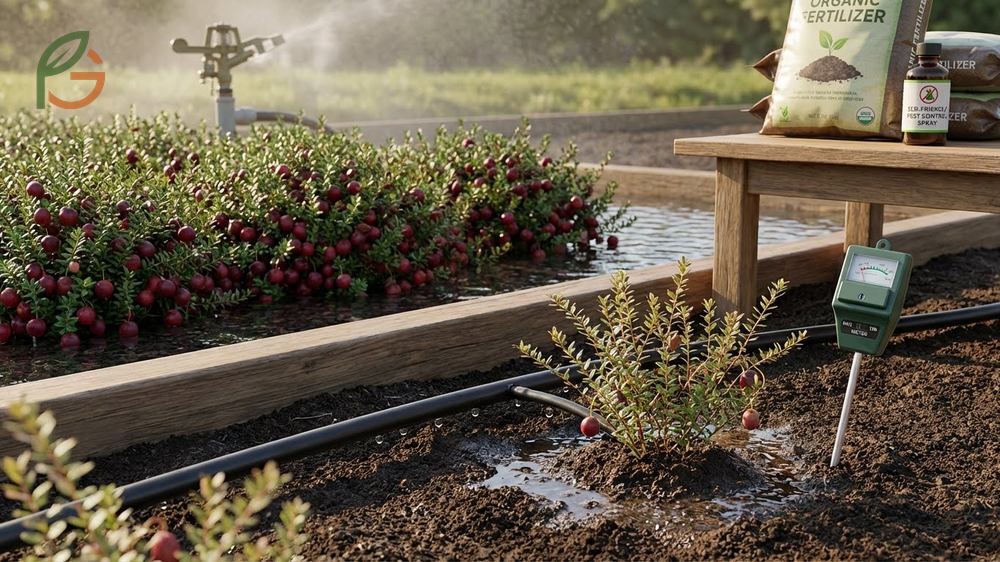
Ongoing maintenance focuses on water, occasional feeding, and pest monitoring. Cranberries demand less intervention than many fruits once established, but neglecting moisture needs for even a few days during summer can damage production for the entire season.
What often gets overlooked is that cranberry maturity affects care intensity. First-year plants need daily monitoring and frequent light watering. Three-year-old established beds can handle 2-3 day intervals between irrigation in cool weather.
Watering Schedule
Research shows cranberry vines require approximately 1 inch of water weekly[3] from rainfall, irrigation, or combination of both. During hot, dry periods above 75°F (24°C), increase this to 1.5 inches. The soil should feel like a wrung-out sponge—moist but not dripping.
Morning watering works best because it allows foliage to dry before evening, reducing fungal disease risk. Soaker hoses or drip irrigation deliver water efficiently without wetting leaves unnecessarily. Check soil moisture 2-3 inches deep rather than relying on surface appearance.
Fertilizing and Mulching
Apply acid-forming fertilizers formulated for blueberries or azaleas in early spring before new growth starts. Use half the package-recommended rate initially—cranberries need less nitrogen than most crops. Excessive feeding produces lush foliage but reduces berry production.
A 2-inch layer of pine needle mulch maintains soil moisture and adds gradual acidity as it decomposes. Refresh mulch annually each fall after harvest. Avoid bark mulches from hardwoods like oak or maple, which can raise pH over time.
- Early spring: Apply acid fertilizer at half strength and refresh pine needle mulch
- Late spring: Monitor for new runner growth and maintain consistent soil moisture
- Summer: Increase watering frequency during heat waves above 80°F (27°C)
- Fall: Harvest ripe berries and test soil pH for winter amendment planning
- Winter: In zone 4 and colder, apply 3-4 inches of straw mulch for frost protection
Soil Requirements Cranberries
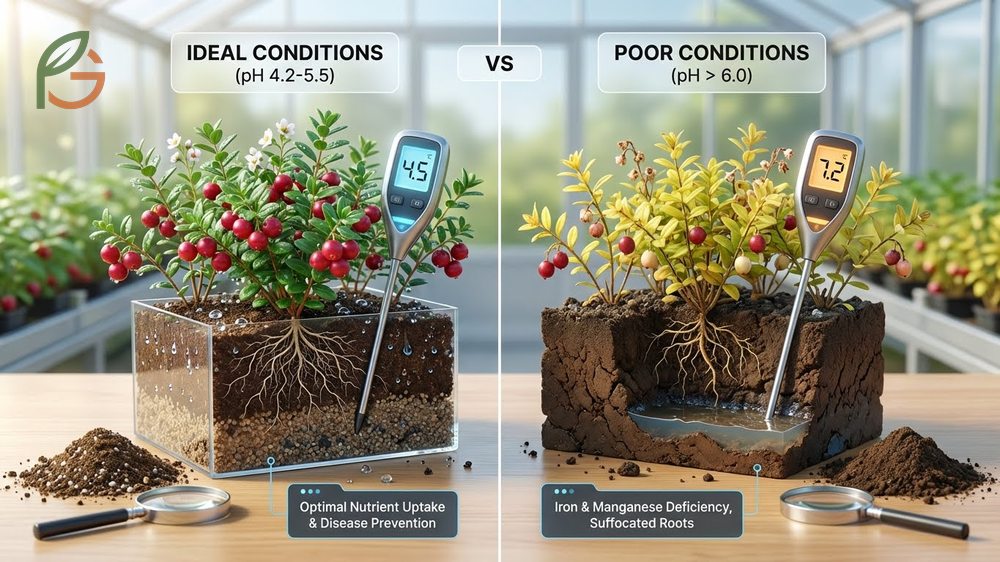
The pH requirement of 4.2-5.5[1] isn’t just a preference—it’s essential for nutrient uptake and disease prevention. At higher pH levels, iron becomes unavailable and plants develop chlorosis (yellowing leaves). Manganese deficiency follows, causing poor growth and reduced flowering.
Texture matters as much as chemistry. Heavy clay soils that drain slowly suffocate roots even with correct pH. Sandy loams or customized peat-sand mixtures provide the aeration cranberry roots need while retaining adequate moisture between waterings.
Organic matter content should stay between 40-60% in cranberry beds. This high percentage comes naturally from peat moss base. As decomposition occurs over years, top-dress beds with additional peat or acidic compost to maintain organic levels.
This table compares four popular cranberry varieties by harvest timing, berry size, growth characteristics, and hardiness zones to help gardeners select appropriate cultivars
| Variety | Harvest Time | Berry Size | Growth Habit | Best Zones |
|---|---|---|---|---|
| Stevens | Mid-season (October) | Large | Vigorous spreader | 3-7 |
| Early Black | Early (September) | Small to medium | Compact growth | 2-6 |
| Ben Lear | Early to mid (Sept-Oct) | Large | Productive, reliable | 3-7 |
| Scarlet Knight | Early (September) | Very large | Disease resistant | 4-7 |
Variety Selection Tip: Choose early varieties like Early Black or Scarlet Knight if you live in zone 5 or colder where early frosts threaten late-season harvests. Stevens works better in milder zones 6-7 with longer fall seasons.
Home Cranberry Garden
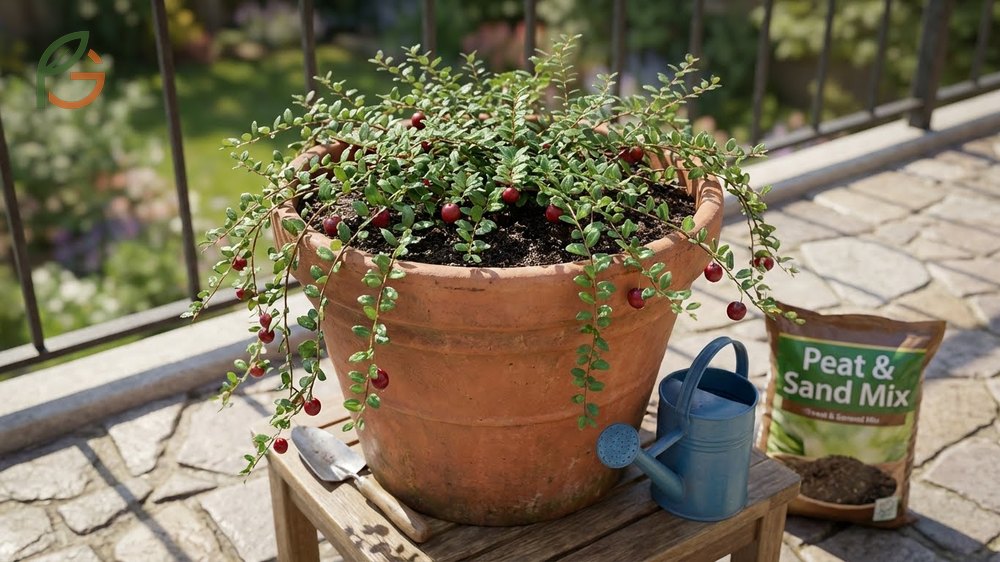
Container growing offers an alternative to in-ground beds, especially for gardeners with alkaline native soil or limited space. Use containers at least 18 inches deep and 24 inches wide to accommodate spreading vines. Drainage holes are critical—without them, roots drown even in properly acidic soil.
Fill containers with the same peat-sand mix used for beds, testing pH before planting. Containers dry faster than ground beds, requiring daily watering checks during summer. The advantage is precise control over soil conditions without extensive ground preparation.
Harvest timing runs from mid-September through mid-November[3] depending on variety and location. Berries start pale green, transition to pink, then deepen to dark red at full ripeness. Wait for this deep color before picking—underripe cranberries taste extremely tart and lack sweetness.
Average yields reach 1-1.5 pounds per plant[4] on mature vines, with exceptional plants producing up to 3 pounds in ideal conditions. Don’t expect significant harvests until year three after planting. Year one focuses on establishment, year two brings a few dozen berries, and year three starts meaningful production.
- Pick berries when they’re firm, glossy, and deep red throughout—test by cutting one open
- Harvest by hand in small batches, handling berries gently to avoid bruising
- Store fresh cranberries in the refrigerator for 3-4 weeks in ventilated containers
- Freeze unwashed berries for up to 12 months by spreading them on trays first, then bagging
- Leave some berries on vines through first frost for sweetest flavor development
Growing Conditions Cranberries
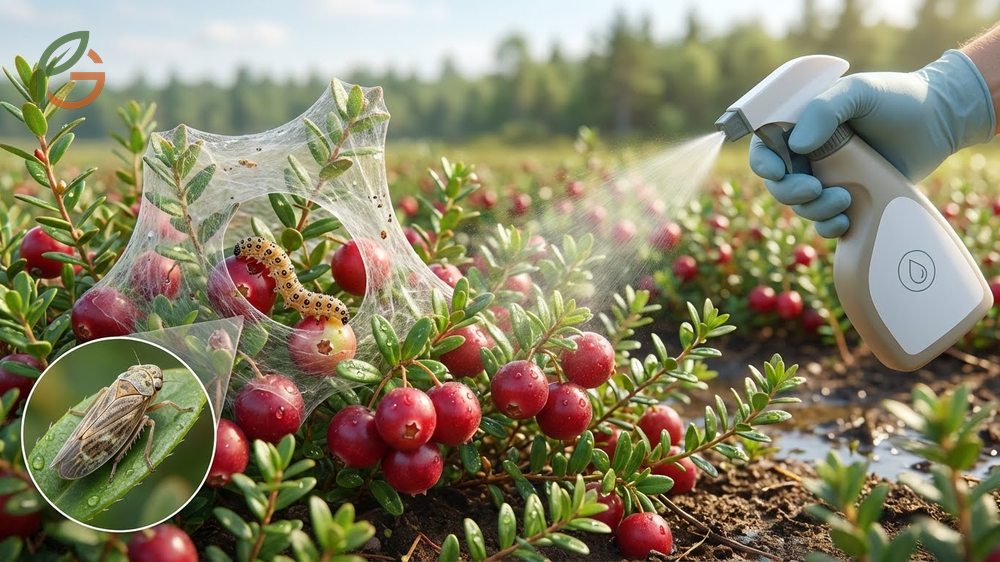
Pest management focuses on preventing false blossom disease, which causes sterile flowers and eliminates fruiting. Blunt-nosed leafhoppers transmit the phytoplasma responsible for this disease[5], making leafhopper control essential. Insecticidal soap applications in early May target nymphs before they mature and spread pathogens.
Spotted fireworms feed on foliage and developing berries during late June through August. These larvae create webbed nests in plant canopies and can reduce yields by 20-30% if left unchecked. Remove weeds like loosestrife and red root where moths prefer laying eggs.
Fungal issues rarely affect well-maintained cranberry patches with proper air circulation and morning watering schedules. If fruit rot appears, improve drainage and reduce nitrogen fertilization, which encourages susceptible soft growth.
Winter protection becomes necessary in zone 4 and colder regions where temperatures drop below -20°F (-29°C). After the ground freezes in late fall, apply 3-4 inches of clean straw over the entire bed. Remove this mulch gradually in early spring as temperatures moderate.
Cold Climate Advantage: Cranberries actually benefit from exposure to frost, which sweetens berries and triggers dormancy for better spring growth. Protect roots but don’t worry about light frosts on foliage during fall harvest season.
Conclusion
The evidence is clear: how to grow cranberries at home succeeds when you prioritize soil acidity, consistent moisture, and appropriate climate selection. These three factors determine 90% of your results—get them right and the rest follows naturally. Current guidance emphasizes starting with small test beds to master pH management before expanding, which saves both money and frustration.
FruitGarden helps home gardeners navigate the specific requirements of specialty fruits like cranberries, translating commercial growing research into practical backyard applications. With proper preparation and the right expectations for timeline, you’ll harvest homegrown cranberries for holiday sauces and fresh eating within three growing seasons.
Frequently Asked Questions
Can you grow cranberries without a bog?
Yes, home gardeners can grow cranberries in raised beds or containers without creating flooded bogs. The key is maintaining consistently moist soil with pH 4.2-5.5 and good drainage. Commercial operations flood bogs primarily for harvesting efficiency, not because cranberries require standing water for growth.
How long does it take for cranberry plants to produce fruit?
Cranberry plants typically begin producing meaningful harvests in their third year after planting. Year one focuses on root establishment with minimal visible growth, year two may produce a few dozen berries, and year three onwards yields increase to 1-1.5 pounds per plant annually as vines mature and spread.
What’s the best time to plant cranberries?
Late spring planting in May works best for cranberries, allowing roots to establish through the growing season before winter dormancy. Fall planting can work in mild climates (zones 6-7) but risks frost damage to young plants. Prepare soil 4-6 weeks before planting to ensure pH has stabilized in the 4.2-5.5 range.
Do cranberries need full sun or shade?
Cranberries perform best in full sun with 6-8 hours of direct light daily, producing the highest yields and deepest berry color. They tolerate partial shade in hot climates above zone 6, but expect 30-40% reduced production. Avoid deep shade locations where flowering and fruiting become minimal.
Why are my cranberry leaves turning yellow?
Yellowing cranberry leaves typically indicate soil pH has risen above 5.5, making iron unavailable to plants—a condition called chlorosis. Test soil pH immediately and apply elemental sulfur to lower it back to the 4.2-5.5 range. Overwatering that drowns roots can also cause yellowing, so check drainage as well.
Can cranberries grow in warm climates?
Cranberries struggle in climates warmer than USDA zone 7 because they require cool summers and winter chill hours. Extended temperatures above 85°F (29°C) stress plants and reduce berry set significantly. Gardeners in zones 8-10 should consider alternative fruits better adapted to warm conditions.
How much water do cranberry plants need?
Cranberry vines need approximately 1 inch of water weekly from rainfall or irrigation, increasing to 1.5 inches during hot, dry periods above 75°F (24°C). Soil should stay consistently moist like a wrung-out sponge but never waterlogged. Morning watering reduces disease risk by allowing foliage to dry before evening.