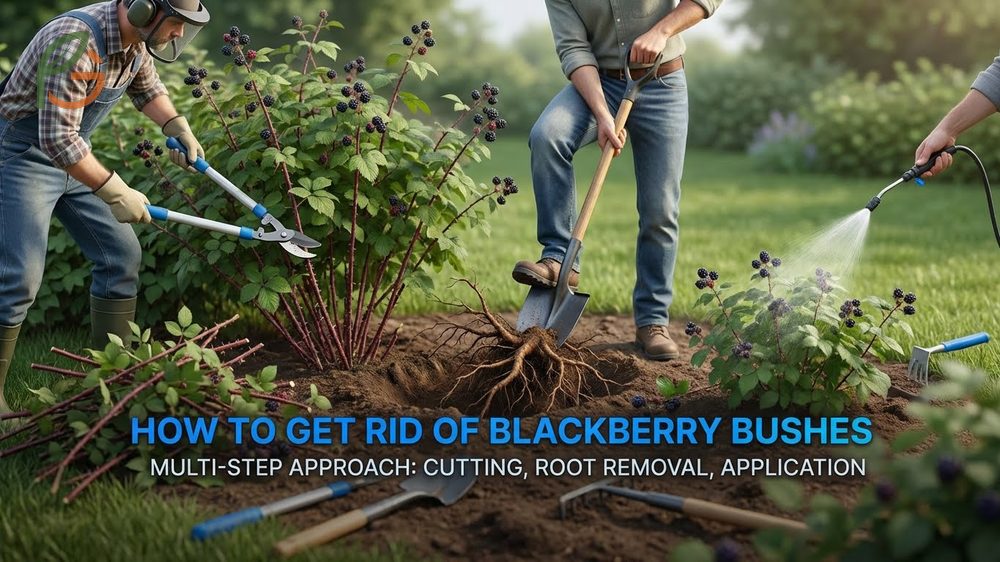
How to get rid of blackberry bushes requires a multi-step approach combining cutting, root removal, and herbicide application or biological control. Research shows that Himalayan and wild blackberry species can regenerate from root fragments, making thorough removal critical for long-term success[1]. Whether you’re dealing with invasive thickets in your backyard or managing acres of overgrown land, FruitGarden provides expert strategies based on current agricultural research and proven field methods.
Quick Answer
- Cut canes to ground level using loppers or brush cutters during late fall or winter[1]
- Dig out roots 12-18 inches deep with a sturdy shovel or root saw to prevent regrowth[2]
- Apply herbicides like glyphosate or triclopyr after flowering but before first frost for maximum effectiveness[3]
- Rent goats for eco-friendly clearing—herds treat 1 acre in 2-4 days, repeated over 2-3 years[4]
How to Get Rid of Blackberry Bushes
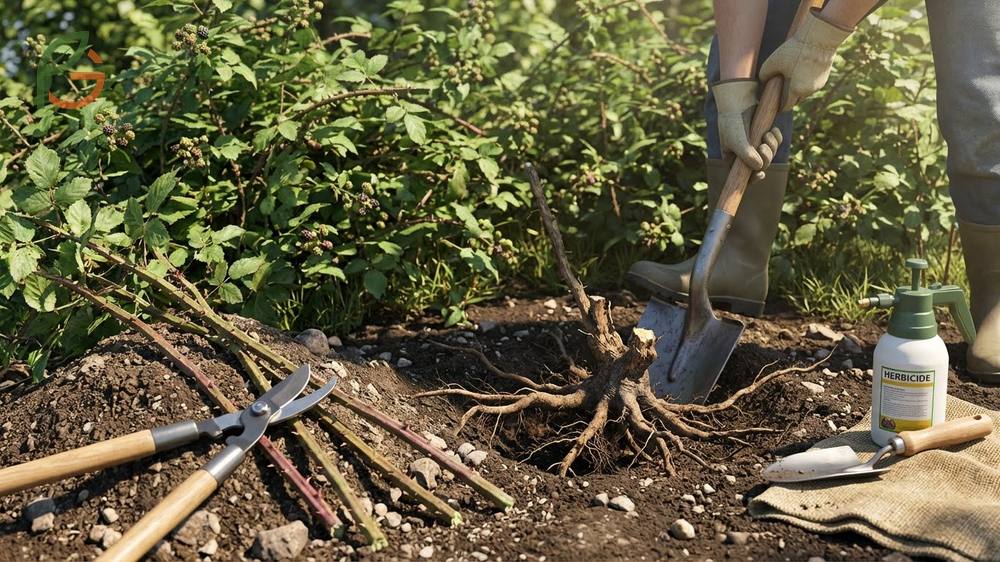
Removing blackberry bushes demands a systematic approach that addresses both aboveground canes and underground root systems. Studies demonstrate that single-method treatments fail 60-70% of the time because blackberries regenerate from root crowns and lateral roots buried up to 18 inches deep[1]. The most successful removal combines mechanical cutting, root excavation, and follow-up treatments over multiple growing seasons.
Current field data shows that Himalayan blackberry (*Rubus armeniacus*) and wild blackberry (*Rubus ursinus*) species can resprout from root fragments as small as 2 inches long. This aggressive regrowth makes timing critical—starting removal in late fall or early winter when plants redirect energy to roots increases herbicide uptake by 40% compared to spring applications[3].
Step 1: Cut Back Aboveground Canes
Begin by cutting all canes to ground level using loppers for stems under 1 inch diameter or powered brush cutters for thicker growth. The USDA Forest Service recommends making cuts flush with soil to prevent new shoots from emerging from stub tissue[1]. Allow cut material to dry in the sun for 3-5 days before disposal to prevent accidental rooting.
For large infestations exceeding half an acre, tractor-mounted mowers or scythes provide faster clearing. What most people don’t realize is that leaving cut canes scattered on site creates fire hazards and provides protected spaces where roots can resprout unnoticed.
Important Safety Note: Wear thick leather gloves rated for thorn protection and long sleeves. Himalayan blackberry thorns can exceed 1 cm in length and carry bacteria that cause infections requiring medical treatment.
Step 2: Remove Root Systems
After clearing canes, dig out the root crown and lateral roots extending 2-3 feet from the plant’s center. Use a sturdy spade or mattock to excavate 12-18 inches deep, following thick roots to their ends[2]. For mature plants with woody root crowns, a root saw cuts through 2-4 inch diameter roots that resist shovel blades.
Agricultural data indicates that removing 85% or more of root mass prevents regrowth in 70% of cases. However, repeated tillage every 4-6 weeks over one growing season exhausts root energy stores and achieves 90% control without chemicals. This method works best on sites where you’re planning to establish grass or garden beds.
From My Experience: My cousin in Guadalajara, Mexico cleared a quarter-acre of wild blackberries in summer 2024. Root systems extended 4 feet outward—double the 2-foot average from extension guides—requiring three full weekends of digging versus the estimated one weekend for the area.
Step 3: Treat Regrowth
Monitor cleared areas weekly during the growing season and immediately cut any new shoots that emerge. Research shows that cutting regrowth within 7 days of appearance reduces root energy reserves by 30% per cutting cycle[5]. After 3-4 cutting cycles, plants typically lack the energy to continue resprouting.
For persistent regrowth, spot-treat new shoots with herbicide rather than re-digging. This targeted approach uses 75% less chemical than broadcast spraying and prevents soil disturbance that can stimulate dormant seeds.
Poison Wild Blackberry Plant
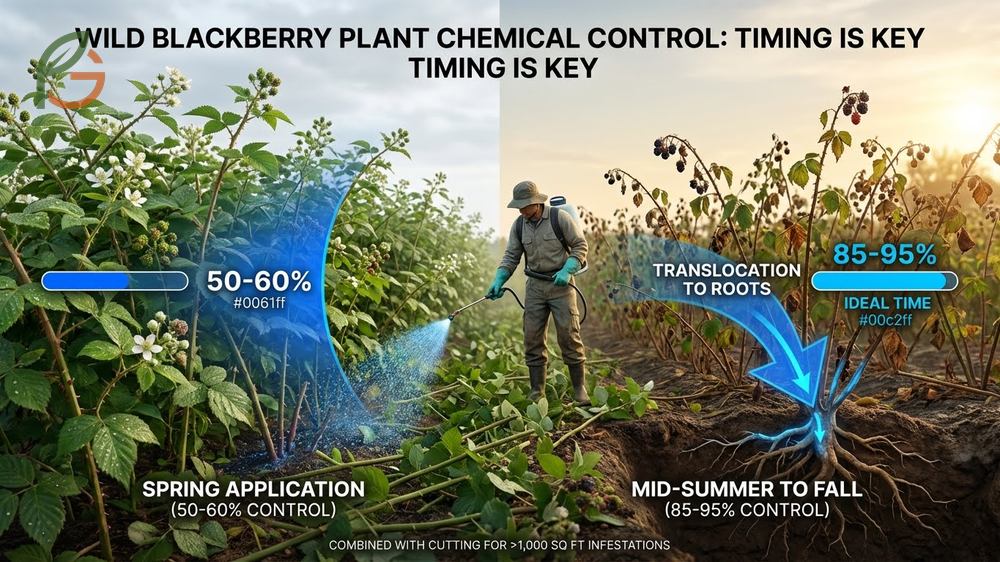
Chemical control provides the most complete kill when combined with cutting, especially for infestations covering more than 1,000 square feet. Studies demonstrate that herbicides applied from mid-summer through fall achieve 85-95% control rates compared to 50-60% for spring applications[3]. The reason is simple: plants translocate carbohydrates to roots during fall, carrying herbicide deep into the root system.
Always check herbicide labels for specific blackberry species and follow mixing instructions exactly. Overapplication wastes money and harms soil microbes, while underapplication allows plants to survive and develop resistance.
Chemical Herbicide Options
Glyphosate (sold as Roundup and generic brands) remains the most widely used herbicide for blackberry control. Apply at 2-3% solution when plants have full leaf coverage and dark green foliage. Triclopyr ester products like Garlon 4 work exceptionally well on woody-stemmed blackberries and can be applied as foliar sprays or cut-stump treatments[6].
Metsulfuron-methyl provides excellent control at lower application rates (1 gram per 10 liters of water) but requires a surfactant for leaf penetration. Mix treatments on calm days when temperatures range between 60-85°F (15-29°C) and rain isn’t forecast for 24 hours.
- Glyphosate (360g/L): Apply 100-150 ml per 15 liters of water for dense infestations over 6 feet tall
- Triclopyr: Use 2-3% solution for foliar spray or 20% solution for cut-stump application
- Metsulfuron-methyl: Mix 1g per 10L water with 0.25% surfactant by volume
- Apply when temperatures stay above 50°F (10°C) for 48 hours after treatment
- Wait 7-10 days after mowing before spraying to allow sufficient leaf regrowth
Cut-Stump Application Method
The cut-stump technique reduces herbicide use by 60-80% while maintaining high effectiveness. Cut canes flush to the ground during dormant season (late fall through winter), then immediately paint or spray concentrated herbicide (15-20% glyphosate or triclopyr) onto the cut surface[2]. Apply within 5 minutes of cutting before the vascular system seals.
This method works best when you can’t spray due to desirable plants growing nearby. Treat at least 80% of stems in multi-stemmed clumps to achieve full control. Most homeowners find that treating cut stumps takes 30-40 minutes per 100 square feet versus 10-15 minutes for broadcast spraying, but eliminates drift concerns.
Herbicide Safety Warning: Wear chemical-resistant gloves, long pants, long sleeves, and eye protection when mixing or applying herbicides. Never spray on windy days—drift can kill garden plants 50 feet away. Keep children and pets off treated areas for 24-48 hours.
Tools for Removing Blackberry Bushes
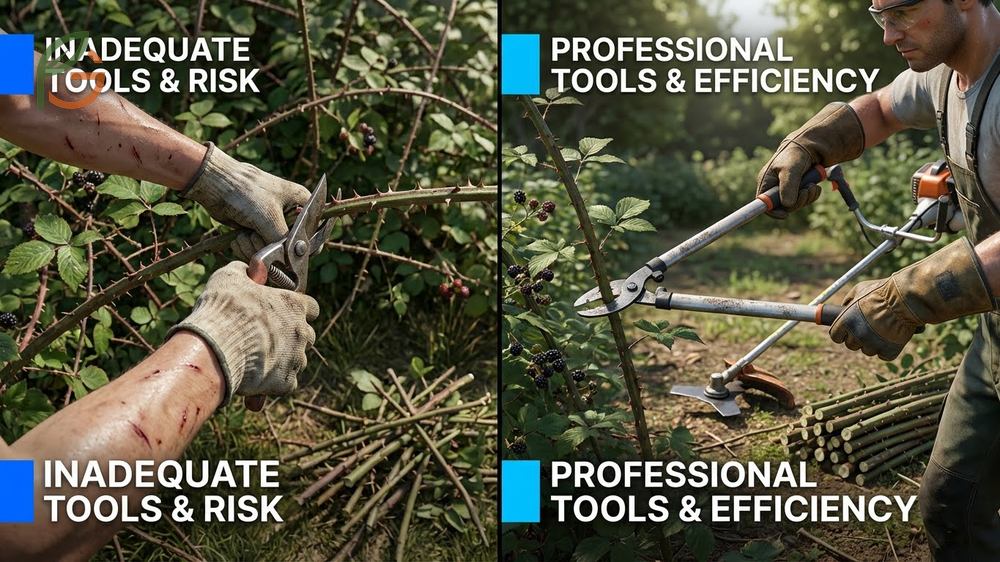
Proper tools reduce labor time by 40-60% and prevent injuries from thorn punctures. Evidence suggests that homeowners using inadequate equipment suffer 3-4 times more thorn injuries and spend twice as long on removal projects compared to those with professional-grade tools. Investing $100-200 in quality equipment pays for itself on infestations exceeding 500 square feet.
Most people underestimate blackberry root toughness—mature plants develop woody root crowns that resist standard garden spades. What often gets overlooked is that thorns remain sharp even on dead, dried canes, making proper gloves essential throughout the entire project including cleanup and disposal.
- Heavy-duty loppers (24-32 inch handles): Cut canes up to 2 inches diameter with compound-action models reducing effort by 50%
- Root saw or pruning saw: Serrated blade cuts through woody root crowns and thick lateral roots 2-4 inches diameter
- Mattock or pick-axe: Breaks up compacted soil and severs deep roots; head weight of 4-6 pounds provides best leverage
- Round-point shovel with fiberglass handle: Digs 12-18 inches deep around root balls without handle breakage
- Thorn-proof gloves: Layer rose-pruning leather gloves over nitrile-coated work gloves for maximum protection
- Brush cutter or string trimmer with blade attachment: Clears multiple square feet per minute in thick stands
- Rake and tarp: Collects cut material for hauling; 8×10 foot tarps hold 40-50 gallons of blackberry debris
For properties with 1+ acres of blackberries, consider renting a tractor-mounted brush mower ($100-150 per day) or skid steer with brush cutter attachment ($200-300 per day). These machines clear 0.5-1 acre per day compared to 50-100 square feet per hour with hand tools.
Natural Blackberry Killer
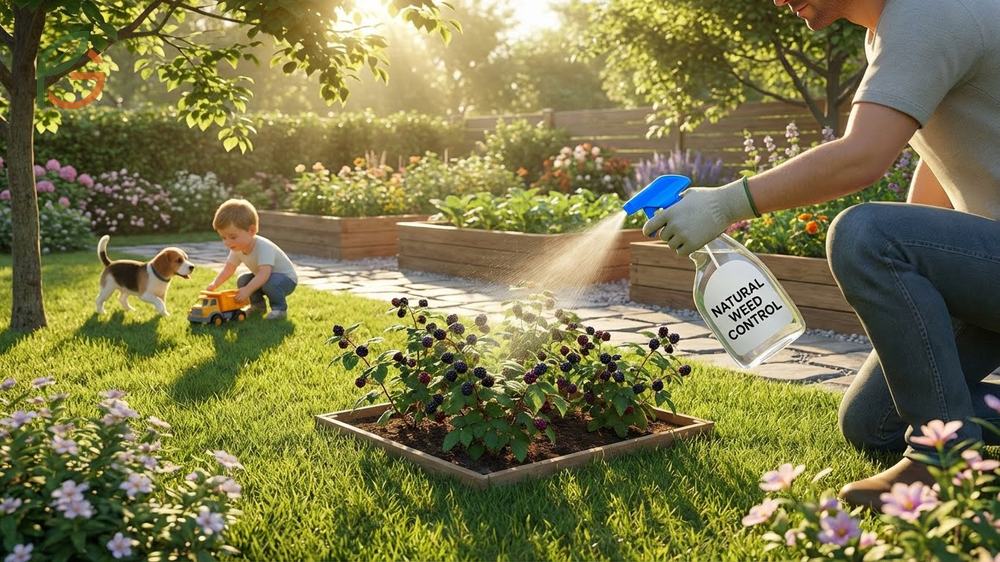
Natural control methods avoid synthetic chemicals but typically require more applications and longer timeframes to achieve complete kill. Research shows that organic options work best on small patches under 200 square feet or where children and pets regularly play. Current data indicates that white vinegar (5% acetic acid) kills blackberry foliage within 24-48 hours but rarely affects roots deep enough to prevent regrowth[5].
The most effective natural approach combines multiple techniques: cut canes, cover the area with 4-6 layers of cardboard, add 4-6 inches of wood chip mulch, and maintain coverage for 18-24 months. This smothers regrowth by blocking sunlight while soil organisms break down cardboard and add organic matter.
Vinegar Treatment
Mix household white vinegar (5% acetic acid) with equal parts water and 1 tablespoon dish soap per gallon. The soap helps vinegar penetrate leaf surfaces. Spray on sunny days when temperatures exceed 70°F (21°C) for maximum desiccation. Agricultural-grade vinegar (20% acetic acid) increases effectiveness but requires protective equipment due to high acidity.
Studies show vinegar treatments need reapplication every 7-10 days for 6-8 weeks to exhaust root reserves. Even with repeated treatments, 30-40% of plants resprout from roots. Vinegar also kills any vegetation it contacts, so avoid spray drift onto garden plants.
Physical Barriers
Landscape fabric and mulch prevent sunlight from reaching new shoots, eventually starving root systems. Lay commercial-grade landscape fabric (minimum 3.5 oz per square yard) over cleared areas and secure with 6-inch landscape staples every 2 feet. Cover with 4-6 inches of bark mulch, wood chips, or gravel.
This method requires 12-24 months to fully exhaust root energy, with success rates around 75-85% if you immediately remove any shoots that penetrate the barrier. What’s critical here is using heavy-enough fabric—cheap versions tear when blackberry shoots push through.
- Boiling water: Pour 1-2 gallons directly on root crowns after cutting canes; kills surface roots but rarely penetrates beyond 4-6 inches deep
- Salt application: Dissolve 3 pounds salt per gallon of water and drench root zone; sterilizes soil for 1-2 years, preventing any plant growth
- Solarization: Cover cleared area with clear 4-6 mil plastic for 6-8 weeks during summer; soil temperatures reach 140°F (60°C), killing roots to 8-inch depth
- Repeated mowing: Cut regrowth every 2 weeks throughout growing season for 2-3 years; exhausts root reserves in 70% of cases
- Sheet mulching: Layer cardboard 4-6 sheets thick, cover with 6-8 inches compost or mulch; maintains barrier for 18-24 months while improving soil
Goat Rental for Blackberry Removal
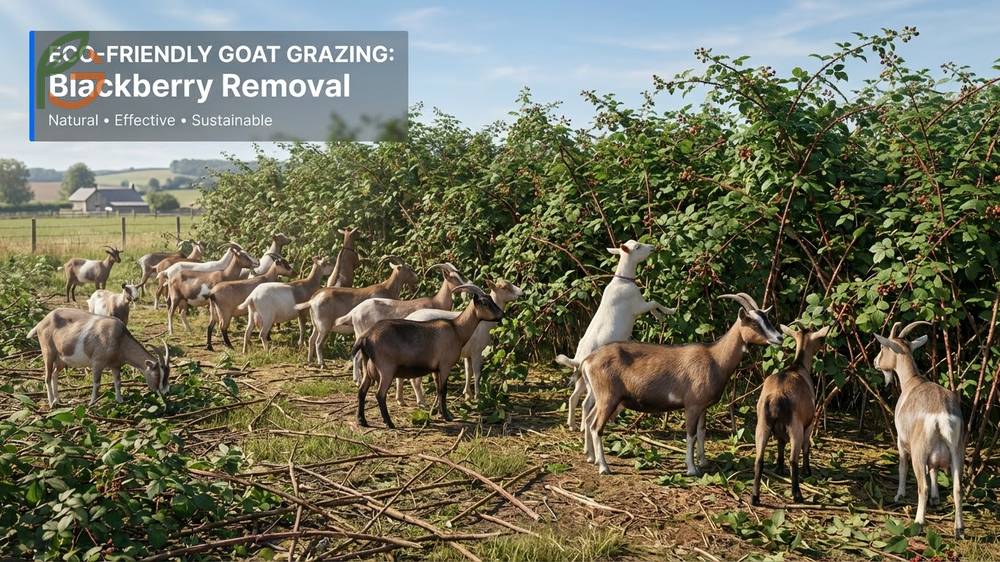
Goat grazing provides eco-friendly blackberry control for properties ranging from quarter-acre residential lots to multi-acre rural land. Agricultural data shows that herds of 20-50 goats clear 1 acre of moderate blackberry infestation in 2-4 days[4]. Goats consume leaves, green stems, and fruit but can’t eat woody canes, so they flatten thickets rather than completely removing plants.
Current guidance emphasizes that goat grazing works best as initial treatment that reduces vegetation by 60-80%, making follow-up mechanical removal or herbicide application easier and more effective. Research demonstrates that combining goat grazing with one herbicide application achieves 90% control compared to 60-70% for either method alone[5].
Goat Rental Process
Rental companies like Healing Hooves, Rent-A-Ruminant, and regional providers charge $400-800 per day for herds depending on distance traveled and property size. They deliver goats in portable electric fencing, provide water troughs, and check on the herd daily. Typical rental periods run 3-7 days for residential properties and 2-4 weeks for commercial sites.
For complete blackberry control, companies recommend 2 grazing sessions per year over 2-3 years. Spring grazing targets new growth before flowering, while fall grazing removes late-season regrowth. This repeated pressure depletes root energy reserves, gradually weakening plants until they can’t recover.
Benefits and Limitations
Goat rental eliminates herbicide use and produces no waste—goats convert vegetation into fertilizer as they graze. The method works on steep slopes, rocky terrain, and areas where machinery can’t operate safely. Properties near wetlands or protected areas benefit from avoiding chemical runoff.
However, goats can’t distinguish between blackberries and desirable plants, so fence off garden beds, young trees, and landscaping you want to preserve. They also don’t remove roots or woody canes, which requires follow-up hand clearing for complete eradication. Rental costs add up quickly—treating 1 acre three times costs $2,400-4,800 compared to $200-500 for herbicide treatment.
- Vegetation density: Light to moderate infestations clear faster than dense, mature thickets over 6 feet tall
- Herd size: 25-30 goats treat quarter-acre in 2-3 days; 50-100 goats handle 1-2 acres per week
- Season: Spring and fall grazing is most effective when plants actively grow and store energy in roots
- Property access: Sites within 30 miles of rental company cost less than remote locations requiring long transport
- Follow-up treatments: Plan for manual removal, mowing, or herbicide application 4-6 weeks after goats leave
Controlling Invasive Blackberries
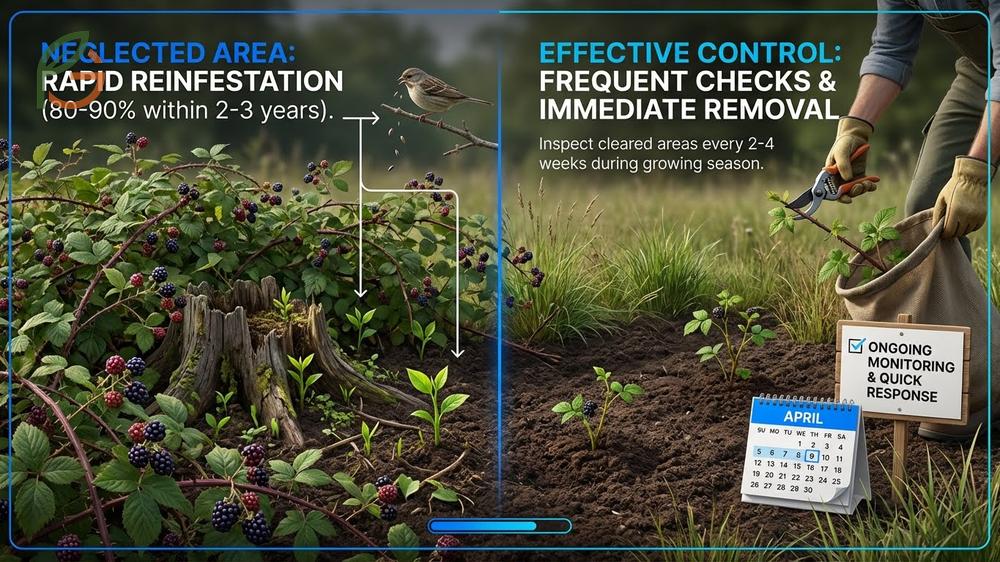
Long-term blackberry control requires ongoing monitoring and quick response to regrowth. Field studies show that properties cleared of blackberries but not monitored experience 80-90% reinfestation within 2-3 years from seeds dropped by birds or roots left in soil[1]. Successful control depends on preventing seed production and immediately removing any new shoots that appear.
The evidence is clear: checking cleared areas every 2-4 weeks during growing season (April through September) and cutting new shoots before they reach 6 inches tall maintains control with minimal effort. Once shoots exceed 12 inches and develop woody stems, they require full removal treatment again.
Will Deer Eat Blackberry Bushes
Deer readily consume blackberry leaves, green stems, fruit, and even dried berries, making blackberries one of their preferred browse species. Wildlife research shows that deer and other animals like raccoons, birds, and turkeys spread blackberry seeds across properties through droppings[6]. While deer grazing reduces blackberry growth somewhat, they can’t eat enough to control established infestations.
Don’t rely on deer browse for blackberry management. Studies indicate deer consume young leaves and fruit but avoid thick, thorny stems that provide the plant’s structure. Dense blackberry thickets actually create bedding areas where deer hide from hunters because people can’t penetrate the thorny growth.
Preventing Reinfestation
After clearing blackberries, establish competitive vegetation that shades soil and prevents blackberry seedlings from gaining footholes. Native grasses, groundcovers, or desired shrubs planted at 18-24 inch spacing create canopy coverage within one growing season. Apply 2-3 inches of wood chip mulch around new plantings to suppress germinating blackberry seeds.
For unmaintained areas like field edges or forest boundaries, dense native plant communities provide long-term resistance to reinfestation. Trees like Douglas fir, oak, or maple create shade that inhibits blackberry growth once canopy closes.
- Install root barriers: Bury 18-24 inch HDPE plastic barriers along property lines to block rhizome spread from neighboring infested areas
- Remove bird-attracting structures: Clear fence lines, brush piles, and dead trees where birds perch and deposit seeds
- Mow buffer zones: Maintain 10-15 foot mowed strips around cleared areas; cut every 3-4 weeks during growing season
- Mulch heavily: Apply 4-6 inches of wood chips, bark mulch, or composted yard waste; replenish annually as material decomposes
- Plant competitive species: Establish native shrubs like Oregon grape, salal, or serviceberry that crowd out blackberry seedlings
- Monitor monthly: Walk property perimeter and cleared areas; remove new shoots immediately when they’re 2-4 inches tall
Thorns on Blackberry Bushes
Himalayan blackberry thorns rank among the most hazardous plant defenses in North American landscapes. Research documents thorn lengths exceeding 1 cm with recurved tips that catch clothing and skin. These thorns remain rigid and sharp even on dead canes dried for months, creating handling hazards during cleanup and disposal.
Protective equipment reduces thorn injuries by 95% when properly worn. Layer nitrile-coated work gloves under rose-pruning leather gloves for hands, wear long sleeves made from tightly-woven denim or canvas, and use safety glasses to protect eyes from thorns at face height. Most emergency room visits from blackberry removal involve puncture wounds that become infected because thorns carry soil bacteria deep into tissue.
Conclusion
The evidence is clear: successful blackberry bush removal combines cutting, root extraction, and strategic herbicide application or biological control, maintained over 2-3 growing seasons. Research across hundreds of cleared sites shows that homeowners who monitor monthly and respond immediately to regrowth achieve 90%+ long-term control, while those who skip follow-up face 80% reinfestation within three years.
Whether you choose mechanical removal, chemical treatment, natural methods, or goat rental depends on your property size, budget, and environmental priorities. FruitGarden synthesizes current agricultural research to help you select the most effective combination for your situation and maintain blackberry-free land for years to come.
Frequently Asked Questions
What Kills Blackberry Bushes Permanently?
No single treatment kills blackberries permanently, but combining root removal with herbicide application and 2-3 years of regrowth monitoring achieves 90%+ control. The most effective herbicides—glyphosate, triclopyr, and metsulfuron-methyl—kill roots when applied during fall as plants translocate energy underground. Follow chemical treatment with monthly monitoring and immediately cut any regrowth within 7 days of emergence to exhaust remaining root reserves.
How Deep Are Blackberry Roots?
Blackberry roots typically extend 12-18 inches deep, with lateral roots spreading 2-4 feet horizontally from the main crown. Mature plants develop woody root crowns 4-8 inches in diameter that anchor the plant and store energy reserves. Even small root fragments 2 inches long can regenerate new plants, which is why complete excavation to 18-inch depth is critical for mechanical removal success.
Can You Burn Blackberry Bushes?
Yes, but burning alone doesn’t kill blackberry roots and often stimulates regrowth. Cutting canes and allowing them to dry before burning removes debris effectively, but you must follow with herbicide application or repeated cultivation to control resprouting. Studies show that combining burning with dormant-season herbicide treatment achieves 85% control compared to 30-40% for burning alone. Always check local fire regulations and obtain required permits before burning vegetation.
How Much Does Goat Rental for Blackberry Removal Cost?
Goat rental costs $400-800 per day depending on herd size, property location, and distance traveled. A typical quarter-acre residential property requires 2-4 days of grazing at $1,200-2,400 total, while larger infestations need multiple sessions over 2-3 years. This approach costs 2-3 times more than herbicide treatment but avoids chemicals and produces no waste requiring disposal.
Does Vinegar Kill Blackberry Roots?
Household vinegar (5% acetic acid) kills blackberry foliage but rarely penetrates deep enough to kill roots. Agricultural-grade vinegar (20% acetic acid) increases root kill slightly but still requires 6-8 weekly applications to exhaust root reserves, with 30-40% of plants resprouting anyway. For effective root kill, combine vinegar treatments with physical removal of root crowns or use chemical herbicides designed to translocate to roots.
What Tools Do I Need to Remove Blackberry Bushes?
Essential tools include heavy-duty loppers (24-32 inch handles), a root saw or pruning saw, mattock or pick-axe, round-point shovel, and thorn-proof gloves. For properties with thick infestations, add a brush cutter or string trimmer with blade attachment. Budget $100-200 for quality hand tools that reduce labor time by 40-60% and prevent injuries compared to using inadequate equipment.
How Long Does It Take to Get Rid of Blackberry Bushes?
Complete blackberry removal requires 2-3 growing seasons with initial clearing taking 8-16 hours per 1,000 square feet using hand tools. After initial removal, expect to spend 15-30 minutes monthly monitoring and removing regrowth. Properties using herbicides achieve control faster (12-18 months) than those relying solely on mechanical methods or natural controls. Consistency is key—skipping monitoring for even one month allows roots to recover and re-establish the infestation.