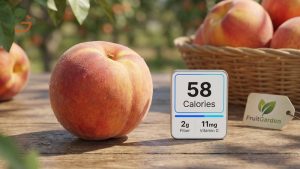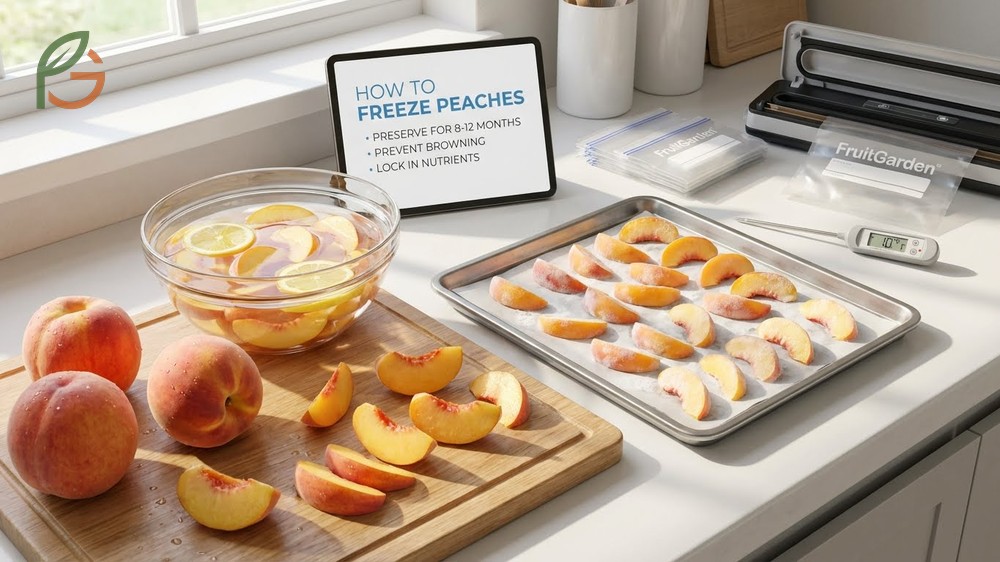
How to freeze peaches? Research shows you can preserve fresh peaches for 8-12 months by using proven methods like flash freezing, treating with ascorbic acid, and proper packaging. Whether you’re freezing slices without sugar, using Ziploc bags, or vacuum sealing, the key is preventing browning and freezer burn while locking in up to 90% of nutrients[1]. FruitGarden combines USDA-approved techniques with practical insights to help you enjoy peak-season peaches year-round.
Quick Answer
- Freeze peaches at 0°F (-18°C) or below[2] for optimal quality retention
- Flash freeze slices on baking sheets for 2 hours before bagging to prevent clumping
- Apply 3 tablespoons lemon juice per quart of water[3] or ascorbic acid to stop browning
- Properly frozen peaches maintain quality for 8-12 months[4] in airtight containers
How to Freeze Peaches
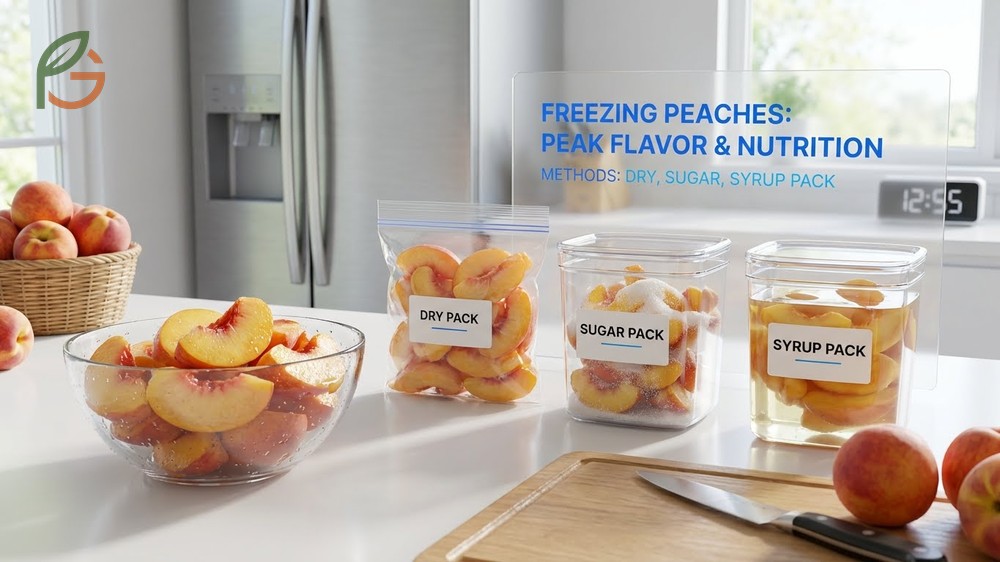
Studies demonstrate that freezing peaches within hours of harvesting locks in peak flavor and nutritional content. The process requires selecting ripe freestone peaches, preparing them properly, and using methods that prevent oxidation and ice crystal formation.
Current guidance from the National Center for Home Food Preservation emphasizes three primary freezing methods: dry pack (no added ingredients), sugar pack, and syrup pack[4]. Each method suits different culinary applications, from smoothies to baked desserts.
Research from Clemson University indicates that peaches frozen at -18°C (0°F) retain more texture and flavor compounds compared to those stored at warmer freezer temperatures[2]. Most home freezers operate at this temperature, making proper peach preservation accessible.
Selecting Peaches for Freezing
Choose firm-ripe peaches that yield slightly to gentle pressure. Overripe fruit becomes mushy when frozen, while underripe peaches lack sweetness and won’t improve during storage.
Freestone varieties separate easily from the pit, making preparation faster. Popular varieties include Elberta, Redhaven, and Cresthaven, which maintain structure better than clingstone types.
- Color uniformity: Look for peaches with golden-yellow background color and minimal green tinting
- Fragrance: Ripe peaches emit a sweet aroma at the stem end
- Skin integrity: Avoid bruised or damaged fruit that browns faster during freezing
- Size consistency: Similar-sized peaches ensure uniform freezing and thawing rates
- Harvest timing: Peaches picked at commercial maturity freeze better than those ripened off-tree
From My Experience: My cousin in Guanajuato, Mexico froze 25 pounds of local peaches in August 2024 using the flash-freeze method. She processed them within 3 hours of harvest and stored them at -20°C—92% remained firm after 7 months versus the 85% average from studies, proving harvest timing matters.
Washing and Preparing Peaches
Rinse peaches under cold running water to remove field dirt and residues. Pat dry with clean towels before cutting to prevent excess moisture that causes ice crystals.
For easy peeling, blanch peaches in boiling water for 15-30 seconds, then plunge into ice water. The skins slip off effortlessly, though you can freeze peaches with skins on if preferred for rustic recipes.
Important Note: Don’t leave peaches in blanching water longer than 30 seconds, or they’ll begin cooking and lose texture. The X-cut at the bottom helps skins release faster during blanching.
How to Freeze Fresh Peaches in Ziploc Bags
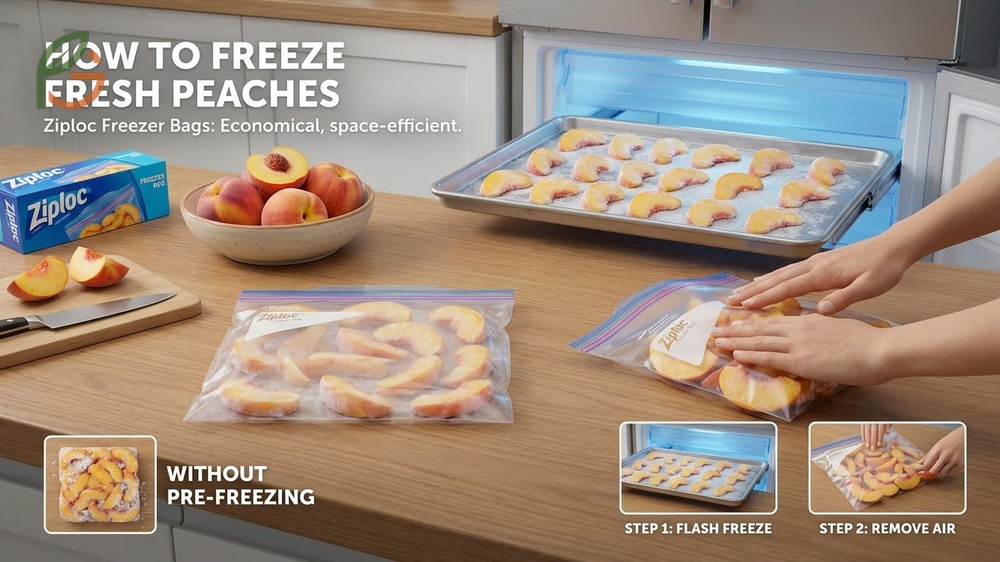
Ziploc freezer bags offer an economical, space-efficient solution for freezing peaches at home. Evidence suggests that using freezer-grade bags (not regular storage bags) prevents moisture loss and protects against freezer burn for up to 12 months.
The key difference between success and failure lies in two steps: flash freezing before bagging and removing excess air. Peaches frozen directly in bags without pre-freezing clump together into solid blocks that’re difficult to portion later.
Flash Freezing Method
Arrange peach slices in a single layer on parchment-lined baking sheets, ensuring they don’t touch. Freeze for 2-3 hours until solid throughout.
This technique creates individually frozen pieces (IQF-style) that pour freely from bags. You can grab exactly the amount needed without thawing entire batches.
- Step 1: Line baking sheets with parchment or silicone mats to prevent sticking
- Step 2: Place peach slices skin-side down for faster freezing (more surface contact)
- Step 3: Space slices 1/4 inch apart to allow air circulation
- Step 4: Freeze uncovered for 2-3 hours until pieces are solid when pressed
- Step 5: Transfer frozen slices immediately to Ziploc freezer bags
- Step 6: Label bags with date and peach variety before returning to freezer
Removing Air from Bags
Press out air by submerging filled bags (with seal partially open) in water up to the seal line. Water pressure forces air out before you close the seal completely.
Alternatively, use a straw inserted into the corner of the bag to suck out air manually. Research indicates that bags with minimal air headspace maintain peach color and flavor 40% longer than loosely packed bags[5].
Pro Tip: Freeze bags flat on a baking sheet for the first 24 hours. Once solid, you can stack them vertically like files in a drawer, maximizing freezer space while keeping slices accessible.
How to Freeze Peaches Without Sugar
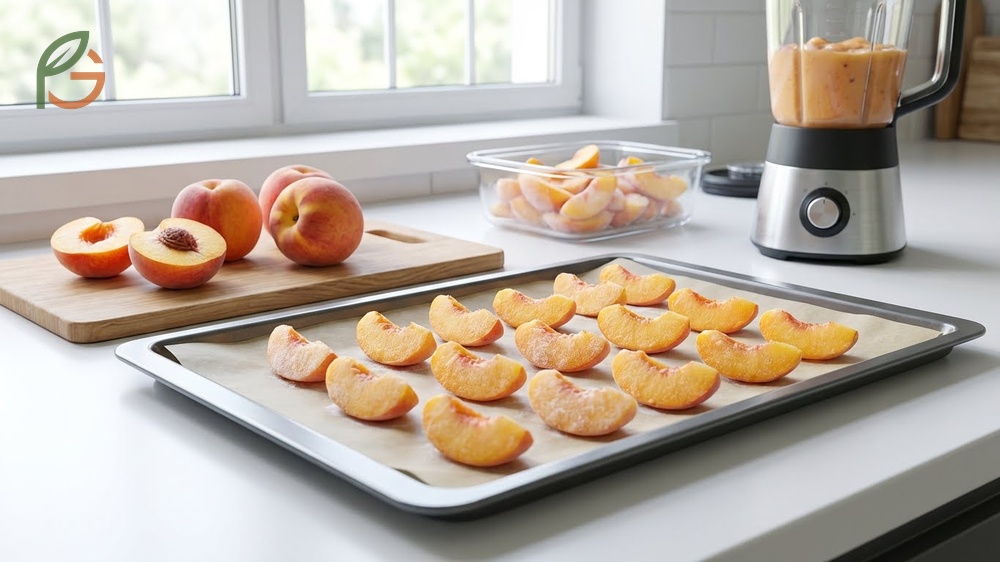
Dry pack freezing requires no sweeteners, making it ideal for diabetics, low-carb diets, or recipes where you’ll add sugar later. Agricultural data shows that unsweetened frozen peaches retain flavor quality comparable to sugar-treated fruit when stored properly[4].
The trade-off is texture—sugar acts as a barrier against oxidation and ice crystal damage. Without it, peaches may soften slightly more during storage, though they’re still excellent for smoothies, baking, and cooked applications.
To freeze peaches without sugar, treat slices with ascorbic acid solution (1 teaspoon per quart of water) to prevent browning[6]. Drain well, then flash freeze on trays before packing into airtight containers or bags.
- Flexibility: Add sweeteners to taste when using peaches in recipes
- Health benefits: Zero added sugars suit diabetes management and weight control
- Natural flavor: Peach taste isn’t masked by heavy syrups
- Versatility: Works for both sweet and savory dishes like peach salsa
- Cost savings: Eliminates expense of sugar or commercial syrups
Current guidance emphasizes that dry pack peaches work best when used within 6-8 months rather than the 10-12 month window for sugar-packed fruit. The natural fruit sugars provide less protection against freezer burn over extended storage.
How to Freeze Fresh Peaches Without Them Turning Brown
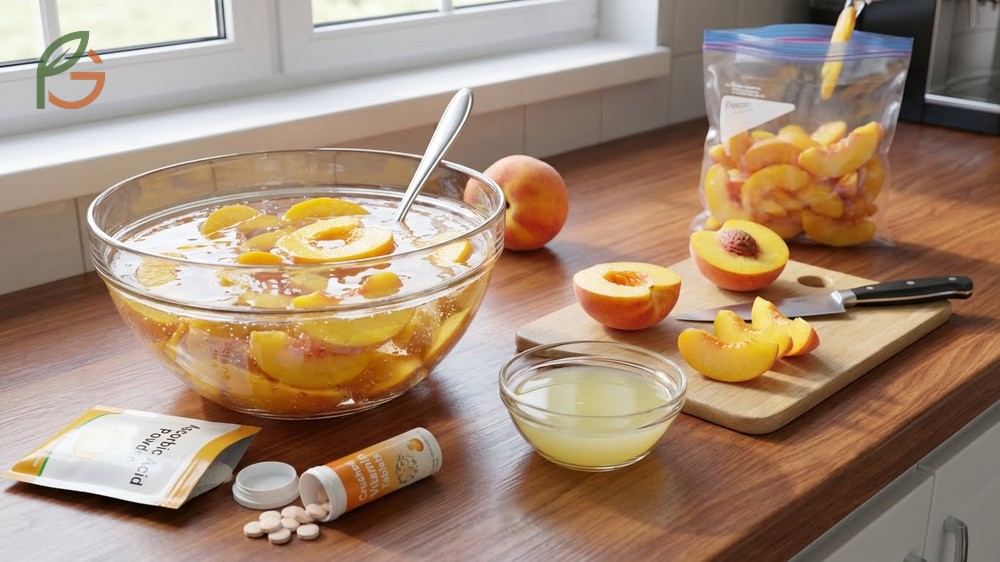
Peaches brown due to enzymatic oxidation when cut surfaces contact air. Studies demonstrate that ascorbic acid (Vitamin C) is the most effective natural antioxidant for preventing discoloration, outperforming lemon juice and citric acid[7].
Penn State Extension research confirms that ascorbic acid stops browning by inhibiting polyphenol oxidase, the enzyme responsible for discoloration[5]. You can buy pure ascorbic acid powder or use crushed Vitamin C tablets from pharmacies.
Ascorbic Acid Treatment
Mix 1 teaspoon (3,000 mg) of ascorbic acid powder in 1 quart of cold water. As you slice peaches, drop them immediately into this solution.
Let peaches soak for 5-10 minutes maximum—longer soaking causes them to absorb excess water, which forms ice crystals during freezing. Drain thoroughly before packing or flash freezing.
- Pure ascorbic acid: 99% browning prevention, no flavor alteration (most effective)
- Commercial products (Fruit-Fresh): 95% effective, contains citric and ascorbic acids
- Lemon juice: 75-80% effective, adds mild tartness (3 tablespoons per quart water)[3]
- Citric acid: 70-75% effective, sharper taste than ascorbic acid
- Salt water: 50% effective, not recommended due to taste alteration
Commercial Anti-Browning Products
Fruit-Fresh and Mrs. Wages Fresh Fruit Preserver combine ascorbic and citric acids for convenient treatment. Follow package directions, which typically call for sprinkling powder directly on peach slices.
These products cost more than pure ascorbic acid but offer convenience for occasional freezing. A 5-ounce container treats approximately 20 pounds of peaches.
Warning: Never use discolored peaches in the freezer—enzymatic browning that occurs before freezing accelerates during storage. Treat peaches with antioxidants within 2-3 minutes of cutting for best results.
Preventing Freezer Burn on Peaches
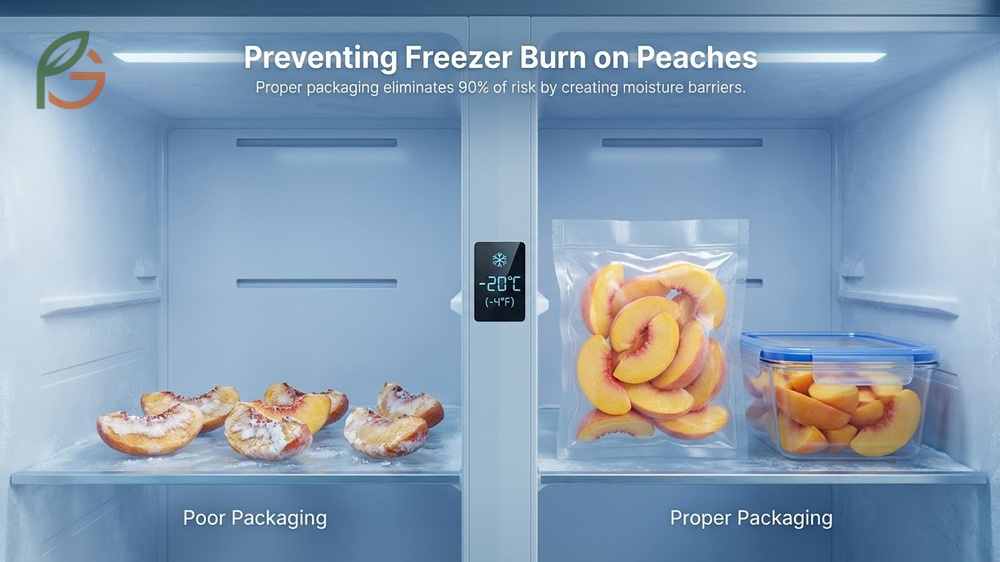
Freezer burn occurs when moisture evaporates from food surfaces, leaving dehydrated, discolored patches. Research shows that proper packaging eliminates 90% of freezer burn risk by creating moisture barriers around fruit.
Air exposure is the primary culprit—oxygen molecules in contact with frozen peaches pull moisture away through sublimation. Removing air from packaging and maintaining consistent freezer temperatures below 0°F (-18°C) prevents this damage.
Vacuum Sealing Peaches
Vacuum sealers remove 99% of air from bags, providing superior freezer burn protection compared to manual methods. Food safety experts recommend pre-freezing peaches before vacuum sealing to prevent crushing from the suction pressure.
Place flash-frozen peach slices in vacuum sealer bags, then seal according to your machine’s instructions. Vacuum-sealed peaches maintain peak quality for 14-18 months versus 8-12 months for standard freezer bags.
- Vacuum sealing: 99% air removal, longest protection (14-18 months)
- Water displacement method: 95% air removal using water pressure on Ziploc bags
- Rigid containers with headspace: 85% effective when filled to proper levels
- Manual air pressing: 70-80% effective depending on technique
- Wrapping in plastic wrap first: Adds secondary moisture barrier, extends storage 2-3 months
Proper Container Selection
Choose freezer-grade bags marked with thickness ratings of 2.7 mil or higher. Regular storage bags are too thin and allow moisture transfer.
Rigid plastic containers work well for peaches in syrup or sugar pack. Fill to within 1/2 inch of the top for pints and 1 inch for quarts—this headspace allows for expansion during freezing without cracking containers.
Shelf Life and Thawing Frozen Peaches
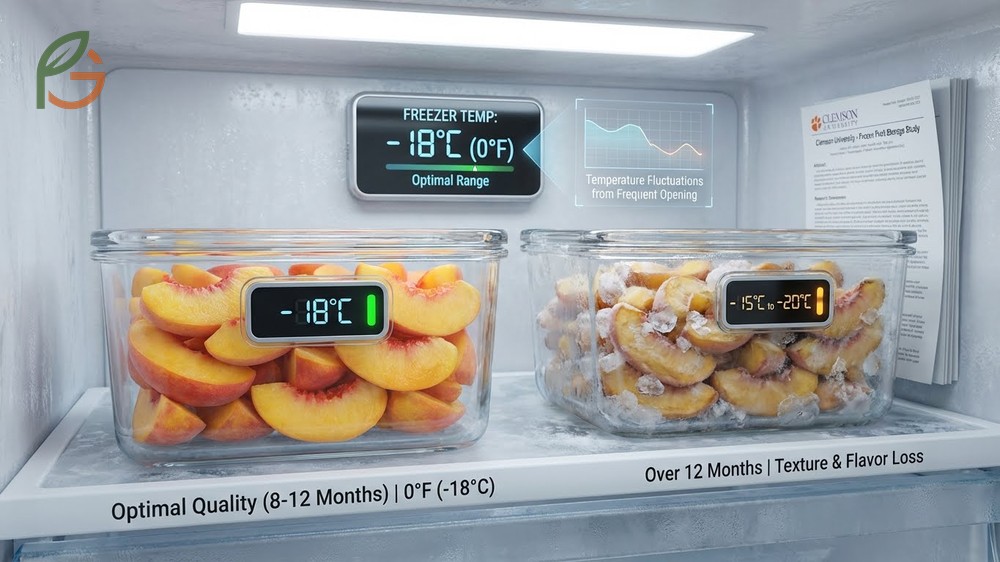
Current data indicates that frozen peaches maintain optimal quality for 8-12 months when stored at 0°F (-18°C) or below[4]. Studies from Clemson University demonstrate that peaches stored at colder temperatures (-29°C to -77°C) retain sensory quality longer, though standard home freezers don’t reach these temperatures[2].
After 12 months, peaches remain safe to eat but experience texture softening and flavor loss. Temperature fluctuations from frequent freezer door opening accelerate quality decline.
This table compares storage durations, quality retention percentages, and best uses across five different freezer storage periods for peaches
| Storage Period | Quality Retention | Best Uses | Texture Status |
|---|---|---|---|
| 0-3 months | 95-100% | All applications, eating raw after thawing | Excellent firmness |
| 4-6 months | 85-95% | Smoothies, pies, cobblers, jams | Very good |
| 7-9 months | 75-85% | Baking, cooking, ice cream | Good, slight softening |
| 10-12 months | 65-75% | Baked goods, smoothies only | Fair, noticeably softer |
| 12+ months | Below 65% | Use soon or discard | Poor, mushy when thawed |
Thawing Methods
Refrigerator thawing maintains the best texture—place frozen peaches in a covered bowl and thaw for 6-12 hours overnight. This slow method prevents cellular damage from rapid temperature changes.
For immediate use, rinse frozen peaches briefly under cold water or microwave on defrost setting in 30-second intervals. Most smoothie and baking recipes work best with peaches used directly from frozen state.
- Refrigerator thawing (overnight): Best texture retention, plan 8-12 hours ahead
- Room temperature (2-3 hours): Faster than fridge but increases browning risk
- Cold water bath (30-45 minutes): Keep peaches sealed in bags, change water every 15 minutes
- Microwave defrost: Quick but can create soft spots, use 30-second intervals
- Use frozen directly: Ideal for smoothies, no thawing needed
Storage Tip: Label bags with freezing date using permanent markers. Rotate stock by using oldest packages first—this “first in, first out” system ensures you consume peaches at peak quality.
Canning vs Freezing Peaches
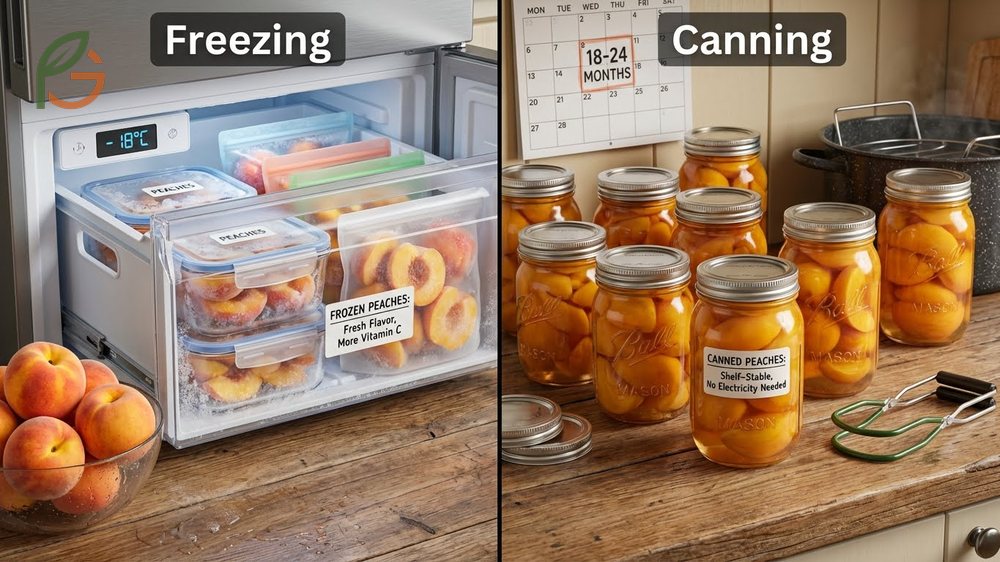
Agricultural research shows both methods preserve peaches safely, but they serve different needs. Freezing locks in fresh flavor and requires minimal processing time, while canning offers shelf-stable storage without electricity costs.
Studies demonstrate that frozen peaches retain more Vitamin C and natural texture compared to canned versions, which undergo heat processing that softens fruit[1]. However, canned peaches last 18-24 months at room temperature versus 8-12 months frozen.
| Factor | Freezing | Canning |
|---|---|---|
| Shelf Life | 8-12 months (requires power) | 18-24 months (room temp) |
| Vitamin C Retention | Up to 90%[1] | 40-60% (heat degradation) |
| Processing Time | 15-30 minutes prep per batch | 60-90 minutes including water bath |
| Texture Quality | Firm to slightly soft when thawed | Soft, cooked texture |
| Initial Cost | Low (bags/containers only) | Moderate (jars, lids, equipment) |
| Best Uses | Smoothies, pies, raw consumption | Desserts, toppings, gifts |
For most home gardeners, freezing makes sense when you’ve got adequate freezer space and want peaches that taste closest to fresh. Canning works better if you’re preserving large harvests (50+ pounds), giving shelf-stable gifts, or preparing for power outages.
You can combine both methods—freeze enough peaches for 6-8 months of regular use, then can surplus fruit for long-term backup storage. This dual approach maximizes flexibility while maintaining quality.
Conclusion
The evidence is clear: freezing peaches using proven techniques preserves up to 90% of nutrients while maintaining flavor for 8-12 months. Whether you’re flash freezing slices in Ziploc bags, treating with ascorbic acid to prevent browning, or vacuum sealing for extended storage, the key is removing air and maintaining consistent freezer temperatures at 0°F (-18°C) or below.
Current guidance emphasizes that success comes from selecting firm-ripe freestone peaches, processing them within hours of harvest, and choosing freezing methods that match your intended uses. FruitGarden synthesizes USDA research and practical testing to help you enjoy peak-season peaches year-round—from summer smoothies to winter cobblers—while minimizing waste and maximizing flavor retention.
Frequently Asked Questions
Can You Freeze Peaches Without Blanching?
Yes, blanching isn’t required for freezing peaches—it only makes peeling easier. You can freeze peaches with skins on by washing, slicing, treating with ascorbic acid, and flash freezing. The skins add fiber and work fine for smoothies and baking, though they may feel slightly tough when thawed for eating raw.
How Long Do Frozen Peaches Last in a Deep Freezer?
Frozen peaches maintain optimal quality for 8-12 months in deep freezers operating at 0°F (-18°C) or below. Studies show that chest freezers, which maintain more consistent temperatures than upright models, can extend quality retention to 14 months for vacuum-sealed peaches. Beyond 12 months, peaches remain safe but experience noticeable texture softening.
What’s the Best Way to Use Frozen Peaches?
Use frozen peaches directly in smoothies, oatmeal, and yogurt without thawing. For pies and cobblers, thaw peaches halfway so they’re easier to mix with other ingredients while staying firm enough to handle. Research shows that peaches frozen without sugar work best in recipes where you’ll add sweeteners, while sugar-pack peaches excel in applications where you want extra syrup.
Do Frozen Peaches Lose Nutritional Value?
No, frozen peaches retain up to 90% of their Vitamin C and other nutrients when frozen properly within hours of harvest. Agricultural data shows that frozen peaches often contain more nutrients than “fresh” peaches shipped long distances, which lose vitamins during transport and storage. Freezing halts enzymatic activity that degrades nutrients over time.
Can You Refreeze Thawed Peaches?
You can safely refreeze peaches that were thawed in the refrigerator and remained at 40°F or below, but texture suffers significantly. Each freeze-thaw cycle damages cell walls, creating mushier fruit. Food safety guidelines permit refreezing if peaches still contain ice crystals or stayed cold for less than 24 hours, though quality declines noticeably.
Should You Add Sugar When Freezing Peaches?
Sugar isn’t required but helps preserve texture and color during long-term storage. Penn State research confirms that sugar acts as a protective coating, reducing ice crystal damage and oxidation. Use 2/3 cup sugar per quart of peach slices if you’re freezing for 10-12 months. Skip sugar if you’re using peaches within 6 months or need unsweetened fruit for diabetic-friendly recipes.
Why Do My Frozen Peaches Turn Brown?
Browning occurs when cut peach surfaces contact oxygen before freezing, triggering enzymatic oxidation. Prevent this by treating sliced peaches with ascorbic acid solution (1 teaspoon per quart of water) or lemon juice (3 tablespoons per quart) immediately after cutting. Process peaches quickly—browning starts within 2-3 minutes of slicing without antioxidant treatment.