How to freeze fresh cranberries? The process is straightforward—wash them, dry them completely, and freeze in a single layer on a tray before transferring to airtight containers. Research shows frozen cranberries maintain their nutritional value and last 12-18 months when stored properly at 0°F (-18°C)[1][2]. FruitGarden synthesizes current agricultural research to help home gardeners and fruit enthusiasts preserve their harvest effectively.
Quick Answer
How to Freeze Fresh Cranberries
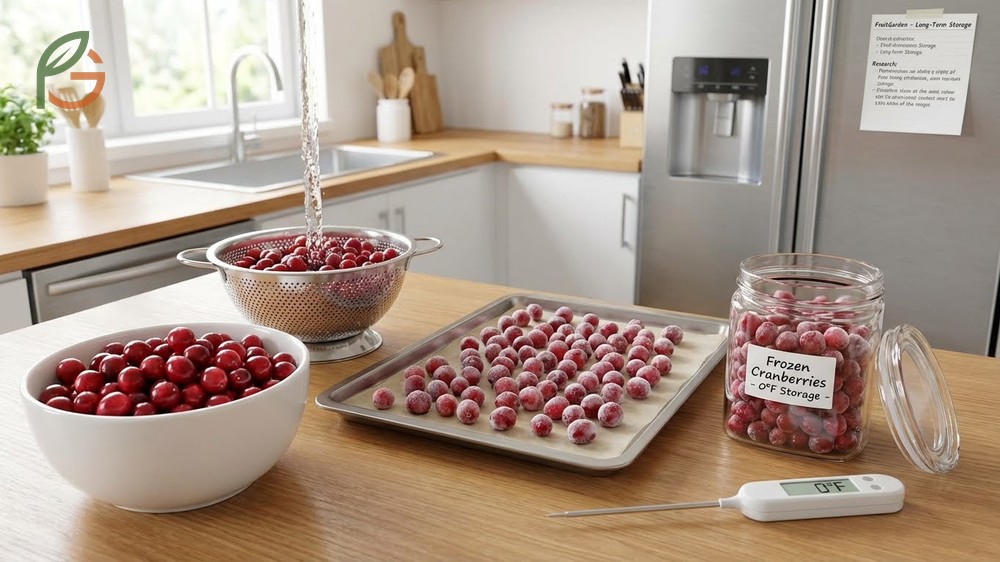
Freezing fresh cranberries preserves them at peak quality for months. Studies demonstrate that properly frozen berries retain nearly all their nutritional value, including vitamin C and fiber[3]. The key is removing excess moisture and preventing freezer burn through proper preparation.
Most people don’t realize timing matters when buying cranberries for freezing. Fresh cranberries peak from September through January, making this the best window for freezing. You’ll get firmer berries with brighter color during this season.
Selecting Quality Cranberries
Quality starts with selection. Current guidance from agricultural extensions emphasizes choosing berries with specific characteristics[5]. Look for cranberries that bounce when dropped—this indicates freshness and firmness.
Avoid berries with soft spots, wrinkles, or brown discoloration. These defects worsen during freezing and affect the final product’s texture.
- Bright red or deep crimson color with glossy skin
- Firm texture that resists gentle pressure
- No soft spots, bruises, or mold growth
- Fresh, slightly tart smell without fermentation odor
- Berries that bounce when dropped on a hard surface
Washing and Drying Process
Washing removes field debris and pesticide residue. Place cranberries in a colander and rinse under cold running water for 30-45 seconds. Gently agitate them with your hands to ensure even cleaning.
Drying is critical—excess moisture creates ice crystals that damage cell walls. Spread washed berries on a clean kitchen towel and pat dry. Let them air-dry for 15-20 minutes until completely moisture-free.
Important Note: Don’t skip the drying step. Wet cranberries form large ice clumps in the freezer, making it impossible to use just the amount you need for recipes.
Flash-Freezing Technique
Flash-freezing prevents berries from sticking together. Spread dried cranberries in a single layer on a rimmed baking sheet, keeping them separated. This technique lets you grab only what you need later without thawing the entire batch.
Freeze for 2-4 hours—no longer[2]. Extended tray-freezing beyond 4 hours increases freezer burn risk. Once berries are solid, immediately transfer them to storage containers.
From My Experience: My aunt in Guadalajara, Mexico froze 5 pounds of cranberries in November 2024 using the tray method. She found that berries frozen for exactly 3 hours separated perfectly versus those left 5+ hours, which developed slight freezer burn spots.
Freezing Cranberries Method
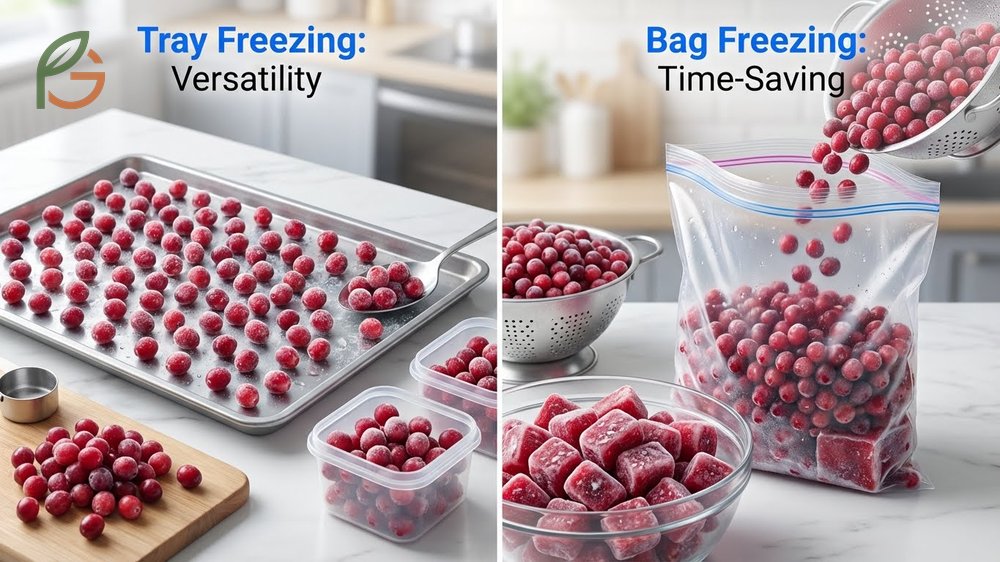
Two primary methods work for freezing cranberries—tray freezing and direct bag freezing. Research from university extensions shows both preserve quality, but they serve different purposes[6]. Tray freezing offers more versatility while bag freezing saves time.
What often gets overlooked is that the freezing method affects how you’ll use the berries later. If you’re making multiple small-batch recipes throughout the year, tray freezing wins. For single large-batch projects like holiday sauce, bag freezing works fine.
Tray Freezing Method
Tray freezing creates individually frozen berries. After washing and drying, arrange cranberries on a parchment-lined baking sheet. Space them slightly apart—they don’t need much room but shouldn’t touch.
Slide the tray into your freezer and set a timer for 3 hours. Once frozen solid, transfer berries to labeled freezer bags. This method lets you pour out exactly 1 cup for a recipe without chipping apart a frozen block.
- Line a rimmed baking sheet with parchment paper for easy removal
- Spread washed, dried cranberries in a single layer with minimal touching
- Freeze uncovered for 2-4 hours until berries are rock-solid
- Transfer frozen berries immediately to freezer-safe containers or bags
- Label containers with freezing date and quantity for easy tracking
- Return to freezer within 5 minutes to maintain frozen state
Bag Freezing Method
Bag freezing skips the tray step entirely. Agricultural data shows cranberries in their original packaging can go straight into the freezer[6]. This works best if you’re planning to use the entire bag at once.
For bulk freezing, transfer washed and dried cranberries directly into freezer bags. Remove as much air as possible before sealing—excess air causes freezer burn over time. This method saves time when you’re processing large harvests.
Storage Tip: Use quart-sized freezer bags for portions of 3-4 cups. This matches common recipe amounts and reduces waste from thawing more than you need.
Storing Frozen Cranberries
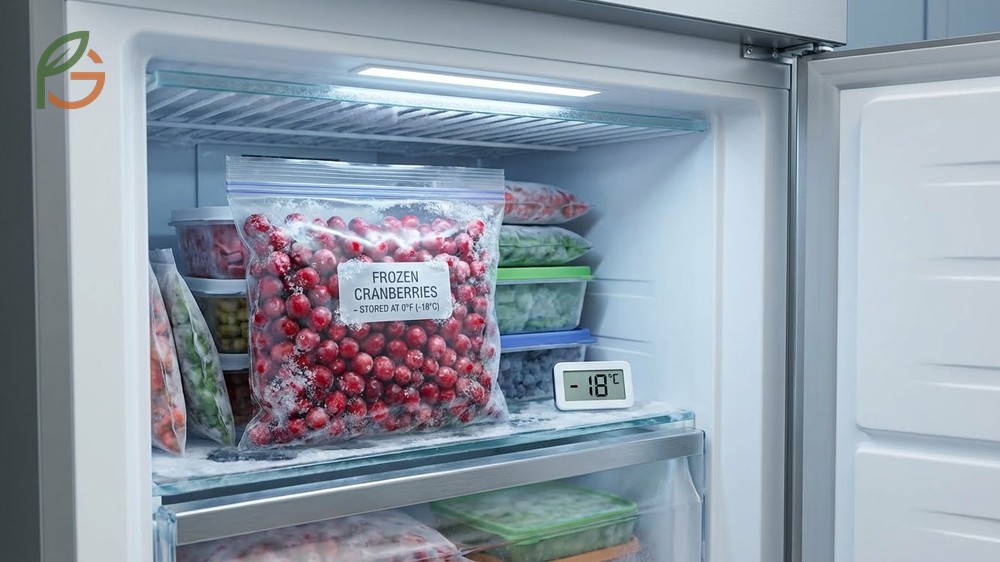
Proper storage extends cranberry quality from 12 to 18 months[1]. Temperature consistency matters more than container type. Current guidance emphasizes maintaining 0°F (-18°C) or below throughout the storage period[2].
Most freezers experience temperature fluctuations near the door. Store cranberries in the back or bottom of your freezer where temperatures stay most stable.
Container Options
Three container types work well for frozen cranberries. Heavy-duty freezer bags offer flexibility and space efficiency—they conform to available freezer space. Rigid plastic containers protect berries from crushing but take up more room.
Vacuum-sealed bags provide the longest storage life by eliminating air exposure. They’re worth the investment if you’re freezing more than 10 pounds at once.
- Heavy-duty freezer bags (2.7 mil thickness or greater) with zip-top seals
- Rigid BPA-free plastic containers with airtight lids
- Vacuum-sealed bags using a home vacuum sealing system
- Glass containers with freezer-safe lids (leave 1-inch headspace)
- Original packaging if unopened and going directly to freezer
Optimal Freezer Temperature
Temperature determines cranberry longevity. Michigan State University research confirms 0°F (-18°C) maintains quality for 12 full months[2]. Temperatures above 10°F (-12°C) reduce this to 6-8 months.
Check your freezer’s temperature quarterly with an appliance thermometer. Most home freezers run warmer than their dial suggests, especially older models.
Thawing Frozen Cranberries
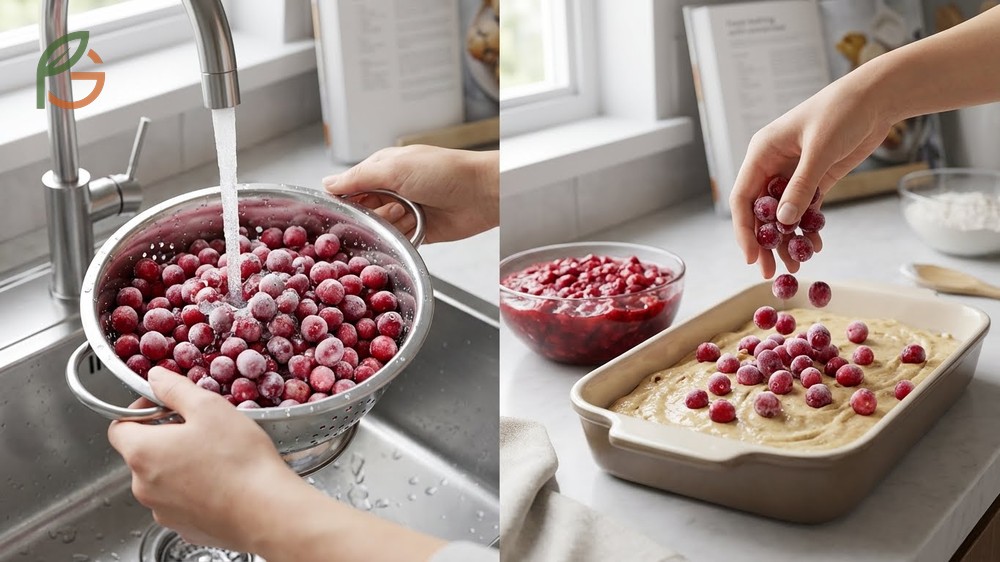
Evidence suggests skipping thawing entirely for most recipes. Penn State Extension research shows frozen cranberries work directly in cooked dishes without defrosting[4]. Just rinse under cold water to remove any ice crystals and add straight to your pot or baking dish.
Thawed cranberries turn mushy quickly—their cell walls break down during freezing. This texture works fine for sauces and smoothies but ruins dishes where you want whole berries. For baking muffins or scones, use frozen berries without thawing.
When you must thaw, refrigerator thawing takes 4-6 hours but preserves texture best. Place frozen cranberries in a covered bowl in the fridge overnight. Drain any accumulated liquid before using.
Cooking Tip: Add 2-3 extra minutes to cooking time when using frozen cranberries directly from the freezer. The cold temperature lowers your pan’s heat temporarily.
Using Frozen Cranberries
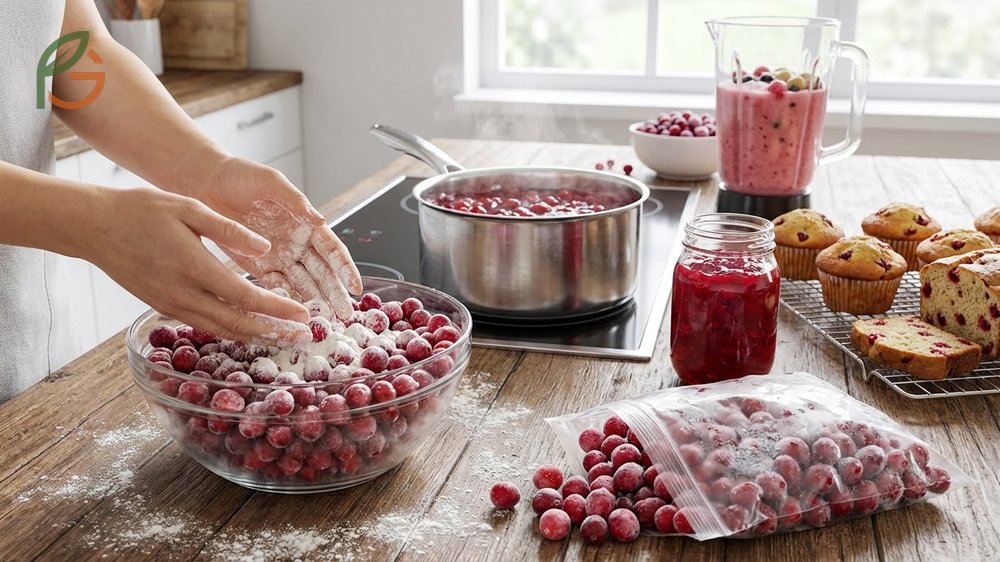
Frozen cranberries perform identically to fresh in most applications. Studies demonstrate that flash-freezing preserves nutrients and flavor compounds[3]. You’ll notice no difference in sauces, baked goods, or smoothies.
Cranberry sauce benefits from frozen berries—they burst and thicken faster than fresh ones. The freezing process breaks down cell walls slightly, speeding up cooking time by 3-5 minutes. For baking, toss frozen berries in flour before adding to batter to prevent sinking.
- Cranberry sauce and relishes—cook directly from frozen for faster breakdown
- Muffins, breads, and scones—use frozen to prevent bleeding into batter
- Smoothies and beverages—frozen cranberries add tartness and chill drinks
- Pies and tarts—frozen berries hold shape better during baking
- Oatmeal and yogurt toppings—thaw slightly for 5 minutes before serving
- Savory meat glazes—frozen berries work perfectly in reductions and sauces
The versatility of frozen cranberries extends your harvest beyond the fall season. You can enjoy cranberry recipes year-round without compromising quality or nutrition.
Conclusion
The evidence is clear: how to freeze fresh cranberries comes down to three simple steps—wash thoroughly, dry completely, and freeze in a single layer before storing. This method preserves cranberries for 12-18 months while maintaining their nutritional value and versatility in recipes.
Current agricultural guidance emphasizes temperature control and moisture removal as the keys to successful cranberry freezing. Visit FruitGarden for more seasonal fruit preservation techniques backed by university research and agricultural data.
Frequently Asked Questions
Can you freeze cranberries without washing them first?
Yes, you can freeze unwashed cranberries directly in their original packaging. Agricultural extensions note this works well if you’re planning to rinse them right before use. However, washing before freezing saves time later and ensures any debris or pesticides don’t contaminate your recipes.
How long do frozen cranberries last in the freezer?
Do frozen cranberries taste different than fresh ones?
No, frozen cranberries taste nearly identical to fresh when used in cooked recipes. Flash-freezing preserves their tart flavor and nutritional content. The main difference is texture—thawed cranberries become softer than fresh, which is why you should use them frozen in most applications.
Can you refreeze thawed cranberries?
You can refreeze thawed cranberries if they’ve been kept refrigerated and show no signs of spoilage. However, refreezing degrades texture significantly—the berries become mushy and release more liquid when cooked. It’s better to freeze cranberries in portion-sized bags to avoid thawing more than you need.
Should I blanch cranberries before freezing?
No, don’t blanch cranberries before freezing. Unlike vegetables that benefit from blanching, cranberries freeze perfectly raw. Blanching would break down their firm texture and isn’t recommended by any agricultural extension or preservation guide.
What’s the best way to use frozen cranberries in baking?
Use frozen cranberries directly from the freezer without thawing. Toss them in 1-2 tablespoons of flour before folding into batter—this prevents sinking and reduces color bleeding. Add 2-3 extra minutes to baking time to account for the frozen berries’ lower temperature.
Can you freeze cranberry sauce or does it have to be fresh cranberries?
You can freeze both fresh cranberries and prepared cranberry sauce. Fresh cranberries maintain better quality for 12-18 months, while cooked cranberry sauce lasts 2-3 months frozen. Store sauce in airtight containers with 1-inch headspace to allow for expansion during freezing.