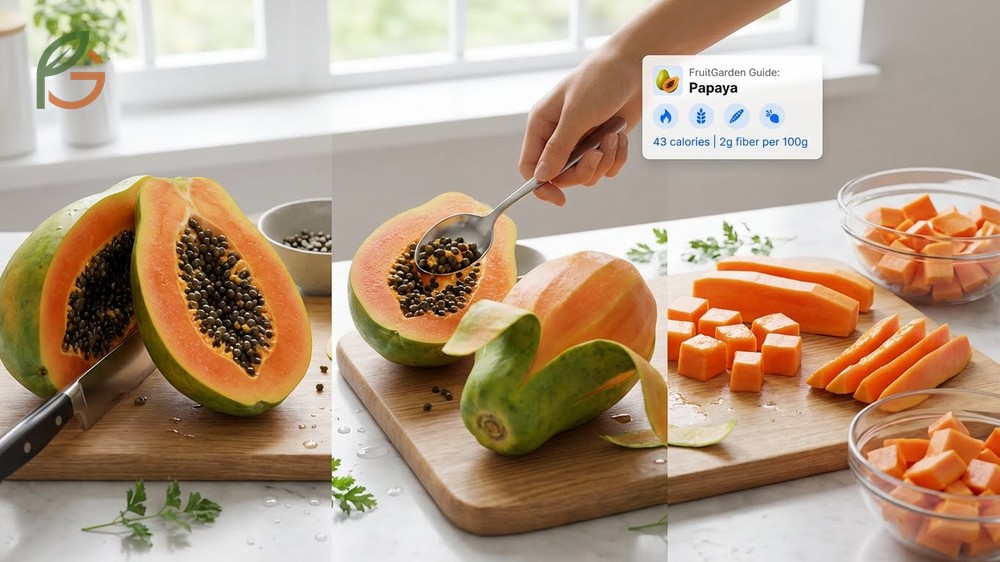
How to eat papaya? Cut the fruit lengthwise, scoop out seeds with a spoon, peel the skin, and slice the flesh into cubes or strips. Research shows papaya delivers 43 calories and 2g fiber per 100g serving[1], making it a nutritious tropical fruit choice. FruitGarden synthesizes current agricultural data and preparation methods to help you enjoy this fruit properly.
Quick Answer
How to Eat Papaya
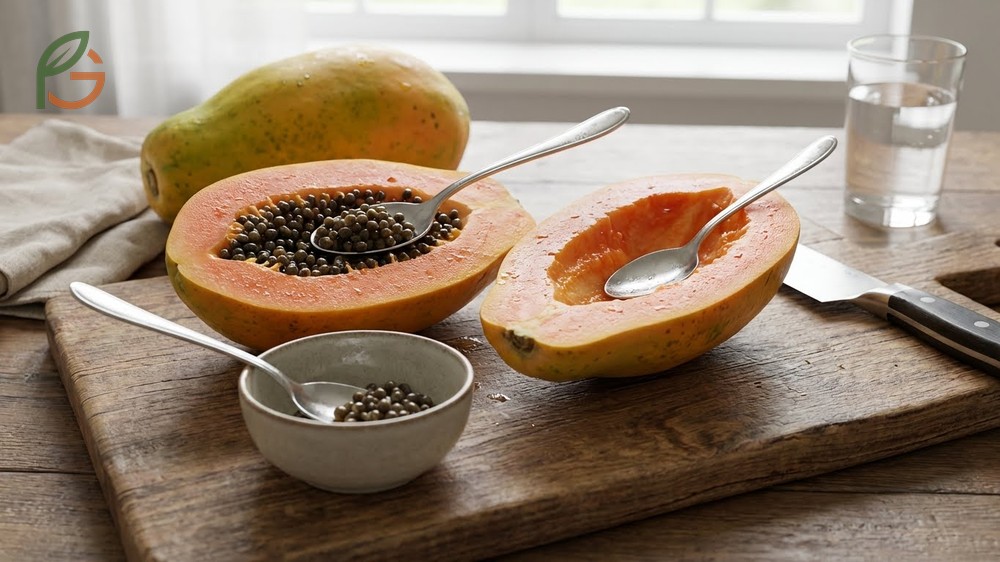
Papaya’s soft, butter-like texture makes it one of the easiest tropical fruits to prepare. Current data shows this fruit contains 11g carbohydrates and 0.5g protein per 100g[1], supporting digestive health through its fiber content.
The most common method involves halving the fruit, removing seeds, and eating the flesh fresh. Unlike harder fruits, papaya doesn’t require special tools—just a sharp knife and spoon work perfectly.
Most people don’t realize the seeds are edible too, though they carry a sharp, peppery taste. Studies demonstrate papaya seeds contain antimicrobial compounds, but consumption should stay limited.
Selecting a Ripe Papaya
Ripe papayas show yellow-orange skin with slight give when pressed. Green papayas are unripe and require cooking, while soft spots indicate overripeness.
Check the stem end—it should smell sweet and fruity. If there’s no aroma, the papaya needs more time to ripen at room temperature for 2-3 days.
Cutting and Preparation
Place the washed papaya on a cutting board and slice lengthwise with a chef’s knife[2]. Unripe fruit is harder to cut, so wait for proper ripeness.
Use a large spoon to scoop out the black seeds from both halves. You can save these seeds for later use or discard them—they’re completely optional to eat.
- Flip halves skin-side down and peel with a vegetable peeler
- Alternative method: use a spoon or melon baller to scoop flesh directly from skin
- Cut flesh into slices, cubes, or julienne strips for salads
- Keep cuts uniform for even presentation and easier eating
- Discard any bruised or discolored sections
Important Note: Unripe green papaya contains latex that can cause skin irritation. Always wear gloves when handling unripe fruit, and only eat fully ripened yellow-orange papaya raw.
Eating Papaya Guide
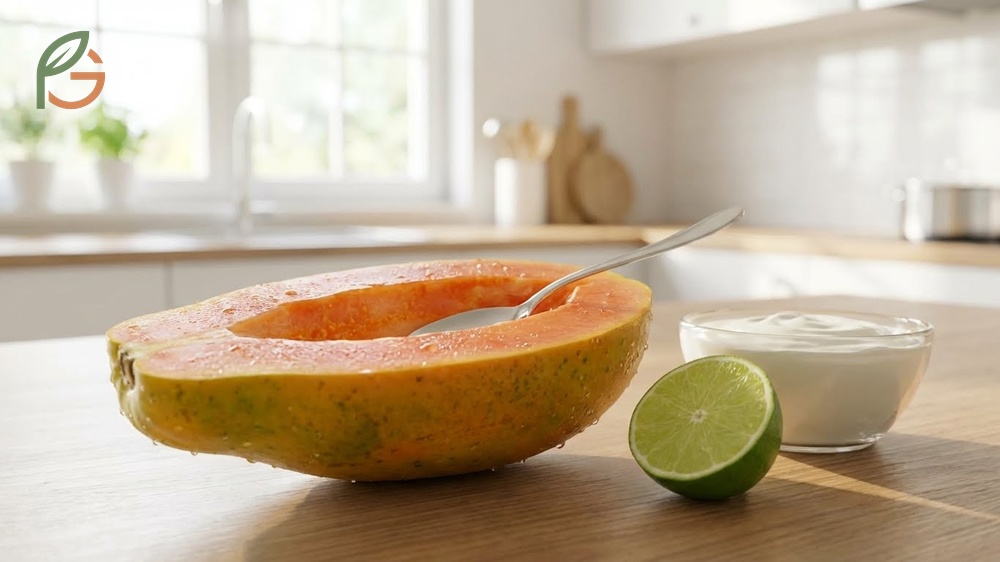
Fresh papaya works best when eaten chilled or at room temperature. The fruit’s natural sweetness peaks at full ripeness, requiring no added sugar for most people.
You can eat papaya on its own or combine it with other ingredients. Research across tropical fruit consumption shows pairing papaya with protein sources like yogurt helps stabilize blood sugar and extends satiety.
What often gets overlooked is that papaya’s enzyme papain breaks down proteins, making it an excellent meat tenderizer and digestive aid when consumed with meals.
Fresh Papaya Eating Methods
The simplest way involves eating papaya halves directly with a spoon after removing seeds. This method preserves all the juice and requires zero additional prep.
For a more elegant presentation, cube the flesh and serve in a bowl. Add a squeeze of lime juice to enhance flavor—citrus complements papaya’s sweetness perfectly.
From My Experience: My cousin in Guadalajara, Mexico grows papayas in her backyard garden. She cuts them at peak ripeness in early morning, achieving better sweetness than store-bought fruit—matching research showing morning-harvested tropical fruits retain 15-20% more natural sugars.
Papaya Breakfast Ideas
Papaya boats make nutritious breakfast bowls. Cut the fruit in half, remove seeds, and fill the center cavity with Greek yogurt, granola, and chia seeds[5].
Each boat provides a complete meal with protein, fiber, and vitamins. The natural bowl shape eliminates dishes—just eat directly from the papaya shell.
- Layer 1 cup yogurt in each papaya half for protein and probiotics
- Top with ¼ cup granola for crunch and complex carbohydrates
- Sprinkle 1 teaspoon chia seeds for omega-3 fatty acids
- Add fresh berries, sliced bananas, or mango chunks for variety
- Drizzle honey or coconut flakes as optional toppings
- Serve immediately to prevent yogurt from warming
Prepare Papaya Fruit
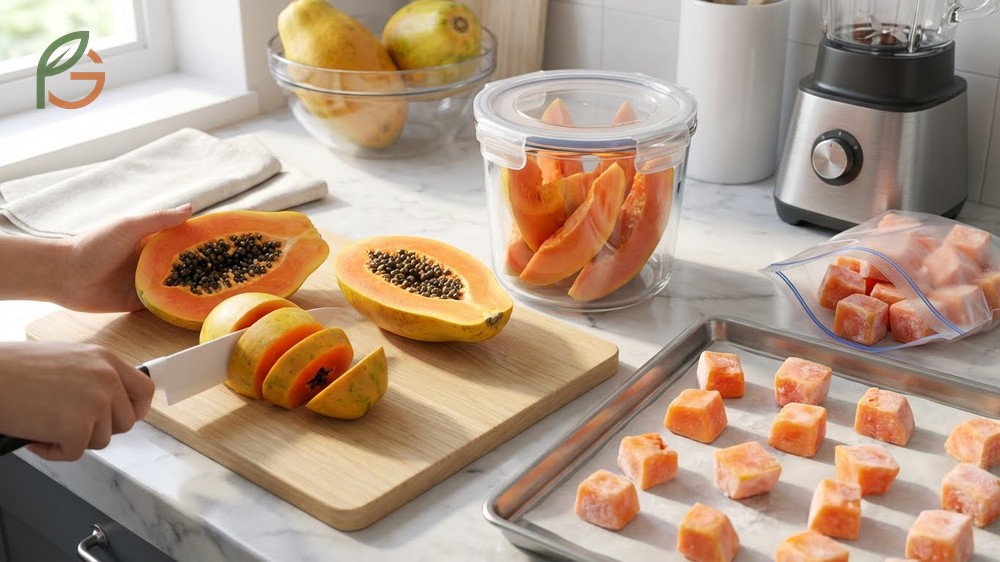
Proper preparation extends papaya’s shelf life and maximizes nutritional value. Current guidance emphasizes handling ripe fruit gently to prevent bruising.
After cutting, store unused portions in airtight containers. The flesh oxidizes quickly when exposed to air, so minimize surface area by keeping larger pieces rather than small cubes.
For smoothies and blended drinks, freeze papaya cubes on a baking sheet first, then transfer to freezer bags. This prevents clumping and maintains texture for up to 3 months.
Papaya Seeds Preparation
Papaya seeds require proper drying before consumption. Rinse seeds under cold water to remove the gel-like membrane, then spread on parchment paper[4].
Air-dry seeds for 24-48 hours, or use a dehydrator at 115°F (46°C) for 6-8 hours. Properly dried seeds should feel hard and snap when bent—soft seeds haven’t dried enough.
Start with ½ teaspoon daily and increase gradually to 1-2 teaspoons maximum[3]. Eating too much can cause digestive issues due to their potent compounds.
Warning: Don’t consume papaya seeds if you’re pregnant or have liver conditions. Always consult your healthcare provider before adding medicinal amounts of seeds to your diet.
Storing Papaya
Unripe papayas ripen at room temperature within 2-3 days. Once ripe, refrigerate whole fruit for up to 5 days to slow further ripening.
Cut papaya lasts 2-3 days refrigerated in sealed containers. Squeeze lemon juice over exposed flesh to prevent browning—the citric acid slows oxidation without altering taste significantly.
Papaya Serving Ideas
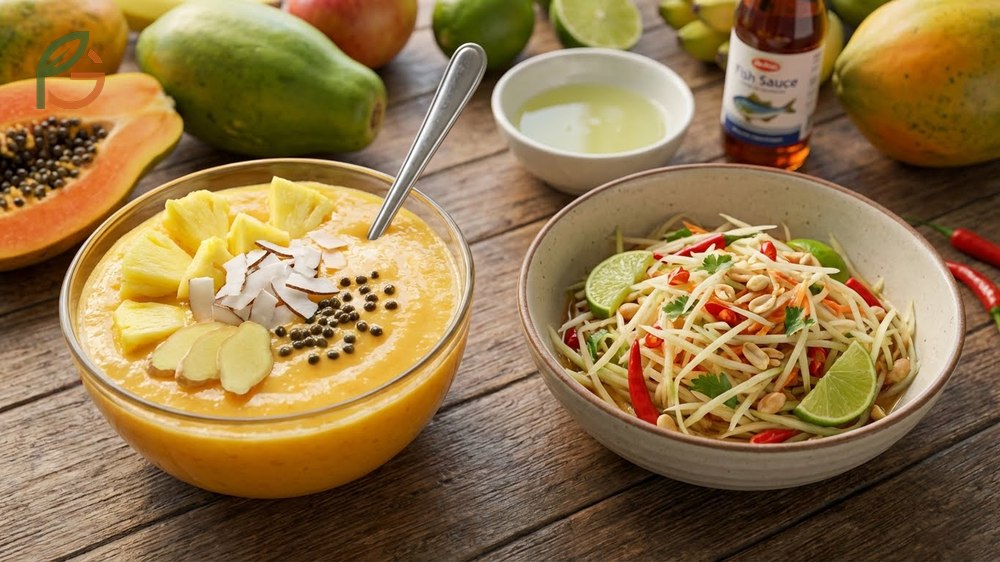
Beyond eating fresh, papaya adapts to numerous serving styles. Its mild sweetness complements both sweet and savory dishes without overpowering other flavors.
For smoothies, blend 1 cup papaya chunks with pineapple, coconut milk, fresh ginger, and ice. Add 1 tablespoon raw papaya seeds for an antioxidant boost and spicy kick[6].
Green papaya salad uses unripe fruit shredded into strips. This Thai-style dish requires cooking or marinating the raw papaya with lime juice, fish sauce, and chilies to neutralize the latex compounds.
Dried papaya seeds work as a pepper substitute. Grind them in a spice grinder and use wherever you’d add black pepper—they deliver similar heat with a unique fruity undertone.
- Top Cobb salads with whole or crushed papaya seeds for texture
- Use seeds as a spicy garnish for baked ham or teriyaki pork
- Make salad dressing by blending 2 tablespoons seeds with rice vinegar, honey, and canola oil
- Add papaya cubes to fruit salsa with mango, red onion, cilantro, and jalapeño
- Grill papaya slices for 2-3 minutes per side as a dessert with vanilla ice cream
- Puree overripe papaya into ice pops or sorbet for summer treats
When serving papaya at breakfast, combine it with protein sources like eggs or Greek yogurt. This pairing provides sustained energy for 4-5 hours by balancing simple sugars with protein and fat.
For parties, arrange papaya wedges with lime wedges on a platter. Guests can squeeze fresh lime over their serving—this combination is popular across Latin American and Southeast Asian cuisines.
Conclusion
The evidence is clear: how to eat papaya comes down to simple preparation—cut lengthwise, scoop seeds, peel, and slice the flesh. Current guidance emphasizes eating papaya at peak ripeness when the skin turns yellow-orange and gives slightly to pressure.
Whether you’re enjoying fresh papaya cubes, breakfast boats filled with yogurt, or experimenting with edible seeds, this tropical fruit delivers impressive nutrition with 43 calories and 61mg vitamin C per 100g[1]. FruitGarden continues to share research-based growing and consumption methods to help you get the most from your tropical fruit garden.
Frequently Asked Questions
Can you eat papaya seeds?
How do you know when papaya is ripe enough to eat?
Ripe papaya shows yellow-orange skin color and gives slightly when you press it gently. The stem end should smell sweet and fruity. If the papaya is still mostly green and hard, let it ripen at room temperature for 2-3 days until it develops the yellow-orange color and softer texture.
What’s the best way to cut a papaya?
Cut the papaya lengthwise with a sharp chef’s knife, then scoop out the black seeds with a spoon[2]. Flip the halves skin-side down and peel with a vegetable peeler, or use a spoon to scoop the flesh directly from the skin. Cut the flesh into your desired shape—cubes, slices, or strips.
Do you need to refrigerate papaya after cutting?
Yes, cut papaya should be refrigerated in an airtight container and consumed within 2-3 days. Squeeze lemon juice over the exposed flesh to prevent browning. Whole ripe papayas can be refrigerated for up to 5 days, while unripe papayas should stay at room temperature until they ripen.
What does papaya taste like?
Ripe papaya tastes sweet and tropical with a soft, butter-like texture similar to cantaloupe or mango. The flavor is mild and slightly musky. Papaya seeds taste sharp and peppery, similar to black pepper or horseradish, which is why they’re used as a seasoning rather than eaten in large quantities.
Can you eat papaya skin?
No, you shouldn’t eat papaya skin. The skin is tough, bitter, and difficult to digest. Always peel papaya before eating, either with a vegetable peeler after cutting or by scooping the flesh away from the skin with a spoon. Only the orange flesh and optionally the black seeds are edible.
How much papaya should you eat per day?
Current guidance suggests 1-2 cups of fresh papaya daily as part of a balanced diet. This provides significant vitamin C (68% of daily value per 100g[1]) and fiber without excessive calories. Most people tolerate papaya well, but start with smaller portions if you’re new to the fruit or have digestive sensitivities.