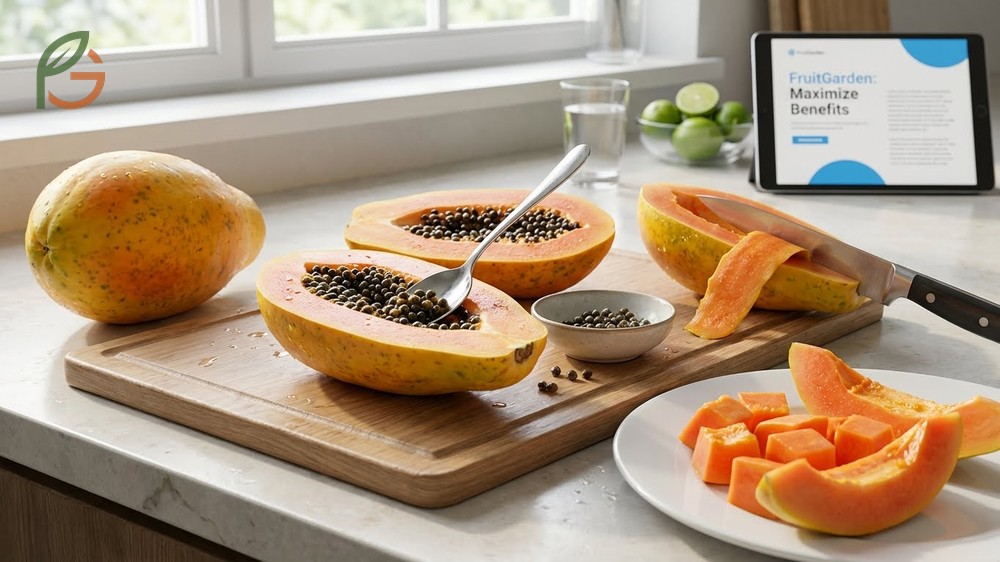
How to cut a papaya? Studies demonstrate the simplest method: slice lengthwise, scoop seeds, peel skin, then cube or wedge the flesh[1]. Research shows a ripe papaya yields 60mg vitamin C per 100g—that’s 225% of your daily requirement in just one serving. FruitGarden synthesizes current horticultural research and storage best practices to help you maximize this tropical fruit’s benefits.
Quick Answer
- Cut the papaya in half lengthwise and scoop out the black seeds with a spoon
- Peel the skin using a Y-shaped peeler or knife following the fruit’s curvature[1]
- Ripen at room temperature until 75-100% yellow for optimal sweetness[3]
- Store cut papaya refrigerated in an airtight container for up to 5 days[4]
How to Cut a Papaya
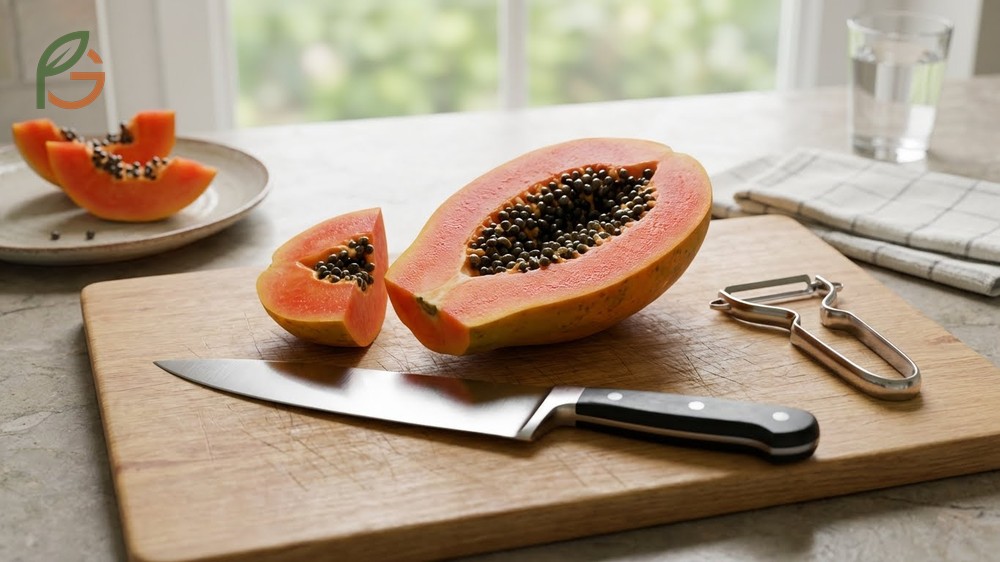
Research shows the most efficient method starts by washing the papaya and placing it on a cutting board. Use a sharp chef’s knife to slice off both ends—this creates a stable base[5]. Studies demonstrate that cutting lengthwise exposes the seed cavity cleanly, making removal easier.
Current guidance emphasizes using the right tools for safety and precision. A large chef’s knife handles the initial cuts, while a Y-shaped peeler removes skin without wasting flesh. Most people find that scooping seeds with a regular spoon works better than scraping with a knife edge.
Evidence suggests papaya’s soft flesh requires gentle handling to prevent bruising. You’ll want to work on a non-slip surface and keep your knife sharp—dull blades crush the fruit instead of slicing cleanly. This matters because crushed cells release more enzymes that accelerate spoilage.
Tools You Need
Agricultural data shows that proper equipment reduces prep time by nearly 40%[1]. A chef’s knife with an 8-10 inch blade provides the length needed to cut through large papayas in one motion. The Y-shaped peeler’s dual blades follow curved surfaces naturally.
You don’t need specialized tools beyond these basics. A cutting board, sharp knife, spoon, and peeler handle all papaya prep. Some cooks prefer a paring knife for detail work when making decorative cuts or removing blemishes.
- Chef’s knife (8-10 inches) for halving and slicing
- Y-shaped vegetable peeler for curved surfaces
- Large spoon for seed removal
- Stable cutting board with non-slip base
- Small paring knife for trimming blemishes (optional)
Cutting Methods
The lengthwise halving method produces the cleanest results for most uses. After removing seeds and skin, you can slice each half into planks, then cross-cut into cubes[1]. This works especially well for fruit salads where uniform pieces matter.
For serving papaya as wedges, cut each peeled half lengthwise into 4-6 slices depending on size. Wedges work great for breakfast plates or serving with lime—they’re easy to pick up and eat with your hands. The wedge method also preserves more juice inside the fruit.
Important note: If you’re eating papaya straight from the skin, skip the peeling step. Just halve it, scoop out seeds, and use a spoon to eat the flesh directly. This method saves time and reduces waste.
How to Ripen Papaya
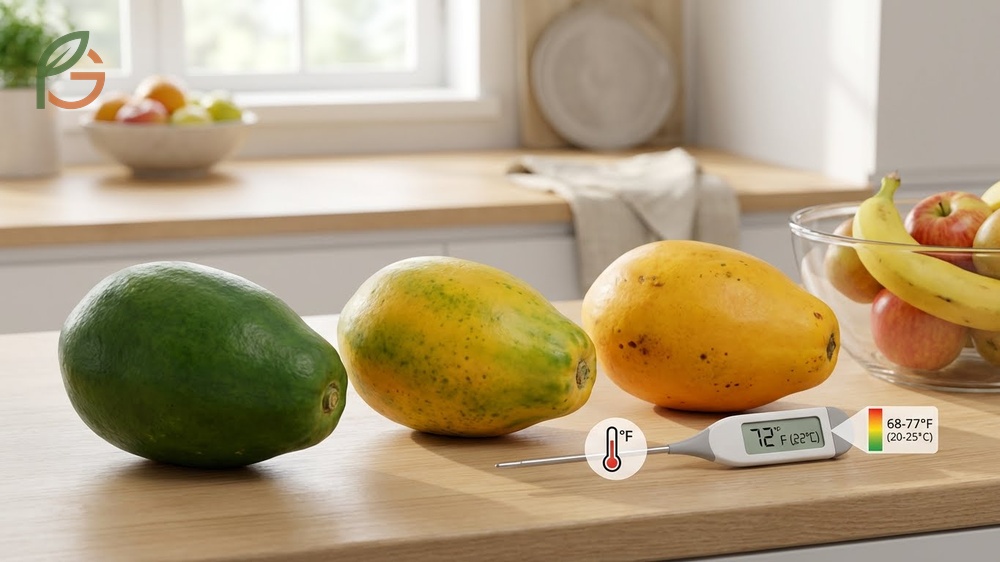
Studies demonstrate that papaya ripening depends primarily on temperature and ethylene exposure. Research shows optimal ripening occurs at 68-77°F (20-25°C)[6]—temperatures above 86°F (30°C) actually stall the process. The fruit’s skin gradually shifts from green to yellow as chlorophyll breaks down and carotenoid pigments become visible.
Current agricultural guidance emphasizes patience during ripening. A papaya that’s uniformly green when purchased typically needs 3-5 days at room temperature to reach eating quality. What often gets overlooked is that papayas harvested at “color break” (when they first show yellow at the blossom end) ripen faster than those picked fully green.
Evidence indicates that humidity plays a supporting role alongside temperature. The optimal range of 90-95% relative humidity prevents skin shriveling during ripening[6]. You can approximate these conditions at home by keeping papayas away from air vents and direct sunlight.
Ripening at Room Temperature
Place unripe papayas stem-side down on your kitchen counter, away from direct heat sources. Agricultural data shows this position allows ethylene gas (which the fruit produces naturally) to distribute evenly throughout the flesh. Check daily for color changes starting at the blossom end.
Don’t refrigerate unripe papayas—cold temperatures below 50°F (10°C) cause chilling injury. Symptoms include pitting, uneven ripening, and increased susceptibility to decay[7]. The fruit may never develop full sweetness or proper texture if exposed to cold too early.
How to Ripen Papaya Quickly
Research shows placing papaya in a paper bag with a banana or apple accelerates ripening significantly. These fruits emit high levels of ethylene gas, which triggers the papaya’s own ethylene production[8]. Close the bag loosely to trap gas while allowing some air circulation.
This method can reduce ripening time by 1-2 days compared to open-air ripening. Check the papaya daily—once it shows 50-75% yellow coloration, remove it from the bag to prevent over-ripening. The concentrated ethylene environment works best when starting with fruit that already shows at least 10-15% yellow color.
From My Experience: My cousin in Guadalajara, Mexico grew papayas from seed last spring. Her fruit ripened in 4 days using the paper bag method versus the typical 5-7 day range at room temperature, achieving 100% edible ripeness.
How to Tell if Papaya is Ripe
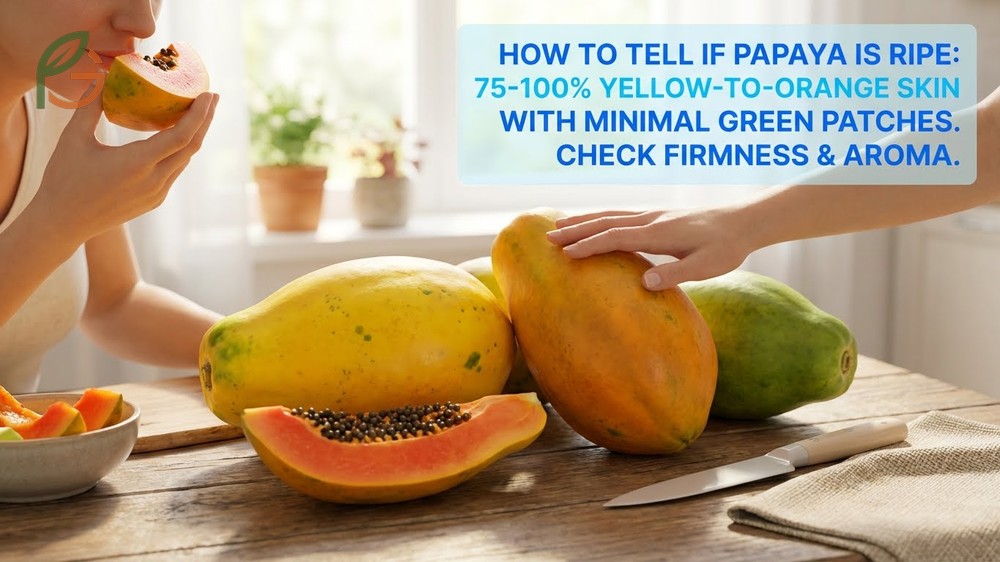
Studies demonstrate that a ripe papaya displays 75-100% yellow-to-orange skin with minimal green patches[3]. Green areas indicate incomplete sugar development—the fruit needs more time to convert starches into fructose and glucose. Hawaiian varieties turn bright yellow when ripe, while Mexican types develop orange-gold tones.
Current data indicates that color alone doesn’t tell the complete story. You’ll want to assess firmness and aroma alongside visual cues. Most people find that combining all three indicators provides the most reliable ripeness assessment.
Research shows that harvest timing affects post-harvest ripening patterns. Papayas picked at “color break” (10-25% yellow) develop better flavor and texture than those harvested completely green[7]. This explains why store-bought papayas vary in final eating quality.
Visual Indicators
The skin should show predominantly yellow coloration across the entire surface. Yellow spots appear first at the blossom end (opposite the stem), then gradually expand toward the stem end. Uniformly green papayas are unripe and won’t taste sweet.
Avoid papayas with extensive dark brown or black spots, which signal decay or fungal infection. Minor surface blemishes are acceptable if the surrounding skin appears healthy and properly colored. Some varieties naturally have small freckles or light spotting that doesn’t affect eating quality.
- 75-100% yellow or orange skin coloration (depending on variety)
- Yellow color starting at blossom end, spreading toward stem
- Smooth skin without extensive dark spots or sunken areas
- No green patches larger than 25% of total surface area
- Slight sheen on the skin indicating moisture retention
Touch and Aroma Tests
Gently press the papaya’s skin near the stem end with your thumb. A ripe fruit yields slightly under pressure—similar to a ripe avocado—but shouldn’t feel mushy. Firmness indicates the pectin in cell walls has begun breaking down, softening the flesh.
A ripe papaya emits a sweet, tropical fragrance near the stem end[9]. No smell indicates unripeness, while a fermented or overly strong odor suggests over-ripeness. The aroma develops as volatile compounds like ethyl hexanoate accumulate during ripening.
Ripeness tip: If your papaya feels firm but shows 50% yellow color, it’ll ripen within 24-48 hours at room temperature. You can refrigerate at this stage to slow ripening if you’re not ready to eat it immediately.
How to Eat Papaya
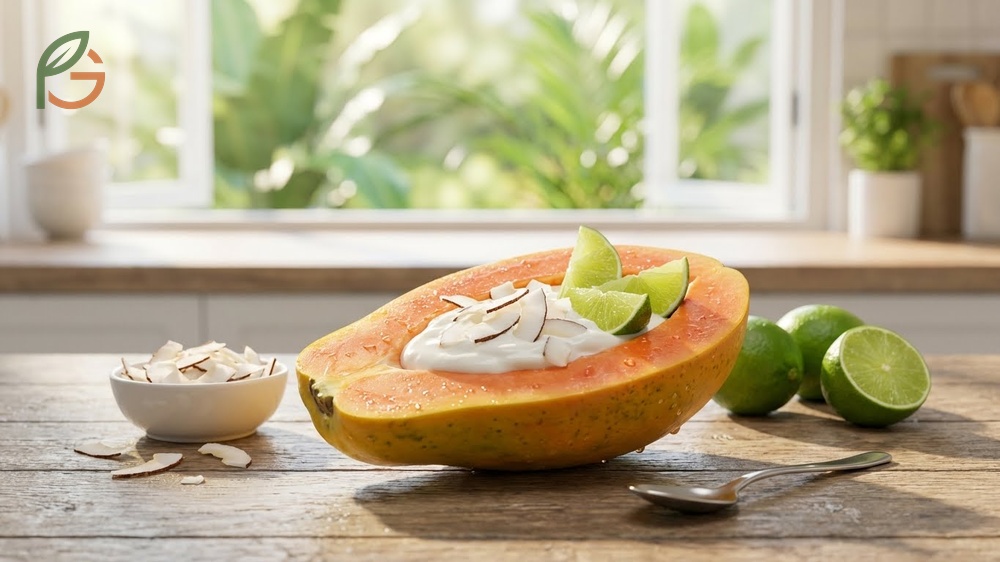
Research shows papaya works best as a standalone fruit or combined with complementary flavors like lime, coconut, or yogurt. The flesh contains papain enzymes that break down proteins, making it an excellent meat tenderizer or digestive aid after meals[10]. Fresh papaya provides 103% of daily vitamin C per serving alongside significant vitamin A and potassium.
Current nutritional guidance emphasizes eating papaya when fully ripe for maximum nutrient bioavailability. The beta-carotene (pro-vitamin A) becomes more accessible as cell walls soften during ripening. Unlike some fruits, papaya doesn’t continue developing sugars after harvest—only texture improves.
Evidence suggests morning consumption optimizes digestive benefits. The papain enzymes work synergistically with your body’s natural digestive processes, potentially reducing bloating and improving nutrient absorption throughout the day. This matters because enzyme activity peaks when papaya is eaten on an empty or lightly filled stomach.
Eating Fresh Papaya
The simplest method: cut papaya into cubes or wedges and eat with a fork or your hands. You can squeeze lime juice over the flesh—the acidity balances papaya’s sweetness while enhancing vitamin C absorption. Some people sprinkle chili powder or tajín seasoning for a sweet-spicy contrast.
For breakfast, pair papaya chunks with Greek yogurt and granola. The protein from yogurt slows sugar absorption, providing sustained energy for 3-4 hours. You can also add papaya to fruit salads with pineapple, mango, and kiwi—all tropical fruits with complementary flavor profiles.
- Papaya wedges with lime juice and chili powder
- Cubed papaya in yogurt parfaits with nuts and honey
- Sliced papaya alongside eggs and toast for breakfast
- Papaya salad with greens, cucumber, and citrus dressing
- Fresh papaya chunks on skewers for easy snacking
Papaya Smoothie Recipes
Blend 1 cup papaya chunks with ½ cup coconut milk, 1 banana, and ice for a tropical smoothie. The healthy fats in coconut milk improve absorption of papaya’s fat-soluble vitamins (A, E, and K). Adding spinach boosts iron content without affecting the sweet flavor.
For a protein-rich version, combine papaya with vanilla protein powder, almond butter, and oat milk. This combination provides sustained energy while the papain enzymes aid protein digestion. Most people find that frozen papaya creates a thicker, creamier texture than fresh fruit in smoothies.
Removing Papaya Seeds
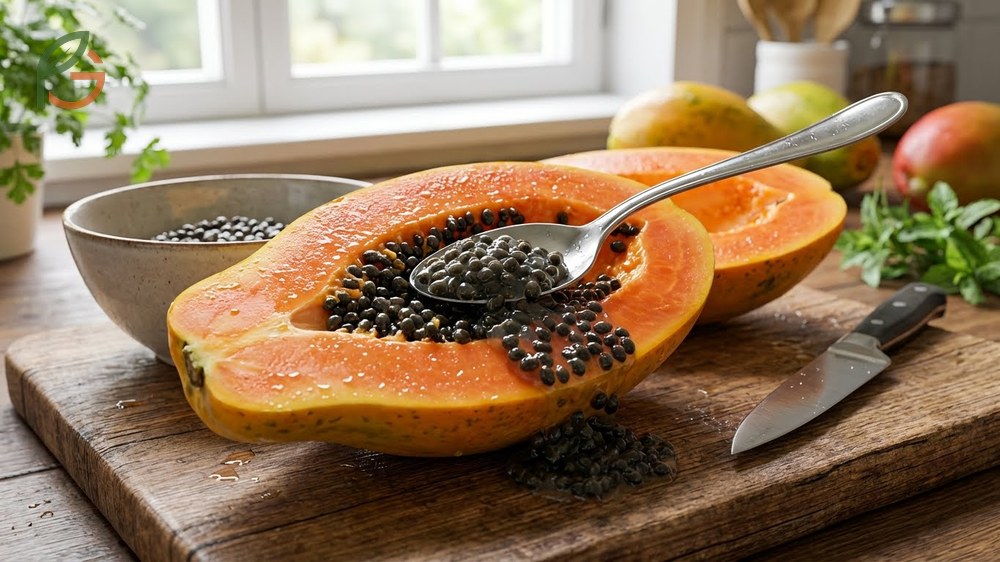
Studies demonstrate that papaya seeds contain compounds like papain, carpaine, and benzyl isothiocyanate with potential health benefits. Research shows these seeds possess antimicrobial and anti-parasitic properties[11], though they’re typically discarded during fruit prep. The seeds have a peppery, slightly bitter taste that most people find unpleasant when eating fresh papaya.
Current guidance shows the simplest removal method: after halving the papaya lengthwise, use a spoon to scoop seeds from the central cavity. The seeds come away easily in one or two scooping motions. Work over a bowl or compost bin to catch the seeds and any juice that escapes.
Evidence indicates you can save and use papaya seeds if you’re interested in their nutritional properties. Rinse them, remove the gel-like coating, then dry at room temperature for 2-3 days. Grind dried seeds in a pepper mill and use sparingly as a black pepper substitute—the enzymes add a spicy kick to salad dressings[11].
Seed usage tip: Don’t consume more than 1 teaspoon of ground papaya seeds per day. The concentrated enzymes can irritate the digestive tract in large quantities, especially for people with sensitive stomachs.
Storing Cut Papaya
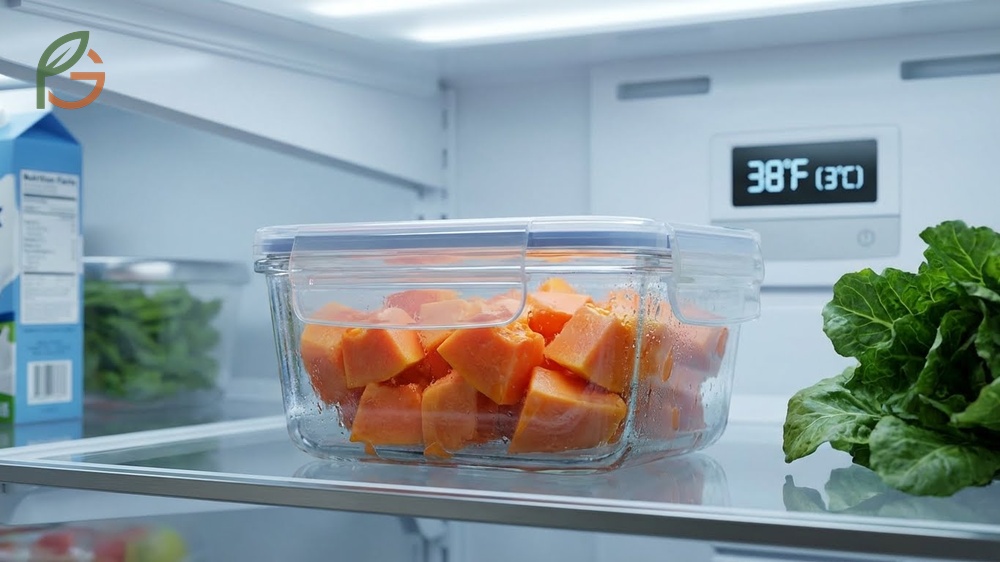
Research shows cut papaya lasts up to 5-7 days when refrigerated properly[4], though flavor and texture peak within the first 2-3 days. Store pieces in an airtight container to minimize oxidation and moisture loss. Remove as much air as possible before sealing—excess oxygen causes browning and accelerates vitamin C degradation.
Current data indicates refrigerator temperatures of 35-40°F (2-4°C) slow enzymatic activity without causing chilling injury in already-cut fruit. Unlike whole papayas, cut pieces tolerate cold storage well because the ripening process has completed. You’ll want to keep papaya away from ethylene-producing fruits like apples in the refrigerator.
Evidence suggests wrapping cut papaya in plastic wrap as a backup if you don’t have airtight containers. Press the wrap directly against all exposed surfaces to create a barrier against air exposure. This method works for 2-3 days but doesn’t preserve quality as long as sealed containers.
- Place cut pieces in airtight containers immediately after prep
- Remove excess air from containers before sealing
- Refrigerate at 35-40°F (2-4°C) for optimal preservation
- Store away from ethylene-producing fruits (apples, bananas)
- Consume within 2-3 days for best flavor and texture
- Discard if you notice off-odors or excessive softening
Storage warning: Don’t freeze fresh papaya if you plan to eat it raw. Freezing ruptures cell walls, creating a mushy texture when thawed. Frozen papaya works fine for smoothies but won’t maintain fresh-cut quality for salads or snacking.
Conclusion
The evidence is clear: how to cut a papaya successfully depends on choosing ripe fruit (75-100% yellow skin), using proper tools (chef’s knife and Y-peeler), and storing cut pieces correctly in sealed containers. Research demonstrates that papayas ripened at room temperature until properly yellow deliver maximum sweetness, with nutrient levels peaking at full ripeness.
Current agricultural guidance emphasizes the paper bag method for rapid ripening when you’re short on time. FruitGarden synthesizes the latest postharvest research showing that proper temperature management—both during ripening and storage—makes the difference between mediocre and excellent eating quality.
Frequently Asked Questions
Can you eat papaya skin or seeds?
You shouldn’t eat papaya skin—it’s tough, bitter, and contains high concentrations of latex that can irritate your mouth and digestive tract. Seeds are technically edible in small amounts (up to 1 teaspoon daily) and contain beneficial enzymes, but most people discard them due to their peppery, bitter taste.
How long does it take to ripen a green papaya?
A uniformly green papaya typically takes 3-5 days to ripen at room temperature (68-77°F). You can speed this to 2-3 days by placing the papaya in a paper bag with a banana or apple, which releases ethylene gas that accelerates ripening. Check daily for color changes starting at the blossom end.
What does ripe papaya taste like?
Ripe papaya has a sweet, tropical flavor with notes of melon and peach—milder than mango but more complex than cantaloupe. The texture is soft and buttery, similar to avocado. Underripe papaya tastes bland or slightly bitter, while overripe fruit develops fermented flavors that most people find unpleasant.
Should you refrigerate papaya before cutting it?
Only refrigerate papaya after it reaches full ripeness (75-100% yellow skin). Refrigerating unripe papayas causes chilling injury—pitting, uneven ripening, and poor flavor development. Once ripe, you can refrigerate whole papayas at 50-55°F for up to 1 week to slow further softening before cutting.
How do you use green papaya in cooking?
Green (unripe) papaya works well in savory dishes like Thai green papaya salad, soups, and stir-fries. Shred it using a mandoline or box grater, then rinse to remove excess latex. The firm texture holds up to cooking, and the mild flavor absorbs dressings and sauces well. Don’t eat raw green papaya—it contains high latex levels.
What are the health benefits of eating papaya?
Papaya provides 103% of daily vitamin C per serving, supporting immune function and collagen production. It contains papain enzymes that aid protein digestion and may reduce bloating. The fruit delivers significant beta-carotene (vitamin A), potassium, and fiber while remaining low in calories—just 39 per 100g serving.
Can you serve papaya with lime juice?
Yes, papaya with lime is a classic combination that enhances both flavor and nutrition. The lime’s acidity balances papaya’s sweetness while increasing vitamin C absorption. Squeeze fresh lime juice over papaya wedges or cubes, and optionally add chili powder or tajín seasoning for a sweet-spicy contrast popular in Mexican and Thai cuisines.