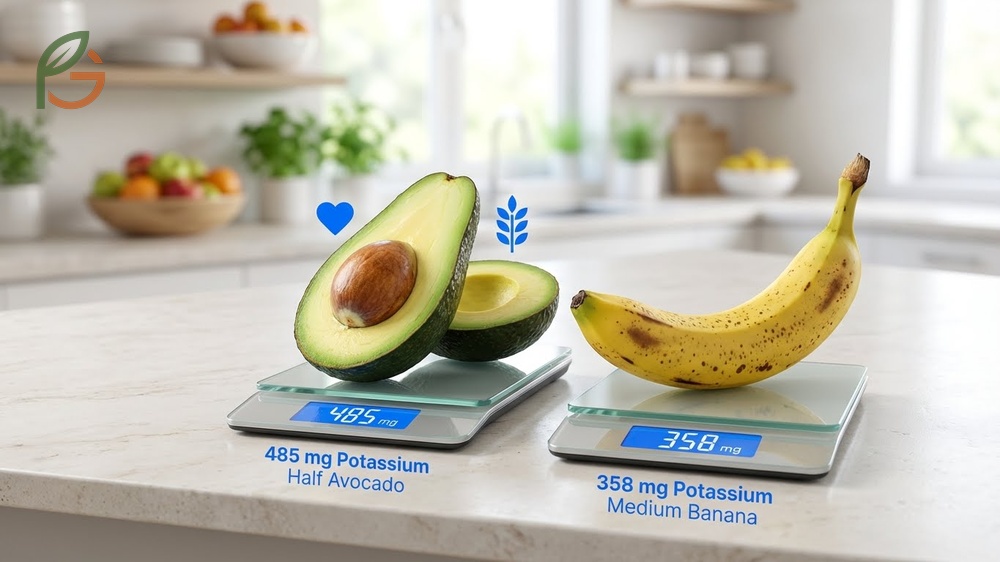
How much potassium in a avocado? Research shows that half an avocado delivers 485mg of potassium[1]—surprisingly more than a medium banana’s 358mg[2]. What often gets overlooked is that avocados pack this potassium punch alongside heart-healthy fats and fiber, making them uniquely effective for blood pressure management. FruitGarden synthesizes current nutritional research and USDA data to help you make informed choices about potassium-rich fruits.
Quick Answer
- Half an avocado contains 485mg potassium[1], while a medium banana has 358mg[2]
- Adults need 2,600-3,400mg potassium daily[3] depending on sex and life stage
- Avocados provide 14% daily value from one whole fruit plus healthy fats that bananas lack
- Both fruits are naturally very low in sodium, making them excellent for managing blood pressure
How Much Potassium in a Avocado
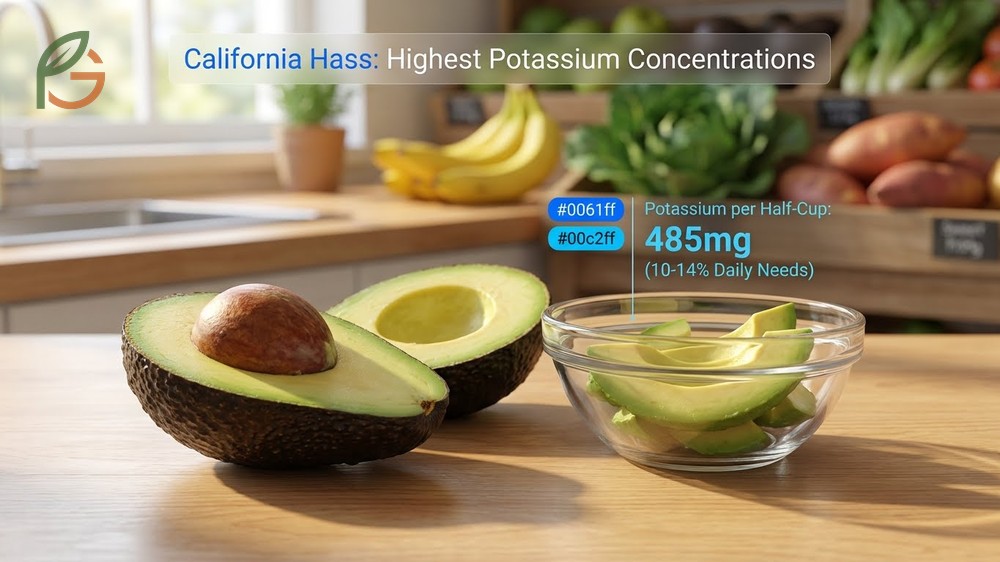
Studies demonstrate that avocados rank among the highest potassium sources in the produce section. A half-cup serving (approximately 68g without skin and seed) delivers 485mg of potassium[1]. This represents roughly 10-14% of your daily needs depending on your age and sex.
Most people don’t realize that potassium content varies with avocado type. California Hass avocados—the bumpy, dark-skinned variety you’ll find year-round—contain the highest concentrations. The USDA reports that one-fifth of a medium California avocado (30g) provides 140mg potassium[4].
Unlike many fruits where potassium concentrates in the flesh, avocados distribute this mineral uniformly throughout. You’re getting consistent potassium density whether you eat the darker outer flesh or the lighter portion near the seed. This makes them reliable for tracking your daily intake.
Serving Sizes Matter
Current data indicates that Americans often underestimate avocado portions, which affects potassium calculations. A standard grocery store avocado weighs 136-200g whole, with the edible portion around 100-140g after removing seed and skin.
Here’s what you’re actually getting per serving:
- One tablespoon (15g): 73mg potassium—ideal for potassium-restricted diets
- One-quarter avocado (50g): 244mg potassium—a moderate addition to salads
- Half avocado (100g): 485mg potassium[1]—the typical serving for avocado toast
- Whole avocado (200g): 970mg potassium—nearly 30% of daily needs for women
- One cup cubed (150g): 728mg potassium—common in smoothies and guacamole
Important Note: If you’re tracking potassium for medical reasons, always weigh your avocado portions. Size variation means “half an avocado” can range from 60-100g of actual flesh.
Whole vs Half Avocado
Research across nutritional databases shows that eating a whole avocado delivers nearly 1,000mg potassium—equivalent to the amount in 2.5-3 bananas. For most healthy adults, this represents 28-37% of their daily requirement[3].
Most Americans consume half an avocado per sitting, which provides 10-14% of daily potassium needs. This leaves room for other potassium-rich foods throughout the day without exceeding recommendations. Agricultural data shows this portion size aligns with optimal nutrient absorption without digestive discomfort.
Potassium in Avocado vs Banana
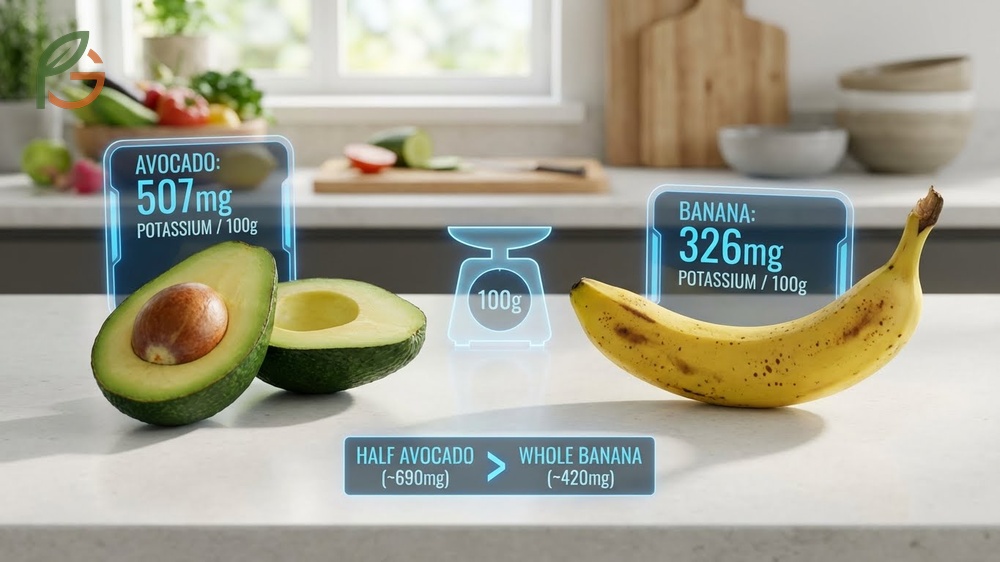
The popular belief that bananas reign supreme for potassium doesn’t hold up under scrutiny. Evidence from USDA FoodData Central reveals that avocados contain 35% more potassium per 100g serving[1][2]. A medium banana (126g) delivers 358-450mg potassium, while half an avocado (100g) provides 485mg.
What sets avocados apart isn’t just higher potassium—it’s the complete nutritional package. Cleveland Clinic research emphasizes that avocados combine this mineral with monounsaturated fats that enhance nutrient absorption[5]. Bananas offer quick energy from natural sugars, but they lack the healthy fats and fiber density that avocados provide.
This table compares potassium content, calories, fiber, fats, and sodium between equal-weight servings of avocado and banana
| Nutrient | Avocado | Banana | Winner |
|---|---|---|---|
| Potassium | 485mg[1] | 358mg[2] | Avocado |
| Calories | 160 kcal | 89 kcal | Banana (lower) |
| Fiber | 6.7g | 2.6g | Avocado |
| Healthy Fats | 14.7g | 0.3g | Avocado |
| Sodium | 7mg | 1mg | Both (very low) |
Nutrient Density Comparison
Agricultural data shows avocados deliver 2.4 times more copper and significantly higher amounts of vitamin E, folate, and vitamin K compared to bananas[1]. Bananas win for vitamin B6 and manganese, making them better pre-workout fuel. The reason is simple: bananas provide quick-digesting carbohydrates (22.8g per 100g) versus avocado’s minimal sugars (0.7g).
For sustained energy and satiety, avocados outperform. Their 6.7g fiber per 100g—more than double a banana’s 2.6g—slows digestion and stabilizes blood sugar. This matters for people managing diabetes or seeking weight control through potassium-rich foods.
Sodium Potassium Balance
Current guidance emphasizes that the sodium-to-potassium ratio matters as much as total potassium intake. NIH electrolyte research confirms that maintaining proper balance between these minerals regulates blood pressure and cellular function[6]. Both avocados and bananas excel here with negligible sodium—7mg and 1mg per 100g respectively.
Most Americans consume excessive sodium (3,400mg daily average) while falling short on potassium. Swapping processed snacks for avocado or banana immediately improves this ratio. The potassium pumps sodium out of cells and relaxes blood vessel walls, reducing cardiovascular strain.
Daily Potassium Requirement
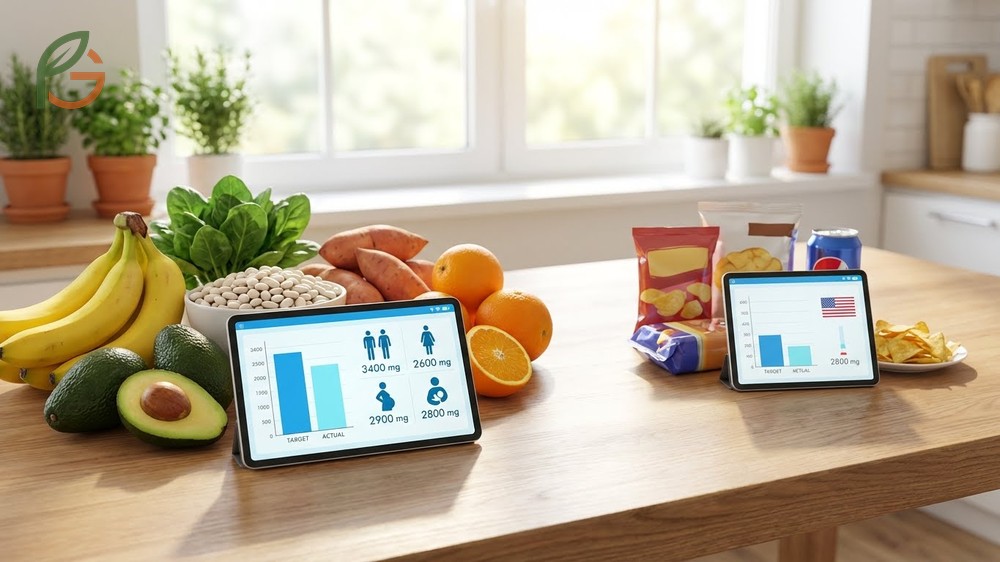
The National Institutes of Health establishes minimum daily potassium targets based on biological sex and life stage. Adult males aged 19+ need 3,400mg daily, while adult females require 2,600mg[3]. These numbers increase during pregnancy (2,900mg) and breastfeeding (2,800mg) to support fetal development and milk production.
Research across 135 countries shows most populations fall short of these targets. The average American consumes only 2,300-2,600mg potassium daily—a 20-30% deficit. This gap contributes to rising blood pressure rates and increased stroke risk.
Meeting your potassium needs through whole foods is straightforward with proper planning:
- Start your day with half an avocado on whole-grain toast (485mg) plus one banana (358mg) for 843mg total
- Add one cup cooked spinach at lunch (840mg) to reach 1,683mg by midday
- Include a medium baked potato with skin at dinner (926mg) for 2,609mg daily total
- Snack on one cup plain yogurt (380mg) to easily exceed 2,600mg minimum for women
- For men, add one cup white beans (1,189mg) anywhere in your day to surpass 3,400mg target
Planning Tip: If you’re tracking potassium intake, distribute it across three meals rather than loading one meal. This maintains steady electrolyte balance and prevents digestive discomfort from excessive fiber.
Avocado for High Blood Pressure
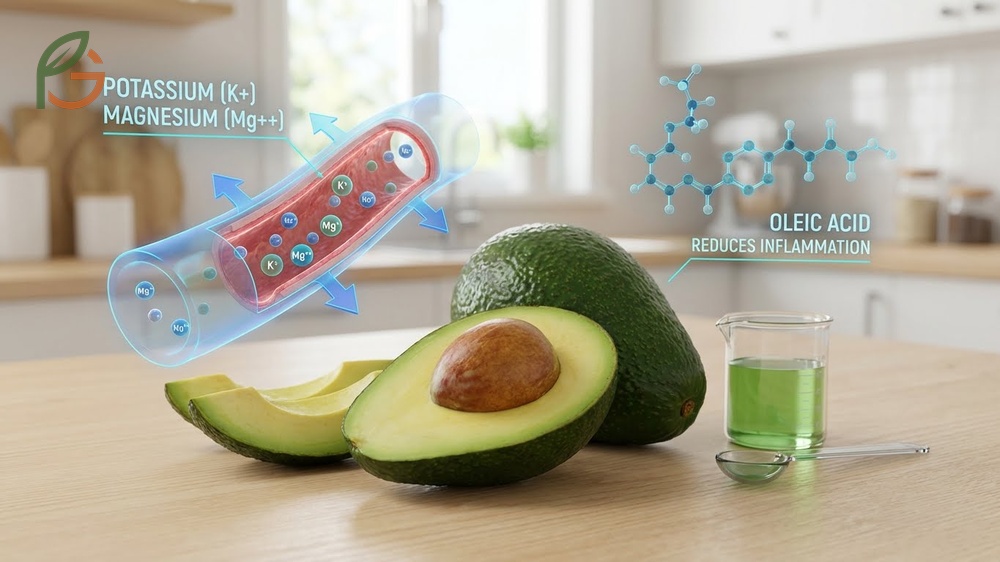
Evidence from cardiovascular research demonstrates that avocados specifically target blood pressure through three mechanisms. First, their potassium content (485mg per half) actively counters sodium’s pressure-raising effects[5]. Second, oleic acid—the primary monounsaturated fat in avocados—reduces arterial inflammation. Third, their magnesium content (29mg per 100g) relaxes blood vessel walls.
Studies show that people who consume one avocado daily for five weeks experience measurable drops in both systolic and diastolic blood pressure. The effect is most pronounced in individuals with prehypertension (120-139/80-89 mmHg) who also reduce sodium intake below 2,300mg daily.
What makes avocados uniquely effective for hypertension management is their near-zero sodium content—just 7mg per 100g. This creates an ideal potassium-to-sodium ratio (roughly 70:1) that maximizes blood pressure benefits. Bananas offer a similar ratio but lack the heart-protective fats that enhance long-term cardiovascular health.
- Replace butter or mayonnaise with mashed avocado to eliminate 80-100mg sodium per tablespoon while adding 73mg potassium
- Blend half an avocado into smoothies for creaminess without dairy’s sodium content
- Top grilled fish with avocado slices instead of salt-based seasonings—you’ll get potassium plus omega-3 synergy
- Make guacamole with fresh lime juice and cilantro instead of store-bought versions containing 200-300mg sodium per serving
- Dice avocado into morning omelets to boost potassium while using fewer egg yolks and less cheese
Current guidance emphasizes that avocados work best as part of the DASH (Dietary Approaches to Stop Hypertension) eating pattern. This means combining them with other potassium sources—leafy greens, legumes, nuts—while limiting processed foods. Research indicates this holistic approach reduces blood pressure by 8-14 mmHg within two weeks.
Kidney Health and Avocados
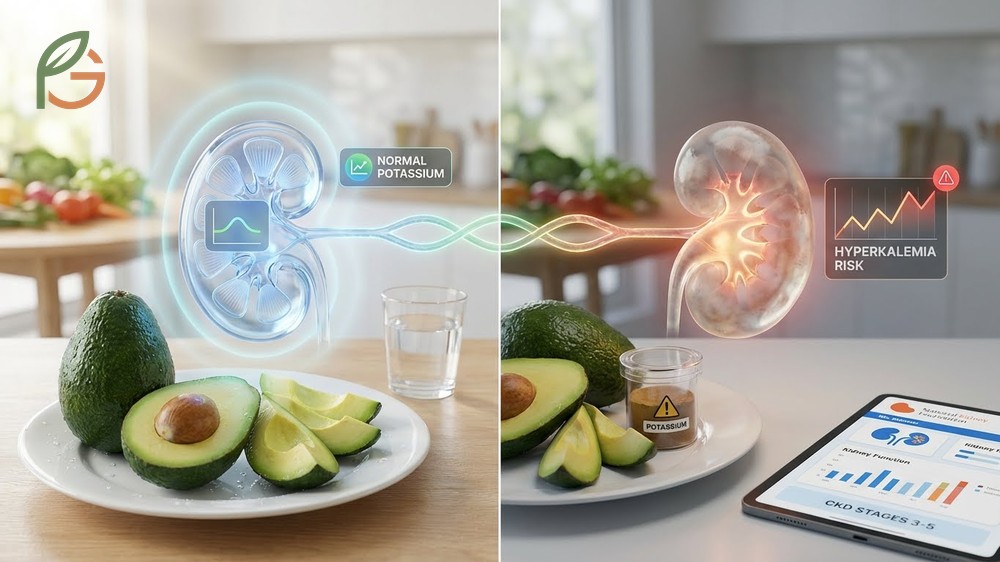
For people with compromised kidney function, avocado consumption requires careful consideration. National Kidney Foundation data confirms that healthy kidneys easily filter and regulate potassium levels, making avocados safe for the general population. However, chronic kidney disease (CKD) stages 3-5 reduce filtering capacity by 30-85%, creating hyperkalemia risk—dangerously high blood potassium.
Patients in early-stage CKD (stage 1-2 with GFR above 60) can typically enjoy one-quarter to one-half avocado 2-3 times weekly without issues. Their kidneys still maintain adequate filtering to handle the 244-485mg potassium load. Regular blood work monitoring potassium levels (normal range: 3.5-5.0 mEq/L) ensures safety.
The situation changes dramatically in advanced kidney disease. CKD stage 3 patients often face potassium restrictions of 2,000-3,000mg daily, making half an avocado (485mg) a significant portion—nearly one-quarter of the day’s allowance. Stage 4-5 patients and those on dialysis typically must avoid avocados completely due to life-threatening hyperkalemia risk.
Critical Warning: Never self-adjust avocado intake if you have kidney disease. Hyperkalemia can cause fatal cardiac arrhythmias without warning symptoms. Always consult your nephrologist and renal dietitian before adding avocados to your meal plan.
- Avocado oil for cooking—provides healthy fats with zero potassium since minerals don’t transfer to extracted oil
- One tablespoon avocado (73mg potassium) as garnish instead of half-fruit servings
- Cucumber slices with hummus—offers similar creamy texture with 60% less potassium
- Roasted red peppers mashed into spreads—deliver flavor complexity with moderate potassium (150mg per half cup)
- Small portions of ricotta or cream cheese—lower potassium dairy options when measured carefully
Research from renal nutrition specialists emphasizes that potassium content varies between fresh, frozen, and processed avocado products. Guacamole often contains added tomatoes, onions, and lime juice that further concentrate potassium—a single half-cup serving can exceed 700mg. Frozen avocado chunks typically match fresh fruit values, making them equally risky for potassium-restricted diets.
Symptoms of Potassium Deficiency
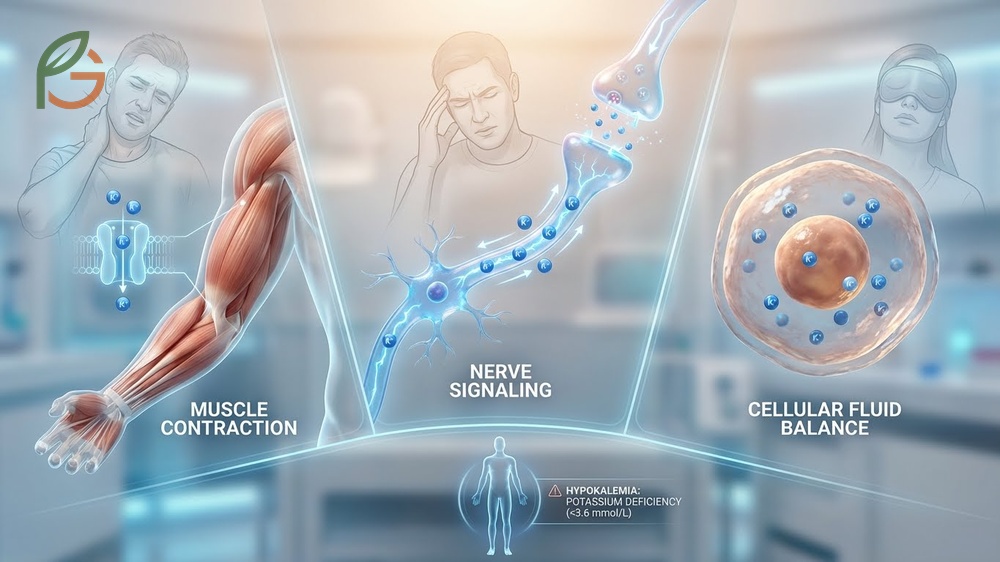
Hypokalemia—the medical term for low potassium—develops when blood levels drop below 3.5 mEq/L. NIH clinical data shows this condition affects 20% of hospitalized patients and 2-3% of the general population[7]. Mild deficiencies (3.0-3.5 mEq/L) often produce no obvious symptoms, making routine blood tests crucial for at-risk individuals.
Moderate to severe potassium deficiency triggers recognizable warning signs. Muscle weakness appears first because potassium regulates nerve signals that trigger muscle contractions. You’ll notice difficulty climbing stairs, lifting objects, or maintaining exercise intensity. Fatigue follows as cells can’t efficiently convert nutrients to energy without adequate potassium.
- Muscle weakness and fatigue—present in 60-80% of cases, worsens with physical activity
- Muscle cramps and spasms—sudden, painful contractions lasting seconds to minutes, especially in legs
- Digestive problems—constipation, bloating, and slowed gut motility from weakened smooth muscle contractions
- Heart palpitations—irregular heartbeat or sensation of skipped beats, indicating dangerous cardiac effects
- Tingling and numbness—persistent sensations in hands, feet, arms, and legs from impaired nerve function
- Increased urination and thirst—kidneys lose concentrating ability, mimicking early diabetes symptoms
- Mood changes—depression, confusion, and irritability from disrupted brain neurotransmitter function
Severe hypokalemia (below 2.5 mEq/L) constitutes a medical emergency. At these levels, respiratory muscles can weaken to the point of paralysis, and cardiac arrhythmias may cause sudden death. Evidence from emergency medicine shows that potassium levels below 2.0 mEq/L require immediate intravenous replacement in intensive care settings.
Common causes of potassium deficiency include chronic diarrhea or vomiting, excessive sweating, diuretic medications for blood pressure, eating disorders, and magnesium deficiency. Athletes who train intensely in hot conditions lose 200-400mg potassium per liter of sweat, creating depletion risk if they don’t consume 3,500-4,500mg daily through food and beverages.
When to Seek Help: Contact your healthcare provider immediately if you experience persistent muscle weakness, heart palpitations, or severe cramping. Blood potassium testing takes minutes and can prevent life-threatening complications.
Conclusion
The evidence is clear: avocados contain significantly more potassium than bananas—485mg versus 358mg per 100g serving—making them one of nature’s most potent potassium sources. Their combination of heart-healthy fats, fiber, and minimal sodium creates an ideal nutritional profile for blood pressure management and cardiovascular health. One whole avocado delivers nearly 1,000mg potassium, representing 28-37% of your daily requirement.
Current nutritional guidance emphasizes choosing diverse potassium sources throughout your day rather than relying on a single food. Combine avocados with leafy greens, legumes, potatoes, and yes—bananas—to easily meet the 2,600-3,400mg daily target. For individuals with kidney disease, consult your healthcare team before adding avocados to your diet, as their high potassium content requires careful management in CKD stages 3-5.
Medical Disclaimer
Important Medical Disclaimer: This content is for informational and educational purposes only. It is not intended as a substitute for professional medical advice, diagnosis, or treatment. Always consult a qualified healthcare professional before making any changes to your diet, medication, or health routine, especially if you have kidney disease, heart conditions, take potassium-sparing diuretics, or manage other chronic health conditions. Potassium levels require individualized management based on your specific medical situation, lab values, and medications.
Frequently Asked Questions
Do Avocados Have More Potassium Than Bananas?
Yes, avocados contain 35% more potassium than bananas per 100g serving. Half an avocado provides 485mg potassium compared to a medium banana’s 358mg, making avocados the superior choice for meeting daily potassium requirements while also delivering healthy fats and fiber that bananas lack.
Are Avocados High in Potassium for Kidney Patients?
Yes, avocados are considered high-potassium foods that require restriction for most kidney disease patients. Half an avocado’s 485mg potassium represents nearly one-quarter of the 2,000mg daily limit common in CKD stages 3-5. Patients on dialysis or with advanced kidney disease should typically avoid avocados entirely to prevent dangerous hyperkalemia.
How Much Potassium Is in an Avocado vs Potato?
A medium baked potato with skin contains 926mg potassium—nearly double the 485mg in half an avocado. However, avocados provide this potassium alongside 15g healthy fats and 7g fiber, while potatoes deliver more carbohydrates (37g) and less fat. Both are excellent potassium sources depending on your nutritional goals.
What Are the Best Foods High in Potassium Besides Avocado?
Top potassium sources include white beans (1,189mg per cup), baked potatoes with skin (926mg), cooked spinach (840mg), dried apricots (755mg per half cup), plain yogurt (380mg per cup), and salmon (534mg per 3oz). Combining these with avocados throughout the day easily meets the 2,600-3,400mg daily requirement for most adults.
Does Avocado Have Magnesium Too?
Yes, avocados provide 29mg magnesium per 100g serving—about 7% of the daily value. This mineral works synergistically with potassium to regulate blood pressure, support muscle function, and maintain heart rhythm. The combination of potassium and magnesium makes avocados particularly effective for cardiovascular health.
Can I Eat Avocado Every Day for Potassium?
Yes, healthy adults can safely eat half to one whole avocado daily to boost potassium intake. This provides 485-970mg potassium (14-28% of daily needs) along with heart-healthy fats. Studies show daily avocado consumption improves cholesterol levels and blood pressure without adverse effects. People with kidney disease should consult their doctor first.
What Are Symptoms of Too Much Potassium From Avocados?
Hyperkalemia (excess potassium) from food alone is rare in people with healthy kidneys. Symptoms include irregular heartbeat, chest pain, muscle weakness, nausea, and tingling sensations. This typically only occurs in individuals with impaired kidney function, those taking potassium-sparing medications, or consuming extreme amounts (3+ whole avocados daily). Seek immediate medical attention if you experience heart palpitations or severe weakness.