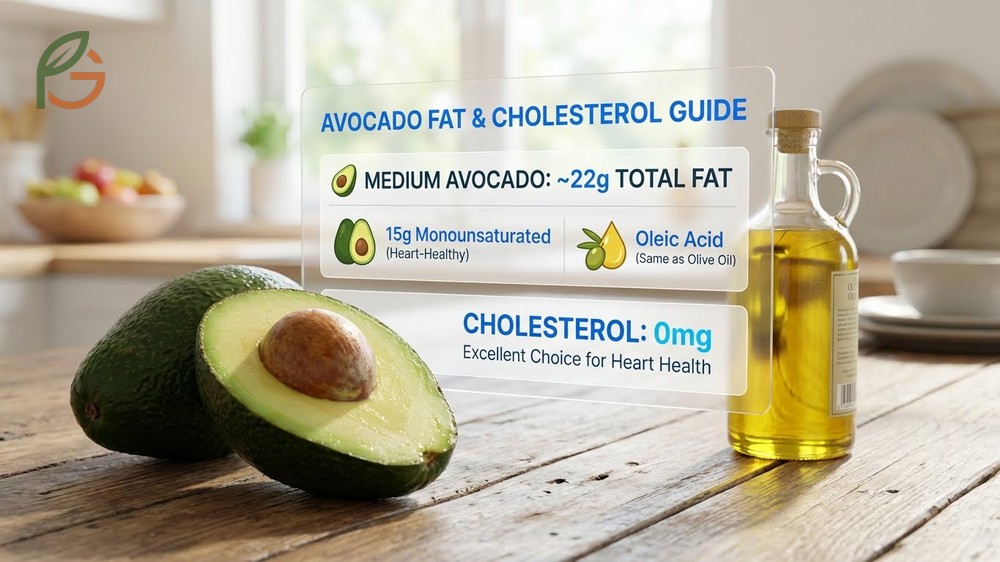
How much fat in avocado? A medium avocado contains about 22 grams of fat, with 15 grams coming from heart-healthy monounsaturated fats[1]. Research shows that most of this fat is oleic acid—the same beneficial fat found in olive oil—which helps lower bad cholesterol while keeping your good cholesterol stable. What surprises most people is that avocados contain zero cholesterol despite their creamy texture, making them an excellent choice for heart-conscious diets. FruitGarden synthesizes current nutritional research and USDA data to help you make informed decisions about incorporating avocados into your fruit garden and daily meals.
Quick Answer
- A medium avocado has 22g total fat[1]: 15g monounsaturated, 4g polyunsaturated, and only 3g saturated
- A 50g serving contains just 1g saturated fat[2] and is completely cholesterol-free
- Avocados provide approximately 70% oleic acid[3], a monounsaturated fat that reduces LDL cholesterol
- Daily recommendation: Eating 1-1.5 avocados per day significantly lowers total cholesterol and triglycerides[4]
How Much Fat in Avocado
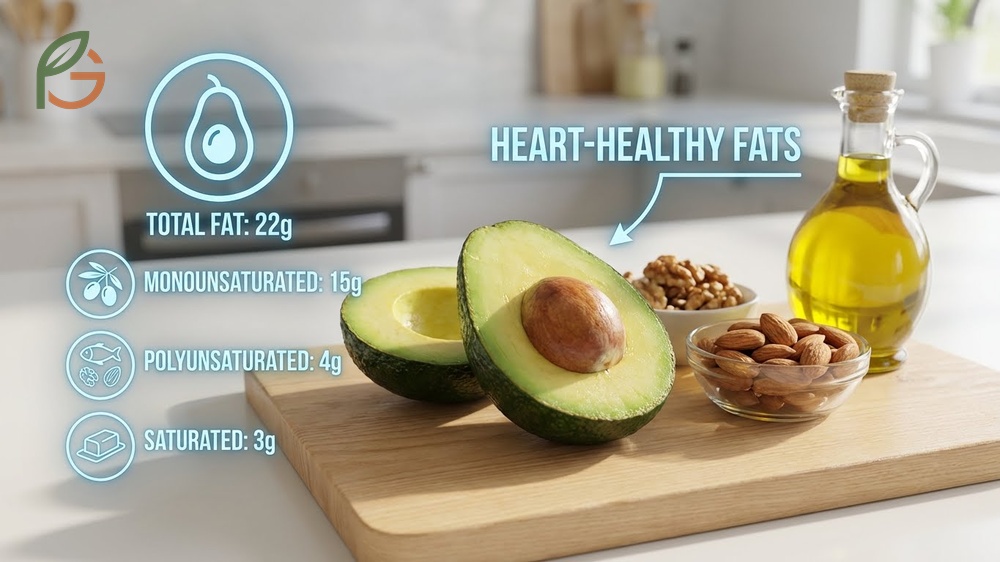
A medium avocado (about 201g) contains 22 grams of total fat, making it one of the fattiest fruits you can grow in your garden[1]. Don’t let that number scare you, though. The fat composition is what matters most for your health.
Studies demonstrate that 15 grams of that fat is monounsaturated, 4 grams is polyunsaturated, and only 3 grams is saturated[1]. This makes avocados unique among fruits—they’re packed with the same heart-healthy fats found in olive oil and nuts. A smaller 50g serving provides about 8 grams of total fat with just 1 gram of saturated fat[2].
The fat content varies slightly depending on the avocado variety you grow. Hass avocados, the most common variety in US gardens and stores, typically have 12-16% fat content in the flesh. This translates to about 240 calories per medium fruit, with 80% of those calories coming from fat.
Total Fat Breakdown by Avocado Size
Understanding portion sizes helps you manage your fat intake more effectively. The fat content scales proportionally with avocado size, but the ratio of good-to-bad fats remains consistent.
A whole avocado might seem like a lot of fat, but research shows it’s the type that benefits your cardiovascular system. Most people eat half an avocado as a serving, which provides about 11 grams of fat—roughly the same as 1.5 tablespoons of olive oil.
This table compares total fat, monounsaturated fat, and saturated fat content across four common avocado serving sizes from 50 grams to one whole medium avocado
| Serving Size | Total Fat | Monounsaturated Fat | Saturated Fat |
|---|---|---|---|
| 50g (about 1/4 avocado) | 8g[2] | 5g | 1g[2] |
| 100g (about 1/2 avocado) | 15g | 10g | 2g |
| 150g (about 3/4 avocado) | 17g | 11g | 2.5g |
| 201g (1 medium avocado) | 22g[1] | 15g[1] | 3g[1] |
Monounsaturated vs Saturated Fat Content
The ratio between monounsaturated and saturated fat in avocados is roughly 5:1, which is exceptional for cardiovascular health. This means you’re getting five times more heart-healthy fat than the kind that raises LDL cholesterol.
Current dietary guidelines emphasize replacing saturated fats with unsaturated fats rather than eliminating fat altogether. Avocados make this substitution easy since they’re naturally low in saturated fat while providing high amounts of beneficial fats that your body needs for nutrient absorption and cell function.
Important Note: While avocados are high in total fat, they won’t raise your cholesterol levels like saturated fat sources do. The 3 grams of saturated fat per medium avocado represents just 15% of the daily limit for a 2,000-calorie diet[5].
Saturated Fat in Avocado
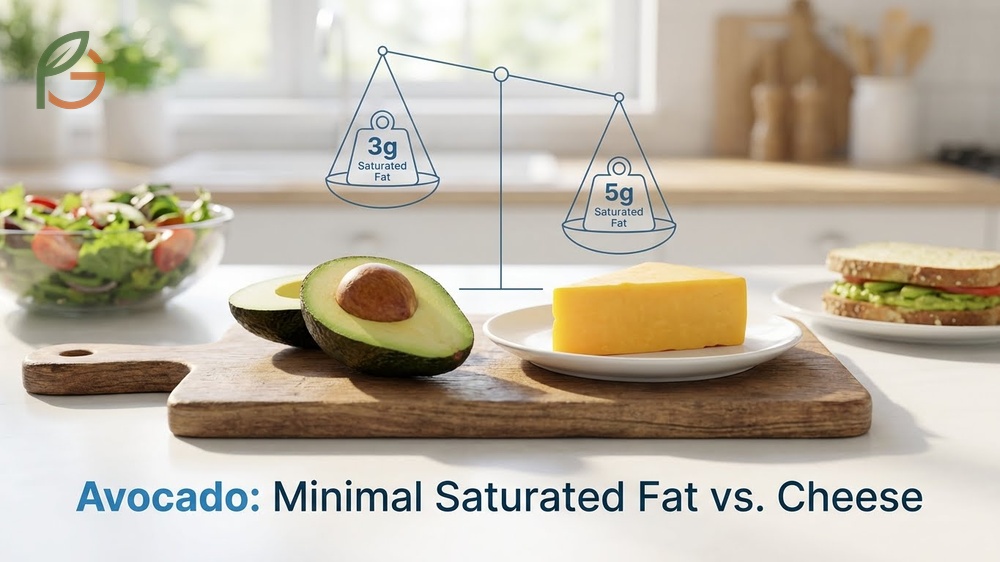
Avocados contain minimal saturated fat compared to other high-fat foods. A medium avocado has only 3 grams of saturated fat[1], while a single slice of cheddar cheese contains 5 grams[2].
The FDA states that most fruits provide negligible amounts of saturated fat, with avocados providing just 0.5 grams per ounce[6]. This low saturated fat content is why dietitians often recommend avocados as a butter or mayo substitute in sandwiches and salads. You’ll get creaminess without the cholesterol-raising effects.
What matters most isn’t avoiding all saturated fat—it’s keeping it within recommended limits while maximizing unsaturated fat intake. Avocados help you do both naturally since the majority of their fat profile consists of oleic acid, a monounsaturated fatty acid that actually improves your lipid profile.
Daily Saturated Fat Limits
The Dietary Guidelines for Americans recommend limiting saturated fat to less than 10% of your daily calories[5]. For a 2,000-calorie diet, that’s 200 calories or about 20 grams of saturated fat per day.
One medium avocado uses up 15% of your daily saturated fat allowance while providing 68% of your daily fiber needs and essential vitamins. This makes it a nutrient-dense choice compared to other high-fat foods that contribute saturated fat without the beneficial nutrients.
- Track your portion sizes—half an avocado provides 1.5g saturated fat, leaving room for other foods
- Replace butter (7g saturated fat per tablespoon) with mashed avocado (0.5g per tablespoon)
- Substitute avocado for cheese in salads to cut saturated fat by 60-70%
- Use avocado oil for cooking instead of coconut oil, which has 12g saturated fat per tablespoon
- Pair avocados with vegetables rather than processed meats to keep total saturated fat low
Comparing Avocado to Other Fat Sources
Understanding how avocado stacks up against common fat sources helps you make smarter substitutions. The key difference isn’t just the amount of fat—it’s the fat quality and what else comes with it.
A slice of cheddar cheese has 30mg cholesterol and 180mg sodium alongside its 5g saturated fat[2]. Meanwhile, an equivalent amount of avocado (about 28g) provides zero cholesterol, virtually no sodium, and less than 1g saturated fat. You’re cutting out the ingredients that raise blood pressure and cholesterol while keeping the creamy texture.
Type of Fat in Avocado
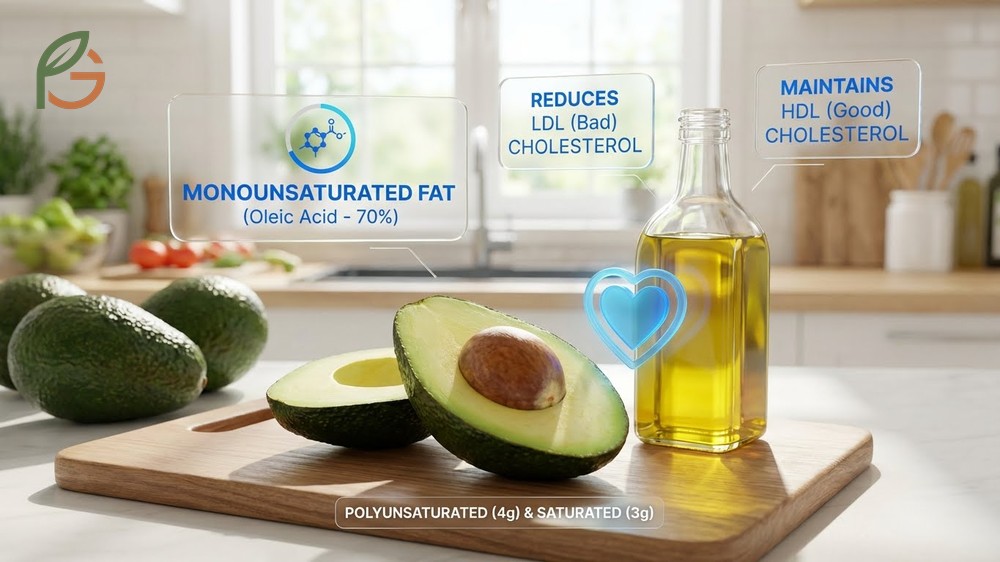
Avocados are rich in monounsaturated fatty acids, particularly oleic acid, which makes up about 70% of their fat content[3]. This is the same beneficial fat that gives olive oil its reputation for heart health. Research consistently shows this type of fat reduces LDL (bad) cholesterol while maintaining or slightly increasing HDL (good) cholesterol.
The remaining fat comes from polyunsaturated fatty acids (4g per medium avocado) and a small amount of saturated fat (3g). This fat composition is nearly ideal for cardiovascular health—you’re maximizing the fats that benefit your heart while minimizing those that don’t.
Unlike many plant foods that are either high in omega-6 or omega-3, avocados provide a modest amount of both types of polyunsaturated fats. While they’re not the richest source of omega-3s, they contribute to your overall intake without significantly skewing your omega-6 to omega-3 ratio.
Oleic Acid Heart Health Benefits
Oleic acid is the star player in avocado’s fat profile. Animal studies found that avocado oil lowers blood pressure as effectively as common blood pressure medications, primarily due to this monounsaturated fatty acid. It works by improving arterial flexibility and reducing inflammation in blood vessel walls.
Research shows oleic acid also helps control blood sugar levels, which lowers your risk of both heart disease and diabetes. A meta-analysis of 10 studies with 229 participants found that eating 1-1.5 avocados daily significantly reduced total cholesterol and LDL cholesterol[4]. The oleic acid content is what drives these improvements.
- Reduces LDL (bad) cholesterol levels by 10-15% when replacing saturated fats
- Maintains stable HDL (good) cholesterol, preserving cardiovascular protection
- Lowers blood pressure through improved arterial function
- Decreases systemic inflammation linked to heart disease and metabolic disorders
- Enhances insulin sensitivity, helping regulate blood sugar levels
- Improves absorption of fat-soluble vitamins A, D, E, and K from other foods
Polyunsaturated Fat and Omega-3 Content
A medium avocado provides about 4 grams of polyunsaturated fat[1], which includes both omega-6 and omega-3 fatty acids. An 85-gram serving contains approximately 94 milligrams of ALA (alpha-linolenic acid), the plant-based form of omega-3.
While avocados aren’t the richest source of omega-3s—fatty fish provides EPA and DHA, which your cells use more efficiently—they still contribute to your daily intake. The American Heart Association recommends 600-1,200mg of omega-3s daily, so avocados provide about 8-16% of that target depending on your serving size.
What’s more important is that avocados don’t overload you with omega-6 fats the way many vegetable oils do. They maintain a reasonable balance, which helps reduce inflammatory responses in your body. Combining avocados with omega-3-rich foods like salmon, walnuts, or chia seeds gives you a more complete fat profile.
Gardening Tip: If you’re growing avocados in warmer US zones (9-11), the fat content in your homegrown fruit will be similar to store-bought varieties. Hass avocados thrive in temperatures of 60-85°F and produce fruit with consistent 12-16% fat content. Harvest when fruit is firm—it’ll ripen off the tree while developing that creamy, fatty texture.
Avocado Cholesterol Impact
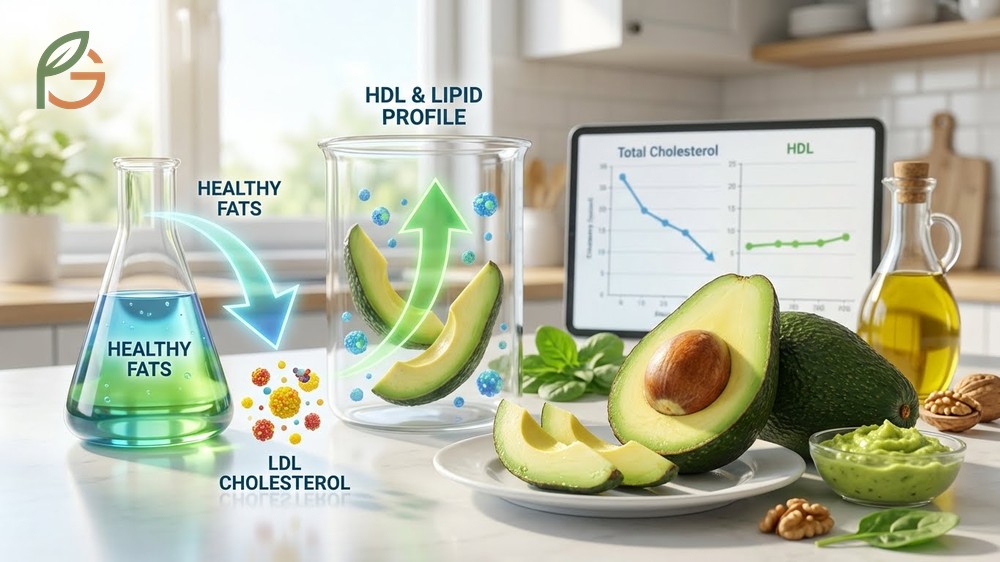
Avocados contain zero cholesterol[1], and research demonstrates they actually lower your blood cholesterol levels rather than raising them. A 50g serving is completely cholesterol-free, sodium-free, and sugar-free[2]—making it one of the cleanest fat sources available.
Studies on avocado consumption show consistent improvements in lipid profiles. When people substitute saturated fat sources with avocados, their total cholesterol drops, LDL cholesterol decreases significantly, and triglycerides improve. The HDL (good) cholesterol remains stable or increases slightly, which is exactly what you want for heart protection.
Here’s how it works: The monounsaturated fats in avocados help remove LDL cholesterol from your bloodstream while supporting HDL cholesterol production. The fiber content (10g per medium avocado) binds to cholesterol in your digestive tract, preventing absorption. Together, these mechanisms create a powerful cholesterol-lowering effect.
- Replace cholesterol-containing foods like cheese, butter, and processed meats
- Provide monounsaturated fats that actively lower LDL cholesterol levels
- Supply 10g of fiber per medium avocado to block dietary cholesterol absorption
- Contain plant sterols that compete with cholesterol for absorption in your gut
- Reduce oxidation of LDL particles, making them less likely to damage arteries
A University of the Pacific meta-analysis found that consuming 1-1.5 avocados per day greatly reduced total cholesterol, LDL cholesterol, and triglycerides when eaten in place of saturated fat sources[4]. The key phrase is “in place of”—you get the best results when you’re substituting avocado for less healthy fats, not just adding it on top of your current diet.
If you’re monitoring your cholesterol, avocados fit naturally into heart-healthy eating patterns like the Mediterranean diet. They’re particularly effective when you pair them with vegetables, whole grains, and lean proteins rather than processed foods or red meat.
Daily Fat Intake Recommendations
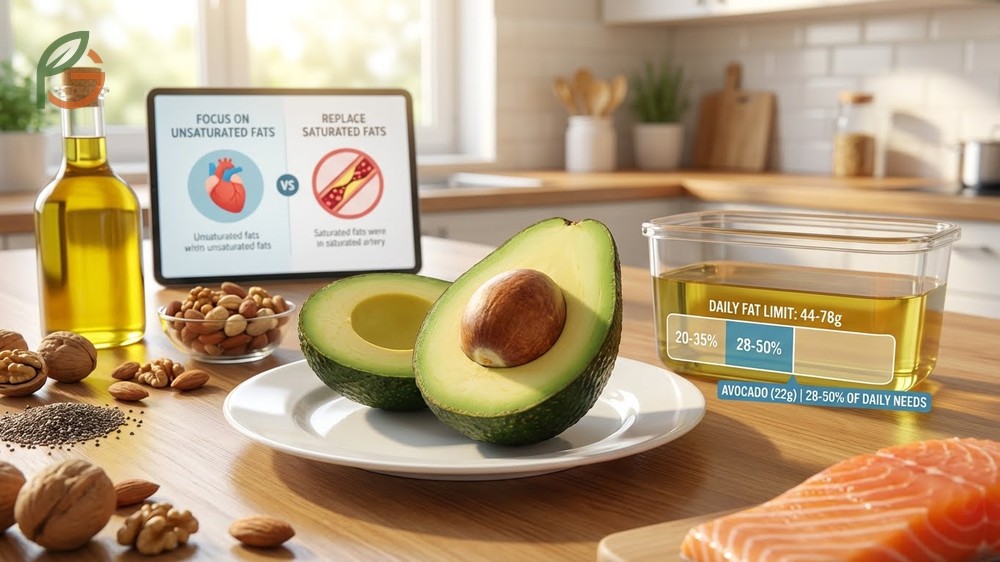
The Dietary Guidelines for Americans recommend getting 20-35% of your total daily calories from fat[7]. For a 2,000-calorie diet, that translates to 44-78 grams of total fat per day. A medium avocado’s 22 grams fits comfortably within this range, providing 28-50% of your daily fat needs.
What matters more than total fat is the type of fat you’re eating. Current guidelines emphasize replacing saturated fats with unsaturated fats rather than following an ultra-low-fat diet. Avocados make this easy since they’re naturally high in monounsaturated fat (the kind you should eat more of) and low in saturated fat (the kind you should limit).
For children, the recommendations differ slightly. Kids ages 1-3 need 30-40% of calories from fat, while those ages 4-18 should get 25-35%. Growing avocados in your garden and incorporating them into family meals helps meet these targets with whole-food sources rather than processed options.
If you’re eating 1-1.5 avocados per day—the amount shown to improve cholesterol levels—you’re consuming 22-33 grams of fat from avocados alone. This leaves 11-56 grams for other fat sources depending on your calorie needs. Balance avocado with nuts, seeds, olive oil, and fatty fish for a complete healthy fat profile.
Practical ways to incorporate avocados without exceeding fat limits include using half an avocado as a sandwich spread instead of mayo, adding a quarter avocado to smoothies, or topping salads with sliced avocado instead of cheese. These swaps improve fat quality while keeping quantities reasonable.
For High Cholesterol Diets: If your doctor recommended reducing saturated fat and cholesterol, avocados are one of your best allies. Research shows they lower LDL cholesterol when you use them to replace butter, cheese, or fatty meats. Start with half an avocado per day and track how your lipid panel responds over 2-3 months.
Conclusion
The evidence is clear: avocados contain significant fat (22g per medium fruit), but it’s the heart-healthy kind your body needs. With 15g of monounsaturated fat, only 3g of saturated fat, and zero cholesterol, avocados improve your lipid profile rather than harming it. Current nutritional guidance emphasizes fat quality over quantity, making avocados an ideal choice for gardeners and health-conscious eaters alike.
Whether you’re growing Hass avocados in your California backyard or buying them at your local market, you’re getting one of nature’s best fat sources. FruitGarden encourages home gardeners to consider avocado trees for zones 9-11—you’ll harvest nutrient-dense fruit while enjoying the satisfaction of homegrown produce that genuinely supports cardiovascular health.
Medical Disclaimer
Important Medical Disclaimer: This content is for informational and educational purposes only. It is not intended as a substitute for professional medical advice, diagnosis, or treatment. Always consult a qualified healthcare professional or registered dietitian before making significant changes to your diet, especially if you have high cholesterol, heart disease, diabetes, or other medical conditions. Individual nutritional needs vary based on age, activity level, health status, and medications.
Frequently Asked Questions
How Many Grams of Fat Are in an Avocado?
A medium avocado (201g) contains 22 grams of total fat, broken down into 15g monounsaturated, 4g polyunsaturated, and 3g saturated fat. A half avocado provides about 11 grams of fat, while a quarter avocado has approximately 5.5 grams. The exact amount varies slightly based on avocado size and variety.
Does Avocado Have Saturated Fat?
Yes, but very little. A medium avocado contains just 3 grams of saturated fat, which is only 15% of the recommended daily limit for a 2,000-calorie diet. This minimal amount is far outweighed by the 15 grams of heart-healthy monounsaturated fat in the same fruit.
Is Avocado High in Cholesterol?
No, avocados contain zero cholesterol. Research shows they actually lower blood cholesterol levels rather than raising them. Studies demonstrate that eating 1-1.5 avocados daily reduces total cholesterol and LDL (bad) cholesterol when you substitute them for saturated fat sources like cheese or butter.
What Type of Fat Is Avocado?
Avocado is primarily a monounsaturated fat, with oleic acid making up about 70% of its fat content. This is the same beneficial fat found in olive oil. The remaining fat consists of polyunsaturated fatty acids (18%) and a small amount of saturated fat (14%).
How Much Fat Does an Avocado Have Compared to Olive Oil?
A medium avocado has 22g of fat, which equals about 1.5 tablespoons of olive oil (14g fat per tablespoon). Both provide similar types of heart-healthy monounsaturated fats, but avocados also give you 10g of fiber, potassium, and vitamins that oil doesn’t contain. Half an avocado matches roughly one tablespoon of olive oil in fat content.
Are Avocados High in Fat Compared to Other Fruits?
Yes, avocados are the fattiest common fruit. Most fruits contain less than 0.5g of fat per serving, while avocados have 22g per medium fruit. However, this isn’t a drawback—the fat is predominantly heart-healthy monounsaturated fat that improves cholesterol levels and helps you absorb fat-soluble vitamins from other foods.
How Much Saturated Fat in Avocado Should I Worry About?
You shouldn’t worry much about the 3g of saturated fat in a medium avocado. It represents only 15% of your daily limit and comes packaged with 15g of beneficial monounsaturated fat, 10g of fiber, and essential nutrients. The fiber actually helps block cholesterol absorption, making the small saturated fat content even less concerning.