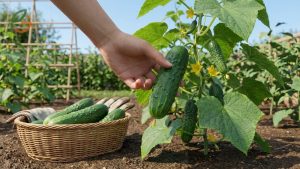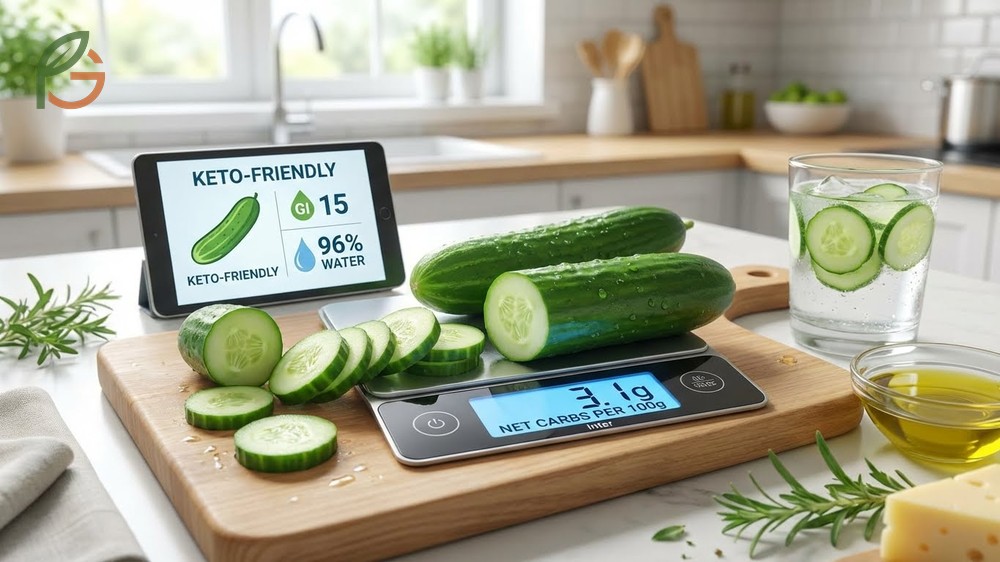
How many carbs in cucumbers? Research shows cucumbers contain just 3.1g net carbs per 100g, making them one of the most keto-friendly vegetables available[1]. With a glycemic index of only 15 and 96% water content, cucumbers won’t spike your blood sugar or kick you out of ketosis[2]. FruitGarden synthesizes current nutritional research and USDA data to help gardeners and health-conscious readers understand exactly how cucumbers fit into low-carb eating plans.
Quick Answer
- One cup of sliced cucumbers contains 3g net carbs and only 16 calories[3]
- A medium cucumber (99g) has 2g total carbs and 1g fiber, giving you roughly 1g net carbs[4]
- Cucumbers have a glycemic index of 15—virtually zero impact on blood sugar levels[2]
- You can eat cucumbers daily on keto diets (under 20-50g net carbs/day limit)[5]
How Many Carbs in Cucumbers
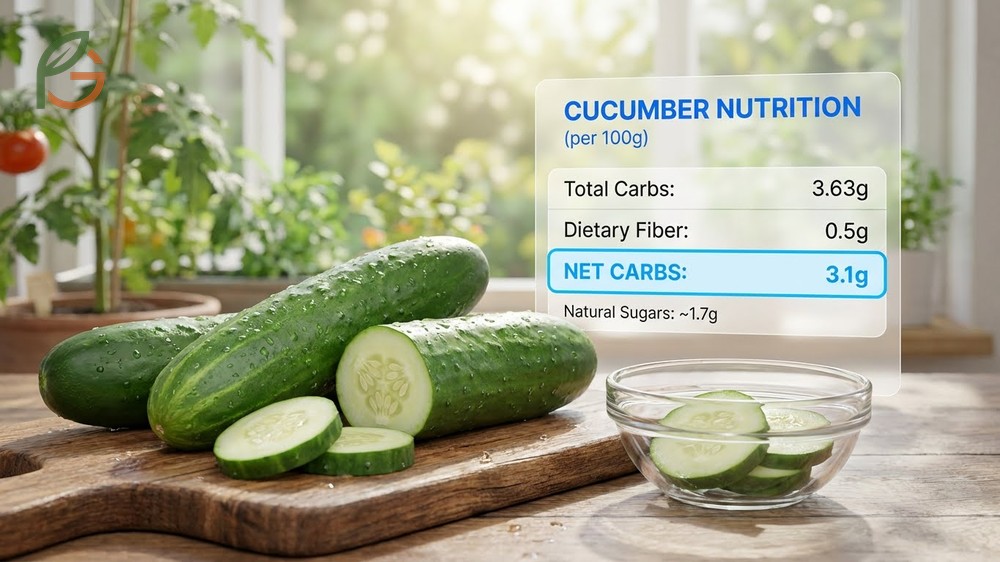
Cucumbers contain approximately 3.63g total carbohydrates per 100g serving[1]. After subtracting the 0.5g of dietary fiber, you’re left with 3.1g net carbs—the number that actually impacts your blood sugar and ketosis state. This makes cucumbers one of the lowest-carb vegetables you can grow in your garden.
The carbohydrate content in cucumbers comes primarily from natural sugars (about 1.7g per 100g) and minimal starch[2]. What often gets overlooked is that cucumber varieties don’t significantly differ in carb content—English cucumbers, Persian cucumbers, and standard slicing cucumbers all hover around the same 3-4g range per 100g serving.
Most people don’t realize that 96% of a cucumber’s weight is water, which explains why it’s so refreshing and why the absolute carb numbers stay remarkably low even when you eat a whole cucumber. A large cucumber weighing 280g contains roughly 10g total carbs, but remember that’s spread across nearly a pound of food.
Cucumber Nutritional Profile for Keto
Beyond the low carb count, cucumbers deliver valuable micronutrients that support overall health during keto dieting. Research shows one cup of sliced cucumber provides 21% of your daily vitamin K needs—crucial for bone health and blood clotting[3]. You’ll also get small amounts of vitamin C, manganese, magnesium, and potassium.
The 0.6g of protein and 0.2g of fat per cup won’t significantly contribute to your macros, but the 95% water content helps with hydration—something many keto dieters struggle with during the initial adaptation phase. The vegetable’s minimal calorie density (just 16 calories per cup) means you can eat substantial portions without worrying about going over your daily limits.
- Vitamin K: 21% DV per cup—supports bone density and cardiovascular health
- Potassium: 147mg per 100g—helps prevent keto flu and muscle cramps
- Magnesium: 13mg per 100g—aids in electrolyte balance during ketosis
- Antioxidants: Beta-carotene and flavonoids that combat oxidative stress
- Silica: Trace mineral that supports connective tissue and skin health
Net Carbs Calculation
Net carbs represent the carbohydrates your body actually digests and converts to glucose. The formula is simple: total carbohydrates minus dietary fiber equals net carbs. For cucumbers, this calculation looks like 3.63g total carbs – 0.5g fiber = 3.13g net carbs per 100g serving.
This matters on keto because fiber doesn’t raise blood sugar or trigger insulin release. Your body can’t break down fiber into glucose, so it passes through your digestive system without affecting ketosis. That’s why keto dieters track net carbs rather than total carbs when planning meals.
Important Note: Always check labels on pickled or processed cucumbers, as many brands add sugar during brining. Fresh cucumbers give you the most accurate carb counts for keto meal planning.
Are Cucumbers Keto Friendly
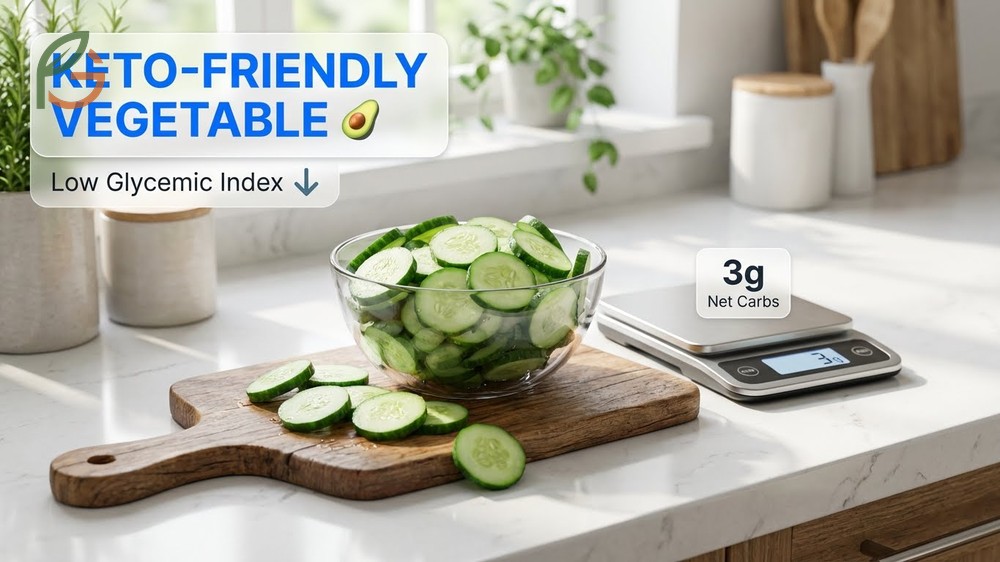
Cucumbers are definitively keto-friendly vegetables that fit comfortably within standard ketogenic macronutrient ranges. With only 3g net carbs per cup, you’d need to eat more than six cups of sliced cucumber to reach even the lower 20g daily carb threshold that strict keto dieters follow[5].
The vegetable’s low glycemic index of 15 ensures it won’t spike your blood sugar or kick you out of ketosis[2]. Studies demonstrate that foods with a GI below 55 have minimal impact on glucose levels, and cucumber sits far below that threshold. This makes it an ideal choice for anyone monitoring blood sugar while following a ketogenic eating plan.
Current guidance emphasizes eating whole, unprocessed vegetables on keto rather than relying on packaged “keto” products. Cucumbers check every box—they’re natural, nutrient-dense, hydrating, and provide satisfying crunch without the carb load of chips or crackers.
Daily Carb Limit Keto
The ketogenic diet typically restricts net carbohydrate intake to less than 50g per day, with most people achieving optimal ketosis at 20-30g daily[5]. Medical literature from the NIH confirms that consuming fewer than 20g of net carbs almost guarantees ketosis for most individuals[6].
Within these limits, cucumbers offer remarkable flexibility. A person following strict 20g keto could eat three cups of cucumber slices (9g net carbs) and still have 11g remaining for other vegetables, nuts, or trace carbs in meat and dairy. Those following more moderate 50g approaches have even more room to incorporate cucumbers into multiple meals throughout the day.
- Strict keto (20g net carbs/day): Up to 6 cups cucumber slices daily
- Standard keto (30g net carbs/day): Up to 9 cups cucumber slices daily
- Moderate keto (50g net carbs/day): Up to 15 cups cucumber slices daily
- With other vegetables: 1-2 cups cucumber leaves room for leafy greens and cruciferous vegetables
- Pre-workout timing: Cucumbers provide hydration without adding significant carbs before exercise
Glycemic Index of Cucumber
Cucumber’s glycemic index of 15 classifies it as a very low GI food—among the lowest of all vegetables[2]. The glycemic load (GL) registers at essentially zero, meaning even large servings have negligible effects on blood glucose. For comparison, watermelon has a GI of 72, and carrots clock in around 39.
This ultra-low GI occurs because cucumbers contain minimal digestible carbohydrates and high water content. The small amount of natural sugar present gets absorbed slowly, preventing the rapid blood sugar spikes that higher-carb foods cause. This property makes cucumbers particularly valuable for people with insulin resistance or diabetes who also want to follow ketogenic approaches.
Tip for Blood Sugar Management: Pairing cucumbers with fat sources like olive oil, avocado, or cheese further blunts any glycemic response, making them even more blood-sugar friendly than when eaten alone.
Cucumber Carbs Per Serving Sizes
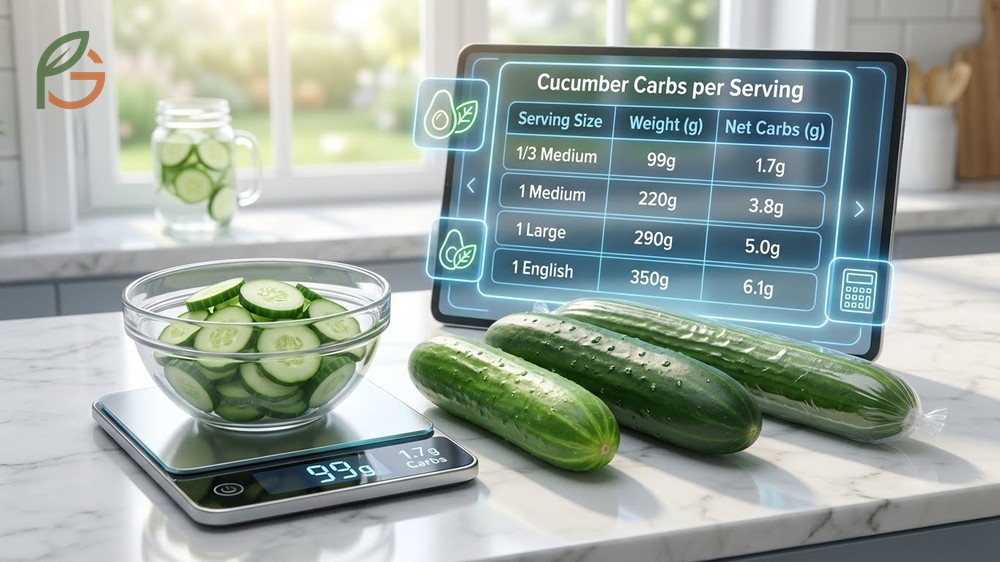
Understanding carb counts across different cucumber serving sizes helps you plan keto meals accurately. The FDA standardizes one serving as 1/3 medium cucumber (99g), but most people eat cucumbers by the slice, cup, or whole vegetable[4].
A medium cucumber typically weighs 200-250g, while large cucumbers can reach 280-300g. English cucumbers tend to be longer and thinner, averaging 300-400g, but their carb concentration per gram stays consistent with regular varieties. The key is measuring by weight or volume rather than counting “one cucumber” to get precise carb tracking.
This table compares total carbohydrates, dietary fiber, net carbs, and calories across six common cucumber serving sizes from small slices to whole large cucumbers
| Serving Size | Weight | Total Carbs | Fiber | Net Carbs | Calories |
|---|---|---|---|---|---|
| 10 slices | 52g | 1.9g | 0.3g | 1.6g | 8 |
| 1/3 medium (FDA serving) | 99g | 2g[4] | 1g | 1g | 10 |
| 1 cup sliced | 104g | 3.8g | 0.5g | 3.3g | 16 |
| 1 medium cucumber | 200g | 7.3g | 1.0g | 6.3g | 30 |
| 1 large cucumber | 280g | 10.2g | 1.4g | 8.8g | 42 |
| 1 English cucumber | 350g | 12.7g | 1.8g | 10.9g | 53 |
The table reveals that even eating an entire large cucumber keeps you under 11g net carbs—well within any keto carb limit. However, most recipes call for 1-2 cups of cucumber, which translates to a mere 3-7g net carbs per meal. This gives you plenty of room to add other low-carb vegetables, proteins, and healthy fats while staying in ketosis.
Low Carb Vegetables List Comparison
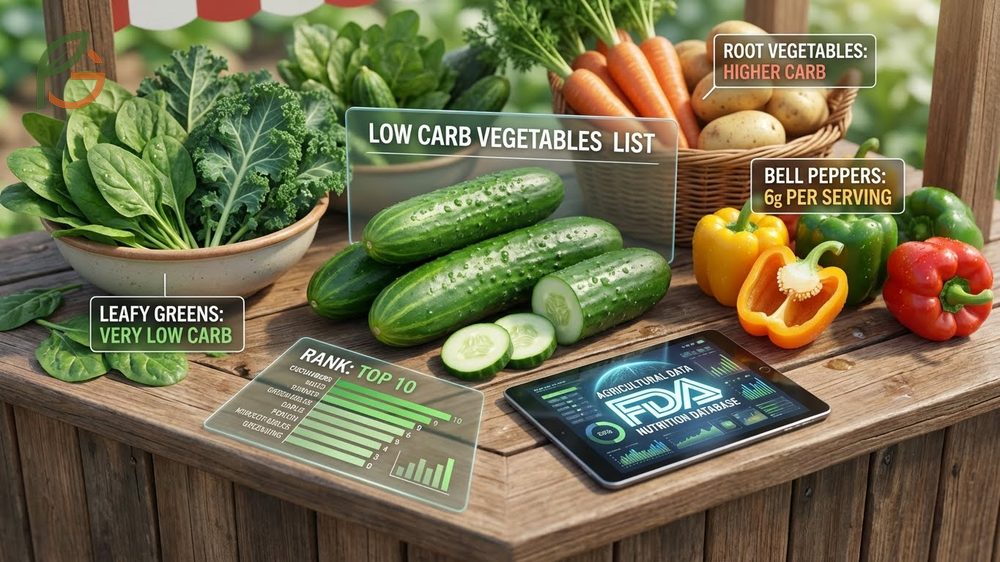
Agricultural data shows cucumbers rank among the top 10 lowest-carb vegetables available to gardeners and shoppers. When compared to other popular keto vegetables, cucumbers hold their own alongside leafy greens and above-ground vegetables that typically contain fewer carbs than root vegetables.
The FDA’s raw vegetable nutrition database reveals interesting patterns in carbohydrate distribution[4]. Cucumbers contain fewer carbs than bell peppers (6g per serving), summer squash (4g), and significantly less than onions (11g) or potatoes (26g). This positions cucumbers as a strategic vegetable choice for strict keto practitioners.
| Vegetable | Net Carbs | Keto Status |
|---|---|---|
| Celery | 1.4g | Excellent |
| Cucumber | 3.1g | Excellent |
| Lettuce | 1.5g | Excellent |
| Zucchini | 2.1g | Excellent |
| Bell Pepper | 4.6g | Good |
| Broccoli | 4.0g | Good |
| Tomato | 2.7g | Excellent |
What’s particularly interesting about cucumbers compared to pickles: fresh cucumbers contain slightly more carbs than dill pickles (2.4g total carbs per 100g)[7]. However, many commercial pickles add sugar during fermentation, which can dramatically increase carb counts—always read labels on pickled products.
- Versatility: Works raw, pickled, spiralized, or blended into smoothies
- Year-round availability: Unlike seasonal vegetables, cucumbers are always in grocery stores
- Easy to grow: Produces abundantly in home gardens with minimal care
- Budget-friendly: Costs less per serving than many keto-approved vegetables
- High water content: Helps meet hydration needs during keto adaptation
- Mild flavor: Pairs well with high-fat dressings and dips without competing flavors
Cucumber Keto Recipes
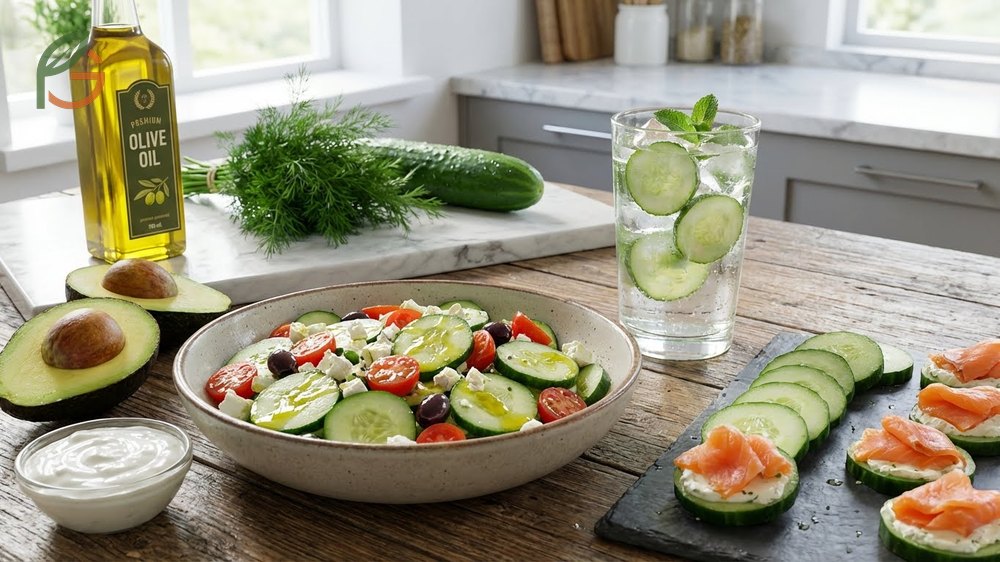
Cucumbers shine in keto recipes because they add volume, crunch, and hydration without carb-loading your meals. The mild flavor profile means they absorb dressings and seasonings beautifully, making them ideal for salads, snacks, and even beverages. Most keto cucumber recipes keep net carbs under 5g per generous serving.
Research shows that combining cucumbers with fat sources like olive oil, avocado, or full-fat dairy creates more satisfying meals that keep you fuller longer[3]. The fat slows digestion and further minimizes any blood sugar impact from the cucumber’s minimal carbs. This principle applies whether you’re making quick snacks or elaborate side dishes.
Keto Cucumber Salad
A classic cucumber salad using 2 cups sliced cucumber (6g net carbs), red onion (2g), fresh dill, olive oil, and apple cider vinegar delivers about 8g net carbs total. Divided into 4 servings, that’s only 2g net carbs per serving—perfect alongside grilled meats or fish. The vinegar adds tanginess without sugar, and olive oil provides healthy monounsaturated fats.
For an Asian-inspired variation, try sesame-lime cucumber salad with toasted sesame oil, rice vinegar, lime juice, and crushed red pepper. This version keeps carbs similarly low while adding different flavor profiles. The sesame oil contributes omega-6 fatty acids and vitamin E, enhancing both taste and nutritional value.
Cucumber Snack Ideas
Cucumber slices work brilliantly as low-carb “chips” for dips and spreads. Pair 1 cup cucumber slices (3g net carbs) with 2 tablespoons full-fat cream cheese mixed with herbs (1g net carbs) for a 4g net carb snack that satisfies crunch cravings. You can also hollow out cucumber sections and stuff them with tuna salad, egg salad, or herbed cheese for grab-and-go options.
Cucumber noodles (made with a spiralizer) substitute for pasta in cold salads. Toss spiralized cucumber with pesto, cherry tomatoes, mozzarella, and grilled chicken for a complete keto meal under 10g net carbs. The “noodles” provide bulk and texture without the 40g+ carbs you’d get from regular pasta.
- Cucumber boats: Halve lengthwise, scoop out seeds, fill with chicken or tuna salad
- Cucumber chips: Slice thin, brush with olive oil, season with salt, bake at 200°F (93°C) until crispy
- Cucumber smoothie: Blend with spinach, avocado, coconut milk, and stevia for a savory green drink
- Tzatziki dip: Grated cucumber mixed with full-fat Greek yogurt, garlic, and dill
- Cucumber sushi rolls: Use thin cucumber slices instead of rice to wrap salmon and avocado
Recipe Tip: Salt cucumber slices and let them sit 15 minutes before using in salads. This draws out excess water, concentrates flavor, and prevents watery dressings. Pat dry with paper towels before adding to recipes.
Conclusion
The evidence is clear: cucumbers are exceptional keto-friendly vegetables with only 3.1g net carbs per 100g and a glycemic index of 15. You can confidently incorporate them into ketogenic meal plans without fear of disrupting ketosis or spiking blood sugar. Their combination of low carbs, high water content, and essential micronutrients makes them ideal for anyone following low-carb eating approaches.
Current guidance emphasizes choosing whole, unprocessed vegetables like cucumbers over packaged keto products. Whether you’re growing them in your garden or buying them fresh, cucumbers deliver nutrition, hydration, and satisfying crunch at a carb cost that fits even the strictest 20g daily limit. FruitGarden recommends keeping cucumbers as a staple in your keto vegetable rotation—they’re versatile enough for every meal from breakfast smoothies to dinner salads.
Medical Disclaimer
Important Medical Disclaimer: This content is for informational and educational purposes only. It’s not intended as a substitute for professional medical advice, diagnosis, or treatment. Always consult a qualified healthcare professional or registered dietitian before making any changes to your diet, especially if you have diabetes, metabolic disorders, or other medical conditions. Individual carbohydrate tolerance varies, and what works for one person on a ketogenic diet may not work for another.
Frequently Asked Questions
How many carbs are in a whole cucumber?
A medium cucumber (200g) contains approximately 7.3g total carbs and 6.3g net carbs, while a large cucumber (280g) has about 10.2g total carbs and 8.8g net carbs. Even eating an entire large cucumber keeps you well within keto carb limits of 20-50g per day.
Can you eat cucumbers every day on keto?
Yes, you can safely eat cucumbers daily on a ketogenic diet. With only 3g net carbs per cup, cucumbers fit easily into all keto carb limits. Their high water content (96%) also helps with hydration, which is important during keto adaptation when electrolyte balance shifts.
Are cucumbers high in carbs compared to other vegetables?
No, cucumbers are among the lowest-carb vegetables available. At 3.1g net carbs per 100g, they contain fewer carbs than bell peppers (4.6g), broccoli (4.0g), and significantly less than starchy vegetables like potatoes (26g) or corn (18g). Only celery and lettuce beat cucumbers for ultra-low carb counts.
What’s the difference between carbs in pickles vs fresh cucumbers?
Fresh cucumbers contain slightly more carbs (3.6g per 100g) than plain dill pickles (2.4g per 100g) because pickling removes some water content. However, many commercial pickles add sugar during processing, which can increase carbs significantly—always check labels. Homemade pickles using vinegar without added sugar remain keto-friendly.
How many cucumber slices can I eat on keto?
You can eat substantial amounts of cucumber slices on keto. Ten slices (52g) contain only 1.6g net carbs. If following strict 20g keto, you could eat 120+ slices daily and still have room for other foods. Practically, most people eat 1-2 cups (20-40 slices) as snacks or in salads, totaling 3-7g net carbs.
Do cucumbers raise blood sugar?
Cucumbers have minimal impact on blood sugar due to their extremely low glycemic index of 15 and near-zero glycemic load. Research shows foods with GI values below 55 don’t cause significant blood glucose spikes. The 96% water content and minimal sugar (1.7g per 100g) mean cucumbers are safe for diabetics and anyone monitoring blood sugar.
What’s the best way to eat cucumbers on keto?
The best keto cucumber preparations pair them with healthy fats to increase satiety and slow any glucose absorption. Try cucumber slices with full-fat cream cheese, add them to salads with olive oil dressing, make cucumber “noodles” with pesto, or blend them into smoothies with avocado. These combinations keep you fuller longer while maintaining very low net carbs.