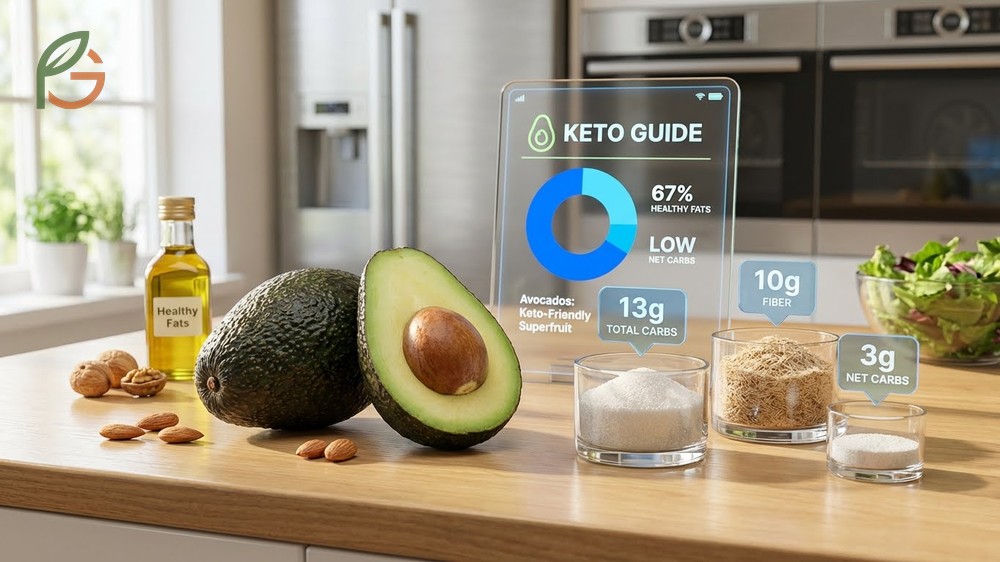
How many carbs in avocado? A whole medium avocado contains 13 grams of total carbohydrates, but with 10 grams of fiber, you’re only getting 3 grams of net carbs[1]. This makes avocados one of the most keto-friendly fruits you’ll find. Research shows that avocados fit perfectly into low-carb eating patterns thanks to their high fiber content and healthy monounsaturated fats, which account for about 67% of their total fat content[1]. FruitGarden synthesizes current nutritional research to help you understand how avocados support your dietary goals, whether you’re managing carb intake for keto, diabetes management, or general wellness.
Quick Answer
- Whole avocado: 3g net carbs (13g total carbs minus 10g fiber)[1]
- Half avocado: 2g net carbs with 160 calories and 15g healthy fats[2]
- Keto-friendly: Fits easily into the 20-50g daily net carb limit for ketosis[3]
- Low glycemic index: GI of 40 won’t spike blood sugar levels[1]
How Many Carbs in Avocado
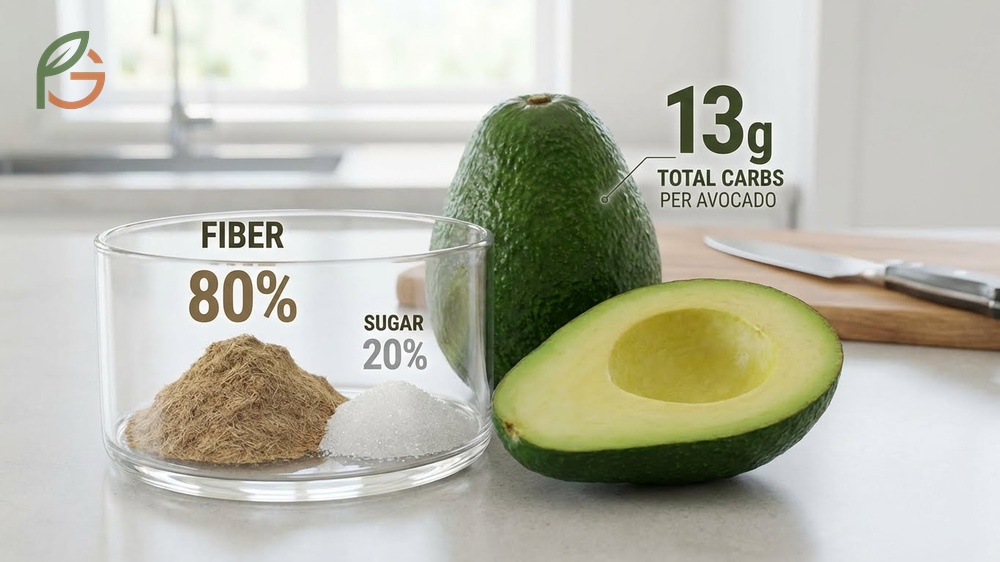
A whole medium avocado contains 13 grams of total carbohydrates[1]. What makes avocados unique is that most of these carbs come from fiber rather than sugar or starch.
Research demonstrates that avocado carbohydrates are composed of about 80% dietary fiber[4]. This high fiber proportion means your body doesn’t absorb most of these carbs as glucose, which is why net carb calculations matter for keto dieters and people managing blood sugar.
Unlike typical fruits that contain significant amounts of sugar, avocados have less than 1 gram of sugar per whole fruit[4]. This minimal sugar content explains why avocados don’t taste sweet and why they work so well in savory dishes.
Total Carbs Breakdown
The 13 grams of total carbohydrates in a whole avocado break down into three components. Studies show that 10 grams come from dietary fiber, less than 1 gram from natural sugars, and the remaining amount from starch[5].
This composition differs dramatically from other popular fruits. For comparison, a medium banana contains about 27 grams of total carbs with only 3 grams of fiber, while an apple has 25 grams of carbs with 4 grams of fiber.
Fiber Content Matters
The 10 grams of fiber in a whole avocado consists of 70% insoluble fiber and 30% soluble fiber[4]. Insoluble fiber adds bulk to your digestive system and promotes regular bowel movements, while soluble fiber helps regulate blood sugar and cholesterol levels.
Current dietary guidance recommends 14 grams of fiber per 1,000 calories consumed. One whole avocado provides about 71% of this recommendation for someone eating 2,000 calories daily, making it an efficient way to meet your fiber needs.
Important Note: The fiber in avocados doesn’t raise blood sugar levels because your body can’t digest it. This is why we subtract fiber when calculating net carbs for keto diets.
Net Carbs in Avocado

Net carbs represent the carbohydrates your body actually digests and converts to glucose. Research-based nutrition calculations define net carbs as total carbohydrates minus fiber and certain sugar alcohols[6].
For avocados, the calculation is straightforward: 13 grams total carbs minus 10 grams fiber equals 3 grams net carbs per whole avocado. This low net carb count makes avocados one of the best fruits for anyone limiting carbohydrate intake.
Calculating Net Carbs
The formula for net carbs is simple but important to get right. Current guidance emphasizes subtracting only the fiber that occurs naturally in whole foods like avocados, vegetables, nuts, and seeds[6].
Most people following keto diets focus on staying under 20 grams of net carbs per day to maintain ketosis[3]. With only 3 grams of net carbs, a whole avocado uses just 15% of your daily carb budget, leaving plenty of room for other nutrient-dense foods.
Serving Size Variations
Different serving sizes change the net carb count proportionally. A half avocado (the most common serving) contains 2 grams of net carbs with 8.5 grams total carbs and 6.5 grams of fiber[2].
Here’s how different portions stack up for net carbs and other key nutrients:
This table compares net carbs, calories, and key nutrients across four common avocado serving sizes from one-quarter to whole fruit
| Serving Size | Net Carbs | Total Carbs | Fiber | Calories | Fat |
|---|---|---|---|---|---|
| 1/4 avocado | 0.75g | 3.25g | 2.5g | 60 | 5.5g |
| 1/2 avocado | 2g[2] | 8.5g | 6.5g | 160 | 15g |
| 3/4 avocado | 2.25g | 9.75g | 7.5g | 180 | 16.5g |
| Whole avocado | 3g[1] | 13g | 10g | 240 | 22g |
Avocado on Keto Diet
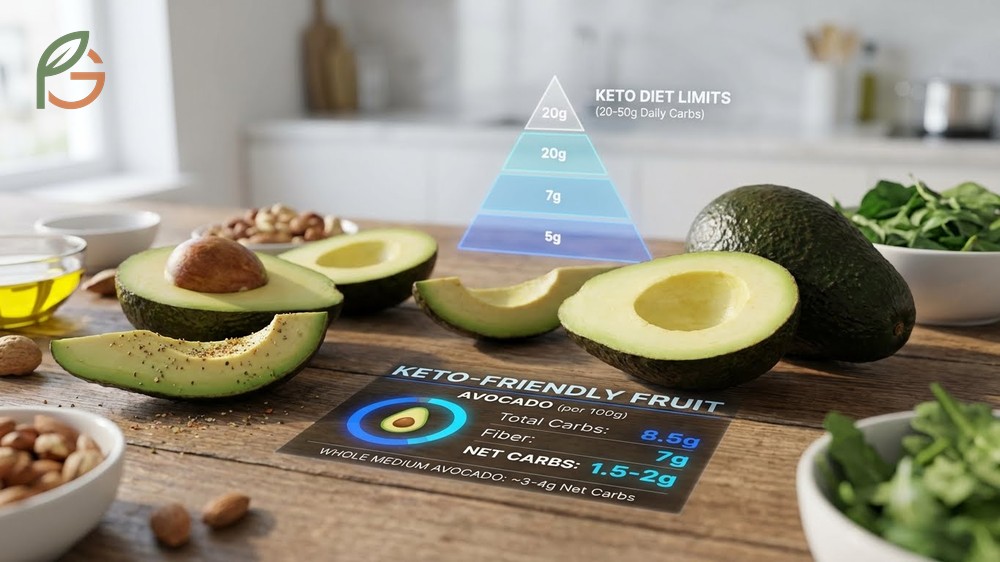
Avocados rank among the most keto-friendly foods you can eat. The ketogenic diet typically restricts net carbs to 20-50 grams per day, with stricter practitioners staying at 20 grams or below to ensure they maintain ketosis[3].
Studies demonstrate that the fat-to-carb ratio in avocados perfectly matches keto requirements. A half avocado provides a 3.75:1 ratio of fat grams to combined protein and net carb grams[2], which aligns with the 70-80% fat intake recommended for ketogenic diets.
The monounsaturated fats in avocados come primarily from oleic acid, the same heart-healthy fat found in olive oil. These fats help you feel satisfied longer and support your body’s transition to using fat for fuel instead of glucose.
You can eat avocados daily on keto without worrying about exceeding your carb limit. Even if you consume a whole avocado every day, you’re only using 15% of a 20-gram net carb budget or 6% of a 50-gram budget.
- Add half an avocado to your breakfast eggs for a filling morning meal with only 2g net carbs
- Blend avocado into keto smoothies for a creamy texture without adding dairy
- Make keto fat bombs by mixing avocado with cocoa powder and a low-carb sweetener
- Top keto-friendly burgers or grilled chicken with sliced avocado instead of carb-heavy sauces
- Use mashed avocado as a base for low-carb salad dressings and dips
- Stuff avocado halves with tuna salad or pulled pork for a zero-bread lunch
Keto Tip: The lower your daily carb intake, the faster you’ll deplete glycogen stores and enter ketosis. Starting at 20 grams or less accelerates this process compared to the 50-gram upper limit.
Keto Guacamole Recipe
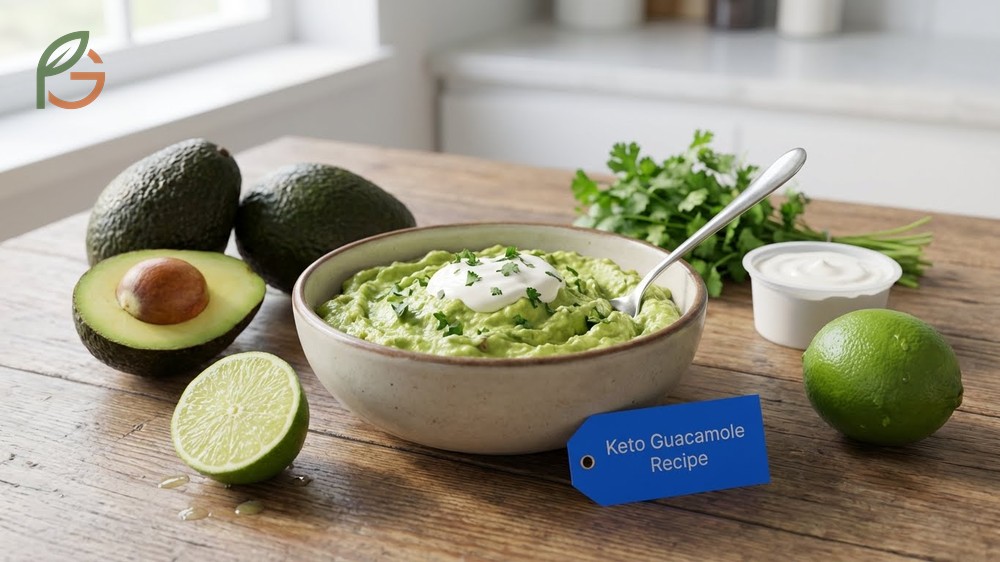
Guacamole is a perfect keto-friendly dip that maximizes avocado’s nutritional benefits. This recipe takes just 5 minutes and provides healthy fats without adding significant carbs.
The ingredients work together to enhance both flavor and nutrition. Fresh lime juice adds vitamin C and helps prevent the avocado from browning, while cilantro provides antioxidants and a fresh taste.
- 3 ripe avocados (9g net carbs total for the batch)
- 1/4 cup full-fat sour cream (adds creaminess with only 2g net carbs)
- 1 small onion, diced (approximately 3g net carbs)
- 1 small tomato, diced (approximately 2g net carbs)
- Juice of 1 lime (1g net carbs)
- Salt and pepper to taste (zero carbs)
- Optional: 1 clove garlic, minced (1g net carbs)
To prepare, slice the avocados in half and remove the pits by pressing your thumb behind each pit until it pops out. Scoop the flesh into a bowl and mash with a fork, leaving some texture for the best consistency.
Add the sour cream, diced onion, tomatoes, and lime juice to the mashed avocado. Mix thoroughly and season with salt and pepper. The total batch contains approximately 18 grams of net carbs, which breaks down to about 2-3 grams per serving when divided among 6-8 people.
This guacamole stays fresh in the refrigerator for 2-3 days when stored in an airtight container with plastic wrap pressed directly against the surface to minimize air exposure. Serve it with keto-friendly vegetables like celery sticks, cucumber slices, or bell pepper strips instead of chips.
Avocado and Blood Sugar
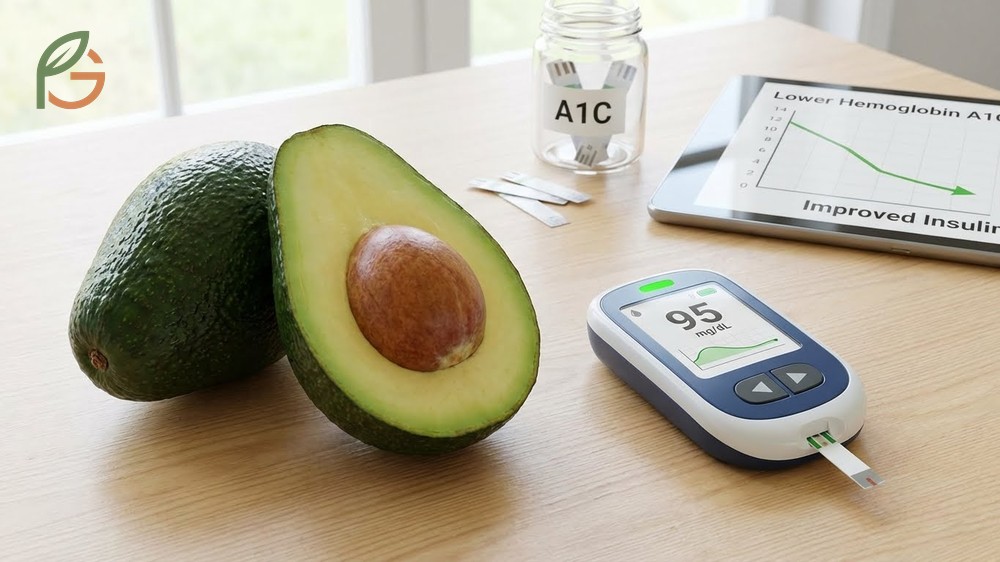
Avocados have a glycemic index of approximately 40, which classifies them as a low-glycemic food[1]. Foods with a GI below 55 are less likely to cause rapid spikes in blood glucose, making avocados an excellent choice for anyone managing diabetes or prediabetes.
Clinical research shows significant benefits for blood sugar regulation. A 2023 study tracking nearly 15,000 adults found that avocado consumption was associated with lower hemoglobin A1C levels and improved insulin response[7].
The combination of healthy fats and fiber in avocados slows down carbohydrate absorption in your digestive system. This means the small amount of digestible carbs gets released gradually into your bloodstream rather than causing a glucose spike.
Evidence suggests that people with prediabetes who regularly eat avocados show a significantly lower risk of progressing to type 2 diabetes. The monounsaturated fats improve insulin sensitivity, helping your cells respond better to insulin signals.
For best blood sugar management, pair avocados with protein sources at meals. Adding half an avocado to eggs at breakfast or including it in a salad with grilled chicken creates a balanced meal that maintains steady glucose levels for 4-5 hours.
- Low glycemic index of 40 prevents blood sugar spikes after eating
- High fiber content slows carbohydrate digestion and glucose absorption
- Monounsaturated fats improve insulin sensitivity and cellular glucose uptake
- Near-zero sugar content means minimal impact on blood glucose levels
- Research links regular avocado intake to lower hemoglobin A1C in people with diabetes
Conclusion
The evidence is clear: avocados contain only 3 grams of net carbs per whole fruit, making them one of the most keto-friendly and blood-sugar-friendly foods available. With 10 grams of fiber, minimal sugar, and a low glycemic index, avocados fit perfectly into low-carb eating patterns while delivering essential nutrients and heart-healthy fats.
Current nutritional guidance emphasizes the importance of calculating net carbs rather than total carbs when following ketogenic diets or managing blood sugar. FruitGarden synthesizes the latest research showing that avocados’ unique macronutrient profile—high in healthy fats, rich in fiber, and extremely low in digestible carbs—makes them a valuable daily addition to your diet, whether you’re pursuing ketosis, managing diabetes, or simply seeking nutrient-dense whole foods.
Medical Disclaimer
Important Medical Disclaimer: This content is for informational and educational purposes only. It is not intended as a substitute for professional medical advice, diagnosis, or treatment. Always consult a qualified healthcare professional before making any changes to your diet, medication, or health routine, especially if you have diabetes, metabolic disorders, or other medical conditions. Individual nutritional needs vary based on health status, medications, and personal circumstances.
Frequently Asked Questions
How many carbs are in an avocado?
A whole medium avocado contains 13 grams of total carbohydrates, but only 3 grams of net carbs because it provides 10 grams of dietary fiber. Half an avocado has 8.5 grams total carbs and 2 grams net carbs, making it perfect for keto and low-carb diets.
Does avocado have carbs that affect ketosis?
Avocados won’t kick you out of ketosis. With only 3 grams of net carbs per whole fruit, they fit easily within the typical keto limit of 20-50 grams of net carbs per day. The high fiber content (10 grams) doesn’t count toward your carb limit because fiber isn’t digested.
What’s the difference between total carbs and net carbs in avocado?
Total carbs include all carbohydrates in the food, while net carbs subtract fiber and certain sugar alcohols. For avocados, you calculate net carbs by subtracting the 10 grams of fiber from the 13 grams of total carbs, giving you 3 grams of net carbs that your body actually digests and converts to glucose.
How many carbs in half an avocado?
Half an avocado contains 8.5 grams of total carbohydrates and 2 grams of net carbs. It also provides 6.5 grams of fiber, 160 calories, and 15 grams of healthy monounsaturated fats. This serving size is the most common recommendation and fits perfectly into keto meal plans.
Are avocados high in carbs compared to other fruits?
No, avocados are actually one of the lowest-carb fruits available. While a medium banana has 24 grams of net carbs and an apple has 21 grams, avocados have only 3 grams. This makes them the best fruit choice for keto, low-carb, and diabetic diets.
How many net carbs are in an avocado for keto?
A whole avocado has 3 grams of net carbs for keto purposes, calculated by subtracting the 10 grams of fiber from the 13 grams of total carbs. This low net carb count, combined with 22 grams of healthy fats, makes avocados ideal for maintaining ketosis while meeting your fat intake goals.
Can I eat a whole avocado every day on keto?
Yes, you can eat a whole avocado daily on keto. With only 3 grams of net carbs, it uses just 15% of a strict 20-gram daily carb limit or 6% of a 50-gram limit. The healthy fats and fiber support ketosis while providing essential nutrients like potassium and vitamins E and K.