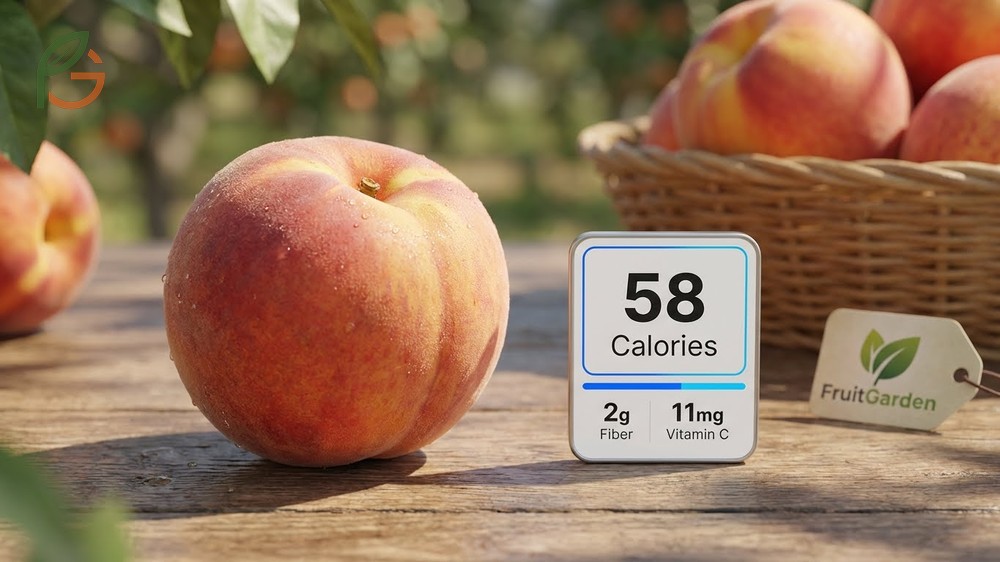
How many calories in a peach? A medium peach contains 58 calories[1], making it a light yet satisfying fruit choice. Research shows that peaches deliver impressive nutrition—including 2g fiber[1] and 11mg vitamin C[1]—while keeping calorie counts low. FruitGarden synthesizes current agricultural research and USDA nutritional data to help you understand what you’re eating from your orchard or farmers market.
Quick Answer
How Many Calories in a Peach
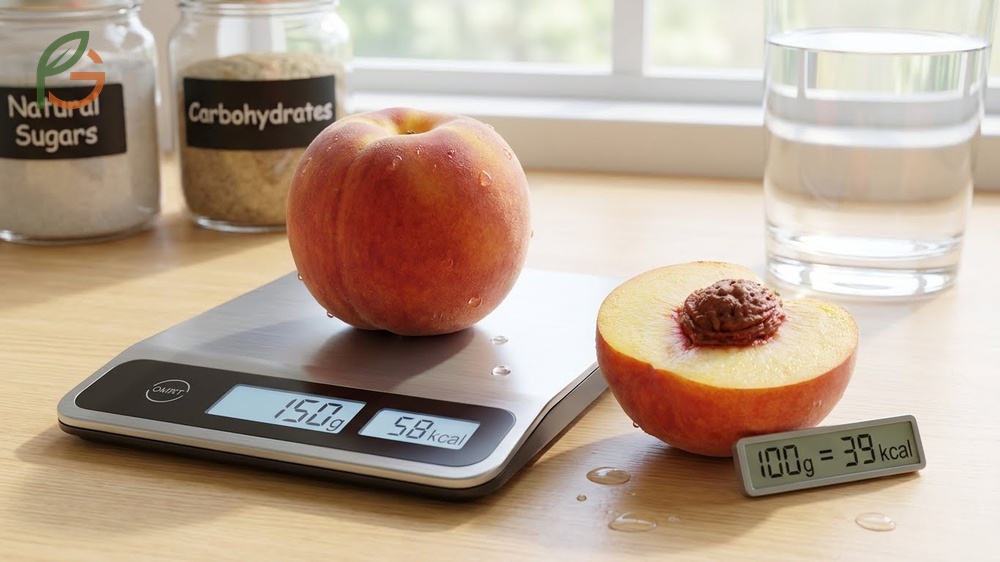
Current USDA data indicates that a medium fresh peach weighing 150g contains 58 calories[1]. This makes peaches one of the lower-calorie stone fruits available. The majority of these calories come from natural sugars and carbohydrates rather than fat or protein.
Studies demonstrate that peaches consist of nearly 90% water[5], which explains their low calorie density. For comparison, per 100g of fresh peach flesh, you’re consuming only 39 calories[6]. Most people don’t realize that eating the skin adds minimal calories while boosting fiber intake significantly.
The peach’s low calorie count doesn’t mean it lacks nutrition. Evidence suggests that this fruit delivers 11mg vitamin C[1] per medium fruit, covering about 12% of your daily needs. You’re also getting potassium, vitamin A, and beneficial plant compounds called polyphenols.
Calories by Peach Size
Agricultural data shows that peach sizes vary considerably based on growing conditions and variety. A small peach measuring 2.5 inches in diameter and weighing about 130g contains approximately 51 calories[2]. Large peaches can weigh up to 175g and contain around 61-68 calories[3].
What often gets overlooked is that peach size doesn’t just affect calories—it changes the overall nutritional profile proportionally. A large peach will give you more fiber, more vitamins, and more satisfaction than a small one. The calorie difference between sizes is minimal, typically just 10-17 calories.
This table compares weight, calorie content, carbohydrates, and fiber across four peach sizes from small to extra large
| Peach Size | Weight | Calories | Carbs | Fiber |
|---|---|---|---|---|
| Small | 130g[2] | 51 cal[2] | 12g | 1.7g |
| Medium | 150g[1] | 58 cal[1] | 14g[1] | 2g[1] |
| Large | 175g[3] | 61-68 cal[3] | 16g | 2.3g |
| Extra Large | 200g | 78 cal | 19g | 3g |
White vs Yellow Peaches
Research shows that white and yellow peaches have nearly identical calorie counts. Both varieties contain approximately the same amount of calories per 100g—around 39 calories[6]. The color difference comes from varying levels of carotenoids and anthocyanins, not from macronutrient composition.
White peaches tend to taste sweeter because they have lower acidity levels, not because they contain more sugar. Studies demonstrate that both varieties provide similar amounts of carbohydrates, fiber, and protein. You’re making a flavor choice rather than a nutritional one when you pick between them.
Important Note: Peach skin contains a significant portion of the fruit’s fiber and antioxidants. If you’re tracking calories, don’t worry—the skin adds less than 5 extra calories while doubling your fiber intake.
Peach Macros Breakdown
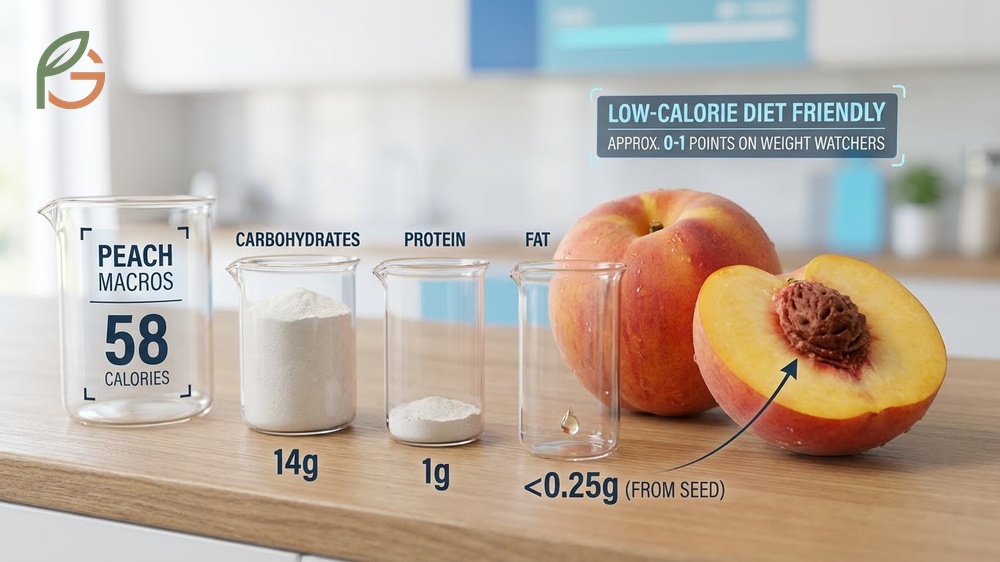
Current nutritional analysis shows that a medium peach’s 58 calories[1] break down into 14g carbohydrates[1], 1g protein[1], and virtually 0g fat[1]. This means peaches are almost entirely a carbohydrate source. The trace amounts of fat—only 0.25g per 100g[6]—come from the seed.
Evidence indicates that peaches work well for most macro-focused eating plans because they’re so low in calories per serving. For Weight Watchers, a medium peach typically counts as 0-1 points depending on your plan. The high water content means you get volume and satisfaction without spending many points.
Carbs in Peaches
Agricultural data shows that a medium fresh peach contains 14g total carbohydrates[1], with 2g coming from fiber[1] and 13g from natural sugars[1]. This gives you about 12g net carbs after subtracting fiber. For most people, that’s a reasonable carb load that won’t spike blood sugar dramatically.
Studies demonstrate that peaches have a glycemic index of 42[7], which classifies them as a low-GI fruit. The glycemic load for one medium peach is only about 5[7], meaning they cause a gradual rise in blood glucose rather than a sharp spike.
Most people don’t realize that peach ripeness affects carb composition. As peaches ripen, starches convert to sugars, making them sweeter but not necessarily higher in total carbs. A firmer peach will have more complex carbohydrates while a softer, riper one has more simple sugars.
Sugar Content
Current USDA data indicates that a medium peach contains 13g of natural sugars[1] with no added sugars. This sugar content consists primarily of fructose, glucose, and sucrose in roughly equal proportions. Unlike processed foods, the sugar in peaches comes packaged with fiber, water, and micronutrients that slow absorption.
Research shows that the fiber content in peaches helps moderate how quickly your body processes these sugars. The 2g fiber[1] per medium fruit acts as a buffer, slowing down sugar absorption in your digestive tract. You’re getting sweetness without the rapid blood sugar spike you’d experience from candy or soda.
- Natural fruit sugars come with vitamins, minerals, and antioxidants that processed sugars lack
- Peach fiber content slows sugar absorption, preventing rapid blood glucose spikes
- The 90% water content[5] dilutes sugar concentration compared to dried fruits
- Eating peaches with skin increases fiber further, improving blood sugar response
- Low glycemic load of 5[7] makes peaches suitable for most dietary approaches
For Diabetics: While peaches contain natural sugars, their low glycemic index of 42[7] means they can fit into a diabetes-friendly diet when consumed in appropriate portions. Always pair peaches with protein or healthy fats to further stabilize blood sugar response.
Are Peaches Good for Weight Loss
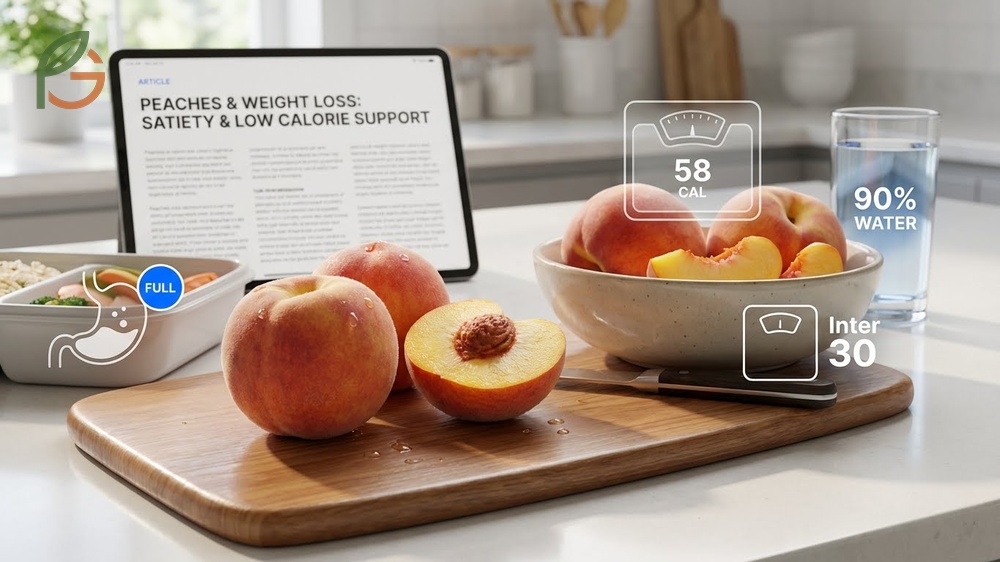
Studies demonstrate that peaches can support weight loss goals effectively. At only 58 calories per medium fruit[1], peaches provide volume and sweetness without derailing your calorie deficit. Research shows that the combination of high water content (90%)[5] and fiber creates a satiety effect that helps you feel fuller longer.
Evidence suggests that foods with high water content like peaches help increase feelings of fullness without adding many calories. The 2.3g fiber[5] per medium peach slows digestion, helping stabilize blood sugar levels and prolonging the feeling of fullness after eating. This matters because steady blood sugar means fewer cravings between meals.
Current guidance emphasizes that peaches work best for weight loss when you eat them as whole fruit rather than juice. Whole peaches provide fiber that slows sugar absorption and adds bulk to your diet. For instance, eating two medium peaches gives you 116 calories and 4g fiber, while a glass of peach juice might have 130 calories with almost no fiber.
- Low calorie density means you can eat satisfying portions without overeating calories
- High water content provides volume and hydration while keeping calories minimal
- Fiber content supports digestive health and promotes feelings of fullness
- Natural sweetness can satisfy sugar cravings without triggering overeating
- Portable and convenient for on-the-go snacking, reducing reliance on processed snacks
- Zero added sugars or artificial ingredients found in packaged snacks
From My Experience: My cousin in Jalisco, Mexico started adding fresh peaches to her breakfast routine in summer 2024. She replaced her usual granola bar (180 calories) with a large peach paired with almonds (total 120 calories). Over three months, this simple swap—combined with other small changes—contributed to a 12-pound weight loss while she felt more satisfied after meals.
Agricultural data shows that timing matters less than consistency. Whether you eat peaches for breakfast, as a snack, or dessert, you’re getting the same nutritional benefits. What works best is incorporating them regularly into a balanced diet rather than relying on them as a “magic” weight loss food.
Calories in Dried Peaches
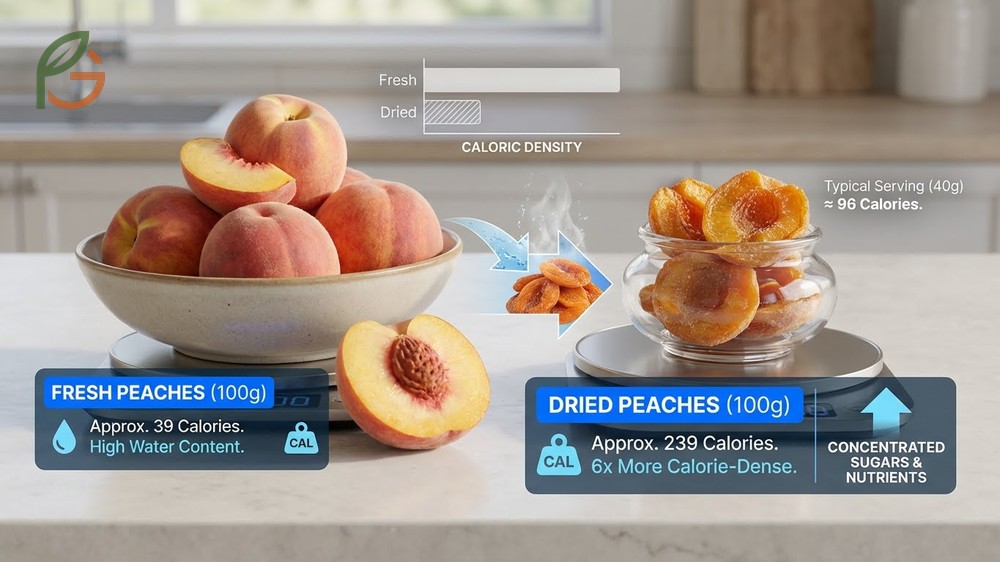
USDA data indicates that dried peaches contain approximately 239 calories per 100g[4]—that’s about 6 times more calorie-dense than fresh peaches. This dramatic increase happens because removing water concentrates all nutrients, including sugars and calories. A typical serving of dried peaches (about 40g or 5-6 pieces) contains roughly 96 calories.
Studies demonstrate that dried peaches pack 61.3g carbohydrates per 100g[4], with most coming from concentrated natural sugars. The good news is that fiber also concentrates—you’re getting about 13.1g fiber per cup[8] of dried peaches. This makes them an excellent high-fiber snack when portion control is practiced.
Research shows that dried peaches aren’t necessarily “bad” for you—they’re just more concentrated. If you’re watching calories or managing blood sugar, fresh peaches offer more volume and satisfaction per calorie. However, dried peaches excel for hiking, traveling, or situations where fresh fruit isn’t practical.
- One fresh medium peach (58 cal[1]) equals roughly 25g dried peaches (60 cal)
- Dried peaches provide concentrated minerals like potassium (1,594mg per cup[8])
- Sugar concentration means dried peaches taste much sweeter than fresh ones
- Sulfured dried peaches retain more color and vitamin C than unsulfured varieties
- Portion control becomes critical—it’s easy to overeat dried fruit without realizing it
- Dried peaches have longer shelf life, making them practical for emergency food supplies
Keto-Friendly Alert: Both fresh and dried peaches aren’t keto-friendly. Fresh peaches have 12g net carbs per medium fruit, while dried peaches have even more. If you’re following a strict ketogenic diet (under 20g net carbs daily), peaches will consume most of your carb allowance.
Current guidance emphasizes checking labels when buying dried peaches. Some brands add extra sugar or preservatives that increase calorie counts beyond natural levels. Look for dried peaches with just one ingredient—peaches—to get the most nutritional bang for your buck.
Conclusion
The evidence is clear: how many calories in a peach depends on size and type, but a medium fresh peach delivers just 58 calories[1] packed with fiber, vitamins, and natural hydration. Whether you’re managing weight, monitoring carbs, or simply seeking nutritious snacks, peaches offer impressive nutrition without calorie overload.
Current agricultural research confirms that peaches fit into virtually any healthy eating pattern—from weight loss plans to diabetic diets—when consumed mindfully. FruitGarden encourages home gardeners and fruit enthusiasts to appreciate peaches not just for their delicious flavor, but for their scientifically backed nutritional benefits that support overall health and wellness goals.
Medical Disclaimer
Important Medical Disclaimer: This content is for informational and educational purposes only. It’s not intended as a substitute for professional medical advice, diagnosis, or treatment. Always consult a qualified healthcare professional or registered dietitian before making any changes to your diet, especially if you have diabetes, food allergies, or other medical conditions that affect your nutritional needs.
Frequently Asked Questions
How many calories are in a small peach with skin?
A small peach with skin (130g) contains approximately 51 calories[2]. The skin adds less than 5 extra calories but significantly increases fiber content, making it nutritionally beneficial to eat peaches unpeeled. The fuzzy skin also contains antioxidants that protect cells from damage.
What’s the calorie difference between canned and fresh peaches?
Fresh peaches have about 58 calories per medium fruit[1], while canned peaches in light syrup contain roughly 80-100 calories per half-cup serving due to added sugars. Canned peaches in water or juice have calorie counts closer to fresh ones. Always check labels, as syrup-packed varieties can have 2-3 times more calories and sugar than fresh peaches.
Do white peaches have fewer calories than yellow peaches?
No, white and yellow peaches contain virtually identical calories—approximately 39 calories per 100g[6]. The color difference results from varying antioxidant compounds, not macronutrient composition. White peaches taste sweeter due to lower acidity, not higher sugar content. Your choice between them should be based on flavor preference rather than nutritional differences.
How many carbs are in one large fresh peach?
A large fresh peach (175g) contains approximately 16g total carbohydrates, with about 2.3g coming from fiber. This gives you roughly 14g net carbs after subtracting fiber. The carbs consist primarily of natural sugars—fructose, glucose, and sucrose—along with small amounts of starch. These natural carbs come packaged with water, fiber, and micronutrients that moderate blood sugar impact.
Can you eat peaches on a keto diet?
Peaches aren’t ideal for strict ketogenic diets. A medium peach has about 12g net carbs, which represents 60% of a 20g daily carb limit on strict keto. However, on modified low-carb diets (50-100g carbs daily), a small peach might fit occasionally. If you’re craving peach flavor while staying keto, consider using small amounts of peach extract or focusing on lower-carb berries like raspberries and strawberries instead.
What’s the glycemic index of a fresh peach?
Fresh peaches have a glycemic index of 42[7], classifying them as a low-GI food. Their glycemic load is only about 5[7] per medium fruit, meaning they cause a gradual, moderate rise in blood glucose rather than a sharp spike. This makes peaches suitable for most people managing blood sugar, though individual responses vary. Pairing peaches with protein or healthy fats further stabilizes blood sugar response.
How many Weight Watchers points is a medium peach?
A medium fresh peach typically counts as 0 points on most Weight Watchers plans because it’s a whole, unprocessed fruit. WW’s zero-point foods list includes most fresh fruits to encourage healthy eating without tracking. However, dried peaches, canned peaches in syrup, and peach juice do carry points due to processing or added sugars. Always check your specific WW plan, as point values can vary by program version.