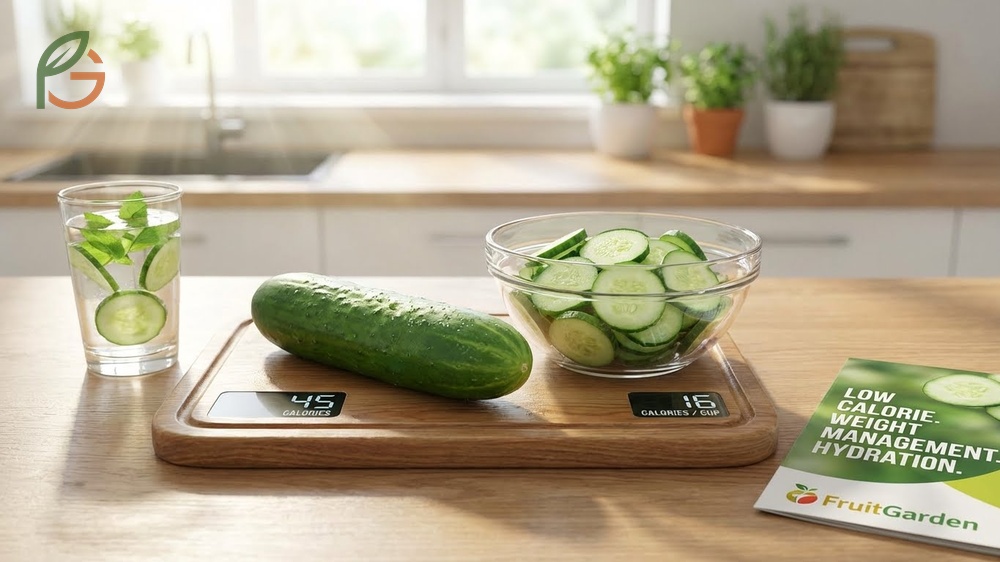
How many calories in a cucumber? A medium cucumber (about 8 inches long) contains 45 calories, while one cup of sliced cucumber has just 16 calories[2]. Research shows that cucumbers rank among the lowest-calorie vegetables available, making them ideal for weight management and hydration. FruitGarden provides evidence-based nutrition information to help you make informed dietary choices.
Quick Answer
- Medium cucumber (301g): 45 calories[1]
- One cup sliced (104g): 16 calories[2]
- Peeled cucumber (100g): 12 calories[3]
- Keto-friendly: Only 3g net carbs per cup[4]
How Many Calories in a Cucumber
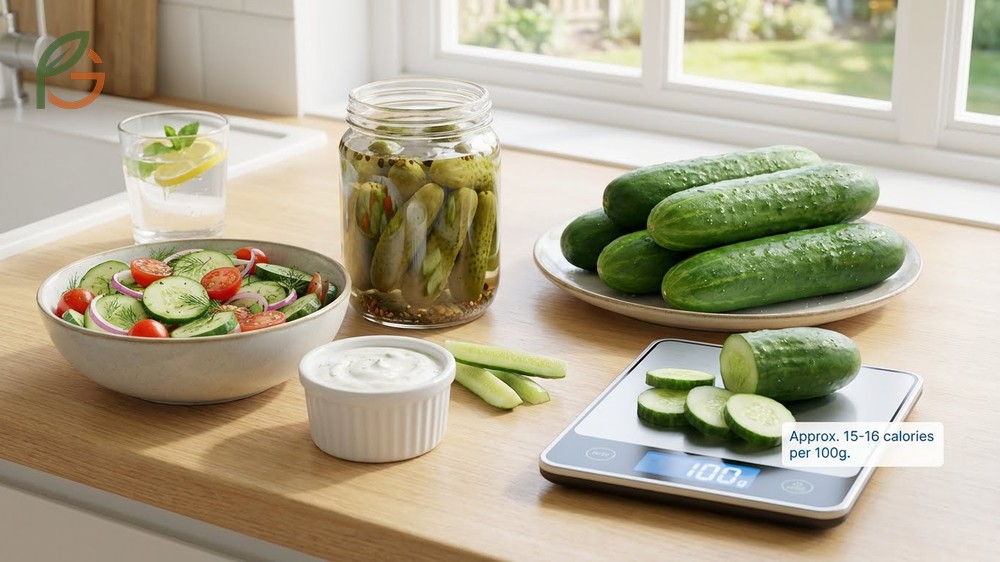
Cucumbers contain remarkably few calories due to their high water content—approximately 96% water[2]. The standard calorie count varies based on serving size and preparation method. Most Americans consume cucumbers in salads, as snacks with dips, or pickled.
Current dietary data shows that 100 grams of raw cucumber with peel contains approximately 15-16 calories[5]. This low caloric density makes cucumbers practically “free” foods in many diet plans. You’d need to eat seven whole medium cucumbers to equal the calories in a single fast-food burger.
The calorie content doesn’t change significantly when cucumbers are sliced or chopped. What matters most is whether you keep the peel on and what you pair them with. Plain cucumbers remain ultra-low in calories, but dips, dressings, and toppings can quickly multiply the total calorie count of your snack.
Standard Serving Sizes
Understanding standard serving sizes helps you track calories accurately. One cup of sliced cucumber (about 104 grams) delivers 16 calories[2]. Half a cup—common in mixed salads—contains approximately 8 calories.
Most nutrition labels base their information on one-third of a medium cucumber, which weighs roughly 100 grams. This portion size contains about 15 calories and represents what researchers consider a typical single serving. For meal planning, one cup represents a generous portion that still keeps calorie intake minimal.
- One slice (7g): 1 calorie
- Half cup sliced (52g): 8 calories
- One cup sliced (104g): 16 calories[2]
- One-third medium cucumber (100g): 15 calories
- One cup chopped (120g): 19 calories
Peeled vs Unpeeled
Peeling cucumbers reduces their calorie content slightly. A 100-gram serving of peeled cucumber contains 12 calories[3], compared to 15-16 calories with the peel intact. This three-calorie difference is negligible for most diets.
The peel provides most of the cucumber’s fiber and certain vitamins, particularly vitamin K. Studies demonstrate that unpeeled cucumbers offer superior nutritional value. Unless you’re concerned about pesticide residues or prefer the milder taste, keeping the peel on delivers more health benefits without meaningful calorie addition.
Important Note: The minimal calorie difference between peeled and unpeeled cucumbers (3-4 calories per 100g) doesn’t justify removing the peel for weight loss purposes. The fiber and nutrients in the skin provide greater dietary value.
Calories in One Cucumber
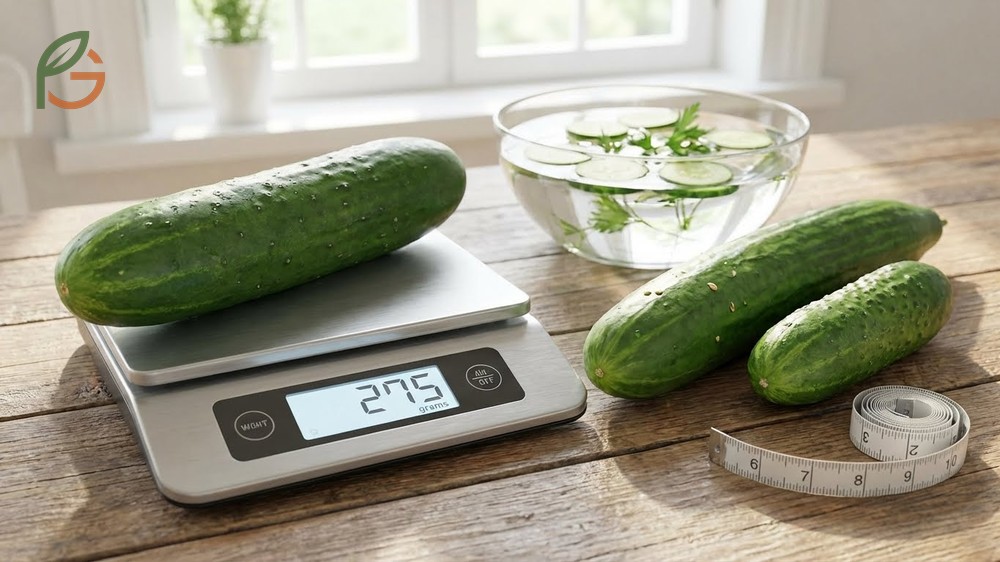
Whole cucumber calorie counts depend primarily on size. Agricultural standards classify cucumbers by length and weight, affecting their total caloric value. A typical grocery store cucumber measures 7-9 inches long and weighs 200-350 grams.
Size variations occur naturally based on growing conditions, harvest timing, and cucumber variety. English cucumbers tend to be longer and have fewer seeds, while Persian cucumbers are shorter and crunchier. Both maintain similar calorie density—about 0.15 calories per gram.
This table compares weight, total calories, net carbs, and typical uses across four cucumber size categories from small to extra-large
| Size | Weight | Total Calories | Net Carbs | Typical Use |
|---|---|---|---|---|
| Small | 150g (6 inches) | 24 calories | 4.5g | Single snack serving |
| Medium | 301g (8 inches) | 45 calories[1] | 9g | 2-3 servings for salads |
| Large | 400g (10 inches) | 60 calories | 12g | Family-size salads |
| Extra-Large (English) | 550g (12-14 inches) | 83 calories | 16.5g | Party platters, multiple meals |
Small Cucumber
Small cucumbers typically weigh around 150 grams (about 6 inches long) and contain approximately 24 calories. Persian and mini cucumbers fall into this category. Their compact size makes them ideal for packed lunches or single-serving snacks.
These smaller varieties often have thinner skins and fewer seeds. Many people find them sweeter and crunchier than standard cucumbers. Despite their petite size, they deliver the same nutritional density and hydration benefits as larger cucumbers.
Medium Cucumber
The medium cucumber—weighing 301 grams at 8¼ inches long—is what you’ll most commonly find at grocery stores. This size contains 45 calories[1] and provides about 2-3 servings for meal preparation.
Medium cucumbers offer the best value for meal planning. One medium cucumber yields approximately 2½ cups of sliced cucumber, enough for a substantial side salad or several snack portions throughout the day. This size balances convenience with minimal food waste.
Large Cucumber
Large cucumbers weigh 350-450 grams (10-11 inches) and contain 53-68 calories total. English cucumbers—sometimes called seedless or hothouse cucumbers—often fall into this category. Their longer shape makes them perfect for cucumber water or spiralized noodle alternatives.
Despite their size, large cucumbers maintain the same low calorie density. What changes is the total volume you’re consuming. One large cucumber can easily serve 4-5 people when sliced for a salad, or provide multiple days of snacks for one person.
Cucumber Calories for Weight Loss
Cucumbers excel as weight loss foods due to their extremely low energy density—0.15 calories per gram. Research on volumetric diets demonstrates that eating high-volume, low-calorie foods like cucumbers increases fullness while reducing overall calorie intake. Studies show people who eat water-rich vegetables lose 50% more weight than those consuming calorie-dense alternatives.
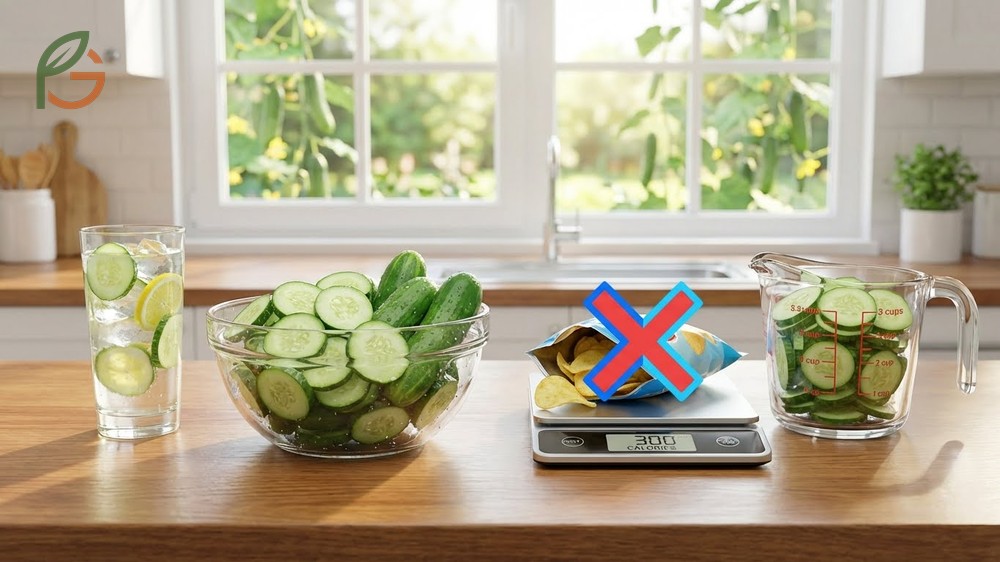
The math works in your favor: replacing 300 calories of chips with three cups of cucumber slices (48 calories) creates a 252-calorie deficit. Do this daily for a week, and you’ve eliminated 1,764 calories—roughly half a pound of fat loss—without feeling deprived.
Cucumbers don’t require any preparation beyond washing and slicing. This convenience factor matters for sustained weight loss. When healthy options are easy to grab, you’re more likely to stick with your diet plan long-term.
Volumetric Diet Benefits
The volumetric approach prioritizes foods with high water and fiber content relative to their calories. Cucumbers perfectly fit this profile with 96% water content and 2 grams of fiber per medium cucumber. This combination stretches your stomach, triggering satiety signals to your brain.
Eating one cup of cucumber before meals can reduce your total calorie intake during that meal. The physical volume occupies stomach space, leaving less room for calorie-dense main courses. This pre-loading strategy works particularly well before dinner—typically the highest-calorie meal for most Americans.
- Start lunch with a cucumber and hummus appetizer to reduce main course portions
- Replace sandwich bread with cucumber slices for open-faced low-calorie alternatives
- Add two cups of cucumber to salads for bulk without calorie overload
- Snack on cucumber sticks between meals to prevent energy crashes and overeating
- Use spiralized cucumber as a pasta substitute in cold noodle dishes
Satiety and Hydration
Water consumed through food behaves differently than drinking water alone. The water in cucumbers is absorbed more slowly, providing sustained hydration. This matters because even mild dehydration can be mistaken for hunger, leading to unnecessary snacking.
Fiber in cucumbers—though modest at 1.5 grams per medium cucumber—slows digestion and stabilizes blood sugar. This prevents the energy crashes that trigger cravings for high-calorie foods. The crunchy texture also increases eating time, giving your brain more time to register fullness.
Weight Loss Tip: Eating cucumbers 20-30 minutes before main meals can reduce subsequent calorie intake by 75-100 calories per meal. Over a month, this strategy alone could create a deficit sufficient for 2-3 pounds of fat loss.
Keto Diet Cucumber
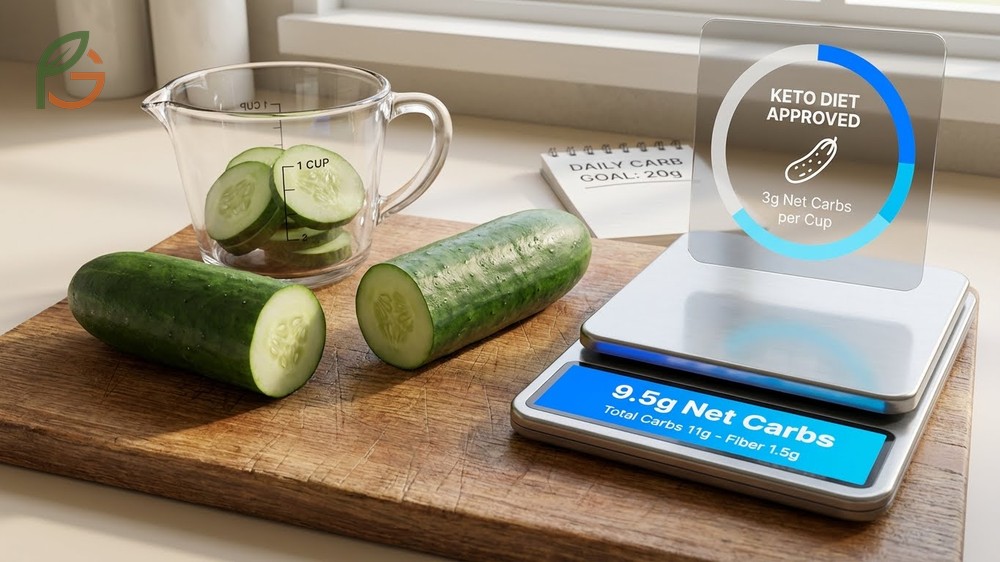
Cucumbers fit comfortably within ketogenic diet guidelines with only 3 grams of net carbs per cup[4]. Net carbs equal total carbohydrates minus fiber—the metric keto dieters track. One medium cucumber contains 11 grams total carbs but 1.5 grams fiber, resulting in 9.5 grams net carbs total.
For strict keto followers limiting carbs to 20 grams daily, half a medium cucumber (about 5g net carbs) leaves room for other vegetables and incidental carbs from nuts, dairy, and seasonings. This makes cucumbers more carb-efficient than tomatoes, carrots, or peppers for keto meal plans.
The key is moderation and pairing. Eating an entire large cucumber—containing up to 16 grams net carbs—could challenge your daily limit. Instead, use cucumber slices as vehicles for high-fat dips like guacamole, cream cheese, or egg salad to maintain keto macros.
- Half cup cucumber slices (1.5g net carbs) with 2 tablespoons ranch dressing
- Cucumber rounds (8-10 slices) topped with smoked salmon and cream cheese
- One cup diced cucumber (3g net carbs) in Greek salad with feta and olives
- Cucumber boats filled with tuna salad using full-fat mayonnaise
- Spiralized cucumber “noodles” (2g net carbs per cup) with pesto sauce
Keto Consideration: Peeling cucumbers reduces net carbs to approximately 2.16 grams per 100g portion, but you’ll also lose beneficial fiber and micronutrients. For most keto dieters, the carb difference doesn’t justify removing the peel.
Cucumber Macros and Nutrition
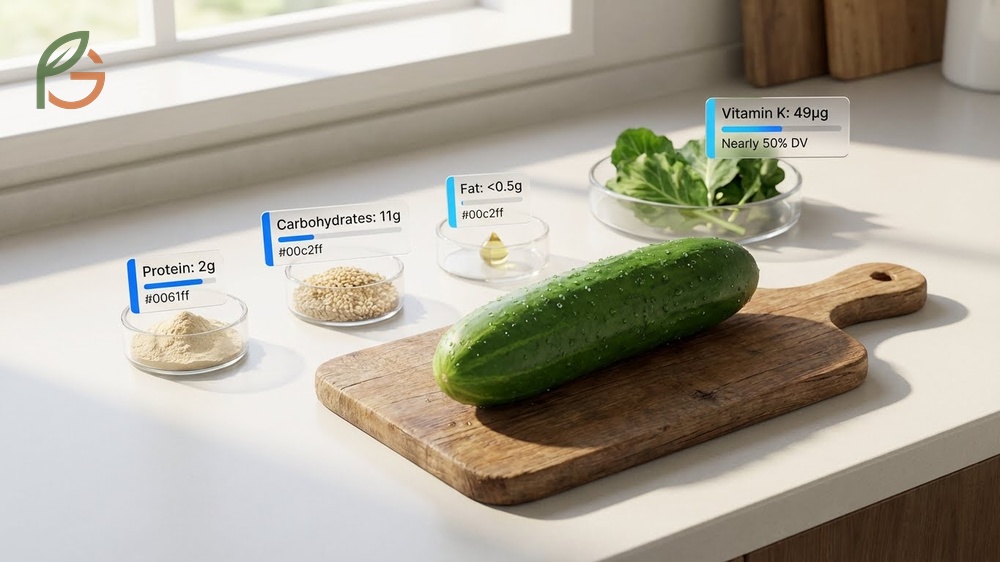
Beyond calories, cucumbers provide a complete macronutrient profile—though in modest amounts. One medium cucumber (301g) contains 2 grams protein, 11 grams carbohydrates, and less than 0.5 grams fat[1]. The protein content, while minimal, still contributes to your daily intake when eating multiple servings.
Micronutrients deliver more significant value. Cucumbers supply 49 micrograms of vitamin K per medium cucumber—nearly half the daily recommended intake. They also provide vitamin C, potassium, magnesium, and manganese in smaller but meaningful quantities.
The antioxidant content includes beta-carotene and flavonoids that support immune function and reduce inflammation. While not as nutrient-dense as dark leafy greens, cucumbers still contribute to your daily micronutrient targets without adding significant calories or carbs.
- Calories: 45 (mostly from carbohydrates)
- Protein: 2g (4% of calories, complete with all essential amino acids)
- Carbohydrates: 11g (9.5g net carbs after subtracting 1.5g fiber)
- Fat: 0.3g (virtually fat-free, all from natural plant lipids)
- Fiber: 1.5g (6% of daily value for digestive health)
- Water: 290g (96% of total weight for hydration)
Conclusion
The evidence is clear: how many calories in a cucumber depends on size, but all cucumbers remain exceptionally low-calorie foods. With 45 calories in a medium cucumber and just 16 calories per cup, you can eat generous portions without derailing weight loss goals or exceeding keto carb limits.
Current nutrition guidance emphasizes whole, minimally processed foods like cucumbers for sustainable weight management. Their combination of high water content, minimal calories, and valuable nutrients makes them a smart addition to virtually any eating plan. FruitGarden encourages incorporating cucumbers as regular snacks, salad bases, and meal components for improved hydration and satiety without caloric excess.
Medical Disclaimer
Important Medical Disclaimer: This content is for informational and educational purposes only. It is not intended as a substitute for professional medical advice, diagnosis, or treatment. Always consult a qualified healthcare professional or registered dietitian before making significant changes to your diet, especially if you have diabetes, kidney disease, or other medical conditions that require specific nutritional management.
Frequently Asked Questions
How Many Calories in a Whole Cucumber?
A whole medium cucumber (8¼ inches, 301g) contains 45 calories. Small cucumbers have about 24 calories, while large cucumbers contain 60-83 calories depending on exact size. The calorie content scales directly with weight—approximately 0.15 calories per gram of cucumber.
Do Cucumbers Have Enough Calories to Break a Fast?
Cucumbers contain calories and will technically break a strict water fast. However, their minimal calorie content (16 calories per cup) has negligible impact on insulin levels or autophagy for most people. Some intermittent fasting protocols allow low-calorie vegetables during fasting windows, but consult your specific fasting guidelines.
How Many Calories Are in a Cup of Cucumber Slices?
One cup of sliced cucumber (approximately 104 grams) contains 16 calories. This serving size provides 3 grams of net carbohydrates and less than 1 gram of protein. Half a cup contains 8 calories, making even generous portions extremely low in caloric value.
Are Peeled Cucumbers Lower in Calories Than Unpeeled?
Yes, but barely. Peeled cucumbers contain about 12 calories per 100 grams compared to 15-16 calories with peel. This 3-4 calorie difference per 100g is nutritionally insignificant. The peel provides most of the fiber and vitamin K, so keeping it on offers better nutritional value without meaningful calorie addition.
How Many Calories in Half a Cucumber?
Half of a medium cucumber (about 150g) contains approximately 22-23 calories. This portion provides about 4.5 grams of net carbohydrates and maintains the same nutrient density as a whole cucumber. Half a cucumber makes an ideal single-serving snack or salad addition.
Is Cucumber a Zero-Calorie Food?
No, cucumbers are not truly zero-calorie, though they’re often treated as such in diets. They contain 15-16 calories per 100 grams. The concept of “negative calorie” foods—where digestion burns more calories than the food provides—lacks scientific support. However, cucumbers are so low in calories that they function similarly to zero-calorie foods for practical dieting purposes.
How Many Cucumbers Can I Eat on Keto?
On a standard keto diet limiting 20g net carbs daily, you can eat about 2 cups of sliced cucumber (6g net carbs) while leaving room for other foods. One medium cucumber contains 9.5g net carbs, so consuming half to two-thirds (5-6g net carbs) keeps you within safe limits. Pair with high-fat dips to maintain keto macronutrient ratios.