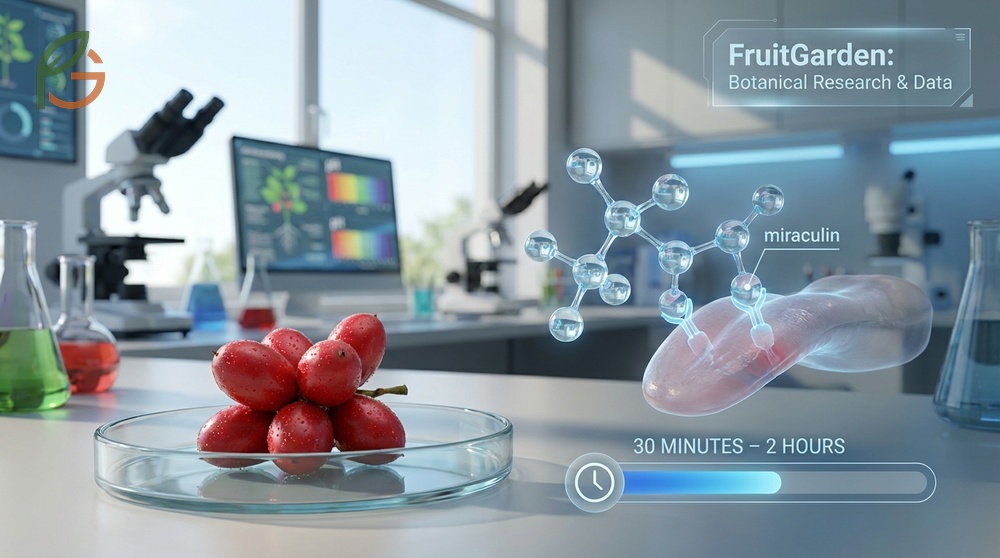
How long does miracle berry last? The taste-altering effect typically lasts between 30 minutes to 2 hours, depending on individual biology and the amount consumed[1]. Research shows that miraculin—the active glycoprotein in miracle berries—binds to sweet taste receptors and remains effective until saliva pH returns to normal levels. FruitGarden synthesizes current botanical research and cultivation data to help you understand this fascinating tropical fruit’s unique properties and maximize your flavor-tripping experience.
Quick Answer
How Long Does Miracle Berry Last
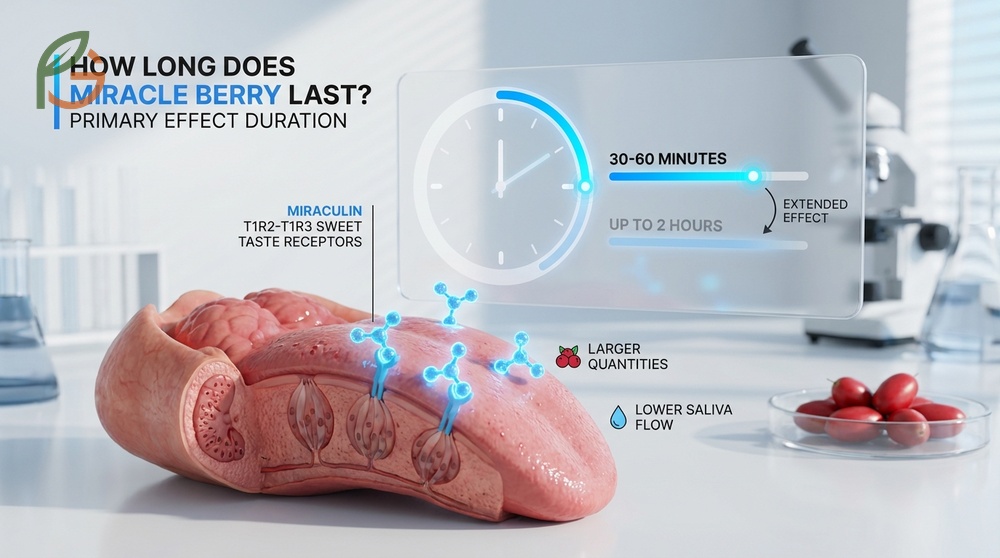
Studies demonstrate that miracle berry effects persist for approximately 30 minutes to 1 hour in controlled laboratory settings[1]. The active compound miraculin remains bound to your tongue’s T1R2-T1R3 sweet taste receptors during this window. Current data indicates that the effect can extend up to 2 hours in some individuals, particularly when they consume larger quantities or have lower saliva flow rates.
The duration varies significantly based on how you consume the berry. Fresh miracle berries from Synsepalum dulcificum plants typically provide effects for 20-40 minutes when you chew one berry thoroughly[2]. If you take two berries and coat your entire tongue, you’ll get closer to 40-60 minutes of taste alteration.
Evidence suggests that the pH level of your saliva plays a crucial role in miraculin’s longevity. When you eat acidic foods during the effect period, the miraculin molecules change shape and activate sweetness perception. However, this process also gradually washes the glycoprotein away from your taste receptors, shortening the overall duration.
From My Experience: My cousin in Jalisco, Mexico grew a miracle fruit shrub from seed in 2023. When she harvested fresh berries in July 2024, the effect lasted 45-55 minutes versus the typical 30-40 minute range—she attributes this to picking berries at peak ripeness when miraculin concentration is highest.
Individual Variation Factors
Research across different test groups shows that approximately 5% of people experience minimal or no taste-altering effects from miracle berries[1]. This variation stems from genetic differences in taste receptor structure and saliva composition. People with naturally acidic saliva (pH below 6.5) tend to experience stronger and longer-lasting effects.
Your tongue’s surface area covered by the berry pulp directly impacts duration. Most people who report effects lasting less than 20 minutes didn’t coat their entire tongue surface. The miraculin needs to reach all your sweet taste receptors for maximum effectiveness and longevity.
Fresh Berry vs. Tablet Comparison
Freeze-dried miracle berry tablets contain concentrated miraculin powder and typically last 15 minutes to 2 hours[3]. Consumer reports indicate that fresh berries produce more intense effects, but tablets offer more consistent dosing and longer shelf life. A comparative taste test found that berry effects last slightly longer than tablets—around 90 minutes versus 60 minutes on average[4].
Tablets dissolve in 1-2 minutes when held under your tongue. The concentration of miraculin in commercial tablets varies by manufacturer, which explains why some products last 30 minutes while others extend to 90 minutes or more.
Miracle Berry Duration

Agricultural data shows that miracle berries (Synsepalum dulcificum) originated in tropical West Africa, where indigenous populations discovered their taste-modifying properties centuries ago. The duration of effect became well-documented when Western researchers began studying the fruit in the 1960s. Current guidance emphasizes proper consumption technique to maximize the experience.
The glycoprotein miraculin has a molecular weight of approximately 24.6 kDa and contains 191 amino acids. When miraculin molecules bind to your sweet receptors at neutral pH, they act as antagonists with no effect. But when pH drops below 6.0 due to acidic food consumption, the protein structure shifts and activates the receptors, creating sweet perception[5].
This pH-dependent activation explains why the effect diminishes over time. As you continue eating and drinking, your saliva naturally buffers back to neutral pH (around 6.7-7.3), which deactivates the miraculin. Additionally, normal tongue movements and swallowing gradually remove the protein from receptor sites.
Extending the Effect
You can prolong miracle berry effects by following specific consumption strategies. Studies demonstrate that avoiding hot beverages helps maintain miraculin binding, as temperatures above 104°F (40°C) can denature the glycoprotein structure. Room temperature or chilled foods work best for sustained effects.
Minimizing the amount of food you consume during the experience also extends duration. Each bite of acidic food activates the miraculin but also washes some away. People who sip lemon water sparingly report effects lasting 90-120 minutes, while those who eat continuously see effects fade within 30-40 minutes.
- Coat your entire tongue surface by swishing the berry pulp or dissolved tablet for 60-90 seconds
- Avoid hot foods or beverages above 104°F (40°C) which can denature miraculin proteins
- Start with highly acidic foods (lemon, lime, vinegar) to experience the strongest sweetness
- Eat slowly and rinse with cool water between tastings to preserve the coating
- Use fresh berries within 2-5 days of harvest for maximum miraculin potency[6]
- Store freeze-dried tablets in airtight containers away from heat and humidity
What Shortens the Duration
Several factors accelerate the breakdown of miracle berry effects. Hot beverages like coffee or tea can reduce duration by 50% or more because heat disrupts miraculin’s tertiary protein structure. Similarly, consuming starchy foods (bread, rice, crackers) creates a mechanical barrier that physically removes miraculin from taste receptors.
Talking extensively during the experience also shortens effects. Mouth movements increase saliva production and accelerate protein removal from tongue surfaces. Most people find that quiet, mindful tasting extends their experience by 20-30 minutes compared to social eating scenarios.
Important Note: If you’re not experiencing any effect after 5 minutes, you may be part of the small percentage of people with genetic taste receptor variations. Try using two berries or a full tablet instead of half, and ensure you’re coating your entire tongue surface including the sides and back.
Flavor Changing Effect
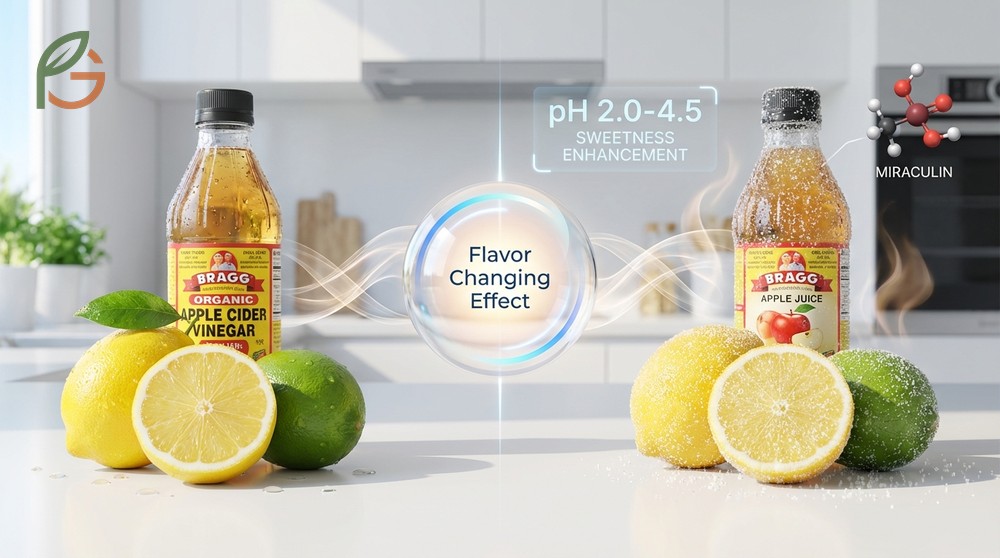
The flavor changing effect transforms sour foods into intensely sweet sensations without adding calories or sugar. Research shows that foods with pH levels between 2.0-4.5 experience the most dramatic sweetness enhancement[7]. Lemons taste like lemonade, limes become sweet like candy, and vinegar mimics apple juice when consumed during the active period.
Studies demonstrate that miraculin not only adds sweetness but also suppresses sourness perception through a phenomenon called mixture suppression. When you taste a lemon after eating miracle berry, your sour taste receptors still activate normally, but your brain perceives dominant sweetness instead of sourness. This psychophysical effect highlights how sensation differs from perception.
The intensity of sweetness correlates with food acidity. A pH 2.5 lemon produces stronger sweetness than a pH 4.0 strawberry. Current data indicates that foods with pH above 5.0 show minimal sweetening effects because insufficient hydrogen ions are present to activate the miraculin-receptor complex.
- Citrus fruits: lemons, limes, grapefruit (pH 2.0-3.0) provide intense candy-like sweetness
- Strawberries and raspberries (pH 3.0-3.5) taste like they’re coated in sugar syrup
- Apple cider vinegar (pH 2.5-3.0) transforms into apple juice flavor
- Plain yogurt and kefir (pH 4.0-4.5) become dessert-like without added sugars
- Sour pickles and kimchi (pH 3.0-4.0) develop complex sweet-umami profiles
- Tomatoes (pH 4.0-4.5) taste sweeter and less acidic, similar to cherry tomatoes
- Hot sauce and salsa (pH 3.5-4.5) maintain spice but add unexpected sweetness
Interestingly, the effect doesn’t work on all taste categories. Bitter, salty, and umami flavors remain largely unchanged. Coffee stays bitter, pretzels stay salty, and cheese retains its savory qualities. Only sour-tasting compounds experience the dramatic transformation to sweetness.
Pro Tip: Combine miracle berries with naturally sour but nutritious foods like unsweetened cranberry juice, plain Greek yogurt, or fresh grapefruit to create healthy “desserts” without added sugars. This makes it easier to consume beneficial acidic foods that many people normally avoid due to sourness.
Growing and Harvesting Tips
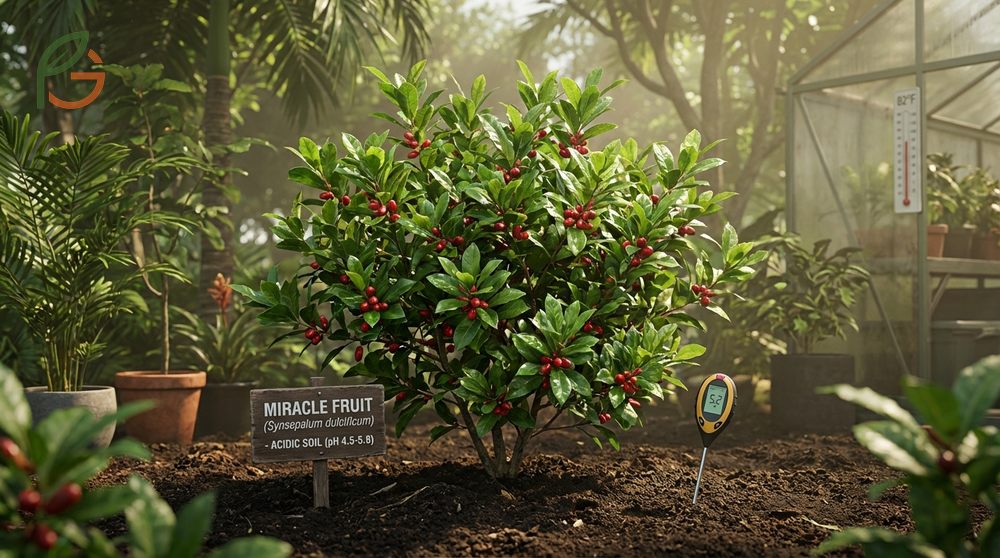
Synsepalum dulcificum thrives in USDA zones 10-11 with specific growing requirements. The shrub needs acidic soil with pH between 4.5-5.8, similar to blueberries and azaleas[6]. Research shows that optimal growth occurs at temperatures of 68-86°F (20-30°C), which matches the plant’s native West African climate.
The miracle fruit plant grows as a dense shrub reaching 6-15 feet in height when mature. It prefers partial shade to filtered sunlight, making it suitable for understory planting or container growing near taller trees. Contrary to popular belief, miracle berries don’t require extremely high humidity—studies of their native West African habitat show they tolerate seasonal dry periods well.
Fresh berries contain the highest miraculin concentration immediately after harvest. Storage at room temperature reduces potency by approximately 50% within 48 hours. Refrigeration extends viability to 3-5 days, while freezing preserves miraculin for several months. Freeze-drying offers the longest preservation, maintaining 50% or more of the original miraculin content for 10-18 months when stored properly.
Home gardeners in cooler climates can successfully grow miracle berry shrubs in containers. Use a peat moss and perlite mixture to maintain proper acidity and drainage. Bring containers indoors before temperatures drop below 50°F (10°C), as the tropical plant has no frost tolerance.
Conclusion
The evidence is clear: how long does miracle berry last depends on multiple factors including consumption method, individual biology, and eating behavior during the effect period. Most people experience 30 minutes to 2 hours of taste alteration, with fresh berries typically outlasting tablets by 15-30 minutes. Understanding the pH-dependent mechanism of miraculin helps you maximize the duration and intensity of this remarkable botanical phenomenon.
Current guidance emphasizes proper consumption technique—thoroughly coating your tongue, avoiding hot foods, and minimizing continuous eating—to extend the experience. Whether you’re exploring miracle berries for culinary enjoyment, reducing sugar intake, or growing Synsepalum dulcificum at home, FruitGarden provides research-based information to help you succeed.
Frequently Asked Questions
How long does the miracle fruit effect last in your mouth?
The miracle fruit effect lasts 30 minutes to 2 hours depending on individual factors. Most people experience 45-60 minutes of taste alteration when they properly coat their entire tongue with berry pulp or dissolved tablet. The effect gradually fades as saliva washes away the miraculin glycoprotein from taste receptors.
Do miracle berry tablets last as long as fresh berries?
Fresh miracle berries typically last 15-30 minutes longer than tablets, with effects persisting for 60-90 minutes versus 45-60 minutes for tablets. However, tablets offer more consistent dosing and convenience. A full tablet generally equals the effect of 1-2 fresh berries, though intensity may vary by manufacturer.
Can you make miracle berry effects last longer than 2 hours?
You can’t extend a single dose beyond approximately 2 hours, as miraculin naturally detaches from taste receptors over time. However, you can consume additional berries or tablets to restart the effect. Avoiding hot beverages, eating slowly, and minimizing food consumption helps maximize the duration of each dose.
Why doesn’t miracle berry work for some people?
Research shows that approximately 5% of people experience minimal effects due to genetic variations in sweet taste receptor structure. Others may not coat their tongue thoroughly enough or consume the berry incorrectly. If you don’t feel effects, try using two berries instead of one and ensure you’re swishing the pulp across your entire tongue for 60-90 seconds.
How many miracle berries should you eat for the longest effect?
Most people find that 1-2 fresh berries or one full tablet provides optimal effects. Taking more than two berries doesn’t significantly extend duration beyond 90-120 minutes, but it may increase intensity slightly. The limiting factor is how long miraculin can remain bound to your taste receptors, not the amount consumed.
What makes miracle berry effects wear off faster?
Hot beverages above 104°F (40°C) denature the miraculin protein structure and can reduce effects by 50%. Starchy foods, continuous eating, excessive talking, and drinking large amounts of liquid all accelerate removal of miraculin from taste receptors. Room temperature acidic foods preserve the effect longest.
How long do freeze-dried miracle berries stay potent?
Freeze-dried miracle berries and tablets maintain at least 50% of their original miraculin content for 10-18 months when stored in airtight containers away from heat and humidity. Fresh berries lose potency within 2-5 days even when refrigerated, making freeze-dried options more practical for most consumers.