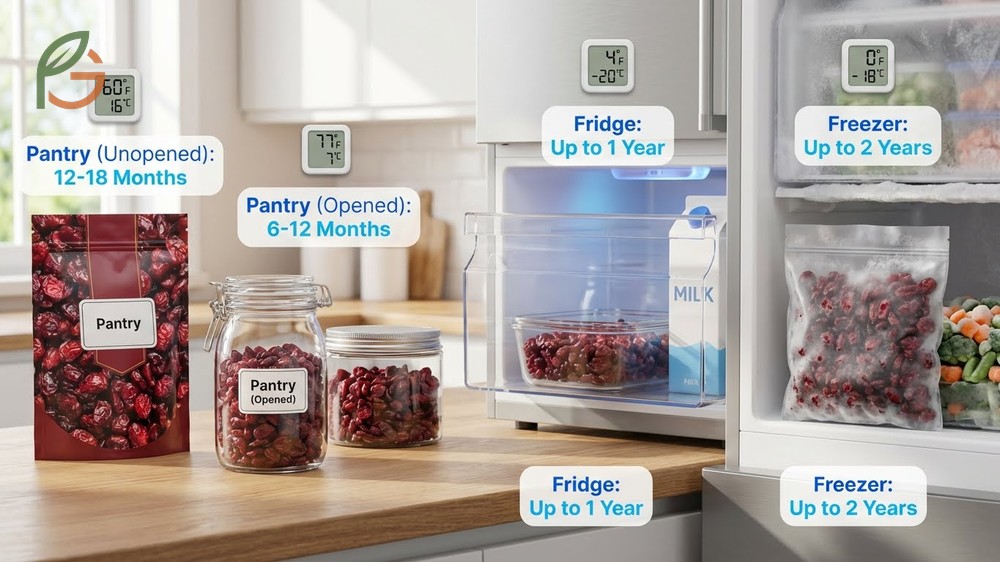
How long do dried cranberries last? Research shows unopened packages last 12-18 months in the pantry, while opened packages stay fresh for 6-12 months when properly sealed.[1] Refrigeration extends shelf life up to one year, and freezing preserves quality for up to two years.[2] Storage temperature dramatically affects longevity—most dried fruits last one year at 60°F (16°C) but only six months at 80°F (27°C).[1] FruitGarden synthesizes current agricultural research to help you maximize your dried fruit storage and reduce food waste.
Quick Answer
- Unopened dried cranberries last 12-18 months in a cool pantry below 65°F (18°C)[3]
- Opened packages stay fresh 6-12 months when resealed and stored properly[1]
- Refrigerator storage extends shelf life to 12 months after opening[2]
- Freezing preserves quality for up to 24 months in airtight containers[2]
How Long Do Dried Cranberries Last
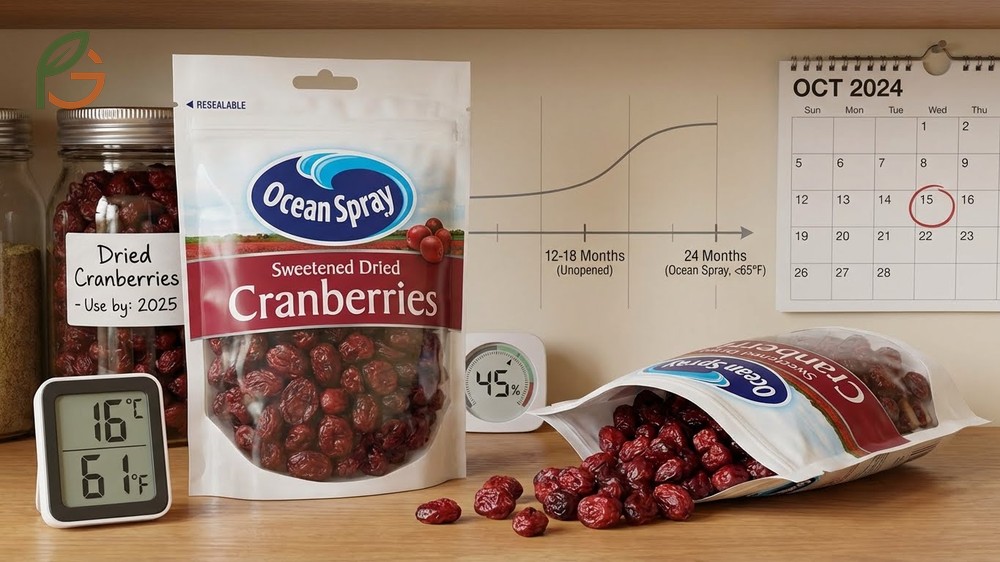
Commercially packaged dried cranberries maintain peak quality for 12-18 months when stored unopened in a cool, dry location.[1] The dehydration process removes most moisture, reducing water activity to levels that inhibit bacterial and mold growth. Ocean Spray’s product specifications confirm their sweetened dried cranberries have an expected shelf life of 24 months when stored below 65°F (18°C).[3]
Once you open the package, exposure to air and humidity begins degrading quality. Resealed packages stored in the pantry remain safe and palatable for 6-12 months.[1] What often gets overlooked is that storage temperature matters more than you’d think—every 10°F increase cuts shelf life roughly in half.
Best-by dates printed on packages indicate peak quality windows, not safety deadlines. Dried cranberries often remain safe to eat months past these dates if stored correctly. Check for signs of spoilage rather than discarding automatically when dates pass.
Pantry Storage Timeline
Pantry storage works best when temperatures stay consistently cool. Studies show dried fruits stored at 60°F (16°C) maintain quality for one full year, compared to just six months at 80°F (27°F).[1] Heat accelerates oxidation and moisture absorption from humid air.
Dark storage locations preserve color and prevent nutrient degradation from light exposure. Store packages away from stoves, dishwashers, and sunny windows. Most people don’t realize that kitchen cupboards near appliances can reach 85-90°F (29-32°C) during cooking.
From My Experience: My cousin in Guadalajara, Mexico stores her dried cranberries in a clay pot in her basement pantry where temperatures stay around 65°F (18°C) year-round. Her opened packages stayed fresh for 11 months versus the 7-8 months she got from kitchen storage—matching the temperature-shelf life research.
Refrigerator and Freezer Options
Refrigerating opened dried cranberries extends their usable life to 12 months by slowing oxidation and preventing moisture absorption.[2] Transfer them to airtight containers or resealable bags before refrigerating. This prevents them from absorbing refrigerator odors from other foods.
Freezer storage pushes the timeline to 24 months while maintaining texture and flavor.[2] Frozen dried cranberries don’t require thawing—use them straight from the freezer in baking or cooking. The dried structure prevents ice crystal formation that damages fresh fruit cells.
Storage Tip: Always let refrigerated or frozen dried cranberries come to room temperature in their sealed container before opening. This prevents condensation from forming on the cold fruit, which can introduce moisture and trigger mold growth.
How Long Are Fresh Cranberries Good For
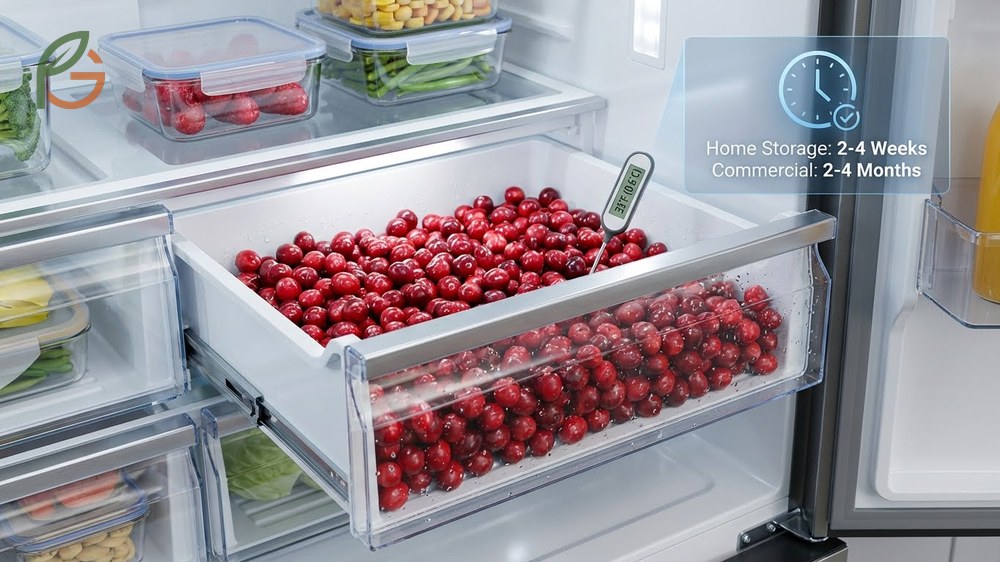
Fresh cranberries outlast most berries when refrigerated properly. Penn State Extension research shows fresh berries stay good for two weeks under standard refrigeration, with careful storage extending this to four weeks.[4] Their natural acidity and thick skin create a protective barrier against spoilage organisms.
Commercial cold storage facilities maintain cranberries for 2-4 months at temperatures near 30.5-33°F (-0.8 to 0.6°C).[5] Home refrigerators typically operate at 35-38°F (2-3°C), which works well for shorter-term storage. Cranberries freeze at 30.4°F (-0.9°C), so avoid storing them in the coldest part of your refrigerator where partial freezing might occur.[5]
Refrigerator Storage for Fresh Berries
Keep fresh cranberries in their original plastic packaging or transfer them to airtight containers. The packaging often includes ventilation designed for optimal moisture control. If you transfer berries, line containers with paper towels to absorb excess moisture without drying them out completely.
Store cranberries in the refrigerator crisper drawer where humidity stays higher than main shelves. Don’t wash berries before storage—moisture accelerates spoilage. Rinse only the amount you’ll use immediately before preparation.
Freezing Fresh Cranberries
Freezing extends fresh cranberry life to 12 months with minimal quality loss.[4] You can place unopened bags directly in the freezer for convenience. For better results, spread washed and dried berries on a baking sheet, freeze until solid, then transfer to freezer bags.
This individual quick-freezing method prevents berries from clumping into solid blocks. You’ll be able to pour out exactly the amount you need without thawing the entire batch. Frozen cranberries work directly in recipes without thawing for most applications.
- Sort berries and discard any soft, wrinkled, or damaged ones
- Rinse selected berries under cold water and drain thoroughly
- Spread in a single layer on a rimmed baking sheet
- Freeze for 2-8 hours until completely solid
- Transfer to labeled freezer bags with dates, removing excess air before sealing
Signs of Spoiled Dried Cranberries
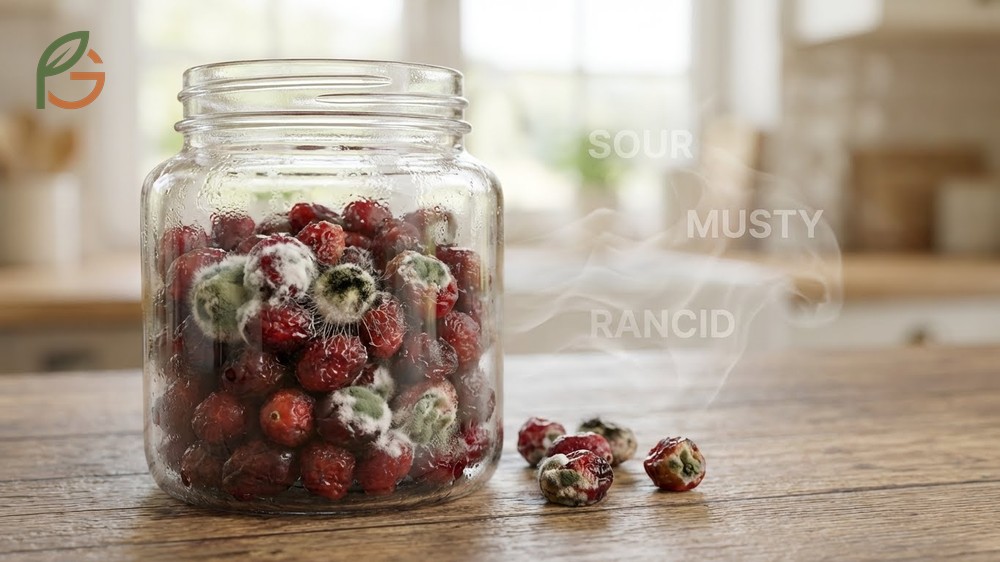
Mold growth signals definite spoilage and appears as white, green, or black fuzzy spots on individual berries or clumps. This typically occurs when dried cranberries absorb moisture from humid storage environments. Discard the entire package once you spot mold—it spreads invisible spores throughout the container.
Off odors provide another clear warning sign. Fresh dried cranberries smell sweet and slightly tangy. Sour, musty, or rancid smells indicate bacterial activity or fat oxidation. Trust your nose—if something smells wrong, it probably is.
Texture changes reveal quality degradation even without safety concerns. Properly dried cranberries feel slightly tacky but not sticky or slimy. Excessive stickiness suggests moisture absorption that creates conditions for microbial growth. Extreme hardness means they’ve dried out too much and lost palatability, though they remain safe to eat.
- Visible mold in white, green, or black fuzzy patches
- Sour, musty, or rancid smell instead of sweet-tart aroma
- Sticky or slimy texture from moisture absorption
- Unusual discoloration with dark spots or fading
- Clumping together in solid masses
- Presence of insects or webbing inside the package
Important Note: Slight color darkening over time doesn’t indicate spoilage—it results from natural oxidation. However, dramatic color changes combined with other signs warrant discarding the product.
Storing Dried Fruit Long Term
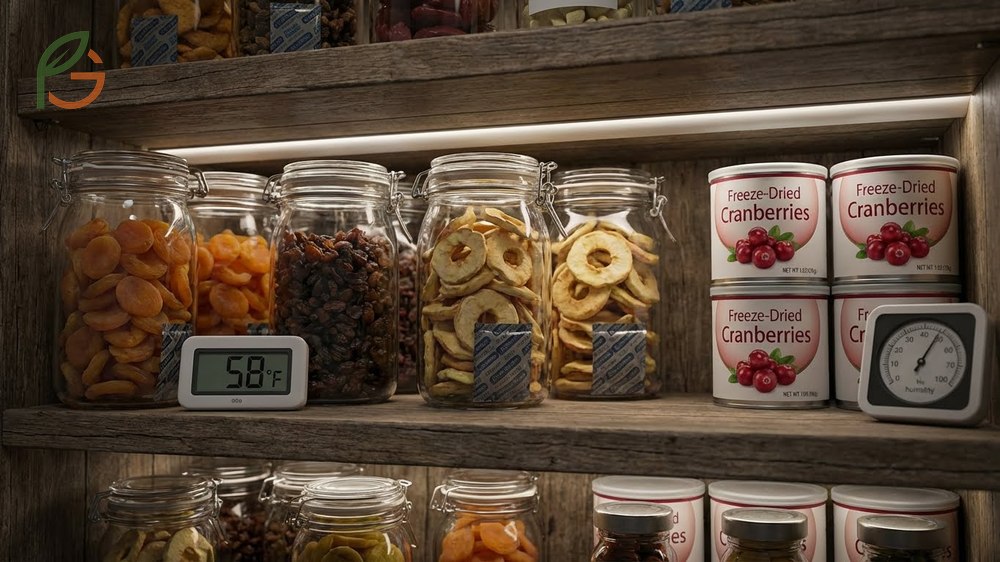
Long-term dried fruit storage requires controlling four environmental factors: temperature, light, moisture, and oxygen. Research confirms dried fruits stored below 60°F (16°C) in darkness maintain nutritional value and flavor for one year minimum.[1] Vegetables have roughly half the shelf life of fruits under identical conditions due to higher protein content that degrades faster.
Commercial freeze-dried cranberries stored in sealed cans with oxygen absorbers can last 20-30 years when kept at 60°F (16°C) or below. Standard air-dried cranberries don’t achieve this extreme longevity but still outlast many preserved foods. The key difference lies in moisture content—freeze-dried products contain less than 2% moisture versus 15-25% for conventionally dried fruits.
Optimal Storage Conditions
Temperature control proves most critical for long-term storage success. Each 10°F (5.6°C) temperature increase cuts shelf life approximately in half through accelerated chemical reactions.[1] Basements, root cellars, and dedicated pantries away from heat sources provide ideal environments.
Humidity levels should stay below 60% to prevent moisture reabsorption. Use silica gel packets in containers if you live in humid climates. Replace these desiccants every 3-6 months as they become saturated. Color-changing silica gel makes monitoring easy—blue beads turn pink when they’ve absorbed maximum moisture.
This table compares storage duration for dried cranberries across four storage methods showing temperature requirements and maximum shelf life periods
| Storage Method | Temperature | Unopened Shelf Life | Opened Shelf Life |
|---|---|---|---|
| Pantry (Cool) | 60-65°F (16-18°C)[3] | 12-24 months[3] | 6-12 months[1] |
| Pantry (Warm) | 75-80°F (24-27°C)[1] | 6-12 months[1] | 3-6 months |
| Refrigerator | 35-40°F (2-4°C) | 18-24 months | 12 months[2] |
| Freezer | 0°F (-18°C) or below | 24-36 months | 24 months[2] |
Container Selection
Airtight containers block oxygen and moisture while protecting against pests. Glass jars with rubber-sealed lids, food-grade plastic containers with tight-fitting lids, and vacuum-sealed bags all work effectively. Avoid containers that previously held strong-smelling foods—residual odors transfer to dried fruits.
Vacuum sealing removes oxygen that causes oxidation and supports insect life cycles. This extends pantry storage by 50-100% compared to standard containers. If you don’t own a vacuum sealer, press out excess air manually before sealing bags.
Opaque containers protect against light degradation better than clear ones. If using clear containers, store them in dark cabinets or pantries. Light exposure destroys vitamins and causes color fading even when other storage conditions remain optimal.
Freezing Dried Cranberries
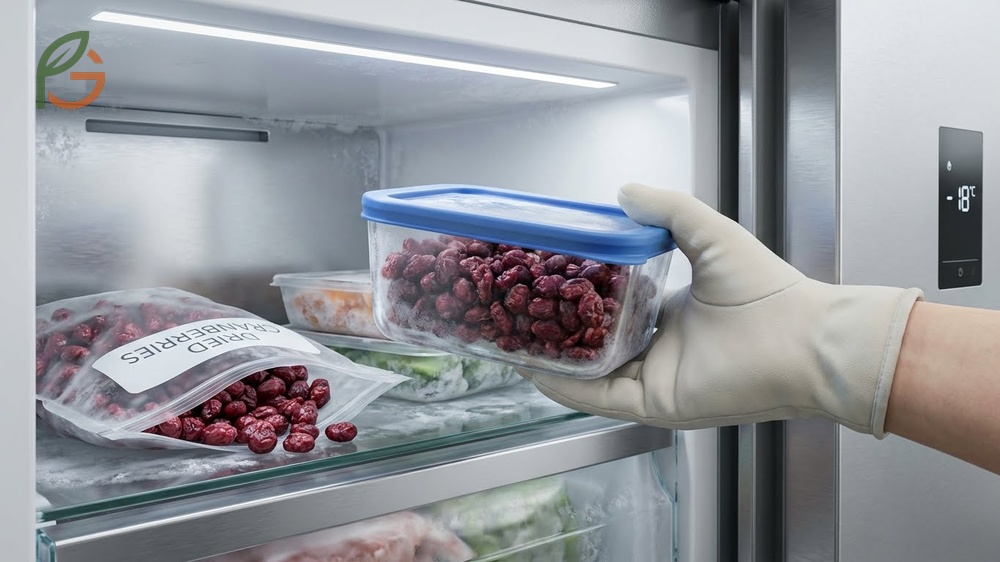
Freezing dried cranberries extends their storage life to two years while preserving flavor and nutritional content.[2] Unlike fresh fruits, dried cranberries don’t develop ice crystals that damage cell structure—their low moisture content prevents this problem. You can use them directly from the freezer without thawing in most recipes.
Transfer opened packages to freezer-safe containers or heavy-duty freezer bags before freezing. Remove as much air as possible to minimize freezer burn risk. Label containers with the freezing date so you can track storage duration.
Frozen dried cranberries maintain their chewy texture better than refrigerated ones over extended periods. The sub-zero temperature completely halts oxidation and enzymatic reactions that degrade quality. This makes freezing the best choice when you’ve bought dried cranberries in bulk or won’t use them within six months.
- Use freezer-safe containers or heavy-duty freezer bags rated for long-term storage
- Portion dried cranberries into usage-size amounts before freezing
- Remove maximum air from containers to prevent freezer burn
- Label each container with contents and freezing date for rotation tracking
- Keep freezer temperature at 0°F (-18°C) or below for optimal preservation
Pro Tip: Don’t thaw and refreeze dried cranberries repeatedly. Remove only what you need for each use and return the container to the freezer immediately. Temperature fluctuations introduce condensation that degrades quality.
Conclusion
The evidence is clear: how long do dried cranberries last depends primarily on storage temperature and moisture control. Unopened packages stored below 65°F (18°C) maintain peak quality for 12-24 months, while opened packages last 6-12 months in the pantry or up to one year refrigerated. Freezing extends this to two years with no quality sacrifice.
Current storage guidance emphasizes controlling four key factors—temperature, light, moisture, and oxygen—to maximize shelf life and minimize food waste. Monitor for spoilage signs like mold, off odors, or texture changes rather than discarding automatically at best-by dates. FruitGarden provides research-based information to help you store your dried fruits effectively and enjoy them at peak quality.
Frequently Asked Questions
Can dried cranberries go bad after the expiration date?
Dried cranberries often remain safe past printed best-by dates if stored properly. These dates indicate peak quality, not safety deadlines. Check for mold, off odors, or unusual texture changes rather than discarding automatically when dates pass.
Should you refrigerate dried cranberries after opening?
Refrigeration isn’t required but extends opened dried cranberries’ shelf life from 6-12 months to a full year. Store them in airtight containers to prevent moisture absorption and odor transfer from other refrigerated foods.
What’s the shelf life of Craisins compared to other dried cranberries?
Ocean Spray Craisins have an expected shelf life of 24 months when stored below 65°F (18°C), matching or exceeding other commercially dried cranberries. Brand differences matter less than storage conditions—temperature and moisture control determine actual longevity.
How do you know when dried cranberries have gone bad?
Spoiled dried cranberries show visible mold growth, emit sour or musty odors, or develop sticky or slimy textures. Dramatic color changes combined with other signs indicate spoilage, though slight darkening from oxidation is normal.
Can you store fresh cranberries in water?
Don’t store fresh cranberries in water—it accelerates spoilage and causes berries to absorb excess moisture. Keep them dry in original packaging or airtight containers in the refrigerator, washing only immediately before use.
Do dried cranberries need to be in airtight containers?
Airtight containers significantly extend dried cranberry shelf life by blocking moisture and oxygen. While not absolutely required for short-term pantry storage, sealed containers prevent quality degradation and protect against pest contamination.
How long do homemade dried cranberries last compared to store-bought?
Homemade dried cranberries last 6-12 months in the pantry, slightly less than commercial products due to higher residual moisture content. Commercial dehydration achieves more consistent drying, but proper home storage in airtight containers at cool temperatures yields comparable results.