How long do cucumbers take to grow? Most varieties mature in 50-70 days from seed to harvest, with germination starting in just 3-10 days.[1] Research shows that specific growing conditions—temperature, soil quality, and variety selection—directly impact your timeline.[2] FruitGarden synthesizes current agricultural research to help you understand exactly when to expect your first cucumbers and what happens at each growth stage.
Quick Answer
How Long Do Cucumbers Take to Grow
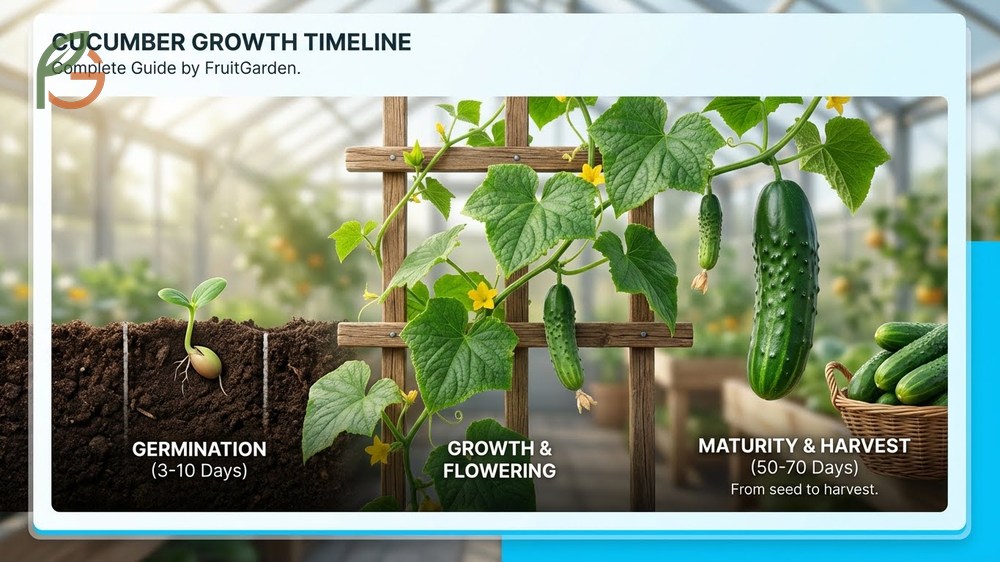
Cucumbers typically need 50-70 days to go from seed to harvestable fruit.[1] This timeline varies based on the variety you’re growing—slicing cucumbers often take the full 60-70 days, while pickling varieties can mature faster. Current agricultural data shows that some fast-maturing varieties produce harvestable cucumbers in just 36-40 days under optimal conditions.[4]
Temperature plays a crucial role in how quickly cucumbers develop. Research demonstrates that cucumbers thrive when soil temperatures reach at least 70°F (21°C), with optimal growth occurring between 75-85°F (24-29°C).[3] Plants grown in cooler conditions can take an additional 1-2 weeks to reach maturity.
From My Experience: My cousin in Guadalajara, Mexico planted cucumber seeds in early May 2024 using a trellis system. Her plants produced the first harvestable cucumbers in 58 days versus the expected 60-65 day range for her variety, achieving consistent daily harvests for six weeks afterward.
Days to Maturity for Cucumbers
The “days to maturity” listed on seed packets represents the time from germination to first harvest, not from planting day. Studies indicate that germination adds 3-10 days to your total timeline, depending on soil warmth and moisture.[1] Understanding this distinction helps you plan your planting schedule more accurately.
Different cucumber types mature at different rates. Slicing cucumbers (8-10 inches long) need 55-70 days, pickling cucumbers (3-5 inches) mature in 48-58 days, and specialty varieties like lemon cucumbers require 60-65 days.[2]
Germination Time for Cucumber Seeds
Cucumber seeds germinate within 3-10 days when soil temperature stays consistently above 70°F (21°C).[3] The warmer your soil, the faster germination occurs—seeds planted in 80°F (27°C) soil often sprout in just 3-4 days. Cold soil below 60°F (16°C) delays germination significantly and increases the risk of seed rot.
Agricultural research shows that cucumber seeds need both warmth and consistent moisture to break dormancy. The radicle (first root) emerges first, followed by the cotyledons (seed leaves) pushing through the soil surface.[1]
Important Note: Don’t plant cucumber seeds until soil temperature reaches at least 70°F (21°C) at a 2-inch depth. Planting too early results in poor germination rates and weak seedlings that struggle throughout the growing season.
Cucumber Plant Stages of Growth
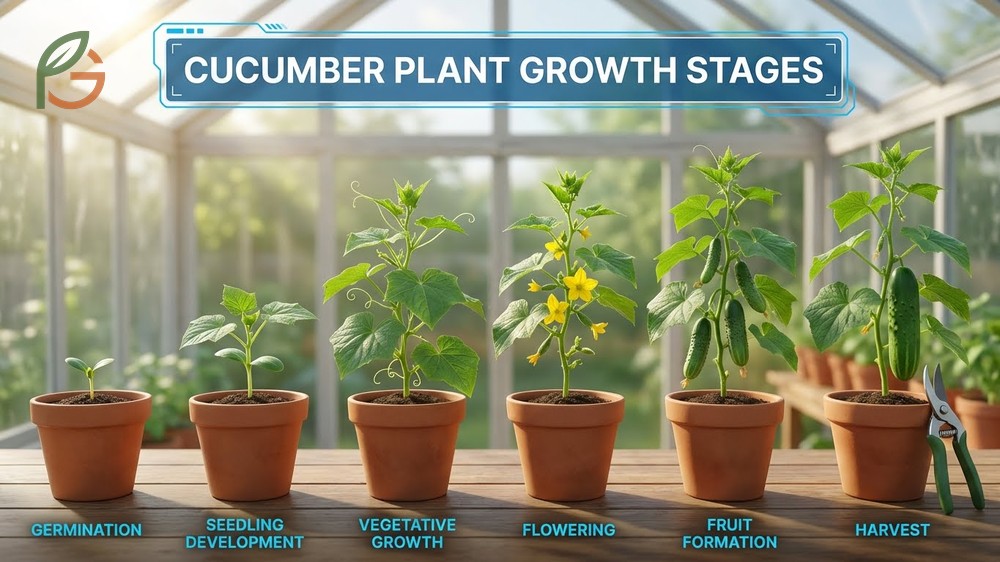
Cucumbers progress through six distinct growth stages: germination, seedling development, vegetative growth, flowering, fruit formation, and harvest. Each stage demands specific care and environmental conditions to ensure healthy development.[1] Understanding these stages helps you anticipate your plant’s needs and troubleshoot problems before they affect yield.
Current horticultural data indicates that the vegetative and flowering stages are the most critical for determining final harvest quantity. Plants that receive consistent nutrition and water during these periods produce 30-50% more fruit than stressed plants.[2]
This table compares the six cucumber growth stages showing timeline duration and key characteristics for each developmental phase from germination through harvest
| Growth Stage | Timeline | Key Characteristics |
|---|---|---|
| Germination | 3-10 days[1] | Seed absorbs water, radicle emerges, cotyledons push through soil |
| Seedling | 10-14 days[1] | True leaves develop, root system expands laterally |
| Vegetative | 3-4 weeks[2] | Rapid stem and leaf growth, vine development begins |
| Flowering | 40-55 days[2] | Male flowers appear first, female flowers 10 days later |
| Fruit Formation | 30-50 days[2] | Rapid cucumber growth after pollination, daily size increase |
| Harvest | 50-70 days total[1] | Continuous picking every 2-3 days for 4-6 weeks |
Seedling Stage
The seedling stage begins when cotyledons emerge from the soil and lasts 10-14 days until true leaves fully develop.[1] During this vulnerable period, seedlings focus energy on establishing a strong root system while producing their first set of real cucumber leaves. These true leaves look different from the rounded cotyledons—they’re larger, lobed, and slightly rough-textured.
Research shows that seedlings need 12-16 hours of direct sunlight daily to prevent stretching and weakness. Inadequate light causes leggy growth that compromises the plant’s ability to support heavy fruit loads later.[2]
Vegetative Growth Stage
The vegetative stage spans 3-4 weeks and represents the plant’s most rapid growth period.[2] Stems thicken dramatically, leaves multiply, and vines begin their climbing behavior. Plants can grow 4-6 inches per week during peak vegetative growth when conditions are optimal.
Current agricultural guidance emphasizes consistent fertilization during this stage. Cucumbers are heavy feeders that require regular nitrogen applications to sustain their rapid growth rate and prepare for the energy-intensive flowering phase.[2]
Flowering and Pollination
Flowering typically begins 40-55 days after germination, with male flowers appearing first.[2] Female flowers emerge about 10 days later and are easily identified by the tiny cucumber-shaped swelling behind each bloom. Successful pollination must occur within the flower’s single day of being open—cucumbers don’t stay receptive for long.
Agricultural studies demonstrate that cucumbers are harvested as early as 8-10 days after female flowers open and receive successful pollination.[4] This quick turnaround from flower to fruit explains why you’ll need to check plants daily once flowering begins.
Pollination Tip: If you’re growing cucumbers in a greenhouse or screened area without natural pollinators, you’ll need to hand-pollinate by transferring pollen from male flowers to female flowers using a small brush or cotton swab. Do this in the morning when flowers first open.
Male vs Female Cucumber Flowers
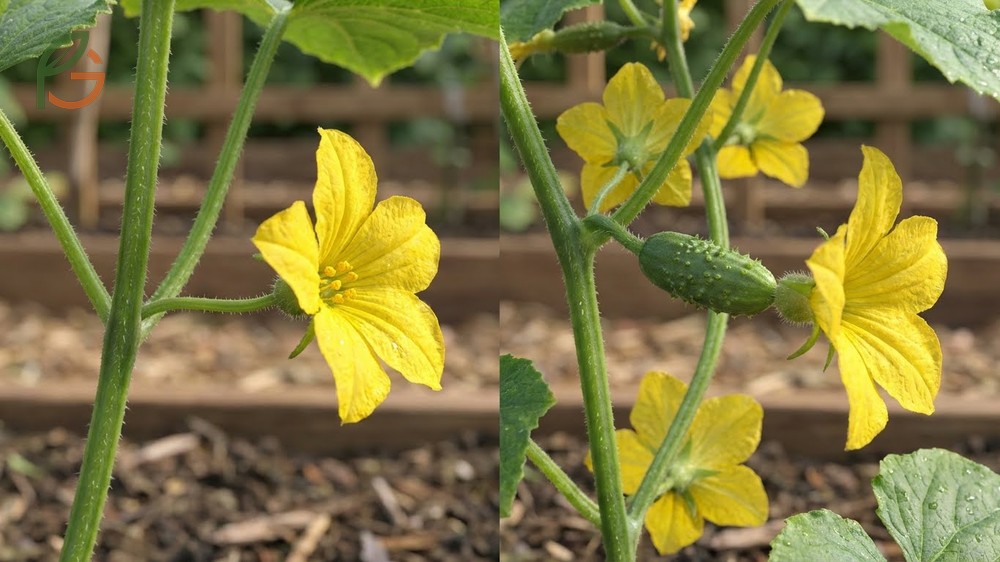
Distinguishing between male and female cucumber flowers is essential for understanding your plant’s productivity. Male flowers attach directly to the stem via a thin stalk and contain only stamens with pollen. Female flowers have a miniature cucumber (the ovary) positioned between the flower and the stem—this swelling is the giveaway.[5]
Research indicates that male flowers outnumber female flowers by a ratio of 10-20 to 1 in most standard cucumber varieties.[5] Male flowers also bloom approximately 10 days before the first female flowers appear. This timing ensures pollen availability when female flowers finally open and become receptive.
Evidence suggests that only female flowers produce cucumbers—male flowers exist solely to provide pollen. Some growers plant gynoecious varieties that produce predominantly female flowers, but these still require a few male flowers (often from a different plant) for successful pollination.[5]
- Location: Males attach via thin stems; females sit on tiny cucumber-shaped ovaries
- Timing: Males bloom 10 days earlier to ensure pollen is ready
- Quantity: Males outnumber females 10-20 to 1 in standard varieties
- Structure: Males have stamens with pollen; females have pistils with sticky stigmas
- Growth pattern: Males grow in clusters of 3-5; females appear individually
- Function: Only females produce edible cucumbers after successful pollination
How Tall Do Cucumber Plants Grow
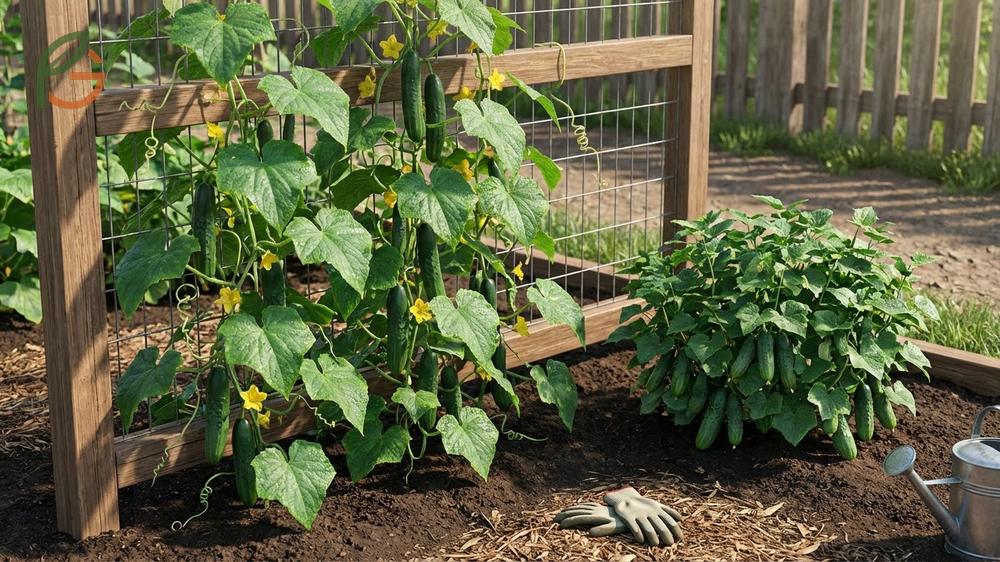
Vining cucumber varieties grow 6-12 feet (1.8-3.7 meters) tall when provided with vertical support like trellises or stakes.[6] Without support, these same plants spread horizontally across 3-6 feet of ground space. Bush or compact varieties stay much shorter at 2-3 feet tall and don’t require trellising.
Agricultural data shows that most gardeners use trellis heights between 6-8 feet (1.8-2.4 meters) to accommodate vining cucumber growth while maintaining easy harvest access.[7] The vines continue growing until frost kills the plant or disease limits further development.
Root depth matters as much as height. Studies indicate that cucumber roots extend 36-48 inches (91-122 cm) into the soil, allowing plants to access deep water reserves and nutrients.[8] This extensive root system explains why cucumbers can tolerate brief dry periods better than their shallow-rooted cousins.
- Vining varieties: Grow 6-12 feet tall vertically on supports
- Bush varieties: Stay compact at 2-3 feet tall, no trellising needed
- Horizontal spread: 3-6 feet without vertical support structures
- Root depth: 36-48 inches deep for water and nutrient access
- Weekly growth rate: 4-6 inches per week during peak vegetative stage
- Trellis height: 6-8 feet recommended for easy harvesting access
Spacing Reminder: Plant vining cucumbers 12-18 inches apart along a trellis, or space bush varieties 24-36 inches apart in rows. Proper spacing prevents disease by improving air circulation and makes harvesting significantly easier.
Speeding Up Cucumber Growth
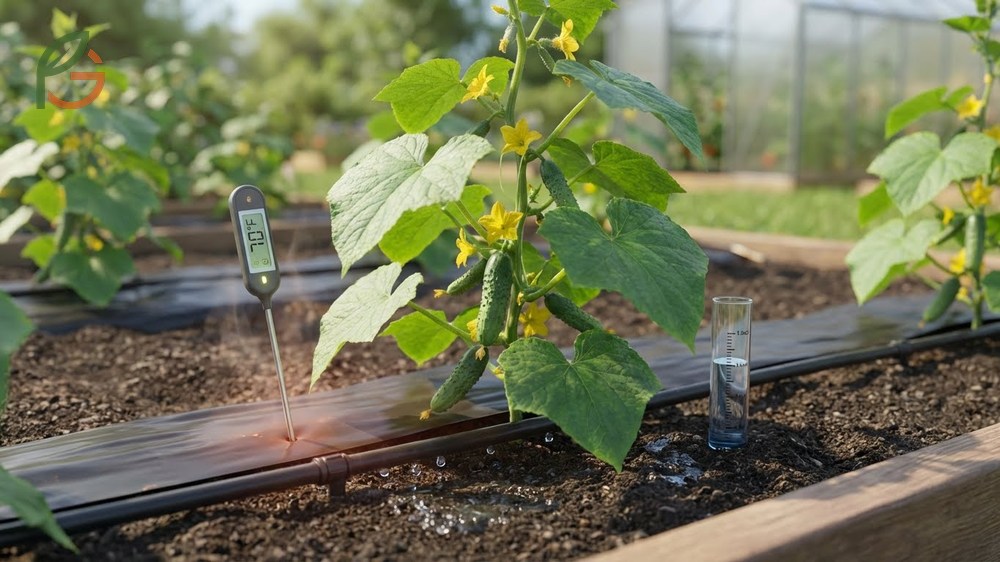
You can shave 7-14 days off your cucumber timeline by optimizing growing conditions. Starting with black plastic mulch warms soil faster in spring, allowing earlier planting when soil reaches the critical 70°F (21°C) threshold.[3] Warmer soil accelerates both germination and early root development.
Current horticultural research emphasizes consistent soil moisture as the single most important factor for faster growth. Cucumbers need 1-2 inches of water per week, delivered through drip irrigation or soaker hoses to keep foliage dry and prevent disease.[2]
Choosing fast-maturing varieties designed for shorter growing seasons can reduce your wait time significantly. Varieties like ‘Bush Slicer’ and ‘Salad Bush’ mature in 50-55 days versus the standard 60-70 days for traditional slicing cucumbers.[4]
- Pre-warm soil: Use black plastic mulch to raise soil temperature 5-10°F faster
- Select fast varieties: Choose 50-55 day varieties instead of 65-70 day types
- Maintain consistent moisture: Provide 1-2 inches of water weekly via drip irrigation
- Apply balanced fertilizer: Feed every 2 weeks with 10-10-10 during vegetative growth
- Ensure full sun: Plant where cucumbers receive 8+ hours of direct sunlight daily
- Control pests early: Monitor for cucumber beetles and aphids that slow plant growth
Conclusion
The evidence is clear: how long do cucumbers take to grow depends primarily on variety selection and growing conditions, with most types maturing in 50-70 days from seed to harvest. By understanding the six growth stages—from germination through harvest—you’ll know exactly what to expect each week and can adjust care accordingly.
Current agricultural guidance emphasizes the importance of soil temperature, consistent moisture, and proper pollination for achieving the shortest possible growing timeline. Whether you’re growing slicing cucumbers for fresh eating or pickling types for preservation, FruitGarden provides research-based insights to help you maximize your harvest and minimize wait times from seed to salad.
Frequently Asked Questions
How long does it take for a cucumber to grow from flower to harvest?
Cucumbers reach harvestable size 8-10 days after successful pollination of female flowers.[4] For pickling cucumbers (3-5 inches), harvest can occur as early as 3 days after pollination. Slicing cucumbers (6-8 inches) typically need the full 8-10 days to reach proper size.
Can you harvest cucumbers too early?
Yes, but slightly immature cucumbers are still edible and often more tender than fully mature ones. Evidence suggests that harvesting cucumbers when they’re slightly undersized (5-6 inches for slicing types) actually encourages the plant to produce more fruit. Extremely young cucumbers under 3 inches may lack flavor development.
Why are my cucumbers growing so slowly?
Slow cucumber growth typically results from inadequate water, poor soil fertility, or temperatures below 70°F (21°C). Research shows that cucumbers need consistent moisture—soil that dries out between waterings stresses plants and slows fruit development significantly. Low nitrogen levels also limit growth during the vegetative stage.
How many cucumbers does one plant produce?
A healthy vining cucumber plant produces 10-15 cucumbers per season, while bush varieties yield 4-8 cucumbers per plant.[1] Consistent harvesting every 2-3 days encourages continued production. Plants that carry overripe cucumbers redirect energy away from producing new fruit.
What temperature is too hot for cucumber plants?
Temperatures above 90°F (32°C) stress cucumber plants and can cause flower drop, reducing fruit set significantly. While cucumbers tolerate heat better than many vegetables, sustained temperatures above 95°F (35°C) halt pollen production and prevent successful pollination. Plants need adequate water and afternoon shade in extreme heat.
Do cucumbers need full sun to grow properly?
Cucumbers require 8+ hours of direct sunlight daily for optimal growth and fruit production. Plants grown in partial shade (4-6 hours of sun) produce 40-60% fewer cucumbers and take longer to reach maturity. Morning sun is particularly important as it helps dry dew from leaves, reducing disease pressure.
Are cucumber plants self-pollinating?
Cucumbers aren’t self-pollinating—they need pollen transfer from male flowers to female flowers. This typically happens through bees, but you can hand-pollinate by using a small brush to move pollen from male flower stamens to female flower stigmas. Without pollination, the tiny cucumber behind the female flower yellows and drops off.