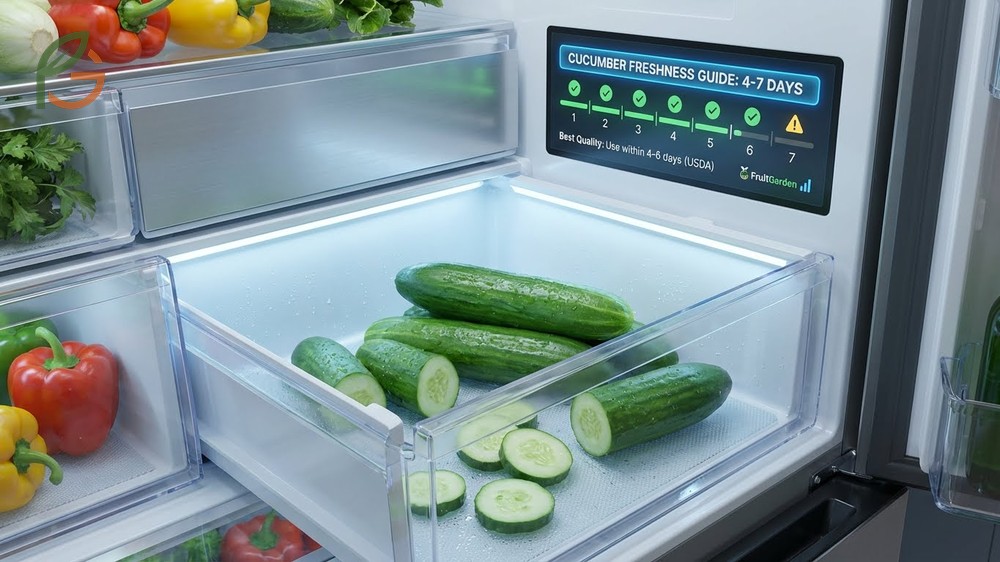
How long do cucumbers last in the fridge? Research shows whole cucumbers stay fresh for 4-7 days when refrigerated properly[1][2]. The USDA recommends using them within 4-6 days after purchase for optimal quality[3]. FruitGarden synthesizes current food safety data and storage research to help you maximize produce freshness and reduce waste.
Quick Answer
How Long Do Cucumbers Last in the Fridge
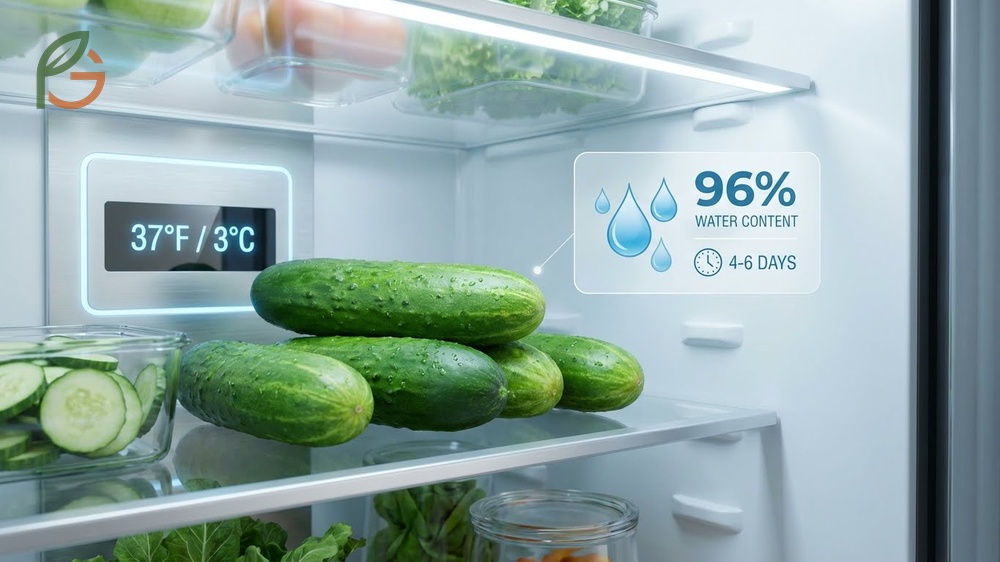
Cucumbers stay fresh in the refrigerator for different lengths of time depending on whether they’re whole or cut. The USDA’s FoodKeeper app recommends consuming whole cucumbers within 4-6 days to ensure optimal freshness and quality[3]. Studies show that cucumbers are made up of 96% water, which makes them highly perishable[1].
Current data indicates that storage conditions dramatically affect shelf life. If you’re like most Americans, your fridge runs at 37-40°F (3-4°C)[3]. This temperature is actually too cold for cucumbers and can cause chilling injury after just 2-3 days[4].
Research demonstrates that various cucumber types have slightly different storage lives. English and Japanese cucumbers last 7-10 days because they often come in sealed plastic wrap that extends freshness[5]. Persian cucumbers and standard fresh cucumbers typically last about 1 week, while pickling cucumbers can last 1-2 weeks when stored properly[5].
Whole Cucumber Storage Timeline
Whole cucumbers maintain their quality for varying durations based on their source and storage method. Farm-fresh or home-grown cucumbers last longer than store-bought ones, staying fresh in the fridge for about 10 days according to produce safety experts[3]. This extended shelf life happens because they haven’t undergone the stress of commercial transportation and handling.
Evidence suggests that cucumbers stored at room temperature only last about 2 days before quality deteriorates[3]. The ideal storage temperature is 50-54°F (10-12°C) with humidity above 95%[4]. When cucumbers are kept below 50°F for more than 2-3 days, they develop chilling injuries[4].
- Fresh whole cucumbers: 4-7 days in the fridge[2]
- English cucumbers with plastic wrap: 7-10 days[5]
- Farm-fresh or garden cucumbers: up to 10 days[3]
- Pickling cucumbers: 1-2 weeks when properly stored[5]
- Room temperature cucumbers: only 2 days[3]
Cut Cucumber Shelf Life
Sliced cucumbers deteriorate much faster than whole ones because cutting exposes the flesh to air and accelerates moisture loss. Research shows you should eat cut cucumbers within 1-2 days for optimal texture and flavor[2][6]. Cut cucumbers release moisture even faster than whole cucumbers, so they need paper towels to absorb what the slices release[2].
Current guidance emphasizes storing sliced cucumbers in an airtight container with a dry paper towel at the bottom. This setup prevents the slices from becoming soggy and maintains their crisp texture. Most people don’t realize that arranging slices in a single layer works better than stacking them, which can lead to faster deterioration[6].
Important Note: Don’t wash cucumbers before storing them in the fridge. Wait to rinse and scrub them until you’re ready to eat, as moisture promotes faster spoilage. Store-bought cucumbers are usually covered in an edible wax coating that should be washed off before consumption[5].
Signs of Spoiled Cucumber
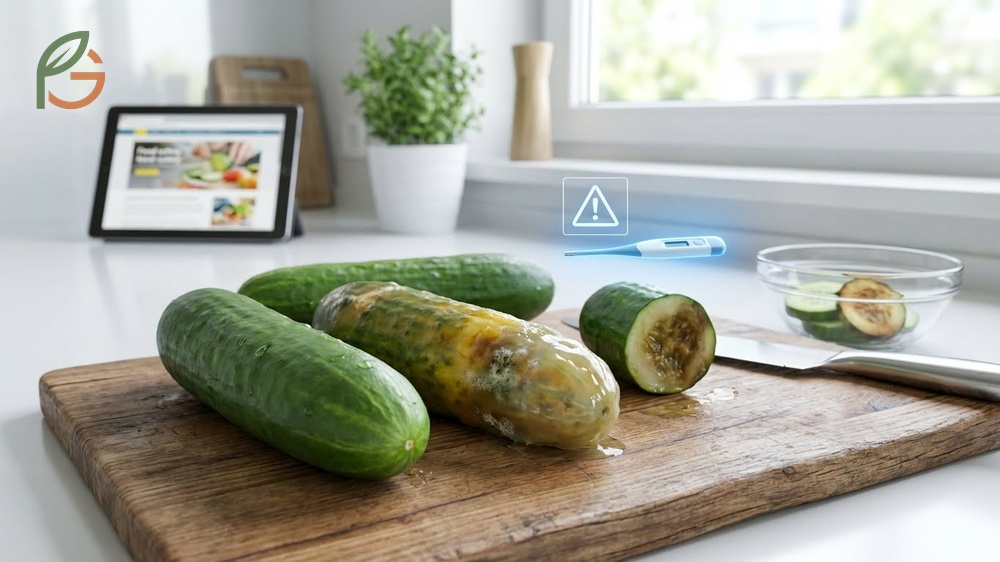
Recognizing when a cucumber has gone bad protects you from potential foodborne illnesses. When cucumbers start to rot, they develop distinct visual and textural changes that signal it’s time to toss them. Studies demonstrate that eating spoiled produce can lead to stomach issues and food poisoning[7].
Research shows that cucumbers develop spoilage signs in a predictable pattern. The high moisture content that makes cucumbers hydrating also predisposes them to a shorter shelf life and faster decay[7]. What often gets overlooked is that slime indicates the whole cucumber is starting to rot, not just the surface.
Slimy Texture and Coating
A slimy film on your cucumber is the most obvious sign it’s gone bad. When a cucumber starts to rot, it produces a slimy, clear or white coating on the skin[8]. If your cucumber feels sticky or slimy, you should toss it out immediately as this is a sign of bacterial growth and decay[8].
It can be tempting to wash off the slime or cut off the mushy parts. However, the slime indicates that the whole cucumber is starting to rot and there are health risks linked to eating spoiled produce[7]. Don’t try to salvage a slimy cucumber—dispose of it to avoid health risks.
Mold and Soft Spots
Mold appears as fuzzy white or black spots on your cucumber and indicates rotting. This visible mold means the cucumber has progressed beyond safe consumption[8]. Soft spots, indentations, and pitting on the outside signal chilling injury from prolonged cold storage[3].
Current data indicates that chilling injuries develop when cucumbers are stored below 50°F (10°C) for extended periods. These injuries manifest as water-soaked areas that eventually lead to extensive decay[4]. Chilled cucumbers often decay rapidly once they’re removed from cold storage[9].
- Slimy, sticky, or clear coating on the skin
- Fuzzy white or black mold patches
- Soft, mushy texture when squeezed
- Water-soaked spots or pitting
- Yellowing skin (indicates overripeness or ethylene exposure)
- Shriveling or wrinkling of the skin
- Bitter taste (though you shouldn’t taste if other signs are present)
Extending Cucumber Freshness
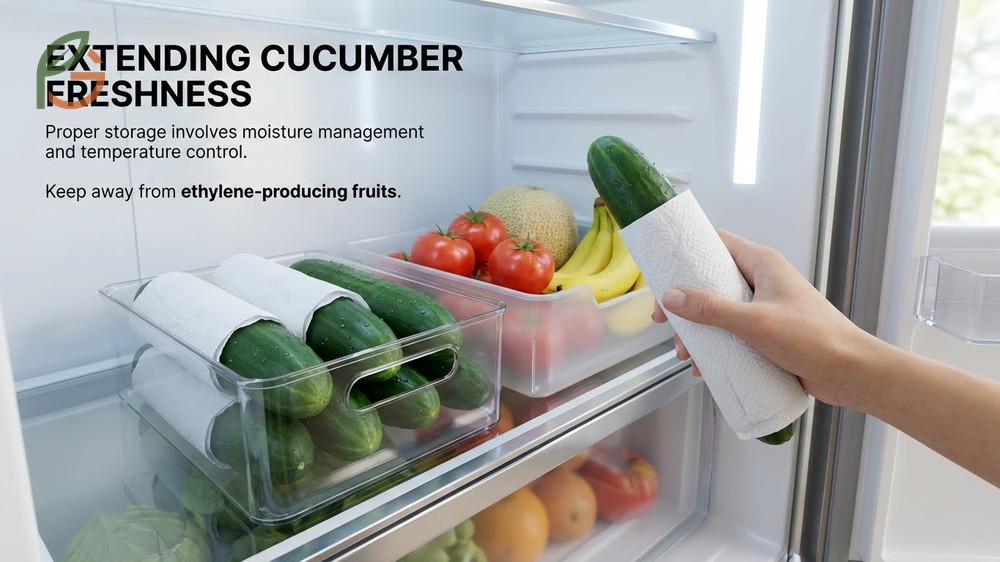
Proper storage techniques can significantly extend cucumber freshness beyond the typical 4-7 day window. Research shows that wrapping cucumbers in paper towels absorbs excess moisture and prevents the sliminess that signals decay[10]. The key lies in understanding temperature sensitivity and moisture management.
Studies demonstrate that cucumbers are ethylene-sensitive and should be stored away from ethylene-producing fruits and vegetables like melons, tomatoes, and bananas. Ethylene gas causes cucumbers to turn yellow and soften prematurely[11]. Most people find that keeping cucumbers separate from these items in the fridge adds 2-3 extra days of freshness.
Proper Wrapping Technique
Wrapping cucumbers correctly creates the ideal microenvironment for extended storage. Place whole cucumbers in a paper towel first, then put them in a plastic bag before refrigerating. This two-layer system manages moisture by allowing the paper towel to absorb excess water while the plastic bag maintains humidity[2].
Current guidance emphasizes checking and replacing the paper towel if it becomes damp. A wet paper towel can’t absorb additional moisture and may actually promote bacterial growth[6]. For cut cucumbers, line your airtight container with a dry paper towel at the bottom and arrange slices in a single layer to prevent stacking-related moisture buildup.
Ideal Fridge Placement
Where you place cucumbers in your fridge matters more than you’d think. Store cucumbers on the top shelf of your refrigerator, not in the crisper drawer. The top shelf is slightly warmer than the rest of the fridge, which helps prevent chilling injuries[2]. The crisper drawer, despite its name, is actually one of the coldest spots in most refrigerators.
Research indicates that cucumbers stored in temperatures below 45°F (7°C) develop chill injury symptoms rapidly. To prevent this, position cucumbers toward the front of the top shelf, away from cooling elements[11]. This placement keeps them in the 45-50°F (7-10°C) range, which isn’t perfect but it’s better than the 37-40°F (3-4°C) standard fridge temperature.
- Wrap in paper towels before bagging to absorb moisture
- Store on the top shelf, not in the crisper drawer
- Keep away from ethylene-producing fruits (bananas, tomatoes, melons)
- Use within 5 days for best quality
- Don’t wash until ready to use
- Check and replace damp paper towels every 2-3 days
- Buy farm-fresh cucumbers when possible for extended shelf life
Pro Tip: If you open your fridge frequently, some gardeners recommend storing cucumbers with a metal spoon tucked alongside them. The metal helps regulate temperature fluctuations, though scientific evidence for this method is limited. The more proven approach is simply keeping cucumbers on the top shelf where temperature remains more stable.
Storing Cut Vegetables
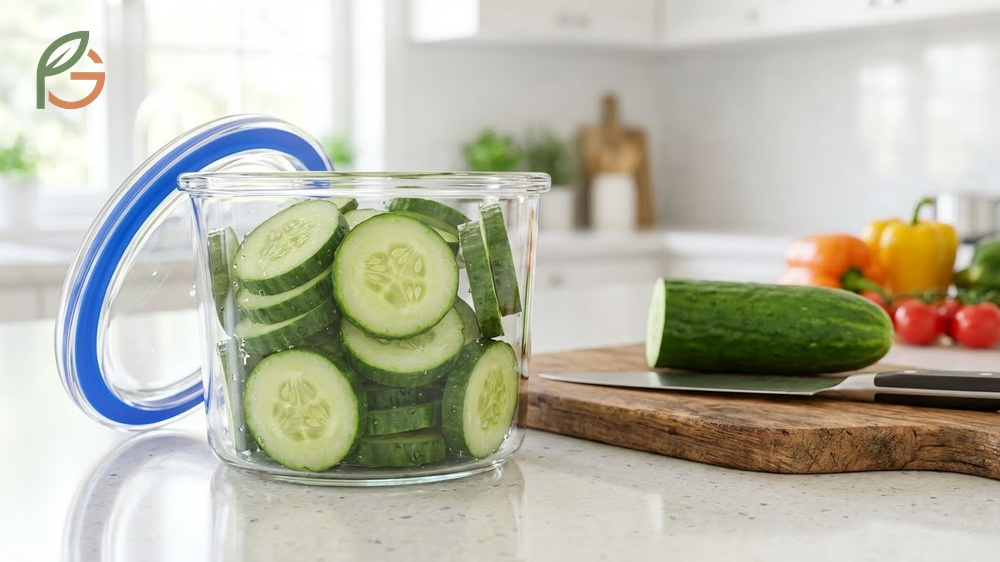
Cut vegetables require different storage approaches than whole produce because their exposed flesh loses moisture rapidly. For cucumbers specifically, studies show that slicing accelerates deterioration and reduces shelf life from 4-7 days to just 1-2 days[6]. Cutting exposes the flesh to air, which speeds up the deterioration process through oxidation and moisture evaporation.
Current data indicates that airtight containers work best for preserving cut cucumber texture. Select a container that’s appropriately sized to hold the slices without overcrowding, as excess space allows moisture buildup[6]. Place a clean, dry paper towel at the bottom to suck up any excess moisture and prevent the cucumbers from becoming soggy.
Evidence suggests that covering the cut end of a partially used cucumber with plastic wrap or a silicone food hugger extends its life to about 3 days. After wrapping the cut face, re-wrap the entire cucumber in a paper towel and refrigerate[12]. This method works for when you’ve only used half a cucumber and want to save the rest.
Some storage methods involve submerging sliced cucumbers in water in a sealed container. This technique can keep them refrigerated for up to a week, though the cucumbers may lose some of their crisp texture[3]. The water prevents moisture loss but it also leaches out some of the cucumber’s nutrients and flavor compounds over time.
- Use an airtight container sized to fit slices without overcrowding
- Line the bottom with a dry paper towel to absorb moisture
- Arrange slices in a single layer, not stacked
- Seal the lid tightly to create an airtight environment
- Store in the refrigerator’s crisper drawer for cut vegetables
- Replace the paper towel if it becomes damp
- Consume within 1-2 days for optimal texture and flavor[2]
Food Safety Reminder: Always store cut vegetables away from raw meat, poultry, and seafood to prevent cross-contamination. Use separate cutting boards and wash your hands thoroughly after handling different food types. Cut cucumbers left at room temperature for more than 2 hours should be discarded according to food safety guidelines.
Conclusion
The evidence is clear: how long cucumbers last in the fridge depends on proper storage techniques and temperature management. Whole cucumbers stay fresh for 4-7 days when wrapped in paper towels and stored on the top shelf, while cut cucumbers need airtight containers and should be eaten within 1-2 days. Research demonstrates that avoiding temperatures below 50°F (10°C) for extended periods prevents chilling injury and extends shelf life.
Current guidance emphasizes buying only what you’ll use within a week, storing cucumbers away from ethylene-producing fruits, and monitoring for spoilage signs like sliminess and mold. FruitGarden provides research-based storage strategies to help you reduce food waste and enjoy crisp, fresh cucumbers every time you reach into your fridge.
Frequently Asked Questions
How long are cucumbers good for in the fridge?
When is a cucumber bad?
How long does a cucumber last at room temperature?
Cucumbers only last about 2 days at room temperature before quality deteriorates[3]. Despite the fridge being too cold for ideal storage, it’s still better than room temperature storage. The optimal temperature is 50-54°F (10-12°C), which is warmer than most fridges but cooler than typical room temperature[4].
Can you freeze cucumbers to extend their shelf life?
Yes, you can freeze cucumbers for up to three months, but they’ll lose their signature crunch and become mushy when thawed[3]. Frozen cucumbers work best when pureed in gazpacho or smoothies rather than used in salads. To freeze them, wash and dry the cucumbers, then place them unwrapped in an airtight container.
Why do cucumbers get slimy in the fridge?
Cucumbers get slimy in the fridge due to chilling injury and their high moisture content of 96%[7]. Standard refrigerator temperatures of 37-40°F (3-4°C) are too cold and cause cell damage after 2-3 days[4]. This damage leads to water-soaked areas and bacterial growth that creates the slimy coating.
Should I wash cucumbers before storing them?
No, don’t wash cucumbers before storing them in the fridge. Wait to rinse and scrub them until you’re ready to eat, as moisture promotes faster spoilage[5]. Store-bought cucumbers are usually covered in an edible wax coating that should be washed off before consumption, but this washing should happen right before eating, not before storage.
What’s the best way to store English cucumbers?
English cucumbers last 7-10 days when kept in their original sealed plastic wrap[5]. If you’ve opened the wrap, place the cucumber in a paper towel and then in a plastic bag on your fridge’s top shelf. English cucumbers have very thin skins that are extremely sensitive to water loss, so keeping them wrapped is essential for maintaining freshness[4].