How big do peach trees get? Standard peach trees reach 12-15 feet tall and wide, semi-dwarf varieties grow 8-15 feet, and dwarf peach trees stay compact at 8-10 feet[1]. Unlike other fruit trees where standards tower at 25+ feet, peaches naturally don’t grow very large, making them ideal for home gardens. FruitGarden provides research-backed guidance to help you choose the right peach tree size for your available space and harvest goals.
Quick Answer
How Big Do Peach Trees Get
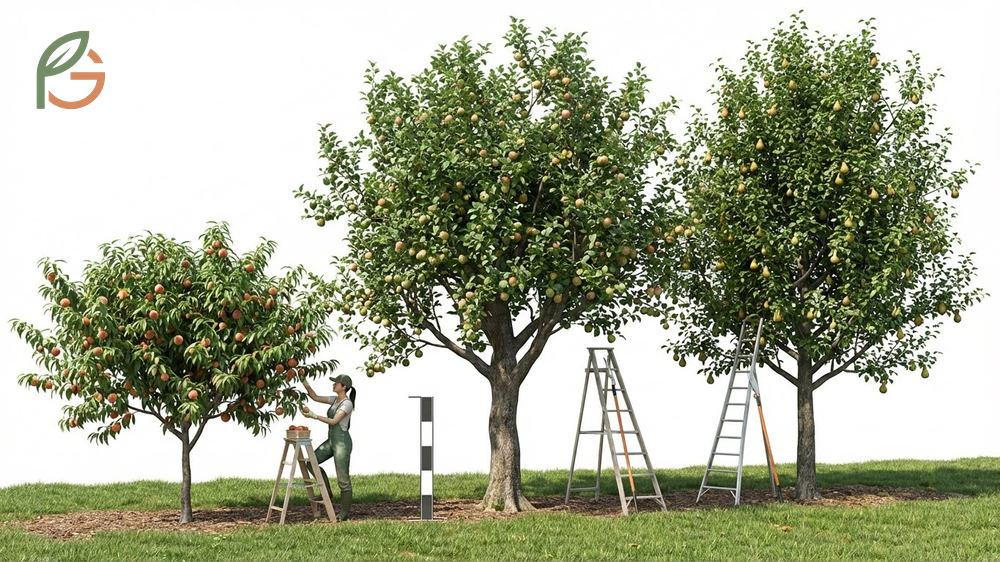
Peach tree size depends on the rootstock and variety you plant. Standard peach trees reach 12-15 feet tall and wide, which is notably smaller than standard apples or pears that tower at 25+ feet[1]. This natural compactness makes peaches easier to manage than many other fruit trees.
Research shows that peach trees develop their mature canopy by year six, reaching heights of 7-9 feet with similar widths when properly maintained[5]. Most home gardeners prefer dwarf or semi-dwarf varieties because you can harvest most fruit without a ladder.
From My Experience: My cousin in Monterrey, Mexico planted a semi-dwarf peach tree in March 2023. The tree reached 9 feet by its second growing season, matching the 12-24 inches annual growth rate that studies report.
Standard vs Dwarf Peach Trees
The main difference between standard and dwarf peach trees is mature height and spread. Standard varieties reach their full 12-15 feet naturally, while dwarfs stay compact at 8-10 feet without aggressive pruning[1]. Dwarf trees produce full-size peaches despite their smaller stature.
Semi-dwarf peach trees fall in the middle range at 8-15 feet, offering a balance between fruit yield and manageability[2]. These trees typically produce nearly twice as much fruit as dwarfs without requiring significantly more space.
This table compares mature height, mature width, and harvesting ease across three peach tree types: standard, semi-dwarf, and dwarf varieties.
| Tree Type | Mature Height | Mature Width | Harvesting |
|---|---|---|---|
| Standard | 12-15 feet[1] | 12-15 feet[1] | Ladder required for upper fruit |
| Semi-Dwarf | 8-15 feet[2] | 8-15 feet[2] | Most fruit reachable from ground |
| Dwarf | 8-10 feet[3] | 8-10 feet[3] | All fruit easily accessible |
Dwarf Peach Tree Size
Dwarf peach trees grow to a manageable 8-10 feet tall and wide at maturity[3]. This compact size makes them perfect for small yards, patios, or container growing. You’ll get full-size peaches without needing 20+ feet of space.
Current data indicates dwarf varieties are grafted onto specialized rootstocks that limit overall growth while maintaining fruit quality. These trees start producing fruit in year 3-4, just like standard varieties, and don’t sacrifice flavor for size.
Important Note: Dwarf peach trees aren’t miniature versions—they produce normal-size peaches on smaller trees. Don’t confuse tree size with fruit size when planning your orchard.
Peach Tree Canopy Width
Peach tree canopy width typically equals tree height, creating a roughly round or slightly spreading crown. After three years of growth, properly trained peach trees develop canopies 7-9 feet wide with trunks 4-7 inches in diameter[5]. This balanced shape allows sunlight to reach interior branches for optimal fruit production.
The ring-shaped fruiting zone extends about 4 feet wide and 4 feet deep within the canopy[5]. Maintaining this structure through annual pruning ensures consistent harvests throughout the tree’s productive years.
How Far Apart to Plant Peach Trees
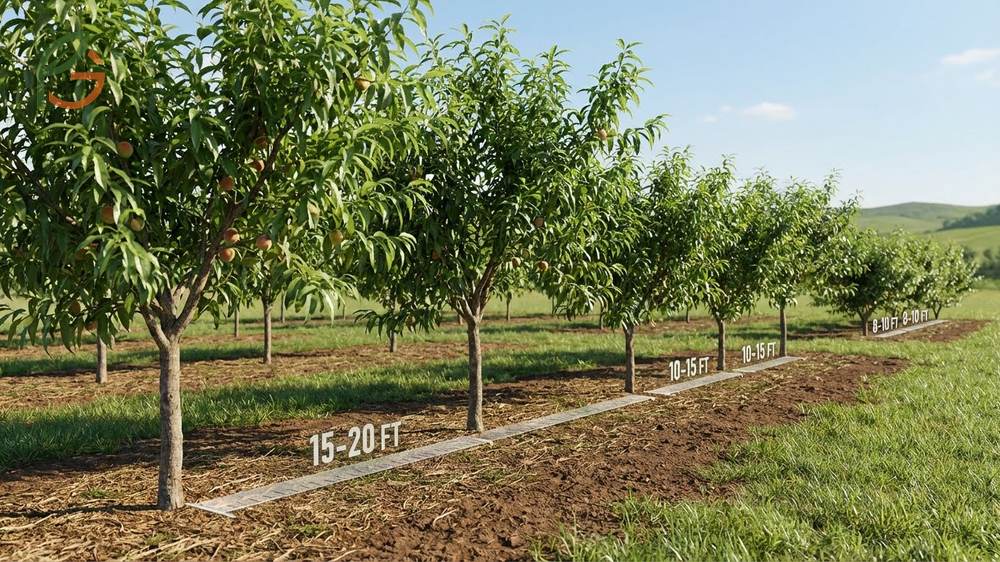
Proper spacing prevents competition for nutrients, water, and sunlight while allowing good air circulation to reduce disease pressure. Standard peach trees need 15-20 feet between trees, semi-dwarf varieties require 10-15 feet, and dwarf trees thrive with 8-10 feet spacing[6]. These distances apply to spacing within rows.
Studies demonstrate that crowded trees develop narrow canopies and produce smaller fruit due to light competition. Agricultural data shows properly spaced orchards yield 30-40% more fruit per tree compared to densely planted layouts.
Peach Tree Planting Spacing by Type
The spacing you choose affects your harvest timeline and maintenance workload. Closer spacing means earlier orchard fill but more frequent pruning to prevent overcrowding. Wider spacing gives trees room to develop naturally with less intervention.
- Standard peach trees: Plant 15-20 feet apart to accommodate full mature spread[6]
- Semi-dwarf varieties: Space 10-15 feet apart for optimal growth and air circulation[6]
- Dwarf peach trees: Plant 8-10 feet apart, perfect for intensive home orchard systems[7]
- Container specimens: Dwarf varieties can grow in 15-20 gallon pots with no in-ground spacing needed
- Espalier training: Trees trained flat against walls or fences can be planted 6-8 feet apart along the structure
Row Spacing for Peach Trees
Row spacing needs to accommodate equipment access and allow sunlight to penetrate between tree rows. Standard orchards maintain 25-30 feet between rows for tractor access, while home gardens can use 15-20 feet between rows for semi-dwarf and dwarf varieties[6]. Proper row orientation maximizes light exposure throughout the day.
Research shows north-south row orientation provides the most even light distribution for peach trees in northern latitudes. In windy regions, closer row spacing creates natural windbreaks, though you’ll need more aggressive pruning to maintain air circulation.
Spacing Tip: Always measure spacing from trunk center to trunk center, not from branch tips. Trees grow wider than initial planting distances suggest, so resist the urge to crowd young trees that look small.
Are Peach Trees Self Pollinating
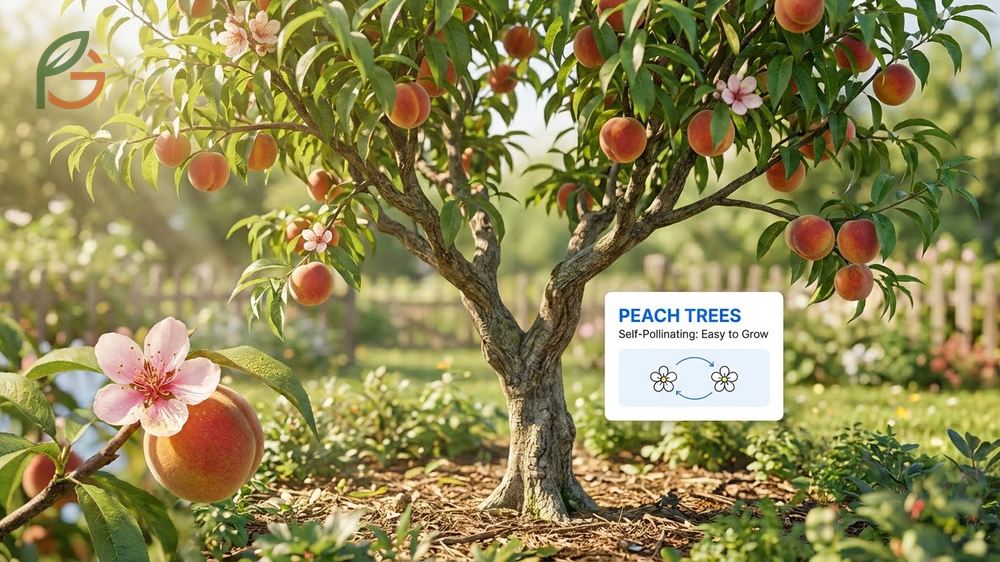
Yes, peach trees are self-pollinating, meaning a single tree can produce fruit without another peach tree nearby[4]. This makes peaches one of the easiest fruit trees to grow, especially if you only have space for one tree. You won’t need to research compatible varieties or worry about bloom timing overlap.
Current horticultural guidance shows all commercial peach and nectarine varieties are self-fertile, unlike apples and pears that typically require cross-pollination[4]. This trait simplifies orchard planning and ensures reliable fruit set even in isolated plantings.
Do Peach Trees Need a Pollinator
No, peach trees don’t need a pollinator or pollination partner to produce fruit. Each flower contains both male and female parts, allowing self-pollination when bees or wind transfer pollen within the same tree[8]. This means you can plant just one peach tree and still harvest fruit starting in year 3-4.
Studies demonstrate that while peaches don’t require cross-pollination, having multiple varieties doesn’t hurt and may slightly increase fruit set through increased pollinator activity. The key factor is ensuring adequate bee populations during the 2-4 week bloom period in early spring.
Pollination Partners for Peach Trees
Since peach trees are self-fertile, you don’t need to select specific pollination partners or worry about compatibility. Plant any combination of peach varieties based on flavor preferences, ripening times, and chill hour requirements rather than pollination needs. This flexibility lets you diversify your harvest season without complex planning.
- Extended harvest: Early, mid, and late-season varieties provide fresh peaches from June through September
- Flavor diversity: White flesh, yellow flesh, freestone, and clingstone varieties offer different taste experiences
- Risk management: Multiple varieties protect against total crop loss if one blooms during a late frost
- Increased pollinator activity: More blooms attract more bees, potentially improving fruit size and set rates
- Comparison testing: Growing several varieties helps you identify which perform best in your specific microclimate
- Fresh eating vs processing: Some varieties excel for eating fresh while others shine in preserves and baking
How Fast Do Peach Trees Grow
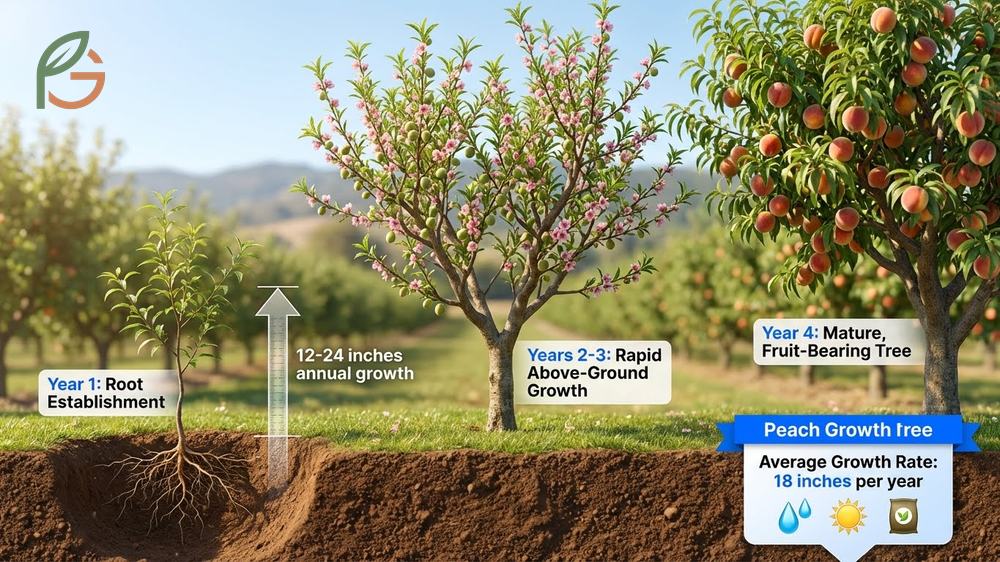
Peach trees grow relatively fast, adding 12-24 inches in height annually during their establishment years[9]. The average growth rate is about 18 inches per year when trees receive proper care including adequate water, nutrients, and sunlight[10]. This vigorous growth means you’ll have a mature, fruit-bearing tree within 3-4 years.
Research shows peach trees focus energy on root establishment during year one, then rapid above-ground growth in years 2-3. After the third season, trees typically reach 6-9 feet tall and 7-9 feet wide, approaching their mature canopy structure[5]. Growth rates slow after fruit production begins as the tree redirects resources to crop development.
Evidence suggests newly planted peach trees can more than double in height during their first growing season when pruned correctly at planting time. One field study documented new branches extending 3-4 feet from the main trunk in a single season, demonstrating the species’ natural vigor.
Pruning for Height Control
Annual pruning controls peach tree height while maintaining productivity and fruit quality. Research demonstrates that maintaining tree heights at 7-9 feet through strategic pruning from years 6-10 onward ensures a low, spreading form that’s easy to harvest[5]. Without pruning, trees quickly become too tall for efficient fruit harvest and pest management.
Current guidance emphasizes removing upright shoots in June and pinching terminal growth above outward-growing branches. This encourages the horizontal, spreading form that maximizes sunlight penetration to interior fruiting wood. Most home gardeners prune in late winter before bud break, removing 30-40% of last year’s growth to control size.
- Summer pinching: Remove upright growth tips in June to redirect energy toward horizontal branches
- Central leader removal: Cut back dominant vertical shoots to encourage an open-center vase shape
- Annual heading cuts: Shorten branch lengths by 30-40% each late winter to maintain compact form
- Water sprout removal: Eliminate vigorous vertical shoots that drain resources from fruiting wood
- Lower branch preservation: Keep low scaffold branches to maintain the spreading, accessible canopy
- Light management: Prune to ensure 20% full sun reaches interior branches for flower bud development[5]
How Long Do Peach Trees Live
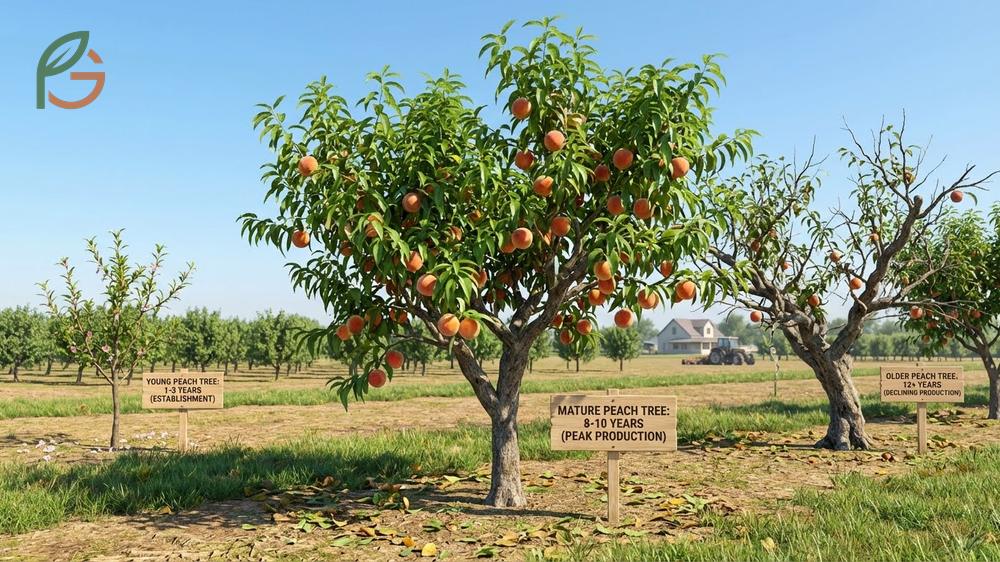
Peach trees live 10-15 years on average, with commercial orchards typically replanting after 12 years when production declines[11]. This is significantly shorter than apple or pear trees, which can produce for 40+ years. Evidence suggests that with proper care, some peach trees in favorable climates live 15-20 years or even reach 25-30 years, though productivity drops after year 8-10.
The productive cycle breaks down into distinct phases: years 1-3 focus on establishment with no fruit, years 4-8 provide peak production with over 2,500 boxes per acre possible, and years 8+ show declining yields[11]. Most home gardeners find 12-15 years of harvests sufficient before replanting with a new variety.
Studies demonstrate that lifespan varies by region, with the University of California at Davis reporting 15-year lifespans in California while the University of Maine cites just 7 years in Maine’s harsher climate[12]. Climate, soil quality, pest pressure, and maintenance practices all influence how long your tree remains productive.
| Years | Stage | Productivity |
|---|---|---|
| 1-3 | Establishment | No fruit, focus on root and canopy development[11] |
| 4-8 | Peak Production | Maximum yields, 2,500+ boxes/acre[11] |
| 8-12 | Declining Production | Gradual yield decrease, quality remains good |
| 12+ | Low Production | Replanting becomes economically beneficial[11] |
Lifespan Factors: Proper annual pruning, disease management, and avoiding overfertilization can extend productive life by 3-5 years. Peach trees stressed by drought, poor drainage, or pest damage decline faster than well-maintained specimens.
Conclusion
The evidence is clear: how big do peach trees get depends entirely on the rootstock and variety you choose, with standards reaching 12-15 feet, semi-dwarfs growing 8-15 feet, and dwarfs staying compact at 8-10 feet. Current agricultural guidance emphasizes matching tree size to your available space and harvest preferences—dwarf varieties excel in small yards while standards suit larger properties with room for multiple trees.
Research across commercial orchards and home gardens shows proper spacing (15-20 feet for standards, 8-10 feet for dwarfs) and annual pruning maximize both fruit quality and tree longevity. Since all peach trees are self-pollinating, you can confidently plant a single specimen and expect full harvests within 3-4 years. FruitGarden synthesizes current horticultural research to help you grow productive peach trees that fit your landscape and provide fresh fruit for 12-15 years.
Frequently Asked Questions
How tall do standard peach trees get compared to other fruit trees?
Standard peach trees reach 12-15 feet tall, which is notably smaller than standard apples or pears that grow 25+ feet[1]. This natural compactness makes peaches easier to harvest and prune than many other fruit trees. Even “standard” peach varieties don’t require tall ladders for harvest.
Can I grow a peach tree in a small backyard?
Yes, dwarf peach trees are perfect for small backyards, growing just 8-10 feet tall and wide[3]. You can even grow them in large containers on patios or decks. Dwarf varieties produce full-size peaches despite their compact growth habit, giving you the same fruit quality in less space.
Do I need two peach trees for pollination?
No, you only need one peach tree because all varieties are self-pollinating[4]. A single tree will produce fruit without a pollination partner nearby. However, planting multiple varieties extends your harvest season and provides flavor diversity without complicating pollination requirements.
How much space do I need between peach trees?
Space standard peach trees 15-20 feet apart, semi-dwarf varieties 10-15 feet apart, and dwarf trees 8-10 feet apart[6]. Proper spacing prevents competition for resources and ensures adequate air circulation to reduce disease pressure. Measure distances from trunk center to trunk center, not from branch tips.
How many years will a peach tree produce fruit?
Peach trees produce fruit for 10-15 years on average, with peak production occurring in years 4-8[11]. Production gradually declines after year 8-10, with most commercial orchards replanting around year 12. With excellent care, some trees continue producing for 15-20 years, though yields decrease over time.
How fast will my peach tree reach full size?
Peach trees grow 12-24 inches per year and typically reach mature canopy size by year 5-6[9]. Dwarf varieties reach full size faster than standards due to their compact mature height. After year 6, growth focuses more on fruit production than canopy expansion.
Can I keep my peach tree shorter through pruning?
Yes, annual pruning easily maintains peach trees at 7-9 feet tall regardless of variety[5]. Remove upright growth and head back branches by 30-40% each late winter to control height while maintaining productivity. Summer pinching of vertical shoots further encourages a low, spreading form that’s easy to harvest without a ladder.