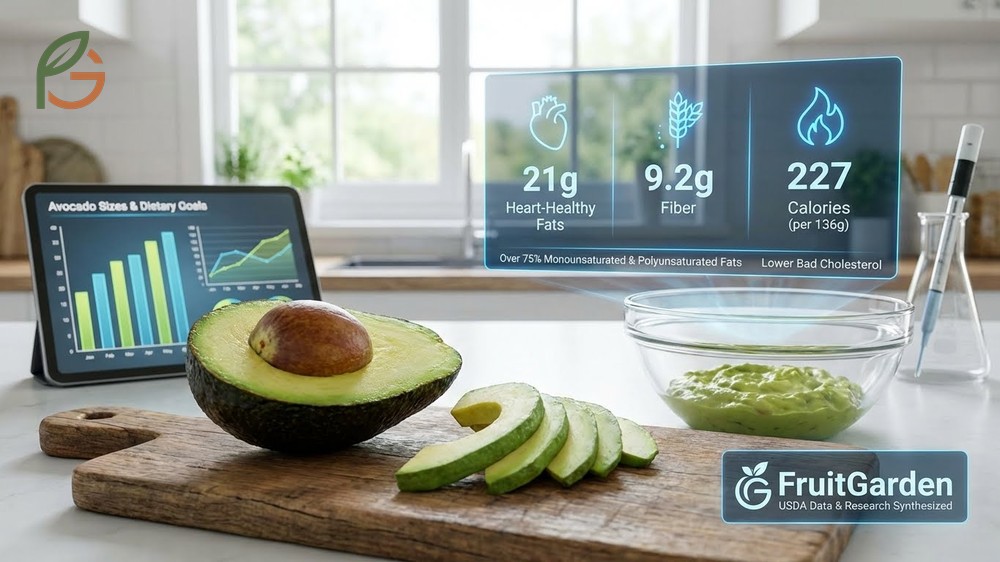
Hass avocado nutrition facts show that one medium fruit (136g) delivers 227 calories, 21g of heart-healthy fats, and 9.2g of fiber[1]. Research from the USDA demonstrates that over 75% of avocado fats are monounsaturated and polyunsaturated, which help lower bad cholesterol levels. FruitGarden synthesizes current USDA data and peer-reviewed nutritional research to help you understand how different avocado sizes fit your dietary goals.
Quick Answer
Hass Avocado Nutrition Facts
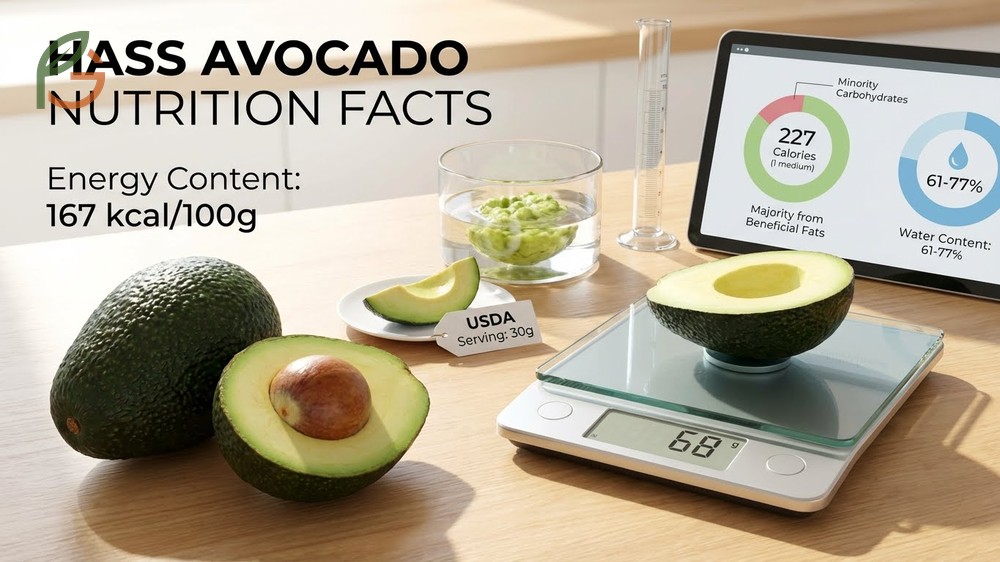
Research shows that one medium Hass avocado (136g) contains 227 calories, with the majority coming from beneficial fats rather than carbohydrates[1]. The official USDA serving size is one-fifth of a fruit (30g), providing 50 calories, but NHANES data reveals Americans typically consume half an avocado (68g) per serving[1]. Current nutritional databases calculate energy content at 167 kcal per 100g of avocado flesh[4].
Studies demonstrate that Hass avocados contain 61-77% water by mass, creating a lower energy density compared to tree nuts[4]. One whole fruit provides nearly 20 vitamins, minerals, and phytonutrients, making it nutrient-dense relative to its calorie content. This composition explains why avocados don’t feel as calorie-heavy as their numbers suggest.
Calories and Macronutrients
Data from peer-reviewed sources shows that a medium Hass avocado breaks down as 21g total fat, 11.8g total carbohydrates (with 9.2g fiber), and 2.7g protein[1]. This means net carbs equal just 2.6g per fruit, making Hass avocados compatible with low-carb eating patterns. Total sugar content remains minimal at 0.2g per half avocado[1].
Evidence suggests that the high fiber-to-calorie ratio helps with satiety and digestive health. Most people find that half an avocado keeps them satisfied for several hours without blood sugar spikes.
- Fat comprises 83% of total calories, primarily from monounsaturated fatty acids
- Fiber accounts for 78% of total carbohydrate content
- Protein content remains low at 2.7g per fruit, requiring pairing with protein sources
- Zero cholesterol and minimal sodium (10mg per fruit)
- Contains all nine essential amino acids in small amounts
Micronutrients and Vitamins
Agricultural data shows one medium Hass avocado delivers 690mg potassium (20% DV), 121mcg folate (30% DV), and 2.0mg pantothenic acid (40% DV)[1]. These levels exceed those found in equal portions of almonds, pistachios, or walnuts. Vitamin K content reaches 28.6mcg per fruit, supporting bone health and blood clotting[1].
Current guidance emphasizes that avocados provide 369mcg of lutein and zeaxanthin combined, which support eye health[1]. The fruit also contains 113mg total phytosterols per medium avocado, compounds that help block cholesterol absorption. Unlike many fruits, avocados supply B-complex vitamins including niacin (2.6mg), vitamin B-6 (0.4mg), and riboflavin (0.2mg).
Important Note: Vitamin content varies by growing conditions and ripeness stage. Store-bought avocados may have 10-15% less vitamin C than freshly harvested fruit.
Calories in a Hass Avocado
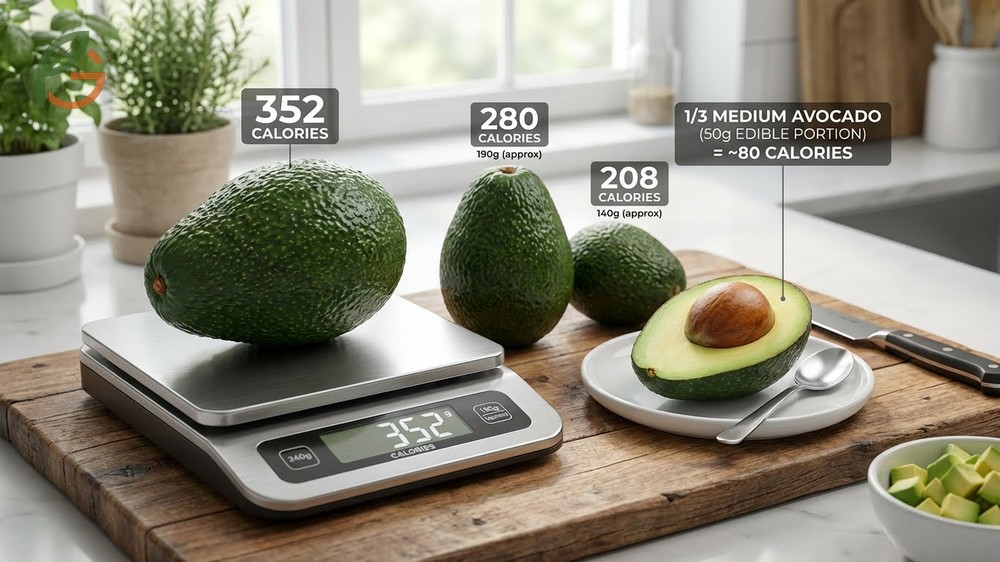
Nutrition databases show that calorie content scales directly with fruit weight, ranging from 208 calories for small avocados to 352 calories for large ones[3]. Most grocery store Hass avocados fall in the 150-180g range when ripe. Research indicates the edible portion equals approximately 73% of total fruit weight after removing pit and skin[5].
Studies demonstrate that one-third of a medium avocado (50g) provides about 80 calories, making it a practical portion for adding to salads or sandwiches[4]. This 50g serving delivers 8g total fat and 3g fiber, meeting 10% of daily fiber needs. For weight management, measuring portions helps control calorie intake while maintaining nutritional benefits.
Small Hass Avocado Calories
A small Hass avocado weighing approximately 130g contains 208 calories and 19g fat[3]. Half of a small avocado equals roughly 120 calories, fitting easily into calorie-controlled meal plans. Current data indicates that small avocados work best for single-serving recipes or when you’re pairing them with other calorie-dense ingredients.
Evidence suggests that choosing smaller avocados helps with portion control without sacrificing nutritional value. The nutrient density per 100g remains constant regardless of fruit size, so you’re getting the same concentration of vitamins and minerals.
Medium and Large Sizes
Research shows medium Hass avocados (150-180g) contain 234-280 calories, while large avocados (220g) reach 352 calories[3]. Most recipes assume a medium avocado when calling for “one avocado,” which typically yields about one cup of mashed fruit. Large avocados provide 30-35g total fat, meeting nearly half the recommended daily fat intake for a 2,000-calorie diet.
Agricultural guidance emphasizes weighing avocados when precision matters for recipes or tracking macros. The visible size difference between medium and large avocados translates to roughly 70 extra calories and 7g additional fat.
- One tablespoon mashed avocado equals approximately 25 calories
- Quarter avocado portions provide about 60 calories each
- Slicing avocado into eight wedges creates 30-calorie portions
- Half-cup servings deliver 120-140 calories depending on fruit size
- Using a food scale eliminates guesswork for consistent tracking
Hass Avocado Nutrition Information
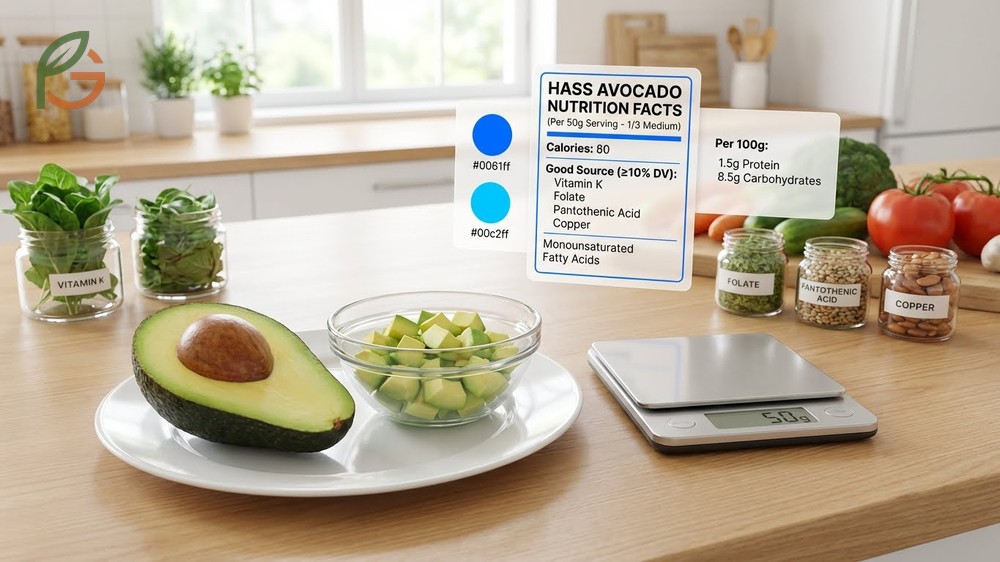
The Nutrition Labeling and Education Act defines one official serving as 50g (one-third of a medium avocado), providing 80 kilocalories[4]. This serving qualifies as a good source (≥10% DV) of vitamin K, folate, pantothenic acid, and copper. Research demonstrates that avocados are virtually the only fruit providing significant monounsaturated fatty acids.
Current nutritional databases reveal that per 100g, Hass avocados contain 1.5g protein, 8.5g carbohydrates, 6.7g fiber, and 14.7g fat[5]. The water content reaches 73%, contributing to the creamy texture. Studies show energy density falls between 1.38-2.56 kcal/g depending on growing conditions and ripeness[4].
This table compares calories, fats, fiber, and key vitamins across different Hass avocado serving sizes from one-fifth fruit to whole fruit
| Serving Size | Weight (g) | Calories | Total Fat (g) | Fiber (g) | Potassium (mg) |
|---|---|---|---|---|---|
| 1/5 fruit (official) | 30 | 50[4] | 4.6 | 2.0 | 152 |
| 1/3 fruit | 50 | 80[4] | 8.0 | 3.0 | 230 |
| 1/2 fruit (typical) | 68 | 114[1] | 10.5 | 4.6 | 345 |
| Whole fruit (medium) | 136 | 227[1] | 21.0 | 9.2 | 690 |
| Per 100g | 100 | 167[4] | 14.7 | 6.7 | 507 |
Tracking Tip: Most nutrition apps default to the USDA one-fifth serving (30g), but Americans typically eat half an avocado. Double-check your portions when logging to avoid underestimating calories by 50% or more.
Fat Content in Hass Avocado
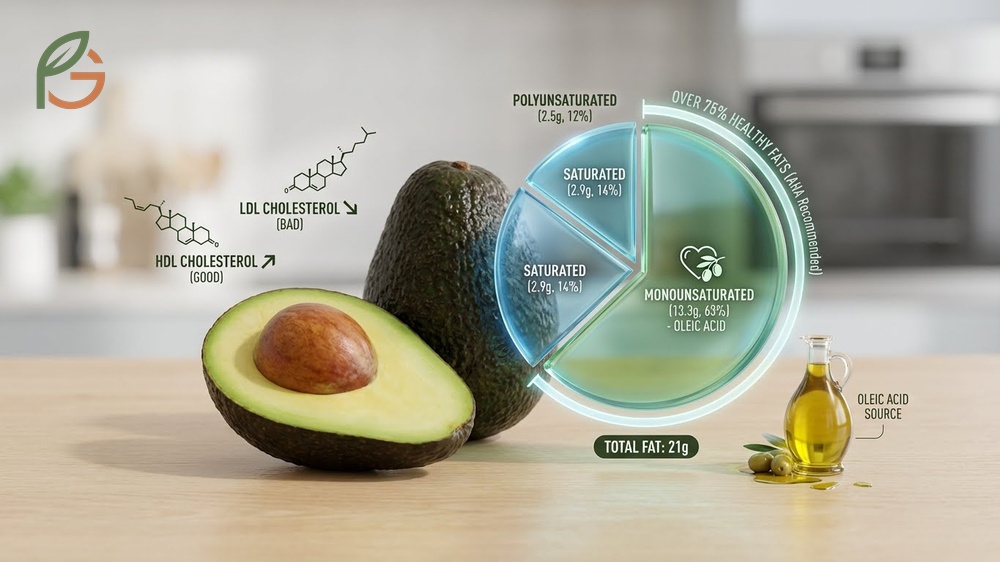
Research demonstrates that one medium Hass avocado contains 21g total fat, with 13.3g monounsaturated (63%), 2.5g polyunsaturated (12%), and 2.9g saturated (14%)[1]. Over 75% of fats qualify as “healthy fats” that the American Heart Association recommends[2]. The predominant fat is oleic acid, the same monounsaturated fat found in olive oil.
Studies show that monounsaturated fatty acids help lower LDL (“bad”) cholesterol while maintaining or raising HDL (“good”) cholesterol[6]. Evidence indicates people who eat avocados twice weekly have a 16% lower risk of cardiovascular disease and 21% lower risk of coronary heart disease compared to avocado avoiders. This protection increases when avocados replace margarine, cheese, or processed meats high in saturated fats.
Current data indicates that one-ounce servings (28g) of Hass avocado provide 4.5g fat, making them comparable to tree nuts in fat density but with different fatty acid profiles[1]. Unlike most nuts, avocados contain minimal omega-6 polyunsaturated fats, maintaining a better omega-6 to omega-3 ratio.
- Monounsaturated fats enhance absorption of fat-soluble vitamins A, D, E, and K from other foods
- Oleic acid may reduce inflammation markers linked to heart disease
- Fat content creates sustained satiety lasting 4-6 hours after eating
- Zero trans fats compared to margarine or shortening alternatives
- Phytosterols in avocado fats block dietary cholesterol absorption in the intestines
Research shows replacing saturated fat sources with avocado slices reduces total dietary saturated fat by 40-50% in typical American meals. For instance, swapping 2 tablespoons butter (14g saturated fat) for half an avocado (1.5g saturated fat) in recipes dramatically improves the fat quality profile.
Hass vs. Florida Avocado Nutrition
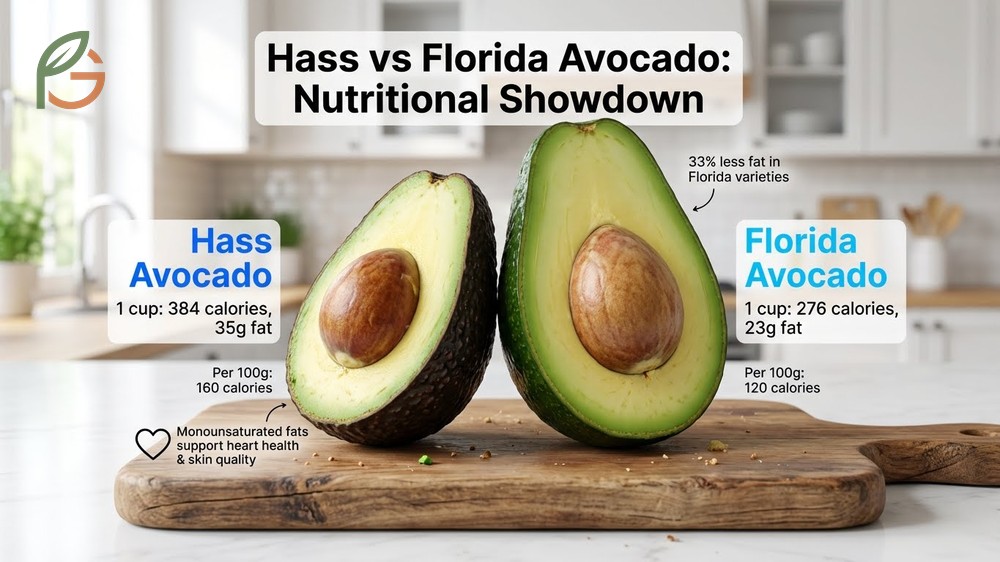
Comparative analysis reveals that Florida avocados contain significantly less fat than Hass varieties, with one cup Florida avocado providing 23g fat versus 35g in Hass[7]. This translates to 276 calories per cup for Florida avocados compared to 384 calories for Hass. Research demonstrates that bite-for-bite comparisons show Florida avocados have fewer calories, but people often eat larger portions due to their milder flavor and less creamy texture.
Evidence suggests that Hass avocados deliver richer taste and better cooking properties precisely because of their higher fat content. Studies show the monounsaturated fat concentration in Hass varieties creates superior texture for guacamole, spreading, and baking applications. For golf ball-sized portions (2 tablespoons), Hass contains 4.6g fat while Florida averages 3g[8].
| Nutrient (per cup) | Hass Avocado | Florida Avocado | Difference |
|---|---|---|---|
| Calories | 384[7] | 276 | +39% Hass |
| Total Fat (g) | 35[7] | 23 | +52% Hass |
| Texture | Creamy, rich | Firm, watery | — |
| Best Uses | Guacamole, spreads | Salads, slicing | — |
Current guidance shows that Florida avocados work better for calorie-restricted diets when used in sliced form for salads, while Hass varieties excel in recipes requiring mashed or pureed texture. The lower fat content in Florida avocados means less satiety per serving, potentially leading to larger portion consumption that negates the calorie advantage.
Conclusion
The evidence is clear: Hass avocado nutrition facts demonstrate why this fruit has earned its superfood status, delivering 227 calories of nutrient-dense energy with heart-healthy monounsaturated fats and exceptional vitamin content per medium fruit[1]. Research consistently shows that portion awareness matters more than avocado avoidance, with half-fruit servings fitting comfortably into balanced eating patterns while providing 690mg potassium and 9.2g fiber.
Current guidance emphasizes choosing Hass avocados for their superior fatty acid profile and micronutrient density compared to lower-fat varieties. FruitGarden recommends weighing portions when tracking nutrition goals and pairing avocados with lean proteins to create complete, satisfying meals that support cardiovascular health.
Medical Disclaimer
Important Medical Disclaimer: This content is for informational and educational purposes only. It’s not intended as a substitute for professional medical advice, diagnosis, or treatment. Always consult a qualified healthcare professional before making any changes to your diet, medication, or health routine, especially if you have diabetes, cardiovascular disease, or other medical conditions. Individual nutritional needs vary based on age, activity level, and health status.
Frequently Asked Questions
How many calories are in a small Hass avocado?
A small Hass avocado weighing approximately 130g contains 208 calories and 19g of fat. Half of a small avocado provides roughly 104 calories, making it an excellent portion for single servings when you’re managing calorie intake while still getting fiber, potassium, and heart-healthy fats.
What’s the difference between Hass and Florida avocado nutrition?
Hass avocados contain significantly more fat and calories than Florida avocados—35g fat and 384 calories per cup versus 23g fat and 276 calories for Florida varieties. Research shows Hass avocados provide richer flavor and creamier texture due to higher monounsaturated fat content, while Florida avocados work better for lower-calorie applications when sliced in salads.
Is Hass avocado high in fiber?
Yes, one medium Hass avocado contains 9.2g of dietary fiber, which equals 37% of the recommended daily value. Evidence shows that half an avocado (4.6g fiber) provides more fiber than most fruits, supporting digestive health and blood sugar stability while creating lasting satiety that helps control appetite between meals.
What’s the glycemic index of Hass avocado?
Hass avocados have a low glycemic index of 40, making them excellent for blood sugar control. Studies demonstrate that avocado intake is associated with lower hemoglobin A1c levels and improved glucose homeostasis, particularly in people with type 2 diabetes, due to their high fiber and healthy fat content that slows carbohydrate absorption.
How much protein is in a Hass avocado?
One medium Hass avocado contains 2.7g of protein, which is relatively low compared to its fat and carbohydrate content. Research shows avocados provide all nine essential amino acids in small amounts but shouldn’t be relied upon as a primary protein source—pair them with eggs, Greek yogurt, or lean meats for complete nutrition.
Are the fats in Hass avocados healthy?
Over 75% of fats in Hass avocados are monounsaturated and polyunsaturated “healthy fats” that help lower LDL cholesterol while maintaining HDL cholesterol. Evidence indicates people who eat avocados twice weekly have a 16% lower risk of cardiovascular disease, especially when replacing saturated fat sources like butter, cheese, or processed meats.
What micronutrients do Hass avocados provide?
One medium Hass avocado delivers 690mg potassium (20% DV), 121mcg folate (30% DV), 2.0mg pantothenic acid (40% DV), and 28.6mcg vitamin K, along with significant amounts of vitamins C, E, B6, and minerals like magnesium and copper. Current data shows avocados also contain 369mcg of lutein and zeaxanthin combined, supporting eye health, plus 113mg phytosterols that block cholesterol absorption.