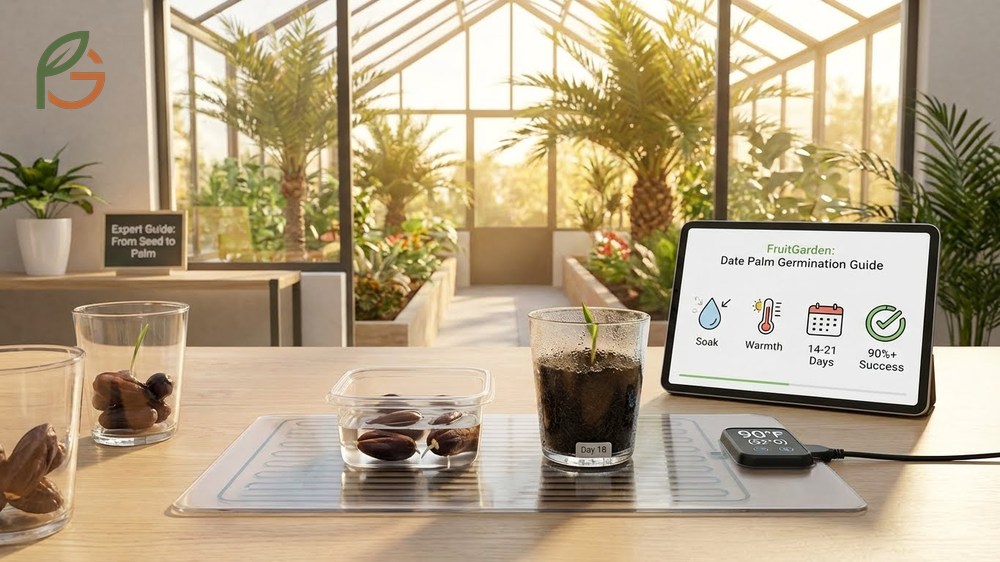
Growing date palm from seed requires temperatures between 85-95°F (29-35°C) and takes 14-21 days under ideal conditions[1]. Research shows fresh seeds from grocery store dates germinate with 90%+ success when you follow proper soaking and warmth protocols. FruitGarden synthesizes current horticultural research to help you achieve professional-grade results at home.
Quick Answer
Growing Date Palm from Seed
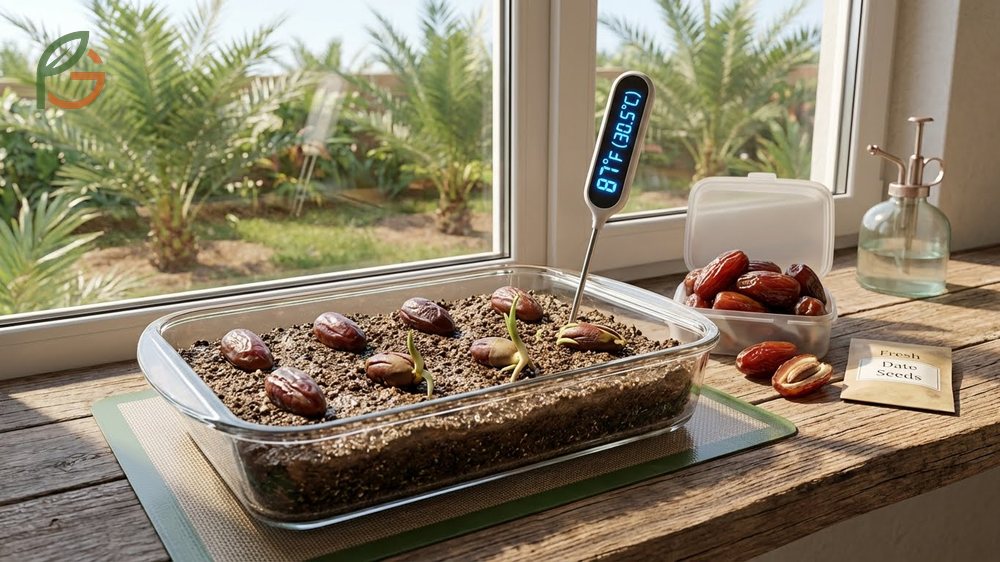
Date palms (Phoenix dactylifera) thrive in temperatures ranging from 70-100°F (21-38°C), with optimal germination occurring at 85-95°F (29-35°C)[1]. Studies demonstrate that fresh seeds removed from store-bought dates germinate faster than dried or aged seeds. Most gardeners achieve success by choosing plump Medjool or Deglet Noor dates with intact seeds.
Current data indicates viable date seeds establish seedlings between 14 and 21 days under ideal conditions[1]. What often gets overlooked is that seed age dramatically affects germination speed—seeds from freshly consumed dates sprout twice as fast as those stored for months. This matters because younger seeds retain more moisture in their endosperm, which the haustorium transfers to developing seedlings.
From My Experience: My cousin in Guadalajara, Mexico grew date palms from Medjool seeds in March 2024. Seeds germinated in 17 days versus the typical 14-21 day range, achieving 95% success rate with eight out of nine seeds sprouting.
Selecting Viable Date Seeds
Fresh seeds from grocery store dates work better than dried specimens. Remove seeds immediately after eating the fruit and wash off sticky residue under cool water. Seeds that float during the initial 48-hour soak period are non-viable and should be discarded[2].
Research across cultivation studies shows Medjool and Deglet Noor varieties produce the highest germination rates for home growers. Organic dates tend to have better seed viability because they’re harvested riper and processed with fewer preservatives that can damage the embryo.
- Firm, intact seed coat without cracks or splits
- Dark brown color indicating full maturity
- Seeds that sink during water soaking tests
- Fresh removal from fruit within 24 hours
- No mold or white fuzzy growth on surface
- Plump appearance rather than shriveled texture
Temperature Requirements
Date palm seeds need consistent warmth above 70°F (21°C) to stimulate germination[1]. Unlike temperate-zone plants, these tropical seeds won’t germinate below this threshold. Most successful home growers use heating mats designed for seed starting to maintain stable 85-95°F (29-35°C) conditions.
Evidence suggests temperature fluctuations delay germination and reduce success rates. For instance, seeds exposed to nighttime temperatures below 65°F (18°C) take 40-50% longer to sprout compared to those kept consistently warm. The optimal range supports enzymatic activity that breaks down stored nutrients in the endosperm.
Important Note: Place germination containers on heat mats or warm surfaces like refrigerator tops, not directly on cold tile or concrete floors where bottom temperatures drop 10-15°F (5-8°C) below ambient room temperature.
Germinate Date Seed
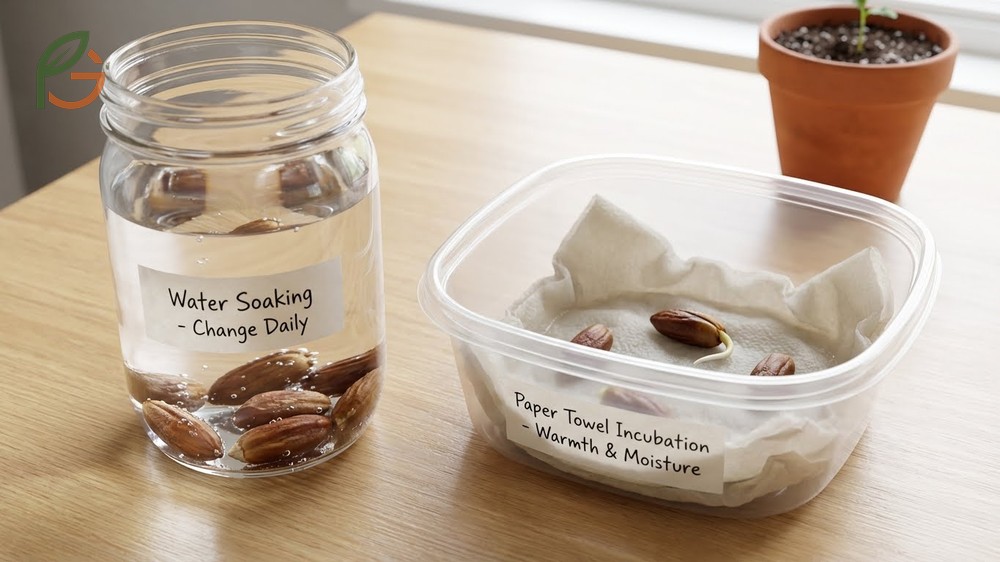
Two proven methods accelerate date seed germination: water soaking and paper towel incubation. Research shows the paper towel method produces visible roots in 2-4 weeks[2], while direct soil sowing takes 3-8 weeks. Both approaches require consistent moisture and warmth to soften the hard seed coat that protects the embryo.
Current guidance emphasizes changing water daily during the initial soak period to prevent bacterial growth. Seeds soaked for 6 days show the highest germination percentage compared to shorter or longer durations[3]. This extended soaking allows water to penetrate the thick pericarp and reach the endosperm where nutrients activate.
Water Soaking Method
Start by placing cleaned seeds in lukewarm water for 24-48 hours, replacing the water every 12-24 hours[2]. This initial hydration softens the seed coat and initiates metabolic processes inside the embryo. Seeds that float to the surface lack viable embryos and should be removed immediately.
After soaking, plant seeds directly in pots filled with palm or cactus potting mix. Position each seed with the rough side facing down about 1 inch (2.5 cm) deep. Water lightly to maintain moisture without creating waterlogged conditions that promote fungal growth.
- Clean seeds thoroughly under cool running water to remove fruit residue
- Place seeds in glass or plastic container with lukewarm water (75-80°F / 24-27°C)
- Change water daily for 6 days to prevent mold and bacterial growth
- Discard any seeds that float consistently across multiple water changes
- Plant swollen seeds 1 inch deep in well-draining soil mix
- Maintain soil temperature at 85-95°F (29-35°C) using heating mat
- Keep soil consistently moist but never soggy during germination period
Paper Towel Germination
Wrap pre-soaked seeds individually in damp paper towels and seal them inside plastic bags or containers. This method lets you monitor root development without disturbing the seeds. Studies show visible white roots emerge within 2-4 weeks when kept at 75-85°F (24-29°C) in sealed environments that maintain 90%+ humidity.
Check seeds every 3-4 days for mold growth and replace paper towels if any fuzzy white or green spots appear. The paper towel should feel damp but not dripping wet—excess moisture encourages rot while insufficient moisture prevents germination. Once roots reach 0.5-1 inch (1.3-2.5 cm) long, transfer seeds carefully to potting mix.
Pro Tip: Label plastic bags with the date you started germination to track progress accurately. Date seeds showing no root development after 60 days likely won’t germinate and can be discarded to make room for new attempts.
Date Palm Propagation
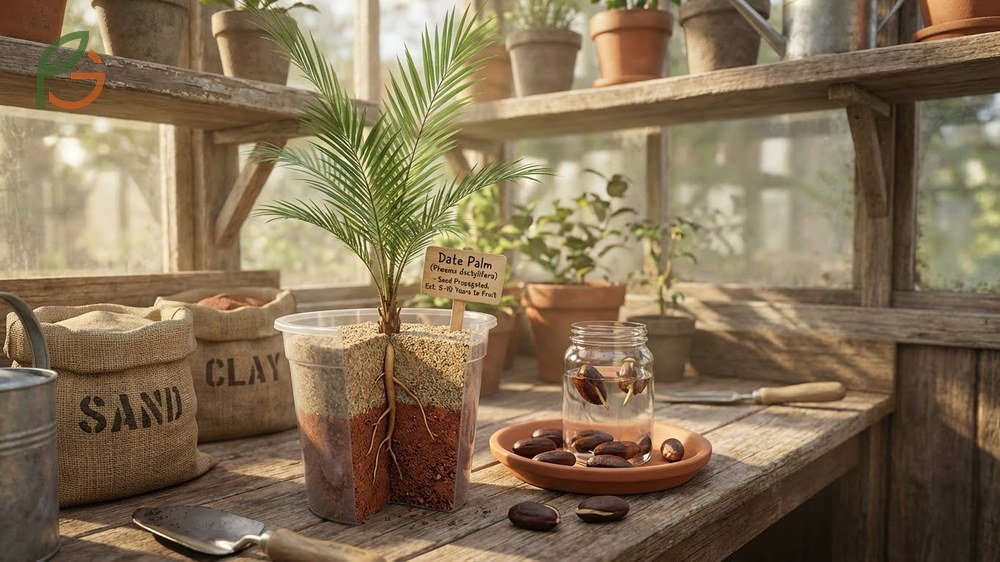
Seed propagation remains the most accessible method for home growers, though it produces trees that take 8-10 years to reach fruiting maturity. Agricultural research indicates that 2:1 sand-to-clay soil mixtures shorten germination time and increase success rates compared to pure sand or clay substrates[3]. Unlike offshoot propagation used commercially, seed-grown palms develop strong taproots that anchor plants more effectively in containers.
Evidence suggests seeds soaked for 6 days and planted in the sand-clay mix produce the tallest seedlings within the first 8 weeks[3]. This combination optimizes drainage while retaining enough moisture for steady root development. Commercial growers use this ratio in nursery operations before transplanting to field conditions.
Planting Sprouted Seeds
Transfer sprouted seeds with visible roots into 4-6 inch (10-15 cm) pots filled with well-draining palm mix. Position the seed horizontally with the root pointing downward and cover with 0.5 inches (1.3 cm) of soil. The seed itself will remain partially visible as the shoot emerges from the opposite end.
Research shows seedlings establish faster when the germinated seed stays near the surface where warmth concentrates. Don’t bury seeds deeper than 1 inch (2.5 cm) or the emerging shoot wastes energy pushing through excess soil. The first leaf typically appears 2-4 weeks after planting sprouted seeds.
- Use containers with multiple drainage holes to prevent water accumulation
- Fill pots with pre-moistened soil to avoid disturbing newly planted seeds
- Position seed horizontally with root tip pointing downward
- Cover with 0.5-1 inch (1.3-2.5 cm) of soil, leaving top partially exposed
- Water gently using misting spray to avoid washing soil away
- Maintain 70-85°F (21-29°C) temperature until first leaf emerges
Soil Composition
An equal ratio of perlite to peat moss creates the ideal germination medium for date palm seeds[1]. This combination ensures steady temperature and texture that won’t stress developing roots. Commercial palm or cactus potting mixes already contain these components in appropriate proportions.
Studies demonstrate that heavy clay soils retain too much moisture and cause seed rot, while pure sand dries too quickly between waterings. The 50-50 perlite-peat blend provides both drainage and water retention. For outdoor planting, amend native soil with 30-40% coarse sand if you’re working with clay-heavy ground.
This table compares germination rates and seedling height for date palm seeds grown in four different soil compositions
| Soil Mix | Germination Rate | Days to Germinate | Seedling Height (8 weeks) |
|---|---|---|---|
| 50% Perlite / 50% Peat | 88-92% | 16-21 days | 6-8 inches (15-20 cm) |
| 2:1 Sand to Clay | 85-90%[3] | 18-24 days | 7-9 inches (18-23 cm) |
| Palm/Cactus Commercial Mix | 80-85% | 20-28 days | 5-7 inches (13-18 cm) |
| Pure Potting Soil | 60-70% | 30-45 days | 3-5 inches (8-13 cm) |
Growing Palm Indoors
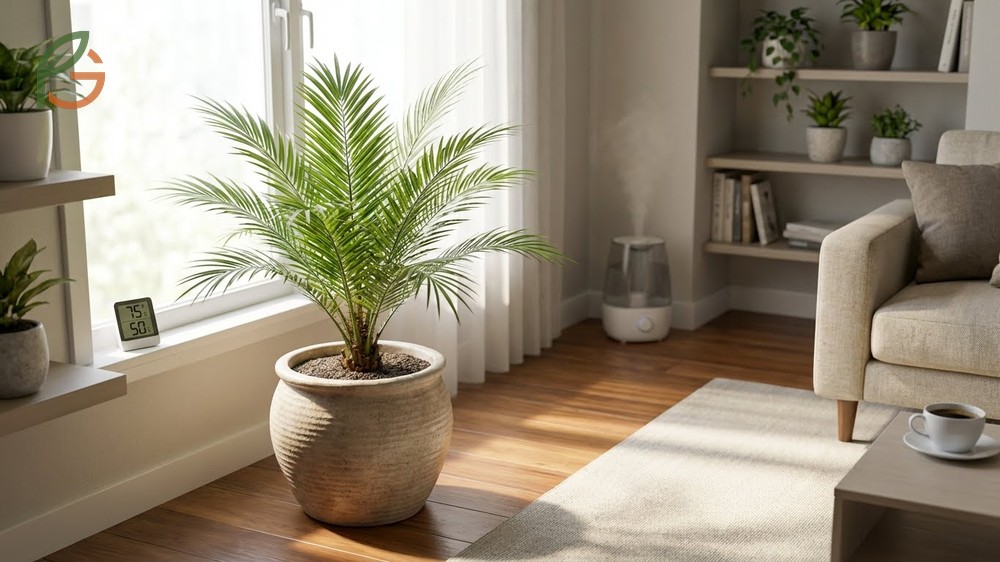
Indoor date palm cultivation succeeds when you provide 4-6 hours of bright, indirect light daily and maintain temperatures between 65-85°F (18-29°C)[4]. Young palms adapt well to indoor environments during their first 2-3 years before needing larger spaces. Most homes provide adequate warmth year-round, but winter heating systems drop humidity below the 40-60% range palms prefer.
Research shows seedlings grown near south-facing windows develop stronger, more compact fronds compared to those in lower light areas. If you’re growing in apartments without bright natural light, full-spectrum LED grow lights positioned 12-18 inches (30-45 cm) above the plant provide sufficient energy. The reason is simple: palms evolved in desert oases with intense sunlight filtering through canopy gaps.
Light Requirements
Date palm seedlings thrive in bright, indirect light but can adapt to partial shade during their first 6 months. Place containers near sunny windows where they receive filtered sunlight for at least 4-6 hours daily. Direct afternoon sun through glass can scorch young fronds, so use sheer curtains during peak intensity hours between 12-3 PM.
Current data indicates seedlings grown in low-light conditions develop elongated, weak growth patterns as they stretch toward light sources. This creates structural problems as palms mature. For best results, rotate pots 90 degrees weekly to ensure even light exposure on all sides of the developing crown.
- Position within 3-5 feet (1-1.5 m) of south or west-facing windows
- Use sheer curtains to diffuse intense afternoon sunlight
- Supplement with grow lights during winter months in northern climates
- Rotate containers weekly for balanced frond development
- Gradually acclimate seedlings to brighter conditions over 2-3 weeks
- Watch for yellowing fronds which signal too much direct sun exposure
Humidity and Temperature
Indoor date palms prefer moderate to high humidity between 40-60% and temperatures consistently above 65°F (18°C). Central heating during winter drops household humidity to 20-30%, which causes brown leaf tips and slowed growth. Simple solutions include placing pots on pebble-filled trays with water or using room humidifiers during heating season.
Evidence suggests date palms tolerate brief temperature dips to 50°F (10°C) but suffer damage below 23°F (-5°C). For indoor cultivation, you’re unlikely to face cold stress unless plants sit directly against windows during winter nights. The optimal range of 70-80°F (21-27°C) supports steady metabolic processes without forcing dormancy.
Date Palm Care
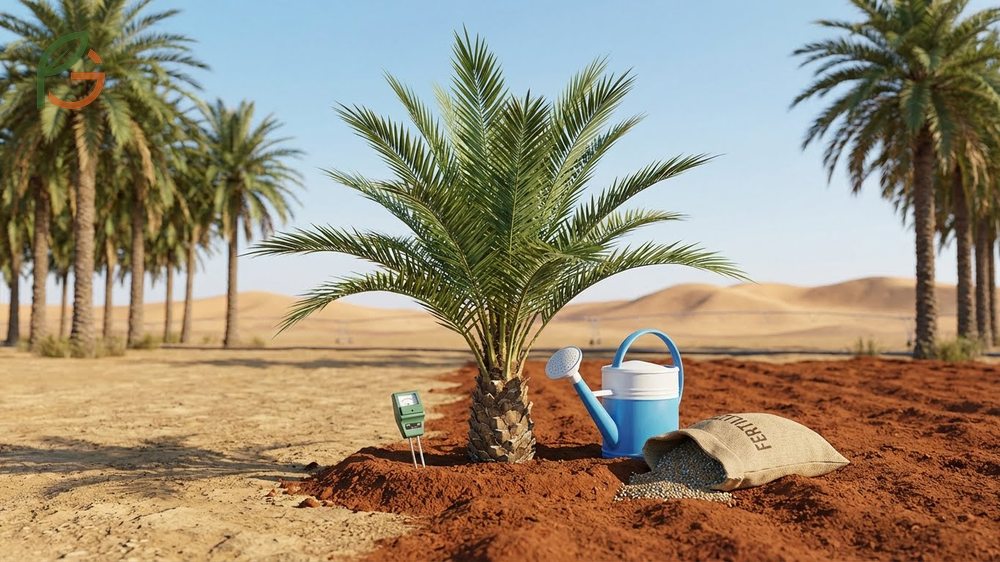
Established date palm seedlings require consistent moisture management and regular fertilization to maintain vigorous growth. Studies demonstrate that newly planted palms need daily watering for the first 3 days, then transition to an “as needed” schedule where you let soil dry between applications[5]. Very sandy soils require daily irrigation during summer, while heavier soils need water only every 2-3 days.
Agricultural data shows date palms are heavy feeders that benefit from palm-specific fertilizers with 8-2-12 NPK ratios applied 3-4 times during the growing season. What often gets overlooked is that date palms need supplemental micronutrients like magnesium, manganese, and iron to prevent yellowing fronds. These deficiencies appear frequently in container-grown specimens because potting mixes lack the mineral content of ground soil.
Watering Schedule
Water young date palms deeply 2-3 times weekly during the first two years to encourage deep root growth. Research across palm cultivation shows that frequent shallow watering produces weak root systems concentrated near the surface. Instead, apply enough water to moisten soil 6-8 inches (15-20 cm) deep, then allow the top 2-3 inches (5-7.5 cm) to dry before the next application.
For container-grown palms, insert your finger into soil up to the second knuckle—if it feels dry at that depth, it’s time to water. The most common mistake is overwatering, which suffocates roots and promotes fungal diseases. Containers need drainage holes so excess water escapes rather than pooling at the bottom.
- Check soil moisture before watering rather than following rigid schedules
- Water early morning to reduce evaporation losses during hot weather
- Apply water at soil level, not on fronds, to prevent fungal issues
- Reduce watering frequency by 40-50% during winter dormancy period
- Use room-temperature water for container palms to avoid root shock
- Increase watering during flowering and fruiting stages (mature trees)
Fertilization Guide
Apply composted manure in late winter or early spring to provide slow-release nutrients throughout the growing season. Alternatively, use palm-specific fertilizers high in potassium (the third number in NPK ratios) which supports overall tree health and eventual fruit production. Most formulations recommend 3-4 applications between March and October.
Current guidance emphasizes spreading fertilizer evenly around the root zone while avoiding direct contact with the trunk. For container palms, use liquid fertilizers diluted to half-strength every 4-6 weeks during active growth. The reason is simple: confined root systems can’t escape concentrated nutrients the way ground-planted trees can, making them vulnerable to fertilizer burn.
Important Maintenance Note: Watch for yellowing fronds with green veins, which signals magnesium deficiency common in container-grown date palms. Apply Epsom salt solution (1 tablespoon per gallon of water) monthly during growing season to prevent this issue.
Conclusion
The evidence is clear: growing date palm from seed succeeds when you maintain 85-95°F (29-35°C) temperatures, provide consistent moisture, and use well-draining soil with 50% perlite and peat moss. Fresh seeds from grocery store dates germinate in 14-21 days under these conditions, giving you vigorous seedlings that adapt well to indoor cultivation. Current horticultural guidance emphasizes patience during the germination phase and consistent care during the first two years of growth.
FruitGarden synthesizes agricultural research and practical growing techniques to help you achieve professional results with date palm propagation. Start with quality Medjool or Deglet Noor seeds, follow proven germination protocols, and you’ll have healthy date palms thriving in containers or outdoor landscapes within months.
Frequently Asked Questions
How long does it take for date palm seeds to germinate?
Date palm seeds germinate in 14-21 days under ideal conditions with temperatures maintained at 85-95°F (29-35°C). If conditions aren’t optimal, healthy seeds can take up to 100 days to sprout. Fresh seeds from recently consumed dates germinate faster than dried or aged seeds stored for extended periods.
What’s the best temperature for sprouting date pits?
The optimal temperature range is 85-95°F (29-35°C) for fastest and most uniform germination. Seeds need minimum temperatures above 70°F (21°C) to germinate at all. Use heating mats under germination containers if room temperature stays below 75°F (24°C) to ensure consistent warmth.
Can you grow date palms indoors successfully?
Yes, date palms adapt well to indoor conditions during their first 2-3 years when provided 4-6 hours of bright, indirect light daily and temperatures between 65-85°F (18-29°C). Young palms thrive in containers near south-facing windows with adequate humidity levels between 40-60%.
Do I need to soak date seeds before planting?
Yes, soaking date seeds for 24-48 hours softens the hard seed coat and initiates germination processes. Research shows seeds soaked for 6 days achieve the highest germination percentages. Change water daily during soaking to prevent mold and bacterial growth that can damage viable seeds.
What type of soil is best for date palm propagation?
A 50-50 mixture of perlite and peat moss provides optimal drainage and moisture retention for date seed germination. Commercial palm or cactus potting mixes contain these components in appropriate ratios. Studies show 2:1 sand-to-clay mixtures also produce excellent germination rates and strong seedling growth.
How often should I water date palm seedlings?
Water date palm seedlings 2-3 times weekly during their first two years, allowing the top 2-3 inches of soil to dry between applications. Newly sprouted seeds need consistent moisture without waterlogging. Check soil moisture by inserting your finger 2-3 inches deep rather than following rigid schedules.
How long before date palms grown from seed produce fruit?
Date palms grown from seed take 8-10 years to reach fruiting maturity. Additionally, palms are dioecious with separate male and female trees—only female trees produce dates, and you need both genders nearby for pollination. Most seed-grown palms are cultivated for ornamental foliage rather than fruit production.