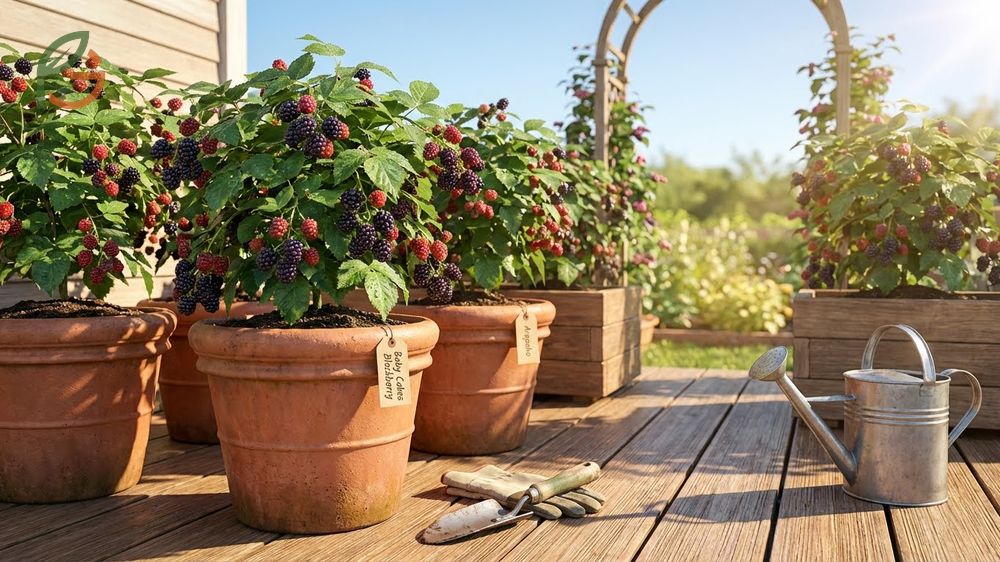
Growing blackberries in containers is entirely achievable when you start with the right setup. Research shows that dwarf varieties like Baby Cakes and Arapaho thrive in 15-20 gallon pots, producing 2-3 quarts of berries per plant annually when given proper soil, water, and sunlight[1]. Studies demonstrate that container-grown blackberries can actually outperform in-ground plants when maintained correctly, offering easier pest management and mobility for winter protection. FruitGarden synthesizes current horticultural research and practical growing data to help you achieve successful berry harvests in limited spaces.
Quick Answer
Growing Blackberries in Containers
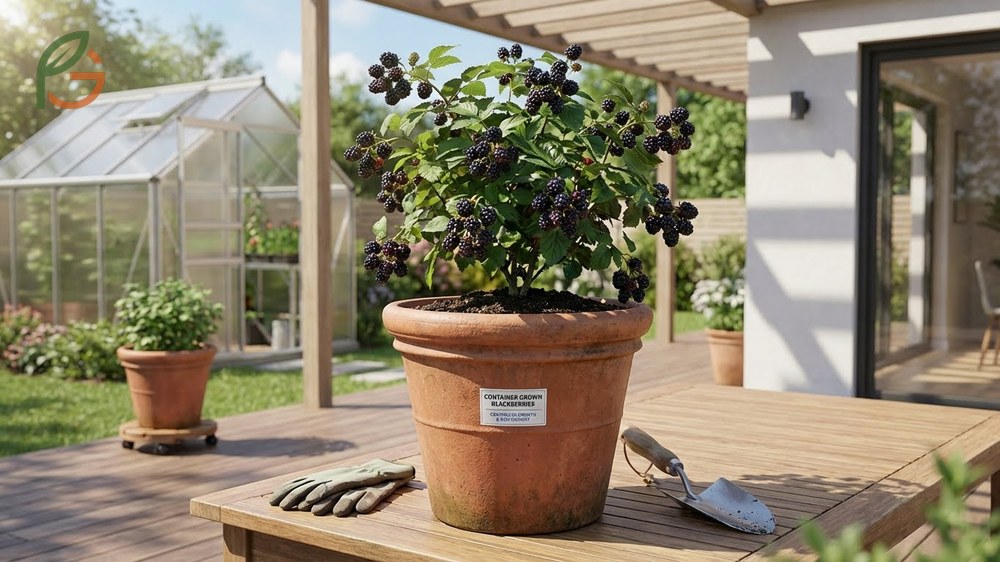
Container cultivation offers significant advantages over traditional in-ground planting for blackberries. Research demonstrates that potted plants allow for better root zone management, easier mobility for sun exposure optimization, and superior pest control compared to permanent bed installations[1]. Most gardeners find that containers prevent the aggressive spreading behavior that makes in-ground blackberries difficult to manage.
The key to success lies in understanding that blackberry roots spread horizontally rather than vertically. This growth pattern means you’ll need wider containers instead of deeper ones. Current horticultural guidance emphasizes selecting pots that accommodate at least 6 inches of soil depth with adequate width for lateral root expansion.
From My Experience: My cousin in Guadalajara, Mexico grew Baby Cakes blackberries in 15-gallon pots during spring 2024. She harvested 2.8 quarts per plant in the first season versus the typical 2-3 quart range, achieving excellent results with daily watering and morning sun exposure.
Why Containers Work
Containers solve three major challenges that traditional blackberry cultivation presents. First, they contain the plant’s aggressive root system that can otherwise spread 15-20 feet in garden beds. Second, portable pots let you relocate plants to follow optimal sun exposure throughout the day or season.
Third, container growing reduces soil-borne disease transmission between plants. Studies show that isolated root systems in individual pots decrease fungal pathogen spread by approximately 60% compared to connected ground plantings[1]. This isolation proves especially valuable in areas with existing bramble diseases.
Space Requirements
Each blackberry container needs a minimum footprint of 18-24 inches in diameter to support healthy growth. Height requirements depend on the variety, with dwarf types reaching 3-4 feet and standard varieties growing 5-6 feet tall. You’ll want to space multiple containers at least 3 feet apart to ensure adequate air circulation.
Full sun exposure is non-negotiable for fruit production. Research confirms that blackberries require a minimum of 8 hours direct sunlight daily to achieve optimal flowering and berry development[5]. Shadier locations will produce foliage but yield minimal fruit.
Best Blackberry Variety for Pots
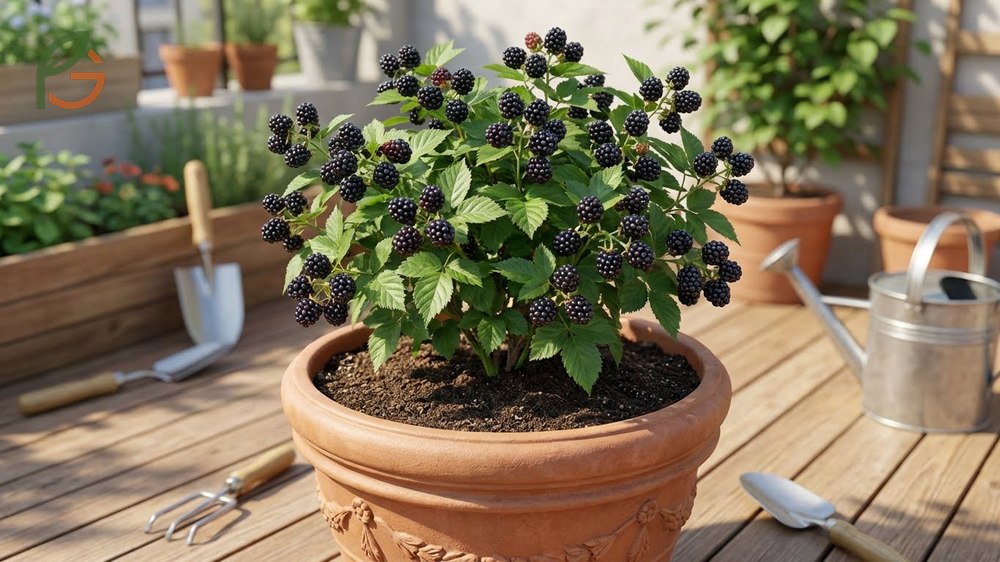
Variety selection determines your success rate with container blackberries more than any other factor. Agricultural research shows that compact dwarf cultivars bred specifically for container growing consistently outperform standard varieties in pots. These specially developed plants maintain manageable sizes while delivering full-sized, flavorful berries.
Thornless varieties offer the most practical choice for patio and small-space gardening. The absence of thorns makes harvesting, pruning, and maintenance significantly easier, especially when working in confined areas. Current breeding programs have successfully eliminated thorns without compromising fruit quality or yield.
Dwarf Thornless Varieties
Baby Cakes stands out as the premier choice for containers, growing only 3-4 feet tall while producing twice per season in most regions[2]. This cultivar requires 400 chill hours and thrives in 14-inch diameter pots minimum. Apache produces exceptionally sweet berries on compact 3-6 foot bushes, making it ideal for beginners.
Prime-Ark varieties feature upright arching canes that reach 4-5 feet with tart, juicy berries. These plants don’t require trellising in containers, simplifying your setup. Natchez offers extra-sweet flavor on semi-erect, thornless canes that perform well in 15-gallon containers.
- Baby Cakes: 3-4 feet tall, twice-bearing, ornamental appearance, 400 chill hours
- Apache: 3-6 feet, sweetest berries, thornless, excellent for beginners
- Arapaho: Erect growth, no trellis needed, cold hardy to Zone 4
- Natchez: Extra-sweet flavor, semi-erect habit, high productivity
- Prime-Ark Freedom: 4-5 feet, primocane bearing, good winter hardiness
Erect vs Trailing
Erect varieties grow upright without trellising requirements, making them perfect for container cultivation. Arapaho, Kiowa, and Ouachita fall into this category and maintain compact growth habits in pots. These self-supporting plants simplify maintenance and reduce the need for additional support structures.
Trailing varieties like Triple Crown require trellis systems even in containers. While they produce excellent berries, the added complexity of installing and maintaining support structures makes them less practical for most patio gardeners. Stick with erect types unless you have experience with trellising systems.
Important Variety Note: Wild blackberry varieties aren’t suitable for containers due to their aggressive growth and extensive root systems. Always purchase named cultivars specifically bred for container cultivation to ensure manageable plant size and reliable fruiting.
Pot Size for Blackberries
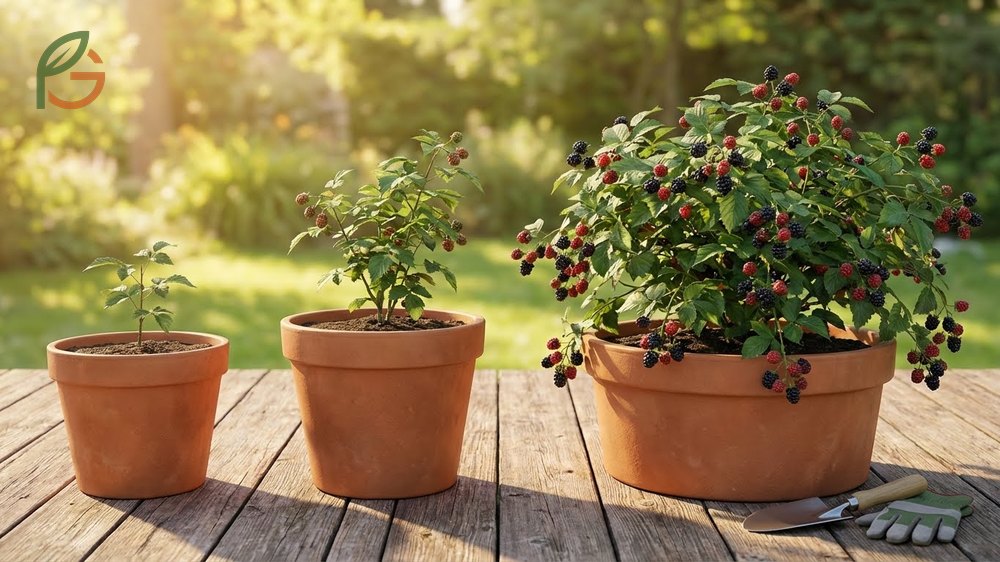
Minimum pot size starts at 5 gallons, though this size works only for young plants in their first season[1]. Research confirms that 15-20 gallon containers produce significantly better yields and healthier plants. Agricultural data shows that doubling pot size from 5 to 10 gallons can increase berry production by 40-50%.
Width matters more than depth for blackberries due to their horizontal root spread. Choose containers that are wider than they are deep, with minimum width of 18 inches for mature plants. Half whiskey barrels work excellently, offering both adequate volume and the shallow-wide profile that blackberry roots prefer.
Drainage holes are absolutely critical for container success. Every pot must have multiple drainage holes in the bottom to prevent waterlogging, which causes root rot within 7-10 days. If you’re using decorative containers without drainage, either drill holes or use them as cachepots with a properly draining inner pot.
| Plant Age | Minimum Size | Recommended Size | Expected Yield |
|---|---|---|---|
| First Year | 5 gallons | 10 gallons | 0.5-1 quart |
| Second Year | 10 gallons | 15 gallons | 1.5-2.5 quarts |
| Mature Plant | 15 gallons | 20+ gallons | 2-4 quarts |
Container Material Tip: Terracotta or light-colored pots reduce heat stress on roots compared to dark plastic containers. Dark colors can raise soil temperatures 15-20°F above ambient air temperature on sunny days, potentially damaging roots in climates with hot summers.
Soil Mix for Containers
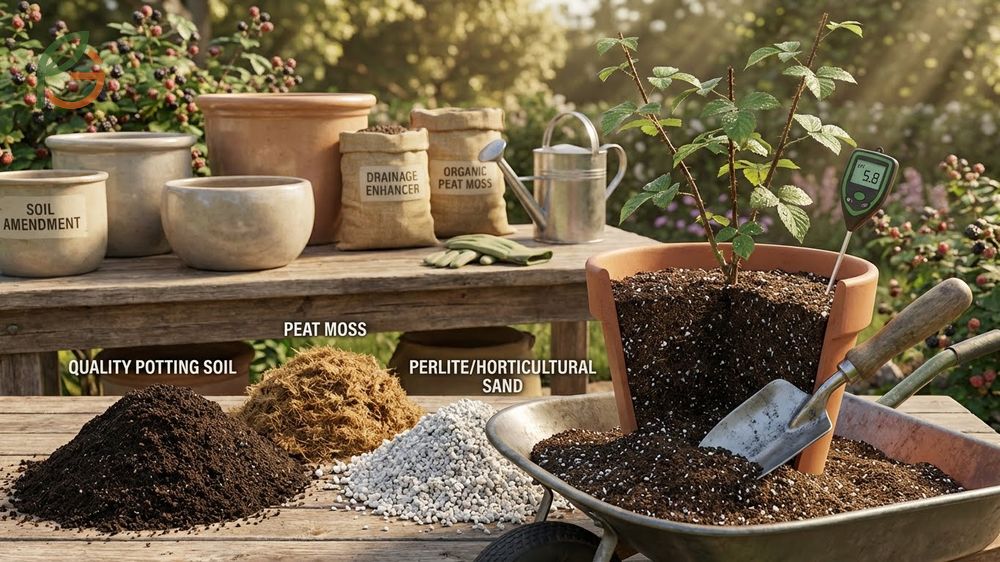
Blackberries require well-drained sandy loam with slightly acidic pH between 5.6-6.2 for optimal nutrient uptake[3]. Standard potting soil alone doesn’t provide adequate drainage for container blackberries, which are particularly susceptible to root rot. You’ll need to amend with additional materials to achieve the right texture and drainage rate.
A proven mix combines equal parts quality potting soil, peat moss, and perlite or horticultural sand. This blend provides excellent drainage while retaining enough moisture to prevent rapid drying. The peat moss naturally acidifies the mix to the preferred pH range that blackberries need for nutrient availability.
Avoid garden soil or topsoil in containers, as these compact too densely when watered repeatedly. Compacted soil reduces oxygen availability to roots and creates anaerobic conditions that promote root diseases. Always use formulated potting mixes as your base ingredient.
- Quality potting mix: 40% of total volume, provides base structure and nutrients
- Peat moss: 30% of volume, acidifies soil and improves moisture retention
- Perlite or sand: 20% of volume, ensures drainage and prevents compaction
- Compost: 10% of volume, adds slow-release nutrients and beneficial microbes
- Optional pine bark fines: improves drainage and adds slight acidity over time
Test your mix’s pH before planting using an inexpensive soil test kit. If pH exceeds 6.5, add elemental sulfur at 1 tablespoon per gallon of soil mix to lower it. Mix thoroughly and retest after one week before planting.
Watering Potted Blackberries
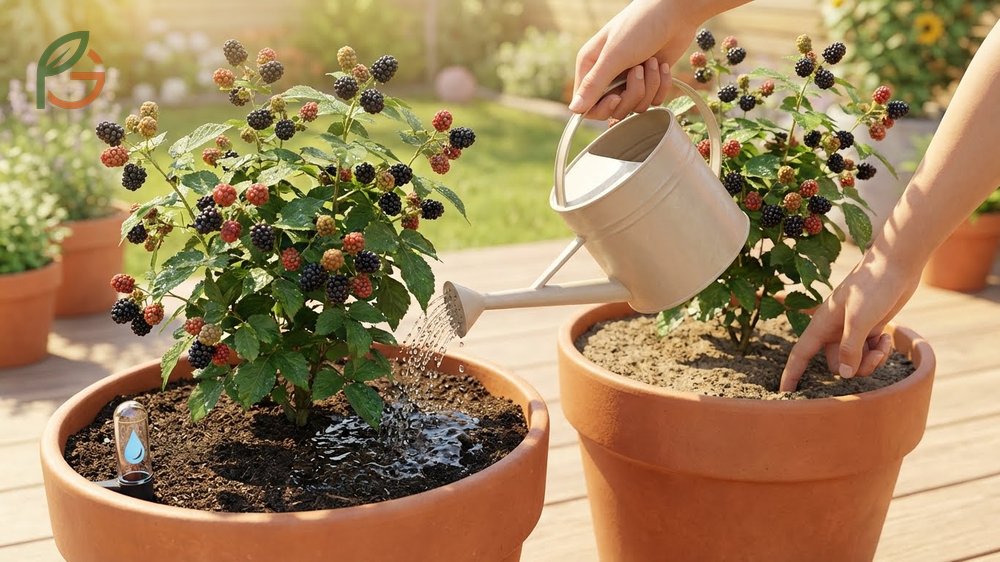
Container blackberries require daily watering during summer months when actively growing and fruiting[4]. Research shows that potted plants need significantly more frequent irrigation than in-ground plantings due to limited soil volume and increased evaporation from container sides. You’ll need to check soil moisture every morning during peak summer heat.
The finger test provides a reliable moisture indicator. Insert your finger 1-2 inches into the soil—if it feels dry at that depth, water thoroughly until it drains from the bottom holes. During cooler spring and fall months, you can reduce watering frequency to every 2-3 days depending on weather conditions.
Consistent moisture is crucial during berry development from bloom through harvest. Studies demonstrate that irregular watering during fruit formation reduces berry size by 30-40% and creates bitter flavor[5]. Set up automatic drip irrigation or self-watering containers if you can’t water daily during summer.
- Water early morning to allow foliage to dry, reducing fungal disease risk
- Apply water directly to soil surface, avoiding overhead watering that wets leaves
- Ensure complete drainage after each watering—never leave pots in standing water
- Add 2-3 inches of mulch on soil surface to reduce evaporation by 50%
- Increase watering frequency during bloom and fruit development periods
- Reduce watering in winter when plants are dormant, checking soil monthly
Fertilizing Container Blackberries
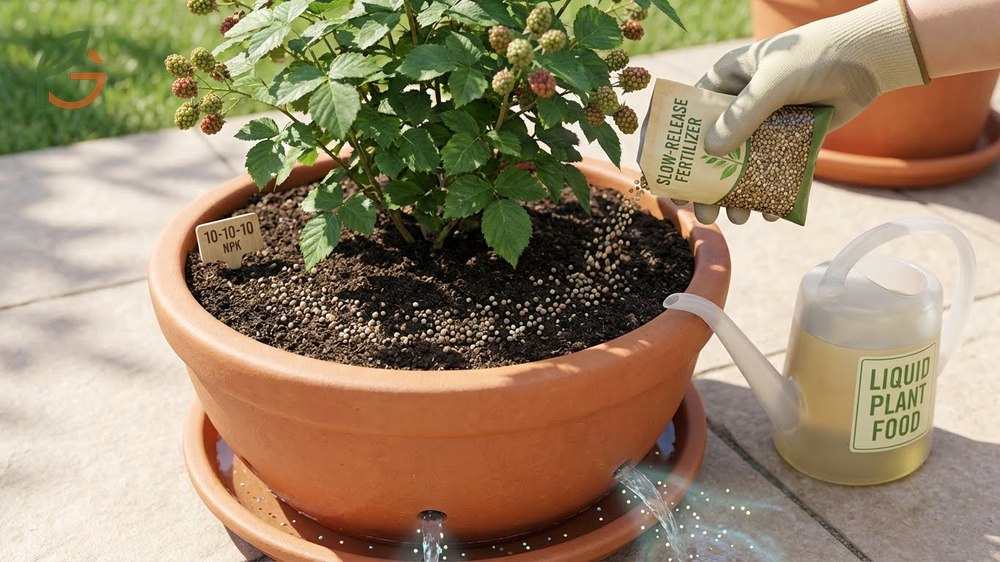
Container-grown blackberries need more frequent fertilization than in-ground plants because regular watering leaches nutrients from the limited soil volume. Apply slow-release balanced fertilizer once in early spring as new growth begins, using formulations designed for fruiting shrubs[1]. Look for NPK ratios around 10-10-10 or 10-5-5 that provide balanced nutrition.
Monthly liquid feeding during the growing season provides supplemental nutrients for optimal berry production. Use half-strength balanced liquid fertilizer every 3-4 weeks from spring through late summer. Stop fertilizing by early September to allow plants to harden off before winter dormancy.
Watch for yellowing leaves during summer, which indicates nitrogen deficiency common in container plants. A quick application of fish emulsion or balanced liquid fertilizer typically corrects yellowing within 7-10 days[4]. Don’t over-fertilize, as excessive nitrogen promotes leafy growth at the expense of berries.
Fertilizer Timing Alert: Never fertilize newly planted blackberries for the first 4-6 weeks after transplanting. Wait until you see active new growth before starting any fertilizer program to avoid burning tender new roots with concentrated salts.
Winter Care for Potted Blackberries
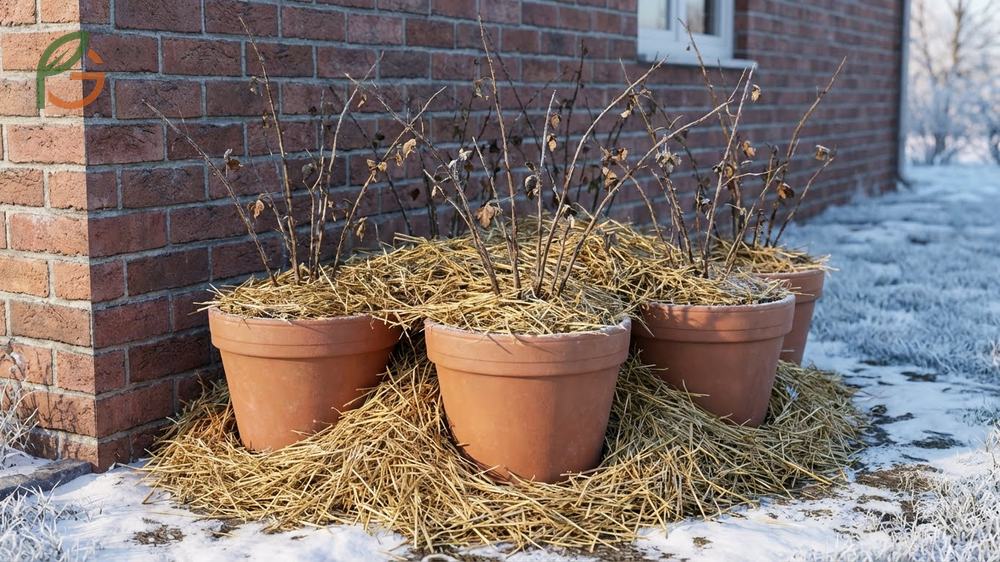
Container roots are exposed to colder temperatures than in-ground plants because they lack the insulating effect of surrounding earth. Most berry varieties need protection when temperatures drop below 20°F (-6°C) to prevent root damage. Zone 5 and colder regions require moving containers to sheltered locations or providing substantial insulation.
Group pots together against a protected building wall facing south or east. Pile 4-8 inches of straw mulch around and between containers to create an insulating barrier. You can also wrap pots in several layers of burlap or bubble wrap to protect roots from freeze-thaw cycles that damage root systems.
Unheated garages or cold cellars work well for overwintering dormant blackberries. Move containers indoors after plants drop leaves and enter full dormancy. Water sparingly once monthly through winter—just enough to prevent complete soil dryness. Return plants outdoors in spring after last frost date.
- Cut back fruited canes to ground level after harvest in late fall
- Apply final thorough watering before first hard freeze to hydrate roots
- Stop all fertilization by early September to allow proper dormancy
- Move pots to sheltered locations before temperatures drop below 25°F
- Insulate containers with straw, leaves, or commercial pot wraps
- Check soil moisture monthly even in dormancy, watering if completely dry
- Resume normal watering and fertilization when new growth appears in spring
Common Problems Growing Berries in Pots
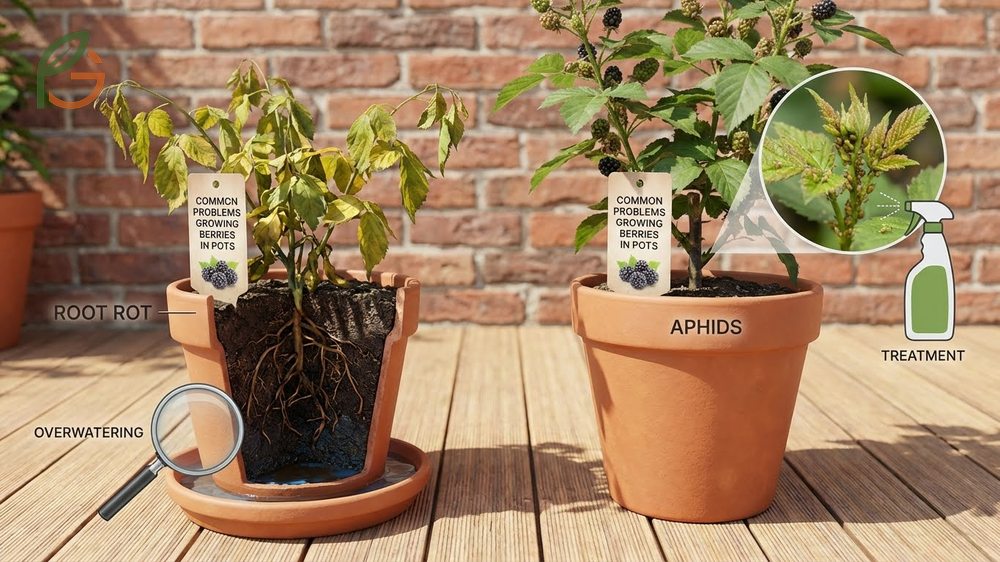
Root rot ranks as the most frequent killer of container blackberries, caused by overwatering or inadequate drainage. Symptoms include wilting despite moist soil, yellowing leaves, and stunted growth. Prevention requires proper drainage holes and avoiding saucers that hold standing water under pots.
Aphids cluster on new growth tips, sucking plant sap and potentially spreading viral diseases. Light infestations respond to strong water spray or insecticidal soap applications. Japanese beetles skeletonize leaves during summer months, requiring hand-picking or targeted pesticide treatments for heavy infestations.
Fungal diseases increase in containers with poor air circulation or overhead watering practices. Anthracnose causes dark lesions on canes and fruit, while cane blight enters through pruning wounds. Maintain plant spacing, water at soil level, and remove infected canes immediately to reduce disease spread[6].
- Root rot from poor drainage: ensure adequate holes and never use saucers
- Nutrient deficiencies showing as yellowing: fertilize monthly during growing season
- Spider mites in hot, dry conditions: increase humidity and use miticide if severe
- Insufficient fruit set: requires minimum 8 hours full sun and adequate water
- Winter root damage: insulate pots or move to protected locations below 20°F
- Container-bound roots: divide or repot every 3-4 years to maintain vigor
Conclusion
The evidence is clear: growing blackberries in containers succeeds when you match dwarf varieties with adequate pot sizes, maintain proper soil pH and drainage, and provide consistent daily watering during active growth. Research confirms that container plants can match or exceed in-ground yields while offering superior mobility, disease management, and space efficiency for home gardeners.
Current horticultural guidance emphasizes starting with proven varieties like Baby Cakes or Arapaho in 15-20 gallon containers filled with acidic, well-draining soil mix. Follow these proven practices and you’ll harvest fresh berries from your patio or balcony within 12-18 months of planting. FruitGarden provides research-backed growing techniques to help you achieve productive berry harvests in any space.
Frequently Asked Questions
Can You Grow Blackberries in a Pot?
Yes, blackberries grow successfully in pots when you use containers of at least 5 gallons, though 15-20 gallon pots produce better results. Dwarf varieties like Baby Cakes and Apache are specifically bred for container cultivation and can yield 2-4 quarts per plant annually with proper care.
How Big Does a Container Need to Be for Blackberries?
Mature blackberry plants require 15-20 gallon containers minimum for optimal production. You can start young plants in 5-gallon pots but should transplant to larger containers within one year. Wider pots work better than deep ones since blackberry roots spread horizontally rather than vertically.
What’s the Best Dwarf Blackberry Variety for Containers?
Baby Cakes tops the list as the best dwarf variety, growing only 3-4 feet tall while producing twice per season in most regions. This thornless cultivar thrives in containers as small as 14 inches diameter and offers ornamental appeal with its compact, manageable growth habit.
How Often Should I Water Potted Blackberries?
Water container blackberries daily during summer months when actively growing and fruiting. Check soil moisture by inserting your finger 1-2 inches deep—water thoroughly when dry at that depth. Reduce frequency to every 2-3 days during cooler spring and fall weather, and monthly during winter dormancy.
Do Container Blackberries Need Full Sun?
Yes, blackberries require minimum 8 hours of direct sunlight daily for proper flowering and fruit development. Shadier locations produce healthy foliage but yield minimal berries. The advantage of containers is you can relocate them to follow optimal sun exposure throughout the day or season.
How Do I Protect Potted Blackberries in Winter?
Move containers to sheltered locations against south-facing walls when temperatures drop below 25°F. Pile 4-8 inches of straw mulch around pots and wrap containers in burlap or bubble wrap for insulation. Alternatively, store dormant plants in unheated garages, watering sparingly once monthly through winter.
When Will Container Blackberries Produce Fruit?
Container blackberries typically produce their first significant harvest in the second growing season. First-year plants develop canes and root systems, with light fruiting possible late in the season. By year two, established plants yield 2-4 quarts of berries depending on variety and growing conditions.