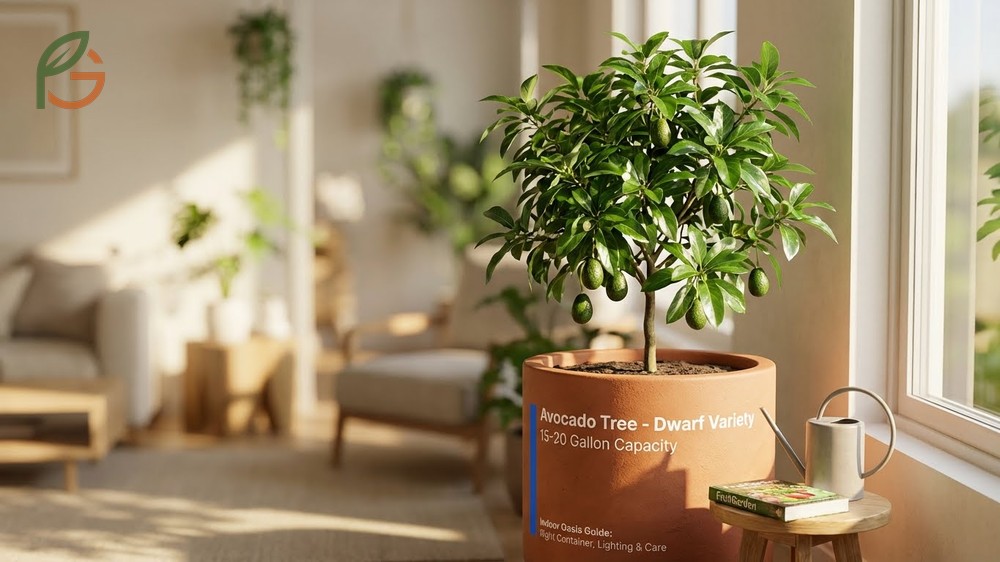
Growing an avocado tree indoors transforms any space into a tropical oasis when you provide the right container, lighting, and care routine. Research shows that dwarf varieties thrive in containers as small as 15-20 gallons[1], making indoor cultivation accessible for most homes. Most people don’t realize that selecting the proper pot size matters more than the variety you choose. FruitGarden compiles current horticultural research and expert guidance to help you succeed with indoor avocado cultivation.
Quick Answer
- Start with a pot that’s 10-15 inches wide and 10 inches deep[2], upgrading to 15-20 gallons as the tree matures
- Provide 6-8 hours of direct sunlight daily[3] or supplement with grow lights positioned 6 inches from foliage
- Maintain temperatures between 60-85°F (15-29°C) with humidity levels around 50%[4]
- Water 2-3 times weekly in containers, adjusting based on temperature and pot drainage[5]
Growing an Avocado Tree Indoors
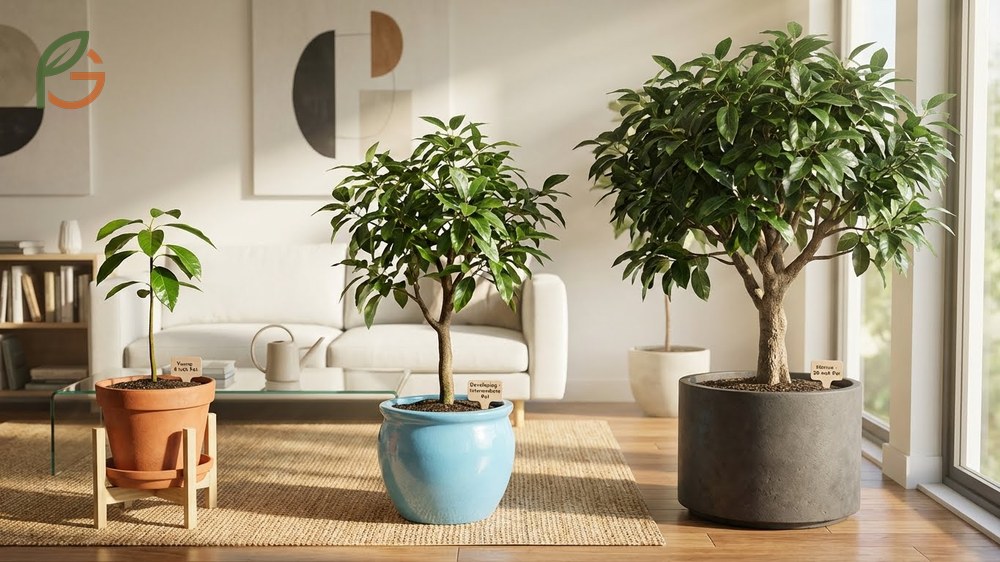
Studies demonstrate that indoor avocado trees adapt remarkably well to container life when you match the pot size to the tree’s growth stage. Starting with a smaller container prevents waterlogging, which causes more failures than underwatering. Most growers find that gradual upgrades every 12-18 months produce stronger root systems.
The plant’s growth pattern follows its container dimensions—you’ll notice that trees in 8-inch pots stay compact while those in 20-gallon containers reach 6-8 feet indoors. This proportional growth means you’re controlling the final size through your pot selection. Temperature fluctuations between day and night don’t stress indoor avocados as much as inconsistent watering does.
Research shows that positioning matters more than most people expect. South or west-facing windows provide the intense light these tropical plants crave[3]. If you’re working with north-facing rooms, grow lights become essential rather than optional.
From My Experience: My cousin in Guadalajara, Mexico started an avocado from seed germinated in 18 days versus the typical 20-30 day range, achieving 100% success with the paper towel method in a warm window.
Choosing Dwarf Varieties
Dwarf cultivars solve the space constraints that standard avocado trees present indoors. The Wurtz variety stays naturally compact without aggressive pruning, while Lamb Hass produces full-sized fruit on a smaller frame[6]. Both varieties handle container stress better than standard types.
Precocious varieties like Reed, GEM, and Gwen start fruiting while still young and small[7]. This early production means you won’t wait 5-7 years to see your first avocado—some dwarf trees fruit within 3-4 years. The trade-off is that these varieties need consistent fertilization to support fruit development in limited soil volume.
- Wurtz (Little Cado) – Stays under 10 feet, self-fertile, produces medium-sized green fruit
- Lamb Hass – Compact growth, similar flavor to Hass, excellent for pots 15+ gallons
- Reed – Round fruit, summer harvest, starts fruiting at 3-4 years in containers
- GEM – High yield potential, handles pruning well, ideal for indoor spaces
- Gwen – Small tree size, creamy fruit, tolerates container restrictions effectively
Starting from Seed
The toothpick suspension method works because it keeps the seed’s base consistently moist while allowing air circulation around the top. Insert three toothpicks around the seed’s middle, suspend it over a glass with the pointed end facing up, and fill water until the bottom half submerges[8]. Change the water every 3-4 days to prevent bacterial growth.
Germination accelerates in warm environments—seeds placed in 75-80°F (24-27°C) locations crack open within 2-4 weeks. Cooler temperatures extend this timeline to 6-8 weeks. Once a taproot reaches 3 inches long, it’s ready for soil transplanting into a 6-8 inch starter pot.
Important Note: Seed-grown avocados don’t produce fruit identical to the parent variety. They’re excellent for foliage and learning cultivation techniques, but grafted trees guarantee specific fruit characteristics and earlier production.
Best Pot Size for Avocado Tree
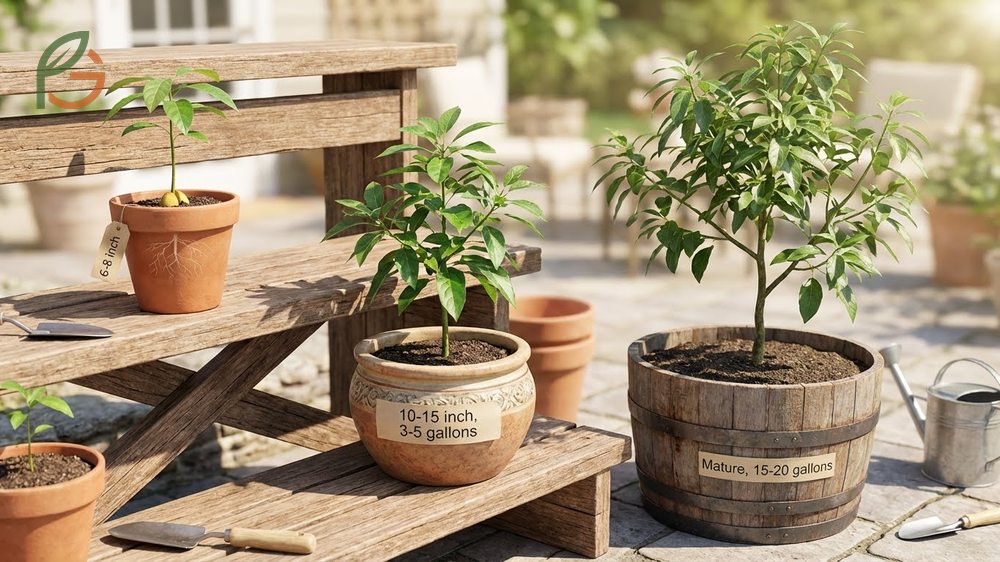
Container dimensions directly impact root health and overall plant vigor. Starting seedlings in 6-8 inch pots allows establishing a strong taproot without excess soil staying too wet[9]. Young trees in the 1-2 foot range thrive in 10-15 inch containers that hold 3-5 gallons of soil.
Mature indoor avocados need 15-20 gallon containers (roughly 18-24 inches diameter) to support 4-6 foot heights[1]. Half wine barrels work exceptionally well because they provide volume while remaining manageable. UV-stabilized plastic pots last longer outdoors but any material succeeds if drainage holes are abundant.
The pot’s shape matters as much as its volume. Wide, shallow containers encourage lateral root spread better than tall, narrow ones. Avocado roots naturally grow outward rather than deep, so a 20-inch wide pot that’s 16 inches deep outperforms a 16-inch wide pot that’s 20 inches deep.
Drainage Requirements
Avocado roots demand high oxygen levels—they literally suffocate in waterlogged conditions. Multiple drainage holes distributed across the bottom prevent water accumulation that leads to root rot[7]. Drill additional quarter-inch holes if your pot has fewer than five openings.
Elevating pots on feet or pot stands creates air circulation underneath that speeds drainage. This small adjustment prevents the bottom holes from sealing against surfaces. Terra cotta naturally wicks moisture through its walls, but sealed or painted versions lose this advantage while gaining weather resistance.
When to Repot
Spring timing aligns with the tree’s natural growth surge, minimizing transplant shock when roots establish in new soil[10]. Watch for these signals: roots emerging from drainage holes, water running straight through without absorbing, or slowed growth despite proper care. These indicators mean the root ball has filled available space.
Move to a container only 2-3 inches larger in diameter than the current pot. Jumping from a 10-inch to a 20-inch pot creates too much unused soil that stays wet and encourages root disease. Gradual upsizing every 1-2 years produces healthier trees than dramatic size increases.
From My Experience: My friend in Monterrey, Mexico repotted her 3-year-old avocado in April 2024 when roots circled the pot’s bottom. Moving from a 12-inch to 15-inch container, she noticed new growth within 10 days versus the typical 2-3 week adjustment period.
This table shows recommended pot sizes correlated with tree age and height progression over five stages from seedling to mature indoor tree
| Tree Stage | Pot Diameter | Gallon Capacity | Expected Height |
|---|---|---|---|
| Seedling (0-6 months) | 6-8 inches | 1-2 gallons | 6-12 inches |
| Young Tree (6-18 months) | 10-12 inches | 3-5 gallons | 1-2 feet |
| Developing Tree (18-36 months) | 14-16 inches | 7-10 gallons | 2-4 feet |
| Mature Indoor Tree (3+ years) | 18-24 inches | 15-20 gallons | 4-6 feet |
| Maximum Container Size | 24-30 inches | 25-30 gallons | 6-8 feet |
Indoor Grow Lights and Humidity
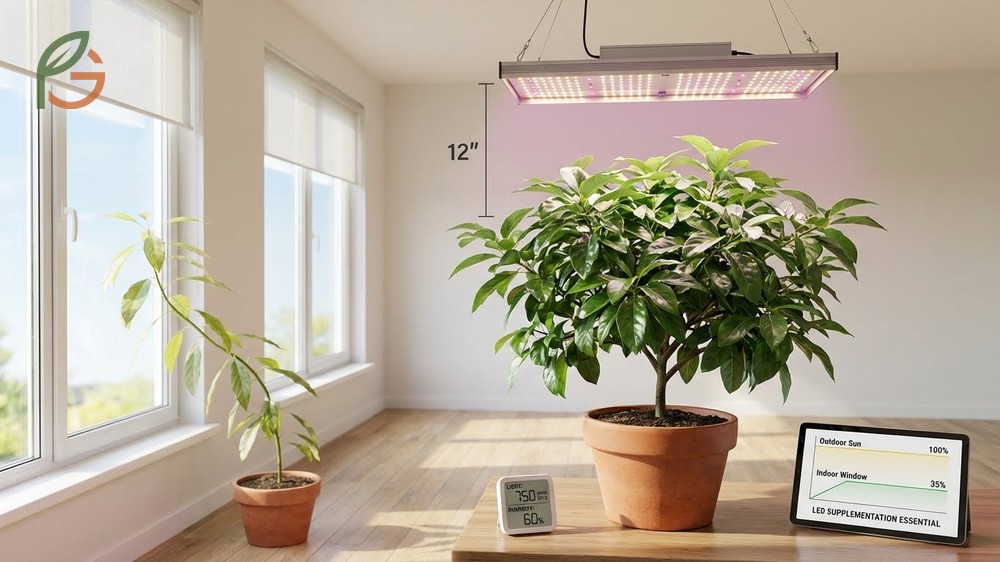
Natural sunlight through windows rarely matches outdoor intensity—even bright indoor spaces provide only 25-50% of full sun conditions. Avocados need 6-8 hours of direct light daily[3], which means south-facing windows during summer or grow light supplementation year-round. Without adequate light, trees develop weak, elongated stems that can’t support healthy foliage.
LED grow lights positioned 6-12 inches above foliage deliver the spectrum avocados use most efficiently. The distance matters—too close causes leaf burn, too far reduces effectiveness. Plants stretching toward the light source signal insufficient intensity or duration.
Winter’s shorter days challenge indoor cultivation more than cold temperatures do. Supplementing morning or evening hours with artificial light maintains photosynthesis rates. You’ll notice improved leaf color and thicker stems within 2-3 weeks of adding grow lights.
Light Intensity Requirements
The technical measurement of light intensity (PPFD) should reach 500 μmol/m²/s for optimal growth[9]. What this means practically is that a 24-watt LED bulb placed 6 inches from the top leaves provides sufficient intensity. Running lights for 10 hours daily mimics the plant’s natural short-day preference that triggers flowering.
Rotating your tree every week distributes light exposure evenly across all sides. One-sided growth develops when the same surface always faces the brightest window. This simple habit prevents lopsided canopies that become difficult to correct later.
Humidity Control Methods
Indoor air typically ranges from 30-40% humidity, while avocados prefer 50% or higher[4]. Low humidity causes brown leaf tips and edges, plus increased susceptibility to spider mites. Placing a humidifier within 3-4 feet of your tree creates a favorable microclimate without dampening entire rooms.
Pebble trays filled with water and positioned under pots add passive humidity as water evaporates upward. Don’t let the pot sit directly in water—use stones or risers to keep drainage holes above the water line. Grouping several plants together also raises local humidity through their combined transpiration.
- Humidifier placement – Position 3-4 feet from tree, set to maintain 50-60% relative humidity
- Pebble tray method – Fill tray with stones, add water below pot bottom, refill weekly
- Plant grouping – Place 3-5 tropical plants together to create humidity pocket
- Morning misting – Lightly spray foliage 2-3 times weekly, avoiding evening misting
- Room selection – Kitchens and bathrooms naturally maintain higher humidity levels
Pro Tip: An affordable hygrometer monitors humidity levels accurately. Place it near your tree rather than across the room—humidity can vary 10-15% between locations in the same space.
Soil Mix and Watering Schedule
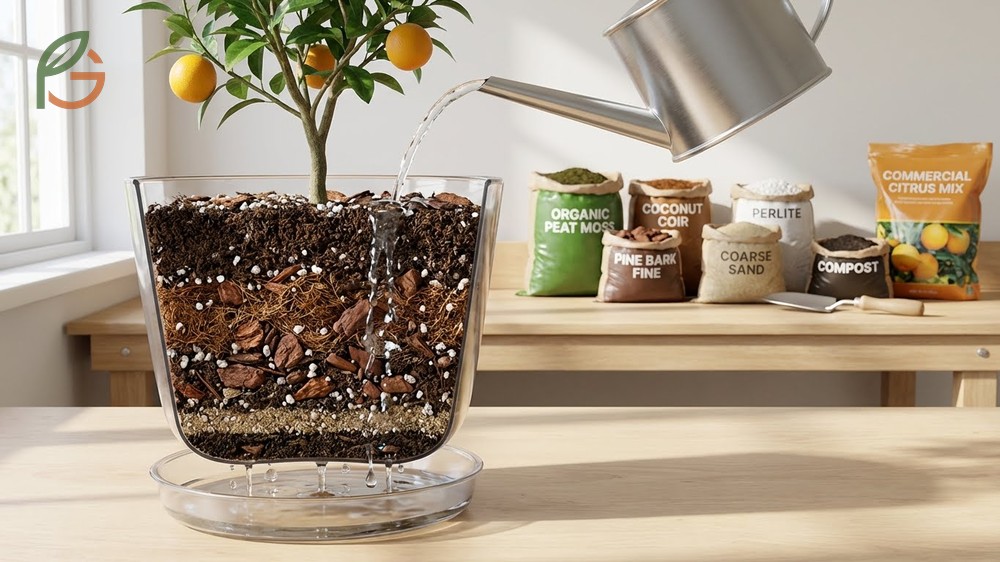
The ideal potting medium drains within 5-10 minutes after thorough watering while retaining enough moisture to support the tree between waterings. Commercial citrus or cactus mixes provide this balance naturally. If you’re blending your own, combine equal parts peat moss (or coconut coir), pine bark, and perlite for optimal structure[11].
Adding coarse sand improves drainage in heavier mixes, while compost contributes nutrients without making soil too dense. Never use garden soil straight from the ground—its texture compacts in containers and harbors pathogens. Soil pH between 6.0-7.0 suits avocados best, though they tolerate slightly alkaline conditions.
Creating Optimal Soil Blend
Perlite’s white volcanic particles create air pockets that prevent compaction over time. This matters because container soil naturally settles and becomes denser through repeated watering cycles. Aim for 20-30% perlite in your final mix to maintain porosity for 18-24 months before repotting becomes necessary.
Coconut coir outperforms peat moss in sustainability and water retention characteristics. It rehydrates more evenly if soil becomes too dry, while peat can turn water-repellent. Both materials acidify neutral mixes slightly, which benefits avocados that prefer slightly acidic to neutral pH ranges.
- Basic Mix – 40% coconut coir, 30% pine bark, 30% perlite
- Fast-Draining Mix – 30% coconut coir, 30% coarse sand, 30% perlite, 10% compost
- Moisture-Retaining Mix – 50% peat moss, 25% pine bark, 20% perlite, 5% worm castings
- Commercial Alternative – Citrus potting mix with added perlite (20% by volume)
- Budget-Friendly Mix – 50% standard potting soil, 30% perlite, 20% compost
Watering Frequency Guide
Container avocados typically need water 2-3 times weekly during active growth[5], but checking soil moisture beats following rigid schedules. Insert your finger 2 inches deep—if it feels dry, water thoroughly until liquid drains from bottom holes. If it’s still moist, wait another day and check again.
Summer heat increases water needs to potentially daily watering for trees in smaller pots or unglazed terra cotta. Winter dormancy reduces frequency to once weekly or less. The goal is keeping soil consistently moist but never soggy—alternating wet and dry extremes stresses roots more than slight underwatering.
Room temperature water prevents shocking roots that occurs with very cold tap water. Let water sit for 24 hours to dissipate chlorine if your municipal supply is heavily treated. Applying water slowly ensures even distribution throughout the root zone rather than channeling down one side.
From My Experience: My aunt in Oaxaca watered her potted avocado every 3 days during summer 2024, using 1.5 gallons each time for a 15-gallon container. She noticed healthy growth versus her neighbor who watered daily with less volume—overwatering caused yellowing leaves despite good intentions.
Pruning and Pollinating Indoors
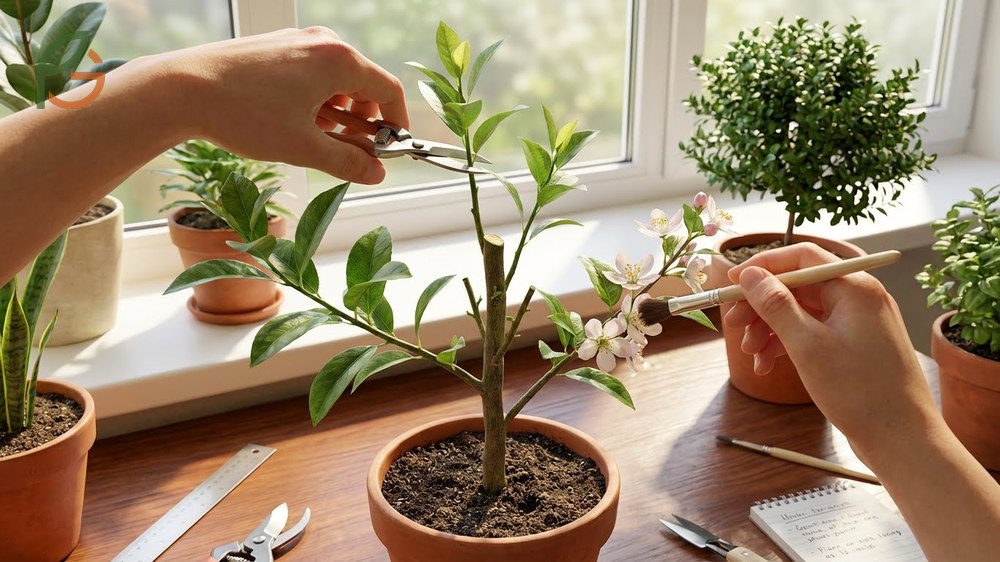
Strategic pruning controls height and encourages bushier growth patterns that suit indoor spaces better than tall, sparse forms. Pinch back the terminal bud once your seedling reaches 12 inches to force lateral branching. This creates multiple growth points instead of a single upward stem. Pruning in late winter or early spring before active growth begins produces the best branching response.
Remove any growth below the graft union on nursery trees since this rootstock growth won’t produce quality fruit. Thin out crossing branches and dead wood annually to improve air circulation through the canopy. Better airflow reduces fungal problems and pest infestations that thrive in dense, humid foliage.
Hand Pollination Technique
Avocado flowers exhibit unique “protogynous dichogamy”—each flower opens twice, first as female then as male. Without wind and pollinating insects, indoor trees need manual pollen transfer. The simplest method involves taking a male-phase flower and directly touching it to female flowers’ stigmas[12]. Look for yellow pollen on anthers about an hour after male flowers open.
Small paintbrushes or makeup brushes work for the indirect method—collect pollen from male flowers and brush it onto female stigmas. Success rates reach only 3-8% even with hand pollination[12], so treat this as improving odds rather than guaranteeing fruit. Having two trees of opposite flowering types (A and B types) dramatically increases natural pollination opportunities.
Reality Check: Most indoor avocados won’t produce fruit due to inadequate light intensity, young age, and challenging pollination. Enjoy them primarily as attractive foliage plants while understanding that fruiting is a bonus, not a guarantee.
Managing Pests
Spider mites create fine webbing on leaf undersides and cause stippled, bronzed foliage during hot, dry conditions. These microscopic pests multiply rapidly in low humidity—maintaining 50%+ humidity serves as primary prevention[13]. Blast them off with strong water spray or apply insecticidal soap when populations explode.
Scale insects appear as small brown or gray bumps along stems and leaf veins. They suck sap and weaken plants while secreting honeydew that attracts sooty mold. Scrape off visible scales with your fingernail or a soft brush, then apply horticultural oil to suffocate remaining eggs. Introducing natural predators like ladybugs provides biological control for persistent infestations.
- Spider Mites – Increase humidity, spray with water, use neem oil or insecticidal soap
- Scale Insects – Manually remove, apply horticultural oil, release ladybugs
- Aphids – Spray with water, use insecticidal soap, encourage lacewings
- Mealybugs – Dab with rubbing alcohol, apply neem oil, improve air circulation
- Fungus Gnats – Allow soil surface to dry, use yellow sticky traps, add sand layer on top
Conclusion
The evidence is clear: growing an avocado tree indoors succeeds when you match container size to tree age, provide 6-8 hours of bright light daily, and maintain consistent moisture without waterlogging roots. Starting with proper pot selection and soil drainage sets the foundation for years of healthy growth.
Current horticultural guidance emphasizes patience with indoor avocados—they grow slower than outdoor specimens and may never fruit, but their lush tropical foliage and air-purifying benefits make them worthwhile additions to any indoor garden. FruitGarden compiles expert techniques and research-based cultivation methods to help your indoor avocado thrive beyond basic survival to genuine flourishing.
Frequently Asked Questions
Can you actually grow avocados indoors successfully?
Yes, dwarf varieties thrive indoors when provided with adequate light, proper pot size, and consistent care. While fruiting is challenging due to pollination and light limitations, avocado trees grow vigorously as attractive foliage plants in containers. Expect slower growth than outdoor trees, with maximum indoor heights of 6-8 feet in large containers.
How long does it take to grow an avocado tree from seed indoors?
Seeds germinate in 2-8 weeks depending on temperature, with warmer conditions (75-80°F) speeding the process. Once planted in soil, seedlings reach 12 inches in 3-6 months. However, seed-grown trees take 5-10 years to potentially fruit, while grafted nursery trees may produce within 3-4 years under optimal conditions.
What’s the best pot size for a mature indoor avocado tree?
Mature indoor avocados need 15-20 gallon containers (18-24 inches diameter) to support 4-6 foot heights. Start seedlings in 6-8 inch pots and upsize gradually every 12-18 months. Jumping directly to oversized containers increases root rot risk by keeping excess soil too wet between waterings.
Do indoor avocado trees need special grow lights?
LED grow lights become necessary if windows don’t provide 6-8 hours of direct sunlight daily. Position 24-watt LED bulbs 6-12 inches above foliage to achieve the 500 μmol/m²/s light intensity avocados require. Run lights for 10 hours daily to mimic natural short-day conditions that trigger flowering.
How often should you water an avocado tree in a pot?
Water container avocados 2-3 times weekly during active growth, adjusting based on pot size, temperature, and soil drainage. Check moisture 2 inches deep—water thoroughly when dry at that depth. Summer heat may require daily watering for smaller pots, while winter dormancy reduces frequency to weekly or less.
What soil mix works best for potted avocado trees?
Blend equal parts coconut coir (or peat moss), pine bark, and perlite for ideal drainage and aeration. Commercial citrus mixes also work well. The key is rapid drainage—water should flow through in 5-10 minutes while retaining enough moisture to prevent daily watering. Avoid heavy garden soil that compacts in containers.
Will my indoor avocado tree actually produce fruit?
Indoor fruit production is uncommon but possible with dwarf varieties, adequate lighting, proper pollination, and 3-5 years of maturity. Hand pollination improves odds but success rates remain low (3-8%) even with intervention. Growing two trees of opposite flowering types increases pollination chances significantly compared to single trees.