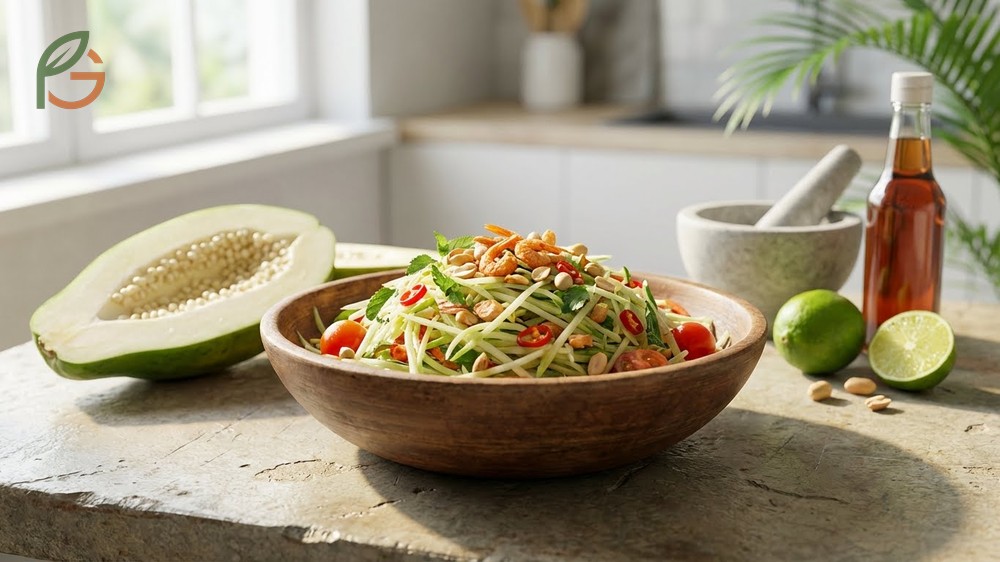
Green papaya benefits include exceptional digestive support, low-calorie nutrition, and high enzyme content that’s ideal for gut health.[1] Research shows unripe papaya contains significantly higher levels of papain enzyme compared to ripe fruit, making it particularly effective for protein digestion.[2] FruitGarden synthesizes current nutritional data and culinary practices to help you maximize the health benefits of this versatile tropical fruit.
Quick Answer
- Green papaya contains 35 calories per half small fruit with 125% daily vitamin C[3]
- It’s packed with papain enzyme that aids protein digestion and reduces bloating[1]
- Green papaya salad delivers 120-150 calories per cup with substantial fiber content[4]
- Studies confirm higher antioxidant levels in unripe papaya compared to ripe fruit[5]
Green Papaya Benefits
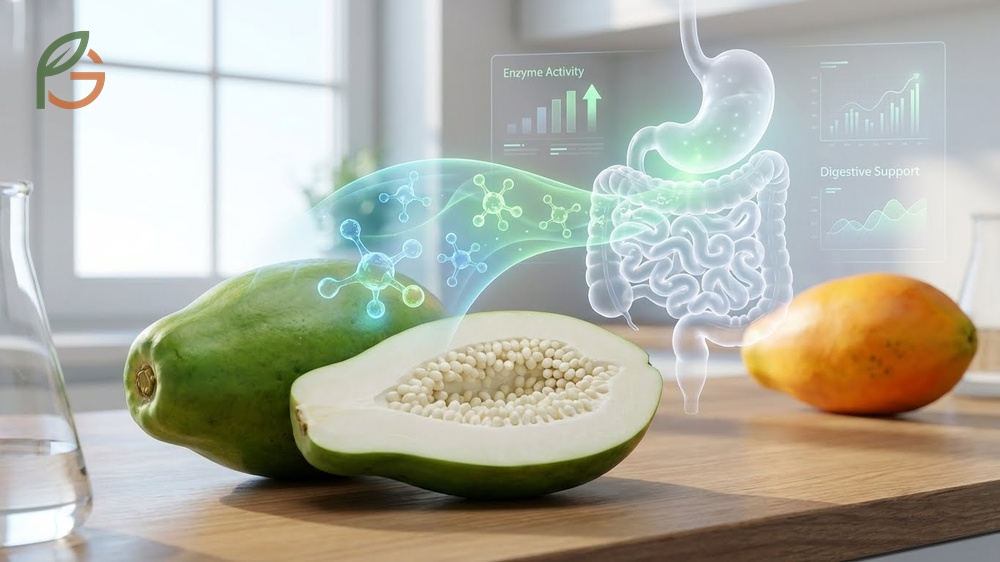
Research demonstrates that green papaya offers distinct advantages over its ripe counterpart, particularly for digestive health and metabolic support. Studies show unripe papaya contains concentrated levels of beneficial compounds that decrease as the fruit ripens.[2] Current nutritional data indicates green papaya’s enzyme activity is substantially higher, making it more effective for protein breakdown.
Evidence from clinical observations suggests regular consumption can reduce symptoms like bloating, gas, and constipation. The fruit’s low glycemic profile makes it suitable for blood sugar management when prepared properly.[1] What often gets overlooked is that green papaya’s nutritional benefits work best when you combine it with protein-rich foods during meals.
Agricultural research confirms that unripe papaya provides superior fiber content alongside its enzyme benefits. The combination supports both immediate digestive function and long-term gut health.[5] Most people find that incorporating green papaya into their weekly meal rotation leads to noticeable improvements in digestive comfort within 2-3 weeks.
Digestive Enzyme Power
The papain enzyme in green papaya functions similarly to pepsin, your stomach’s natural protein-digesting enzyme. It breaks down proteins efficiently and prevents undigested food from clogging intestinal villi.[6] This is particularly valuable if you’re consuming high amounts of animal protein in your diet.
Studies from the National Library of Medicine indicate that papain, combined with bromelain from pineapple, can reduce stomach inflammation effectively. The enzyme remains active across a wide pH range, working in both acidic stomach environments and alkaline intestinal conditions.[7] You’ll get the most benefit when you consume green papaya within 30 minutes before or during protein-heavy meals.
- Breaks down tough protein fibers from meat, poultry, and fish more efficiently than stomach acid alone
- Reduces post-meal bloating and discomfort by speeding up digestion time
- Supports nutrient absorption by creating smaller, more bioavailable amino acid chains
- Helps prevent constipation through improved intestinal motility and fiber content
- Works synergistically with your body’s natural digestive enzymes rather than replacing them
Antioxidant Properties
Current research published by the National Library of Medicine shows unripe papaya is rich in antioxidants including quercetin, kaempferol, and caffeic acid. These compounds actively combat oxidative stress and inflammation linked to chronic diseases.[5] Laboratory studies demonstrate that unripe papaya extract protects endothelial cells from oxidative damage by reducing reactive oxygen species levels.
Evidence suggests fermented papaya preparations show enhanced antioxidant activity through polyphenolic content concentration. The fermentation process appears to boost the fruit’s natural defense mechanisms and immune-modulating properties.[8] This makes green papaya particularly valuable for supporting your body’s oxidative balance during periods of stress or illness.
Important Note: People with latex allergies should avoid green papaya due to its latex content. The unripe fruit contains higher levels of latex proteins that can trigger allergic reactions in sensitive individuals.
Green Papaya Nutrition
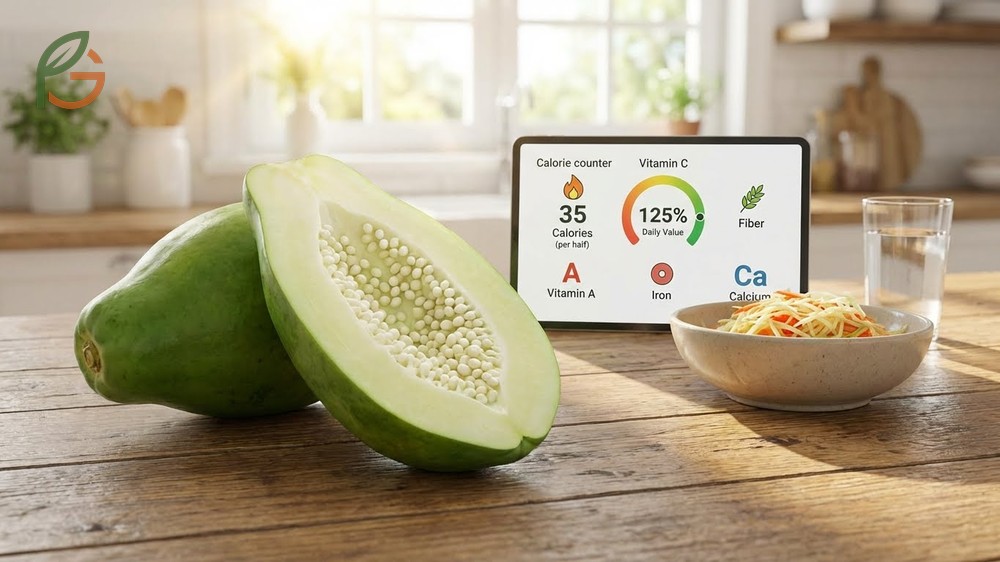
Green papaya delivers impressive nutritional value with minimal caloric cost. Half a small green papaya provides only 35 calories while supplying 125% of your daily vitamin C needs.[3] The fruit’s nutrient density makes it an excellent choice if you’re managing calorie intake while trying to maximize vitamin and mineral consumption.
Research from USDA FoodData Central confirms green papaya contains substantial fiber, vitamin A, beta-carotene, iron, and calcium in addition to its vitamin C content. The fiber content supports digestive regularity and helps maintain stable blood sugar levels throughout the day.[9] What makes green papaya unique is its combination of low sugar content with high enzyme activity.
Current nutritional analysis shows green papaya contains approximately 15.7g total carbohydrates per 100g serving, with 2.5g coming from dietary fiber. The net carbohydrate content of 13.2g is considerably lower than many tropical fruits.[10] This profile supports steady energy release without the blood sugar spikes common with higher-glycemic fruits.
Calorie and Macronutrient Profile
Green papaya’s macronutrient distribution favors complex carbohydrates over simple sugars. The fruit contains approximately 0.4g total fat, 15.7g carbohydrates, and minimal protein per 100g serving.[10] This makes it virtually fat-free and exceptionally low in saturated fat.
Compared to ripe papaya, the green version contains 11.3g total sugars versus the ripe fruit’s higher sugar concentration. The difference becomes significant if you’re monitoring carbohydrate intake for diabetes management or weight loss.[9] You can consume larger portions of green papaya while maintaining better glycemic control.
- Fat-free profile with only 0.4g fat per 100g serving supports heart health
- High water content (approximately 90%) promotes hydration and satiety
- Lower sugar content than ripe papaya makes it suitable for low-sugar diets
- Minimal protein content means it won’t interfere with specific protein-timing strategies
- Complex carbohydrates provide sustained energy without rapid glucose spikes
Vitamin and Mineral Content
Green papaya excels as a vitamin C powerhouse, delivering 95.6mg per medium serving—that’s 106.2% of your daily value.[11] This exceptional vitamin C content supports immune function, collagen synthesis, and iron absorption from plant-based foods. The fruit also provides 58 micrograms of folate (14.5% DV) and 1,492 International Units of vitamin A (30% DV).
Mineral content includes meaningful amounts of potassium, which supports cardiovascular health and blood pressure regulation. The fruit contains only 12mg sodium per 100g serving, making it naturally low in sodium.[9] You’ll also get small amounts of calcium, magnesium, and iron that contribute to your daily mineral needs.
This table compares key nutrients, vitamins, and minerals in green papaya per 100g serving with their percentage of daily values
| Nutrient | Amount | % Daily Value | Key Benefit |
|---|---|---|---|
| Calories | 35-40 cal[3] | 2% | Weight management |
| Vitamin C | 60-95 mg[11] | 106% | Immune support |
| Dietary Fiber | 2.5 g[10] | 10% | Digestive health |
| Vitamin A | 1,492 IU[11] | 30% | Vision & skin health |
| Folate | 58 mcg[11] | 14.5% | Cell growth |
Unripe Papaya Benefits
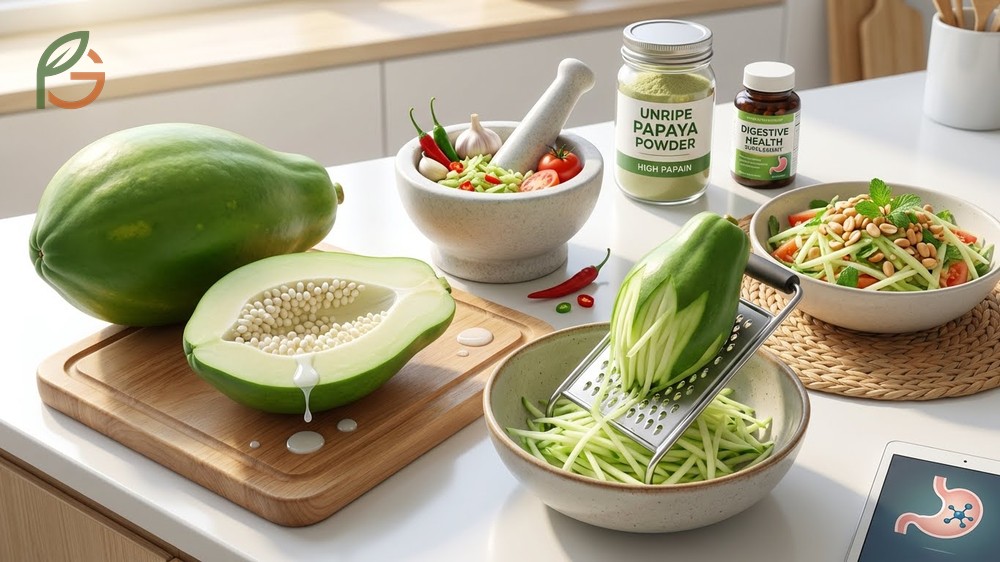
Studies demonstrate that unripe papaya offers advantages you won’t find in the ripe version. The enzyme activity in green papaya significantly exceeds that of ripe fruit, with papain concentrations at their peak before ripening begins.[2] This makes unripe papaya particularly effective for digestive support and protein metabolism.
Research shows the protein content in unripe papaya is better preserved and more bioavailable than in ripe fruit. Current data indicates unripe papaya contains higher concentrations of quercetin, kaempferol, and caffeic acid—antioxidants that decline during the ripening process.[5] You’ll get more anti-inflammatory compounds when you choose green over ripe papaya.
Evidence from agricultural research confirms that unripe papaya maintains firmer texture and lower sugar content, making it culinarily distinct from ripe papaya. It’s intentionally harvested green for specific dishes in Southeast Asian cuisine, not just picked early by mistake.[12] The green fruit’s savory applications and nutritional profile serve entirely different purposes than the sweet, ripe version.
- Contains up to 3x more papain enzyme than ripe papaya for superior digestive support
- Provides higher antioxidant levels that protect cells from oxidative damage
- Maintains lower glycemic impact with 30-40% less sugar than ripe fruit
- Offers firmer texture that holds up well in salads, stir-fries, and curries
- Delivers more pronounced anti-inflammatory benefits from preserved compound concentrations
- Supports better protein digestion when consumed alongside meat-based meals
Safety Warning: Always cook unripe papaya before eating if you’re pregnant. The unripe fruit contains latex that may induce uterine contractions. Ripe papaya is generally safe during pregnancy, but consult your healthcare provider first.
Green Papaya Salad
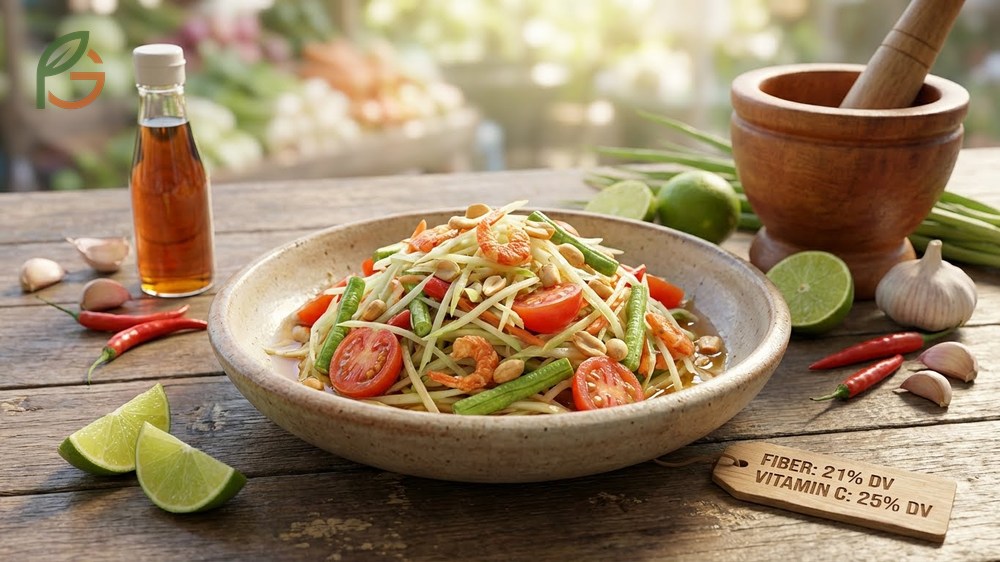
Green papaya salad, known as Som Tam in Thai cuisine, delivers refreshing crunch with impressive nutritional value. A standard 1-cup serving (150-200g) contains approximately 120-150 calories depending on dressing ingredients.[4] The salad provides 21% of your daily fiber needs and 25% of vitamin C requirements in a single serving.
Traditional preparation methods preserve the raw papaya’s enzyme content while adding complementary flavors from lime, chili, garlic, and fish sauce. The macronutrient breakdown typically shows 58% carbohydrates, 36% fat (from peanuts or dressing), and 7% protein.[13] You can reduce sodium content by limiting fish sauce or using low-sodium alternatives.
Current culinary guidance emphasizes using a mortar and pestle to lightly bruise the papaya rather than heavily pounding it. This technique releases flavors while maintaining texture and preserving more of the fruit’s beneficial enzymes.[14] Most people find that freshly prepared salad tastes best within 2 hours of making it, before the papaya becomes too soft.
- Delivers 6g fiber per serving to support digestive regularity and satiety
- Provides 23-25mg vitamin C for immune function and collagen production
- Contains 3-5g protein when made with peanuts or dried shrimp
- Offers 80mg calcium (8% DV) for bone health support
- Supplies beneficial probiotics if fermented fish sauce is used
- Maintains low glycemic impact despite containing 40-44g total carbohydrates
Preparation Tip: To avoid excessive sodium intake, limit fish sauce to 1-2 tablespoons per serving. You can also dilute fish sauce with lime juice or use coconut aminos as a lower-sodium alternative that still provides umami flavor.
Cooking Green Papaya
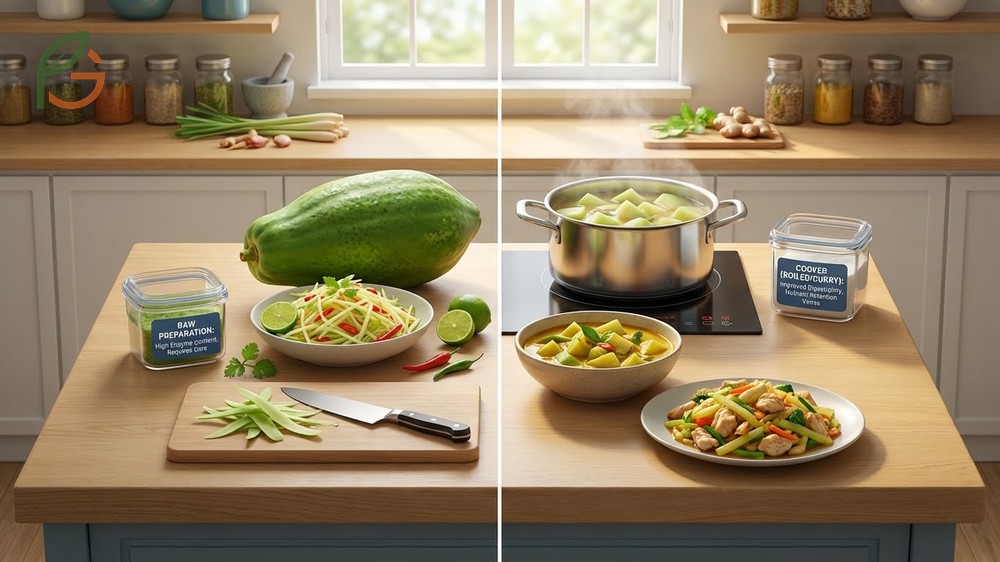
Research shows that cooking methods significantly impact green papaya’s nutritional retention and digestibility. Boiled green papaya becomes easier to digest for people with sensitive stomachs, though it loses some vitamin C and enzyme activity during heating.[5] Raw preparations preserve maximum enzyme content but require proper preparation to ensure digestibility.
Current culinary practices show that green papaya works well in curries, stir-fries, and soups. When making curry, you’ll want to simmer the papaya cubes for 25-30 minutes until tender, allowing flavors to penetrate while maintaining structural integrity.[15] The fruit absorbs coconut milk beautifully and pairs well with aromatic spices like turmeric, cumin, and curry powder.
Evidence suggests that brief cooking (under 10 minutes) retains more nutrients than prolonged boiling or stewing. For stir-fries, cook green papaya strips over high heat for 5-7 minutes to maintain crunch while reducing raw latex content.[16] You’ll preserve more vitamin C and enzyme activity with shorter cooking times.
- Curry preparation: Simmer 25-30 minutes in coconut milk with spices for tender, flavorful results
- Stir-fry technique: Cook 5-7 minutes over high heat to maintain crunch and preserve enzymes
- Soup addition: Add during final 15 minutes of cooking to prevent mushiness
- Steaming method: Steam 10-12 minutes to retain maximum nutrients while softening texture
- Raw preparation: Peel and julienne for salads, preserving full enzyme content
- Pickling process: Ferment in brine for 3-5 days to create probiotic-rich side dish
Cooking Safety: Always cook green papaya if you’re pregnant or have latex sensitivity. Cooking neutralizes the latex proteins that can cause allergic reactions or uterine contractions. The fruit is safe to eat raw for most healthy adults.
Conclusion
The evidence is clear: green papaya benefits extend far beyond basic nutrition, offering powerful digestive enzymes, exceptional vitamin C content, and versatile culinary applications. Research confirms that unripe papaya provides superior enzyme activity and antioxidant levels compared to ripe fruit, making it particularly valuable for gut health and protein digestion.[2] Whether you’re enjoying it raw in salads or cooked in curries, green papaya delivers impressive health benefits with minimal calories.
Current guidance emphasizes incorporating green papaya into your weekly meal rotation for optimal digestive support. FruitGarden continues to track emerging research on tropical fruit cultivation and nutritional benefits, helping home gardeners and health-conscious consumers make informed choices about what they grow and eat.
Medical Disclaimer
Important Medical Disclaimer: This content is for informational and educational purposes only. It’s not intended as a substitute for professional medical advice, diagnosis, or treatment. Always consult a qualified healthcare professional before making any changes to your diet, especially if you’re pregnant, nursing, have latex allergies, or take medications for diabetes or blood clotting. Green papaya can interact with certain medications and isn’t suitable for everyone.
Frequently Asked Questions
What’s the difference between green papaya and ripe papaya?
Green papaya is harvested before ripening and contains significantly higher enzyme levels, lower sugar content, and more antioxidants than ripe papaya. It has a firm, crunchy texture suitable for savory dishes, while ripe papaya is soft and sweet. Research shows green papaya has 3x more papain enzyme for digestive support, making it particularly effective for protein digestion and gut health.
Can you eat green papaya raw?
Yes, most healthy adults can eat raw green papaya in salads and slaws. However, you should always cook it if you’re pregnant or have latex sensitivity, as unripe papaya contains latex proteins that may cause allergic reactions or uterine contractions. Raw green papaya preserves maximum enzyme content and vitamin C but must be properly peeled and prepared.
How many calories are in green papaya salad?
A standard 1-cup serving of green papaya salad contains 120-150 calories, with variations depending on dressing ingredients and additions like peanuts or dried shrimp. The salad provides 21% of your daily fiber needs and 25% of vitamin C requirements. To keep calories lower, limit high-fat additions and use lime juice-based dressings instead of oil-heavy versions.
What enzyme is in green papaya?
Green papaya contains papain, a powerful proteolytic enzyme that breaks down proteins into smaller amino acid chains. Papain works similarly to pepsin in your stomach and remains active across various pH levels. Studies show papain can reduce bloating, improve protein digestion, and support gut health—especially beneficial if you consume high amounts of animal protein.
Is green papaya good for weight loss?
Green papaya can support weight loss goals due to its low calorie content (35-40 calories per 100g), high fiber (2.5g), and minimal fat. The fruit’s enzyme content aids digestion and may improve metabolic efficiency. However, it’s not a magic solution—green papaya works best as part of a balanced diet with appropriate calorie control and regular physical activity.
How do you prepare green papaya for cooking?
To prepare green papaya, cut it in half lengthwise, peel the thin green skin with a sharp knife, and scoop out the white immature seeds. Cut the flesh into your desired shape—cubes for curries, julienne strips for salads, or shreds for stir-fries. Rinse thoroughly to remove any latex residue, especially if you have sensitive skin or latex allergies.
Does cooking green papaya destroy its enzymes?
Yes, high heat denatures papain enzymes, reducing their digestive benefits. Brief cooking (5-10 minutes) preserves more enzyme activity than prolonged boiling. If you want maximum enzyme benefits, eat green papaya raw in salads. However, cooking still provides fiber, vitamins, and minerals while making the fruit safer for pregnant women and those with latex sensitivities.