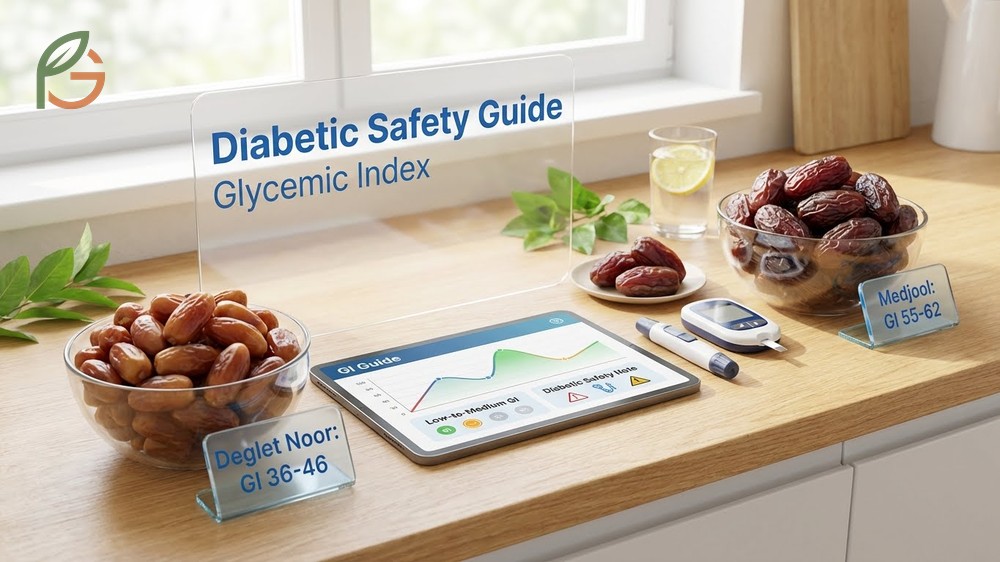
The glycemic index of dates ranges from 36 to 62 depending on variety, placing most dates in the low-to-medium GI category that won’t cause rapid blood sugar spikes when eaten in moderation.[1] Research shows that Deglet Noor dates have a lower GI of around 36-46, while Medjool dates sit at 55-62, making variety selection important for diabetics.[2] FruitGarden synthesizes current nutritional research to help you make informed decisions about incorporating dates into a diabetic-friendly diet.
Quick Answer
Glycemic Index of Dates
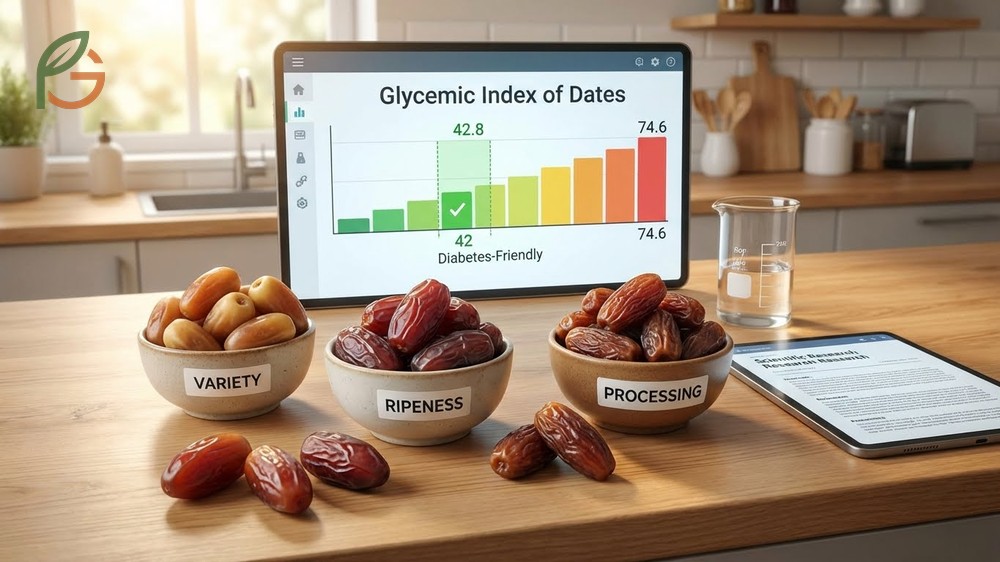
Studies demonstrate that the glycemic index of dates varies significantly across varieties, ranging from 42.8 to 74.6, though most fall in the low-to-medium category.[1] This variation depends on ripeness, processing method, and specific cultivar. Research conducted on five common date varieties in healthy and diabetic subjects found mean GI values around 42, which classifies dates as diabetes-friendly when consumed appropriately.[5]
The GI measurement reflects how quickly a food raises blood glucose after consuming 50g of carbohydrates from that food compared to pure glucose. Lower GI values mean slower, more controlled blood sugar increases. What often gets overlooked is that date ripeness significantly affects GI—semi-ripe (Rutab) dates show a GI of 47.2, while commercially dried dates can drop to 35.5.[6]
What Is Glycemic Index
The glycemic index classifies foods on a scale from 0 to 100 based on their impact on blood sugar levels within two hours of consumption. Foods scoring 55 or below are low GI, 56-69 are medium, and 70+ are high GI. This system helps diabetics predict which foods will cause rapid spikes versus gradual increases in blood glucose.
GI Ranges by Date Variety
Different date varieties show distinct GI profiles that matter for diabetic meal planning. Current data indicates that smaller, firmer varieties like Deglet Noor tend toward the lower end of the spectrum. Larger, softer varieties like Medjool typically rank higher but still remain in the medium range, not high GI territory.
Important Note: GI values can shift by 10-15 points depending on ripeness stage and processing method. Semi-ripe dates generally offer lower GI than fully dried commercial varieties.
Blood Sugar Impact
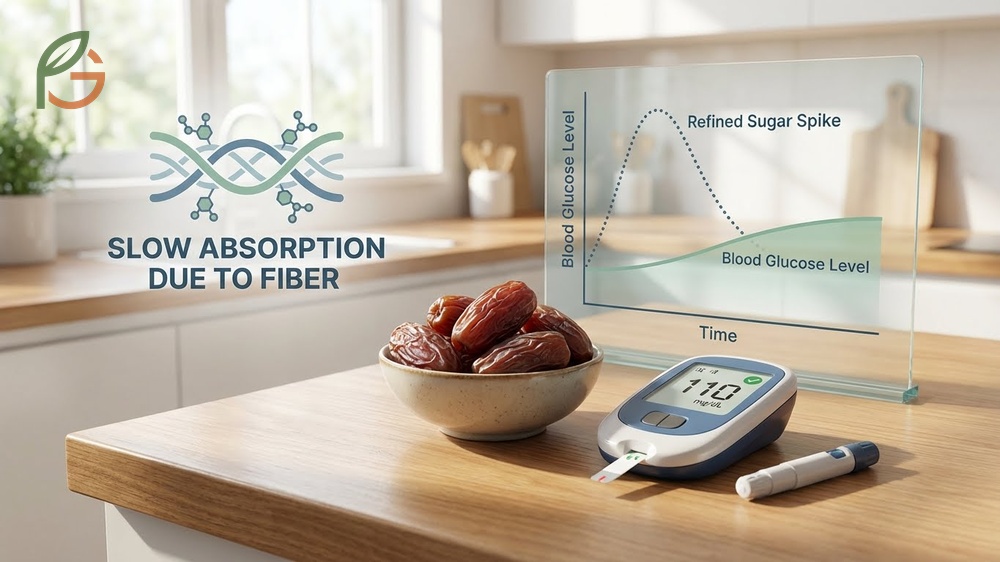
Evidence suggests dates don’t cause the dramatic blood sugar spikes you’d expect from their sweetness—when portion-controlled. Studies on type 2 diabetics showed that date consumption didn’t lead to large post-meal glucose elevations.[6] The fiber content in dates (7-8g per 100g) slows carbohydrate absorption, creating a more gradual rise compared to refined sugars.[4]
The sugar composition of dates includes roughly equal amounts of glucose and fructose (about 20g each per 100g), plus sucrose (24g).[1] While glucose enters the bloodstream quickly, fructose requires liver processing first, which moderates the overall glycemic response. This balanced sugar profile contributes to dates’ moderate GI despite high total sugar content.
Glycemic Load Consideration
Glycemic load (GL) accounts for both GI and actual carbohydrate quantity, making it more practical for real-world eating. Two Medjool dates (48g) contain 36g of carbs, yielding a GL of 17, which falls in the medium range.[3] Research shows GL for dates ranges from 8.5 to 24 depending on portion size and variety.[6]
A single date triggers much less blood sugar change than eating several at once. GL below 10 is low, 11-19 is medium, and 20+ is high. Most people find that sticking to 2-3 dates keeps their GL in the safe medium zone rather than pushing into high territory.
Fiber Content Benefits
The 7-8g of fiber per 100g of dates acts as a natural brake on glucose absorption. Deglet Noor dates pack about 8g of fiber, while Medjool dates contain roughly 6.7g as they lose some fiber during ripening.[7] This fiber slows gastric emptying, promotes satiety, and helps regulate the rate at which sugars enter your bloodstream.
Medjool Glycemic Index
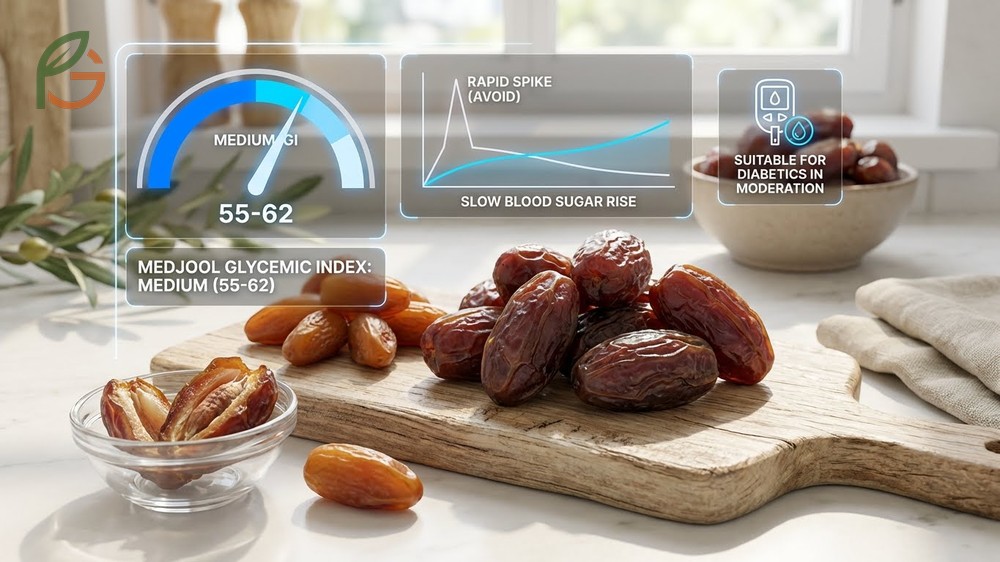
Medjool dates carry a glycemic index of 55-62, placing them in the medium GI category.[8] These larger, softer dates rank higher than their Deglet Noor cousins because they’re about twice the size and contain more natural sugars per piece. One Medjool date (24g) delivers 66.5 calories, 18g carbs, and 16g sugar.[3]
Research shows that when you eat Medjool dates, your blood sugar rises slowly rather than spiking rapidly. The medium GI means diabetics can enjoy them in moderation without dramatic glucose fluctuations. Most nutrition experts recommend treating one Medjool date as equivalent to three smaller Deglet Noor dates in terms of sugar impact.
- Medium GI of 55-62 allows controlled blood sugar response
- Larger size (24g average) means fewer dates per serving than Deglet Noor
- Contains 6.7g fiber per 100g to moderate glucose absorption
- Best consumed with protein or fat to further slow digestion
- Fully ripened Medjool dates may have slightly higher GI than semi-ripe ones
Practical Tip: One Medjool date paired with 1 ounce of almonds creates a balanced snack that won’t spike blood sugar. The protein and fat from nuts slow gastric emptying and flatten glucose curves.
Deglet Noor GI
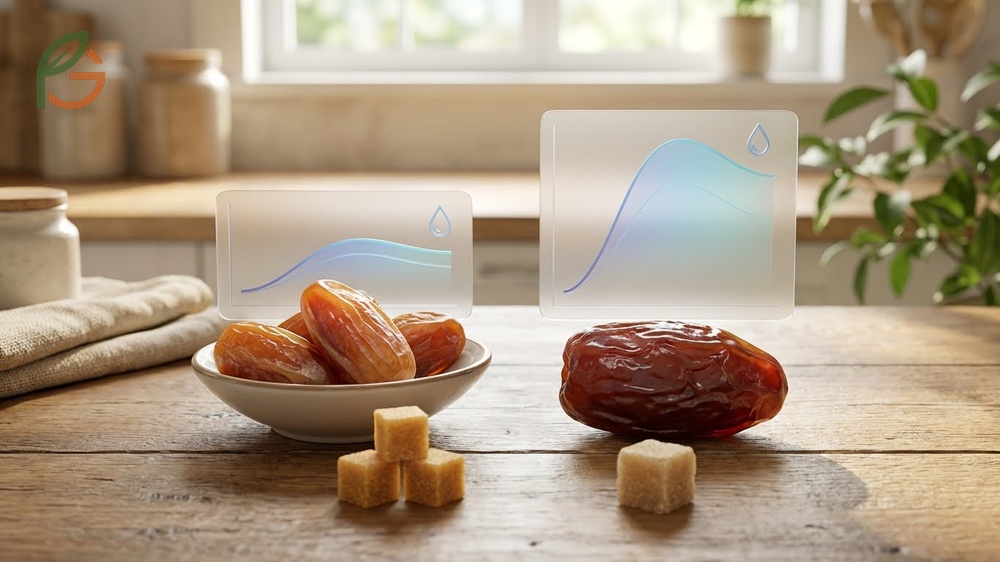
Deglet Noor dates score a glycemic index of 36-46, solidly in the low GI range that’s preferable for diabetics.[2] These smaller, firmer dates contain about 4.5g sugar per date compared to Medjool’s 16g, making them the go-to choice for blood sugar management. Their lower GI means you’d need three Deglet Noor dates to match the sweetness—and glycemic impact—of one Medjool.
The firmer texture and lower moisture content of Deglet Noor dates contribute to their superior GI profile. These dates pack 8g of fiber per 100g, the highest among common varieties, which further slows carbohydrate absorption.[7] Agricultural data shows Deglet Noor dates maintain their low GI even when fully dried, unlike some varieties that see GI increases during processing.
This table compares glycemic index values, sugar content, fiber content, and serving recommendations between Medjool and Deglet Noor date varieties.
| Characteristic | Medjool Dates | Deglet Noor Dates |
|---|---|---|
| Glycemic Index | 55-62 (Medium)[8] | 36-46 (Low)[2] |
| Sugar per Date | 16g[3] | 4.5g[2] |
| Fiber (per 100g) | 6.7g[7] | 8g[7] |
| Average Date Size | 24g (large) | 7-8g (small) |
| Recommended Serving | 2 dates | 3 dates |
Diabetic Date Consumption
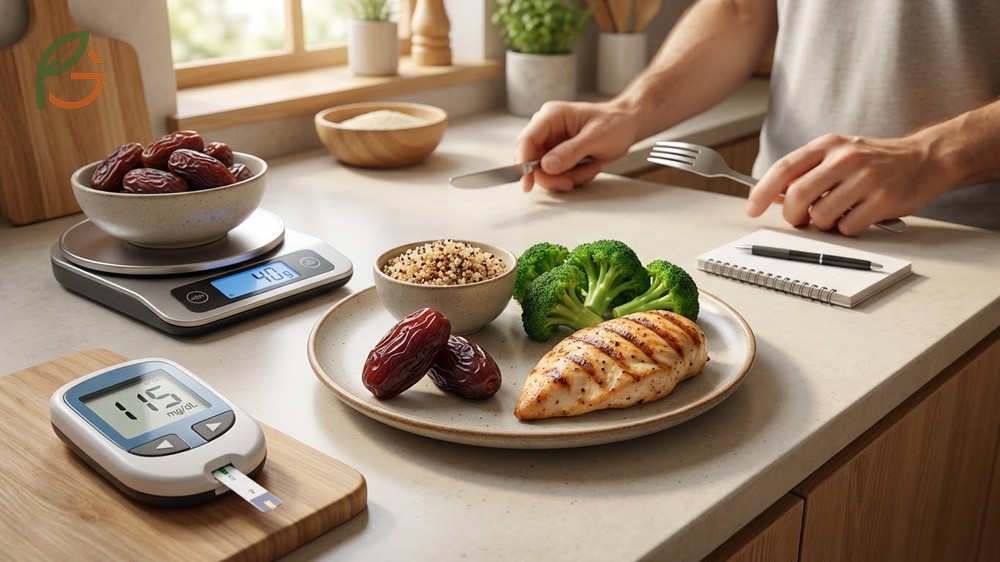
Current guidance emphasizes that diabetics can safely enjoy dates by following portion control and pairing strategies. A typical serving of 2-3 dates provides 15-20g of carbohydrates, which fits within most diabetic meal plans when balanced with other foods.[3] Studies confirm that consuming 1-2 servings per day doesn’t impair glycemia in people with type 2 diabetes.[6]
The key is treating dates as part of your total carbohydrate budget rather than as “free” foods. If you’re counting carbs, factor in that two Medjool dates equal roughly 36g carbs—the same as a medium banana or two slices of bread. This awareness helps prevent unintentional blood sugar spikes from portion creep.
Safe Portion Sizes
Research-backed recommendations suggest 2-3 dates per serving for most diabetics, with a maximum of 1-2 servings daily.[3] For Medjool dates, stick to 2 dates per serving due to their larger size and higher sugar content. For Deglet Noor, you can have 3 dates per serving since they’re smaller and lower GI.
Diabetes UK includes “2 Medjool dates” as a standard fruit portion in their diabetic meal planning guides.[9] Monitor your individual blood glucose response after eating dates, as responses vary based on your medication, activity level, and overall diet. Some diabetics tolerate dates better at certain times of day or when paired with specific foods.
Pairing Strategies
Pairing dates with protein or healthy fats slows gastric emptying and flattens post-meal glucose rises by 30-40% compared to eating dates alone. The reason is simple: protein and fat delay stomach emptying, giving your body more time to process the carbohydrates gradually rather than all at once.
Effective combinations include dates with Greek yogurt, almond butter, cheese, or mixed nuts. For breakfast, chopping 2 dates into oatmeal with walnuts creates a balanced meal that provides sustained energy for 4-5 hours without blood sugar crashes. These pairings also increase satiety, helping you feel full longer and reducing overall calorie intake.
- Choose Deglet Noor over Medjool for lower GI impact when possible
- Limit to 2-3 dates per serving, maximum 1-2 servings daily
- Always pair with protein (nuts, yogurt, cheese) or healthy fats
- Avoid eating dates on an empty stomach to prevent rapid glucose spikes
- Test your blood sugar 1-2 hours after eating dates to learn your individual response
- Count dates toward your total daily carbohydrate allowance
- Spread date consumption throughout the day rather than eating all at once
Blood Sugar Monitoring Tip: Track your glucose levels before eating dates and again 1-2 hours later. If your blood sugar rises more than 40-50 mg/dL, reduce portion size or ensure better protein/fat pairing next time.
Conclusion
The evidence is clear: the glycemic index of dates ranges from 36-62 depending on variety, making them a viable option for diabetics when consumed mindfully. Deglet Noor dates offer the best GI profile (36-46), while Medjool dates (55-62) remain acceptable in controlled portions of 2-3 dates per serving.
Current nutritional guidance emphasizes that dates’ high fiber content (7-8g per 100g) and balanced sugar composition help moderate blood glucose responses despite their sweetness. By choosing lower-GI varieties, practicing strict portion control, and pairing dates with protein or healthy fats, diabetics can safely enjoy these nutrient-dense fruits without compromising blood sugar management.
Medical Disclaimer
Important Medical Disclaimer: This content is for informational and educational purposes only. It’s not intended as a substitute for professional medical advice, diagnosis, or treatment. Always consult a qualified healthcare professional or registered dietitian before making any changes to your diet, medication, or health routine, especially if you have diabetes or other medical conditions. Individual blood sugar responses vary, and what works for one person may not work for another.
Frequently Asked Questions
Are Dates Safe for Type 2 Diabetics?
Yes, dates are safe for type 2 diabetics when consumed in moderation. Research shows that eating 2-3 dates per serving doesn’t cause dangerous blood sugar spikes in people with diabetes, particularly when paired with protein or healthy fats. Choose varieties with lower GI values like Deglet Noor (GI 36-46) and limit intake to 1-2 servings daily while monitoring your individual glucose response.
Which Date Variety Has the Lowest Glycemic Index?
Deglet Noor dates have the lowest glycemic index among common varieties, scoring 36-46 on the GI scale. This makes them the best choice for diabetics and anyone managing blood sugar levels. They contain less sugar per date (4.5g) and more fiber (8g per 100g) compared to Medjool dates, resulting in a slower, more controlled glucose response.
How Many Dates Can a Diabetic Eat Per Day?
Most diabetics can safely eat 2-3 dates per serving, with a maximum of 1-2 servings (4-6 total dates) daily. For Medjool dates, stick to 2 dates per serving due to their larger size and higher sugar content. For smaller Deglet Noor dates, 3 dates per serving is acceptable. Always count these carbohydrates toward your daily total and monitor your blood glucose response.
Do Dates Cause Blood Sugar Spikes?
Dates don’t cause dramatic blood sugar spikes when eaten in proper portions, despite their natural sweetness. Their fiber content (7-8g per 100g) slows carbohydrate absorption, creating a gradual rise rather than a sharp spike. Studies on diabetic subjects confirm that controlled date consumption doesn’t lead to large post-meal glucose elevations, especially when dates are paired with protein or fat.
What’s the Difference Between Medjool and Deglet Noor for Diabetics?
Deglet Noor dates are superior for diabetics because they have a lower glycemic index (36-46) compared to Medjool dates (55-62). Deglet Noor dates are smaller, firmer, contain more fiber (8g vs. 6.7g per 100g), and have less sugar per date (4.5g vs. 16g). You’d need three Deglet Noor dates to equal the sugar impact of one Medjool date, making portion control easier.
Should Diabetics Eat Dates Before or After Meals?
Diabetics should eat dates with meals or as part of a balanced snack, not on an empty stomach. Consuming dates alongside protein, healthy fats, or fiber-rich foods slows glucose absorption and prevents rapid blood sugar spikes. For example, eating 2 dates with Greek yogurt and almonds as a snack, or adding chopped dates to oatmeal at breakfast, creates a more stable glycemic response than eating dates alone.
Does Date Ripeness Affect Glycemic Index?
Yes, date ripeness significantly affects glycemic index. Semi-ripe (Rutab) dates have a GI of 47.2, fully ripe sun-dried (Tamer) dates score 45.3, while commercially processed dried dates can drop to 35.5. Fully ripened dates may have slightly higher GI values due to increased sugar concentration and reduced fiber content. For the lowest glycemic impact, choose commercially dried or semi-ripe dates over very soft, fully ripened varieties.