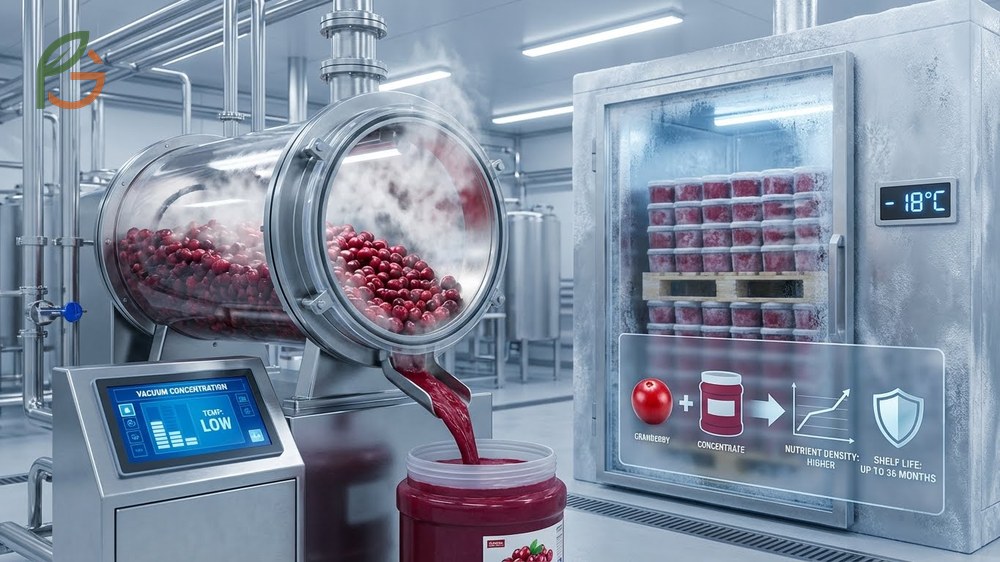
Frozen cranberry juice concentrate delivers concentrated nutrition with extended shelf life through specialized processing methods. Research shows this form retains higher nutrient density compared to fresh juice while maintaining commercial viability for up to 36 months when stored at -18°C (-0.4°F)[1]. What often gets overlooked is that vacuum concentration under low temperatures preserves the essence fraction that delivers authentic cranberry flavor. FruitGarden synthesizes current processing standards and USDA guidelines to help you understand this preserved fruit product.
Quick Answer
- Frozen cranberry concentrate is processed from clean, mature cranberries (Vaccinium macrocarpon) using vacuum and low-temperature extraction[2]
- Standard storage temperature: 0°F to -18°C (32°F to -0.4°F) for optimal preservation[3]
- Typical dilution ratio: 1:6.97 concentrate to water yields approximately 1.75 gallons of single-strength cranberry juice per quart[4]
- Shelf life extends to 36 months frozen, but product becomes subject to fermentation after thawing[1]
Frozen Cranberry Juice Concentrate
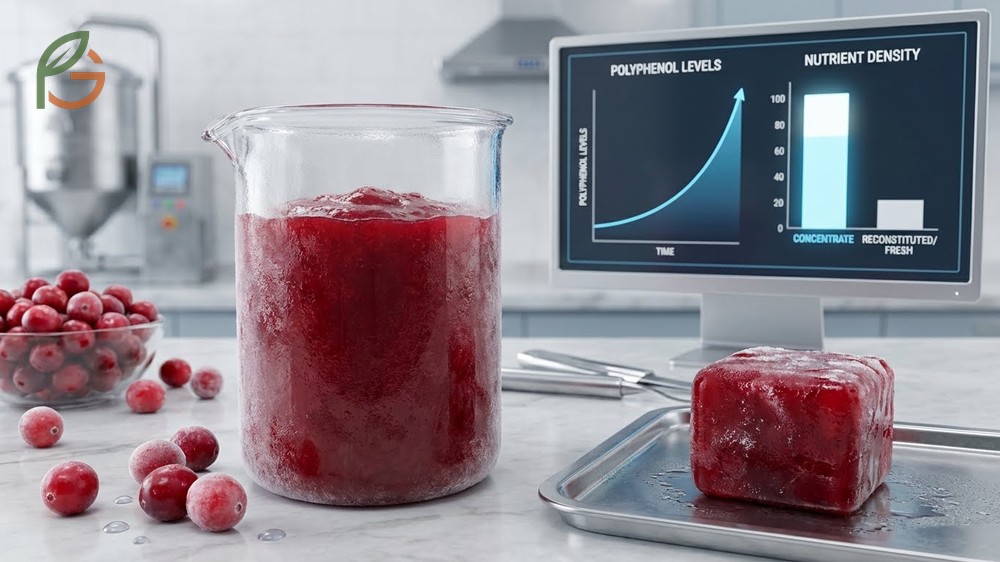
Studies demonstrate that frozen cranberry juice concentrate maintains superior nutrient density compared to reconstituted or fresh alternatives. The concentration process removes water content through controlled methods, resulting in a product with more intense flavor and higher levels of polyphenols per volume. Current USDA specifications require that all cranberry juice products derive from clean, sound, mature, well-colored, washed, fresh or frozen cranberries of the Vaccinium macrocarpon species[5].
The concentrate form extends usability beyond what fresh cranberry juice can offer. Unlike fresh juice with a shelf life measured in days, properly frozen concentrate remains commercially viable for years. This transformation doesn’t happen by accident—it requires precise temperature control and vacuum systems that preserve volatile compounds responsible for cranberry’s characteristic tartness.
Processing facilities must operate according to Current Good Manufacturing Practice (CGMP) and comply with 21 CFR Part 117 regulations[5]. These standards ensure product safety and consistency across commercial operations. Third-party audits verify compliance with Kosher, Halal, and organic certifications when applicable.
Processing Standards
Commercial cranberry concentrate production follows strict quality protocols established by federal regulations. Facilities must process and package products within 90 days of the delivery date unless contract terms specify otherwise. The cranberries used must originate from the current crop year, ensuring optimal freshness and nutrient content at processing time.
Thermal processing requirements mandate hermetic sealing to achieve commercial sterility. This step eliminates microbial contamination risks while preserving the concentrate’s integrity. Manufacturers employ depectinization and filtration before concentration to ensure clarity and proper viscosity in the final product.
Essence Recovery
The essence fraction captured during concentration contains aromatic compounds that define cranberry’s sensory profile. Processing systems collect these volatiles separately, then reintroduce them to the concentrate after water removal. This technique preserves flavor authenticity that would otherwise be lost during heating or vacuum application.
Evidence suggests that essence recovery significantly impacts consumer acceptance. Concentrates without returned essence exhibit flat or cooked flavors that differ markedly from fresh cranberry taste. The returned essence provides the bright, tangy notes consumers expect from quality cranberry products.
Important Note: Cranberry concentrate contains no added sugar, colors, or preservatives in its pure form. Always verify product labels, as some manufacturers add sweetening ingredients like sucrose, invert sugar syrup, or high fructose corn syrup during formulation[2].
Cranberry Concentrate Processing Methods
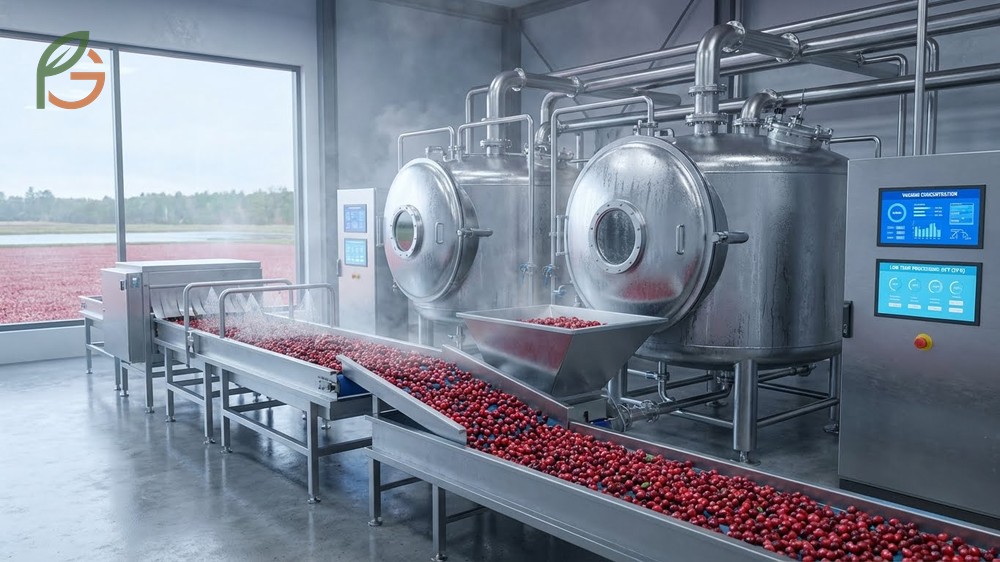
Current data indicates that vacuum concentration under low temperatures represents the industry-standard method for cranberry juice processing. This approach minimizes heat exposure, protecting heat-sensitive vitamins and anthocyanins from degradation. Facilities operate vacuum chambers at reduced atmospheric pressure, allowing water to evaporate at temperatures well below 100°C (212°F).
The process begins with cranberry selection and washing. Processors screen berries to remove damaged or unripe fruit, then clean them thoroughly before juice extraction. Fresh or previously frozen cranberries both produce acceptable concentrate, though processing parameters may require adjustment based on starting material condition.
After extraction, the juice undergoes depectinization using enzymatic treatment. This step reduces pectin content to prevent gel formation during concentration and storage. Filtered juice then enters vacuum evaporators where controlled heating removes water content while preserving nutritional compounds.
Vacuum Concentration
Vacuum systems create reduced-pressure environments where water boils at significantly lower temperatures than at standard atmospheric pressure. This property allows manufacturers to achieve concentration targets without subjecting cranberry juice to temperatures that would damage vitamin C, polyphenols, and flavor compounds. Most operations maintain evaporation temperatures between 40-60°C (104-140°F).
The concentration ratio determines final product characteristics. A 3+1 concentrate requires three parts water for reconstitution to one part concentrate. Higher concentration ratios produce more compact products with extended shelf stability but require precise dilution for optimal flavor.
- Preserves heat-sensitive vitamins through reduced-temperature operation
- Maintains polyphenol content responsible for health benefits
- Reduces shipping weight and storage volume by 70-85%
- Extends product shelf life to 24-36 months when properly frozen
- Allows for essence capture and reintroduction to preserve authentic flavor
- Minimizes energy consumption compared to atmospheric evaporation
Packaging Specifications
Industry standards specify packaging in 55-gallon open-head steel drums with double polyethylene liners approved for direct food contact[3]. Alternative packaging includes aseptic bags in plastic or metal drums, scaled to customer requirements. Every container receives labeling that complies with international food safety regulations.
The double-liner system protects concentrate from contamination and prevents flavor transfer from packaging materials. Steel drums provide structural integrity during frozen storage and shipping, preventing damage that could compromise product quality.
Health Benefits of Cranberry Concentrate
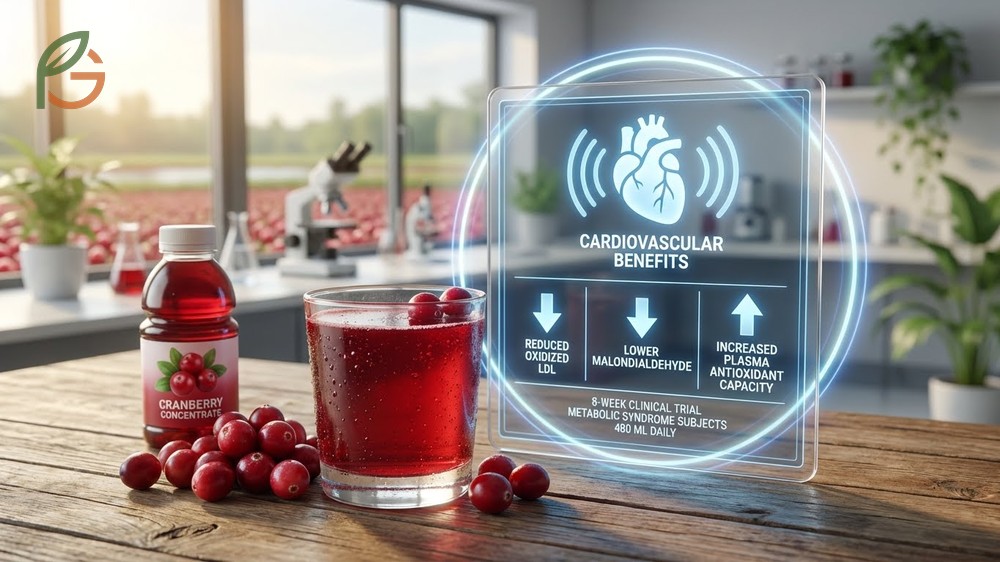
Research shows that cranberry juice concentrate delivers measurable cardiovascular benefits through multiple mechanisms. An 8-week clinical trial demonstrated that low-calorie cranberry juice consumption (480 mL daily) significantly reduced oxidized LDL and malondialdehyde levels while increasing plasma antioxidant capacity in subjects with metabolic syndrome[6]. These improvements occurred without significant changes in inflammatory markers, glucose, or standard lipid profiles.
The polyphenol content in cranberries accounts for much of their health-promoting properties. Studies demonstrate that cranberry consumption improves oxidative stress markers, postprandial glycemic response, and atherosclerotic indicators in both healthy volunteers and type 2 diabetes patients. A 12-week intervention using cranberry concentrate powder showed significant decreases in serum insulin levels among diabetic participants.
Concentrated forms may offer advantages over diluted juice for therapeutic applications. The reduced volume required to deliver equivalent polyphenol doses makes concentrate more practical for clinical interventions. However, sugar content remains a consideration—most commercial concentrates require sweetening for palatability unless specifically formulated as unsweetened products.
- Reduces lipid oxidation markers including oxidized LDL cholesterol[6]
- Increases plasma antioxidant capacity measurably within 8 weeks
- Supports urinary tract health through proanthocyanidin content
- Provides 47% daily value of vitamin C per 100g serving[7]
- Delivers concentrated polyphenols linked to cardiovascular protection
- May improve postprandial glycemic response when consumed strategically
Clinical Note: Most health studies use daily doses of 240-480 mL reconstituted juice. Consult healthcare providers before using cranberry concentrate for therapeutic purposes, especially if you’re taking anticoagulant medications or have kidney stone history.
Dilution Ratios and Usage
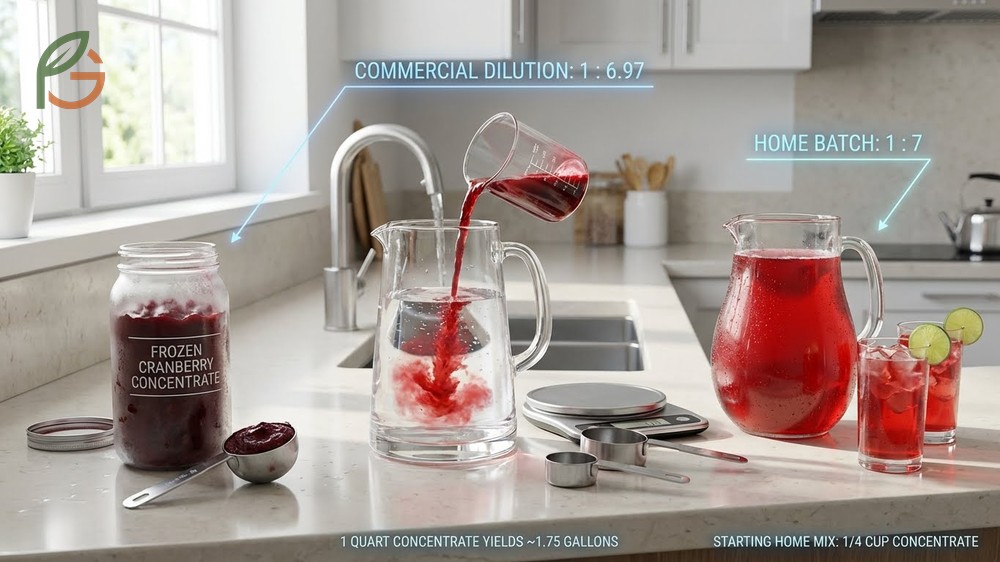
The standard commercial dilution for frozen cranberry concentrate follows a 1:6.97 ratio of concentrate to water[4]. This proportion yields approximately 1.75 gallons of single-strength juice from one quart of concentrate. For smaller batches, a simplified 1:7 ratio produces results nearly identical to commercial standards.
Home users often adjust dilution ratios based on sweetness preferences and intended applications. Starting with 1/4 cup concentrate mixed with water, then adding liquid incrementally until reaching desired flavor intensity, provides better control than following fixed ratios. This method accounts for natural variation in cranberry tartness and individual taste preferences.
A 3+1 concentrate specification—common in USDA commodity purchases—requires mixing one part concentrate with three parts water to produce cranberry juice cocktail[2]. The reconstituted product must be practically free from defects and exhibit no scorched, green, or undesirable flavors when properly prepared.
This table compares concentrate quantities, water additions, yield volumes, and recommended applications across five dilution ratios from 1:3 to 1:8
| Concentrate Amount | Water Addition | Total Yield | Recommended Use |
|---|---|---|---|
| 1 cup (8 fl oz) | 3 cups | 4 cups (1 quart) | Cranberry cocktail (standard sweetness) |
| 1 cup (8 fl oz) | 5 cups | 6 cups (1.5 quarts) | Beverage blending, smoothies |
| 1 cup (8 fl oz) | 7 cups | 8 cups (2 quarts) | Single-strength juice (commercial standard)[4] |
| 1/4 cup (2 fl oz) | 1.75 cups | 2 cups (16 fl oz) | Individual serving preparation |
| 1 quart (32 fl oz) | 7 quarts | 2 gallons | Batch preparation, food service |
- Brewing ingredient for craft beer, hard cider, and wine production
- Natural flavoring for meat glazes and marinades
- Smoothie base providing tart flavor and antioxidants
- Jelly and preserve production with concentrated cranberry essence
- Cocktail mixer for craft beverages requiring intense fruit flavor
- Baking ingredient replacing fresh cranberries in recipes
Storage and Shelf Life
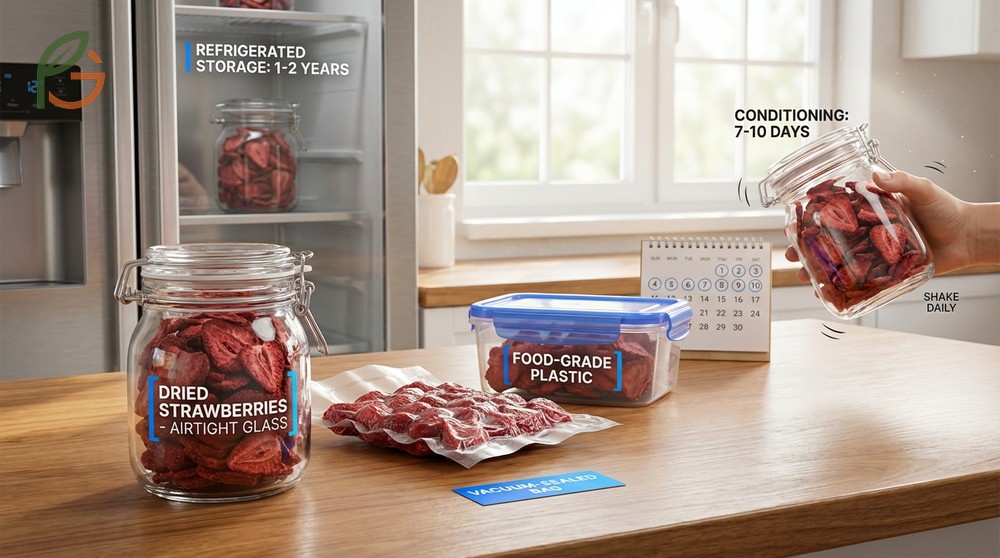
Frozen cranberry concentrate requires consistent storage at 0°F (-18°C) or below to maintain quality throughout its shelf life[3]. At this temperature, properly packaged concentrate remains commercially viable for 36 months[1]. Temperature fluctuations above this threshold accelerate degradation of both nutritional compounds and sensory qualities.
Once thawed, cranberry concentrate becomes subject to fermentation and must be refrigerated immediately. Most manufacturers recommend consuming thawed concentrate within 7-10 days when stored at 40°F (4°C) or below. The high sugar content in concentrate creates favorable conditions for yeast activity at room temperature, leading to off-flavors and potential spoilage.
Commercial facilities ship concentrate at 0°F ±15°F (-18°C ±9°C) to maintain frozen status during transit. Dry shipment options exist for customers with controlled receiving environments, though frozen transport remains the industry standard for quality assurance.
Storage Warning: Never refreeze thawed cranberry concentrate. The freeze-thaw cycle damages cellular structures, promotes ice crystal formation, and creates separation that affects texture and appearance. Portion concentrate before initial freezing to avoid repeated thawing.
- Maintain continuous frozen storage at -18°C (0°F) from receipt through usage
- Store drums in upright position to prevent liner damage and leakage
- Rotate stock using first-in, first-out (FIFO) method despite extended shelf life
- Thaw concentrate in refrigerator over 24-48 hours rather than at room temperature
- Transfer opened concentrate to food-grade containers with airtight seals
- Label containers with thaw dates to track refrigerated shelf life accurately
- Keep concentrate away from strong-odor foods that could transfer flavors
Conclusion
The evidence is clear: frozen cranberry juice concentrate delivers exceptional nutrient density, extended shelf life, and versatile applications when processed and stored according to industry standards. Current guidance emphasizes vacuum concentration methods that preserve polyphenols and vitamin content while achieving commercial stability for up to three years. Whether you’re sourcing concentrate for home use, food service, or manufacturing applications, understanding processing methods and proper storage requirements ensures you maximize both nutritional value and investment return.
Agricultural data shows that concentrate form reduces shipping costs by 70-85% compared to single-strength juice while maintaining the health benefits documented in clinical research. FruitGarden provides research-based information to help you make informed decisions about cranberry products for your garden, kitchen, or commercial operation.
Frequently Asked Questions
How long does frozen cranberry juice concentrate last?
Frozen cranberry concentrate maintains quality for 36 months when stored continuously at -18°C (0°F) or below. After thawing, refrigerate the product and consume within 7-10 days to prevent fermentation. Never refreeze thawed concentrate, as freeze-thaw cycles damage quality and create undesirable texture changes.
What’s the difference between cranberry juice from concentrate and not from concentrate?
Juice from concentrate undergoes water removal through vacuum evaporation, then reconstitution with water before packaging. Not-from-concentrate juice skips the concentration step, moving directly from extraction to bottling. Research shows concentrate maintains higher nutrient density per volume during storage, though both forms provide similar nutritional benefits when properly processed and stored.
Can you make cranberry juice from frozen concentrate at home?
Yes, home preparation is straightforward using a 1:7 concentrate-to-water ratio. Mix 1/4 cup concentrate with 1.75 cups water for a single serving, adjusting to taste preferences. Start with cold or room-temperature water, stir thoroughly until fully incorporated, then add sweetener if desired. The reconstituted juice keeps refrigerated for 3-5 days.
Where can I buy pure cranberry concentrate without added sugar?
Pure unsweetened cranberry concentrate is available through specialty retailers, online suppliers, and some health food stores. Look for products labeled “100% cranberry” or “no sugar added” from brands like Ocean Spray Pure, Lakewood Organic, or commercial suppliers such as Coloma Frozen Foods and Badger State Fruit Processing. Verify ingredient lists, as many consumer products contain added sweeteners.
What are the health benefits of drinking cranberry concentrate?
Clinical studies demonstrate that cranberry concentrate reduces oxidized LDL cholesterol, increases plasma antioxidant capacity, and supports cardiovascular health when consumed regularly. The concentrated polyphenol content provides these benefits at lower volumes than fresh juice. Evidence also supports urinary tract health benefits, though therapeutic use should be discussed with healthcare providers, especially for individuals on anticoagulant medications.
How is frozen cranberry concentrate processed commercially?
Commercial processing begins with cleaning mature cranberries, followed by juice extraction and depectinization. The juice enters vacuum evaporators operating at reduced pressure, allowing water removal at low temperatures (40-60°C or 104-140°F) that preserve heat-sensitive nutrients. Processors capture and return essence fractions to maintain authentic cranberry flavor before packaging the concentrate in double-lined steel drums for frozen storage.
Does cranberry concentrate have more sugar than fresh juice?
Pure cranberry concentrate without added sweeteners contains the same natural sugar concentration as fresh cranberries on a dry-weight basis—approximately 4g per 100g of fruit. However, many commercial concentrates include added sucrose, high fructose corn syrup, or invert sugar to improve palatability. Always check nutrition labels, as sugar content varies significantly between pure concentrate and sweetened formulations designed for direct consumption.