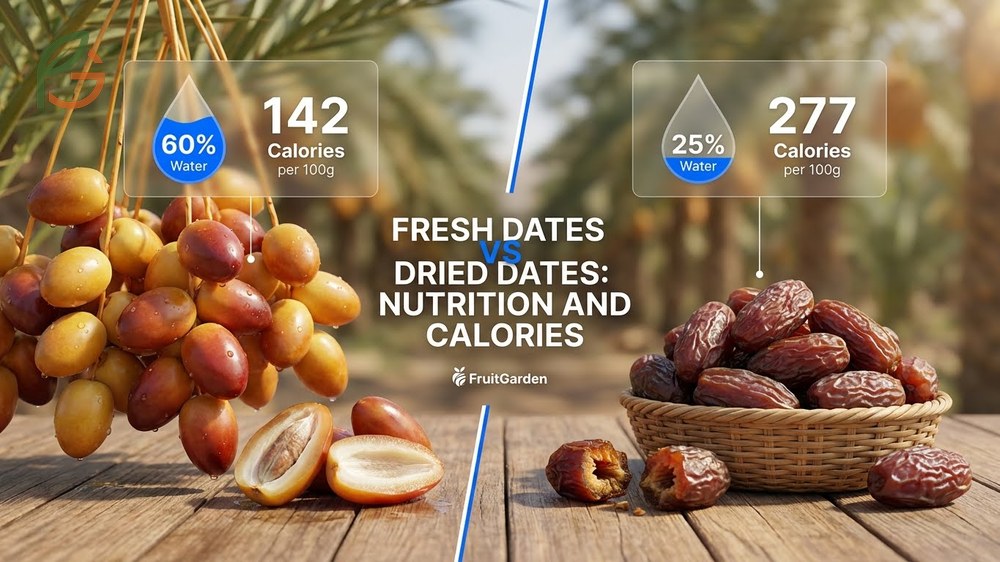
Fresh dates vs dried dates differ significantly in moisture, calories, and nutrient concentration. Fresh dates contain approximately 60% water and provide 142 calories per 100g, while dried dates have only 25% water content and deliver 277 calories per 100g[1]. Research shows that both forms offer substantial health benefits, though dried dates provide more concentrated fiber and minerals due to water removal[2]. FruitGarden synthesizes current agricultural research to help you understand which date form best suits your nutritional goals and culinary needs.
Quick Answer
- Fresh dates contain 142 calories per 100g with 3.5g fiber, perfect for weight-conscious snacking[1]
- Dried dates pack 277 calories per 100g with 8g fiber, offering concentrated energy and nutrients[1]
- Moisture content drops from 60% in fresh to 25% in dried dates, concentrating sugars and extending shelf life[3]
- Store fresh dates at 4°C (39°F) for 6-12 months; dried dates last 4-6 months at room temperature[4]
Fresh Dates vs Dried Dates
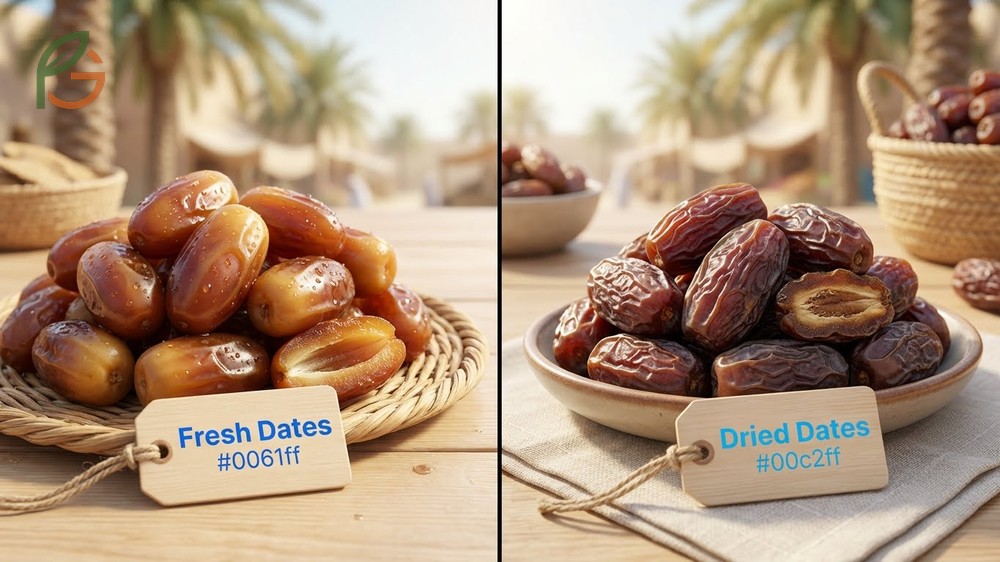
The fundamental difference between fresh and dried dates lies in their water content and processing stage. Fresh dates are harvested at the Khalal or Rutab stages when they’re plump, moist, and contain 60% water[3]. These dates have a soft, almost syrupy texture with caramel-like sweetness.
Dried dates reach the Tamr stage, where moisture drops to approximately 25%, creating a wrinkled appearance and concentrated sweetness[2]. This natural dehydration process intensifies the sugar concentration and extends shelf life significantly. Most people find dried dates chewier and sweeter than their fresh counterparts.
Both date types come from the same fruit but represent different maturity and processing stages. Current agricultural data indicates that processing method doesn’t diminish the core nutritional value, though it does alter caloric density and nutrient concentration per gram[1].
What Makes Dates Fresh or Dried
Fresh dates aren’t actually “fresh” in the traditional sense—they’re semi-ripe fruits harvested before full maturation. You’ll recognize them by their glossy skin, plump appearance, and softer bite. They’re perishable and require refrigeration to maintain quality beyond 1-2 months.
Dried dates complete the natural ripening cycle on the tree or through controlled dehydration. The fruit develops a darker color, firmer texture, and significantly reduced moisture. This transformation makes them shelf-stable at room temperature for 4-6 months without refrigeration[4].
Date Ripeness Stages
Date palms produce fruits that progress through five distinct maturity stages. Understanding these stages helps you appreciate the differences between fresh and dried varieties.
- Hababouk: Initial pollination stage, dates are not yet formed
- Kimri: Green, hard, and bitter with high tannin content—inedible at this stage
- Khalal: First edible stage with yellow-to-red skin, crunchy texture, and sweet-astringent flavor—harvested as fresh dates
- Rutab: Soft, brown, juicy dates with caramel notes and loosening skin—consumed as fresh or semi-dried dates
- Tamr: Fully ripe, dark brown, wrinkled dates with concentrated sweetness—sold as dried dates[2]
Important Note: Fresh dates sold commercially are typically Barhi or Medjool varieties harvested at the Khalal or Rutab stage. They’re highly seasonal and available primarily from late summer through fall in growing regions.
Moisture Content Differences in Dates
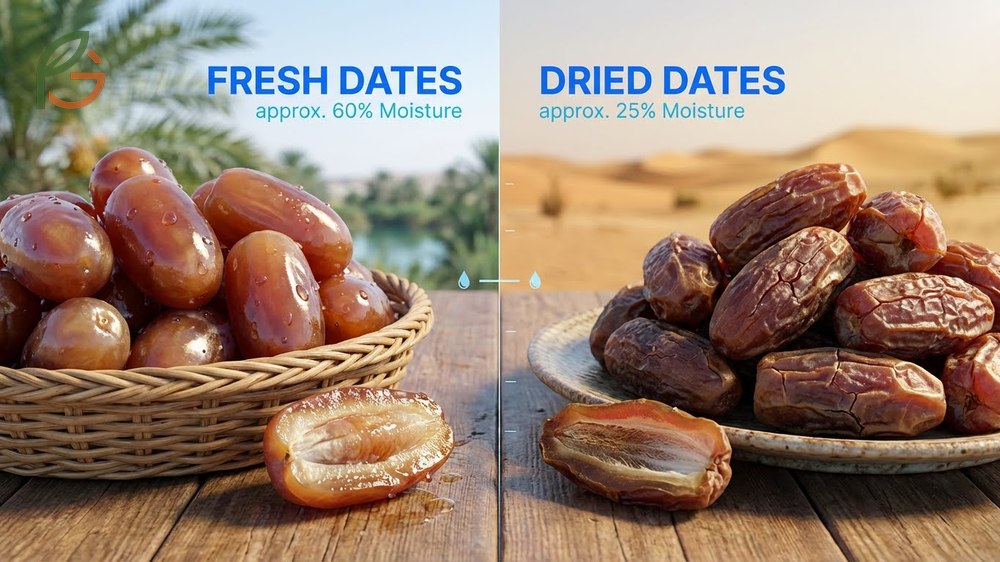
Water content creates the most striking contrast between fresh and dried dates. Fresh dates contain approximately 60% moisture, giving them a juicy, almost grape-like consistency when you bite into them[3]. This high water content makes them hydrating and refreshing, particularly in hot climates where date palms naturally thrive.
Dried dates lose about 60% of their original water during the ripening or dehydration process, leaving only 25% moisture. This dramatic reduction concentrates all other components—sugars, fiber, vitamins, and minerals—into a smaller volume. You’re essentially getting more nutrients per gram, but also more calories and sugars.
The moisture difference explains why dried dates can survive in your pantry while fresh dates need refrigeration. Lower water content inhibits bacterial growth and enzymatic reactions that cause spoilage. This makes dried dates ideal for long-term storage, travel, or emergency food supplies.
Storage Tip: If your dried dates become too hard, you can rehydrate them by soaking in warm water for 15-30 minutes. This restores some moisture without significantly changing their nutritional profile.
Nutritional Comparison of Fresh and Dried Dates
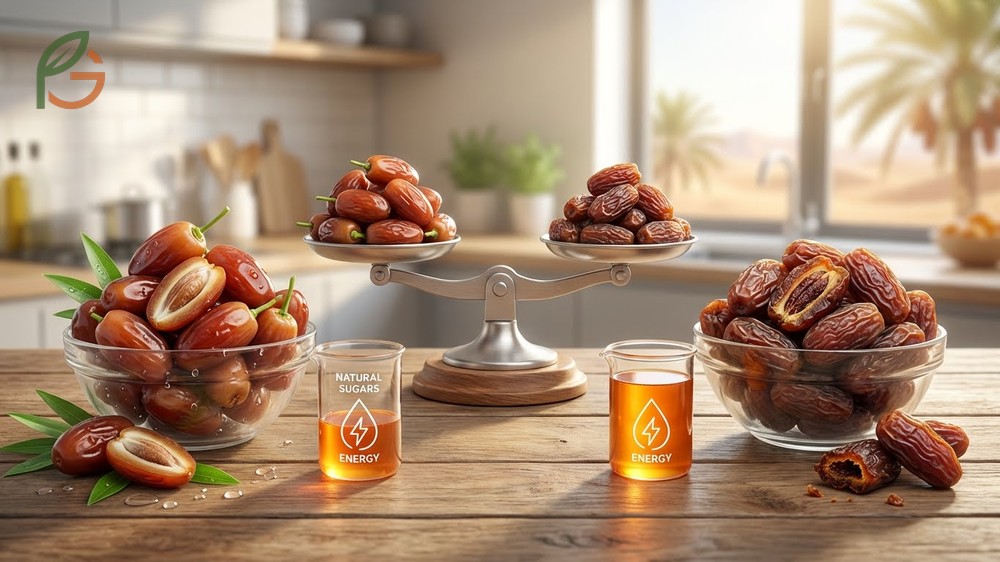
The nutritional profiles of fresh and dried dates differ primarily in concentration rather than composition. Studies demonstrate that drying doesn’t eliminate nutrients—it simply packs them into a denser form[1]. This means you’ll need to eat fewer dried dates to get the same nutrient levels as fresh dates.
Both date types provide excellent sources of natural sugars (glucose, fructose, and sucrose), making them powerful energy boosters. However, the calorie density differs significantly due to water content changes. Fresh dates offer a lower-calorie option for those monitoring energy intake, while dried dates work better when you need concentrated fuel—like during endurance activities or as a pre-workout snack.
Calorie and Macronutrient Breakdown
Per 100g serving, fresh dates deliver 142 calories compared to 277 calories in dried dates—nearly double the energy content[1]. This difference stems entirely from water removal concentrating all other nutrients. If you’re trying to control calorie intake, fresh dates let you enjoy more volume for fewer calories.
Fiber content shows a similar concentration pattern. Dried dates contain 8g of fiber per 100g versus 3.5g in fresh dates[1]. This makes dried dates particularly effective for digestive health and blood sugar management. The higher fiber slows sugar absorption, preventing rapid glucose spikes despite the concentrated sweetness.
This table compares calories, protein, fat, carbohydrates, and fiber content per 100g serving between fresh dates and dried dates
| Nutrient | Fresh Dates | Dried Dates | Difference |
|---|---|---|---|
| Calories | 142 kcal[1] | 277 kcal[1] | +95% higher in dried |
| Protein | 1.81 g | 2.45 g | +35% higher in dried |
| Fat | 0.15 g | 0.39 g | +160% higher in dried |
| Carbohydrates | 37 g | 75 g | +103% higher in dried |
| Fiber | 3.5 g[1] | 8 g[1] | +129% higher in dried |
Vitamin and Mineral Content
Both fresh and dried dates provide substantial amounts of potassium, magnesium, and B vitamins. Dried dates show higher concentrations of these minerals due to water loss—you’ll get more potassium and magnesium per gram in dried dates. Research indicates that a 100g serving of dried dates provides over 15% of the daily recommended intake for selenium, copper, potassium, and magnesium[2].
Fresh dates retain slightly higher levels of vitamin C and certain antioxidants that degrade during the drying process. However, the difference isn’t substantial enough to consider one form nutritionally superior. What often gets overlooked is that date ripeness affects mineral availability more than the fresh-versus-dried distinction—fully ripe dates at any moisture level provide better nutrient absorption.
- Potassium: Supports heart health and blood pressure regulation—particularly high in both forms
- Magnesium: Essential for bone health and muscle function—concentrated in dried dates
- Iron: Helps prevent anemia and supports energy levels—present in moderate amounts
- Calcium: Contributes to bone density—slightly higher in dried dates
- Copper: Vital for red blood cell production—provides significant daily value in both types
Shelf Life Differences Between Date Types
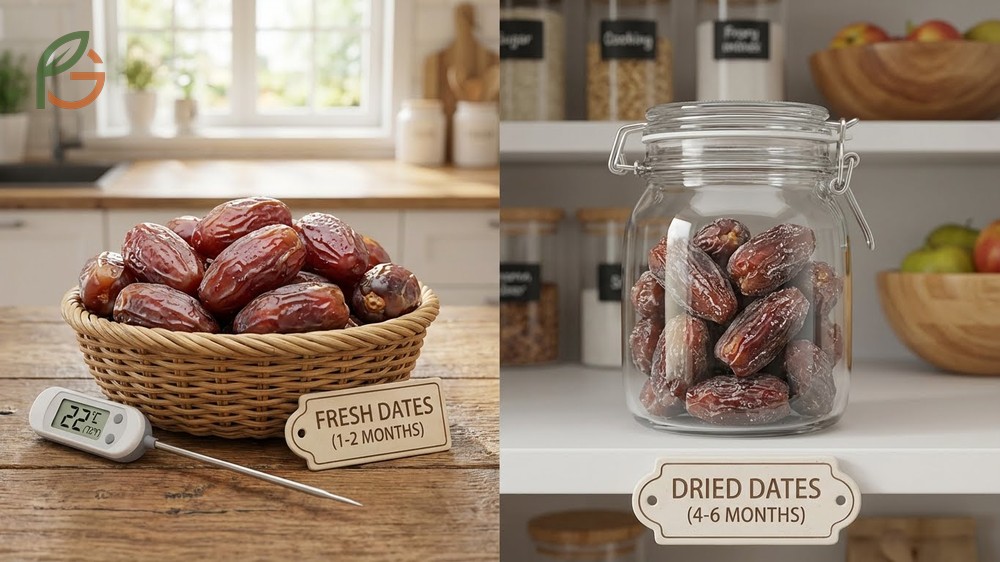
Storage duration varies dramatically between fresh and dried dates due to moisture content differences. Fresh dates stored at room temperature (20-25°C or 68-77°F) last only 1-2 months for Medjool varieties before quality degrades[4]. They’re perishable like other fresh fruits and require careful handling to prevent spoilage.
Dried dates maintain quality for 4-6 months at room temperature in your pantry. Their low moisture inhibits mold growth and bacterial contamination. You can extend this to 6-12 months by refrigerating at approximately 4°C (39°F)[4]. This makes dried dates far more practical for bulk purchasing and emergency food supplies.
For maximum longevity, both date types can be frozen for 2-3 years without significant quality loss. Store them in airtight freezer bags or containers to prevent freezer burn and moisture absorption. Before consuming frozen dates, thaw slowly at room temperature to preserve texture and prevent condensation damage.
- Keep dates in airtight containers to prevent moisture and odor absorption from surrounding foods
- Store fresh dates in the refrigerator immediately after purchase to maximize shelf life
- Place dried dates in a cool, dark pantry away from heat sources and direct sunlight
- Check stored dates every 4-6 weeks for signs of mold, fermentation odors, or texture changes
- Separate different date varieties during storage to prevent flavor transfer between types
Quality Check: Discard dates that develop off-odors, visible mold, or unusual discoloration. Fresh dates shouldn’t smell fermented, and dried dates shouldn’t become excessively hard or crystallized with sugar deposits.
Taste and Texture Comparison of Dates
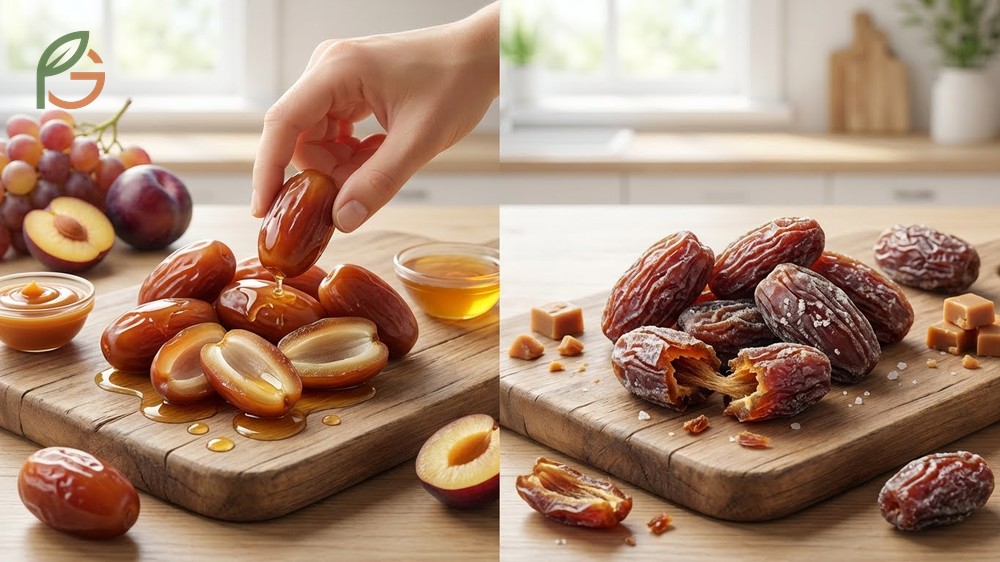
Fresh dates deliver a soft, almost luscious texture with caramel and honey-like flavors. When you bite into one, you’ll notice the juicy consistency similar to a ripe plum or grape. The skin remains intact but yields easily, and the flesh practically melts in your mouth. This makes fresh dates particularly appealing for eating out of hand as a light snack.
Dried dates offer a chewier, denser experience with intensified sweetness and toffee notes[5]. Because sugar becomes more concentrated as fruit dries, dried dates taste sweeter than fresh despite having the same sugar types. The texture requires more chewing effort, creating a more substantial mouthfeel that many people find satisfying for longer periods.
The wrinkled, glossy exterior of dried dates contrasts sharply with the plump, smooth skin of fresh dates. This visual difference reflects the internal moisture changes—dried dates have a firmer bite resistance while fresh dates feel almost custard-like inside. Neither texture is superior; your preference depends on whether you want a refreshing snack or a concentrated sweet treat.
Tasting Tip: Try both types side by side at room temperature to appreciate the flavor and texture differences. Fresh dates taste best slightly chilled, while dried dates develop fuller flavor profiles when warmed to room temperature.
Culinary Uses for Each Date Type
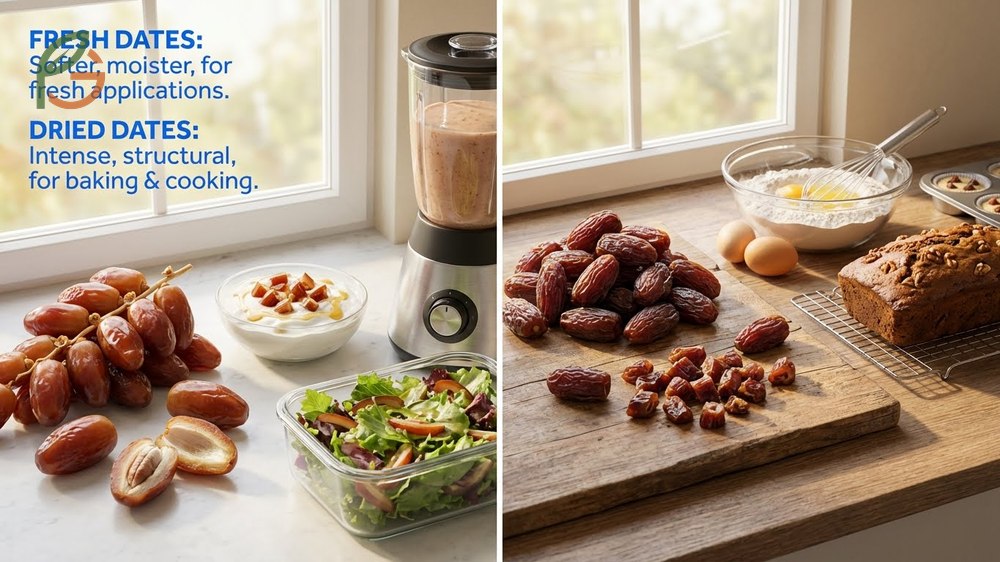
The moisture and texture differences between fresh and dried dates make each type better suited for specific culinary applications. Fresh dates work beautifully in preparations where you want a softer texture and less concentrated sweetness. Their juiciness adds moisture to recipes without overwhelming other flavors.
Dried dates excel in baking, cooking, and recipes requiring structural integrity. They hold their shape during heating and provide intense sweetness that can replace refined sugars. You can also rehydrate dried dates by soaking them in warm water for 15-30 minutes, making them versatile for both dried and fresh-date recipes.
Best Uses for Fresh Dates
Fresh dates shine in raw preparations and recipes where their delicate texture enhances the dish. Their soft consistency makes them perfect for stuffing with cheese, nuts, or other fillings without requiring pre-softening. The natural moisture also helps them blend smoothly into dressings and sauces.
- Stuffed appetizers: Fill pitted fresh dates with goat cheese, cream cheese, or mascarpone, then wrap in bacon for sweet-savory bites
- Fresh salads: Slice and toss with arugula, feta, walnuts, and balsamic vinaigrette for a Mediterranean-inspired dish
- Smoothies and shakes: Blend into fruit smoothies for natural sweetness and creamy texture without added sugars
- Raw desserts: Use in no-bake energy balls, raw cheesecakes, or fruit tarts where soft texture is desired
- Breakfast bowls: Chop and add to yogurt, oatmeal, or açai bowls for natural sweetness and soft fruit contrast
Best Uses for Dried Dates
Dried dates handle heat and processing better than fresh dates, making them the go-to choice for baking and cooked dishes. Their concentrated sweetness means you can use less to achieve the desired flavor intensity. They also add structural texture to baked goods rather than creating excess moisture.
- Baked goods: Chop and fold into muffins, quick breads, cookies, and cakes for chewy texture and natural sweetness
- Energy bars and snacks: Process into date paste as a binding agent for homemade granola bars and protein balls
- Tagines and stews: Add to Moroccan lamb tagines, chicken dishes, or vegetable stews for sweet-savory depth
- Date syrup and paste: Blend rehydrated dates into natural sweeteners for drizzling or replacing refined sugar in recipes
- Breakfast baking: Soak overnight and mix into sticky toffee pudding, date-nut bread, or breakfast cakes
Substitution Guide: When substituting dried dates for fresh in recipes, soak them first to add back moisture. Use a 1:1 ratio by weight after soaking. For baking, you can replace 1 cup sugar with 1.5 cups chopped, pitted dried dates plus 1/4 cup extra liquid.
Conclusion
The evidence is clear: fresh dates vs dried dates offer distinct advantages depending on your nutritional goals and culinary needs. Fresh dates provide a lower-calorie option with 142 calories per 100g and refreshing texture, while dried dates deliver concentrated energy at 277 calories with double the fiber content. Current guidance emphasizes that neither form is nutritionally superior—dried dates simply pack more nutrients into less volume due to water removal.
Your choice between fresh and dried dates should align with your storage capabilities, intended uses, and dietary preferences. Fresh dates require refrigeration but work beautifully in raw preparations and stuffed appetizers. Dried dates last months in your pantry and excel in baking, cooking, and situations where you need portable, shelf-stable nutrition. FruitGarden helps you understand these practical differences so you can maximize the nutritional and culinary benefits of both date forms.
Medical Disclaimer
Important Medical Disclaimer: This content is for informational and educational purposes only. It is not intended as a substitute for professional medical advice, diagnosis, or treatment. Always consult a qualified healthcare professional or registered dietitian before making significant changes to your diet, especially if you have diabetes, metabolic conditions, or food allergies. Individual nutritional needs vary based on age, health status, and activity level.
Frequently Asked Questions
Are Fresh Dates Healthier Than Dried Dates?
Neither fresh nor dried dates are inherently healthier—they simply offer different nutritional concentrations. Fresh dates contain fewer calories and more water, making them better for weight management and hydration. Dried dates provide more fiber and concentrated minerals per gram, which benefits digestive health and nutrient intake. Choose based on your specific health goals rather than assuming one type is universally superior.
Can I Substitute Dried Dates for Fresh Dates in Recipes?
Yes, you can substitute dried dates for fresh dates by rehydrating them first. Soak dried dates in warm water for 15-30 minutes until they soften to a similar texture as fresh dates. Use a 1:1 ratio by weight after soaking. This works well for smoothies, stuffed appetizers, and raw desserts. For recipes where texture matters less, like energy balls or date paste, you can use dried dates without rehydrating.
How Many Dates Should I Eat Per Day?
Most nutrition experts recommend eating 3-6 dates per day as part of a balanced diet. This provides approximately 100-200 calories and 4-8g of fiber without excessive sugar intake. If you’re using dried dates for concentrated energy during physical activity, 2-3 dates offer a quick 80-120 calorie boost. People managing blood sugar should limit portions to 2-3 dates and pair them with protein or healthy fats to slow glucose absorption.
Do Dried Dates Lose Nutrients Compared to Fresh Dates?
Dried dates don’t lose significant nutrients—they concentrate them as water evaporates. Studies show that minerals like potassium, magnesium, and iron remain stable during drying. Some vitamin C and heat-sensitive antioxidants decrease slightly, but the difference is minimal. The concentrated fiber and minerals in dried dates often provide more nutritional value per serving than fresh dates, though at higher calorie density.
What’s the Best Way to Store Fresh Dates?
Store fresh dates in an airtight container in the refrigerator at 4°C (39°F) for optimal freshness. This extends their shelf life to 6-12 months compared to just 1-2 months at room temperature. For longer storage, freeze fresh dates in freezer-safe bags for up to 2-3 years. Always check dates every 4-6 weeks for signs of mold, fermentation, or texture changes that indicate spoilage.
Are Dried Dates Good for Weight Loss?
Dried dates can support weight loss when eaten in controlled portions despite their higher calorie density. The 8g of fiber per 100g helps increase satiety and reduce overall calorie intake throughout the day. However, their concentrated sweetness makes portion control challenging—stick to 2-3 dried dates (about 60-80 calories) as a snack. Fresh dates offer a lower-calorie alternative at 142 calories per 100g if you want larger portions.
Why Do Dried Dates Taste Sweeter Than Fresh Dates?
Dried dates taste sweeter because water removal concentrates the natural sugars (glucose, fructose, and sucrose) into a smaller volume. While both fresh and dried dates contain similar sugar types, the reduced moisture in dried dates means you’re getting more sugar per bite. This creates a more intense sweetness perception and toffee-like flavor notes that aren’t as prominent in fresh dates’ lighter, caramel-honey taste profile.