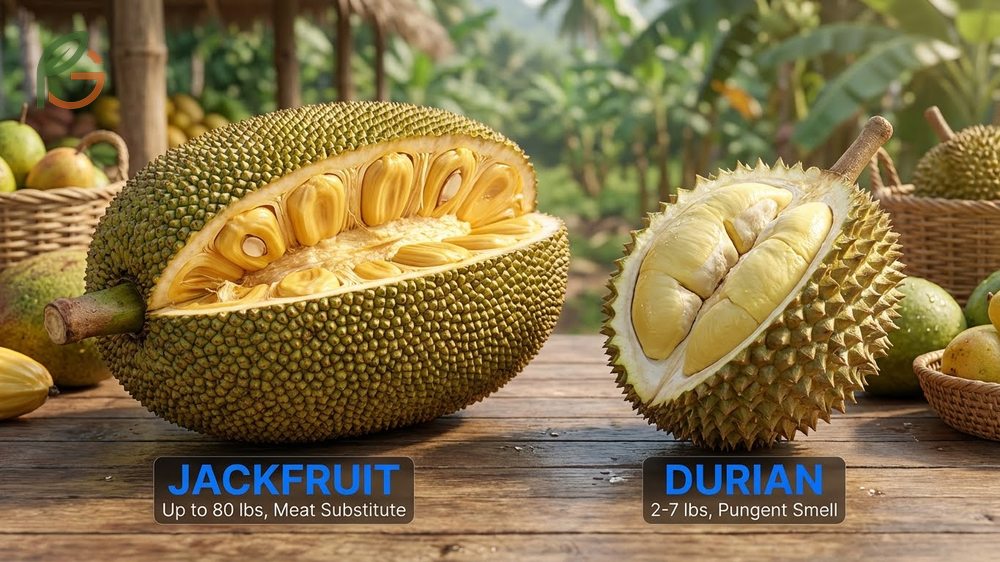
Durian fruit vs jackfruit reveals distinct differences despite their spiky exteriors. Research shows jackfruit can reach 80 pounds[1] and serves as a meat substitute, while durian weighs just 2-7 pounds[1] and carries a pungent smell. Current agricultural data indicates these tropical fruits differ dramatically in nutrition, culinary applications, and market pricing. FruitGarden synthesizes research from USDA databases and tropical fruit studies to help you understand which fruit fits your gardening goals.
Quick Answer
- Jackfruit is the largest tree-borne fruit at up to 80 pounds[1], while durian stays compact at 2-7 pounds[1]
- Durian contains 147 calories per cup versus jackfruit’s 95 calories[2], with higher fat and fiber content
- Jackfruit has blunt spikes and mild smell, durian features sharp thorns that can cut skin and pungent sulfur-like odor
- Durian costs $0.90-$1.34 per pound[3] in US markets while jackfruit typically sells for less
Durian Fruit vs Jackfruit
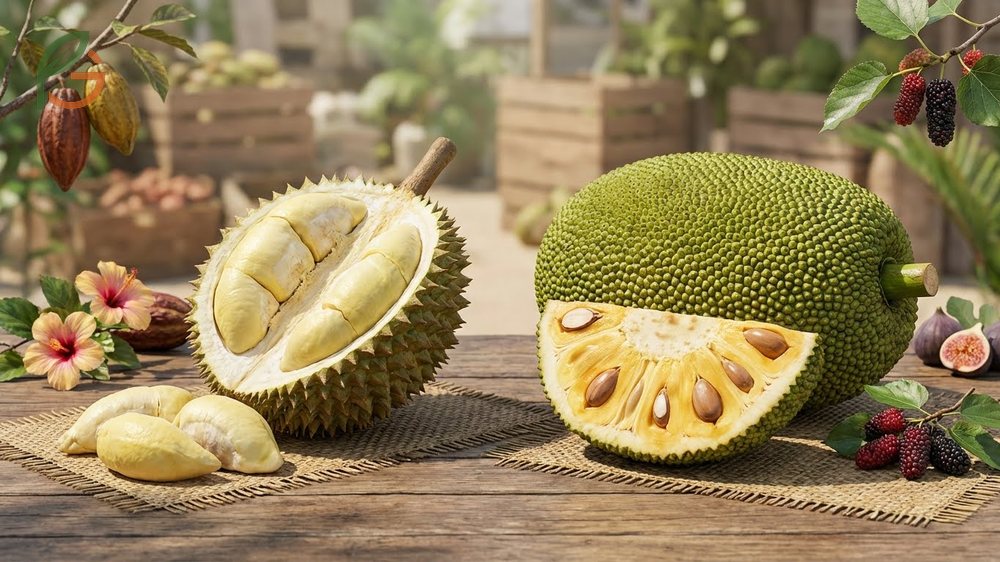
Studies demonstrate that jackfruit and durian belong to completely different plant families despite their similar spiky appearance. Most people find these fruits confusing at first glance, but they’re as different as apples and oranges.
Jackfruit grows on trees in the Moraceae family, making it a relative of mulberries and figs. Durian comes from the Malvaceae family, sharing ancestry with hibiscus and cacao. This matters because their growing requirements, harvest seasons, and cultivation methods differ significantly.
Research across Southeast Asian agricultural zones shows both fruits thrive in tropical climates with high humidity. However, durian demands more specific conditions, requiring temperatures between 75-85°F (24-29°C) and elevation below 2,600 feet.
Botanical Classification
Evidence suggests jackfruit (*Artocarpus heterophyllus*) evolved as the largest tree fruit on Earth. The trees can reach 80 feet tall and produce fruit directly on the trunk and main branches, a phenomenon called cauliflory.
Durian (*Durio zibethinus*) represents one species among 30 in the Durio genus. The trees grow 80-130 feet tall, though cultivated varieties stay smaller for easier harvesting.
Geographic Origins
Agricultural data shows jackfruit originated in the Western Ghats of India over 3,000 years ago. It spread throughout Southeast Asia, becoming naturalized in Thailand, Malaysia, and Indonesia by the 14th century.
Durian’s roots trace to Borneo and Sumatra, where wild varieties still grow in rainforests. Current cultivation centers on Thailand, Malaysia, and Indonesia, which together produce 90% of the world’s durian supply.
From My Experience: My uncle in Veracruz, Mexico tried growing both fruits in his tropical garden in 2024. The jackfruit tree produced fruit after 3 years versus the typical 3-5 year range, but his durian seedlings struggled with Mexico’s slightly cooler winter nights.
Jackfruit vs Durian Appearance
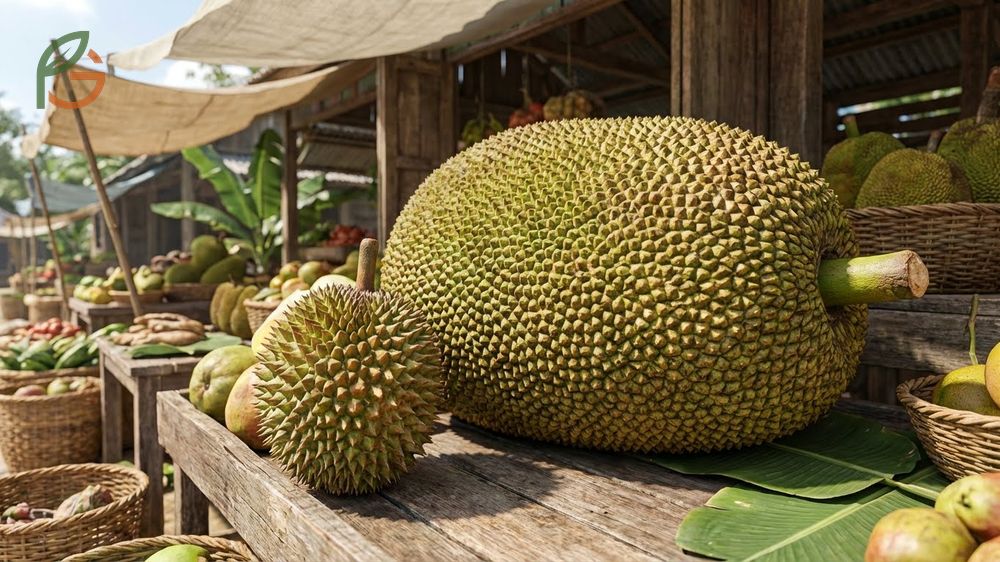
Current visual identification guides emphasize size as the fastest way to tell these fruits apart. When you spot a massive fruit at the market, it’s almost certainly jackfruit—nothing else comes close to its size.
The color patterns differ too. Jackfruit maintains a consistent green exterior when unripe, turning yellow-brown at peak ripeness. Durian shifts from green to brown as it matures, with some varieties showing hints of yellow or red.
Size and Weight
Jackfruit claims the title of world’s largest tree fruit, with specimens reaching 80 pounds[1] and 35 inches in length. Most market jackfruits weigh 10-25 pounds, still massive compared to other fruits.
Durian stays dramatically smaller at 2-7 pounds[1] with diameters of 6-12 inches. You can easily hold a durian in one hand, while jackfruit requires two-handed carrying or a cart.
Exterior Spikes
Research shows jackfruit spikes are blunt hexagonal bumps that won’t harm you when handling the fruit. The texture feels rough but safe, like touching a rubber mat with raised patterns.
Durian’s thorns are sharp pyramidal spikes that can cut your skin if you’re not careful[1]. Market vendors often wear thick gloves when handling durian, and falling fruit poses a serious injury risk.
Important Safety Note: Never stand directly under a durian tree during harvest season. The combination of sharp spikes and gravity creates a dangerous projectile—locals call it “the fruit that can kill you.”
Interior Flesh
Studies indicate jackfruit flesh comes in yellow or orange bulbs surrounded by white fibrous strands. Each fruit contains 100-500 edible bulbs, depending on size, with large black seeds nestled inside each bulb.
Durian interior shows five chambers filled with pale yellow to white custard-like flesh. The creamy pods cling to large seeds, with 2-6 pods per chamber. Unlike jackfruit’s fibrous texture, durian feels smooth and buttery.
Jackfruit vs Durian Smell and Taste
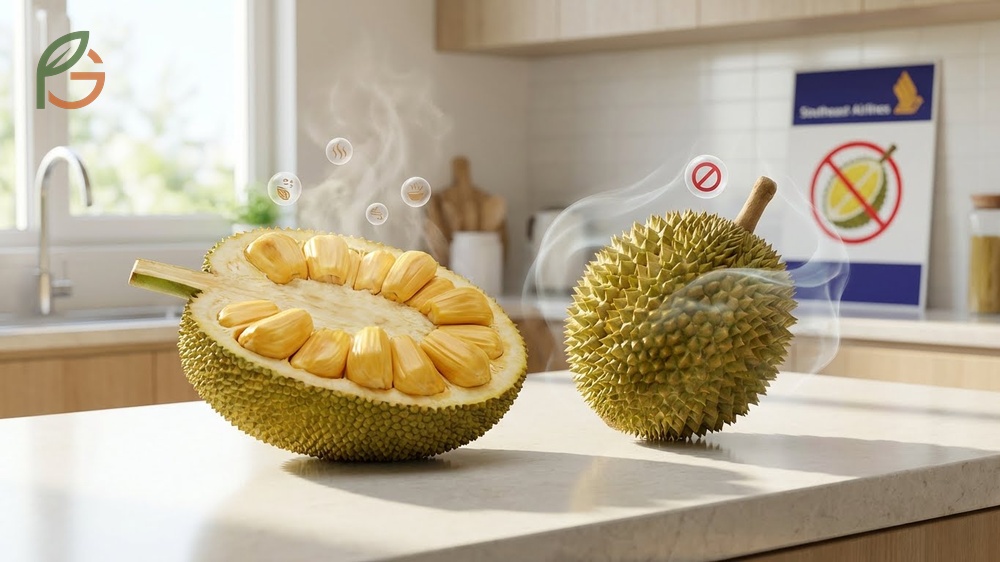
The smell difference between these fruits couldn’t be more extreme. Research shows durian’s odor is so polarizing that airlines ban it from flights, and many hotels in Southeast Asia prohibit bringing it indoors.
Jackfruit produces a sweet, pleasant aroma when ripe that most people find appealing. The smell intensifies as the fruit ripens, signaling optimal eating time without offending anyone nearby.
Durian’s Pungent Smell
Studies demonstrate durian contains 44 active aromatic compounds[4], including sulfur compounds that create its infamous smell. Scientists describe it as a mix of sewage, sulfur, rotting onions, and gym socks.
Current research indicates genetic differences determine whether people love or hate durian’s smell. Southeast Asians with frequent exposure learn to distinguish the sweet ketones from the putrid sulfur notes, while newcomers often can’t get past the initial shock.
The smell penetrates packaging and lingers in enclosed spaces for hours. That’s why Singapore’s mass transit system enforces strict fines for bringing durian aboard trains or buses.
Jackfruit’s Mild Aroma
Evidence suggests jackfruit emits a tropical fruit fragrance similar to pineapple mixed with banana when fully ripe. The smell is sweet and inviting without overwhelming intensity.
Unripe jackfruit has almost no smell, making it perfect for savory dishes where you don’t want fruit flavors interfering. This neutral characteristic explains why it works so well as a meat substitute.
Taste Comparison
Research shows ripe jackfruit tastes like a blend of pineapple, mango, and banana with honey sweetness. The texture is chewy and fibrous, similar to pulled pork but with tropical fruit notes.
Durian’s flavor is intensely sweet and creamy with savory undertones that people describe as custard mixed with onions and almonds. The taste doesn’t match the smell—most first-timers are surprised the flavor is actually pleasant despite the off-putting odor.
Young jackfruit has virtually no taste, absorbing whatever seasonings you add. This makes it versatile for curries, tacos, and sandwiches. Durian’s strong flavor dominates any dish, working best in desserts or eaten fresh.
Nutritional Difference Jackfruit Durian
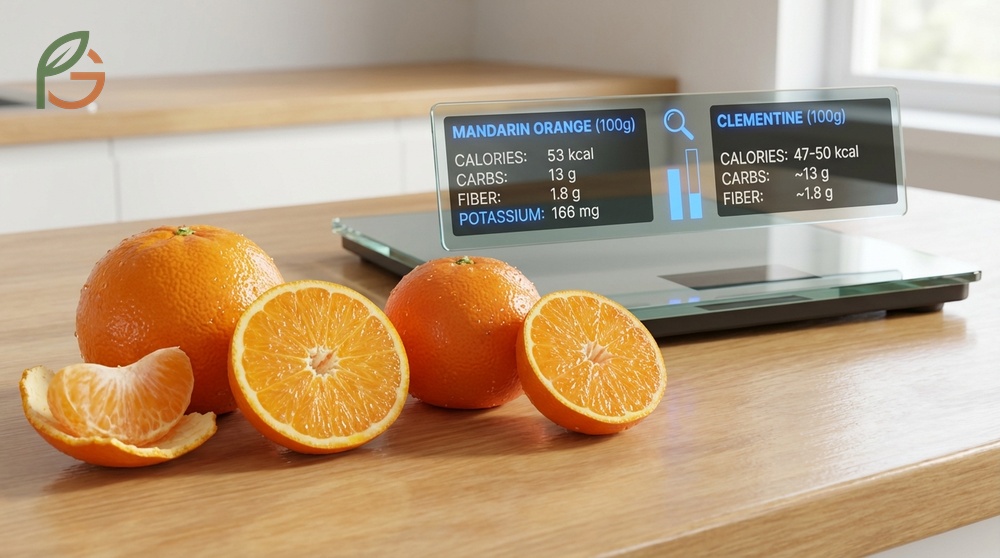
Current USDA data reveals significant nutritional gaps between these tropical fruits. Durian packs more calories, fats, and fiber, making it an energy-dense choice, while jackfruit offers a lighter option with fewer calories.
Studies demonstrate durian contains 147 calories[2] per cup compared to jackfruit’s 95 calories[2]. The fat content differs dramatically—durian has 5.33g[2] per cup versus jackfruit’s minimal 0.64g[2].
Agricultural research indicates both fruits provide antibacterial properties and immune support through vitamin C and flavonoids[5]. However, their vitamin profiles differ substantially.
This table compares calories, macronutrients, fiber, and key vitamins between jackfruit and durian per one cup serving
| Nutrient | Jackfruit | Durian | Winner |
|---|---|---|---|
| Calories | 95 kcal[2] | 147 kcal[2] | Jackfruit (lower) |
| Fat | 0.64g[2] | 5.33g[2] | Jackfruit (lower) |
| Fiber | 1.5g[2] | 3.8g[2] | Durian (higher) |
| Carbohydrates | 23.25g[2] | 27.09g[2] | Jackfruit (lower) |
| Vitamin C | 13.7mg[2] | 19.7mg[2] | Durian (higher) |
- Durian provides higher levels of B vitamins (B1, B2), copper, zinc, and iron for energy metabolism
- Jackfruit offers more calcium for bone health and vitamin A for eye function
- Durian delivers 2.5 times more fiber, supporting digestive health and satiety
- Jackfruit contains less sugar per serving, making it suitable for blood sugar management
- Both fruits supply potassium for heart health—jackfruit has 448mg while durian has 436mg per cup[2]
Weight Management Tip: If you’re watching calories, jackfruit is your best bet with 35% fewer calories than durian. But if you need sustained energy for physical activity, durian’s higher fat and carb content provides longer-lasting fuel.
Cooking with Jackfruit vs Durian
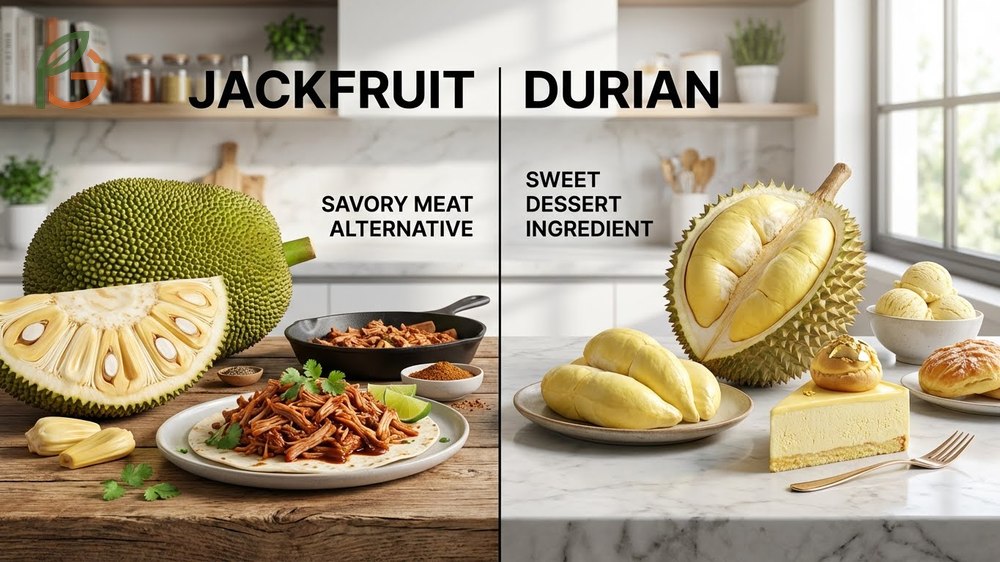
Evidence indicates these fruits serve completely different culinary roles. Jackfruit dominates the plant-based meat alternative market, while durian reigns supreme in Southeast Asian desserts and sweet applications.
Research shows unripe jackfruit’s neutral flavor and fibrous texture make it a chameleon ingredient. It absorbs marinades and spices like tofu but provides a meaty chew that tofu can’t match.
Durian’s intense flavor limits its versatility—you can’t hide it in dishes. That strong taste works beautifully in ice cream, pastries, and candies where you want prominent durian character.
Jackfruit as Meat Substitute
Current culinary trends show jackfruit replacing pulled pork, shredded chicken, and ground beef in plant-based cooking. When cooked, young jackfruit shreds into stringy fibers that mimic meat texture remarkably well.
Studies demonstrate jackfruit works best in heavily spiced dishes where sauces provide the main flavor. BBQ jackfruit sandwiches, jackfruit tacos, and curry dishes showcase this fruit’s adaptability.
- BBQ pulled jackfruit sandwiches—shred canned young jackfruit and simmer in smoky BBQ sauce for 20 minutes
- Jackfruit carnitas tacos—cook with cumin, oregano, lime juice, and crisp in a hot skillet
- Buffalo jackfruit wings—coat in hot sauce and breadcrumbs, then bake until crispy
- Jackfruit biryani—layer spiced jackfruit with basmati rice for a vegetarian feast
- Jackfruit curry—simmer in coconut milk with Thai curry paste and vegetables
- Crab-less jackfruit cakes—mix finely chopped jackfruit with Old Bay seasoning and pan-fry
Agricultural data shows jackfruit seeds are edible too—boil them for 20-30 minutes and they taste like chestnuts. Don’t throw them away when preparing dishes.
Durian Culinary Uses
Research indicates durian shines in sweet preparations where its creamy texture and complex flavor create unique desserts. Southeast Asian cuisines have developed hundreds of durian-based treats over centuries.
The flesh blends smoothly into ice cream, creating a custard-like consistency that doesn’t require additional thickeners. Durian ice cream is Thailand and Malaysia’s most popular flavor, outselling vanilla and chocolate combined in those markets.
- Durian ice cream—blend flesh with cream and sugar, freeze for Southeast Asia’s favorite frozen treat
- Durian sticky rice—Thailand’s “khao niao durian” combines sweet sticky rice with durian and coconut cream
- Durian puffs—flaky pastry shells filled with durian custard, popular in dim sum restaurants
- Durian cake—Malaysian birthday cakes often feature durian cream frosting
- Durian candy—chewy durian-flavored sweets sold throughout Southeast Asia
- Fresh durian with sticky rice—the simplest preparation, eaten as-is with glutinous rice on the side
Evidence suggests durian works in savory dishes too, though this is less common. Indonesian and Malaysian cuisines feature durian in curries and sambal, where the fruit’s savory notes complement spicy flavors.
Price Difference Durian Jackfruit
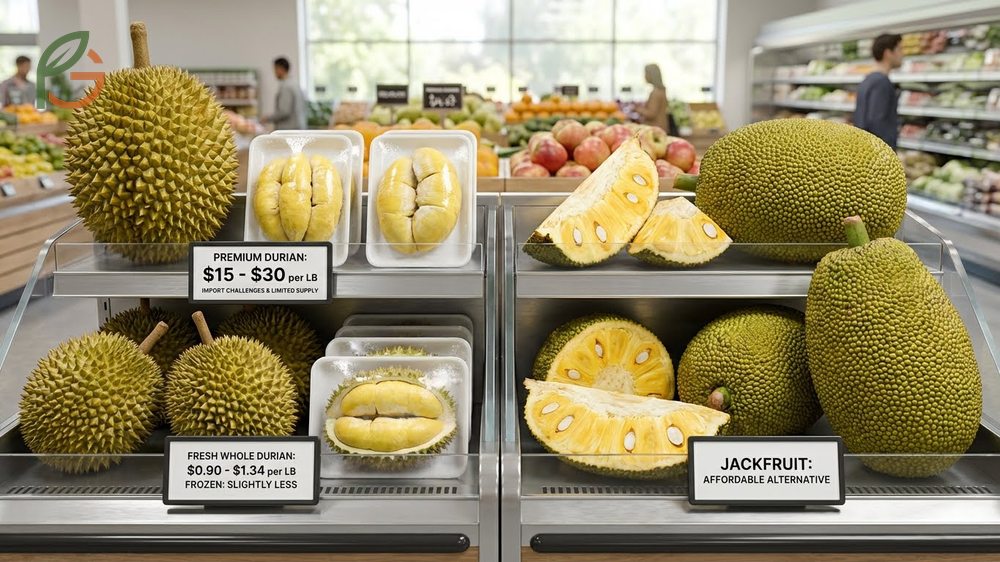
Market data reveals durian commands premium prices in the United States due to import challenges and limited supply. Current retail prices range from $0.90 to $1.34 per pound[3] for whole fresh durian, with frozen durian costing slightly less.
Research shows specialty varieties like Musang King or D24 durian can reach $15-$30 per pound in major US cities. These premium cultivars are air-shipped from Malaysia and Thailand, driving up costs dramatically.
Jackfruit pricing stays more accessible because the fruit ships well and has longer shelf life. Fresh whole jackfruit typically sells for $2-$3 per pound, while canned young jackfruit in brine costs $2-$4 per 20-ounce can.
| Product Form | Jackfruit Price | Durian Price |
|---|---|---|
| Fresh whole fruit | $2-$3 per pound | $0.90-$1.34 per pound[3] |
| Canned/packaged | $2-$4 per 20oz can | $8-$15 per 14oz package |
| Frozen flesh | $3-$5 per pound | $6-$10 per pound |
- Durian’s short shelf life requires air freight, adding $5-$10 per pound in shipping costs
- Jackfruit stays fresh for weeks, allowing cheaper sea freight from Southeast Asia
- US growers in Hawaii and South Florida produce limited jackfruit locally, reducing costs
- Durian trees take 8-10 years to fruit, limiting supply expansion and keeping prices high
- Seasonal availability affects both fruits—peak season (May-August) offers better prices and quality
Current agricultural guidance shows growing your own jackfruit in USDA zones 10-12 can eliminate costs entirely. A single mature tree produces 100-200 fruits annually, providing year-round supply once established. Durian cultivation in the US remains experimental outside Hawaii due to specific climate requirements.
Conclusion
The evidence is clear: durian fruit vs jackfruit represents a comparison between two distinct tropical fruits that shouldn’t be confused. Jackfruit’s massive size, mild flavor, and meat-substitute versatility make it accessible and practical for American gardeners and cooks, while durian’s intense aroma, creamy texture, and premium pricing position it as an exotic delicacy.
Current guidance emphasizes choosing based on your goals—grow jackfruit if you want abundant harvests and culinary flexibility, or seek out durian for a unique taste experience. FruitGarden recommends starting with fresh or canned jackfruit to explore tropical fruit gardening, then graduating to durian once you’ve developed your tropical growing skills and palate.
Frequently Asked Questions
Which fruit is healthier, jackfruit or durian?
Jackfruit is healthier for weight management with 95 calories per cup versus durian’s 147 calories. However, durian provides 2.5 times more fiber and higher levels of B vitamins, copper, and zinc. Choose jackfruit for lower calorie intake or durian for energy density and digestive health support.
Can you grow jackfruit and durian in the United States?
Jackfruit grows successfully in USDA zones 10-12, including South Florida, Southern California, and Hawaii. Durian cultivation remains challenging outside Hawaii due to specific humidity and temperature requirements. Research shows jackfruit tolerates slightly cooler conditions, making it more viable for US gardeners.
Why does durian smell so bad but jackfruit doesn’t?
Durian contains 44 active aromatic compounds including sulfur-based chemicals that create its pungent odor. Jackfruit produces simple fruit esters similar to pineapple and banana, resulting in a pleasant sweet smell. The smell difference stems from completely different chemical compositions, not ripeness or storage conditions.
Is jackfruit really a good meat substitute?
Yes, young unripe jackfruit provides an excellent meat texture with its stringy, fibrous consistency that shreds like pulled pork. It’s neutral flavor absorbs marinades and spices effectively. Studies show it works best in heavily seasoned dishes like BBQ sandwiches, tacos, and curries where sauces provide the primary flavor.
How do you know when jackfruit and durian are ripe?
Ripe jackfruit develops a strong sweet aroma, yellow-brown skin color, and yields slightly to pressure. Ripe durian emits an intense smell, shows cracks along the seams, and stem ends feel soft. For both fruits, the smell intensifies dramatically at peak ripeness—you can’t miss it when they’re ready to eat.
What are the main differences between durian and jackfruit spikes?
Jackfruit has blunt hexagonal bumps that feel rough but won’t hurt you. Durian features sharp pyramidal thorns that can cut skin if you grab the fruit carelessly. Market vendors wear thick gloves when handling durian, while jackfruit requires no special protection during handling.
Where can I buy fresh durian and jackfruit in the US?
Fresh jackfruit appears in Asian supermarkets, Whole Foods, and specialty grocers year-round, with peak availability May-August. Fresh durian has limited availability, mostly in Asian markets in major cities during summer months. Frozen durian and canned jackfruit offer year-round alternatives with wider distribution.