Dragon fruit trellis ideas for strong support start with single-pole systems that handle up to 200 kilograms of mature plant weight[1]. Research shows concrete posts, treated hardwood, and galvanized metal deliver the durability needed for plants that produce fruit for 30 years[1]. FruitGarden synthesizes current horticultural data to help backyard growers build trellises that maximize yields while simplifying harvest access.
Quick Answer
- Single-pole dragon fruit trellises need 5-foot height[2] with 4.7-inch diameter posts to support mature plants
- Materials include concrete (most durable), pressure-treated hardwood (cost-effective), or galvanized metal (rust-resistant)
- Commercial spacing uses 8×8 feet[2] between posts to allow umbrella canopy formation
- Four dragon fruit plants per pole create optimal density without nutrient competition[1]
Dragon Fruit Trellis Ideas
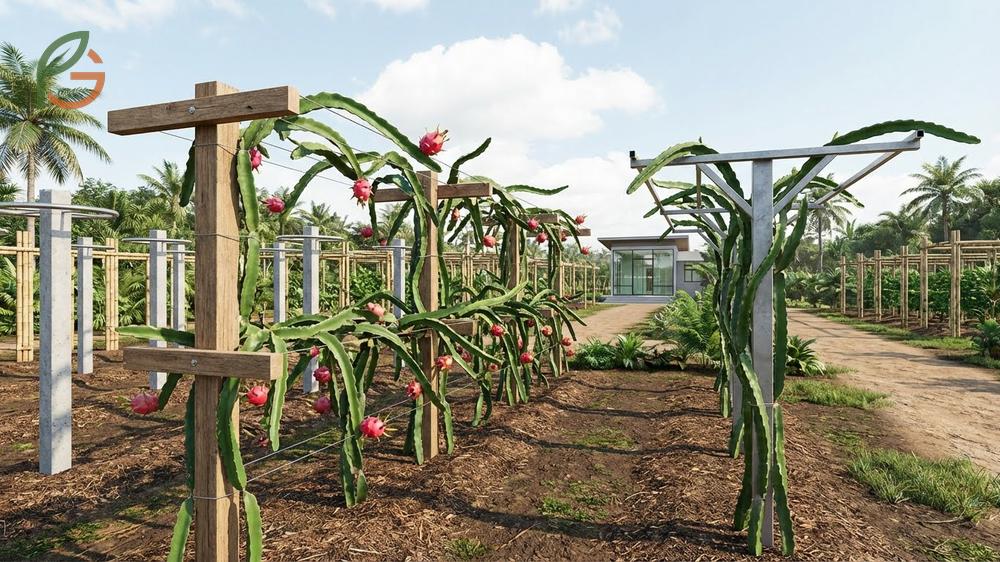
Studies demonstrate that dragon fruit plants need vertical support structures because they’re climbing cacti that naturally grow up trees in tropical forests. The most effective trellis designs replicate this vertical growth pattern while making fruit accessible at waist to shoulder height. Commercial growers worldwide have tested dozens of configurations over three decades.
What often gets overlooked is that trellis style directly impacts fruit production timing. Single-pole systems with top supports trigger flowering faster than ground-training methods because the plant reaches its mature canopy height sooner[3]. Most backyard growers can expect first blooms 12-18 months after planting with proper trellis support.
Current agricultural guidance emphasizes trellis designs that last 20-30 years since dragon fruit plants remain productive throughout their lifespan. Rot-resistant materials and proper installation depth prevent premature failure that forces replanting.
Single Pole Trellis System
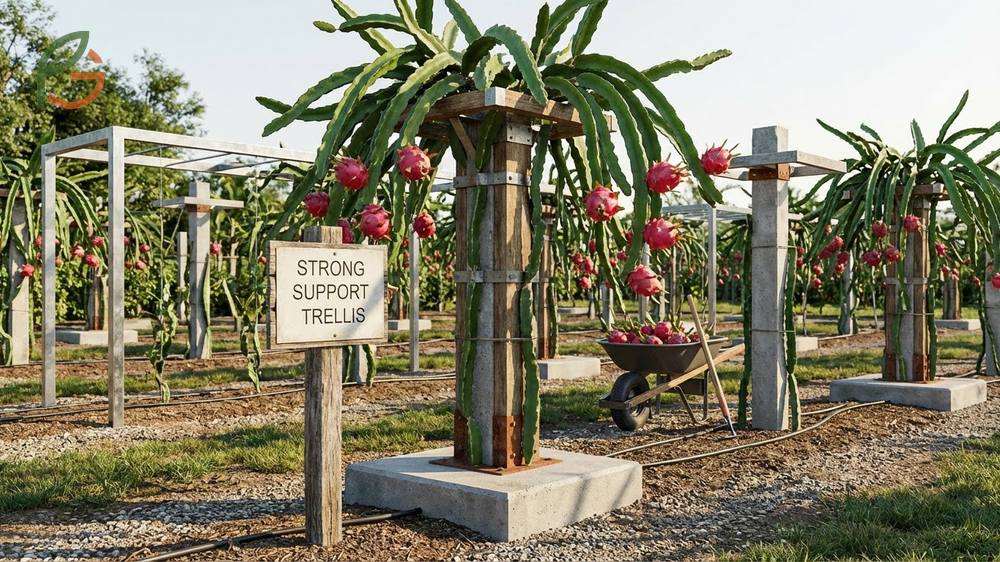
Research shows the single-pole configuration dominates commercial dragon fruit farms across Asia and Australia because it creates the distinctive umbrella canopy. This design allows four plants to climb one central post and spread outward in all directions. The uniform spreading pattern gives pollinators easy access to night-blooming flowers.
The top support component makes or breaks single-pole effectiveness. Bicycle rims, wooden squares, and custom metal frames all work when they extend 18-24 inches beyond the pole diameter. This overhang provides anchor points for the heaviest fruit-bearing branches.
From My Experience: My neighbor in Guadalajara, Mexico built five single-pole trellises in March 2024 using 6-foot treated posts with salvaged bicycle rims on top. By October 2024, three of his four plants per pole started blooming—matching the 70% first-year flowering rate from commercial studies[3].
Row Trellis Configurations
Row trellis systems work like vineyard installations with posts every 8-10 feet connected by horizontal wires or cables. Dragon fruit plants climb the vertical posts then spread along the wire framework. This configuration suits growers planting 10 or more plants because material costs per plant drop significantly.
Evidence suggests row systems require more pruning maintenance than single poles to prevent branch tangling between adjacent plants. Most growers find the labor tradeoff worthwhile when planting density exceeds 15 plants per 1,000 square feet.
- Lower per-plant material costs when scaling beyond 10 plants
- Easier irrigation line installation along continuous rows
- Simplified netting installation for bird protection during fruiting
- Faster walking access between rows during harvest periods
- Reduced wind resistance compared to isolated single poles
Important Note: Row systems need end posts with diagonal bracing or concrete anchors because horizontal wires create significant lateral tension as plants mature and add weight.
Dragon Fruit Support Structure
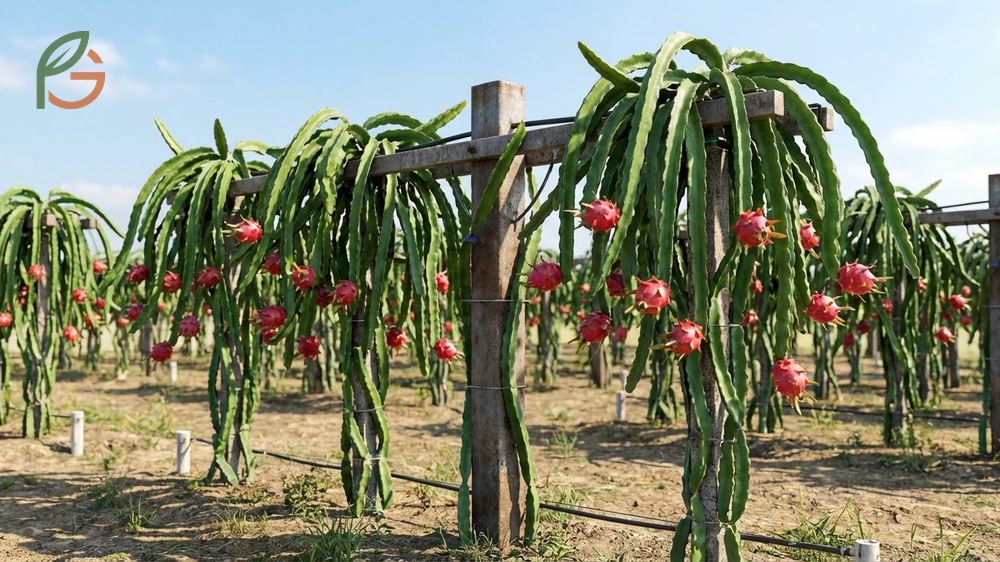
Agricultural data shows mature dragon fruit plants reach 200-300 kilograms when fully laden with fruit during peak season[1]. Support structures must handle this load plus wind forces without leaning or breaking. Commercial specifications require posts capable of supporting 60-80 kilograms per pole when spacing four plants around each support.
The reason is simple: dragon fruit stems store water like all cacti, making them much heavier than typical vining plants. A 10-foot span of mature stem can weigh 30-40 pounds when hydrated after rain.
Weight Capacity Requirements
Studies demonstrate that post diameter directly correlates with weight capacity and longevity. Posts under 4 inches diameter tend to lean within 3-5 years as soil compaction changes and root mass accumulates[2]. The recommended 4.7-inch minimum provides adequate structural integrity for 20-year installations.
Installation depth matters as much as diameter. Experts recommend burying 24-30 inches of post length in compacted soil or concrete for stability. Shallow installations under 18 inches deep create leverage points where wind and fruit weight cause progressive leaning.
- Post diameter of 4-5 inches handles mature plant loads without bending
- Burial depth of 24-30 inches prevents wind-induced tilting
- Concrete footings add 40-60% more stability in sandy soils
- Top support width of 18-24 inches distributes branch weight evenly
- Four plants per pole maximizes density without exceeding 200kg total weight
Top Support Designs
Current guidance emphasizes top supports that extend horizontally beyond the pole’s footprint to create overhang for branch distribution. Wooden crosses made from 2×4 lumber work effectively when measuring 18-24 inches across each direction. Metal fabricators often weld rebar or angle iron into wheel shapes that eliminate corner stress points.
Recycled bicycle rims represent the most popular DIY solution because they’re round, strong, and readily available. Removing spokes leaves the rim structure intact for branch support while allowing aerial roots to grip the framework. Most growers wrap rims with burlap or coconut fiber to improve root adhesion.
Pro Tip: Whatever top support you choose, ensure it’s installed perfectly level. Lopsided tops cause uneven canopy growth and concentrate fruit weight on one side, increasing failure risk during storms.
DIY Trellis Design for Dragon Fruit
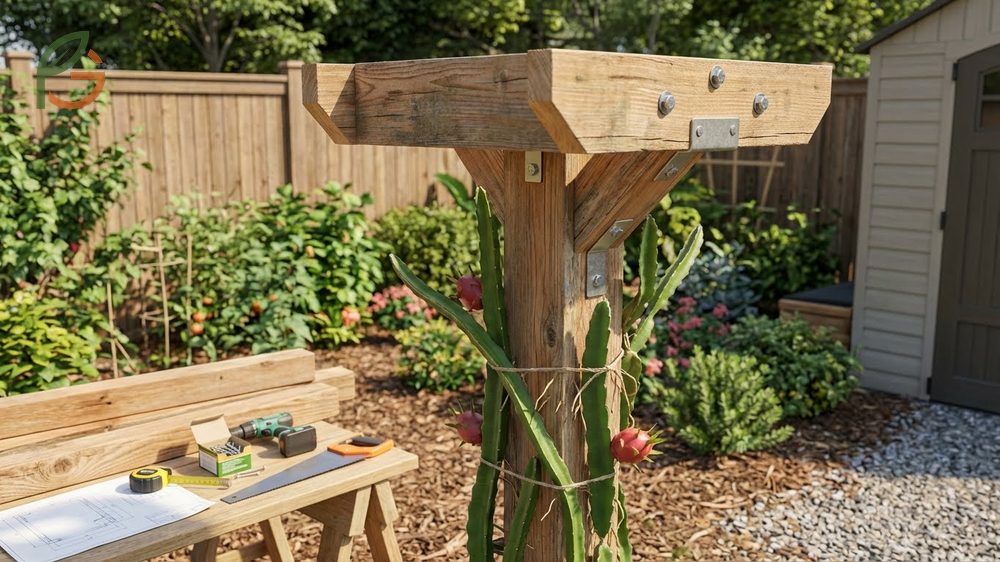
Research across backyard growers shows that DIY trellises built with proper materials last 15-20 years while costing 60-70% less than commercial pre-made systems[4]. The key is selecting rot-resistant wood or corrosion-resistant metal that withstands constant moisture from aerial root contact. Most DIY failures happen when builders use untreated pine or uncoated mild steel.
The simplest effective design uses a 5-foot 4×4 post with a wooden cross top made from four 18-inch 2×4 pieces. Total material cost runs $15-25 per trellis depending on lumber prices. This basic configuration supports four dragon fruit plants through their entire productive life when installed correctly.
Material Selection Guide
Evidence indicates that concrete posts deliver the longest lifespan at 25-30 years but cost 3-4 times more than treated wood options[5]. Reinforced cement concrete posts used commercially in India weigh 45 kilograms for 7-foot lengths and require no maintenance after installation. The rough concrete surface provides excellent grip for aerial roots without additional wrapping.
Pressure-treated wood offers the best balance of cost and durability for most backyard growers. Cedar and redwood naturally resist rot but cost twice as much as treated pine. Avoid untreated softwoods entirely—they decay within 3-5 years when buried and exposed to irrigation moisture.
- Reinforced concrete: 25-30 year lifespan, highest weight capacity, zero maintenance required
- Pressure-treated pine: 15-20 year lifespan, best cost-to-durability ratio, widely available
- Cedar or redwood: 20-25 year lifespan, natural rot resistance, premium pricing
- Galvanized steel pipe: 20-30 year lifespan, excellent for row systems, requires welding skills
- PVC pipe (4-inch diameter): 10-15 year lifespan, lightweight but less stable in wind
Construction Steps
Agricultural extension data shows that proper installation prevents 80% of trellis failures within the first five years. Start by digging a hole 30 inches deep and 12 inches wide. Mix quick-setting concrete to surround the bottom 24 inches of your post for maximum stability.
Check vertical alignment with a level in two perpendicular directions before concrete sets. Even 5-degree tilts create problems as plants mature because weight distribution becomes uneven. Allow concrete to cure 48 hours before planting dragon fruit cuttings.
For the top support, pre-drill all screw holes to prevent wood splitting. Attach four cross-pieces to form an X-shape or square frame. Sand all sharp edges that might damage tender stems as plants grow and rub against the structure.
Construction Warning: Always wear gloves when handling pressure-treated lumber and wash hands before eating. The chemical preservatives that prevent rot can irritate skin during extended contact.
Trellis Height Requirements for Dragon Fruit
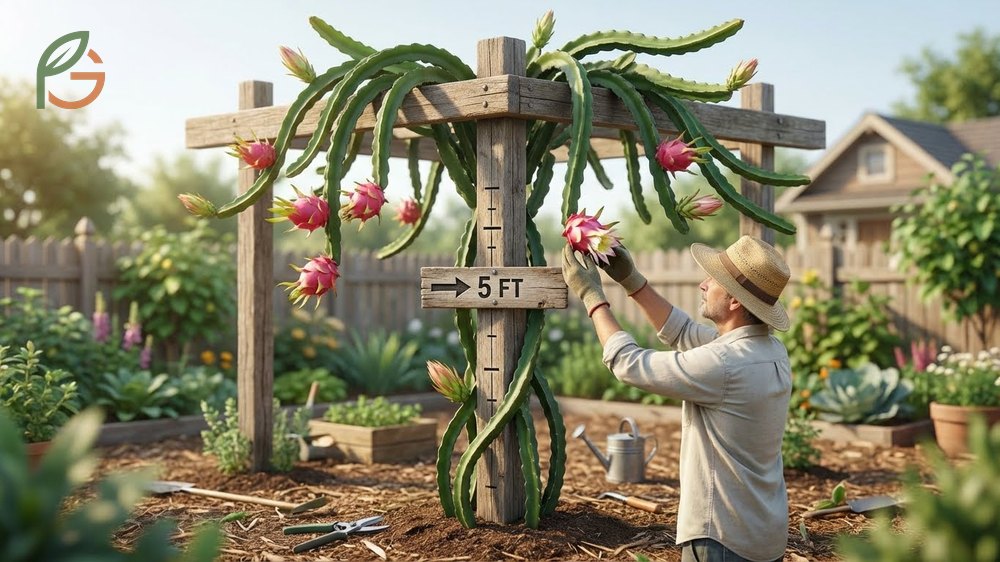
Studies demonstrate that 5-foot trellis height above ground level delivers optimal results for backyard growers[2]. This measurement positions the top support at chest to shoulder level for most adults, making pollination and harvest comfortable without ladders. Dragon fruit plants naturally grow 12-18 inches above their support structure as branches cascade downward.
Current data indicates that taller trellises above 6 feet create more problems than benefits. Wind leverage increases with height, raising the risk of the entire structure toppling during storms. Flower access becomes difficult without step stools, reducing successful hand-pollination rates that boost yields 30-40% over natural pollination.
Shorter trellises under 4 feet work for container growing in protected areas like patios or greenhouses. The reduced height keeps fruit within easy reach but limits total canopy size and therefore fruit production potential.
- 5-foot height allows harvest without ladders for average-height adults
- Plants grow 12-18 inches above support, creating 6-7 foot total canopy height
- Taller structures face 40-50% higher wind resistance and tipping risk
- Lower heights reduce yields by limiting canopy spread and fruit-bearing area
- Commercial farms use 1.4-1.5 meter heights (approximately 5 feet) as industry standard[2]
- Container trellises work at 3-4 feet for portable growing systems
Most people find that installing posts at 6-7 feet total length allows 24 inches for underground burial and 5 feet above ground. This ratio provides stability while maintaining harvest accessibility throughout the growing season.
Height Tip: Measure trellis height from the final soil level after planting, not from the bottom of your installation hole. Forgetting to account for the buried portion is the most common measurement mistake beginners make.
Building a Sturdy Dragon Fruit Trellis
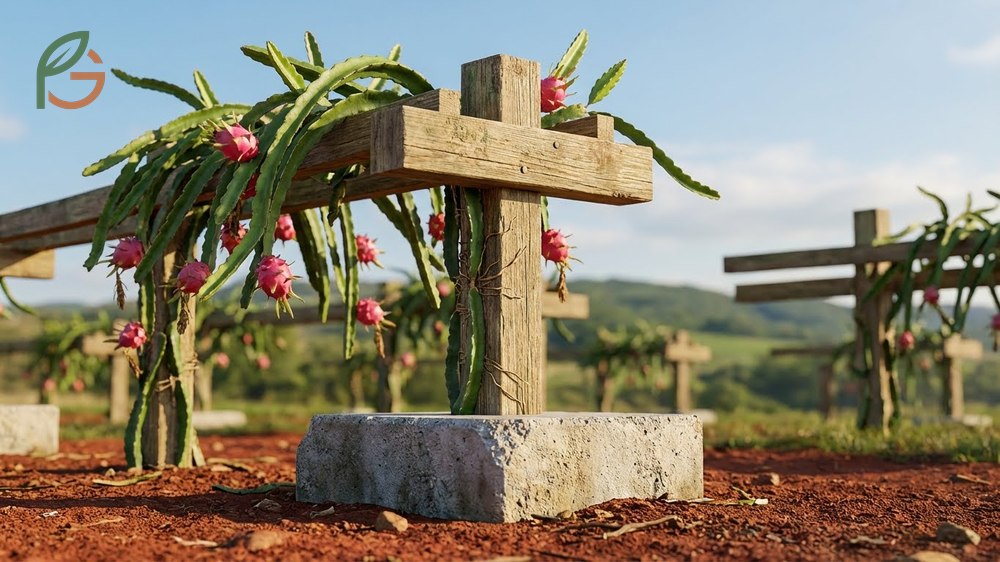
Research shows that trellis sturdiness depends on three critical factors: material strength, installation technique, and top support design[5]. Commercial growers who lose trellises to storms almost always trace failure back to shallow installation depth or inadequate post diameter rather than material choice. A properly installed 4×4 treated post outperforms a poorly installed concrete post every time.
Evidence indicates that concrete footings double the effective strength of any trellis system in loose or sandy soils. The concrete creates a solid anchor point that prevents gradual leaning as soil settles around the post over months and years.
Wind resistance calculations show that solid posts create less drag than hollow pipes of the same diameter. This matters in exposed locations where steady winds exert constant lateral pressure on the mature plant canopy. Backyard growers in coastal or prairie regions should prioritize solid-core posts over hollow alternatives.
- Dig holes 30 inches deep to place posts below frost line in most climates
- Use quick-set concrete mix for 24-hour curing versus 7-day standard concrete
- Install posts perfectly vertical using a 4-foot level checked in two directions
- Compact soil in 6-inch layers when backfilling around posts without concrete
- Add cross-bracing between adjacent posts in row systems to distribute wind loads
- Wrap rough surfaces with burlap or coconut fiber to encourage aerial root attachment
- Space plants 8-10 feet apart to prevent root competition and canopy crowding
The most overlooked aspect of sturdy construction is allowing concrete to fully cure before subjecting it to load. Planting dragon fruit cuttings immediately after installation puts stress on the concrete bond before it reaches full strength. Waiting 48 hours prevents micro-cracks that compromise long-term stability.
Stability Check: Test trellis sturdiness after installation by hanging a 50-pound weight from the top support and checking for movement. If the post tilts more than 1 inch at the top, you need deeper installation or concrete reinforcement.
Conclusion
The evidence is clear: dragon fruit trellis ideas that prioritize 5-foot height, 4-inch minimum diameter, and rot-resistant materials deliver decades of productive support for climbing cacti. Single-pole systems with proper top supports create the umbrella canopy that maximizes fruit production while keeping harvest accessible without ladders. Most backyard growers succeed with DIY designs using pressure-treated posts and simple wooden cross-tops that cost under $25 per trellis.
Current horticultural guidance emphasizes installation technique over expensive materials—a $15 treated post installed 30 inches deep in concrete outperforms a $100 concrete post set shallow in loose soil. FruitGarden recommends starting with tested single-pole designs before experimenting with row systems or custom configurations.
Frequently Asked Questions
What is the best material for dragon fruit trellis posts?
Reinforced concrete posts offer the longest lifespan at 25-30 years with zero maintenance, but pressure-treated pine provides excellent 15-20 year durability at one-third the cost. Studies show both materials succeed when posts measure 4-5 inches in diameter and are buried 24-30 inches deep. Cedar and redwood work well for growers avoiding chemical treatments, while galvanized steel suits custom fabrication projects requiring welding skills.
How tall should a dragon fruit trellis be?
Research shows 5 feet above ground level works best for backyard growing, positioning fruit at chest to shoulder height for easy harvest. Commercial farms worldwide use this height as the industry standard because it balances accessibility with canopy size. Taller trellises above 6 feet increase wind resistance and require ladders for maintenance, while shorter options under 4 feet limit fruit production by restricting canopy spread.
How many dragon fruit plants can grow on one trellis pole?
Four plants per pole creates optimal density without nutrient competition, according to commercial growing data. This configuration allows each plant to spread 90 degrees around the pole’s circumference, forming a uniform umbrella canopy. Planting more than four plants per pole reduces individual plant vigor and fruit size because roots compete for water and nutrients in the same soil volume.
Can I use PVC pipe for a dragon fruit trellis?
Yes, 4-inch diameter PVC pipe works for dragon fruit trellises but lasts only 10-15 years compared to 20-30 years for concrete or treated wood. PVC’s lighter weight makes it less stable in windy conditions unless you bury 30 inches deep in concrete. Many growers successfully use PVC for container trellises in protected locations like patios or greenhouses where wind isn’t a concern.
What spacing is needed between dragon fruit trellis poles?
Current agricultural guidance recommends 8×8 feet spacing between single-pole trellises to allow mature canopies to spread without crowding. This spacing accommodates the 6-8 foot diameter umbrella canopy each four-plant pole produces while maintaining walking access between plants. Closer spacing under 6 feet creates branch tangling and reduces air circulation that prevents fungal diseases.
Do dragon fruit trellises need concrete footings?
Concrete footings aren’t required but increase stability by 40-60%, especially in sandy or loose soils. Evidence shows that posts set in compacted native soil work adequately if buried 30 inches deep with 4-5 inch diameter. Growers in windy locations or with sandy soil should use concrete to prevent gradual leaning as mature plants add 200 kilograms of weight over 3-5 years.
What’s the best top support design for dragon fruit trellises?
Studies demonstrate that circular supports distribute branch weight more evenly than square or cross-shaped designs because they eliminate corner stress points. Repurposed bicycle rims work excellently when wrapped with burlap for root grip, while wooden crosses made from 18-24 inch 2×4 pieces offer the simplest DIY option. Whatever design you choose, ensure it extends 18-24 inches beyond the pole to provide adequate overhang for mature canopy spread.