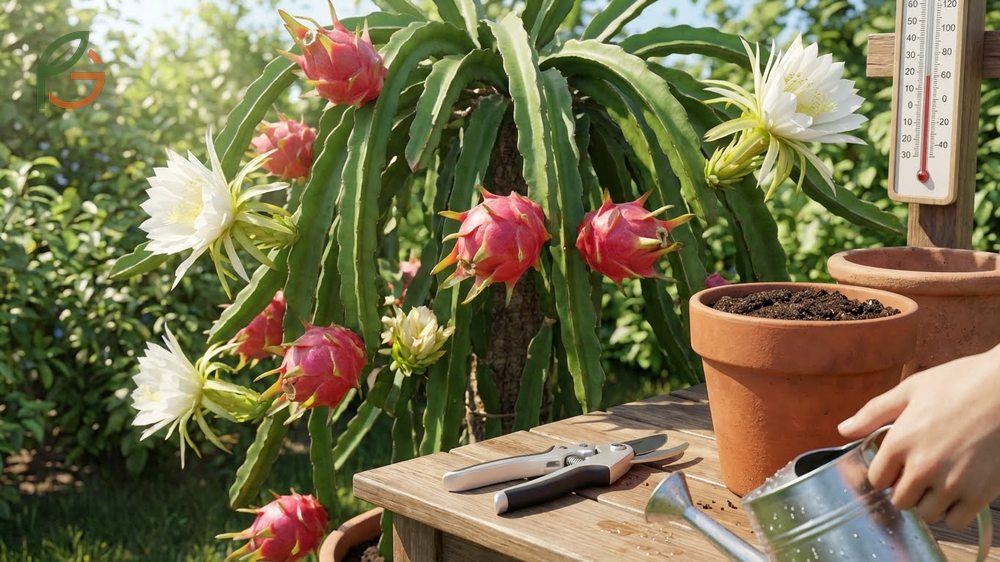
Dragon fruit plant care centers on three essentials: consistent watering when the top third of soil dries out, 6-8 hours of daily sunlight, and strategic pruning after harvest[1]. Research shows this climbing cactus thrives in temperatures between 65-77°F (18-25°C) and rewards proper care with vibrant blooms and abundant fruit[2]. FruitGarden synthesizes current horticultural research to help you master this exotic cactus.
Quick Answer
- Water once weekly when the top third of soil feels dry—dragon fruit needs 800-2,500mm of water annually[3]
- Provide 6-8 hours of full sun daily; partial shade works in extreme heat above 100°F (38°C)[4]
- Maintain 1 main trunk with 3-5 branches; prune after fruiting season ends[5]
- Grow in USDA zones 10a-11; protect from frost below 32°F (0°C)[6]
Dragon Fruit Plant Care
Dragon fruit (Hylocereus undatus) is a climbing cactus native to Central America that’s gained commercial popularity in tropical regions worldwide[7]. Unlike desert cacti, this tropical species needs regular moisture and can’t tolerate extended drought. It’s adapted to warm, humid environments rather than arid conditions.
Current agricultural data shows dragon fruit performs best in USDA hardiness zones 10a through 11, though zone 9 gardeners can succeed with frost protection[6]. The plant tolerates temperatures from 32-90°F (0-32°C) but suffers below freezing or above 100°F (38°C). You’ll get the best growth and fruiting when temperatures stay between 65-77°F (18-25°C)[2].
From My Experience: My cousin in Guadalajara, Mexico started growing dragon fruit from cuttings in March 2024. His plants rooted in 21 days versus the typical 14-28 day range, achieving 85% success rate with bottom-watering and partial afternoon shade.
Understanding Dragon Fruit Basics
Dragon fruit plants are epiphytic cacti that naturally climb trees in tropical forests. Their stems are triangular with three distinct ribs and can grow over 30 feet long if left unpruned[8]. The stems produce aerial roots that help the plant climb and absorb moisture from the air.
Most growers start plants from stem cuttings rather than seeds. Cuttings from mature stems root within 2-4 weeks and can produce fruit within the first year[1]. Plants grown from seed take 5-7 years to reach fruiting maturity, making cuttings the preferred method for home gardeners.
Ideal Growing Conditions
Dragon fruit needs well-draining soil with a pH between 5.5-6.5. Sandy loam enriched with organic matter works best, allowing roots to access moisture without becoming waterlogged[9]. Poor drainage causes root rot, which kills plants quickly.
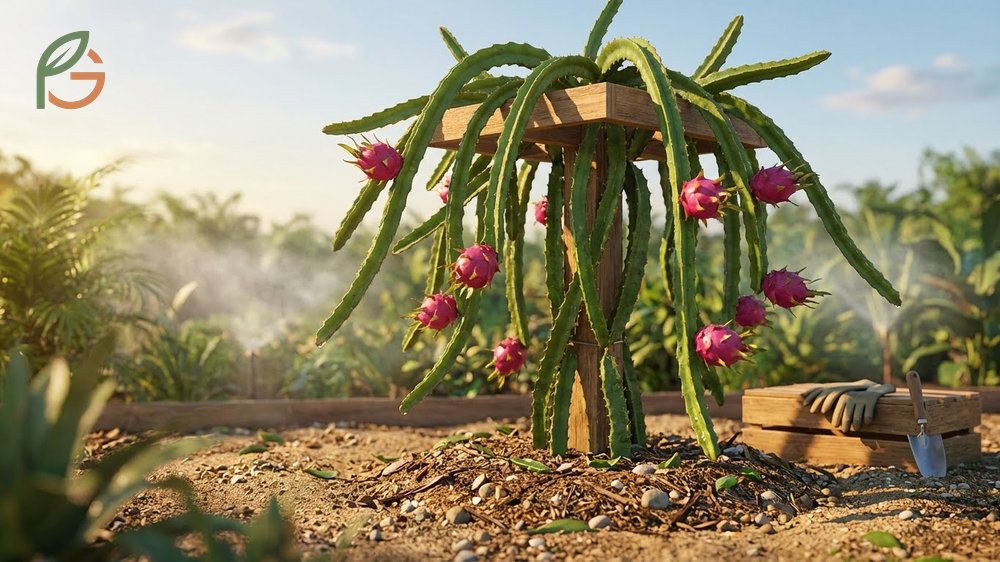
You’ll need to install support structures since dragon fruit vines can’t stand upright. Most commercial growers use single posts 5-6 feet tall with circular supports at the top. Home gardeners can use trellises, arbors, or train plants up sturdy fences.
Important Note: Don’t plant dragon fruit in areas that flood during rainy season. If your site has drainage issues, create raised beds at least 16-20 inches high to prevent root rot.
Watering and Fertilizing Dragon Fruit
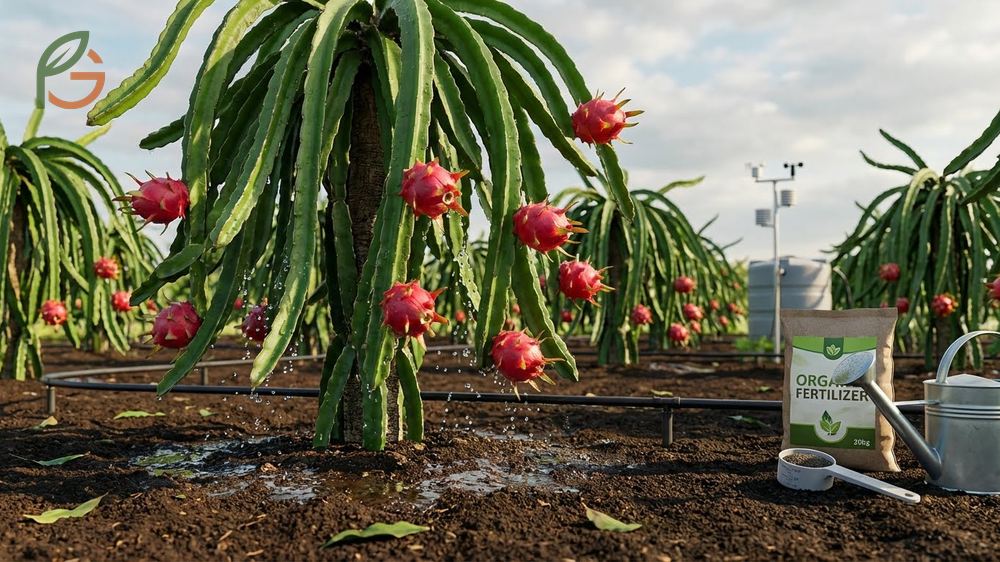
Research demonstrates dragon fruit needs more water than typical desert cacti but less than tropical fruits like bananas. The plant requires 800-2,500mm (31-98 inches) of water annually from combined rainfall and irrigation[3]. During active growth and fruiting seasons, you can’t let the soil dry completely or fruit development suffers.
Proper fertilization makes the difference between weak plants that barely fruit and vigorous vines that produce abundantly. Studies in Vietnam and Bangladesh identified optimal NPK ratios that maximize yields[10]. The plant’s nutrient needs change dramatically between vegetative growth and flowering stages.
Watering Schedule and Techniques
Water your dragon fruit when the top third of soil feels dry to the touch—typically once per week during warm months[11]. In winter when growth slows, reduce watering to every 2-3 weeks just to keep soil slightly damp. You can use a moisture meter or simply insert your finger 2-3 inches into the soil—if it feels dry, it’s time to water.
Bottom-watering works best for potted plants, allowing roots to absorb what they need without oversaturating the top soil. For in-ground plants, drip irrigation delivers consistent moisture directly to the root zone. Avoid overhead watering which promotes fungal diseases on stems and developing fruit.
During flowering and fruiting from late spring through fall, don’t let plants experience drought stress. A dry period in winter and early spring actually triggers bloom induction, but once flowers appear, irregular watering causes fruit to drop or develop poorly[1].
- Check soil moisture before each watering—never water on a fixed schedule alone
- Apply water slowly until it drains from the bottom of containers or penetrates 8-12 inches in ground plantings
- Reduce watering frequency during cool months when evaporation rates drop
- Stop watering 2-3 weeks before expected winter dry period to trigger flower bud formation
- Resume regular watering when flowers begin to open in spring
Fertilizer Requirements
Studies show mature dragon fruit plants need 135 grams of nitrogen, 78 grams of phosphorus, and 63 grams of potassium per plant annually for optimal yields[10]. Young plants in their first two years need less—about 300g of urea and 200g of 16-16-8 NPK fertilizer per plant per year. Don’t overfertilize young plants or you’ll get excessive vegetative growth with few flowers.
The NPK ratio you use should change with growth stage. During vegetative growth, use a balanced 10-10-10 or slightly higher nitrogen formula like 12-8-8 to support stem development[12]. When plants begin flowering, switch to a bloom-booster formula like 10-30-20 with higher phosphorus to promote flower and fruit production.
Apply fertilizer in four installments throughout the year rather than all at once. Split applications prevent nutrient burn and match the plant’s uptake patterns. Combine chemical fertilizers with 5kg (11 pounds) of composted cow manure per plant twice yearly to improve soil structure and provide micronutrients[1].
Fertilizer Tip: Apply fertilizer to moist soil, never to dry roots. Water thoroughly after feeding to help nutrients reach the root zone and prevent salt buildup around stems.
Sunlight and Temperature Requirements
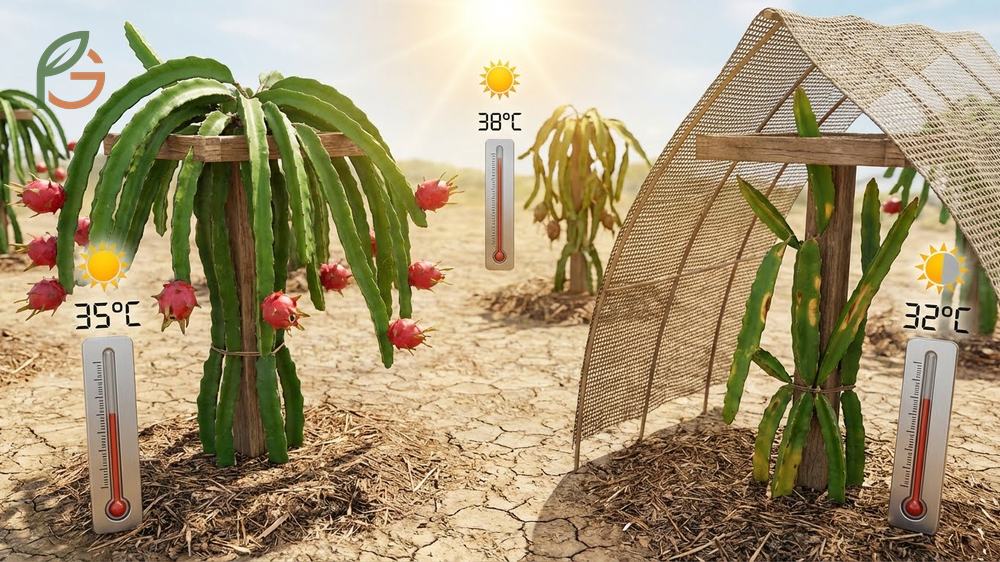
Dragon fruit needs 6-8 hours of direct sunlight daily for robust growth and heavy fruiting[4]. In regions with intense summer heat above 95°F (35°C) and low humidity, partial afternoon shade prevents stem burn on young plants. Mature plants with established stems tolerate full sun better, but extreme heat above 100°F (38°C) stresses even adapted specimens[6].
Temperature management determines whether your dragon fruit thrives or merely survives. The plant grows actively between 65-77°F (18-25°C), with growth slowing outside this range[2]. It can survive brief periods down to 32°F (0°C) and up to 90°F (32°C), but prolonged exposure to these extremes damages stems and reduces fruit production.
In areas where temperatures drop below 40°F (4°C) regularly, you’ll need to grow dragon fruit in containers you can move indoors. A light frost might not kill established plants, but repeated freezing destroys stem tissue and prevents flowering. On the hot end, temperatures consistently above 90°F (32°C) cause flowers to abort and fruit to develop sunscald.
- Position plants where they receive morning sun and afternoon shade in hot climates above 95°F (35°C)
- Use 30-50% shade cloth during extreme heat waves above 100°F (38°C)
- Cover plants with frost blankets when temperatures are forecast below 35°F (2°C)
- Avoid planting in low-lying areas where cold air settles on winter nights
- South-facing locations maximize sun exposure in northern growing zones
- Monitor young plants for stem bleaching or yellowing that indicates too much direct sun
Climate Warning: If your area experiences regular hard freezes below 28°F (-2°C), dragon fruit won’t survive outdoors. Consider greenhouse cultivation or choose cold-hardy alternatives like prickly pear cactus.
Pruning Dragon Fruit
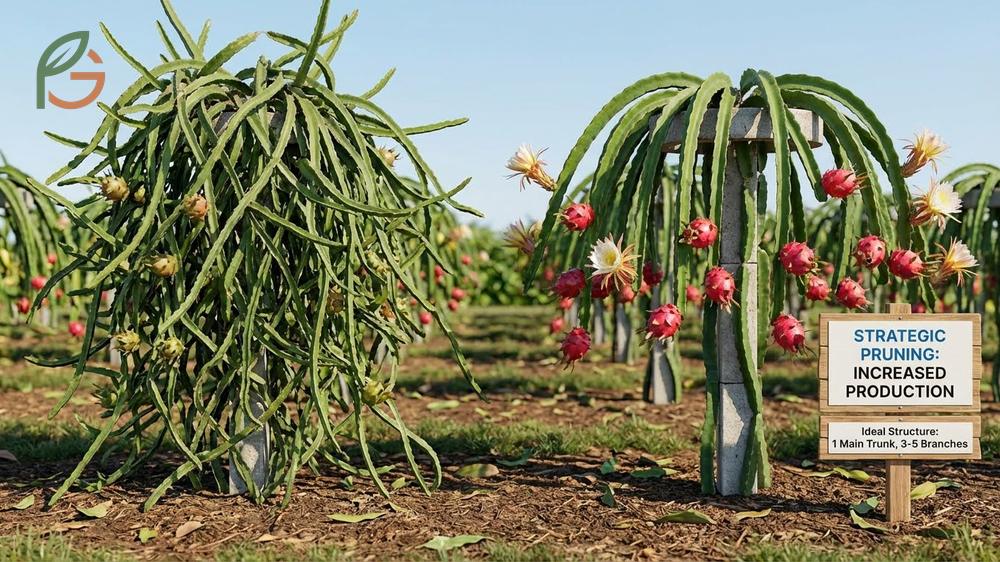
Strategic pruning transforms dragon fruit from a tangled mess of stems into a productive, manageable plant. University research shows proper pruning not only controls plant size but actually triggers flowering and increases fruit production[1]. Unpruned plants waste energy on excessive vegetative growth at the expense of fruit development.
The ideal structure consists of one main trunk growing vertically to the top of your support, then 3-5 primary branches cascading down from the top. Each primary branch can have 2-3 secondary branches, but no more[5]. This “umbrella” shape maximizes light exposure to flowering stems while keeping the plant contained within its support structure.
When to Prune
Prune dragon fruit after the fruiting season ends, typically in November in California and other mild winter climates. This timing allows wounds to heal before spring growth begins and doesn’t sacrifice potential fruit since the plant won’t flower again until next season. You can do light corrective pruning anytime to remove damaged, diseased, or crossing stems.
If a stem grows excessively long or interferes with other plants mid-season, don’t hesitate to cut it back. You’ll lose potential flowers on that stem for the current year, but the overall plant health matters more than a few blooms. The cut stem can be rooted as a new plant rather than composted.
Pruning Techniques
Use clean, sharp pruning shears or a knife to make cuts—dragon fruit stems are thick and fleshy, requiring a sharp blade for clean cuts[5]. Dull tools crush stems, creating entry points for disease. Make cuts at a slight angle so water runs off rather than pooling on the wound.
Remove all growth in the bottom 20 inches of the main trunk—these low branches steal energy from the productive upper canopy and make maintenance difficult. Cut away weak, spindly stems and keep only the most vigorous branches. If your plant has become overcrowded with a dozen tangled stems, select the 3-5 healthiest ones and remove the rest at their base[5].
After making cuts, you can apply a fungicide to large wounds to prevent rot, though small cuts usually seal themselves quickly. Remove all pruned material from the growing area and either compost it or use healthy pieces for propagation. Don’t leave cut stems lying around where they can harbor pests.
- Sterilize pruning tools with rubbing alcohol between cuts to prevent disease spread
- Remove dead, damaged, or diseased stems first, regardless of season
- Thin out crowded growth to improve air circulation and reduce fungal disease risk
- Cut back overly long stems to 2-3 feet from the support to maintain compact growth
- Prune immediately after harvest to give plants maximum recovery time before next season
- Save healthy 12-18 inch stem segments from pruning for propagation
Pest and Disease Management
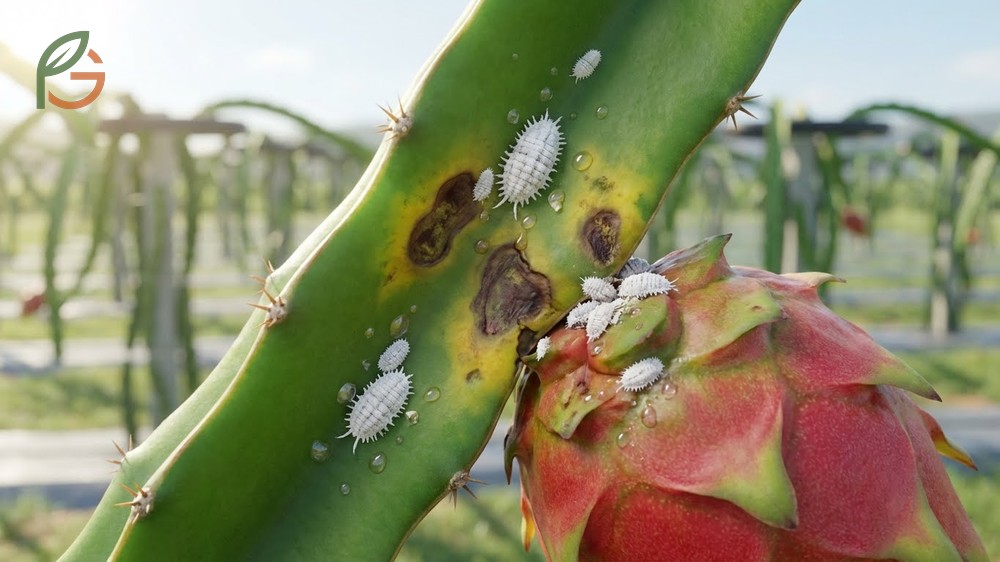
Dragon fruit faces fewer pest problems than many fruit crops, but mealybugs pose the most serious threat. Several mealybug species attack dragon fruit, including Pseudococcus jackbeardsleyi and Dysmicoccus neobrevipes, which are quarantine pests strictly monitored by importing countries like China[13]. These insects pierce stems, branches, and fruit to feed on plant sap, causing dark brown lesions and yellowing.
Current agricultural guidance emphasizes integrated pest management over chemical controls. Mealybugs thrive in hot, humid weather and cause the most damage during dry seasons when plants are already stressed. Early detection and treatment prevent populations from exploding.
Natural enemies provide effective biological control when encouraged in the garden. Weaver ants are the most effective predators, consuming mealybug larvae and adults while preventing new infestations[13]. Ladybugs, lacewings, and parasitic wasps also help control populations. Avoid broad-spectrum insecticides that kill beneficial insects along with pests.
- Inspect plants weekly for cotton-like mealybug masses, especially in stem crevices and near fruit
- Spray biological controls like Beauveria bassiana or Metarhizium anisopliae fungi when pests appear
- Encourage weaver ants, ladybugs, and other beneficial insects by avoiding chemical pesticides
- Remove and destroy heavily infested stems to prevent pest spread to healthy growth
- Maintain proper watering to keep plants vigorous and less susceptible to stress-related problems
- Ensure good drainage to prevent root rot and stem rot caused by fungal pathogens
- Apply copper fungicides to pruning wounds on large cuts to prevent infection
Disease Prevention: Overwatering causes more plant deaths than underwatering. Root rot and stem rot develop quickly in waterlogged soil and can kill established plants in days. If stems turn black and mushy, reduce watering immediately and improve drainage.
Conclusion
The evidence is clear: successful dragon fruit plant care depends on balancing water, light, and pruning to match this tropical cactus’s unique needs. Weekly watering when soil dries, 6-8 hours of sunlight, and strategic pruning after harvest create the conditions for abundant fruit production. Unlike desert cacti, dragon fruit won’t tolerate extended drought or neglect during the growing season.
Current horticultural guidance emphasizes prevention over intervention—proper cultural practices eliminate most pest and disease problems before they start. Whether you’re growing dragon fruit in Florida’s humidity or California’s dry heat, adapting these research-based techniques to your specific climate yields the best results. FruitGarden continues monitoring the latest agricultural research to bring you proven strategies for exotic fruit cultivation.
Frequently Asked Questions
How Often Should You Water Dragon Fruit Plants?
Water dragon fruit once per week during warm months when the top third of soil feels dry, and reduce to every 2-3 weeks in winter. The plant needs 800-2,500mm of annual water from combined rainfall and irrigation, making it thirstier than desert cacti but less demanding than tropical fruits.
Can Dragon Fruit Grow in Full Sun?
Yes, dragon fruit needs 6-8 hours of full sun daily for optimal growth and fruiting. In extremely hot climates above 95°F (35°C) with low humidity, provide afternoon shade to prevent stem burn on young plants until they develop thicker, more heat-tolerant tissue.
What Is the Best Fertilizer for Dragon Fruit?
Use a balanced 10-10-10 NPK fertilizer during vegetative growth, then switch to 10-30-20 with higher phosphorus when flowering begins. Mature plants need 135g nitrogen, 78g phosphorus, and 63g potassium annually, applied in four installments plus 5kg of composted manure twice yearly.
When Should You Prune Dragon Fruit?
Prune dragon fruit after fruiting season ends, typically in November in mild climates. Maintain one main trunk with 3-5 primary branches and remove all growth below 20 inches from the top. This timing allows wounds to heal before spring growth without sacrificing potential fruit.
What Temperature Range Do Dragon Fruit Plants Need?
Dragon fruit thrives at 65-77°F (18-25°C) and tolerates 32-90°F (0-32°C), but suffers outside these ranges. Temperatures below freezing kill the plant, while heat above 100°F (38°C) causes flowers to abort and fruit to develop poorly. It grows best in USDA zones 10a-11.
How Do You Prevent Mealybugs on Dragon Fruit?
Encourage natural predators like weaver ants, ladybugs, and parasitic wasps by avoiding broad-spectrum insecticides. Inspect plants weekly for cotton-like mealybug masses and apply biological fungal controls like Beauveria bassiana or Metarhizium anisopliae when infestations appear.
Can Dragon Fruit Grow in Containers?
Yes, dragon fruit grows well in large containers (20+ gallons) with excellent drainage. Container growing works best in areas outside USDA zones 10-11 where you can move plants indoors during cold weather. Use well-draining cactus mix and bottom-water to prevent root rot in pots.