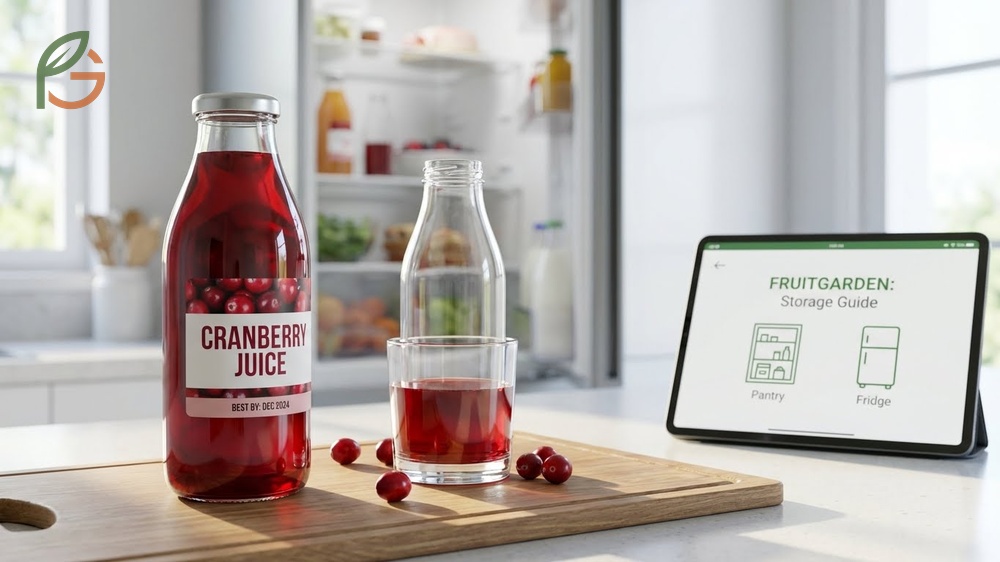
Does cranberry juice go bad? Yes, cranberry juice expires and spoils when stored improperly or kept too long. Research shows unopened bottles last 12-18 months past the printed date when shelf-stable[1], while opened containers must be refrigerated and consumed within 7-10 days[2]. FruitGarden provides evidence-based guidance to help you maximize juice quality and prevent foodborne illness.
Quick Answer
- Unopened shelf-stable cranberry juice lasts 12-18 months past the date on the package[1]
- Opened juice keeps 7-10 days when refrigerated below 40°F (4°C)[2]
- Frozen cranberry juice maintains quality for 8-12 months at 0°F (-18°C)[1]
- Discard juice immediately if you see mold, detect fermented odors, or notice bottle bloating
Does Cranberry Juice Go Bad
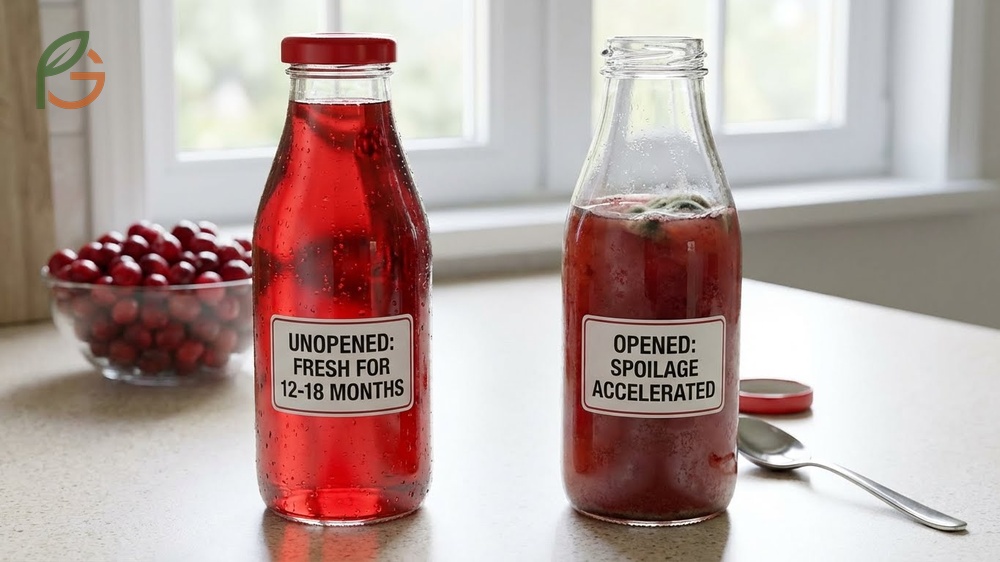
Cranberry juice expires and loses quality over time due to microbial growth and oxidation. Studies show that unopened shelf-stable juice maintains safety for 12-18 months beyond the package date when stored at room temperature[1]. The high acidity of cranberries naturally inhibits some bacterial growth, but it doesn’t prevent all spoilage.
Once you break the seal, exposure to air and bacteria accelerates degradation. Research from juice manufacturers confirms opened bottles spoil within 7-10 days when refrigerated properly[2]. The moisture content creates an ideal environment for microorganisms to multiply rapidly.
Temperature abuse significantly shortens shelf life. If you leave opened juice at room temperature for more than 2 hours, harmful bacteria can reach dangerous levels. Most cranberry juice products contain no preservatives, making refrigeration essential after opening[2].
Expiration Date vs Best By Date
The printed date on cranberry juice indicates peak quality rather than absolute safety. Current food labeling standards show “best by” dates reflect when manufacturers guarantee optimal flavor and nutrient content. You can often consume juice several months past this date if unopened and stored correctly[1].
USDA guidelines for bottled juices require products to maintain quality for at least 9 months unrefrigerated[3]. However, once opened, the clock starts ticking regardless of the original date. Don’t rely on package dates alone—always inspect the juice for signs of spoilage before drinking.
Shelf Stable vs Refrigerated Cranberry Juice
Shelf-stable juice undergoes pasteurization at high temperatures that destroy heat-resistant microorganisms. FDA guidance defines shelf-stable products as hermetically sealed containers that show no microbial growth when stored at room temperature[4]. This processing extends unopened storage to 12-18 months without refrigeration.
Refrigerated juice receives gentler heat treatment to preserve fresh flavor but requires continuous cold storage. These products typically last 7-10 days from production even when unopened. The packaging usually indicates “keep refrigerated” prominently on the label.
Important Storage Note: Even shelf-stable juice must be refrigerated immediately after opening. The protective seal no longer prevents contamination once broken, regardless of the original processing method.
How Long Does Cranberry Juice Last
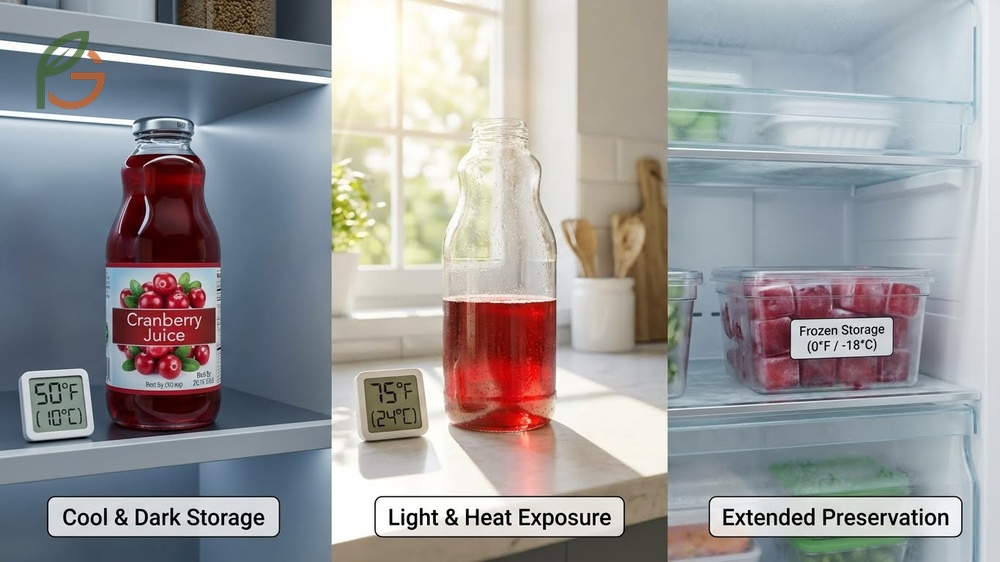
Storage duration depends on package condition and temperature control. Current data shows unopened shelf-stable bottles maintain quality for up to 18 months when stored in cool, dark conditions[5]. Exposure to light and heat degrades nutrients and accelerates spoilage even before opening.
Frozen juice extends preservation significantly. Research indicates properly frozen cranberry juice maintains peak quality for 8-12 months at 0°F (-18°C) and remains safe indefinitely at this temperature[1]. The freezing process halts microbial activity completely, though texture and flavor may change slightly upon thawing.
Once thawed, consume juice within 3-5 days if defrosted in the refrigerator. If you use microwave or cold water thawing methods, drink the juice immediately to prevent bacterial growth.
How Long Does Cranberry Juice Last Once Opened
Opened cranberry juice keeps for 7-10 days when refrigerated below 40°F (4°C) with the cap tightly sealed[2]. Some sources suggest juice may last up to 2-3 weeks under optimal conditions, but quality declines progressively. The absence of preservatives in most products means bacteria multiply rapidly after exposure to air.
Each time you open the container, you introduce new microorganisms. Studies show that drinking directly from the bottle transfers oral bacteria into the juice, accelerating spoilage. Always pour juice into a glass rather than drinking from the container.
- Seal the cap tightly immediately after pouring to minimize oxygen exposure
- Store juice on refrigerator shelves rather than door compartments where temperatures fluctuate
- Transfer large quantities into smaller containers to reduce airspace and preserve remaining juice longer
- Keep juice away from raw meat and seafood in the refrigerator to prevent cross-contamination
- Mark the opening date on the bottle with a permanent marker to track freshness accurately
Does Cranberry Juice Need to Be Refrigerated
Unopened shelf-stable cranberry juice doesn’t require refrigeration until you break the seal. The pasteurization process and hermetic packaging create an environment where microbes can’t survive or grow. However, storing unopened juice in the refrigerator can extend its quality beyond the printed date.
Once opened, refrigeration becomes mandatory for safety. Current food safety guidelines show that juice left at room temperature for more than 2 hours enters the danger zone where bacteria multiply exponentially. This applies even if you plan to finish the bottle quickly.
Refrigerated juice varieties require cold storage from production through consumption. These products never develop the shelf stability of pasteurized versions and will spoil within days if left unrefrigerated.
Signs of Bad Cranberry Juice
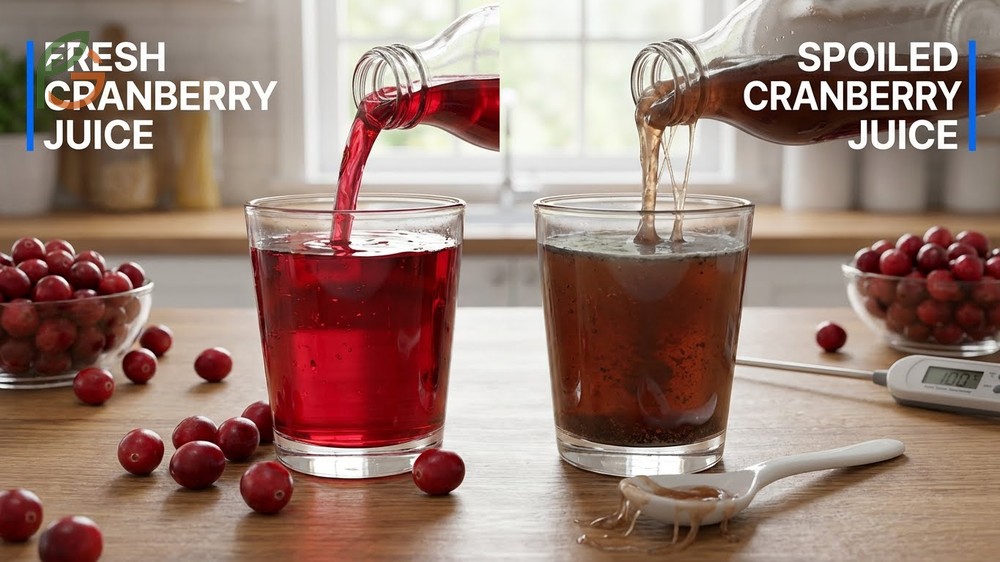
Visual and olfactory cues reliably indicate spoilage before consumption. Research shows most people detect expired juice through color changes—healthy cranberry juice maintains a bright red or deep crimson hue, while spoiled juice turns dark, cloudy, or develops a grayish tint[6]. The clarity diminishes as particles separate or settle unnaturally.
Texture changes signal degradation. Fresh juice flows smoothly, but spoiled cranberry juice often thickens or develops stringy consistency. If you notice sediment that doesn’t mix back in when shaken, the juice has likely begun fermenting.
Package integrity provides warning signs before you even open the bottle. Bulging containers indicate gas production from bacterial fermentation. If the bottle hisses or releases pressure when opened, discard it immediately—this shows active microbial growth[1].
- Color shift from bright red to dark brown, gray, or muddy appearance
- Visible mold growth on the surface, cap threads, or floating in the liquid
- Unusual cloudiness or separation that doesn’t resolve with shaking
- Sediment formation beyond normal pulp settling
- Container bulging, denting inward, or showing signs of pressure changes
Fermented Cranberry Juice Smell
Fermentation produces distinctive off-odors that differentiate spoiled juice from fresh product. Studies demonstrate that fresh cranberry juice has a tart, fruity aroma while fermented juice develops sour, vinegary, or wine-like smells[6]. This occurs when wild yeasts and bacteria convert sugars into alcohol and organic acids.
The smell intensifies as fermentation progresses. Some people describe it as musty, funky, or similar to spoiled fruit. If the odor makes you hesitate or seems unusual, trust your instincts and discard the juice.
Mold in Juice Bottles
Mold contamination poses serious health risks beyond simple spoilage. Research from Ohio State University confirms that mold growth in beverages leads to mycotoxin formation that diffuses throughout the liquid[7]. You can’t eliminate toxins by removing visible mold—the entire bottle must be discarded.
Mold appears as fuzzy patches on the juice surface, white or colored spots floating in the liquid, or growth around the cap and bottle neck. Some heat-resistant mold spores survive pasteurization and germinate when conditions allow, particularly in opened juice stored too long.
Safety Warning: Never taste juice that shows mold growth or smells fermented. Mycotoxins can cause serious illness even in small amounts. When in doubt, throw it out.
Storing Open Cranberry Juice
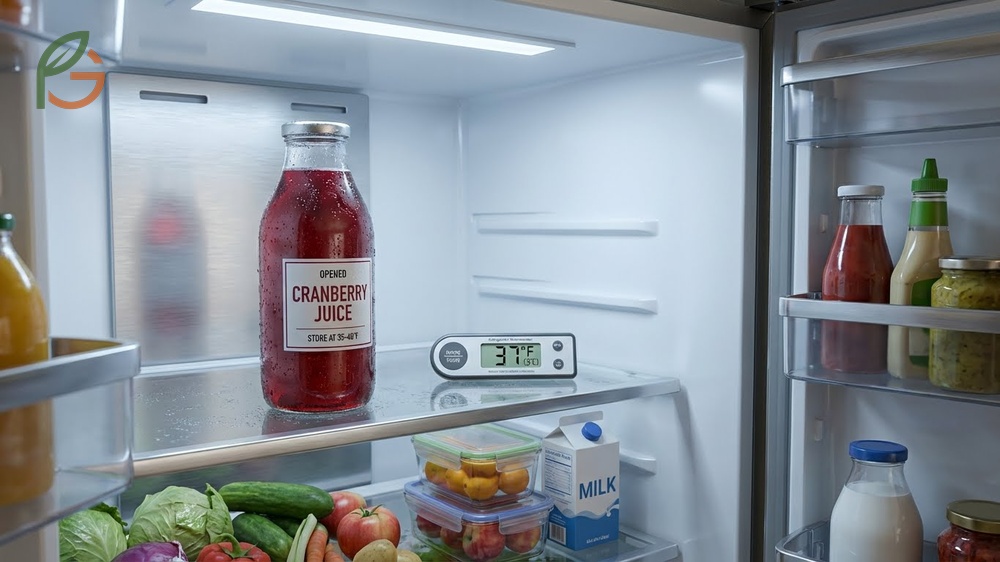
Proper storage techniques significantly extend juice freshness after opening. Current guidance emphasizes maintaining temperatures between 35-40°F (2-4°C) consistently[2]. Store juice on middle or lower refrigerator shelves where temperatures remain most stable, avoiding door compartments that experience frequent temperature swings.
Container selection matters for preservation. Glass bottles provide better protection against oxygen penetration compared to plastic containers. If transferring juice, choose food-grade glass or BPA-free plastic containers with airtight seals.
Freezing offers long-term storage when you can’t finish juice within the refrigeration window. Pour juice into freezer-safe containers, leaving 1-2 inches of headspace for expansion. Frozen juice maintains quality for 8-12 months[1], though flavor and texture may change slightly.
- Divide large bottles into smaller portions immediately after opening to limit repeated exposure to air and bacteria
- Wipe bottle threads and cap with a clean cloth after each use to remove residue where bacteria colonize
- Store juice in its original container when possible—manufacturers design packaging for optimal preservation
- Keep juice away from strong-smelling foods like onions or garlic that can penetrate packaging and affect flavor
- Label containers with opening dates using waterproof markers to track storage duration accurately
- Never return poured juice back to the original container as this introduces contamination
Pro Storage Tip: Consider freezing juice in ice cube trays for portion control. Frozen juice cubes work perfectly in smoothies and cocktails while preventing waste from spoilage.
What Happens If You Drink Spoiled Cranberry Juice
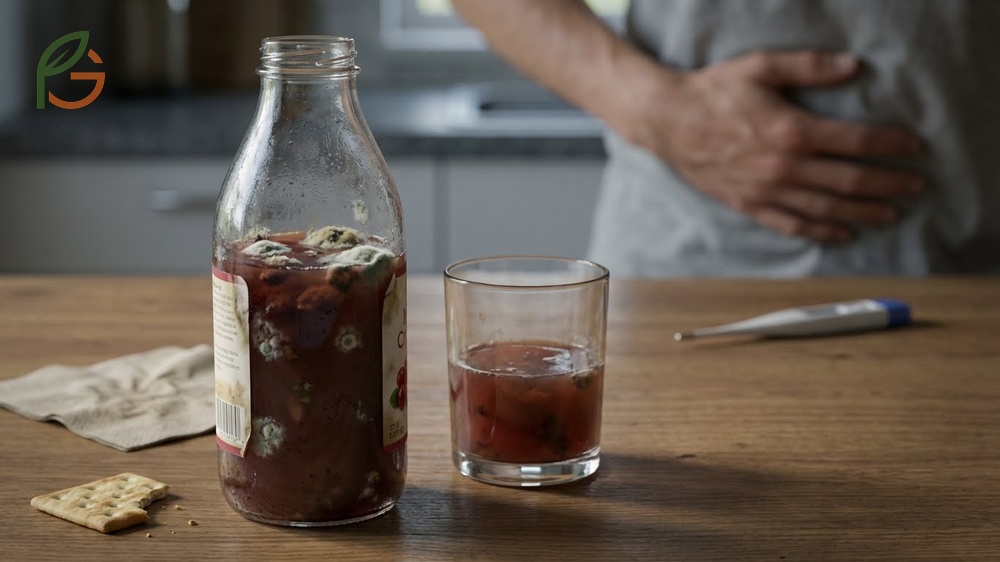
Consuming spoiled cranberry juice can cause foodborne illness with varying severity. CDC data shows the most common symptoms include diarrhea, stomach cramps, nausea, vomiting, and fever[8]. Symptoms typically appear within 1-48 hours depending on the type of contaminant and amount consumed.
Mold-contaminated juice poses additional risks beyond bacterial infection. Mycotoxins produced by certain molds can cause more severe reactions including respiratory problems, allergic responses, and immune system suppression. Young children, pregnant women, older adults, and immunocompromised individuals face higher risks from spoiled juice.
The severity depends on the spoilage type and individual health factors. Mildly fermented juice might only cause minor stomach upset, while heavily contaminated juice with pathogenic bacteria can lead to serious dehydration requiring medical attention. Evidence shows that symptoms lasting more than 3 days, bloody diarrhea, or fever above 102°F (39°C) warrant immediate medical evaluation[8].
- Persistent vomiting preventing fluid retention for more than 12 hours
- Signs of severe dehydration including dry mouth, dizziness, dark urine, or decreased urination
- Bloody or mucus-containing diarrhea indicating intestinal damage
- High fever exceeding 102°F (39°C) suggesting systemic infection
- Symptoms persisting beyond 3 days without improvement despite home care
Prevention remains the best strategy. When uncertain about juice safety, discard it rather than risk illness. The cost of replacing juice far outweighs potential medical expenses and discomfort from foodborne disease.
Conclusion
The evidence is clear: cranberry juice does go bad, but proper storage extends its usability significantly. Unopened shelf-stable juice lasts 12-18 months, while opened containers require refrigeration and consumption within 7-10 days. By recognizing spoilage signs—fermented odors, color changes, mold growth, and container bloating—you can prevent foodborne illness and enjoy cranberry juice safely.
Current food safety guidance emphasizes temperature control, airtight storage, and prompt refrigeration after opening. FruitGarden synthesizes research-based recommendations to help you make informed decisions about juice storage, ensuring both quality and safety for you and your family.
Medical Disclaimer
Important Food Safety Disclaimer: This content is for informational and educational purposes only. It is not intended as a substitute for professional food safety advice or medical consultation. If you experience symptoms of food poisoning after consuming cranberry juice or any beverage, consult a qualified healthcare professional immediately. Always follow FDA and USDA food safety guidelines, and when uncertain about product safety, discard potentially contaminated items rather than risk illness.
Frequently Asked Questions
Can cranberry juice expire if unopened?
Yes, unopened cranberry juice eventually loses quality and can expire, though shelf-stable varieties last 12-18 months past the printed date when stored properly. The juice remains safe beyond the “best by” date if the container shows no bulging, leaking, or damage, but flavor and nutrients degrade over time.
How long is cranberry juice good for after opening the bottle?
Opened cranberry juice stays fresh for 7-10 days when refrigerated below 40°F (4°C) with the cap sealed tightly. Some products may last up to 2 weeks under optimal conditions, but quality declines progressively. Always check for spoilage signs before consuming juice near the end of this window.
Does cranberry juice spoil faster than other juices?
Cranberry juice spoils at similar rates to other fruit juices once opened. The high acidity provides some natural preservation, but it doesn’t prevent bacterial growth completely. All opened fruit juices without preservatives typically last 7-10 days refrigerated, regardless of fruit type.
What’s the difference between shelf-stable and refrigerated cranberry juice?
Shelf-stable juice undergoes high-temperature pasteurization that destroys heat-resistant microorganisms, allowing room-temperature storage for months when unopened. Refrigerated juice receives gentler processing to preserve fresh taste but requires continuous cold storage and has a shorter shelf life even when unopened.
Can you freeze cranberry juice to extend its life?
Yes, freezing cranberry juice extends storage to 8-12 months while maintaining quality. Pour juice into freezer-safe containers leaving 1-2 inches of headspace for expansion, and store at 0°F (-18°C). Thawed juice keeps 3-5 days refrigerated or should be used immediately if defrosted by microwave or cold water.
Is it safe to drink cranberry juice that smells fermented?
No, discard cranberry juice that smells fermented, sour, or wine-like. Fermentation indicates bacterial or yeast activity that can produce harmful compounds and cause foodborne illness. Trust your senses—if the smell seems off or makes you hesitate, throw the juice away rather than risk getting sick.
Why does my cranberry juice have mold on top?
Mold grows when juice is stored too long, exposed to air repeatedly, or contaminated during pouring. Some heat-resistant mold spores survive pasteurization and germinate in opened containers. Discard the entire bottle immediately—mycotoxins from mold diffuse throughout the liquid and can’t be removed by skimming surface growth.