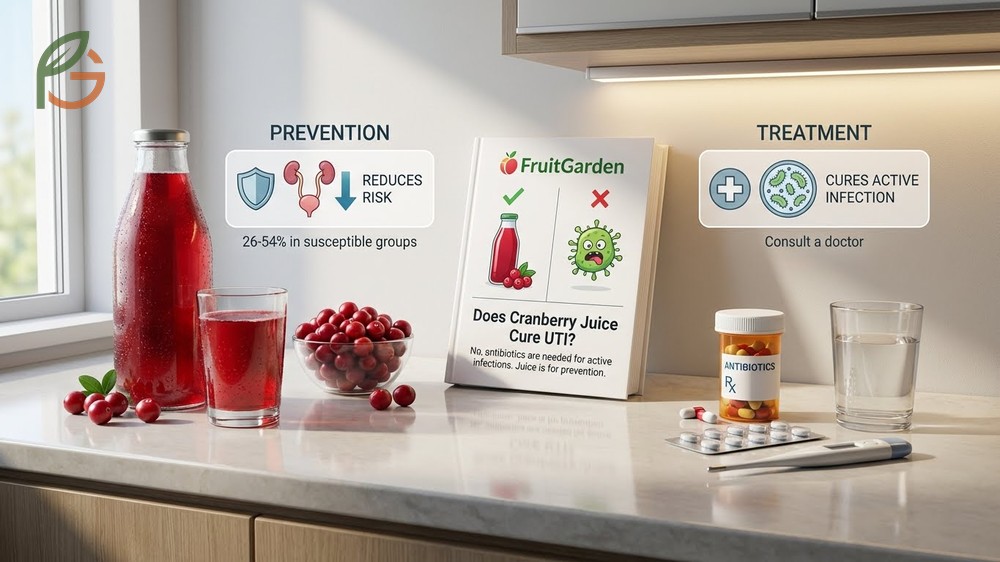
Does cranberry juice cure UTI? No, it doesn’t cure active urinary tract infections—you’ll need antibiotics for that. Research shows cranberry products work as prevention, reducing UTI risk by 26-54% in susceptible groups, but they can’t replace medical treatment once infection sets in. FruitGarden synthesizes current medical research to help you understand when cranberry juice helps and when it’s time to see a doctor.
Quick Answer
- Cranberry juice can’t cure active UTIs—antibiotics are required for treatment[2]
- Prevention works: 54% risk reduction in children, 26% in women with recurrent UTIs[1]
- You need 36mg proanthocyanidins daily for 12-24 weeks to see preventive benefits[3]
- See a doctor immediately if you have fever, back pain, or blood in urine[4]
Does Cranberry Juice Cure UTI
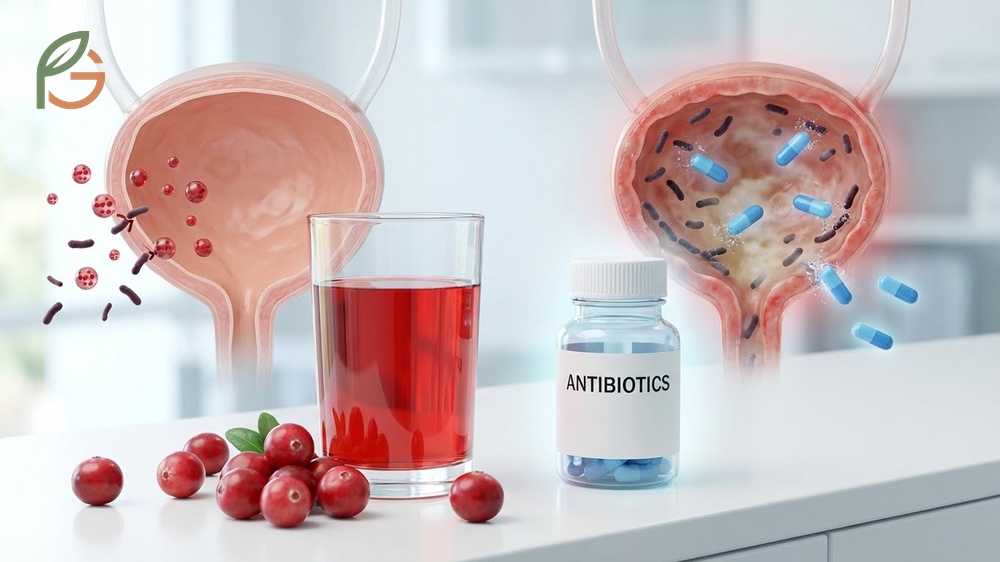
Studies demonstrate that cranberry juice can’t cure urinary tract infections once bacteria have established infection in your bladder. Antibiotics remain the only proven treatment for active UTIs[2]. The confusion comes from cranberry’s well-documented prevention benefits, which don’t translate to treatment once infection occurs.
Research shows cranberry products reduce UTI recurrence by preventing bacteria from adhering to bladder walls. However, this anti-adhesion mechanism doesn’t kill existing bacteria or resolve active infections. You’ll still need prescription antibiotics to eliminate the infection-causing organisms.
Current medical guidance emphasizes that waiting to treat a UTI with cranberry juice alone can lead to serious complications. The infection can spread to your kidneys within days if left untreated with proper antibiotics.
How Cranberry Prevents UTI
Cranberries contain compounds called proanthocyanidins (PACs) that prevent E. coli bacteria from sticking to urinary tract walls[5]. When bacteria can’t adhere, your body flushes them out during normal urination. This mechanism works before infection starts, not after.
Clinical trials confirm that cranberry juice decreases E. coli adhesion for up to 8 hours after consumption[6]. The effect is temporary, which is why daily consumption matters for prevention.
- Prevents bacterial adhesion to bladder walls through PACs
- Works within 8 hours of consumption for temporary protection
- Requires continuous daily intake to maintain anti-adhesion effect
- Most effective against E. coli, which causes 80-85% of UTIs
- Doesn’t kill bacteria—it simply prevents them from colonizing
Why It Can’t Cure Active Infections
Once bacteria have attached to your bladder lining and multiplied, cranberry’s anti-adhesion properties become irrelevant. The bacteria are already established and causing inflammation. Anti-adhesion can’t reverse existing infection or eliminate bacterial colonies.
Evidence indicates that bacterial counts during active UTI reach millions of organisms per milliliter of urine. Cranberry juice can’t reduce these numbers—only antibiotics can kill the bacteria at this concentration.
Important Warning: Don’t delay antibiotic treatment by relying on cranberry juice for active UTI symptoms. Untreated infections can progress to kidney infection within 48-72 hours.
Scientific Evidence Cranberry UTI

A comprehensive Cochrane review analyzing 50 randomized controlled trials with 8,857 participants confirmed cranberry products reduce UTI risk[1]. This meta-analysis represents the highest level of evidence in medical research. The reduction varies by population, with children showing the most dramatic benefit.
Network meta-analysis data shows cranberry juice consumers had a 54% lower UTI rate compared to no treatment and 27% lower rate versus liquid placebo[7]. These findings come from moderate-certainty evidence involving 3,091 participants.
Prevention Success Rates
This table compares UTI risk reduction percentages across five population groups using cranberry products, showing children and post-intervention patients benefit most
| Population Group | Risk Reduction | Study Quality | Recommended Use |
|---|---|---|---|
| Children with recurrent UTIs | 54%[8] | Moderate certainty | Daily juice or capsules |
| People after medical intervention | 53%[8] | Moderate certainty | Post-radiation therapy |
| Women with recurrent UTIs | 26%[1] | Moderate certainty | 2+ UTIs per 6 months |
| Nursing home residents | No significant benefit | Low certainty | Not recommended |
| Pregnant women | Insufficient evidence | Very low certainty | Consult physician |
Research across multiple trials shows cranberry’s effectiveness depends heavily on the population. Women with recurrent UTIs benefit consistently, while older adults in care facilities show minimal response. The difference likely relates to immune function and overall health status.
Optimal Dosage and Duration
Current data indicates you need at least 36mg of PACs daily to prevent UTIs effectively[3]. This represents the first meta-analysis to establish minimum thresholds. Most commercial cranberry juices contain 20-30mg PACs per 8-ounce serving, meaning you’d need 10-12 ounces daily.
Studies demonstrate that UTI risk reduction becomes significant only with continuous use for 12-24 weeks[3]. Shorter durations don’t provide measurable protection. You can’t take cranberry products sporadically and expect prevention benefits.
- Minimum 36mg PACs daily for measurable UTI risk reduction
- Continue daily intake for 12-24 weeks to achieve clinical benefits
- Cranberry juice provides better outcomes than capsules in most studies
- 240-300ml cranberry juice cocktail daily prevents 50% of recurrences[6]
- PAC content varies widely between products—check labels carefully
Prevention vs Cure UTI
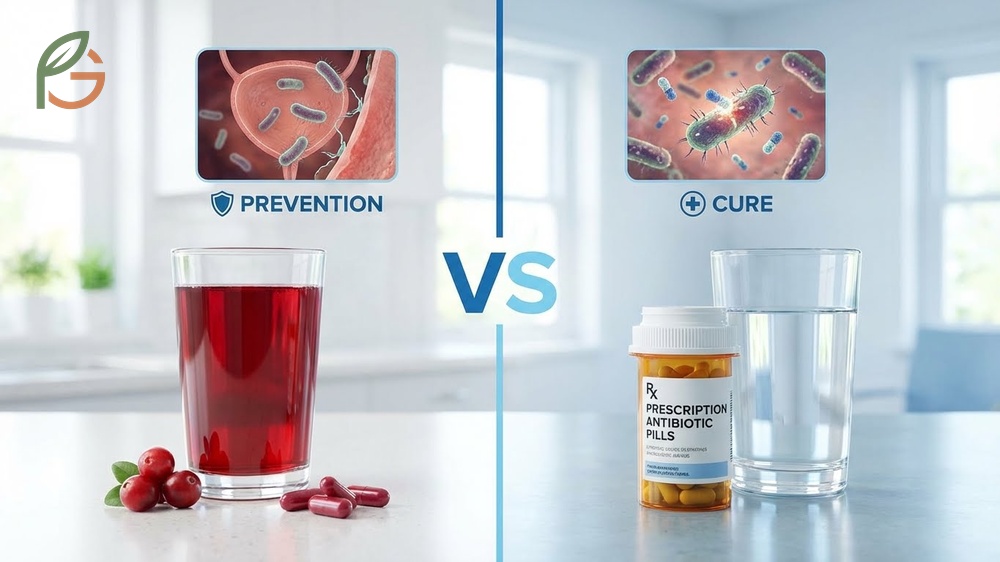
The distinction between prevention and treatment matters significantly for UTI management. Prevention means taking action before infection occurs to reduce your risk. Treatment means eliminating active infection with antimicrobial medication.
Evidence shows cranberry products work exclusively for prevention, not cure. This limitation comes from their mechanism—they prevent bacterial adhesion but can’t kill bacteria or reverse inflammation. Antibiotics remain essential for treating established infections.
Research comparing antibiotic prophylaxis to cranberry prophylaxis found both reduce recurrence, but antibiotics work faster and more reliably for acute treatment[9]. Cranberry’s role is reducing antibiotic use through prevention, not replacing antibiotics for active infections.
Critical Distinction: If you have UTI symptoms now (burning, frequency, urgency), cranberry juice won’t help. You need antibiotics. Cranberry works for people without current symptoms who want to prevent future infections.
- Prevention: Daily cranberry products for 12+ weeks before symptoms appear
- Treatment: Antibiotics within 24-48 hours of symptom onset
- Prevention target: People with 2+ UTIs per year who are infection-free
- Treatment need: Anyone with current burning, frequency, or urgency symptoms
- Prevention reduces antibiotic use by 59% compared to no intervention[7]
- Treatment delay increases kidney infection risk significantly within 48 hours
Some women try combining cranberry juice with antibiotics during active infections. While this won’t harm you, studies haven’t shown that cranberry enhances antibiotic effectiveness or speeds recovery from established infections.
When to See a Doctor for UTI

Contact a healthcare provider as soon as you notice burning during urination, frequent urination, or urgent need to urinate[4]. These symptoms indicate active infection that requires antibiotic treatment. Don’t wait to see if symptoms improve on their own—UTIs rarely resolve without medication.
Certain groups need immediate medical attention even for mild symptoms. Pregnant women, men, children under 2, adults over 65, and immunocompromised individuals should contact their doctor the same day symptoms begin[4].
- Fever above 100.4°F (38°C) with UTI symptoms
- Strong pain in your back or sides near kidneys
- Blood in your urine (pink, red, or cola-colored)
- Nausea or vomiting along with urinary symptoms
- Symptoms that worsen after 48 hours despite home care
- Recurring UTIs (2+ in 6 months or 3+ in 12 months)
- First-time UTI symptoms (you need proper diagnosis)
Go to the emergency room if you have high fever (over 101°F), severe back pain, persistent vomiting, or confusion alongside UTI symptoms. These signs suggest the infection has spread to your kidneys, which requires immediate intervention.
Don’t Wait: Studies show kidney infections can develop within 48-72 hours of untreated lower UTI symptoms. Early antibiotic treatment prevents this progression in over 95% of cases.
Dangers of Untreated UTI
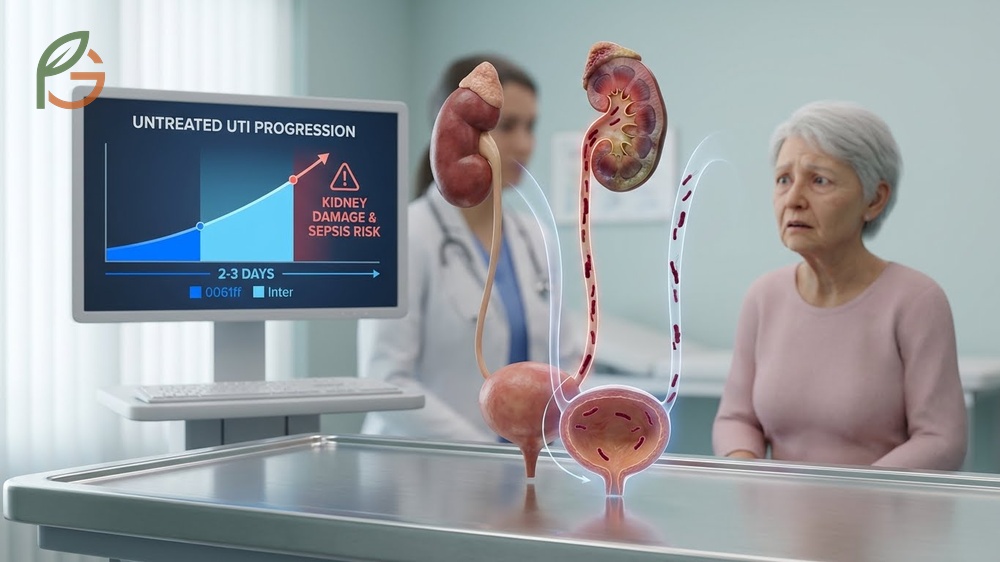
Untreated urinary tract infections can progress to pyelonephritis (kidney infection), which causes permanent kidney damage[10]. Bacteria travel up the ureters from your bladder to your kidneys, where they trigger severe inflammation. This progression happens faster than most people realize—often within 2-3 days.
Kidney infections lead to sepsis in 20-30% of untreated cases, particularly in elderly or immunocompromised individuals[10]. Sepsis is a life-threatening condition where infection spreads throughout your bloodstream. It requires hospitalization and can result in organ failure.
- Permanent kidney damage affecting long-term kidney function
- Sepsis (bloodstream infection) requiring ICU hospitalization
- High blood pressure developing from chronic kidney disease
- Recurrent UTIs becoming more frequent and antibiotic-resistant
- Premature birth or low birthweight babies in pregnant women[11]
Research indicates that delaying antibiotic treatment by even 48 hours significantly increases complication rates. Women who wait 3+ days to seek treatment face 4-5 times higher risk of developing kidney infection compared to those who start antibiotics within 24 hours.
Some people develop chronic UTIs after repeated untreated infections, where UTIs return every few months despite treatment. This creates a cycle requiring stronger antibiotics and potentially contributing to antibiotic resistance.
Conclusion
The evidence is clear: cranberry juice doesn’t cure UTI, but it’s an effective prevention tool when used correctly. You need 36mg PACs daily for 12-24 weeks to reduce your UTI risk by 26-54%, depending on your situation. This works through anti-adhesion, not bacterial elimination.
Current medical guidance emphasizes antibiotics remain essential for treating active infections. Don’t delay medical care hoping cranberry juice will cure symptoms—this increases your risk of serious complications. FruitGarden recommends using cranberry products for prevention while seeking prompt antibiotic treatment for any active UTI symptoms.
Medical Disclaimer
Important Medical Disclaimer: This content is for informational and educational purposes only. It’s not intended as a substitute for professional medical advice, diagnosis, or treatment. Always consult a qualified healthcare professional before making any changes to your diet, medication, or health routine, especially if you have recurrent UTIs, kidney disease, diabetes, or other medical conditions. Never delay seeking medical attention for UTI symptoms based on information from this article.
Frequently Asked Questions
Can Cranberry Juice Cure a UTI
No, cranberry juice can’t cure an active UTI. Research shows it works for prevention by stopping bacteria from sticking to bladder walls, but it can’t eliminate existing infections. You need antibiotics prescribed by a doctor to treat active UTIs effectively.
Will Cranberry Juice Get Rid of a UTI
Cranberry juice won’t get rid of a UTI once you have symptoms like burning or frequency. Studies confirm it reduces future UTI risk by 26-54% when taken daily for prevention, but it doesn’t treat established infections. Contact your doctor for antibiotic treatment instead of relying on cranberry juice alone.
Does Cranberry Juice Really Help UTI
Yes, cranberry juice really helps prevent UTIs when consumed daily with at least 36mg PACs for 12-24 weeks. Meta-analyses show it reduces recurrence rates significantly in women and children. However, it doesn’t help treat active infections—that requires antibiotics.
How Fast Does Cranberry Juice Work for UTI
Cranberry juice takes 12-24 weeks of daily use to reduce UTI risk effectively. It doesn’t work fast for active infections because it prevents bacteria from adhering, not killing them. If you have symptoms now, you need antibiotics that work within 24-48 hours, not cranberry juice.
Can Drinking Cranberry Juice Cure a UTI
No, drinking cranberry juice can’t cure a UTI regardless of how much you consume. The anti-adhesion compounds in cranberries prevent new infections but don’t eliminate bacteria causing current symptoms. Clinical guidelines recommend antibiotics as the only effective treatment for active UTIs.
Will Cranberry Juice Cure a Bladder Infection
Cranberry juice won’t cure a bladder infection (lower UTI). While it prevents bacteria from sticking to bladder walls when taken preventively, it can’t treat existing infections. You need prescription antibiotics to cure bladder infections—cranberry juice works only for prevention, not treatment.
Does Cranberry Juice Prevent Urinary Tract Infections
Yes, cranberry juice prevents urinary tract infections when consumed daily with adequate PAC content. Evidence from 50 clinical trials shows 26-54% risk reduction in susceptible groups. You need 240-300ml daily containing 36mg PACs, continued for 12+ weeks for measurable prevention benefits.