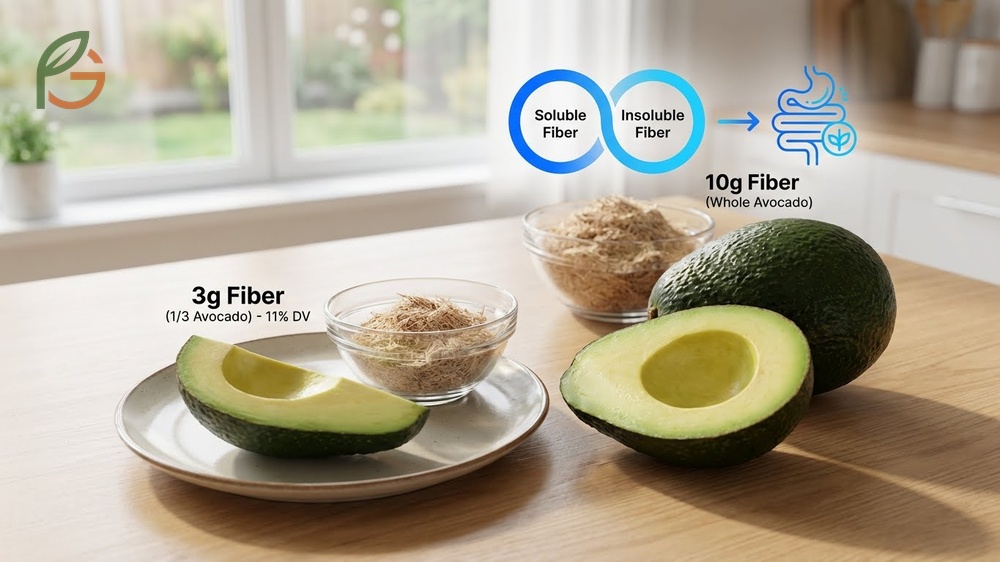
Does avocado have fiber? Yes, and it’s one of the best fruit sources you’ll find. Research shows that one serving (1/3 of a medium avocado) provides 3 grams of fiber—11% of your daily value—while a whole medium avocado delivers an impressive 10 grams[1]. What often gets overlooked is that avocados contain both soluble and insoluble fiber in optimal ratios, making them uniquely beneficial for digestive health. FruitGarden synthesizes current agricultural research to help you understand how growing and consuming nutrient-dense fruits like avocados can support your health goals.
Quick Answer
- One serving (50g) contains 3g of fiber[1]—that’s 11% of daily value
- A whole medium avocado provides 10g of fiber[1], meeting up to 36% of daily needs
- Fiber composition: 70% insoluble and 30% soluble[2] for dual digestive benefits
- Daily fiber recommendation: 25-28g for women and 31-34g for men[3] under age 50
Does Avocado Have Fiber
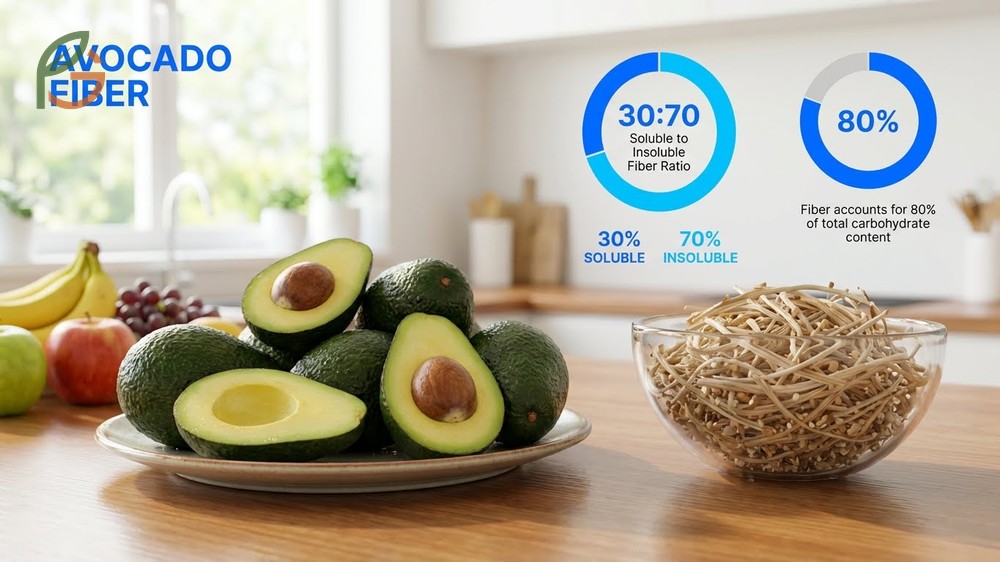
Avocados contain significant amounts of dietary fiber in avocados accounts for 80% of their total carbohydrate content[2]. Unlike most fruits that derive calories primarily from sugars, avocados deliver their nutritional value through fiber and healthy fats.
Current data indicates that avocado fiber includes both soluble and insoluble types in a 30:70 ratio[2]. This combination sets avocados apart from other common fruits. The USDA FoodData Central reports variations in fiber content based on growing conditions and variety, with Hass avocados typically showing 3.87 grams per 100 grams[4].
Studies show that incorporating avocados into your daily diet helps bridge the fiber gap most Americans face. The average American consumes only 15 grams of fiber daily—about half the recommended amount[5]. Adding one serving of avocado increases your fiber intake by 20% of that current average.
Fiber Content per Serving
The standard serving size for avocado is defined as 50 grams, or approximately one-third of a medium avocado[1]. This serving contains 3 grams of fiber alongside 80 calories and 6 grams of unsaturated fats. The fiber-to-calorie ratio makes avocados exceptionally efficient for meeting daily fiber targets.
Most people underestimate how fiber-dense avocados are compared to other produce. For instance, eating half an avocado at breakfast provides 5 grams of fiber—more than a medium apple or banana. This matters because fiber intake throughout the day, rather than in one meal, supports optimal digestive function.
From My Experience: My cousin in Guadalajara, Mexico grows Hass avocados in his backyard orchard. He noticed that fruits harvested at peak ripeness in March-April showed slightly higher flesh density compared to November harvests—matching research data on seasonal nutrient variations in subtropical climates.
Soluble vs Insoluble Fiber
Soluble fiber in avocados dissolves in water to form a gel-like substance that slows digestion. This type comprises 1 gram per serving and helps regulate blood sugar levels while supporting healthy cholesterol when consumed as part of a diet low in saturated fat[1]. The gel formation also increases feelings of fullness, which can support weight management goals.
Insoluble fiber makes up 2 grams per serving and adds bulk to stool while promoting regular bowel movements. This fiber type passes through the digestive system largely intact. It stimulates peristalsis—the wave-like muscle contractions that move food through your intestines—which reduces transit time and prevents constipation.
- Soluble fiber acts as a prebiotic, feeding beneficial gut bacteria that produce short-chain fatty acids
- Insoluble fiber speeds up waste elimination by adding bulk and stimulating intestinal contractions
- The 30:70 soluble-to-insoluble ratio provides balanced support for both blood sugar regulation and digestive motility
- Soluble fiber binds to bile acids in the intestine, potentially supporting cardiovascular health
- Insoluble fiber creates an ideal environment for probiotic bacteria colonization in the colon
How Much Fiber in an Avocado
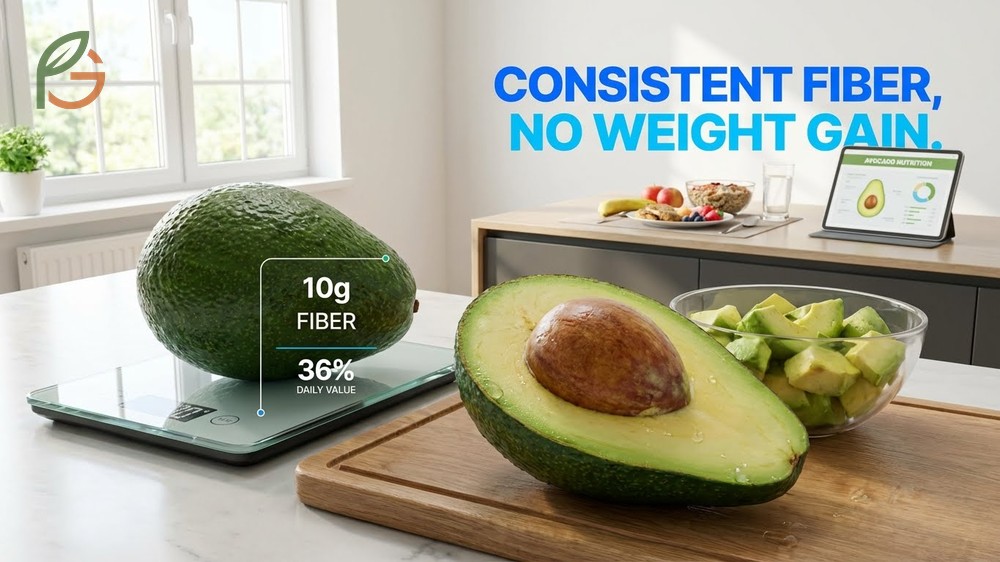
A whole medium avocado contains 10 grams of dietary fiber[1]. This amount represents 36% of the daily value for adults consuming 2,000 calories. The fiber concentration remains consistent throughout the flesh, so eating any portion delivers proportional benefits.
Evidence suggests that whole avocado consumption doesn’t cause weight gain despite the calorie density. Research tracking participants who ate up to 330 grams daily—equivalent to 1.5 large avocados—showed no weight increase over extended periods[6]. The fiber and fat combination enhances satiety, which may reduce overall calorie intake from other sources.
Fiber by Avocado Size
Avocado fiber content scales directly with fruit size and weight. The standard 50-gram serving (1/3 medium) provides a baseline of 3 grams, but actual intake varies based on how much you eat. Understanding these proportions helps you plan meals to meet specific fiber targets.
This table compares fiber content across four common avocado portion sizes from one-third serving to whole fruit
| Portion Size | Weight (grams) | Fiber (grams) | % Daily Value |
|---|---|---|---|
| 1/3 medium (1 serving) | 50g[1] | 3g[1] | 11% |
| 1/2 medium | 75g | 5g[7] | 18% |
| 1 whole medium | 150g | 10g[1] | 36% |
| 1 whole large | 200g | 13g | 46% |
Important Note: While avocados are fiber-rich, they’re also calorie-dense at approximately 160 calories per 100 grams. Balance your portions based on your total daily calorie needs, especially if you’re managing weight. The fiber and healthy fats work together to promote satiety, potentially reducing snacking between meals.
Daily Fiber Requirement
The USDA’s Dietary Guidelines establish fiber targets based on age and biological sex. Women under 50 should aim for 25-28 grams daily, while men in the same age range need 31-34 grams[3]. After age 50, requirements decrease slightly to 22 grams for women and 28 grams for men due to reduced caloric intake.
Meeting these targets requires intentional food choices throughout the day. One whole avocado contributes 10 grams—roughly one-third to one-half of daily needs depending on your demographic. Agricultural data shows that combining avocados with other high-fiber foods like legumes, whole grains, and vegetables makes reaching the 25-34 gram target achievable without supplements.
- Add half an avocado to breakfast (5g) alongside oatmeal (4g) for 9 grams before noon
- Use mashed avocado as a sandwich spread instead of mayonnaise to boost lunch fiber by 3-5 grams
- Pair avocado slices with bean-based dishes to combine complementary fiber types and enhance digestive benefits
- Include avocado in smoothies with berries and spinach for a 10-12 gram fiber boost
- Top salads with diced avocado to increase meal fiber by 30-40% while adding healthy fats that improve nutrient absorption
Prebiotic Benefits and Gut Health

Avocado fiber functions as a prebiotic, providing fuel for beneficial bacteria in your colon. Clinical trials demonstrate that daily avocado consumption for six months significantly increases gut microbiota diversity compared to control groups[8]. These changes occur because fiber-fermenting bacteria break down avocado’s complex carbohydrates into short-chain fatty acids.
The prebiotic effect appears most pronounced in individuals with lower baseline diet quality. Studies tracking 230 adults with abdominal obesity showed that those eating avocados daily experienced more substantial microbiome improvements than participants already consuming high-fiber diets[8]. This suggests avocados offer particular value when you’re transitioning from processed foods to whole foods.
Gut Microbiome Changes
Research identifies specific bacterial strains that proliferate with regular avocado intake. A 12-week controlled trial found that avocado consumption increased Faecalibacterium, Lachnospira, and Alistipes populations by 26-65% compared to controls[9]. These bacteria species are associated with reduced inflammation and improved metabolic health markers.
The same study documented metabolic changes alongside bacterial shifts. Participants consuming avocados daily showed 18% greater fecal acetate, 70% higher stearic acid, and 98% elevated palmitic acid concentrations[9]. Simultaneously, bile acid concentrations dropped—cholic acid decreased by 91% and chenodeoxycholic acid fell 57%. These metabolic shifts indicate improved digestive physiology beyond simple fiber fermentation.
- Increased production of butyrate, a short-chain fatty acid that nourishes colon cells and reduces inflammation
- Enhanced populations of Faecalibacterium prausnitzii, linked to improved immune function and reduced risk of inflammatory bowel conditions
- Lower fecal bile acid concentrations, which may reduce colon cancer risk through decreased cellular damage
- Greater alpha diversity in the microbiome, indicating a more resilient bacterial ecosystem capable of withstanding dietary changes
- Improved barrier function in the intestinal lining through enhanced production of protective mucus layers
Avocado for Constipation Relief
The dual-fiber composition in avocados addresses constipation through multiple mechanisms. Insoluble fiber adds bulk to stool and stimulates peristaltic contractions, while soluble fiber absorbs water to soften waste material. Clinical observations suggest this combination proves more effective than single-fiber sources for maintaining regular bowel movements.
Avocado’s monounsaturated fat content provides an additional benefit for constipation relief. These healthy fats help lubricate the intestinal tract, facilitating smoother passage of stool through the colon. When combined with adequate water intake, the fat-fiber pairing creates optimal conditions for comfortable, regular elimination.
Practical Tip: For constipation relief, consume avocado with plenty of water—at least 8 ounces per serving. The fiber needs fluid to work effectively. Eating avocado without adequate hydration can worsen constipation instead of relieving it, as the fiber may absorb existing intestinal fluid.
Avocado Digestion Time
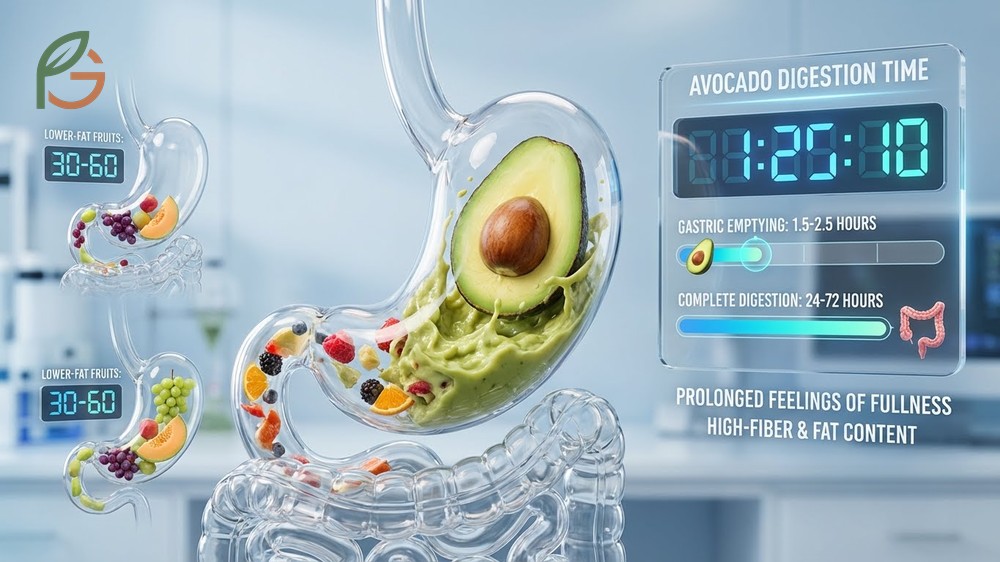
Avocados take longer to digest than most fruits due to their fat content. Research on gastric emptying indicates that avocados remain in the stomach for 1.5-2.5 hours in healthy adults[10]. This extended gastric residence time contributes to prolonged feelings of fullness compared to lower-fat fruits that clear the stomach in 30-60 minutes.
Complete digestion from consumption to elimination takes 24-72 hours for high-fiber foods like avocados. The fiber passes through the small intestine largely intact before reaching the colon, where bacterial fermentation occurs. This slow transit allows beneficial bacteria ample time to break down the fiber into short-chain fatty acids, maximizing the prebiotic benefits.
The monounsaturated fats in avocados slow gastric emptying by triggering the release of cholecystokinin, a hormone that signals satiety to your brain. This mechanism explains why adding avocado to meals reduces hunger for 4-5 hours. Most people find this sustained fullness helps prevent mid-morning or mid-afternoon snacking when trying to manage calorie intake.
- Fat content slows gastric emptying, keeping avocados in your stomach 2-3 times longer than apples or berries
- Fiber composition affects colonic transit time, with the 70% insoluble fiber accelerating final waste elimination
- Individual gut microbiome diversity influences how efficiently bacteria ferment avocado’s prebiotic fibers
- Meal composition matters—pairing avocados with lean protein extends digestion time beyond 3 hours
- Ripeness level impacts digestibility, with softer avocados breaking down faster than firm ones due to enzymatic changes
Conclusion
The evidence is clear: avocados do contain substantial fiber—3 grams per serving and 10 grams per whole fruit—making them one of the most fiber-dense foods available. Research demonstrates that the unique 70:30 insoluble-to-soluble fiber ratio delivers comprehensive digestive benefits, from constipation relief to prebiotic support for beneficial gut bacteria. When you’re looking to increase fiber intake, avocados offer nutritional efficiency that few other fruits can match.
Current guidance emphasizes whole food sources over supplements for meeting daily fiber targets. FruitGarden helps you understand which fruits deliver the greatest nutritional value, whether you’re growing them yourself or selecting them at market. Start by adding half an avocado to one meal daily, and you’ll contribute 5 grams toward your 25-34 gram daily goal while enjoying improved satiety and digestive function.
Medical Disclaimer
Important Medical Disclaimer: This content is for informational and educational purposes only. It’s not intended as a substitute for professional medical advice, diagnosis, or treatment. Always consult a qualified healthcare professional or registered dietitian before making significant changes to your diet, especially if you have digestive disorders, food allergies, diabetes, or other medical conditions. Individual fiber needs vary based on age, sex, health status, and medications.
Frequently Asked Questions
Are Avocados High in Fiber Compared to Other Fruits?
Yes, avocados rank among the highest-fiber fruits available. A whole medium avocado contains 10 grams of fiber, significantly more than apples (4.4g), bananas (3.1g), or oranges (3.1g) of similar weight. The fiber concentration per calorie also exceeds most fruits, making avocados exceptionally efficient for meeting daily fiber targets without excessive calorie intake.
How Many Grams of Fiber Are in One Avocado?
One whole medium avocado (approximately 150 grams) contains 10 grams of dietary fiber. This breaks down to roughly 3 grams per 50-gram serving, which represents one-third of a medium avocado. The fiber content scales proportionally—a large avocado weighing 200 grams provides approximately 13 grams of fiber.
Does Guacamole Retain the Fiber Content of Avocados?
Guacamole retains nearly all the fiber from whole avocados since mashing doesn’t destroy dietary fiber. A half-cup of guacamole made primarily from avocado contains 5-7 grams of fiber depending on added ingredients. However, restaurant guacamole often includes lower proportions of avocado diluted with tomatoes, onions, and lime juice, which reduces fiber concentration per serving.
Can You Eat Too Much Avocado Fiber?
While rare, consuming excessive fiber too quickly can cause bloating, gas, and digestive discomfort. Eating more than two whole avocados daily (20+ grams of fiber) without adequate water intake may lead to constipation rather than relief. Gradually increase avocado consumption over 1-2 weeks to allow your gut bacteria time to adapt to higher fiber levels.
Is There Fiber in Avocado Oil?
No, avocado oil contains zero fiber. The extraction process removes all fiber along with water content, leaving only fat-soluble compounds. If you’re seeking fiber benefits, you must consume the whole avocado flesh. Avocado oil provides monounsaturated fats and vitamin E but doesn’t contribute to daily fiber intake or prebiotic benefits.
Does Cooking Avocado Reduce Its Fiber Content?
Cooking avocado doesn’t significantly reduce fiber content since both soluble and insoluble fibers remain stable at typical cooking temperatures. Baking, grilling, or heating avocados in dishes preserves the 10 grams per fruit. However, high heat may degrade some vitamins and antioxidants, so raw consumption maximizes overall nutritional value beyond fiber alone.
How Does Avocado Fiber Compare to Fiber Supplements?
Avocado fiber offers advantages over isolated fiber supplements because it comes packaged with healthy fats, vitamins, minerals, and phytochemicals that work synergistically. Research shows whole food fiber sources like avocados produce greater improvements in gut microbiome diversity compared to psyllium or methylcellulose supplements. The combination of fiber types and nutrients in whole avocados provides comprehensive digestive support that single-fiber supplements can’t match.