Does avocado cause constipation? No, avocados don’t cause constipation—they actually help prevent it. Research shows that half a medium avocado provides 6.7g of dietary fiber[1], promoting regular bowel movements and supporting digestive health. Studies demonstrate that daily avocado consumption increases beneficial gut bacteria by up to 65%[2]. FruitGarden provides evidence-based guidance on how avocados affect your digestive system and when they might trigger heartburn.
Quick Answer
- Half an avocado contains 6.7g fiber[1] (70% insoluble, 30% soluble[3]) that prevents constipation
- Daily avocado intake increases fiber-fermenting bacteria by 26-65%[2] and boosts short-chain fatty acid production
- Safe serving size for sensitive digestive systems: 60g (about 3 tablespoons)[4]
- High fat content (21g per fruit)[5] can trigger heartburn by slowing digestion and relaxing the lower esophageal sphincter
Does Avocado Cause Constipation
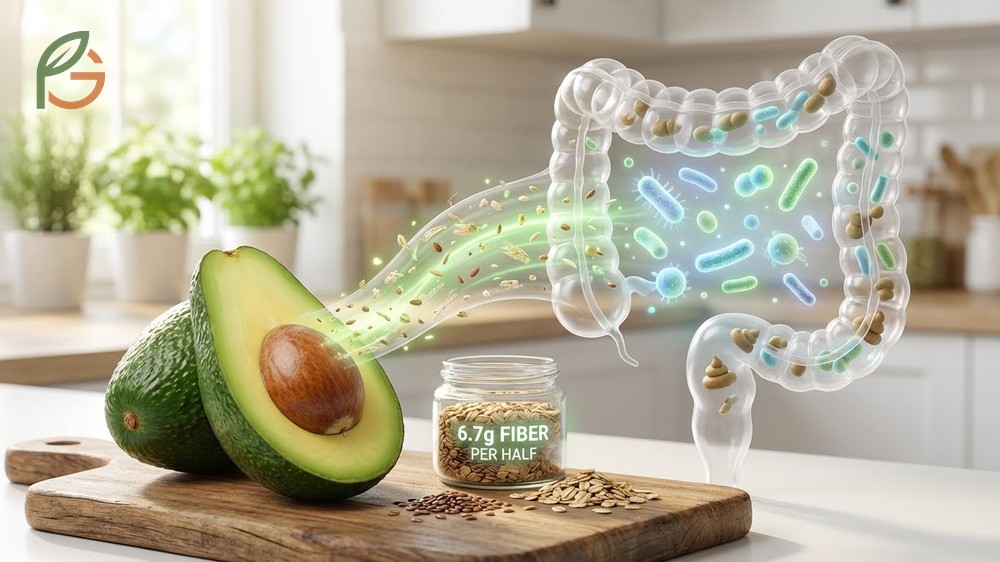
Avocados don’t cause constipation—they’re actually one of the most effective fruits for preventing it. Half a medium avocado delivers 6.7g of dietary fiber[1], which equals about 27% of the daily recommended intake for women and 18% for men. This high fiber content adds bulk to stool and promotes regular bowel movements.
Research from the University of Illinois shows that eating avocado daily for 12 weeks increases beneficial gut bacteria like Faecalibacterium and Lachnospira by 26-65%[2]. These bacteria break down fiber into short-chain fatty acids that support colon health. The same study found that participants who ate avocado had 18% higher fecal acetate concentrations[2], indicating better fiber fermentation.
Current evidence indicates that avocados help maintain digestive regularity rather than causing blockages. The combination of fiber, healthy fats, and prebiotic compounds creates an ideal environment for smooth digestion.
Fiber Content Breakdown
Avocados contain two types of fiber that work together to prevent constipation. About 70% is insoluble fiber, while 30% is soluble fiber[3]. Insoluble fiber adds bulk and speeds up transit time through your intestines.
Soluble fiber dissolves in water to form a gel-like substance that softens stool and makes it easier to pass. This type includes pectin, a prebiotic that feeds beneficial gut bacteria[3]. The dual fiber action means you’re getting both immediate relief and long-term digestive support.
This table compares total fiber, insoluble fiber, soluble fiber, and calorie content across five common avocado serving sizes from 50g to 200g
| Serving Size | Total Fiber | Insoluble Fiber | Soluble Fiber | Calories |
|---|---|---|---|---|
| 50g (1/4 avocado) | 3.4g | 2.4g | 1.0g | 80 |
| 60g (Low FODMAP) | 4.0g | 2.8g | 1.2g | 96 |
| 100g (1/2 avocado) | 6.7g[1] | 4.7g | 2.0g | 160 |
| 136g (1 whole medium) | 9.2g[6] | 6.4g | 2.8g | 227 |
| 200g (1 large) | 13.4g | 9.4g | 4.0g | 320 |
Gut Bacteria Benefits
Studies show that avocado consumption reshapes your gut microbiome in ways that support digestive health. The 12-week University of Illinois trial found that daily avocado meals increased alpha diversity—a measure of bacterial variety linked to better gut function[2]. Participants who ate avocado had 91% lower cholic acid and 57% lower chenodeoxycholic acid concentrations[2], indicating reduced intestinal inflammation.
These changes matter because bile-sensitive bacteria like Faecalibacterium produce butyrate, a compound that fuels colon cells and reduces inflammation. Lower bile acid levels create a friendlier environment for these helpful microbes.
Important Note: If you’re new to high-fiber foods, start with 50g (1/4 avocado) and gradually increase over 2-3 weeks. Adding too much fiber too quickly can cause temporary bloating or gas as your gut bacteria adjust.
Is Avocado Good for Constipation

Avocados rank among the best natural remedies for constipation due to their unique nutrient profile. Beyond fiber, they contain 22g of healthy fats per whole fruit[5]—primarily monounsaturated fats that help lubricate your digestive tract. This combination of fiber and fat creates an ideal consistency for easy bowel movements.
Evidence suggests that regular avocado consumption provides more consistent relief than many other high-fiber fruits. While apples and pears contain similar fiber levels, avocados offer the added benefit of prebiotic compounds like pectin that feed beneficial bacteria. The high potassium content (690mg per fruit[6]) also supports smooth muscle contractions in the intestinal wall.
Current data indicates that eating half an avocado daily can help maintain regularity without causing dependency. Unlike stimulant laxatives, avocados work naturally with your digestive system.
Soluble vs Insoluble Fiber
Understanding how each fiber type works helps you maximize avocado’s benefits for constipation relief. Insoluble fiber—which makes up 70% of avocado’s total fiber[3]—doesn’t dissolve in water. It passes through your digestive system mostly intact, adding bulk to stool and speeding up transit time through your colon.
Soluble fiber absorbs water and forms a gel that softens stool, making it easier to pass. This type also helps regulate blood sugar and cholesterol levels by slowing down digestion. Research shows that the pectin in avocados stimulates beneficial bacteria growth[3], producing metabolites that improve colon health.
- Insoluble fiber adds bulk and reduces transit time from 48 hours to 24-36 hours
- Soluble fiber softens stool consistency by absorbing water in the intestinal tract
- Pectin feeds beneficial bacteria that produce short-chain fatty acids for colon health
- Combined fiber types prevent both constipation and diarrhea by regulating consistency
- Monounsaturated fats lubricate the intestinal lining for smoother passage
Prebiotics and Digestion
Avocados contain prebiotics—special compounds that beneficial gut bacteria use as fuel. The pectin and other soluble fibers reach your colon intact, where bacteria ferment them into short-chain fatty acids like acetate, propionate, and butyrate. These metabolites lower pH levels in your colon, creating an environment that discourages harmful bacteria while supporting helpful strains.
Research demonstrates that this prebiotic effect contributes significantly to constipation relief. When beneficial bacteria thrive, they produce compounds that stimulate mucus production and strengthen the intestinal barrier. This creates better conditions for smooth, regular bowel movements.
Pro Tip: Pair avocados with other fermented foods like yogurt or kefir to maximize digestive benefits. The probiotics in fermented foods work synergistically with avocado’s prebiotics for optimal gut health.
Does Avocado Cause Heartburn
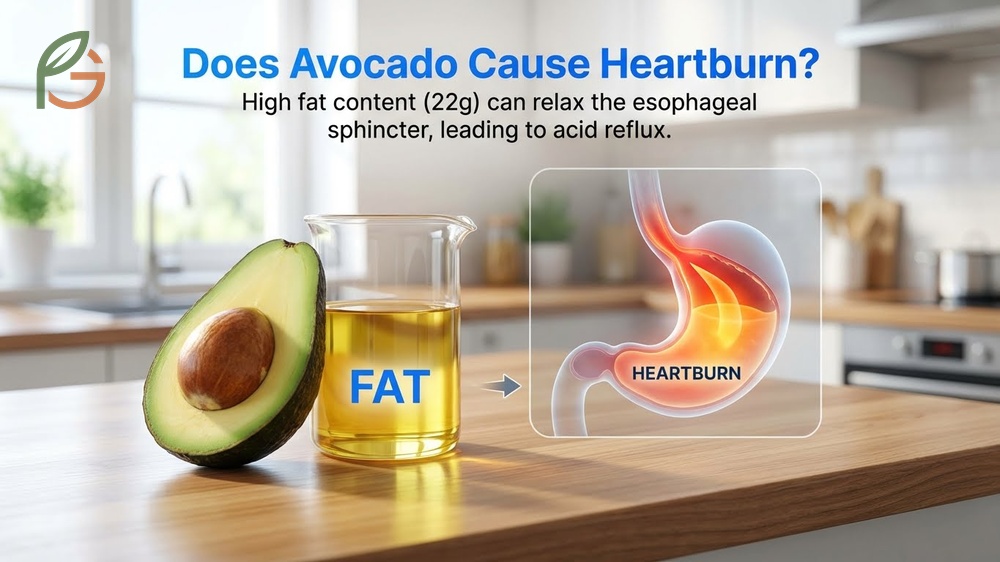
Avocados can trigger heartburn in some people due to their high fat content, even though they’re considered a healthy food. One whole avocado contains 22g of fat[5], with 15g being monounsaturated. While these are heart-healthy fats, they take longer to digest than proteins or carbohydrates, causing food to sit in your stomach longer and increasing acid production.
Studies show that high-fat foods—whether healthy or not—can relax the lower esophageal sphincter (LES), the valve between your stomach and esophagus. When the LES relaxes, stomach acid flows back into your esophagus, causing that burning sensation. Evidence indicates that fatty foods increase stomach acid levels because your body needs more time to break down fats compared to other nutrients.
Current research suggests that portion size matters more than complete avoidance. Most people can tolerate 50-60g (1/4 to 1/3 avocado) without triggering reflux symptoms.
Fat Content and Acid Reflux
The mechanism behind avocado-triggered heartburn relates to digestion speed and hormonal responses. When you eat high-fat foods like avocado, your stomach releases cholecystokinin (CCK), a hormone that slows gastric emptying. This means food stays in your stomach longer, creating more opportunity for acid to reflux into your esophagus.
Research shows that meals containing more than 15g of fat can reduce LES pressure for up to 3 hours after eating. Since half an avocado contains about 11g of fat, eating a full avocado in one sitting pushes you into the range that typically triggers reflux in sensitive individuals.
- Eating avocado on an empty stomach increases acid production without other foods to buffer it
- Combining avocado with other high-fat foods (cheese, nuts, oils) compounds the effect
- Lying down within 2-3 hours after eating avocado allows gravity to work against you
- Eating avocado late at night when stomach acid production naturally increases
- Consuming large portions (more than half an avocado) in a single meal
Timing and Portion Control
Timing your avocado intake strategically can help you enjoy the benefits without the heartburn. Eating avocado earlier in the day—at breakfast or lunch rather than dinner—gives your body more time to digest before lying down. Staying upright for at least 3 hours after eating allows gravity to keep stomach contents where they belong.
Portion control makes a significant difference for acid reflux sufferers. Start with 50g (about 1/4 avocado) and wait 2 hours to see how your body responds. If you don’t experience symptoms, you can gradually increase to 100g over several weeks. Pairing avocado with alkaline foods like spinach, cucumber, or whole grains can help neutralize stomach acid.
Research-based strategies include eating avocado as part of a balanced meal rather than alone. The fiber from vegetables and complex carbs slows down overall digestion in a way that doesn’t trigger the same LES relaxation as fat alone.
Low FODMAP Serving Sizes
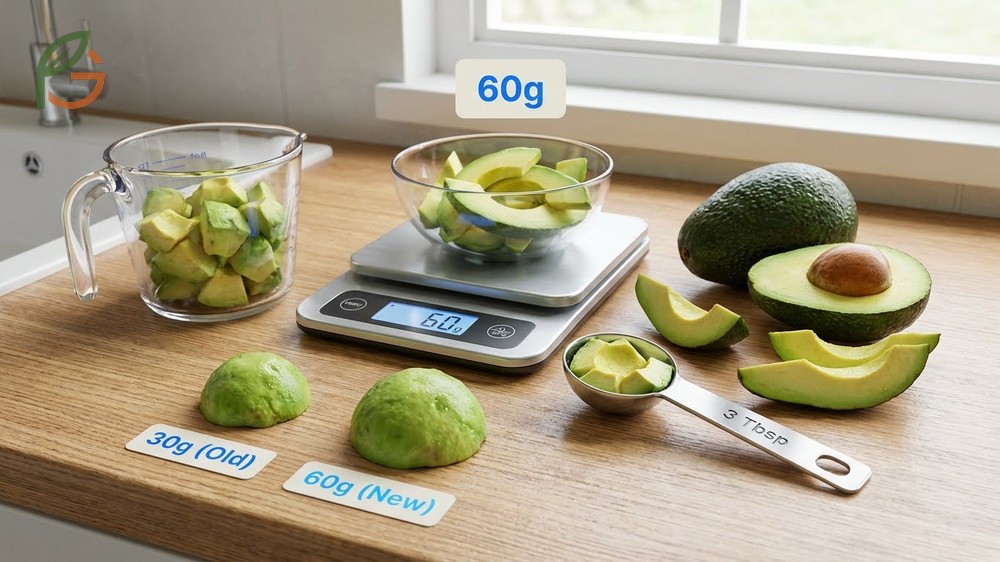
Recent updates from Monash University show that the low FODMAP serving size for avocado has increased from 30g to 60g (about 3 tablespoons)[4]. This change came after researchers discovered perseitol, a new polyol compound in avocados. Despite this discovery, testing revealed that larger portions remain safe for most people following a low FODMAP diet.
Studies indicate that servings of 80g (about half a small avocado) contain moderate amounts of perseitol, while portions above 100g become high FODMAP. For people with irritable bowel syndrome (IBS) or FODMAP sensitivity, sticking to the 60g recommendation prevents symptoms like bloating, gas, and abdominal discomfort.
Current guidance emphasizes weighing your avocado rather than estimating portions by eye. Avocados vary significantly in size—Florida varieties can weigh 910g while Hass avocados average 170g. What looks like “1/8 of an avocado” could contain anywhere from 20g to 115g depending on the fruit’s size.
- Weigh portions using a kitchen scale to ensure accuracy—eyeballing often leads to overshooting
- Space avocado servings at least 3-4 hours apart to prevent FODMAP stacking effects
- Start with 30g if you’re highly sensitive, then gradually increase to 60g over 2 weeks
- Combine avocado with low FODMAP proteins (eggs, chicken, tofu) rather than high FODMAP grains
- Track symptoms in a food diary to identify your personal tolerance threshold
- Avoid eating avocado with other sorbitol-containing foods like apples or stone fruits
FODMAP Tip: If you’re reintroducing FODMAPs after elimination, test avocado separately from other trigger foods. Wait 3 days between testing different FODMAP groups to accurately identify which compounds cause your symptoms.
Avocado Intolerance Symptoms

Avocado intolerance differs from a true allergy, though symptoms can overlap. The most common cause is avocado’s high histamine content[7]—a compound that triggers inflammatory responses in sensitive individuals. Unlike allergies that involve IgE antibodies and can cause anaphylaxis, intolerances typically produce digestive symptoms that develop gradually over hours rather than minutes.
Research shows that latex-fruit syndrome accounts for many avocado reactions. Avocados contain proteins similar to natural latex, so people with latex allergies often react to avocados, bananas, and kiwis[7]. This cross-reactivity means you might tolerate avocado fine until suddenly developing symptoms after repeated exposure.
Current data indicates that histamine intolerance affects up to 3% of the population. When you can’t break down histamine efficiently, eating high-histamine foods like avocado causes symptoms within 2-48 hours.
| Reaction Type | Onset Time | Common Symptoms |
|---|---|---|
| Histamine Intolerance | 2-24 hours | Bloating, stomach cramps, diarrhea, headaches, skin flushing |
| FODMAP Sensitivity | 4-12 hours | Gas, bloating, abdominal pain, altered bowel movements |
| Oral Allergy Syndrome | 5-15 minutes | Itchy mouth, scratchy throat, swollen lips or tongue |
| Latex-Fruit Syndrome | Minutes to hours | Hives, mouth itching, stomach discomfort, sneezing |
- Digestive distress (cramping, bloating, diarrhea) occurring 2-8 hours after eating avocado
- Oral symptoms (itching, tingling, swelling) in mouth or throat within minutes of consumption
- Skin reactions (hives, eczema flare-ups, flushing) appearing hours after eating
- Respiratory symptoms (sneezing, nasal congestion, wheezing) in people with latex allergies
- Headaches or migraines triggered consistently after avocado consumption
- Worsening symptoms when combining avocado with other high-histamine foods (aged cheese, fermented foods)
Medical Alert: If you experience difficulty breathing, rapid heartbeat, or widespread hives after eating avocado, seek emergency medical care immediately. These symptoms suggest anaphylaxis, a life-threatening allergic reaction requiring epinephrine treatment.
Conclusion
The evidence is clear: avocados don’t cause constipation—they’re one of nature’s most effective remedies for maintaining digestive regularity. With 6.7g of fiber per half fruit[1] and proven benefits for gut bacteria[2], avocados support healthy bowel function when consumed in appropriate portions. For heartburn concerns, timing and portion control make the difference—stick to 50-60g servings earlier in the day to enjoy the benefits without triggering acid reflux.
Current guidance emphasizes individual tolerance levels, especially for those with IBS, histamine sensitivity, or latex allergies. Start with smaller portions and gradually increase while monitoring your body’s response. FruitGarden recommends consulting digestive health resources and working with qualified professionals to optimize your avocado intake for your specific needs.
Medical Disclaimer
Important Medical Disclaimer: This content is for informational and educational purposes only. It is not intended as a substitute for professional medical advice, diagnosis, or treatment. Always consult a qualified healthcare professional or registered dietitian before making any changes to your diet, especially if you have digestive disorders, food allergies, or other medical conditions. Individual responses to avocados vary based on personal health status, sensitivities, and underlying conditions.
Frequently Asked Questions
Can eating too much avocado cause constipation?
No, eating large amounts of avocado won’t cause constipation—but it can cause digestive discomfort if you’re not used to high-fiber foods. Suddenly increasing fiber intake from 10g to 30g per day can temporarily cause bloating and gas as your gut bacteria adjust. Gradually increase avocado portions over 2-3 weeks to let your digestive system adapt.
How much avocado should I eat daily for constipation relief?
Half an avocado (100g) daily provides optimal constipation relief for most people, delivering 6.7g of fiber and beneficial fats. Research shows this amount increases beneficial gut bacteria without causing digestive upset. If you’re new to avocados or have IBS, start with 1/4 avocado (50g) and increase gradually while monitoring your response.
Why does avocado give me heartburn but not constipation?
Avocado’s high fat content (22g per fruit) triggers heartburn by relaxing the lower esophageal sphincter and slowing stomach emptying, while its fiber prevents constipation by adding bulk to stool. These are two separate mechanisms—fat affects your upper digestive system (esophagus and stomach) while fiber works in your lower system (intestines and colon). You can reduce heartburn by limiting portions to 50g and avoiding eating avocado within 3 hours of lying down.
Is avocado better than other fruits for preventing constipation?
Avocados rank among the top fruits for constipation relief due to their unique combination of fiber, healthy fats, and prebiotics. While prunes contain more sorbitol (a natural laxative) and apples provide similar fiber, avocados offer the added benefit of monounsaturated fats that lubricate the digestive tract. Studies show avocado’s prebiotic compounds increase beneficial bacteria by 26-65%, providing longer-term digestive support beyond immediate relief.
Can I eat avocado if I have IBS and constipation?
Yes, but stick to the low FODMAP serving size of 60g (about 3 tablespoons) to avoid triggering IBS symptoms. Monash University research shows this portion provides constipation relief without causing bloating or gas in most IBS patients. Weigh your portions with a kitchen scale since avocado sizes vary significantly, and space servings at least 3-4 hours apart to prevent FODMAP stacking.
What time of day is best to eat avocado for digestion?
Eating avocado at breakfast or lunch works best for both constipation relief and heartburn prevention. Morning consumption gives your body all day to digest the fats and process the fiber, promoting a bowel movement within 12-24 hours. Avoid eating avocado within 3 hours of bedtime since lying down with high-fat foods in your stomach increases acid reflux risk.
How long does it take for avocado to help with constipation?
You’ll typically see results within 12-24 hours after eating avocado, though effects vary based on your overall diet and hydration. The fiber starts adding bulk to stool immediately, while the prebiotic effects on gut bacteria develop over 7-14 days of regular consumption. Research shows that eating avocado daily for 12 weeks produces the most significant improvements in bacterial diversity and digestive function.