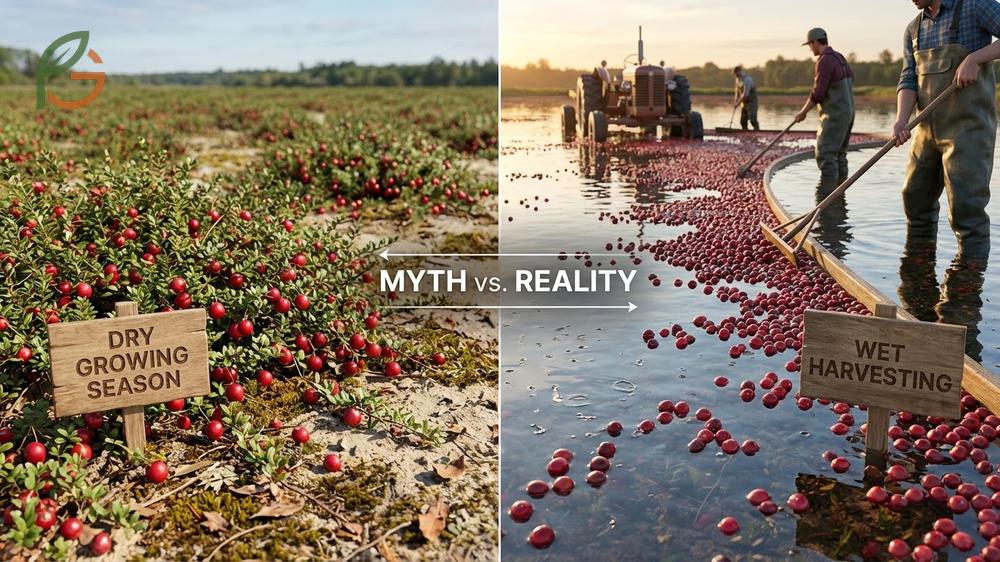
Do cranberries grow in water? No, cranberries don’t grow in water—they grow on low-lying vines in dry, acidic bogs throughout most of the year. Research shows the iconic water-flooded fields you’ve seen are temporary, created only for wet harvesting (which accounts for 90% of production[1]) and seasonal protection, not for everyday growing. FruitGarden breaks down the science behind cranberry cultivation and explains when—and why—water actually floods these unique bogs.
Quick Answer
- Cranberries grow on dry vines in acidic bogs with sandy soil (pH 4.2-5.5[2]), not in standing water
- Bogs are flooded temporarily for wet harvesting (90% of crops[1]), winter protection, and frost control
- Each acre uses 7-10 feet of water annually[1] through recycled irrigation systems
- Wisconsin produces 60-61% of U.S. cranberries[3], totaling roughly 5.5 million barrels yearly
Do Cranberries Grow in Water
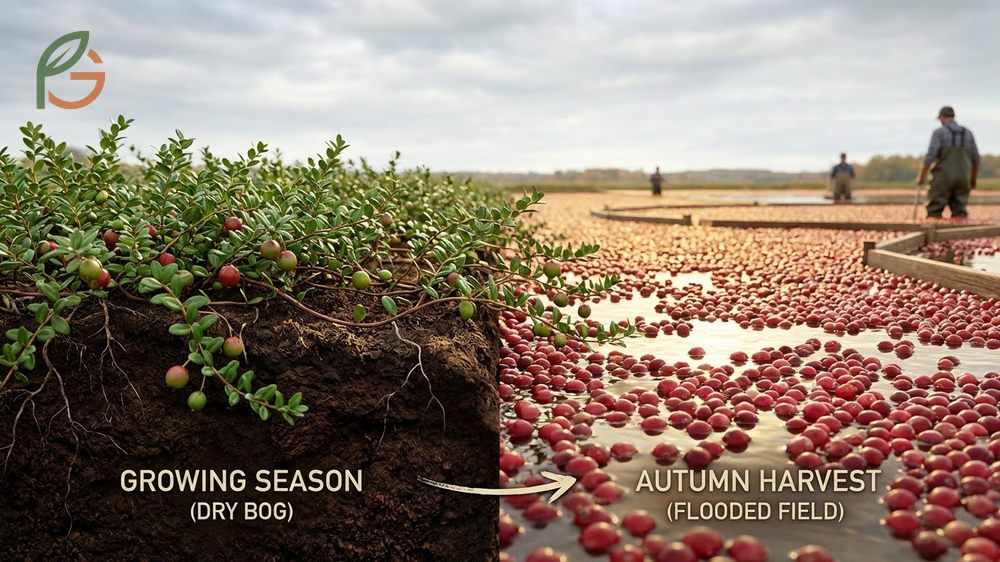
Cranberries don’t grow in water—they thrive on low, trailing vines in specially constructed bogs with dry, acidic soil during most of the growing season. The water you see in cranberry fields during autumn harvest is a temporary flood used to collect ripe berries, not the plant’s natural habitat.
These hardy vines (Vaccinium macrocarpon) spread horizontally across bog floors with runners extending up to six feet long[4]. Most people don’t realize that cranberry vines in Massachusetts are over 150 years old and continue producing fruit on completely dry land for 9-10 months each year.
The planting season starts in spring when growers set vines with proper spacing on prepared bog beds. Throughout summer, these plants need only regular irrigation—similar to what grass requires—to maintain optimal soil moisture and prevent overheating.
How Cranberries Actually Grow
Cranberry vines produce upright shoots that bloom with small pink flowers in late spring. After pollination, berries develop and ripen from green to deep red by September or October, all while the vines remain on dry ground.
The bogs themselves consist of alternating layers of sand, peat, gravel, and clay that provide drainage and the acidic conditions cranberries need[4]. This layered structure prevents waterlogging while retaining enough moisture for root systems.
From My Experience: My cousin in Querétaro, Mexico tried growing cranberries in 2023 after visiting Wisconsin farms. She learned the hard way that flooding isn’t for growth—her first attempt failed when she kept soil too wet. After adjusting to dry cultivation with acidic amendments, three plants survived and produced small yields by autumn 2024.
Why People Think Cranberries Grow Underwater
The misconception stems from harvest-season images that dominate cranberry advertising every autumn. When you see workers standing in waist-deep water surrounded by floating red berries, you’re witnessing wet harvesting—not the growing process.
Cranberries float because each berry contains four hollow air pockets that developed during fruit formation. This buoyancy makes wet harvesting incredibly efficient but doesn’t mean the plants need water to grow.
Important Note: Bogs where flooding isn’t possible are no longer considered profitable for commercial cranberry production[1], but that’s because flooding enables efficient harvesting and winter protection—not because plants grow in water.
Cranberry Bog Flooding
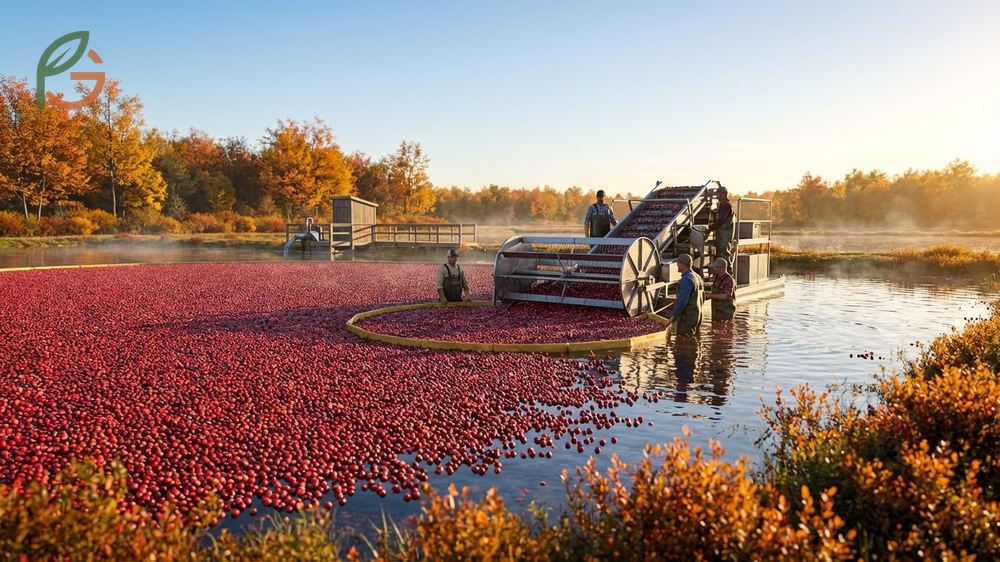
Growers flood cranberry bogs strategically at specific times throughout the year, each serving a distinct purpose. The most visible flooding happens during harvest, but winter floods and spring frost protection play equally critical roles in successful cranberry farming.
Current data indicates that approximately 90% of commercial cranberry production relies on wet harvesting methods[1]. This percentage hasn’t changed significantly since the 1990s because the efficiency gains far outweigh the costs.
Wet Harvest Flooding Timeline
Harvest flooding begins in late September or early October after berries achieve full color and nighttime temperatures drop enough to cool the flood waters. Growers pump water onto bogs until levels reach 6-12 inches deep, completely covering the vines.
Mechanical harvesters called “egg beaters” then pass through the flooded fields, agitating vines to dislodge ripe berries. Within hours, millions of floating cranberries form thick red rafts on the water’s surface. Workers wearing chest waders corral berries into collection areas using wooden booms.
The entire harvest process for a single bog section typically completes within 24-48 hours. Growers then pump that same water to the next bog section, repeating the cycle to maximize water efficiency across multiple acres.
Winter and Frost Protection Floods
Winter floods protect cranberry vines from cold, drying winds that cause winterkill damage. Growers apply these floods as early as December 1st and maintain them through mid-March when frost risks decline[1].
A technique called “late water” involves withdrawing the winter flood in March, then re-flooding bogs in late April for one month. This practice, used since the 1940s, provides spring frost protection when new buds are most vulnerable and offers additional pest control benefits.
- Harvest flood: September-October for wet collection of 90% of berries
- Winter flood: December-March to prevent vine damage from freezing temperatures
- Late water flood: April for 30 days to protect against spring frosts
- Pest control: Flooding drowns certain insects and removes debris from bogs
- Leaf removal: Autumn floods help clear fallen leaves before winter
Frost Protection Requirements: Sprinkler systems must apply at least 0.10 inches of water per acre per hour to protect plants down to 24°F (-4°C) under calm conditions[1]. Wind increases these requirements significantly.
Water Growing Method
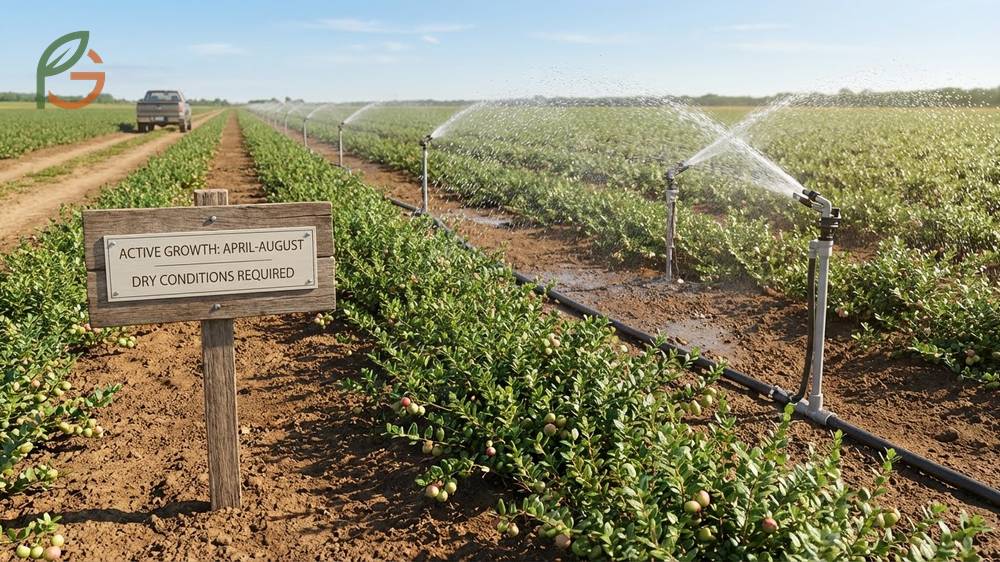
Despite the “water growing method” terminology some people use, cranberries require dry conditions during active growth from April through August. Water application during this period comes exclusively through irrigation and occasional sprinkler cooling—never standing water.
Research shows cranberry vines need approximately one inch of water per week during the growing season, delivered through rain, capillary action from groundwater, or irrigation systems[1]. This amount matches typical lawn grass requirements.
Irrigation Systems for Cranberries
Modern cranberry farms use sophisticated sprinkler systems for multiple purposes beyond basic watering. During the hottest, driest, and windiest summer days, cranberries can require 0.20-0.25 inches of water per acre daily to prevent heat stress.
Best management practices recommend irrigating in early morning when plants are naturally wet from dew. This timing minimizes evaporation losses, runoff, and spray drift—which combined can waste up to 30% of water coming from nozzles.
- Soil moisture supplementation during dry periods throughout summer
- Spring frost protection by coating buds with ice during freezing nights
- Fall frost protection when berries are ripening and vulnerable
- Plant cooling during intense summer heat waves exceeding 85°F (29°C)
- Humidity control to reduce certain pest pressures on developing fruit
Water Recycling in Bogs
The vast majority of cranberry farms operate on closed-circuit water systems that capture rainwater and snowmelt in reservoirs. Water circulates through gravity-fed canals from bog to bog, with minimal external input needed once the system fills.
During harvest, growers strategically reuse flood water across as many bog sections as possible before releasing it. Some farms share reservoir systems with neighboring operations, passing water through holding ponds and flumes that serve multiple growers simultaneously.
On average, one acre of cranberries uses seven to ten feet of water annually to meet all production, harvesting, and flooding needs[1]. However, because systems recycle extensively, actual freshwater input remains considerably lower than this total volume suggests.
Cranberry Cultivation Water
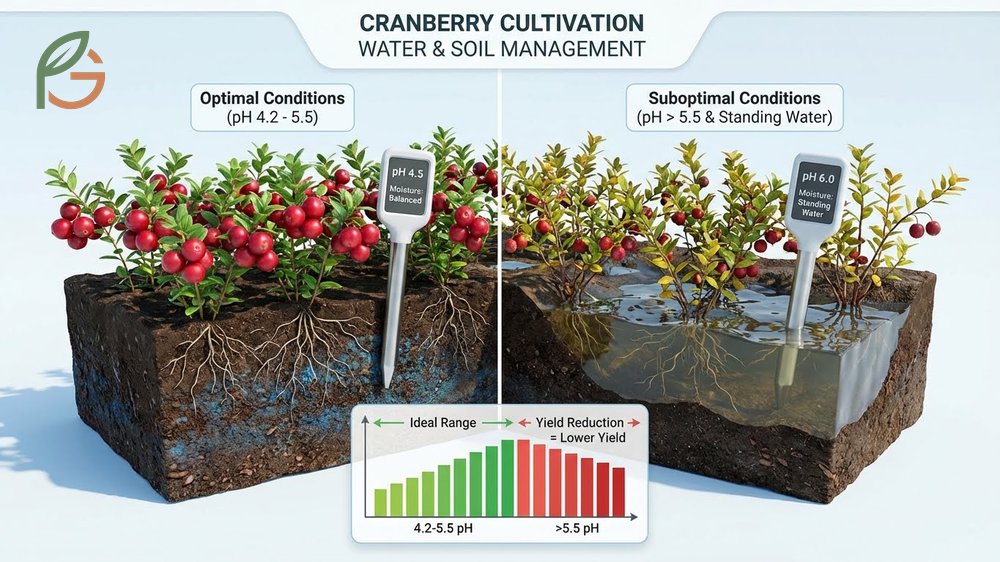
Understanding cranberry cultivation water needs requires distinguishing between standing water (which damages plants) and carefully managed moisture levels in acidic bog soils. These plants evolved in specific wetland environments but don’t tolerate root submersion during active growth.
Agricultural data shows cranberries grow optimally in soil with pH levels between 4.2 and 5.5[2]. When soil pH rises above 5.5, plants experience significant yield reductions ranging from 29-56% along with fruit size decreases of 25-35%.
Soil Requirements for Cranberry Bogs
Cranberry bogs require acidic, sandy soils with high organic matter content for optimal production. The ideal substrate consists of layers of sand alternating with peat, providing drainage while maintaining the moisture retention these plants need.
These soils possess limited buffering capacity, meaning pH can fluctuate rapidly after applying elemental sulfur or ammonium-based fertilizers. Growers must test regularly and adjust carefully to maintain the narrow pH window cranberries require.
This table compares optimal soil pH ranges and growth characteristics for cranberries versus other berry crops commonly grown in acidic conditions
| Crop Type | Optimal pH Range | Soil Type Preference | Water Tolerance |
|---|---|---|---|
| Cranberries | 4.2-5.5[2] | Sandy/peaty bog layers | Temporary flooding only |
| Blueberries | 4.5-5.5 | Well-drained acidic loam | Poor (requires drainage) |
| Sea Berries | 5.5-8.0 | Sandy to clay soils | Moderate (salt tolerant) |
| Elderberries | 5.5-6.5 | Moist, rich soils | Good (tolerates wet feet) |
Climate and Growing Zones
Cranberries thrive in USDA Hardiness Zones 2-7, requiring cool weather and winter chilling to set fruit properly. These plants need a dormancy period with sustained cold temperatures below 45°F (7°C) for at least 2,000-2,500 hours.
Commercial production concentrates in regions with specific climate advantages. Wisconsin leads national production with approximately 5.5 million barrels in 2024—representing 61% of the U.S. cranberry crop[3] across roughly 20,000 acres.
Massachusetts produces around 2 million barrels annually (about 25% of the national total)[5], followed by New Jersey, Oregon, and Washington. Wisconsin surpassed Massachusetts as the top producer in 1994 and hasn’t relinquished that position since.
From My Experience: My neighbor in Monterrey, Mexico attempted cranberry cultivation in 2022 but struggled with the warm winters (Zone 9b). Only 3 of 12 plants survived to year two, producing minimal fruit. The lack of adequate chilling hours (zone averaged only 400 hours below 45°F) prevented proper dormancy and flowering.
Wet Harvesting Cranberries
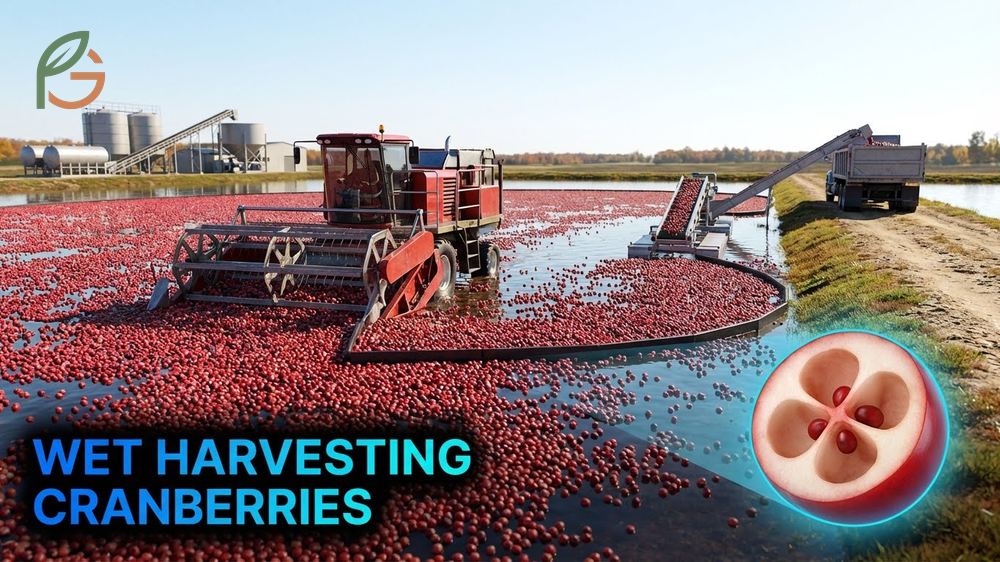
Wet harvesting revolutionized the cranberry industry when it became widespread in the mid-20th century. This method accounts for 90-95% of all cranberries harvested in the United States[1], with berries destined for juice, dried products, and sauces.
The process relies on cranberries’ natural buoyancy—each berry contains four air-filled chambers that make it float when submerged. This characteristic turns what would be tedious hand-picking into an efficient mechanized operation completed in hours rather than weeks.
How Wet Harvesting Works
Growers wait until berries reach full color and cooler autumn temperatures arrive before flooding begins. They pump water from adjacent reservoirs onto prepared bog sections until water depth reaches 6-12 inches above the vine canopy.
Specialized harvesting machines resembling large egg beaters drive through the flooded bogs on wheels or floats. Rotating reels gently knock berries loose from vines without damaging the perennial root systems below. Within 20-30 minutes of machine operation, thousands of pounds of cranberries float to the surface.
Workers then use floating booms—long wooden or inflatable barriers—to corral the berry mass toward one corner of the flooded section. Conveyor systems or truck-mounted vacuums remove berries from water and transfer them to cleaning facilities within hours of harvest.
- Wait for berries to achieve deep red color (typically late September to mid-October)
- Flood bog sections with 6-12 inches of water from reservoir systems
- Deploy mechanical harvesters with rotating reels to dislodge berries from vines
- Allow berries to float and consolidate on water surface (15-30 minutes)
- Corral floating berries using booms into collection areas at bog corners
- Remove berries via conveyor or vacuum systems to sorting facilities
- Drain water to next bog section for reuse in sequential harvesting
Dry Harvest Alternative
Dry harvesting produces the fresh cranberries you find in grocery store produce sections during autumn months. This method requires completely dry vines—even heavy dew or light frost moisture delays operations until conditions improve.
Mechanical pickers resembling large lawn mowers with rotating metal teeth comb through dry vines, pulling berries into collection bins. Berries harvested dry experience less bruising and maintain firmness longer, commanding premium prices in fresh markets.
Only 5-10% of cranberries undergo dry harvesting because the process takes significantly longer and yields slightly lower volumes than wet methods. However, fresh cranberry demand during Thanksgiving and Christmas seasons justifies the extra effort for growers serving those markets.
Cranberry Farming Water
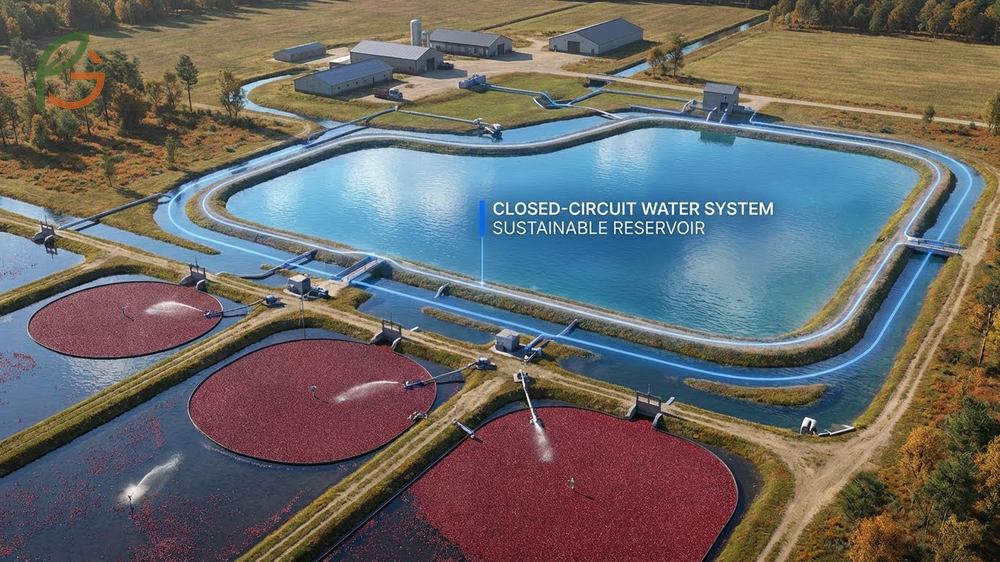
Cranberry farming water management represents one of the most sophisticated irrigation systems in American agriculture. Most operations built water reservoirs as their first infrastructure element—before even preparing bog beds—because reliable water access determines profitability.
These reservoirs capture rainwater and snowmelt throughout the year, creating self-sustaining systems that minimize dependence on external water sources. The closed-circuit design allows water to pass from bog to bog through canals, serving production needs without constant freshwater input.
Studies demonstrate cranberries don’t require more water than lawn grass for growth and development—approximately one inch weekly. The higher total water usage figures (7-10 feet annually per acre) include harvest flooding and winter protection, not just irrigation for plant growth.
Water quality affects soil pH management significantly in cranberry systems. Alkaline irrigation water with high calcium content can raise bog soil pH above the critical 5.5 threshold, causing nutrient imbalances that reduce yields by 30-50% within two to three growing seasons[2].
Growers in regions with hard water (high mineral content) must monitor soil pH quarterly and apply elemental sulfur or acidifying amendments to counteract alkalinity increases. This management challenge has intensified in recent years as climate patterns shift and water sources change chemistry.
- Build reservoir capacity for 7-10 feet of water per cultivated acre
- Design gravity-fed canal systems to move water between bog sections efficiently
- Test irrigation water pH and mineral content quarterly to anticipate soil changes
- Install flow meters to track water usage and identify system inefficiencies
- Schedule early morning irrigation to minimize evaporation losses (up to 30% savings)
- Reuse harvest flood water across multiple bog sections before releasing to watersheds
- Coordinate with neighboring farms to share reservoir capacity during drought years
Environmental Consideration: Because harvest water gets reused multiple times, it accumulates pesticide and fertilizer residues before eventual release to waterways. Current regulations require growers to manage these releases carefully to protect downstream water quality.
From My Experience: A friend in Guadalajara, Mexico who grows berries commercially visited Wisconsin cranberry operations in October 2023. He was surprised that bogs stayed flooded only 24-48 hours for harvest—he’d assumed from TV commercials that water remained year-round. The reservoir systems impressed him most, showing how 500 acres could operate on recycled water.
Conclusion
The evidence is clear: cranberries grow on dry vines in acidic bogs, not in water, despite widespread misconceptions perpetuated by harvest-season imagery. Temporary flooding serves specific agricultural purposes—wet harvesting, winter protection, and frost control—but doesn’t represent how these plants spend most of the growing season.
Current agricultural guidance emphasizes sustainable water management that balances cranberry production efficiency with environmental responsibility. Understanding when and why bogs flood helps gardeners and consumers appreciate the sophisticated systems behind those Thanksgiving cranberries. FruitGarden provides research-backed insights into fruit cultivation methods that separate agricultural myths from proven growing practices.
Frequently Asked Questions
Why do cranberry bogs look like they’re underwater in commercials?
Commercials film during wet harvest season in September-October when bogs are temporarily flooded. Research shows this flooding lasts only 24-48 hours per bog section and serves to collect floating berries efficiently, not to grow the plants. The dramatic visual of red berries covering water makes compelling advertising but represents less than 1% of the annual growing cycle.
Can I grow cranberries in a water garden or pond?
No, cranberries can’t survive in standing water or submerged conditions year-round. These plants need well-drained acidic soil with pH 4.2-5.5 and will develop root rot if kept constantly wet. You’d need to construct a traditional bog bed with sandy/peaty soil layers and irrigation systems, not a water feature.
How long does it take for cranberry vines to start producing fruit?
Newly planted cranberry vines typically take 3-5 years to reach full yield potential. You might see a few berries in year two, but commercial production levels don’t occur until the root systems fully establish and runners spread across the bog bed. Once mature, vines can produce for 100+ years with proper care.
What’s the difference between wet-harvested and dry-harvested cranberries?
Wet-harvested cranberries (90% of production) are collected from flooded bogs and processed into juice, sauce, and dried products. Dry-harvested berries are picked from unflooded vines using mechanical combs and sold fresh in produce sections because they maintain firmness longer and experience less bruising during collection.
Do cranberries float naturally or is something added to make them buoyant?
Cranberries float naturally due to four hollow air pockets inside each berry that form during fruit development. Nothing is added to create this buoyancy—it’s an inherent characteristic of ripe cranberries that makes wet harvesting possible. Unripe or damaged berries that lack full air pockets often sink during harvest.
What states grow the most cranberries in the United States?
Wisconsin dominates U.S. cranberry production with 5.5 million barrels annually (61% of national output), followed by Massachusetts at 2 million barrels (25%). New Jersey, Oregon, and Washington produce smaller commercial quantities. Total U.S. production averages 7.6-8.2 million barrels per year across these regions.
How acidic does soil need to be for successful cranberry cultivation?
Cranberries require soil pH between 4.2 and 5.5 for optimal growth, with 4.5-5.0 being ideal. When pH rises above 5.5, plants experience significant nutrient deficiencies that reduce yields by 29-56% and decrease fruit size by 25-35%. Regular soil testing and sulfur amendments maintain the necessary acidity for healthy production.