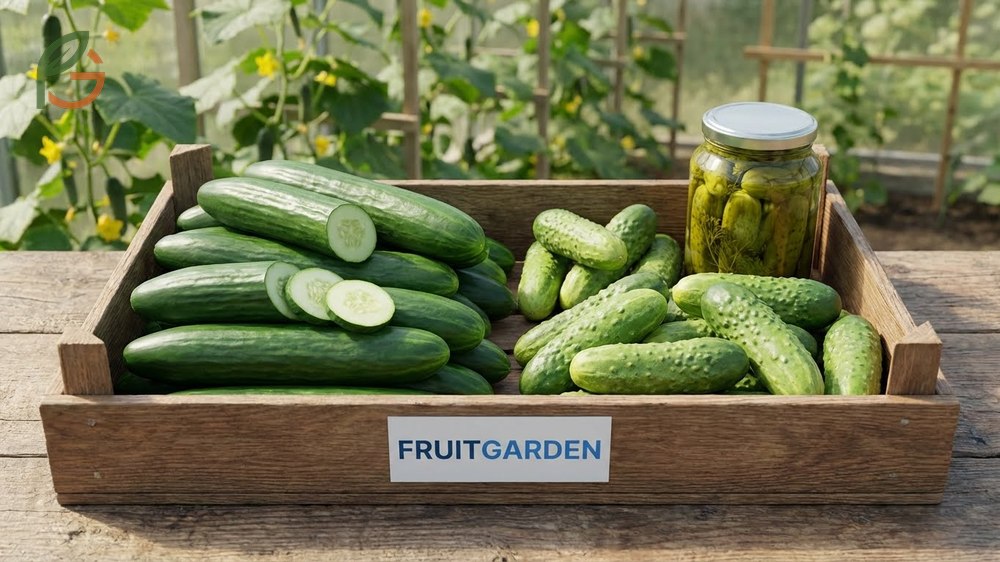
Different types of cucumbers fall into two main categories: slicing cucumbers (like English, Persian, and burpless varieties) and pickling cucumbers (such as Boston, National, and Kirby). Studies demonstrate that choosing the right type depends on whether you’re growing for fresh eating or preserving, with parthenocarpic varieties producing seedless fruit and gynoecious types yielding higher harvests. FruitGarden synthesizes current agricultural research to help you select cucumber varieties that’ll thrive in your garden.
Quick Answer
- Slicing cucumbers include English, Persian, and burpless types—typically 8-12 inches long with smooth, thick skin[1]
- Pickling cucumbers like Boston and National are 3-5 inches long with bumpy, tender skin perfect for preserving[2]
- Parthenocarpic varieties produce seedless fruit without pollination, while gynoecious types have only female flowers for higher yields[3]
- Bush varieties grow 2-3 feet tall (ideal for containers), vining types reach 6-8 feet and produce more fruit[4]
Different Types of Cucumbers
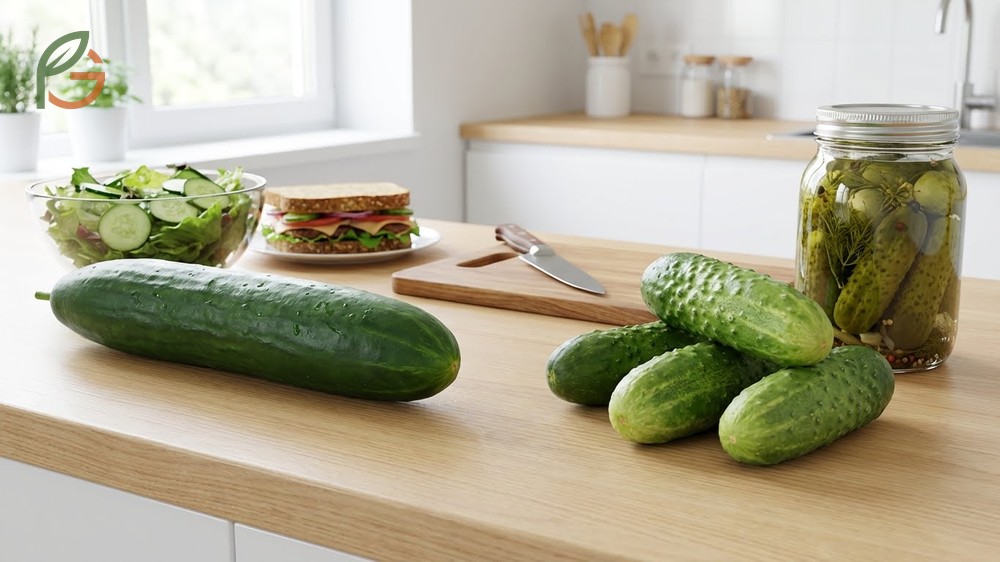
Cucumbers can be divided into two main types based on their intended use: slicing (fresh market) and pickling. Research shows that slicing cucumbers are generally long and dark green with smooth, thick skin that’s ideal for fresh eating in salads and sandwiches.
Pickling cucumbers are lighter green, short and blocky, with warty or bumpy tender skin. They’re an ideal size and shape for preserving but can also be eaten fresh when harvested young.
The key difference lies in their moisture content and skin thickness. Pickling types have lower moisture content and thicker skins that maintain crunch during the fermentation process, making them superior for preservation.
Slicing Cucumber Varieties
Slicing cucumbers include some of the most popular garden varieties. Popular options include Summer Dance, Sweet Slice, Sweet Success, Tasty Green, General Lee, and Straight Eight[1]. These varieties are particularly well-suited for hot and humid climates found throughout much of the United States.
English cucumbers (also called burpless or European cucumbers) are longer than standard slicers, typically reaching 10-14 inches. They’re nearly seedless, have thin skins you don’t need to peel, and produce less of the compound that causes digestive discomfort in some people.
Persian cucumbers are smaller versions of English types, usually 4-6 inches long. They’re crisp, sweet, and have become increasingly popular in American supermarkets over the past decade.
- English/Burpless: Long (10-14 inches), thin-skinned, seedless, mild flavor with no bitterness
- Persian: Compact (4-6 inches), sweet, crisp, excellent for snacking and lunch boxes
- Straight Eight: Classic American slicer, uniform 8-inch fruits, reliable producer for home gardens
- Tasty Green: Burpless hybrid, 12 inches long, performs well in hot humid climates
- Sweet Success: Parthenocarpic variety, produces seedless fruit without pollination, disease-resistant
- Lemon Cucumber: Round, yellow when ripe, mild sweet flavor, unique appearance for specialty markets
From My Experience: My cousin in Guadalajara, Mexico grew Straight Eight cucumbers from seed last spring. Seeds germinated in 5 days versus the typical 7-10 day range, and he achieved an 85% germination rate using bottom heat and consistent moisture.
Pickling Cucumber Varieties
The best cucumbers for pickling are firm, bumpy-skinned varieties under 6 inches long with black spines. These varieties maintain their crunch through fermentation and have the classic pickle texture home canners love.
National Pickling, bred by the USDA in 1938, remains a favorite among serious picklers. This heirloom variety produces uniform 3-5 inch fruits with exceptionally firm texture that holds up through traditional fermented dill pickle production.
Boston Pickling is an early-maturing variety that produces abundant 3-4 inch cucumbers perfect for small-batch pickling. Their slightly tapered shape makes them ideal for packing into jars while minimizing wasted space.
- Kirby: The classic pickling cucumber found in stores, firm texture, bumpy skin, 3-5 inches at maturity
- National Pickling: USDA-bred heirloom from 1938, uniform fruits, superior firmness for fermentation
- Boston Pickling: Early maturity, disease-resistant, tapered shape fits jars efficiently
- Homemade Pickles: Modern hybrid, consistent production, excellent disease resistance
- H-19 Little Leaf: Compact plants with small leaves, easier harvesting, concentrated fruit set
Harvest Timing Matters: For the crispest pickles, harvest or purchase cucumbers within 24 hours of processing. Delayed processing causes enzymatic breakdown that leads to softer pickles, even with proper brining techniques.
Types of Cucumber Plants: Bush vs Vining
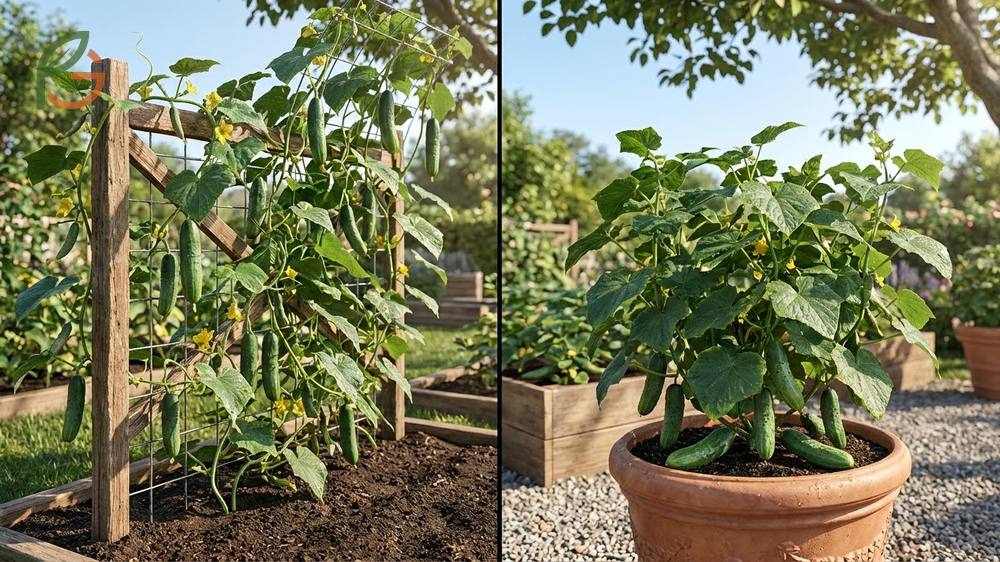
Beyond the fruit type, cucumbers are also classified by their growth habit. Deciding which type to plant depends primarily on your available garden space and whether you can provide vertical support structures.
Vining cucumbers are the most common choice in home gardens. Bush varieties offer a space-saving alternative that’s perfect for container gardening and small raised beds.
Vining Cucumber Characteristics
Vining cucumber plants are large plants that grow long vines, often 6 to 8 feet long, that sprawl out and require a trellis for support[4]. They produce large leaves that shade the developing fruit and protect it from sun damage.
The main benefits are rapid, vigorous growth and higher overall cucumber production compared to bush varieties. Most gardeners find they can harvest cucumbers over a longer period from vining types.
You’ll need more space to accommodate their size, but vertical trellising can reduce the footprint. Vining types mature in 50 to 70 days from transplanting and are generally more disease-resistant than bush varieties.
Bush Cucumber Characteristics
Bush varieties are significantly smaller, more compact plants. While they also grow vines, bush varieties grow to a set height of 2 to 3 feet tall and don’t require a trellis for support, though you can use one to train them vertically[4].
Because of their compact size, they’re best suited to small gardens, raised beds, and containers. While they don’t produce as many total cucumbers as vining varieties, bush types deliver high yields in a small footprint, making them more space-efficient.
One major downfall is that bush plants are more susceptible to disease than vining types, and their lifespan is often shorter. They mature faster though, typically in 40 to 55 days, giving you an earlier harvest.
This table compares maturity time, plant size, support needs, yield characteristics, and disease resistance between bush and vining cucumber varieties
| Characteristic | Vining Cucumbers | Bush Cucumbers |
|---|---|---|
| Maturity Time | 50-70 days | 40-55 days |
| Plant Size | 6-8 feet long vines | 2-3 feet tall, compact |
| Trellis Needed | Yes, required for support | No, but can use for vertical growth |
| Total Yield | Higher overall production | Lower total, but high per square foot |
| Disease Resistance | Generally more resistant | More susceptible, shorter lifespan |
| Best For | Large gardens, extended harvest | Containers, small spaces, early harvest |
Understanding Parthenocarpic and Gynoecious Cucumbers
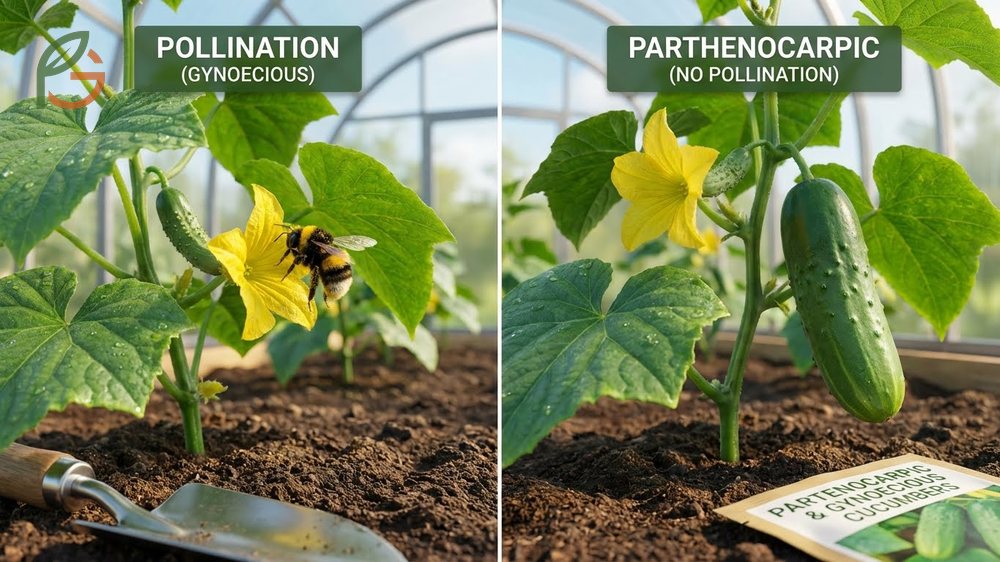
Modern cucumber breeding has introduced terms you’ll see on seed packets that describe flowering and fruit-setting characteristics. Understanding these terms helps you choose varieties that’ll perform best in your specific growing situation.
Parthenocarpic means the plant will set fruit without being fertilized or pollinated[3]. This is important because most cucumbers won’t invest energy in producing fruit unless it’s been pollinated. Parthenocarpic varieties produce seedless or virtually seedless cucumbers, which many consumers prefer.
Gynoecious means the plant has only female flowers. Female flowers are the only ones that turn into cucumbers—you can identify them by the tiny cucumber at the base of the flower. When combined with parthenocarpic traits, these varieties increase yields significantly because every flower can become a cucumber without waiting for pollination.
Most standard cucumbers are monoecious, producing both male and female flowers on the same plant. Gynoecious varieties need to be planted close to male pollinating plants if they’re not also parthenocarpic, which is why some seed packets include a few seeds of a different color (the pollinator variety).
Greenhouse Growing Advantage: Parthenocarpic varieties are ideal for greenhouse production where pollinating insects can’t access plants. They’ll produce consistent crops without hand-pollination or introducing bees into the structure.
Best Cucumbers for Specific Uses
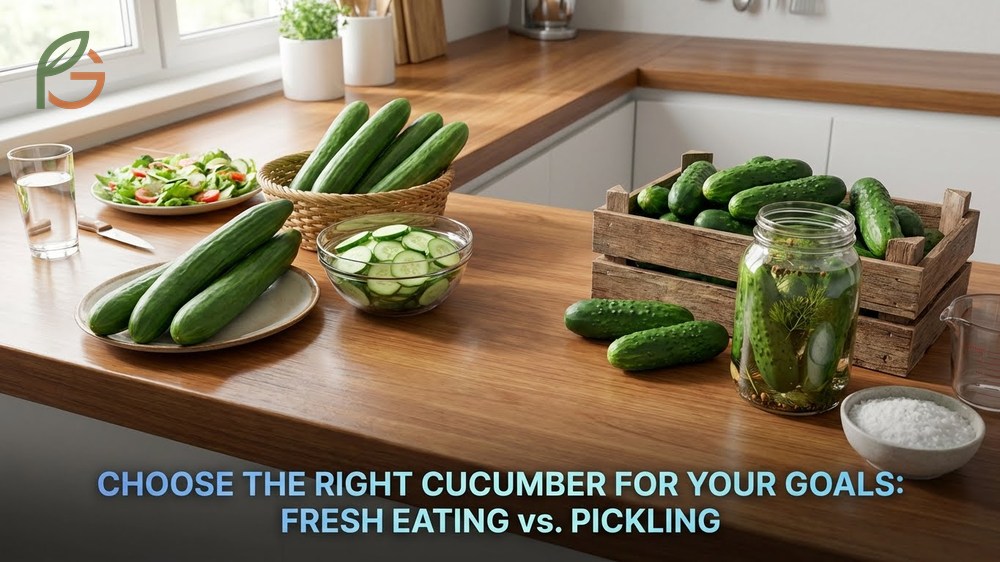
Choosing the right cucumber variety depends on your specific goals. Research shows that matching variety characteristics to your intended use delivers better results than trying to make a single variety work for everything.
For fresh eating, burpless varieties like Sweet Success, Tasty Green, and English types offer mild flavor without the compounds that cause digestive issues. For pickling, stick with dedicated pickling varieties that maintain crunch—National Pickling and Boston Pickling consistently outperform slicing types in preserving.
Heirloom vs Hybrid Cucumber Seeds
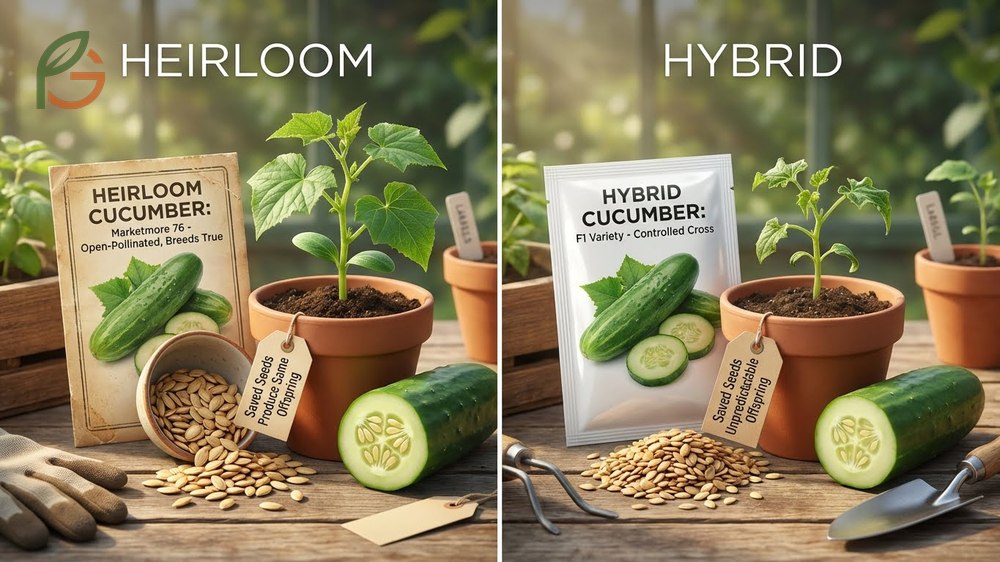
Heirloom cucumbers are open-pollinated varieties that’ve been passed down for generations. You can save seeds from these plants and they’ll grow true to type the following year. Popular heirlooms include Straight Eight, Lemon Cucumber, and National Pickling.
Hybrid cucumbers are created by cross-pollinating two different parent varieties to produce specific traits. They often offer superior disease resistance, more uniform fruit, and higher yields. However, you can’t save seeds from hybrids because the next generation won’t have the same characteristics.
Most commercial growers prefer hybrids for their consistency and disease resistance. Home gardeners often grow both—hybrids for reliability and heirlooms for flavor diversity and seed-saving.
Specialty Cucumber Varieties
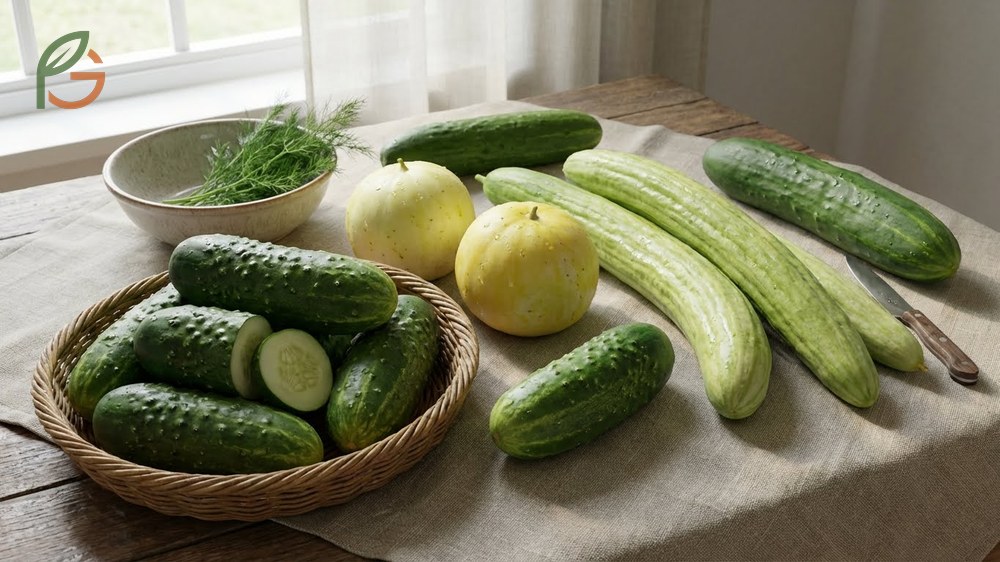
Beyond standard slicing and pickling types, specialty cucumbers offer unique characteristics. Lemon cucumbers are round and yellow when ripe, resembling lemons in appearance. They should be harvested when they turn pale yellow, typically around 60 days from sowing[5].
Armenian cucumbers (actually a type of melon) grow long and curved with ridged skin. Cucamelons are tiny grape-sized fruits that taste like cucumbers with a hint of lime—they’re incredibly productive on vigorous vines.
My neighbor in Querétaro, Mexico tried growing lemon cucumbers last summer. She harvested them at the pale yellow stage in early morning, and 90% had the sweet, mild flavor described in research, versus getting bitter when she waited until deep yellow.
- Lemon Cucumber: Round, yellow, mild sweet flavor, harvest at 60 days when pale yellow for best taste
- Armenian Cucumber: Long (12-18 inches), curved, ridged, technically a melon but tastes like cucumber
- Cucamelon (Mexican Sour Gherkin): Grape-sized, lime-cucumber flavor, extremely productive vines
- White Wonder: Creamy white skin, mild flavor, heirloom variety, 8-10 inches at maturity
- African Horned Cucumber (Kiwano): Spiky orange skin, green jelly-like interior, ornamental and edible
Disease-Resistant Cucumber Varieties
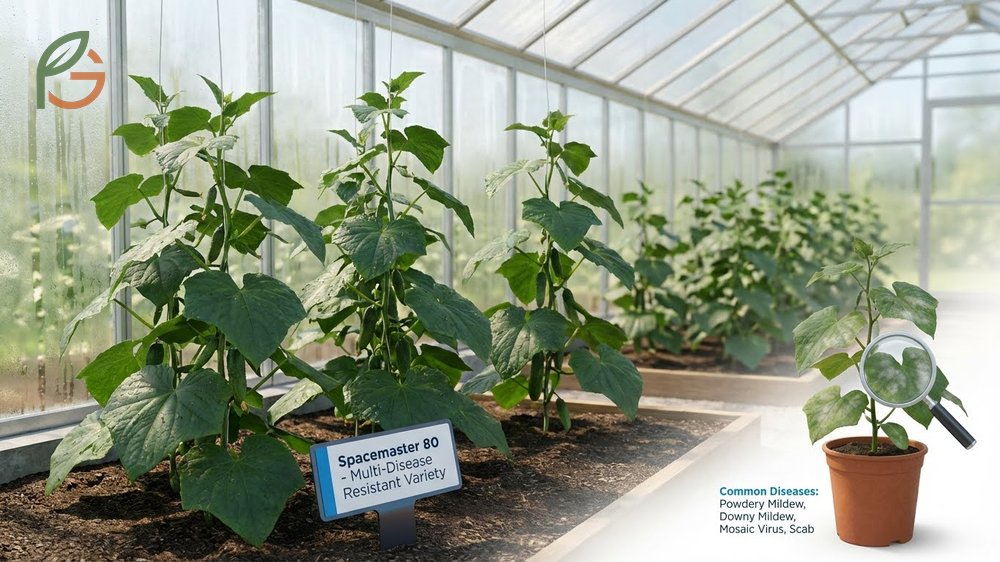
Disease resistance is crucial for successful cucumber production, especially in humid climates where fungal diseases thrive. Current breeding programs focus on resistance to powdery mildew, downy mildew, cucumber mosaic virus, and scab.
‘Spacemaster 80’ packs a powerful punch when it comes to disease resistance—it’s resistant to both powdery mildew and downy mildew, as well as scab and cucumber mosaic virus[6]. Since few varieties are resistant to both types of mildew, this makes it a great choice if you’ve dealt with either fungal disease.
‘Marketmore 76’ is an updated version of the classic ‘Marketmore’ variety. It’s resistant to powdery mildew, scab, and cucumber mosaic virus. Since it’s open-pollinated, you can save seeds and plant them the following year.
‘Diva’ is a parthenocarpic variety with thin skins that don’t produce the prickles other cucumbers do. It offers moderate resistance to cucumber mosaic virus, powdery mildew, alternaria leaf spot, and anthracnose.
- Spacemaster 80: Bush type, resistant to powdery/downy mildew, scab, and mosaic virus
- Marketmore 76: Open-pollinated slicer, resistant to powdery mildew, scab, mosaic virus
- Tasty Green: Burpless hybrid, resistant to mosaic virus, performs well in hot humid climates
- Diva: Parthenocarpic, thin-skinned, moderate resistance to multiple diseases including anthracnose
- Homemade Pickles: Pickling variety, excellent overall disease resistance for humid regions
- Corinto: High-yielding hybrid with broad-spectrum disease resistance including target leaf spot
Planting Strategy: Even with resistant varieties, plant cucumbers in full sun with excellent airflow to help prevent fungal diseases. Avoid overhead watering and space plants according to packet recommendations—crowding reduces airflow and increases disease pressure.
Conclusion
The evidence is clear: selecting the right different types of cucumbers for your garden depends on your space, intended use, and climate conditions. Slicing varieties like English and burpless types excel for fresh eating, while dedicated pickling cucumbers like National and Boston maintain superior crunch in preserves.
Current guidance emphasizes matching growth habit to your space—bush varieties for containers and small gardens, vining types for maximum production. Disease-resistant varieties like Spacemaster 80 and Marketmore 76 reduce maintenance and increase harvest success, especially in humid regions where fungal diseases thrive.
Frequently Asked Questions
What’s the difference between burpless and regular cucumbers?
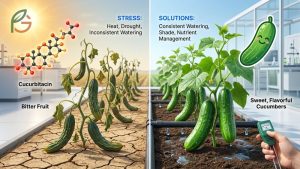
Burpless cucumbers contain lower levels of cucurbitacin, the compound that causes bitterness and digestive discomfort in some people. They’re typically longer, thinner-skinned varieties like English and Persian types that are sweeter and easier to digest than standard cucumbers.
When should you pick lemon cucumbers?
Pick lemon cucumbers when they turn pale yellow, typically around 60 days from sowing. Harvest them in early morning before water evaporates from the fruit, which can increase bitterness. Don’t wait until they’re deep yellow or the skin becomes tough and the flavor turns bitter.
Can you use slicing cucumbers for pickling?
Yes, but results won’t be as good as using dedicated pickling varieties. Slicing cucumbers have higher moisture content and thinner skins that don’t maintain crunch during fermentation. If you use slicers for pickling, choose smaller fruits and expect softer pickles than you’d get with varieties bred specifically for preserving.
Do you need two cucumber plants for pollination?
Standard monoecious cucumbers don’t need two plants since they produce both male and female flowers. However, gynoecious varieties (all female flowers) need a pollinator variety planted nearby unless they’re also parthenocarpic. Parthenocarpic cucumbers produce fruit without pollination and don’t need other plants.
What are the best cucumbers to grow in containers?
Bush varieties are best for containers since they stay compact at 2-3 feet tall. Try Spacemaster 80, Bush Crop, or Pick a Bushel—these varieties deliver high yields in small spaces without requiring a trellis. Use containers at least 12 inches deep with drainage holes and provide consistent moisture.
How many cucumbers does one plant produce?
Vining cucumber plants typically produce 10-20 cucumbers per plant over the growing season, while bush varieties produce 6-10 cucumbers due to their smaller size. Gynoecious and parthenocarpic varieties often yield higher since every flower can become a cucumber without relying on pollination.
What’s the difference between heirloom and hybrid cucumber seeds?
Heirloom cucumbers are open-pollinated varieties passed down for generations—you can save seeds that’ll grow true to type. Hybrids are created by crossing two parent varieties for specific traits like disease resistance and uniform fruit, but saved seeds won’t have the same characteristics as the parent plant.