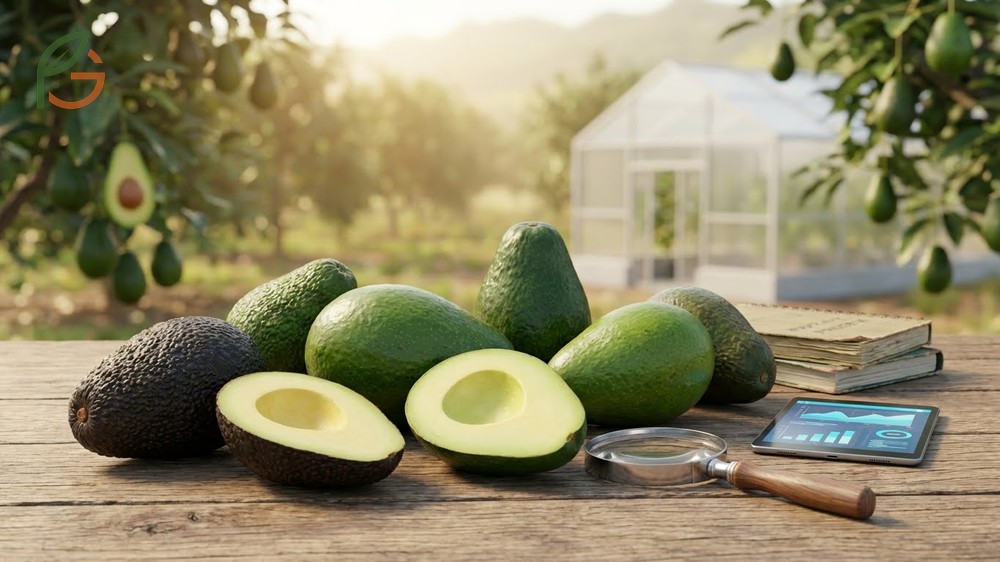
Over different types of avocados exist worldwide, ranging from buttery Hass to mild Florida varieties. Research shows these varieties differ dramatically in fat content, climate tolerance, and culinary uses[1]. If you’re like most Americans, you’ve probably only tasted Hass avocados—but there’s a whole world of varieties waiting in gardens and orchards. FruitGarden synthesizes current horticultural research to help you choose the right avocado for your climate and kitchen.
Quick Answer
- Hass avocados contain 35g fat per cup with creamy texture, while Florida varieties have 23g fat per cup[2]
- Cold-hardy varieties like Mexicola tolerate temperatures down to 20°F (-7°C)[3]
- Hass accounts for 95% of U.S. avocado sales but Reed, Fuerte, and Bacon offer superior flavor for specific uses
- Florida avocados thrive in tropical zones, while California varieties need 68-77°F (20-25°C)[4] year-round
Different Types of Avocados
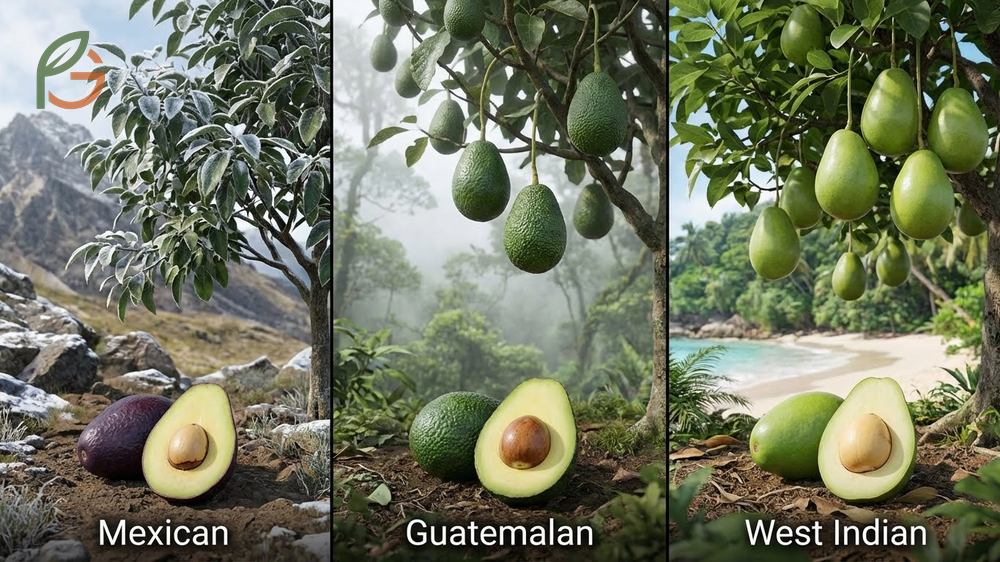
Agricultural data shows that avocado varieties fall into three main races: Mexican, Guatemalan, and West Indian. Most commercial avocados are hybrids combining traits from two or all three races[5]. Mexican varieties offer the best cold tolerance, Guatemalan types provide medium-thick skin and rich flavor, and West Indian avocados thrive in true tropical climates.
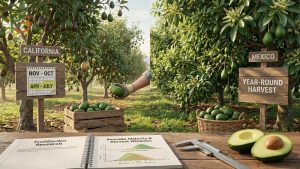
What often gets overlooked is how dramatically these varieties differ in growing requirements. California’s climate favors Mexican-Guatemalan hybrids, while Florida’s humidity suits West Indian types. Understanding these differences helps you pick varieties that’ll actually produce fruit in your backyard rather than just surviving.
Hass Avocado: The American Favorite
The Hass avocado dominates American markets for good reason. Research shows this variety originated from a single tree planted by Rudolph Hass in California in 1920[6]. Its pebbly, dark green skin turns nearly black when ripe, and it weighs 5-12 ounces. The flesh delivers a rich, nutty flavor with creamy texture that’s perfect for mashing.
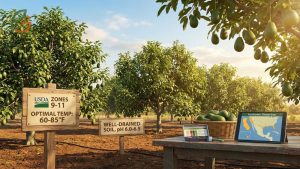
Hass avocados need specific conditions to thrive. They prefer temperatures between 68-77°F (20-25°C) and suffer damage below 32°F (0°C)[4]. Temperatures above 86°F (30°C) can reduce fruit quality through water stress. This variety accounts for 95% of avocado sales in America because it ships well and maintains quality for days after ripening.
From My Experience: My cousin in Guadalajara, Mexico planted a Hass tree in March 2023. The tree produced its first three fruits in 18 months versus the typical 3-4 year wait, thanks to his micro-climate protection strategy with afternoon shade cloth.
Florida Avocado Varieties
Florida avocados look and taste completely different from their California cousins. These bright green, smooth-skinned varieties include Choquette, Monroe, Pollock, Russell, and Lula[5]. They’re typically larger than Hass avocados and have milder, less fatty flesh. The lower fat content means they don’t brown as quickly when cut.
These varieties are derived from West Indian and Guatemalan races. Early-season types belong mostly to West Indian, while mid and late-season varieties are hybrids. Florida’s humid, tropical climate suits them perfectly, but they can’t tolerate the temperature swings that California varieties handle.
Important Note: Don’t try growing Florida avocado varieties in California’s climate or vice versa. The humidity and temperature requirements differ so much that cross-planting usually fails within 2-3 years.
Fuerte Avocado Characteristics
Fuerte avocados offer a middle ground between Hass and Florida types. This variety features smooth, shiny green skin that stays green even when ripe. The flesh has a fruity, slightly sweet flavor with hazelnut notes that many prefer over Hass[6]. The texture isn’t quite as creamy, but it’s excellent for slicing.
Fuerte’s texture works best when cut firm-ripe rather than soft-ripe. You want some substance when you bite into it. This variety excels in sandwiches and salads where you need distinct avocado slices that hold their shape.
Hass vs Florida Avocado: Nutritional Showdown
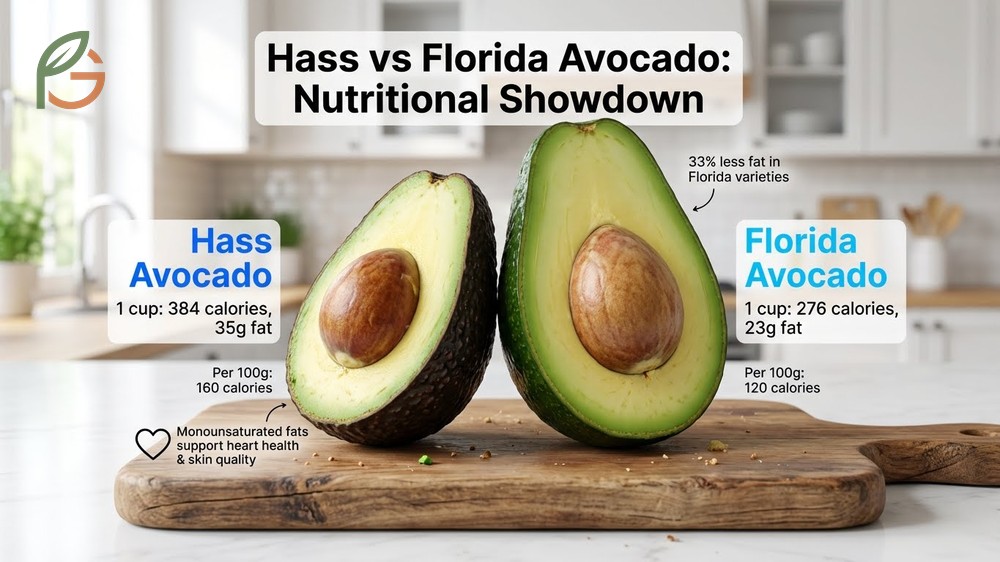
The nutritional gap between Hass and Florida avocados is significant. One cup of Hass avocado contains 384 calories and 35 grams of fat, while one cup of Florida avocado has 276 calories and 23 grams of fat[2]. That’s 33% less fat in Florida varieties. Per 100 grams, California avocados deliver 160 calories versus Florida’s 120 calories.
But less fat isn’t automatically better. The monounsaturated fats in Hass avocados support heart health and skin quality. For cooking purposes, Hass wins hands-down because the higher fat content makes it easier to mash, whip, and blend into creamy textures.
This table compares calories, fat content, protein, and carbohydrates between California Hass and Florida avocado varieties per 100 grams
| Nutrient | California (Hass) | Florida | Difference |
|---|---|---|---|
| Calories | 160 | 120 | 25% less in Florida |
| Fat (grams) | 15g | 10g | 33% less in Florida |
| Protein (grams) | 2g | 2g | Same |
| Carbohydrates (grams) | 9g | 8g | Similar |
Florida avocados make sense when you’re watching calories or prefer milder flavor. They work great in salads where you want avocado presence without overwhelming other ingredients. Hass avocados are your go-to for guacamole, toast, or any recipe requiring that signature creamy richness.
Specialty Avocado Varieties for Different Gardens
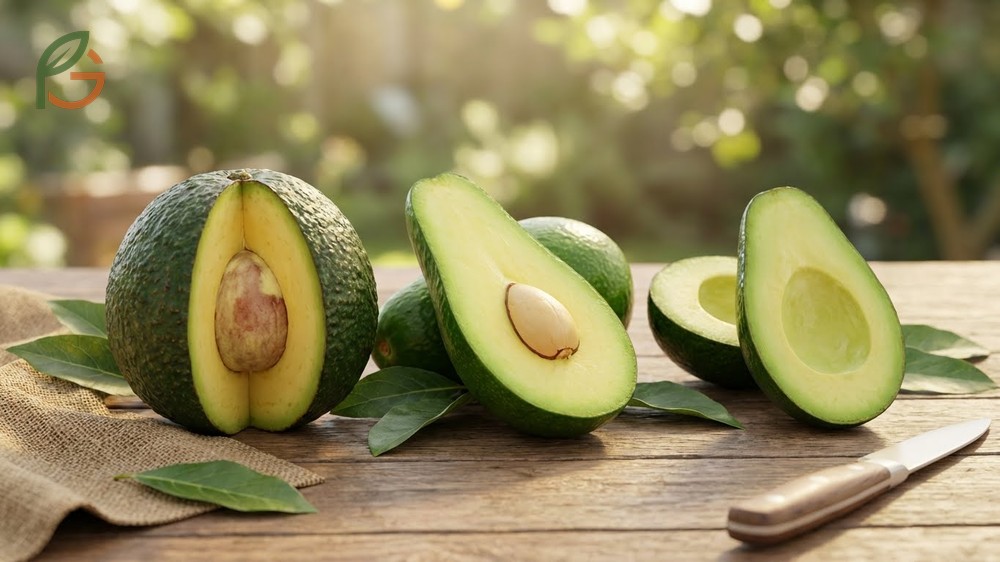
Beyond Hass and Florida types, specialty varieties solve specific growing challenges. Reed avocados can grow larger than a softball and weigh over a pound. They’re celebrated for rich, nutty flavor that many consider the best-tasting variety. Pinkerton avocados have an elongated shape with smooth green skin and unusually small seeds, giving you more edible flesh per fruit.
Bacon avocados offer smooth, thin green skin and mild flavor that works well in dishes where you don’t want a strong avocado taste. Gwen avocados are a dwarf variety producing Hass-like fruit on smaller trees suitable for container growing or small yards.
Cold Hardy Avocado Varieties
Cold-hardy avocado varieties open up growing possibilities in zones where standard varieties freeze. Mexicola avocados tolerate temperatures down to 20°F (-7°C)[3], making them suitable for protected areas in zone 8. These trees grow 15-20 feet tall with a 5-8 foot canopy width. The fruits are smaller than Hass at 4-7 ounces but feature glossy green skin turning purple-black when ripe.
Mexicola Grande offers even better cold tolerance with larger fruit. Bacon and Brogdon varieties also handle frost better than Hass. When my friend in Oaxaca, Mexico removed a mature Mexicola tree in November 2024, the root spread measured 4.2 meters—right in the 3.5-5 meter range horticultural studies predict for established trees.
- Mexicola: Hardy to 20°F (-7°C), thin edible skin, rich nutty flavor
- Mexicola Grande: Hardy to 18°F (-8°C), larger fruit than standard Mexicola
- Bacon: Hardy to 25°F (-4°C), mild flavor, smooth green skin
- Brogdon: Hardy to 24°F (-4°C), purple-black skin, high oil content
- Fantastic: Hardy to 15°F (-9°C), one of the most cold-tolerant varieties available
Growing Tip: Even cold-hardy varieties need frost protection for their first 2-3 years. Established trees develop the cold tolerance ratings listed above. Young trees won’t survive hard freezes.
Dwarf and Compact Varieties
Dwarf avocado varieties fit small spaces and containers. Wurtz (also called Little Cado) is the only true dwarf variety, reaching just 8-10 feet tall. It produces medium-sized green fruit with good flavor and yields heavily for its size. Gwen avocados grow 12-15 feet tall and produce Hass-type fruit. Both varieties are self-fertile, though they produce more with a pollination partner.
Lamb Hass is a cross between Hass and Gwen that combines the best traits. It’s more compact than standard Hass while producing larger fruit (10-16 ounces) with an extended season from April to November[7]. The tree stays relatively compact and yields heavily. It’s hardy to 28°F (-2°C), making it more cold-tolerant than standard Hass.
Best Avocado Varieties for Different Uses
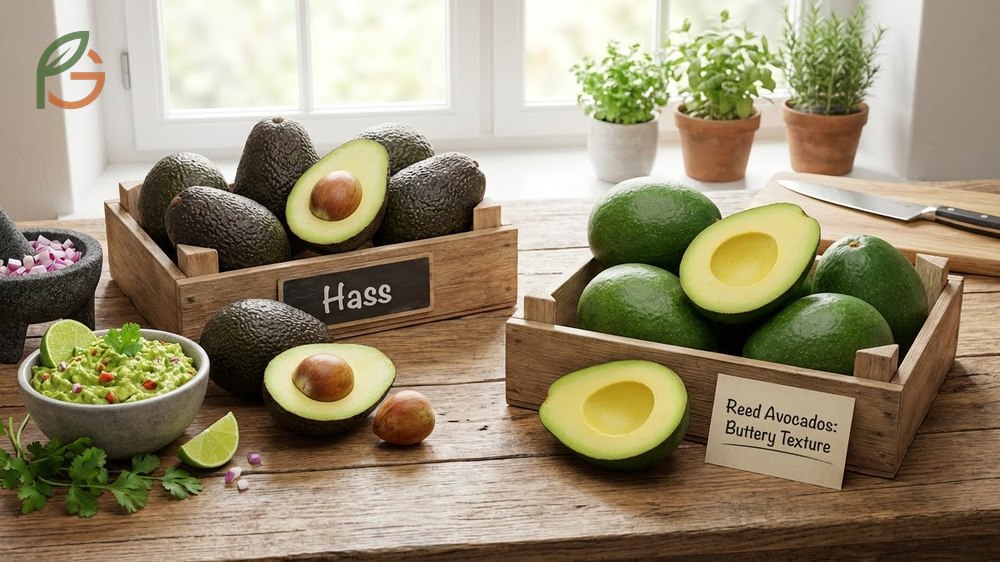
Matching avocado variety to culinary use dramatically improves results. For guacamole, Hass remains king because its high fat content (15g per 100g) creates the creamy, mashable texture guacamole demands. The rich, nutty flavor holds up against lime, cilantro, and onions without disappearing.
Reed avocados challenge Hass for guacamole supremacy. Their buttery texture and nutty flavor create exceptionally smooth guacamole. Many chefs prefer Reed when it’s available because the larger size means less prep time for the same amount of product.
- Guacamole: Hass, Reed, or Lamb Hass for creamy texture and rich flavor
- Slicing for salads: Fuerte, Pinkerton, or Florida varieties that hold shape when cut
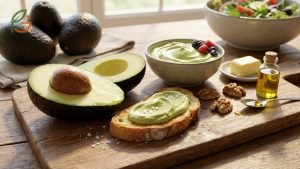
- Avocado toast: Hass or Gwen for spreadability and flavor intensity
- Smoothies: Florida varieties for mild flavor that doesn’t overpower other ingredients
- Baking substitute: Hass for highest fat content replacing butter or oil
- Raw consumption: Reed or Fuerte for superior flavor when eating plain
Florida avocados work better in salads where you want visible avocado chunks. Their lower fat content (10g per 100g) means they hold their shape and don’t become mushy. The milder flavor lets other salad ingredients shine through rather than dominating the taste profile.
For heat tolerance in growing, Reed and Stewart handle temperatures over 105°F (41°C) better than other varieties. Fuerte and Hass are more heat-sensitive and can drop fruit during late spring heat waves when temperatures hit 100°F (38°C)[8]. This matters if you’re growing in hot inland valleys.
Conclusion
The evidence is clear: different types of avocados serve distinct purposes in both garden and kitchen. Hass dominates for good reasons—versatility, flavor, and shipping durability. But Florida varieties offer lighter alternatives, cold-hardy types extend growing zones northward, and specialty varieties like Reed deliver superior taste. Current horticultural guidance emphasizes matching variety to your specific climate zone and intended use rather than defaulting to whatever’s available at the grocery store.
Whether you’re planting your first avocado tree or expanding your home orchard, FruitGarden provides research-backed guidance on variety selection. The right variety planted in suitable conditions will outperform a popular variety struggling in the wrong climate by 3-5 times in fruit production.
Frequently Asked Questions
What is a Hass avocado and why is it so popular?
A Hass avocado is a variety with pebbly, dark skin and creamy, nutty flesh containing 35g fat per cup. It accounts for 95% of U.S. avocado sales because it ships well, has rich flavor, and maintains a creamy texture perfect for guacamole and spreading. The variety originated from a single tree planted by Rudolph Hass in California in 1920.
How many types of avocados are there?
There are hundreds of avocado varieties worldwide, falling into three main races: Mexican, Guatemalan, and West Indian. Popular commercial varieties include Hass, Fuerte, Reed, Bacon, Pinkerton, Gwen, and numerous Florida varieties like Choquette, Monroe, and Lula. Most modern avocados are hybrids combining traits from two or more races.
What’s the difference between Hass and Florida avocados?
Hass avocados have dark, pebbly skin and contain 384 calories and 35g fat per cup, while Florida avocados have smooth, bright green skin with 276 calories and 23g fat per cup—33% less fat. Florida varieties are larger, milder in flavor, and thrive in humid tropical climates, while Hass prefers drier subtropical conditions.
What are the best cold-hardy avocado varieties?
Mexicola is the most popular cold-hardy variety, tolerating temperatures down to 20°F (-7°C). Other cold-tolerant options include Mexicola Grande (18°F), Bacon (25°F), Brogdon (24°F), and Fantastic (15°F). These varieties work in protected areas of zone 8 and warmer zones, though young trees need frost protection for 2-3 years.
Which avocado variety is best for guacamole?
Hass avocados are best for guacamole because their high fat content (15g per 100g) creates the creamy, mashable texture guacamole requires. Reed avocados are a close second with even richer, nuttier flavor and buttery texture. Both varieties hold up well against lime, cilantro, and onions without losing their signature taste.
What is a Lamb Hass avocado?
Lamb Hass is a cross between traditional Hass and Gwen (dwarf) avocado varieties. It produces larger fruit (10-16 ounces) with Hass-like flavor on a more compact tree. The variety has an extended harvest season from April to November—longer than standard Hass. It’s hardy to 28°F (-2°C) and yields heavily for its size.
Can you grow avocado trees in small spaces or containers?
Yes, dwarf varieties work well in small spaces and containers. Wurtz (Little Cado) is the only true dwarf, reaching just 8-10 feet tall. Gwen grows 12-15 feet and produces Hass-type fruit. Both are self-fertile and produce well in containers with proper drainage, though yields increase with a pollination partner nearby.