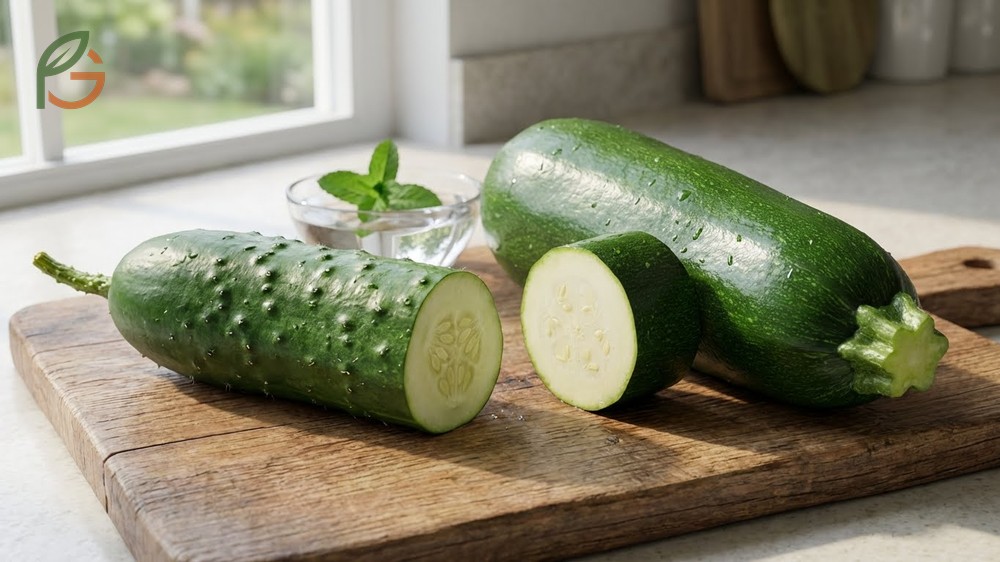
Cucumber vs Zucchini confusion happens because they’re both green, cylindrical vegetables from the gourd family. Research shows they’re actually different species—cucumbers belong to Cucumis sativus while zucchini comes from Cucurbita pepo, the same species as pumpkins and squashes[1]. Most gardeners notice the difference right away once they know what to look for—stem thickness, skin texture, and that distinctive cool “melon” scent from cucumbers. FruitGarden synthesizes current horticultural research and USDA nutritional data to help you distinguish these vegetables whether you’re shopping, gardening, or cooking.
Quick Answer
- Cucumbers have 95.5% water content[2] and taste crisp and refreshing when eaten raw
- Zucchini contains 6.4 times more vitamin C[3] and twice the dietary fiber[3] compared to cucumbers
- Cucumbers grow best at 21-26°C (70-80°F)[4] while zucchini prefers 18-30°C (64-86°F)[5]
- Cucumbers have thin, skinny stems and bumpy skin; zucchini has thick stems and smooth, matte skin[6]
Cucumber vs Zucchini

Studies demonstrate that cucumbers and zucchini belong to different botanical species despite looking similar[1]. Cucumbers (Cucumis sativus) are typically eaten raw and prized for hydration. Zucchini (Cucurbita pepo) transforms beautifully when cooked, developing a soft texture that suits both savory dishes and low-calorie comfort meals.
The confusion between these vegetables happens most often at farmers’ markets or when you’re growing both in your garden. Once you bite into them or touch the stems, the difference becomes obvious—cucumber offers a refreshing crunch with cool, watery taste while zucchini feels denser and sturdier[7].
From My Experience: My cousin in Puebla, Mexico grew both cucumbers and zucchini in adjacent rows last spring. The zucchini plants reached harvesting size in 45 days versus the cucumbers’ 55 days, but the cucumber vines spread twice as far across the garden bed.
Botanical Classification
Current agricultural data shows cucumbers and zucchini come from the Cucurbitaceae family but diverge at the genus level. Cucumbers share their genus with melons, which explains that melon-like flavor profile. Zucchini shares its species with pumpkins and squashes, giving it that characteristic squash-like stem and growth pattern[1].
Both are technically fruits because they develop from the flower and contain seeds. However, their culinary uses classify them as vegetables in most kitchens.
Visual Identification Tips
Research across greenhouse operations identifies stem thickness as the most reliable quick indicator[6]. Cucumber stems are thin and delicate, while zucchini stems are thick and woody. You’ll notice this difference immediately when harvesting.
The skin tells another story—cucumbers have a shinier, more waxy appearance with occasional small bumps. Zucchini skin appears more matte and feels slightly rough to the touch.
- Stem thickness: Cucumbers have skinny, delicate stems; zucchini has thick, woody stems
- Skin finish: Cucumbers appear shiny and waxy; zucchini looks matte and slightly dull
- Surface texture: Cucumbers may have small bumps; zucchini skin is smoother overall
- Weight density: Zucchini feels heavier and denser than cucumber of the same size
- Blossom end: Cucumbers often retain a small dried flower; zucchini’s blossom end is flatter and wider
Important Note: If you’re like most Americans shopping at the grocery store, don’t rely on color alone—both vegetables come in green and yellow varieties. Touch the stem end and check for that waxy shine instead.
Appearance and Shape Differences
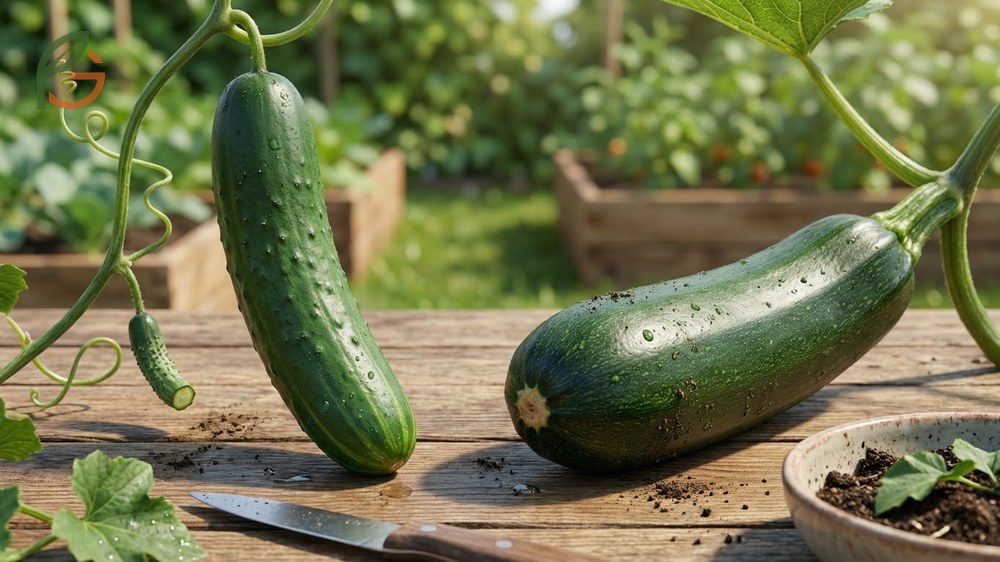
Evidence suggests the easiest way to tell cucumbers and zucchini apart is checking where the stem attaches. Cucumbers hang from vines like grapes, resulting in a more uniform cylindrical shape. Zucchini grows directly from the main stem, often developing a slightly bulbous blossom end[6].
When you hold a zucchini, it feels sturdier and slightly heavier than a cucumber of the same size. They don’t feel cold the way cucumbers do—more like a firm, solid vegetable rather than a crisp, watery one.
Skin Texture Comparison
Cucumbers have thicker, firmer skin with a distinctly waxy coating that helps retain moisture[8]. This waxy layer makes cucumbers ideal for pickles because the skin acts as a barrier during fermentation. Some cucumber varieties have tiny bumps or spines that rub off easily.
Zucchini has very thin, easily broken skin with a matte finish. The skin tears more readily when you scratch it with your fingernail. This delicate skin means zucchini doesn’t store as long as cucumbers and bruises more easily during transport.
Size and Shape Characteristics
Most cucumbers maintain a consistent diameter from end to end, measuring 6-9 inches long at harvest. They’re typically narrower than zucchini, with a more elongated profile.
Zucchini tends to be shorter and thicker, usually 6-8 inches at ideal harvest size. The shape often tapers slightly, with the stem end narrower than the blossom end. If left on the plant too long, zucchini can grow enormous—over 2 feet long—but they become seedy and less flavorful.
Taste and Flavor Differences
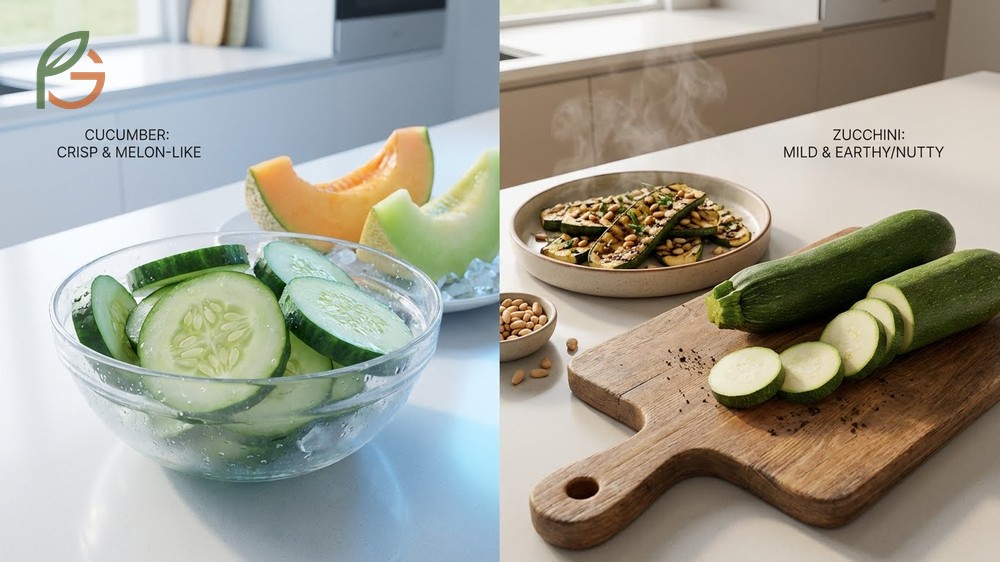
The flavor profiles couldn’t be more different once you taste them. Cucumbers have a crisp, refreshing, cool “melon” flavor that’s immediately recognizable[9]. This melon-like taste comes from compounds similar to those in cantaloupe and honeydew. You’ll notice cucumbers taste best when chilled.
Zucchini has a mild, earthy flavor with a slightly sweet flesh when raw. When cooked, it develops a subtle “green” flavor with nutty undertones. If a zucchini’s overripe, it can taste bitter—another reason to harvest at 6-8 inches.
Research shows the crisp melon scent is the most obvious sign you’ve got a cucumber on hand, not a zucchini[9]. That refreshing aroma disappears when you cook cucumbers, which is why they’re rarely used in hot dishes.
- Raw texture: Cucumbers are crisp and crunchy; zucchini is slightly spongy but firm
- Flavor intensity: Cucumbers have a pronounced melon-like taste; zucchini is mild and subtle
- Cooked transformation: Cucumbers become mushy and lose flavor; zucchini holds shape and develops nutty notes
- Temperature preference: Cucumbers taste best cold; zucchini shines when cooked warm
- Aftertaste: Cucumbers leave a clean, refreshing finish; zucchini has an earthy, slightly sweet aftertaste
Pro Tip: Can’t tell by looking? Take a small bite of the raw vegetable. If it tastes like watermelon rind with a cool, crisp texture, it’s a cucumber. If it’s mild and slightly chalky, you’ve got zucchini.
Nutritional Value Comparison
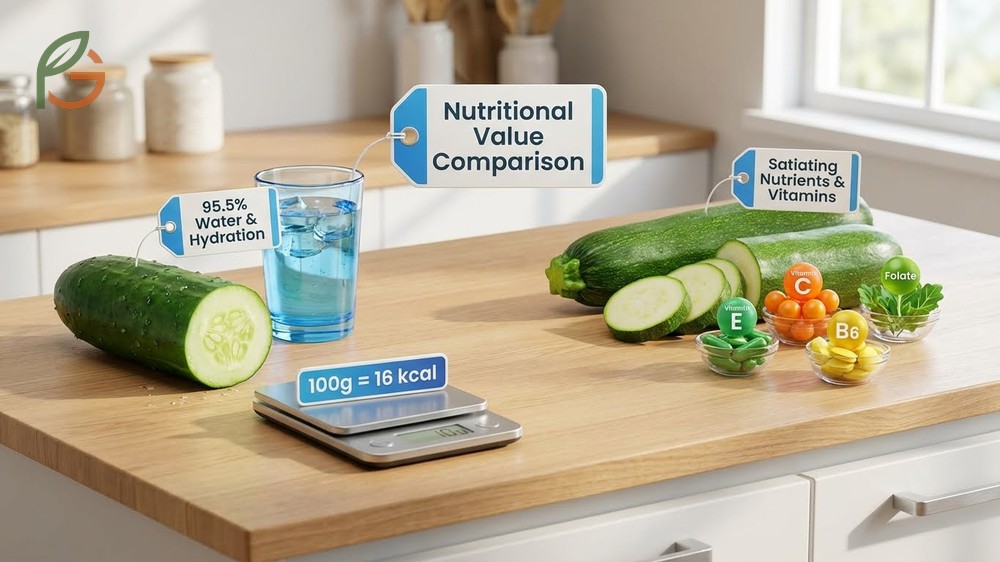
USDA data reveals cucumbers contain 95.5% water[2], making them one of the most hydrating vegetables you can eat. A 100-gram serving provides just 16 calories[2], with minimal protein and fat but excellent hydration value.
Zucchini offers roughly twice the protein and fiber of cucumber, which means it’s a better source of satiating nutrients[10]. Research shows zucchini contains 6.4 times more vitamin C[3], four times more vitamin E and B6[3], and 3.4 times more folate[3] than cucumbers.
Cucumbers excel in one area—they contain 3.8 times more vitamin K[3], which plays a crucial role in blood clotting and bone health. Both vegetables are low in carbohydrates, each containing less than 4 grams per 100-gram serving, making them suitable for low-carb and keto diets[10].
This table compares key vitamins, minerals, and macronutrients per 100-gram serving of cucumber and zucchini based on USDA data
| Nutrient | Cucumber | Zucchini |
|---|---|---|
| Calories | 16[2] | 17 |
| Water Content | 95.5%[2] | 94% |
| Protein | 0.62g[2] | 1.2g |
| Dietary Fiber | 0.5g | 1.0g[3] |
| Vitamin C | 2.8mg[10] | 17.9mg[10] |
| Vitamin K | 16.4mcg[10] | 4.3mcg[10] |
| Potassium | 170mg[2] | 261mg |
A peer-reviewed scientific review explains that cucumber and zucchini, although part of the same botanical family, contain different nutrient concentrations and bioactive compounds that impact their antioxidant, anti-inflammatory, and metabolic properties. Zucchini provides higher levels of vitamins A and C, potassium, magnesium, and folate—nutrients that play key roles in immunity, heart health, and cell repair.
Cooking Uses for Each

Cucumbers shine in raw applications—salads, gazpacho, fresh rolls, and pickles. They lose their crisp texture when cooked and become mushy. That high water content that makes them refreshing raw becomes a liability when heated.
Zucchini transforms beautifully through cooking methods like sautéing, grilling, roasting, and baking[9]. Its mild flavor absorbs seasonings and marinades well. When shredded and baked into recipes like zucchini bread, it adds structure and moisture without any noticeable flavor.
My friend in Guanajuato, Mexico discovered this the hard way last summer—she accidentally cooked cucumbers thinking they were zucchini. The cucumbers turned to mush within minutes and tasted bitter. Now she always does the stem check before cooking.
- Cucumbers for salads: Thinly sliced in Greek salad, cucumber-tomato salad, or Asian cucumber salad
- Cucumbers for pickles: Fermented dill pickles, bread-and-butter pickles, or quick-pickled refrigerator pickles
- Zucchini for grilling: Sliced lengthwise, brushed with olive oil, grilled until charred
- Zucchini for baking: Shredded into zucchini bread, muffins, or brownies for moisture
- Zucchini for spiralizing: Made into “zoodles” as a low-carb pasta substitute
- Zucchini for stuffing: Hollowed out and filled with meat, rice, or vegetable mixtures
Growing and Plant Differences
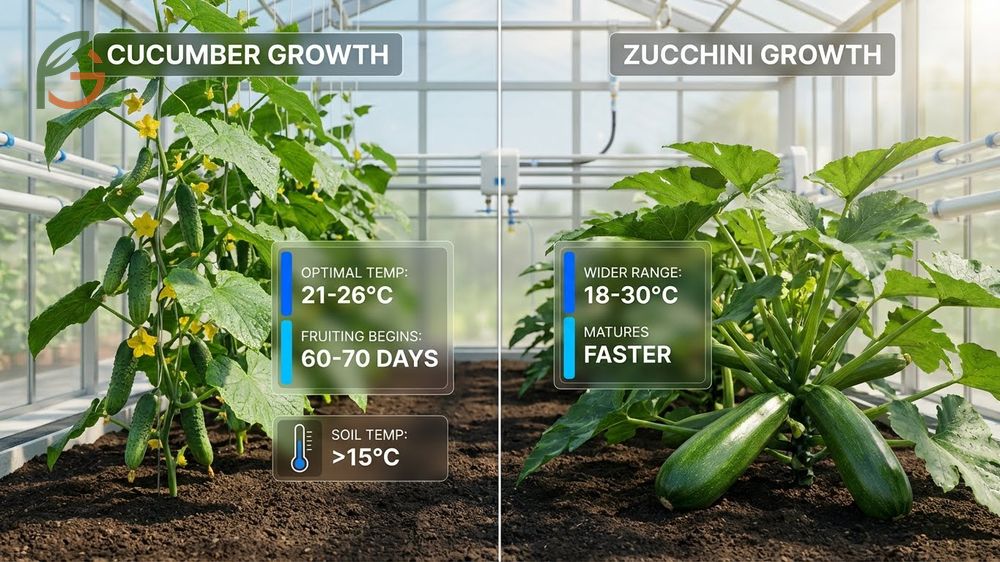
Current horticultural data shows cucumbers prefer temperatures of 21-26°C (70-80°F)[4] for optimal growth and fruit production. Greenhouse cucumbers grow rapidly under optimal conditions, with fruit production beginning 60-70 days after seeding. Soil temperatures should be at least 15°C (60°F)[11] for successful germination.
Zucchini tolerates a wider temperature range of 18-30°C (64-86°F)[5] and matures faster than cucumbers. It’s more tolerant of cool temperatures than other cucurbits like melons or watermelons. Zucchini produces mature fruits in frost-free weather and requires this weather for at least 50 days[5].
| Growing Factor | Cucumber | Zucchini |
|---|---|---|
| Optimal Temperature | 21-26°C (70-80°F)[4] | 18-30°C (64-86°F)[5] |
| Days to Harvest | 60-70 days | 45-55 days |
| Plant Type | Vining (needs trellis)[6] | Bush (compact)[6] |
| Frost Tolerance | Sensitive | Sensitive |
Research shows both plants have large heart-shaped leaves, but zucchini fruits protrude directly from the stems while cucumbers hang from vines like grapes[6]. This growth pattern means cucumbers need vertical support or trellising, while zucchini grows as a compact bush plant that doesn’t require staking.
- Growth habit: Cucumber vines can spread 6-8 feet; zucchini stays compact at 3-4 feet
- Support needs: Cucumbers require trellises or stakes; zucchini grows self-supporting
- Flower appearance: Both have yellow flowers, but zucchini flowers are larger and often stuffed in cooking
- Harvest frequency: Zucchini needs daily checks to prevent oversizing; cucumbers can wait 2-3 days
- Space requirements: Cucumbers need 1-2 square feet per plant with vertical space; zucchini needs 3-4 square feet
Growing Tip: If you’re working with limited garden space, choose bush cucumbers over vining types. They’ll grow more like zucchini and won’t take over your entire garden bed.
Conclusion
The evidence is clear: Cucumber vs Zucchini identification becomes easy once you check stem thickness, skin texture, and that distinctive melon scent. Cucumbers deliver superior hydration with 95.5% water content and excel in raw applications, while zucchini provides 6.4 times more vitamin C, twice the fiber, and transforms beautifully through cooking.
Current horticultural guidance emphasizes that both vegetables deserve space in your garden—cucumbers for refreshing summer salads and pickles, zucchini for versatile cooked dishes and low-calorie comfort meals. FruitGarden synthesizes the latest USDA nutritional data and agricultural research to help you grow, identify, and use these vegetables to their full potential.
Frequently Asked Questions
Can you substitute zucchini for cucumber in recipes?
You can’t substitute zucchini for cucumber in raw dishes because the flavor and texture are completely different. Cucumbers have a crisp, refreshing taste perfect for salads, while zucchini tastes chalky and bland when raw. If you’re making pickles or fresh salads, don’t use zucchini as a substitute—it won’t work.
Which is healthier: cucumber or zucchini?
Zucchini is more nutrient-dense, offering 6.4 times more vitamin C, twice the protein, and twice the fiber compared to cucumbers. However, cucumbers excel at hydration with 95.5% water content and provide 3.8 times more vitamin K. Choose cucumbers for hydration and vitamin K, zucchini for vitamins C, E, B6, and folate.
Why do my cucumbers taste like zucchini?
If your cucumbers taste bland or chalky instead of crisp and melon-like, they might actually be zucchini. Check the stem—cucumbers have thin, delicate stems while zucchini has thick, woody stems. You might’ve accidentally planted zucchini seeds or grabbed the wrong vegetable at the market.
Can you eat cucumber and zucchini skin?
Yes, both cucumber and zucchini skins are edible and contain valuable nutrients and fiber. Cucumber skin provides most of the vegetable’s fiber content, so leave it on when possible. Zucchini skin is thin and tender, making it perfect for eating without peeling. Just wash both thoroughly before eating.
Do cucumbers and zucchini cross-pollinate?
No, cucumbers and zucchini can’t cross-pollinate because they’re different species—cucumber is Cucumis sativus while zucchini is Cucurbita pepo. You can safely grow them side by side without worrying about strange hybrid vegetables. They won’t affect each other’s fruit development or taste.
How long do cucumbers and zucchini last in the fridge?
Cucumbers last 1-2 weeks in the refrigerator crisper drawer thanks to their thicker, waxy skin. Zucchini only lasts 4-5 days because its thin skin bruises easily and loses moisture faster. Store both unwashed in perforated plastic bags, and don’t wash until you’re ready to use them.
Can you cook cucumbers like zucchini?
You shouldn’t cook cucumbers like zucchini because they turn mushy and bitter when heated due to their 95.5% water content. Cucumbers are designed for raw consumption—salads, pickles, and cold soups. If you accidentally cook cucumbers, they’ll lose their refreshing flavor and crisp texture within minutes.