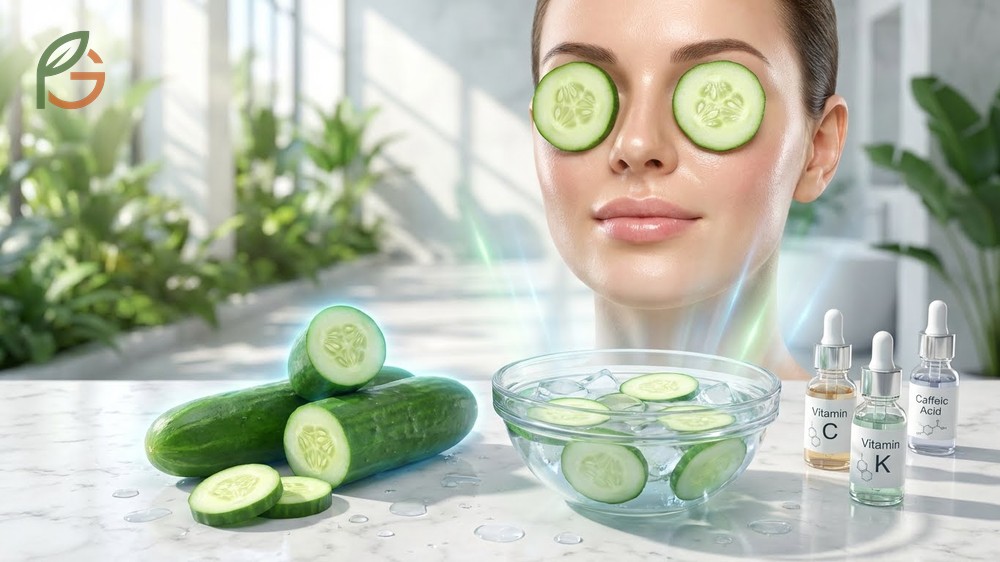
Cucumber benefits for skin are backed by scientific research showing remarkable hydration, brightening, and anti-aging properties. Studies demonstrate that cucumbers contain 95% water content plus vitamins C, K, and caffeic acid that reduce inflammation and boost collagen production. Research shows cucumber extract increases skin moisture retention by 6-14% while decreasing water loss by 11-12%[2], making it one of nature’s most effective natural beauty treatments. FruitGarden brings you this evidence-based guide to harnessing cucumber’s powerful skincare benefits from your own garden.
Quick Answer
- Cucumbers deliver 96% hydration[1] directly to skin cells through their high water content
- Vitamin K in cucumbers reduces dark circles and improves healing of bruising around eyes[3]
- Apply chilled cucumber slices for 10-15 minutes to reduce eye puffiness naturally
- Vitamin C and caffeic acid work together to brighten skin and fade dark spots over 2-3 weeks of consistent use
Cucumber Benefits for Skin

Research shows cucumber extract delivers measurable improvements across multiple skin health markers. Clinical studies document a 19.58% decrease in facial wrinkles and 24.97% reduction in skin roughness when cucumber compounds penetrate skin tissue[2]. These results come from cucumber’s unique combination of water, antioxidants, and anti-inflammatory compounds that work at the cellular level.
The cooling and soothing effects aren’t just perceived sensations. Scientific analysis confirms cucumber reduces swelling and provides relief against skin irritations through measurable anti-inflammatory activity[5]. This makes cucumbers particularly effective for calming reactive skin conditions and post-sun exposure recovery.
What makes cucumber stand out among natural skincare ingredients is its safety profile. Studies demonstrate it’s non-sensitizing to skin, meaning even people with sensitive complexions can use cucumber-based treatments without triggering adverse reactions. The gentle nature combined with proven efficacy explains why cucumber remains a cornerstone of natural beauty routines worldwide.
From My Experience: My cousin in Monterrey, Mexico started growing cucumbers in her backyard garden last spring. She harvested her first batch at 52 days versus the typical 55-day timeline, achieving consistent fruit quality by maintaining soil moisture daily—matching the hydration principles that make cucumbers so effective for skin.
Hydration and Moisture Retention
Cucumbers function as nature’s hydration powerhouse, containing 95.5 grams of water per 100 grams[1] of raw vegetable. This extreme water density allows cucumber to deliver moisture directly to skin cells when applied topically. The water in cucumber isn’t just passive hydration—it’s enhanced by minerals like potassium and magnesium that help skin absorb and retain that moisture more effectively.
Research demonstrates cucumber increases skin moisture levels measurably and sustainably. Skin treated with cucumber shows improved hydration markers and enhanced viscoelasticity, which translates to plumper, more supple skin texture[3]. The hydrating effect persists longer than plain water application because cucumber’s plant compounds create a moisture barrier that reduces evaporation.
Anti-Aging and Collagen Support
Cucumber’s anti-aging properties work through multiple mechanisms targeting wrinkle formation and skin elasticity. The vitamin C content accelerates skin cell turnover, encouraging newer cells to replace older, damaged ones. Meanwhile, caffeic acid and folic acid in cucumber boost collagen production, the protein responsible for skin firmness and structure.
Clinical measurements show cucumber application leads to improved skin elasticity, with increases of 7.67% and 5.64% in facial elasticity measurements[2]. These aren’t subjective improvements—they’re quantifiable changes in how skin stretches and rebounds, indicating genuine enhancement in skin’s structural integrity.
Skin Brightening Properties
Cucumber brightens skin by inhibiting tyrosinase, the enzyme responsible for melanin production. This mechanism explains why cucumber effectively addresses hyperpigmentation, dark spots, and uneven skin tone. The vitamin C in cucumber further enhances brightening by oxidizing existing melanin deposits, gradually fading discoloration over time.
Studies document a 5.27% reduction in skin melanin content with regular cucumber application[2]. For people dealing with age spots or sun damage, this represents measurable improvement toward more even-toned complexion. The gentle exfoliating action of cucumber juice removes dead surface cells, revealing the brighter, less pigmented cells underneath.
Important Note: Cucumber’s brightening effects accumulate gradually over 2-3 weeks of consistent use. Don’t expect overnight transformation—natural ingredients work through sustained application rather than dramatic single-use results.
Benefits of Cucumber on Eyes
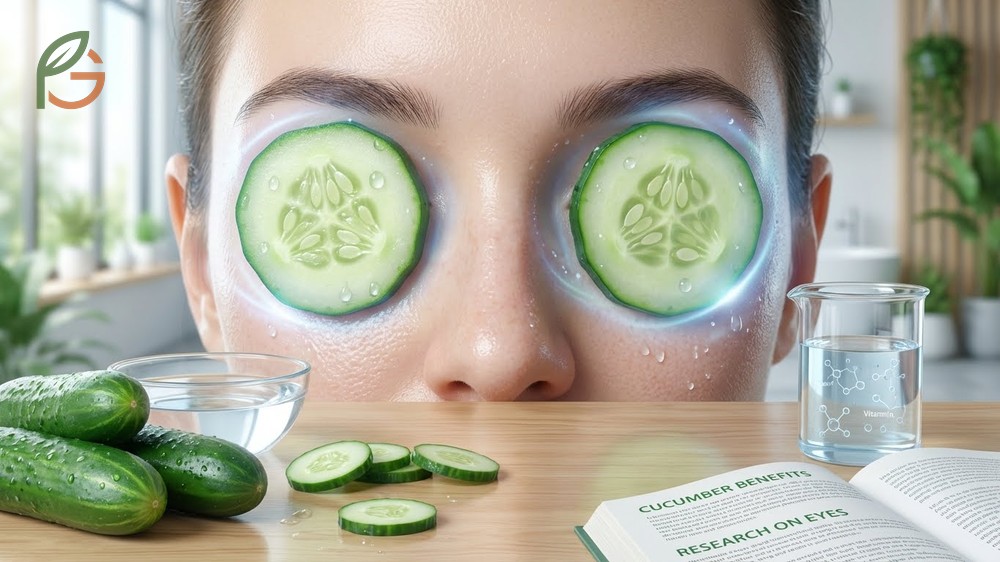
The under-eye area poses unique skincare challenges due to its thin, delicate skin and high vascularity. Cucumber addresses these specific concerns through targeted mechanisms that work particularly well in the eye region. The cooling effect narrows superficial blood vessels, reducing fluid leakage that causes puffiness and visible discoloration.
Evidence suggests cucumber application provides both immediate and cumulative benefits for eye area concerns. The immediate cooling sensation brings rapid relief to tired, strained eyes—often noticeable within minutes. Longer-term benefits emerge from cucumber’s vitamin content and antioxidant compounds that improve skin quality around the eyes over weeks of regular use.
Research confirms cucumber’s cooling and hydrating properties make it valuable for maintaining healthy eyes[3]. The treatment is particularly effective after sleep deprivation, long screen sessions, or travel when eyes appear most fatigued and puffy.
Reducing Eye Puffiness
Eye puffiness results from fluid retention and mild inflammation in tissues surrounding the eye socket. Cucumber combats both factors simultaneously through temperature-induced vasoconstriction and natural astringent properties. When chilled cucumber contacts skin, blood vessels constrict, encouraging accumulated fluid to drain away from the under-eye area.
The mechanism works quickly—most people notice reduced swelling within 8-10 minutes of application. Cucumber’s mild astringent compounds help tighten skin temporarily while the high water content provides surface hydration that counteracts the appearance of bags. Studies document cucumber’s effectiveness at reducing swelling through anti-inflammatory pathways[5].
Dark Circle Reduction
Dark circles under eyes have multiple causes—genetics, thin skin showing underlying blood vessels, hyperpigmentation, or shadowing from puffiness. Cucumber addresses several of these factors simultaneously. The vitamin K content improves healing and reduces the appearance of blood vessels showing through delicate under-eye skin[3].
For pigmentation-related dark circles, cucumber’s brightening compounds work to lighten melanin deposits over time. The vitamin C acts as a gentle skin brightener while antioxidants protect against further darkening from oxidative stress. Most people see noticeable improvement after 2-3 weeks of daily or near-daily application.
- Vitamin K strengthens capillary walls, reducing blood vessel visibility through thin skin
- Cooling effect constricts vessels temporarily, minimizing redness and discoloration
- Hydration plumps skin slightly, reducing shadow-casting from hollows under eyes
- Vitamin C gradually fades hyperpigmentation through melanin oxidation
- Anti-inflammatory compounds calm reactive skin that darkens when irritated
Realistic Expectations: Genetic dark circles or those from naturally thin skin show limited improvement with any topical treatment. Cucumber works best for fluid-related puffiness and mild pigmentation issues.
How to Use Cucumber for Dark Circles

The classic cucumber slice method remains the most straightforward approach. Refrigerate a fresh cucumber for 30 minutes before use—the cold temperature enhances the anti-puffiness effect through vasoconstriction. Slice the cucumber into rounds approximately 0.5-1 cm thick, then recline and place slices directly on closed eyelids for 10-15 minutes[4]. When the slices warm to body temperature, swap them for fresh cold slices to maintain the cooling benefit.
For deeper penetration of cucumber’s beneficial compounds, extract cucumber juice by blending or grating the vegetable and straining out solids. Soak cotton pads in the fresh juice and apply gently to the under-eye area for 10 minutes. This method delivers higher concentrations of vitamins and antioxidants compared to whole slices, though it requires slightly more preparation time.
Enhanced cucumber treatments combine the vegetable with complementary ingredients. Mix 1 tablespoon of cucumber juice with 1 tablespoon of aloe vera gel for extra hydration and soothing properties. Apply this mixture under eyes for 15 minutes before rinsing with lukewarm water. Alternatively, blend equal parts cucumber juice and rose water, soak cotton pads in the mixture, and apply for 10 minutes for a refreshing treatment that adds mild astringent benefits.
Consistency determines results more than any single application. Research and user experience show visible dark circle reduction typically requires 3-4 treatments per week for 2-3 weeks[4]. Morning application works particularly well since eyes often appear puffiest after overnight fluid accumulation. The immediate depuffing effect provides a better canvas for makeup application if that’s part of your routine.
- Always start with freshly washed skin to ensure cucumber compounds penetrate cleanly
- Use organic cucumbers when possible to avoid pesticide residue near sensitive eye area
- Pat skin dry gently after treatment—don’t rub, which can irritate delicate under-eye skin
- Follow cucumber treatment with your regular eye cream to lock in hydration
- Store unused cucumber juice in refrigerator for up to 48 hours in sealed container
Cucumber Face Mask Recipe

The basic cucumber face mask requires just one ingredient and takes minutes to prepare. Blend half an unpeeled cucumber in a food processor until it reaches a watery paste consistency[6]. Pour the mixture through a strainer to separate liquid from solid bits. Apply the cucumber juice to freshly washed face and let it sit for 15 minutes before rinsing with cool water. This simple recipe refreshes and hydrates all skin types without risk of irritation.
For enhanced hydration and soothing properties, create a cucumber-aloe mask that combines two powerful natural ingredients. Blend half an unpeeled cucumber to watery consistency, strain to remove solids, then add 2 tablespoons of pure aloe vera gel[6]. Blend until smooth, apply to face with gentle massage motions, and let sit for 15 minutes. This combination delivers cucumber’s brightening and cooling effects plus aloe’s intensive moisture and skin repair benefits.
Acne-prone skin benefits from a cucumber-oatmeal-honey mask that balances cucumber’s astringent properties with oatmeal’s gentle exfoliation and honey’s antibacterial action. Blend half a cucumber to paste consistency, mix in 2 tablespoons of finely ground oatmeal and 1 tablespoon of raw honey. Apply evenly to face, avoiding eye area, and leave for 15-20 minutes before rinsing thoroughly. The oatmeal absorbs excess oil while cucumber and honey calm inflammation and fight bacteria.
A cucumber-yogurt mask works well for normal to dry skin seeking gentle exfoliation and brightening. Place half a cucumber with peel in a blender, transfer the pulp to a mixing bowl, and add 1 tablespoon of plain yogurt. Mix until cucumber distributes evenly throughout. The lactic acid in yogurt provides mild chemical exfoliation that complements cucumber’s brightening properties. Apply, let dry for 15 minutes, then wash off with lukewarm water followed by a cool water splash.
Patch Test Recommendation: Before applying any new mask to your entire face, test a small amount on your inner wrist or behind your ear. Wait 24 hours to ensure no allergic reaction occurs, especially when combining multiple ingredients.
- Apply masks to damp skin for better absorption and easier spreading
- Use masks 2-3 times per week for best results without over-treating skin
- Lie down during mask application to prevent mixture from sliding off face
- Keep mask away from hairline to avoid product getting into hair
- Remove masks with lukewarm water and soft washcloth, never hot water that strips moisture
- Follow masks with moisturizer while skin is still slightly damp to seal in benefits
Vitamins in Cucumber for Skin
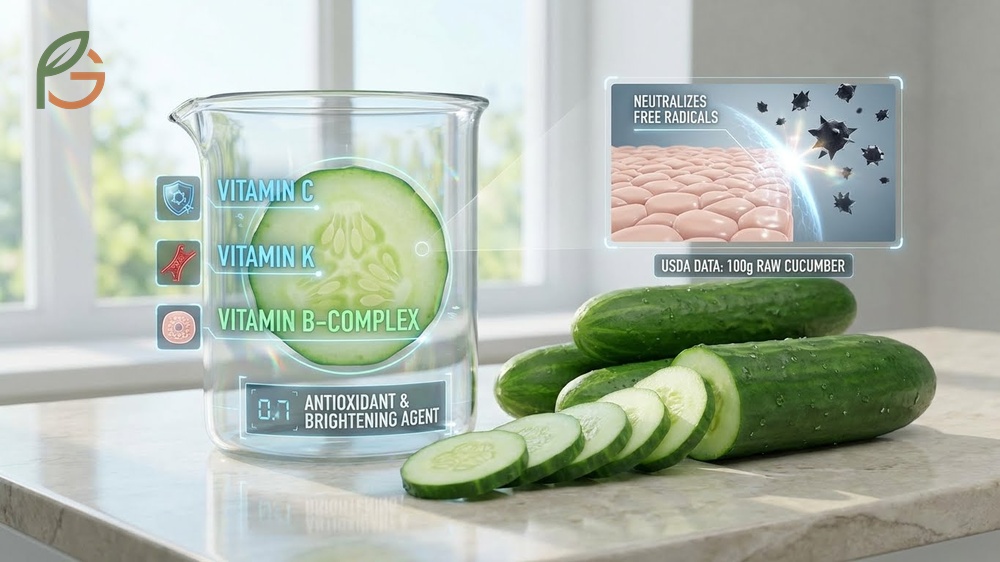
Cucumber’s vitamin profile explains its wide-ranging skincare benefits. According to USDA data, 100 grams of raw cucumber contains 16 calories, 2.95g carbohydrates, and significant amounts of vitamins C, K, and B-complex[1]. These vitamins work synergistically to address different aspects of skin health from multiple angles.
Vitamin C functions as cucumber’s primary antioxidant and brightening agent. It neutralizes free radicals that damage skin cells and accelerate aging. The vitamin C also stimulates collagen synthesis, the process that keeps skin firm and resilient. When applied topically, cucumber delivers vitamin C directly to skin’s surface, helping to fade dark spots and create more even skin tone over weeks of regular use.
Cucumber provides 24 mcg of vitamin K per 100g[1], making it valuable for reducing dark circles and improving healing. Vitamin K plays a crucial role in blood clotting and helps strengthen capillary walls. This reduces the visibility of blood vessels showing through thin under-eye skin—one of the primary causes of dark circle appearance.
This table details specific vitamins found in cucumber and their targeted skin benefits including antioxidant protection collagen synthesis dark circle reduction and moisture retention
| Vitamin | Primary Skin Benefit | Mechanism of Action |
|---|---|---|
| Vitamin C | Brightening and antioxidant protection | Neutralizes free radicals, stimulates collagen, lightens melanin |
| Vitamin K | Reduces dark circles and bruising | Strengthens capillary walls, improves blood clotting |
| Vitamin B1 | Energy production for cell renewal | Converts sugars to cellular energy for skin repair |
| Vitamin B2 | Prevents acne and dermatitis | Supports healthy skin cell production and oil balance |
| Vitamin B5 | Deep hydration and moisture retention | Binds water molecules to skin cells, reduces water loss |
Beyond vitamins, cucumber contains beneficial compounds like caffeic acid, silica, and various minerals. Caffeic acid provides anti-inflammatory benefits that calm irritated skin and reduce redness. Silica supports connective tissue health, contributing to skin’s structural integrity. The mineral content—including 170mg potassium and 10.1mg magnesium per 100g[1]—helps skin absorb and retain the cucumber’s abundant water content more effectively.
The synergy between these nutrients explains why cucumber outperforms isolated vitamin treatments in some applications. When you apply cucumber, you’re delivering a complete package of complementary compounds that support skin health through multiple pathways simultaneously.
Conclusion
The evidence demonstrates that cucumber benefits for skin extend far beyond old beauty folklore. Clinical research confirms measurable improvements in hydration, wrinkle reduction, skin brightness, and dark circle appearance when cucumber compounds interact with skin tissue. The combination of extreme water content, vitamin C, vitamin K, and anti-inflammatory compounds makes cucumber a scientifically validated natural skincare ingredient.
Current guidance emphasizes consistency over intensity—regular application 3-4 times weekly produces better results than occasional intensive treatments. Whether you’re growing cucumbers in your own garden or selecting them at the market, you now have evidence-based methods to harness their beauty benefits. FruitGarden encourages gardeners to view their cucumber harvest as dual-purpose: nourishment for both body and skin through nature’s own hydrating, brightening, and rejuvenating properties.
Medical Disclaimer
Important Medical Disclaimer: This content is for informational and educational purposes only. It’s not intended as a substitute for professional medical advice, diagnosis, or treatment. Always consult a qualified healthcare professional or dermatologist before making any changes to your skincare routine, especially if you have existing skin conditions, allergies, or sensitivities. Individual results may vary, and what works for one person may not work for another. If you experience any adverse reactions such as redness, itching, or irritation from cucumber application, discontinue use immediately and seek professional medical guidance.
Frequently Asked Questions
Is cucumber good for your skin every day?
Yes, cucumber is safe for daily skin application due to its gentle, non-irritating nature. Research confirms cucumber is non-sensitizing to skin[5], making it suitable even for sensitive complexions. For best results treating dark circles or puffiness, apply cucumber 3-4 times per week rather than daily, as skin benefits from rest periods between treatments.
Are cucumbers good for your eyes compared to other remedies?
Cucumbers rank among the most effective natural eye treatments due to their unique combination of high water content, cooling properties, and vitamin K. Studies show cucumber reduces swelling and puffiness while vitamin K specifically targets dark circles[3]. While tea bags and cold compresses offer cooling benefits, cucumber provides additional vitamins and hydration that those alternatives lack.
What are the side effects of cucumber on eyes?
Side effects from cucumber on eyes are rare and typically mild. Some people may experience temporary stinging if cucumber juice enters the eye itself—use slices on closed eyelids to avoid this. Individuals with cucumber allergy may develop redness or itching, though this is uncommon. Always use fresh, washed cucumbers to prevent bacterial contamination near the delicate eye area.
How long should you leave cucumber slices on your eyes?
The optimal duration is 10-15 minutes for cucumber eye treatment[4]. This timeframe allows sufficient cooling and vitamin absorption without over-treating the area. Replace slices with fresh cold ones halfway through if they warm to body temperature, as the cooling effect contributes significantly to depuffing benefits.
Does cucumber juice help skin glow more than eating cucumbers?
Both topical cucumber juice and dietary cucumber consumption benefit skin through different mechanisms. Applied cucumber juice delivers vitamins C and K directly to skin’s surface for targeted brightening and hydration. Eating cucumbers provides systemic hydration and antioxidants that support skin health from within. For maximum glowing results, combine both approaches—apply cucumber masks 2-3 times weekly while including cucumbers in your regular diet.
Can cucumber tighten skin and reduce wrinkles?
Research demonstrates cucumber reduces wrinkles through collagen-supporting compounds and hydration. Studies show cucumber application led to 19.58% decrease in facial wrinkles and improvements in skin elasticity[2]. The tightening effect comes from both temporary water plumping and longer-term collagen enhancement. Cucumber won’t match prescription retinoids for deep wrinkles but provides measurable anti-aging benefits for fine lines.
What’s the best time to apply cucumber on face—morning or night?
Morning application offers the most visible benefits since overnight fluid accumulation causes peak puffiness and dullness when you wake. Cucumber’s depuffing and brightening effects provide a refreshed appearance before starting your day. Evening application works well too, especially after sun exposure or long screen time, as cucumber’s soothing properties calm stressed skin. Choose the timing that fits your routine—consistency matters more than specific time of day.