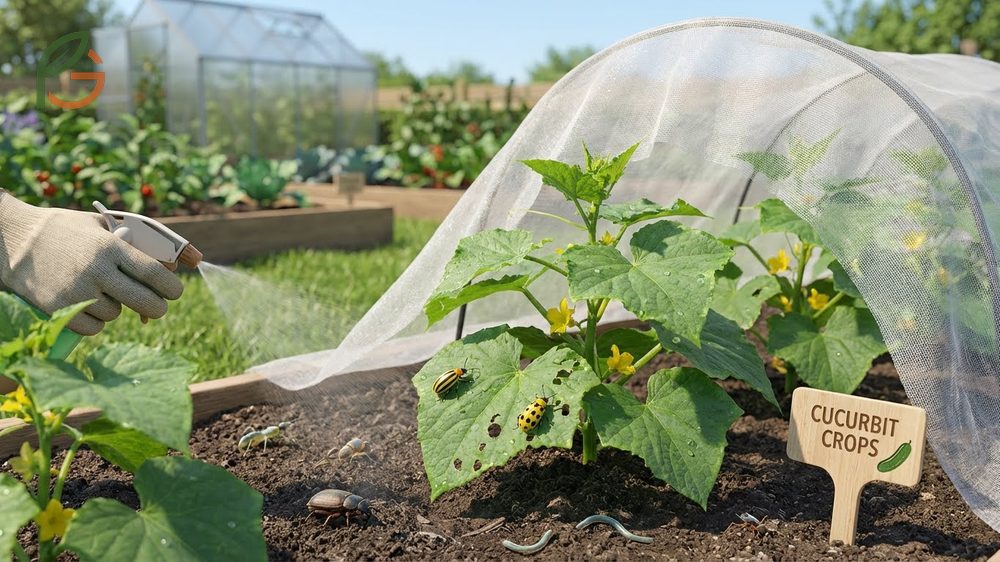
Cucumber beetles control combines physical barriers, biological agents, and strategic pesticide use to protect cucurbit crops from these destructive pests. Research shows that striped and spotted cucumber beetles cause direct feeding damage and transmit bacterial wilt disease, making early intervention critical for successful cucurbit production[1]. FruitGarden synthesizes current agricultural research to help growers implement effective integrated pest management strategies that balance crop protection with environmental stewardship.
Quick Answer
- Row covers reduce beetle colonization by up to 90% when installed at transplanting[2]
- Economic threshold is 1 beetle per plant for cucumbers and melons to prevent bacterial wilt[3]
- Perimeter trap cropping with Blue Hubbard squash eliminates 9% direct feeding losses in main crops[4]
- Spinosad and pyrethrin provide fast knockdown for organic growers facing severe infestations[5]
Understanding Cucumber Beetle Threats
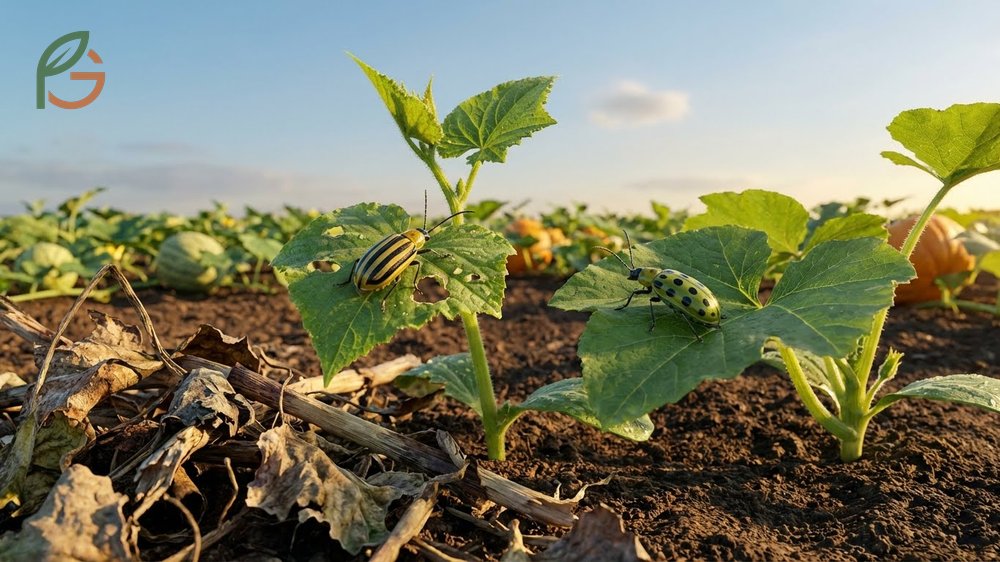
Cucumber beetles rank as the primary insect pest of cucurbit crops throughout North America, attacking cucumbers, melons, squash, and pumpkins with devastating efficiency[1]. You’ll encounter two main species: striped cucumber beetles that specialize exclusively on cucurbits, and spotted cucumber beetles that feed on multiple plant families. Both species overwinter in plant debris along field edges, then rapidly colonize young crops when temperatures warm in spring.
The real danger isn’t just the beetles themselves—it’s the bacterial wilt disease they carry. Beetles ingest the bacterium *Erwinia tracheiphila* while feeding on infected plants, and the pathogen overwinters in their digestive systems[6]. When beetles feed on healthy plants in spring, they deposit bacteria through their excrement and feeding wounds. There’s no cure once a plant’s infected—it’ll wilt and die within weeks.
Most gardeners don’t realize that timing matters more than beetle numbers when it comes to wilt transmission. Plants at the cotyledon and 1-2 leaf stages are most vulnerable to infection, so even low beetle populations can cause significant losses early in the season[3]. After the 5-leaf stage, plants develop better tolerance to both feeding damage and bacterial wilt.
Identifying Striped and Spotted Beetles
Striped cucumber beetles measure about 0.25 inches long with three distinct black stripes running down yellow-orange wing covers and a black abdomen. Spotted cucumber beetles appear slightly larger at 0.25-0.3 inches, with 12 black spots on greenish-yellow wings and a yellow abdomen. Both species have black heads and long, slender antennae that help distinguish them from other garden beetles.
The larvae of both species look similar—creamy white, wormlike creatures with darker heads and tips that grow to about 3/8 inch long. They develop for 2-4 weeks while feeding on cucurbit roots before pupating in the soil for about 7 days[7]. Understanding this lifecycle helps you time control measures effectively.
Damage Patterns and Economic Impact
Adult beetles cause the most economically significant damage through direct feeding on leaves, flowers, and fruits. Seedling damage can stunt growth severely, while feeding on flowers reduces fruit set. When beetles feed directly on developing fruits, they create scars and pock marks that make produce unmarketable.
Beetle larvae feeding on roots typically causes less visible damage but can weaken plants and reduce yields. Research demonstrates that controlling adult beetles early in the season prevents both direct feeding losses and bacterial wilt transmission, making it the most cost-effective strategy.
From My Experience: My cousin in Guadalajara, Mexico grows cucumbers and noticed beetles colonizing transplants within hours of field planting in May 2024. He lost 15% of plants before installing row covers—matching the 9-17% losses reported in University studies for unprotected seedlings.
Organic Beetle Control Methods

Organic growers face limited insecticide options but can achieve excellent control through integrated strategies combining physical barriers, biological controls, and OMRI-listed spray materials. Studies demonstrate that organic methods often outperform conventional approaches when implemented correctly, particularly for small-scale and market garden operations.
The key to organic success is layering multiple tactics rather than relying on a single method. Row covers provide the foundation, while companion plants, trap crops, and targeted sprays fill specific niches in your pest management program.
Row Covers and Physical Barriers
Floating row covers deliver the most reliable non-chemical control when installed properly. Research shows row covers can reduce beetle colonization by up to 90% compared to uncovered crops[2]. You’ll get best results by covering transplants the same day they’re set in the field—beetles can colonize plants in minutes during peak pressure periods.
Don’t quit for the day until all newly set transplants are properly protected with row covers. The perimeter of the netting must be completely secured to prevent beetles from probing for entry points. You’ll need to remove covers when plants begin flowering to allow pollinator access, which unfortunately coincides with the period when second-generation beetles emerge.
One downside: row covers exclude beneficial insects along with pests, which can lead to secondary problems like aphid outbreaks. Monitor weekly under covers and introduce purchased lady beetles if aphids appear on leaf undersides.
Critical Timing: Install row covers within 2 hours of transplanting. Even brief exposure allows beetles to transmit bacterial wilt to vulnerable seedlings. Don’t delay coverage until tomorrow—beetles move fast when they detect fresh cucurbit plants.
Companion Planting Strategies
Companion planting shows mixed results in research trials, but certain combinations provide measurable benefits. Studies found that combining radish, tansy, and nasturtium as companion plants significantly reduced striped and spotted beetle populations while increasing muskmelon yields[8]. The mechanism isn’t fully understood but likely involves masking host plant volatiles that attract beetles.
Other companion plants recommended by growers include marigolds and catnip, though controlled trials haven’t consistently demonstrated their effectiveness. Plant companions densely around field borders rather than interplanting them throughout the crop, which makes cultivation and harvest more difficult.
- Nasturtium—highly attractive to beetles, works well as trap plant or repellent when densely planted
- Radish—proven effective in university trials when combined with other companions
- Tansy—aromatic herb that shows consistent beetle reduction in research plots
- Marigold—traditional companion with anecdotal support but limited research validation
- Catnip—aromatic properties may mask cucurbit scent, works best around field perimeter
Organic Spray Options
Several OMRI-listed insecticides provide fast knockdown of cucumber beetles when populations exceed treatment thresholds. Spinosad (sold as Entrust in organic formulations) offers broad-spectrum control and can be applied as foliar sprays or soil drenches to target larvae[5]. Reapply every 7-14 days or after rainfall washes residues from leaves.
Pyrethrin products derived from chrysanthemum flowers provide quick knockdown but have short residual activity. They work best for immediate control when beetle pressure suddenly spikes. Azadirachtin (neem-based products) acts more slowly but offers both insecticidal and anti-feedant properties that reduce plant damage even when populations remain moderate.
- Spinosad (Entrust formulation)—effective against adults and larvae, OMRI-listed, 7-14 day reapplication interval
- Pyrethrin—fast knockdown, short residual, apply late evening to protect pollinators
- Neem oil/azadirachtin—anti-feedant properties reduce damage, slower kill than pyrethrins
- Kaolin clay (Surround WP)—creates physical barrier on leaves that deters feeding
- Diatomaceous earth—food-grade dust around plant bases, reapply after rain or irrigation
Pollinator Protection: Apply all sprays—even organic ones—late in the evening when bees aren’t foraging. Spinosad and pyrethrins are highly toxic to bees and beneficial insects during application but safe once dried on foliage.
Preventing Cucumber Beetles

Prevention strategies focus on making your field less attractive to beetles and disrupting their lifecycle before damage occurs. Cultural practices and trap cropping can dramatically reduce the need for insecticide applications while providing season-long suppression.
Perimeter Trap Cropping
Perimeter trap cropping uses highly attractive varieties planted around field edges to concentrate beetles away from your main crop. Blue Hubbard squash works exceptionally well as a trap crop, drawing beetles like a magnet while you protect the main planting[4]. Research shows this technique completely eliminated the 9% plant loss from direct feeding damage in control plots.
Plant 2-3 rows of Blue Hubbard squash completely encircling your main crop, using the same spacing as the cash crop. Make sure there aren’t large gaps in the perimeter where beetles can bypass the trap. Spray the trap crop rows as soon as beetles appear—don’t wait for them to colonize the main crop or reach threshold levels.
Monitor continuously and be prepared to make 1-2 additional perimeter sprays if rain washes off the insecticide or if live beetles persist. If beetle pressure gets extreme and breaches the perimeter, you’ll need full-field applications when main crop populations exceed 0.5 beetles per plant for cucumbers.
Cultural Control Practices
Clean cultivation and crop rotation disrupt beetle lifecycles by eliminating overwintering habitat and reducing resident populations. Remove all crop debris immediately after harvest and avoid letting fruits drop to the ground, which attracts beetles and provides overwintering sites.
Rotate cucurbit crops to fields at least 1/4 mile away from last year’s location, since beetles overwinter in field edges and adjacent areas. Avoid planting cucurbits next to corn fields—spotted cucumber beetle larvae also feed on corn roots, creating reservoir populations that move to cucurbits during the season.
- Three-year rotation—plant cucurbits in the same field only once every three years to break beetle lifecycle
- Delayed planting—wait until soil warms above 70°F (21°C) so seedlings grow rapidly past vulnerable stages
- Clean cultivation—remove all crop residue and volunteer plants that harbor overwintering beetles
- Field location—plant new crops away from last year’s cucurbit fields and corn to reduce colonization pressure
- Resistant varieties—choose varieties with some wilt tolerance like County Fair 83 cucumbers or butternut squash
- Timing removal of row covers—remove covers at first bloom to allow pollination while plants are past vulnerable seedling stage
Chemical Control Options

Conventional growers have access to more insecticide options, including synthetic pyrethroids and carbamates that provide longer residual control than organic materials. Popular products include carbaryl (Sevin), permethrin, bifenthrin (Brigade), and lambda-cyhalothrin (Warrior), all of which deliver effective beetle knockdown when applied at label rates.
The economic threshold determines when to spray: treat cucumbers and melons when populations reach 1 beetle per plant, but you can tolerate up to 5 beetles per plant on less susceptible crops like watermelon, squash, and pumpkins[3]. Scout at least 25 plants twice weekly during seedling stages and weekly during fruiting.
Spray within 24 hours after the threshold’s exceeded—proper timing is critical for preventing wilt transmission. Multiple applications are typically needed since beetles continue colonizing fields from surrounding areas throughout the season. Rotate chemical classes to prevent resistance development, and always follow pre-harvest intervals listed on labels.
This table compares conventional and organic insecticides for cucumber beetle control, showing active ingredients, application rates, residual activity duration, and pollinator safety waiting periods
| Product Type | Active Ingredient | Application Rate | Residual Activity | Pollinator Safety |
|---|---|---|---|---|
| Carbaryl (Sevin) | Carbamate | 1-2 lbs/acre | 5-7 days | Apply evening only |
| Permethrin | Pyrethroid | 4-8 oz/acre | 7-10 days | Highly toxic to bees |
| Spinosad (Entrust) | Biological | 4-6 oz/acre | 7-14 days | Safe when dry |
| Pyrethrin | Botanical | Variable by formulation | 1-2 days | Toxic wet, safe dry |
| Neem/Azadirachtin | Botanical | 8-16 oz/acre | 3-5 days | Low toxicity |
Resistance Management: Don’t rely on a single insecticide class all season. Rotate between carbamates, pyrethroids, and biologicals to prevent resistance development in beetle populations. Tank-mixing different classes doesn’t count as rotation.
Conclusion
The evidence is clear: cucumber beetles control succeeds through integrated approaches that combine preventive tactics with threshold-based interventions. Row covers and trap cropping provide the foundation for organic systems, while conventional growers can layer these methods with targeted insecticide applications for maximum efficiency. Current agricultural guidance emphasizes scouting-based decisions rather than calendar sprays, reducing both costs and environmental impacts while maintaining effective beetle suppression.
Whether you choose organic or conventional methods, protecting young plants during their first 3-4 weeks delivers the highest return on investment by preventing bacterial wilt transmission and direct feeding losses. FruitGarden continues tracking emerging research on biological controls and resistant varieties to help growers stay ahead of these persistent pests.
Frequently Asked Questions
What kills cucumber beetles instantly?
Pyrethrin-based sprays provide the fastest knockdown of cucumber beetles, killing them within minutes of contact. However, pyrethrins have short residual activity lasting only 1-2 days, so you’ll need repeat applications during heavy beetle pressure. For longer-lasting control, carbaryl or synthetic pyrethroids maintain effectiveness for 5-10 days after application.
When should I remove row covers to allow pollination?
Remove row covers when plants begin flowering, typically 4-6 weeks after transplanting depending on the crop. This timing coincides with when plants have passed the most vulnerable seedling stages and developed better tolerance to both beetle feeding and bacterial wilt. Remove covers in early morning before bee activity peaks, and monitor closely for beetles colonizing the newly exposed plants.
How do I distinguish striped from spotted cucumber beetles?
Striped cucumber beetles have three distinct black stripes running lengthwise down yellow-orange wing covers and a black abdomen. Spotted cucumber beetles display 12 black spots on greenish-yellow wings with a yellow abdomen. Both measure about 1/4 inch long, but striped beetles specialize on cucurbits while spotted beetles feed on multiple plant families including corn.
Can beneficial nematodes control cucumber beetles?
Yes, entomopathogenic nematodes like Heterorhabditis bacteriophora and Steinernema riobravis can reduce cucumber beetle larval populations in the soil by 50% when applied correctly. These microscopic worms infect beetle larvae feeding on roots, but they don’t affect adult beetles. Apply nematodes to moist soil when temperatures are between 44-86°F (7-30°C) and keep soil consistently moist for two weeks after application.
What’s the best trap crop for cucumber beetles?
Blue Hubbard squash works as the most effective trap crop for cucumber beetles based on university research trials. Plant 2-3 rows of Blue Hubbard completely around your main crop perimeter, then spray the trap crop rows as soon as beetles appear. This concentrates beetles on the perimeter where you can control them with fewer insecticide applications, protecting your cash crop in the center.
How many cucumber beetles can I tolerate before spraying?
Treatment thresholds depend on your crop. For cucumbers and muskmelons, spray when populations reach 1 beetle per plant to prevent bacterial wilt transmission. Watermelons, squash, and pumpkins tolerate up to 5 beetles per plant without significant yield losses since they’re less susceptible to bacterial wilt. Scout at least 25 plants twice weekly during seedling stages to accurately assess population levels.
Does neem oil work for cucumber beetle control?
Neem oil and azadirachtin products work more as feeding deterrents than direct insecticides for cucumber beetles. They significantly reduce plant damage by making foliage less palatable, but they won’t provide fast knockdown like pyrethrins or carbaryl. Use neem as a preventive spray early in the season or in combination with other tactics, applying every 7-10 days in early morning to avoid leaf burn.