Can you drink cranberry juice while pregnant? Yes, research shows it’s safe in all trimesters when consumed in moderation[1]. Studies demonstrate that drinking 240 ml of cranberry juice daily reduces urinary tract infections by 57% in pregnant women[2]. Current evidence from over 900 subjects confirms no increased risks of malformations or neonatal complications[3]. FruitGarden synthesizes the latest clinical research to help you make informed decisions about fruit consumption during pregnancy.
Quick Answer
- Cranberry juice is safe during all three trimesters when you drink 250-720 ml daily[2]
- Research shows a 57% reduction in urinary tract infections with regular consumption[2]
- Choose unsweetened varieties to avoid excessive sugar intake (standard cranberry juice contains 12g sugar per 100ml)
- One cup provides 42mg vitamin C, meeting half your daily pregnancy needs[4]
Cranberry Juice While Pregnant

Research across multiple clinical trials confirms that cranberry juice poses no direct safety concerns for pregnant women or developing fetuses[1]. Studies examining over 900 pregnant subjects found no increased risks of congenital malformations, vaginal bleeding, or neonatal complications[3]. Current evidence indicates you can safely incorporate cranberry juice throughout your pregnancy journey.
Most pregnant women tolerate cranberry juice well when they choose appropriate varieties and stick to recommended amounts. What makes it particularly valuable is its dual role: providing essential nutrients while potentially reducing infection risks. The key lies in selecting unsweetened or low-sugar options and monitoring your total daily sugar intake.
Safety Across All Trimesters
Clinical data shows cranberry juice is safe from conception through delivery. Unlike certain foods that carry restrictions during specific pregnancy stages, cranberry juice doesn’t require trimester-based limitations[2]. You can start drinking it in the first trimester and continue throughout your pregnancy without changing consumption patterns.
Studies tracking pregnant women from early pregnancy through delivery found no differences in obstetrical or neonatal outcomes between cranberry consumers and non-consumers[3]. This includes measures like preterm delivery rates, birth weight, Apgar scores, and neonatal intensive care admissions.
Research-Backed Evidence
A comprehensive safety survey of 400 pregnant women who regularly consumed cranberry products uncovered no adverse events[1]. This real-world evidence complements controlled trial data. Multiple studies have tested daily cranberry consumption ranging from 240 ml to 720 ml without identifying safety concerns.
Recent systematic reviews analyzing cranberry supplementation during pregnancy demonstrate its safety profile extends beyond juice to capsules and extracts[5]. The consistency across different cranberry forms strengthens confidence in its use throughout pregnancy.
Important Note: While cranberry juice is safe, it can’t replace medical treatment for active urinary tract infections. If you experience UTI symptoms like burning during urination or fever, contact your healthcare provider immediately for appropriate antibiotic treatment.
Benefits of Cranberry Juice During Pregnancy

Cranberry juice offers specific advantages during pregnancy that extend beyond basic hydration. Studies demonstrate measurable improvements in urinary tract health, immune function support through vitamin C content, and antioxidant protection for developing tissues. Understanding these benefits helps you maximize cranberry juice’s potential while maintaining balanced nutrition.
The biological mechanisms behind cranberry’s effectiveness involve proanthocyanidins that prevent bacteria from adhering to urinary tract walls. This anti-adhesion property is particularly valuable during pregnancy when anatomical changes increase UTI susceptibility.
UTI Prevention and Treatment Support
Research shows pregnant women who drink at least 240 ml of cranberry juice daily experience a 57% reduction in urinary bacteria and 41% fewer UTIs compared to those drinking placebo beverages[2]. A recent Cochrane review confirms cranberry products reduce overall UTI risk by approximately 30% across populations[5].
UTIs during pregnancy carry serious risks if left untreated. The American College of Obstetricians and Gynecologists reports that untreated UTIs are associated with increased rates of preterm delivery and low birth weight[6]. Regular cranberry juice consumption provides a complementary prevention strategy alongside proper hydration and hygiene practices.
- Prevents E. coli bacteria from adhering to bladder walls through proanthocyanidin compounds
- Reduces asymptomatic bacteriuria, which affects up to 10% of pregnant women
- Supports urinary tract health when anatomical changes during pregnancy increase infection vulnerability
- Works synergistically with adequate water intake (8-10 glasses daily) for optimal urinary health
- May reduce the need for antibiotic courses during pregnancy when used preventatively
Nutritional Advantages
One cup (240 ml) of cranberry juice provides approximately 42mg of vitamin C, which covers nearly half the 85mg daily recommendation for pregnant women aged 19 and older[4]. Vitamin C actively transports across the placenta to support fetal development and collagen formation for your baby’s skin, bones, and cartilage.
The antioxidant properties in cranberry juice protect cells from oxidative stress during pregnancy. Research indicates adequate vitamin C intake may help reduce risks of certain pregnancy complications while improving iron absorption from plant-based foods[4].
- Vitamin E (1.2mg per 100g) supports immune function and cell protection
- Potassium (77mg per 100g) helps maintain healthy blood pressure and fluid balance
- Low sodium content (2mg per 100g) supports cardiovascular health during pregnancy
- Antioxidants including anthocyanins and flavonoids that combat cellular damage
- Zero cholesterol and minimal fat content align with heart-healthy pregnancy nutrition
How Much Cranberry Juice Is Safe During Pregnancy

Current research supports a safe consumption range of 250-720 ml (approximately 1-3 cups) of cranberry juice daily during pregnancy[2]. Clinical trials testing these amounts found no adverse effects on maternal or fetal outcomes. Most studies showing UTI prevention benefits used at least 240 ml daily as the baseline effective dose.
Starting with one cup daily allows you to assess tolerance while providing measurable benefits. You can increase to two or three cups if you’re at higher UTI risk or enjoy the taste, but staying within the tested range ensures safety. Consider your total daily sugar intake when determining your ideal amount, especially if you have gestational diabetes risk factors.
The timing of consumption doesn’t significantly impact effectiveness. Some women prefer drinking cranberry juice in the morning with breakfast, while others spread intake throughout the day. What matters most is consistency rather than specific timing patterns.
Sugar Consideration: If you’re approaching your glucose tolerance test or managing gestational diabetes, limit cranberry juice consumption 24-48 hours before testing. High juice intake can temporarily affect blood sugar readings.
- Start with 240 ml (1 cup) daily and monitor how your body responds
- Increase to 480-720 ml (2-3 cups) for enhanced UTI prevention if needed
- Dilute concentrated juice with water at a 1:1 ratio to reduce sugar concentration
- Drink with meals to minimize potential digestive discomfort
- Count cranberry juice toward your total daily fluid intake of 8-10 glasses
Choosing the Right Type of Cranberry Juice

The type of cranberry juice you choose significantly impacts its health benefits and sugar content. Pure, unsweetened cranberry juice contains approximately 12g sugar per 100ml, all naturally occurring from the fruit. In contrast, cranberry cocktails often contain 15-20g total sugar per 100ml due to added sweeteners, which can cause unwanted blood sugar spikes during pregnancy.
Reading labels carefully helps you avoid products marketed as “cranberry juice” that contain only 10-30% actual cranberry juice mixed with apple, grape, or other cheaper juices. Look for products listing “cranberry juice” or “100% cranberry juice” as the first ingredient without added sugars or high-fructose corn syrup.
Unsweetened varieties taste quite tart, which many pregnant women find challenging due to heightened taste sensitivity. Diluting pure cranberry juice with water or sparkling water makes it more palatable while reducing sugar concentration. This approach gives you control over sweetness levels and helps stretch your juice supply.
This table compares sugar content, cranberry concentration, additives, and pregnancy suitability across four types of cranberry beverages
| Type | Sugar Content | Cranberry % | Best For Pregnancy |
|---|---|---|---|
| 100% Unsweetened Juice | 12g per 100ml (natural only) | 100% | Excellent – highest benefits, no additives |
| No Sugar Added Juice | 12-14g per 100ml | 100% | Excellent – pure juice, naturally sweet |
| Cranberry Cocktail | 15-20g per 100ml | 25-40% | Moderate – diluted benefits, high sugar |
| Cranberry Juice Blend | 13-18g per 100ml | 10-50% | Fair – variable quality, check labels |
- Check the ingredient list for “cranberry juice” as the first item, not “water” or “sugar”
- Avoid products with artificial sweeteners like aspartame or sucralose during pregnancy
- Choose organic options when possible to minimize pesticide exposure
- Store opened juice in the refrigerator and consume within 7-10 days
- Consider cranberry capsules as an alternative if you dislike the taste or need to control sugar intake
Potential Side Effects and Precautions
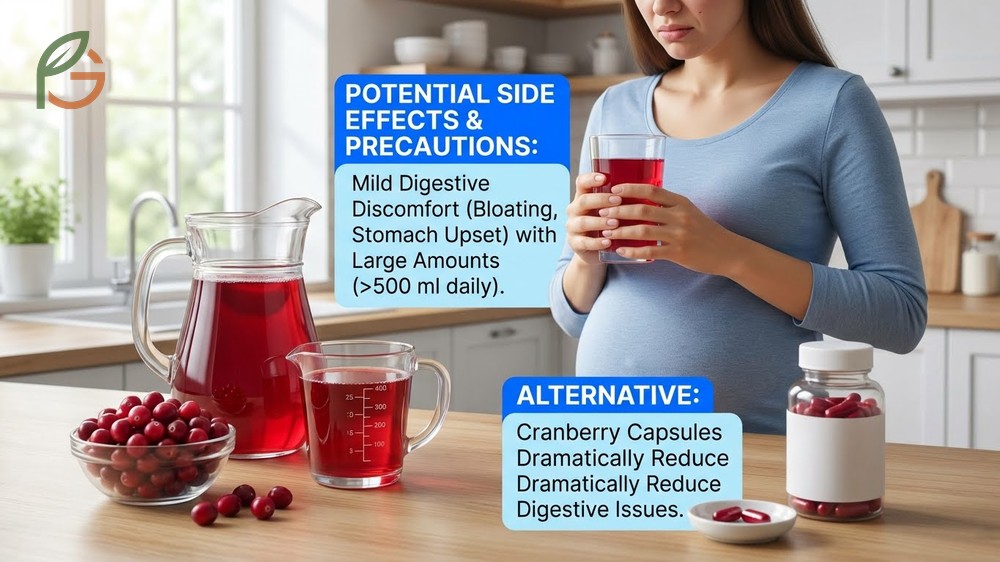
While cranberry juice is generally safe, some pregnant women experience mild digestive discomfort, particularly when consuming large amounts. Studies report gastrointestinal side effects in approximately 23% of pregnant women drinking cranberry juice daily[5]. These effects include bloating, stomach upset, and occasional diarrhea, typically occurring with doses exceeding 500 ml daily.
Switching from juice to cranberry capsules dramatically reduces digestive issues. Research shows only 2% of pregnant women taking cranberry capsules experience side effects compared to 23% with juice[5]. This alternative provides the same UTI prevention benefits without liquid volume or sugar concerns.
Women taking blood-thinning medications like warfarin should exercise caution with cranberry products. While evidence of interactions during pregnancy remains limited, discussing cranberry consumption with your healthcare provider ensures safety if you’re on anticoagulant therapy.
When to Avoid or Limit: If you’ve been diagnosed with gestational diabetes, consult your healthcare provider before adding cranberry juice to your diet. The natural sugar content may require adjustments to your meal plan or insulin doses.
- Reduce intake if you experience stomach cramping or loose stools
- Monitor blood sugar levels closely if you have gestational diabetes or prediabetes
- Space cranberry juice away from iron supplements by 2-3 hours to maximize iron absorption
- Watch for allergic reactions like itching, hives, or difficulty breathing (rare but possible)
- Avoid cranberry products if you have a known allergy to berries or salicylates
Conclusion
The evidence is clear: cranberry juice while pregnant is safe and offers measurable benefits when consumed within recommended amounts of 250-720 ml daily. Research demonstrates a 57% reduction in UTIs, significant vitamin C contribution toward your 85mg daily needs, and no increased risks to maternal or fetal health across multiple clinical studies. Choosing unsweetened varieties and monitoring your total sugar intake maximizes benefits while minimizing potential drawbacks.
Current medical guidance supports cranberry juice as a complementary approach to pregnancy wellness, particularly for urinary tract health. FruitGarden encourages you to discuss dietary choices with your healthcare provider to create a personalized nutrition plan that supports both you and your growing baby throughout pregnancy.
Medical Disclaimer
Important Medical Disclaimer: This content is for informational and educational purposes only. It is not intended as a substitute for professional medical advice, diagnosis, or treatment. Always consult a qualified healthcare professional before making any changes to your diet, medication, or health routine during pregnancy. If you experience symptoms of a urinary tract infection or any pregnancy complications, seek immediate medical attention. Individual nutritional needs vary, and what works for one pregnant woman may not be appropriate for another.
Frequently Asked Questions
Is cranberry juice good while pregnant for preventing UTIs?
Yes, research shows cranberry juice significantly reduces UTI risk during pregnancy. Studies demonstrate that drinking at least 240 ml daily leads to a 57% reduction in urinary bacteria and 41% fewer UTIs compared to placebo beverages. The proanthocyanidins in cranberries prevent bacteria from adhering to urinary tract walls, providing natural infection prevention.
Can cranberry juice cause miscarriage during pregnancy?
No, there’s no scientific evidence linking cranberry juice consumption to miscarriage. Studies examining over 900 pregnant women found no increased risks of pregnancy complications, stillbirth, or neonatal death associated with regular cranberry consumption. Cranberry juice is considered safe throughout all trimesters when consumed in moderate amounts.
How much cranberry juice is safe during pregnancy?
You can safely drink 250-720 ml (approximately 1-3 cups) of cranberry juice daily during pregnancy. Most research studies testing these amounts found no adverse effects on maternal or fetal outcomes. Starting with one cup daily allows you to assess tolerance, and you can increase to two or three cups if desired, particularly if you’re at higher UTI risk.
Should I choose cranberry juice or cranberry tablets during pregnancy?
Both options are safe and effective during pregnancy. Cranberry tablets cause significantly fewer side effects, with only 2% of pregnant women experiencing issues compared to 23% with juice. Tablets are ideal if you want to avoid sugar, dislike the taste, or experience digestive discomfort with juice. Choose unsweetened juice if you prefer liquid forms and need the hydration benefits.
Is cranberry juice safe to drink during pregnancy if I have gestational diabetes?
Cranberry juice requires careful consideration with gestational diabetes due to its natural sugar content of approximately 12g per 100ml. Consult your healthcare provider before adding it to your diet. If approved, choose unsweetened varieties, dilute with water, and count the carbohydrates in your meal plan. Cranberry capsules offer a sugar-free alternative for UTI prevention.
Can I drink cranberry juice in my first trimester?
Yes, cranberry juice is safe throughout all trimesters, including the first. Clinical studies found no differences in pregnancy outcomes between women who consumed cranberry from early pregnancy and those who didn’t. You can start drinking it as soon as you become pregnant and continue throughout your entire pregnancy without trimester-based restrictions.
What’s the difference between cranberry juice and cranberry cocktail for pregnancy?
Pure cranberry juice contains 100% cranberry with no added sugars, providing maximum health benefits with approximately 12g natural sugar per 100ml. Cranberry cocktails contain only 25-40% cranberry juice mixed with added sugars, resulting in 15-20g total sugar per 100ml. Choose 100% unsweetened cranberry juice for optimal pregnancy benefits and better blood sugar control.