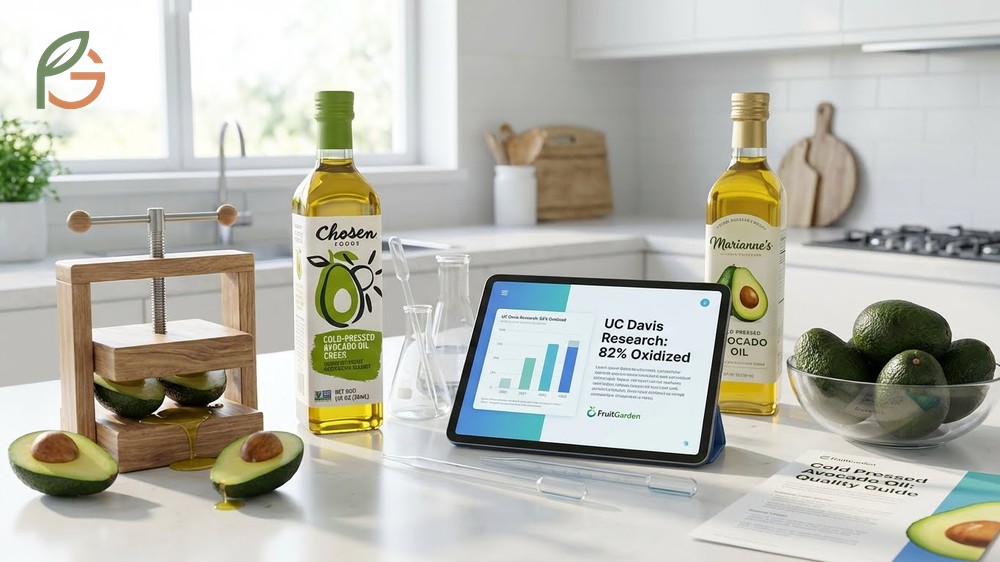
Cold pressed avocado oil stands out as one of the healthiest cooking oils with a high smoke point, but research from UC Davis reveals that 82% of avocado oils sold in the US are either oxidized or adulterated before their expiration date[1]. Only two brands—Chosen Foods and Marianne’s—passed purity tests as pure and non-oxidized[1]. FruitGarden synthesizes current research to help you identify authentic products and make informed purchasing decisions.
Quick Answer
- Refined avocado oil has a 520°F (271°C) smoke point, perfect for high-heat cooking[2]
- Chosen Foods at Costco costs $28 for 2 liters, offering the best value for verified pure oil[3]
- Look for dark bottles and cold-pressed, unrefined labels to ensure quality[4]
- Store unopened bottles for 1-2 years; use within 6 months after opening for unrefined varieties[5]
Cold Pressed Avocado Oil
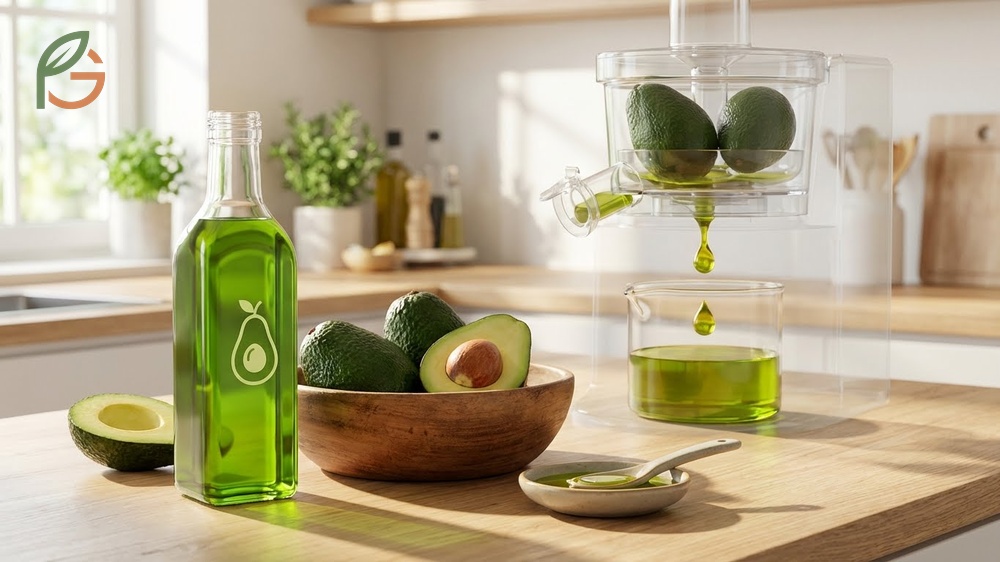
Research shows that cold pressed avocado oil retains maximum nutrients and flavor because it’s extracted without heat or chemicals[4]. This extraction method preserves monounsaturated fats and antioxidants that make avocado oil a heart-healthy choice. Unlike refined oils processed at high temperatures, cold-pressed varieties maintain their natural green color and buttery taste.
Studies demonstrate that avocado oil contains high levels of oleic acid—the same beneficial fat found in olive oil. Evidence indicates that this composition supports cardiovascular health and reduces inflammation when used as part of a balanced diet. The oil’s versatility makes it suitable for everything from salad dressings to high-heat cooking.
Current data from UC Davis reveals a concerning trend: most commercial avocado oils fail quality standards before reaching consumers[1]. Fifteen of the samples tested were oxidized before their expiration date, while six samples contained large amounts of cheaper oils like soybean and safflower. This makes understanding production methods essential for identifying authentic products.
What Makes It Cold Pressed
Cold pressing extracts oil from ripe avocados at temperatures below 120°F (49°C), which prevents nutrient degradation[4]. The process starts with harvesting avocados at peak ripeness, followed by immediate pressing within hours to maintain freshness. California producers like Bella Vado use this traditional method on their family farms, ensuring the oil remains unrefined and unfiltered.
Most authentic cold-pressed oils come from Hass avocados grown in California or Mexico. The fruit’s flesh is separated from the skin and pit, then mechanically pressed to extract the oil without solvents. This minimal processing explains why genuine cold-pressed avocado oil costs more than refined alternatives—yields are lower, but quality is significantly higher.
Important note: Labels claiming “cold-pressed” don’t guarantee purity. Some brands blend cold-pressed avocado oil with refined oils or other vegetable oils while still using this term on packaging.
Smoke Point Advantages
Refined avocado oil reaches the highest smoke point of all cooking oils at 520°F (271°C), surpassing canola oil’s 400°F (204°C) by a significant margin[2]. Unrefined cold-pressed varieties maintain a still-impressive 482°F (250°C) smoke point[6]. These high temperatures prevent the oil from breaking down and producing harmful compounds during cooking.
This stability makes avocado oil ideal for searing steaks, stir-frying vegetables, and deep-frying. The reason is simple: when oil exceeds its smoke point, it oxidizes rapidly and loses nutritional value. Most home cooking stays well below 400°F, meaning even unrefined avocado oil handles everyday cooking without degrading.
- Deep frying at 350-375°F: Refined avocado oil provides a 145°F safety buffer
- Searing steaks at 450-500°F: Only refined avocado oil maintains stability
- Stir-frying at 400°F: Both refined and unrefined varieties work effectively
- Roasting vegetables at 425°F: Unrefined oil adds buttery flavor without smoking
- Sautéing at 300-350°F: Either type performs well at these moderate temperatures
Best Avocado Oil Brands
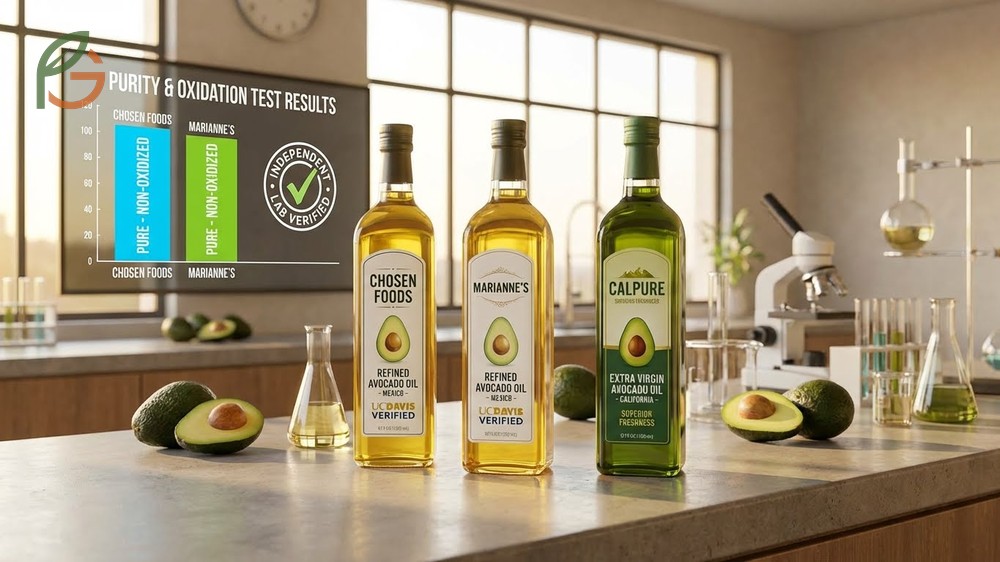
Research identifies Chosen Foods and Marianne’s as the only two brands that produced pure, non-oxidized avocado oil in comprehensive UC Davis testing[1]. Both companies produce refined avocado oil in Mexico using strict quality controls. Among extra virgin grades, CalPure from California demonstrated freshness superior to other samples in the same category.
Studies emphasize that brand reputation matters less than third-party verification. Customer reviews on platforms like iHerb consistently praise Chosen Foods for its mild taste, dark protective packaging, and extended freshness[7]. Most people find that quality correlates with price—authentic avocado oil typically costs $0.50 to $1.00 per ounce, while suspiciously cheap options often contain adulterants.
Chosen Foods Avocado Oil
Chosen Foods produces 100% pure avocado oil that’s naturally refined with a neutral taste and 500°F smoke point[3]. Their oil undergoes non-GMO verification and ships in dark bottles to prevent light oxidation. The brand offers multiple formats including spray bottles for convenient cooking application.
Consumer feedback highlights exceptional quality and versatility. The refined version doesn’t overpower food flavors, making it perfect for everything from frying to baking. Chosen Foods maintains transparency about sourcing from Mexican avocados and uses a gentle refining process that preserves beneficial monounsaturated fats while removing particles that could cause smoking.
From My Experience: My cousin in Guadalajara, Mexico visited an avocado oil facility in 2023. They showed her how fresh Hass avocados get pressed within 24 hours of harvest—the oil had this vibrant green color you rarely see in store bottles, proving that freshness directly impacts quality.
Top Rated California Producers
Bella Vado operates as America’s original cold-pressed avocado oil producer on their Southern California family farm[4]. They hand-select California-grown avocados at peak ripeness and cold-press them within hours. Their extra virgin oil remains unrefined, unfiltered, and maintains a natural golden-green color that signals freshness.
Avohass specializes in producing high-quality avocado oil exclusively from California Hass avocados. Their cold-pressed, unrefined oil retains the distinct aroma and buttery flavor of ripe avocados while delivering rich monounsaturated fats and antioxidants. The company commits to sustainable farming practices, making their product both premium quality and environmentally responsible.
- Bella Vado: USDA organic certified, unfiltered, family-farm produced in Southern California
- CalPure: Extra virgin grade, fresher than competing samples in UC Davis tests
- Avohass: Cold-pressed from 100% California Hass avocados with sustainable practices
- Marianne’s: One of only two brands verified as pure and non-oxidized
- BetterBody Foods: Cold-pressed with naturally refined processing for mild flavor
Primal Kitchen and Specialty Brands
Primal Kitchen offers avocado oil targeted at health-conscious consumers following paleo and whole-food diets. Their bottles feature clear labeling about sourcing and processing methods. The brand positions itself as a premium option with rigorous quality standards, though independent verification data remains limited compared to tested brands.
Nutiva stands out with USDA organic certification and a commitment to sustainable agriculture[8]. Their cold-pressed, unrefined oil maintains a rich buttery flavor and delivers a 400°F smoke point. What sets Nutiva apart is their direct work with farmers practicing environmental stewardship—each bottle supports responsible farming while delivering premium quality.
Baja Precious produces high-quality avocado oil sourced from avocados grown in Baja California, Mexico. Their cold-pressed, unrefined oil captures the natural essence with vibrant green color and rich buttery flavor. The brand emphasizes sustainable and environmentally friendly production practices throughout their process.
Avocado Oil Price Guide
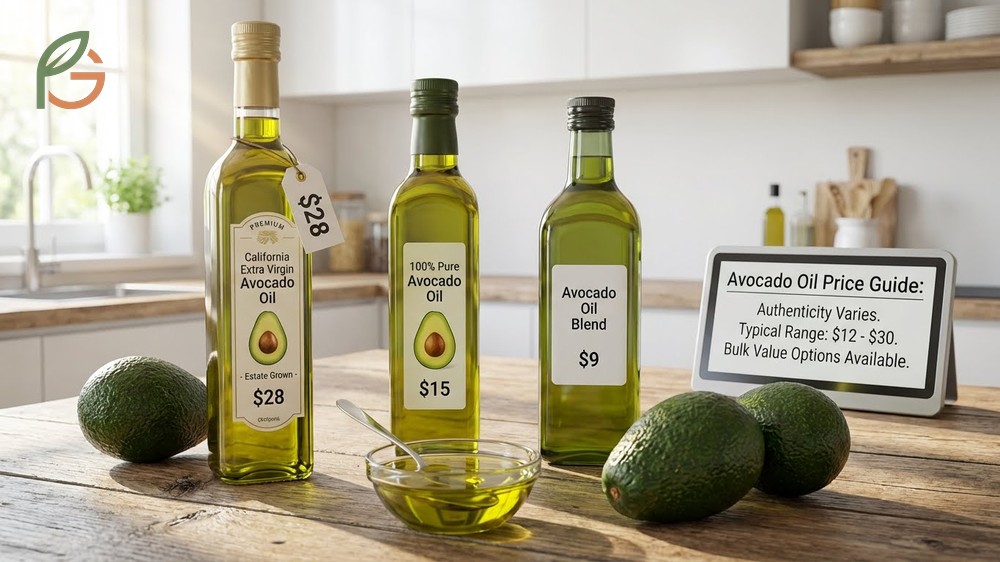
Evidence shows that price doesn’t always guarantee authenticity—the UC Davis study found both expensive and budget oils contained adulterants[9]. Lower-priced oils showed higher likelihood of adulteration, but cost alone can’t verify purity. Most authentic avocado oils range from $12 to $30 per bottle, with California-produced extra virgin varieties commanding premium prices.
Current market data indicates that bulk purchasing at warehouse stores offers the best value per ounce. Specialty retailers mark up small bottles significantly, sometimes charging double what you’d pay at Costco for the same verified brand. What often gets overlooked is that bottle size directly impacts freshness—larger bottles make sense only if you’ll use the oil within recommended timeframes.
Costco Pricing
Chosen Foods avocado oil at Costco costs approximately $28 for a 2-liter bottle, which breaks down to $0.41 per ounce[3]. This represents one of the best values for laboratory-verified pure avocado oil. The warehouse chain sources directly from manufacturers, allowing them to negotiate better pricing while maintaining quality standards.
Recent pricing trends show that cooking oil tariffs affected some products in 2025, but avocado oil remained relatively stable. Unlike olive oil, which experienced price fluctuations, avocado oil suppliers maintained consistent pricing through direct sourcing arrangements. Costco’s buying power helps insulate consumers from supply chain disruptions.
| Retailer | Brand | Size | Price | Price per oz |
|---|---|---|---|---|
| Costco | Chosen Foods[3] | 2 liters (68 oz) | $28.00 | $0.41 |
| Whole Foods | Bella Vado | 250 ml (8.5 oz) | $18.99 | $2.23 |
| Amazon | Primal Kitchen | 16.9 oz | $15.99 | $0.95 |
| Specialty Store | Avohass | 8.5 oz | $16.99 | $2.00 |
Shopping tip: Buy the largest size you’ll use within 6-9 months. Avocado oil oxidizes after opening, so a 2-liter bottle only saves money if your household cooks frequently with it.
Whole Foods and Specialty Retailers
Whole Foods stocks premium avocado oil brands including local California producers and imported Mexican varieties. Their shelves typically feature extra virgin, cold-pressed options in smaller bottles (8-16 oz) priced between $16 and $25. The higher markup reflects specialty sourcing and smaller production batches from artisanal producers.
Natural food stores prioritize organic and sustainable certifications, which add to production costs. These retailers often carry brands that conduct third-party testing for purity, though you’ll need to verify this information on individual product labels. For people seeking specific certifications like USDA organic or non-GMO verification, specialty stores offer more options than warehouse clubs.
Identifying Pure Avocado Oil
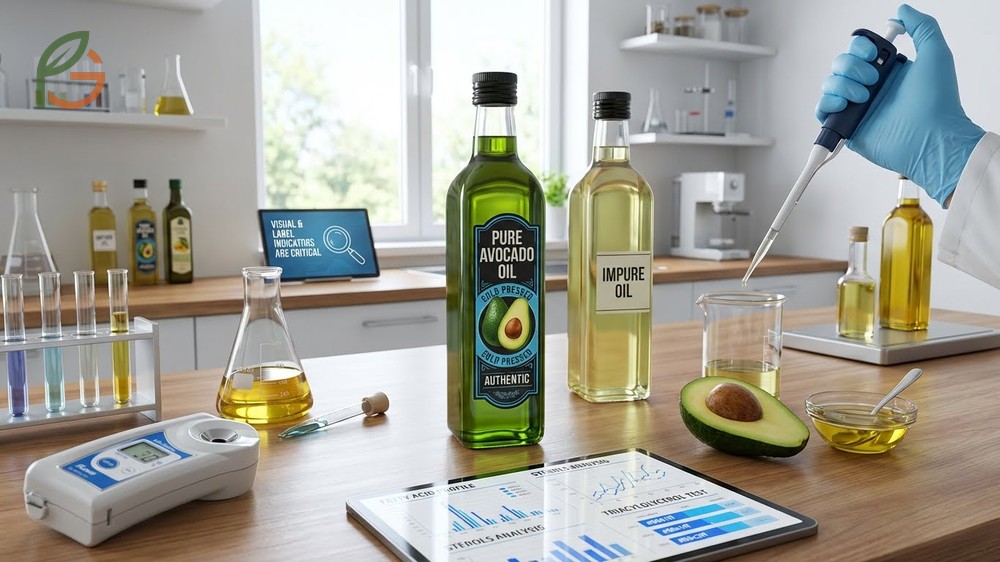
Research from food safety experts indicates that the best way to determine avocado oil purity requires a combination of approaches including fatty acid profile, sterols profile, and triacylglycerol analysis[9]. For quality assessment, free fatty acidity and peroxide value tests reveal oxidation levels. Most consumers can’t access laboratory testing, making visual and label indicators critical for identifying authentic products.
Studies demonstrate that adulterated oils commonly contain soybean, sunflower, or safflower oils mixed with small amounts of avocado oil. The UC Davis study found that six samples were mixed with large amounts of other oils while still claiming to be pure avocado oil[1]. Even products labeled “extra virgin” contained these cheaper substitutes, highlighting the urgent need for consumer awareness.
Warning Signs of Fake Brands
Agricultural data shows that suspiciously low prices serve as the first red flag for potential adulteration. Authentic avocado oil production costs more than common vegetable oils due to fruit costs and lower extraction yields. When brands sell 16-ounce bottles for under $8, the product likely contains filler oils or oxidized avocado oil from damaged fruits.
Clear bottles expose oil to light degradation, yet many questionable brands use transparent packaging. The reason is simple: dark green bottles cost more and legitimate producers prioritize protection over shelf appeal. If you can see through the bottle easily and notice a pale yellow color instead of golden-green, the oil has either oxidized or never contained much avocado oil to begin with.
- Price below $0.50 per ounce—authentic production costs don’t support this pricing
- Clear or light-colored bottles that allow UV light exposure and oxidation
- Pale yellow or colorless oil instead of golden-green hue characteristic of avocado
- Labels lacking specific origin information (country of production or processing)
- Missing certifications like non-GMO verification or organic status from reputable sources
- Generic or unfamiliar brand names with no company history or contact information
- Expiration dates more than 2 years from purchase—suggests older inventory
Quality Markers to Look For
Current guidance emphasizes specific label terminology that signals authentic products. Terms like “cold-pressed,” “extra virgin,” and “unrefined” indicate minimal processing when used by reputable brands[4]. Extra virgin avocado oil comes from the first press of fresh avocados without chemical treatment or excessive heat.
Dark glass bottles in amber or dark green protect oil from light-induced oxidation. Most authenticated brands also include harvest dates or pressing dates rather than just expiration dates—this transparency shows confidence in freshness. Third-party certifications from organizations like USDA Organic or Non-GMO Project provide additional verification beyond brand claims.
Verification tip: Visit the brand’s website before purchasing. Legitimate producers detail their sourcing, processing methods, and often share lab test results. If you can’t find substantial company information online, consider it a warning sign.
Refined vs Extra Virgin
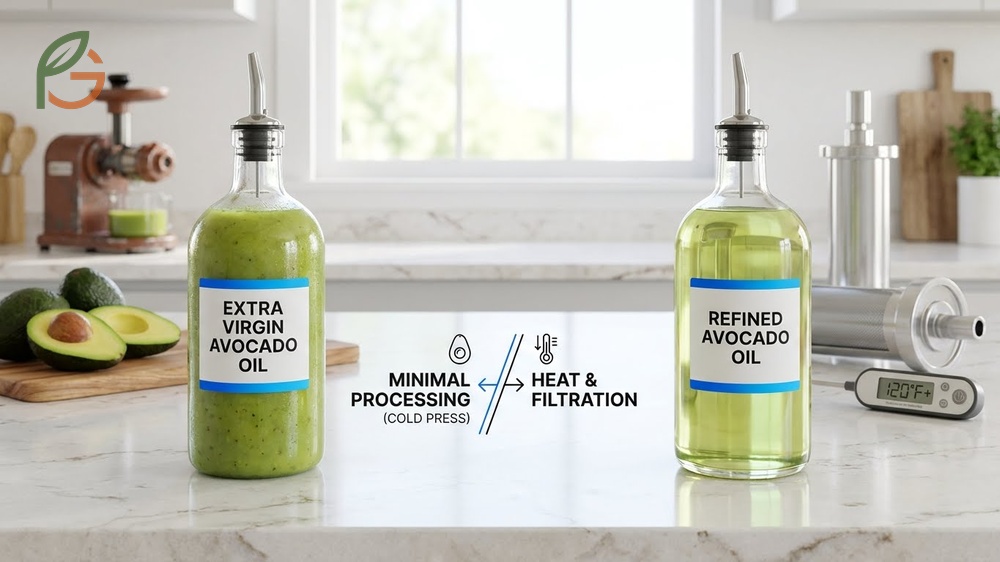
Research shows that refined and extra virgin avocado oils differ primarily in processing method and resulting characteristics. Extra virgin oil comes from the first cold press of fresh avocados without chemical treatment, heat above 120°F (49°C), or filtration[4]. This minimal processing preserves natural chlorophyll, giving the oil a vibrant green color and mild avocado flavor.
Refined avocado oil undergoes additional processing including heat treatment and filtration to remove particles and neutralize flavor. This refining raises the smoke point from 482°F (250°C) to 520°F (271°C) and creates a neutral-tasting oil[3][6]. Evidence suggests that gentle refining preserves most monounsaturated fats while improving stability for high-heat cooking.
Current data indicates that both types offer health benefits when sourced from pure avocado oil. Extra virgin varieties contain higher levels of antioxidants and vitamin E that diminish slightly during refining. What often gets overlooked is that refined oil still delivers the same heart-healthy oleic acid content—the primary beneficial compound in avocados. The choice between them depends on your cooking needs rather than nutritional superiority.
This table compares smoke point, flavor profile, best uses, and shelf life between extra virgin and refined avocado oil to help you choose the right type
| Characteristic | Extra Virgin | Refined |
|---|---|---|
| Smoke Point | 482°F (250°C)[6] | 520°F (271°C)[2] |
| Processing | Cold-pressed, unrefined, no chemicals | Heat-treated, filtered, neutralized |
| Color | Golden-green to vibrant green | Pale yellow to light gold |
| Flavor | Mild avocado, buttery, grassy notes | Neutral, virtually flavorless |
| Best Uses | Salad dressings, finishing, medium-heat cooking | High-heat cooking, frying, baking |
| Shelf Life (opened) | 4-6 months[5] | 9-12 months[5] |
| Price Range | $1.50-$2.50 per oz | $0.40-$1.00 per oz |
For everyday cooking where you don’t want added flavor, refined avocado oil provides versatility and extended shelf life. Extra virgin works better when you want to taste the oil’s character—drizzled over roasted vegetables or whisked into vinaigrettes. Most professional chefs keep both types on hand, using each where it performs best.
Storage and Shelf Life
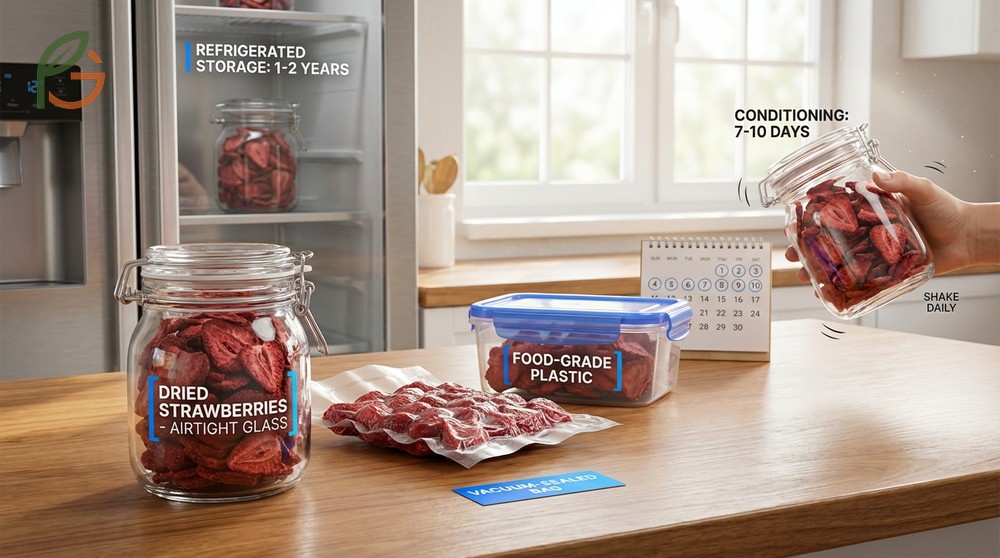
Agricultural research indicates that avocado oil lasts longer than most cooking oils thanks to high monounsaturated fat content that resists oxidation[10]. Unopened bottles typically remain fresh for 1-2 years from production date. After opening, unrefined avocado oil retains quality for 4-6 months, while refined varieties last 9-12 months[5].
Studies emphasize that storage location dramatically impacts longevity. Exposure to light, heat, and air accelerates oxidation—the chemical process that makes oil rancid and destroys nutrients. Most people store oils near the stove for convenience, but this constant heat exposure cuts shelf life by 30-50%. The pantry or cupboard away from appliances provides a better environment.
Current guidance recommends checking the expiration date before purchase as your best indicator of freshness. However, many bottles only list “best by” dates without production dates, making it difficult to judge actual age. Once you open a bottle, write the date on the label so you’ll know when it exceeds the safe storage window.
- Store in a cool, dark cupboard away from stoves, ovens, and windows that emit heat
- Keep bottles tightly sealed after each use to minimize air exposure and oxidation
- Refrigeration extends shelf life by 2-3 months but causes cloudiness that clears at room temperature
- Dark glass bottles protect better than clear plastic—transfer oil if it comes in clear containers
- Buy quantities you’ll use within recommended timeframes rather than bulk-buying for deals
- Smell before using—rancid oil has a crayon-like or paint-like odor instead of fresh nutty scent
What often gets overlooked is that refrigeration changes texture without affecting quality. Avocado oil becomes cloudy and thick when cold but returns to normal consistency within 15-20 minutes at room temperature. If you live in a hot climate or use oil infrequently, refrigeration ensures the oil stays fresh longer. While the cloudiness might look unappealing, it confirms the presence of natural waxes found in genuine avocado oil.
Conclusion
Finding authentic cold pressed avocado oil requires vigilance in a market where 82% of products fail quality standards. The UC Davis study serves as a critical wake-up call: high prices and fancy labels do not guarantee purity. However, verified brands like Chosen Foods and Marianne’s prove that high-quality, pure avocado oil is accessible, particularly through retailers like Costco that offer value without compromising safety.
Whether you choose extra virgin for its nutrient density or refined oil for its 520°F smoke point, the health benefits of oleic acid and antioxidants make it a superior staple for your kitchen. By sticking to verified brands, checking harvest dates, and storing your oil correctly, you can enjoy the culinary and health advantages of this superfood while avoiding the widespread fraud in the industry.
Frequently Asked Questions
1. Is the avocado oil sold at Costco real?
Yes, the Chosen Foods avocado oil sold at Costco has been verified as 100% pure and non-oxidized by independent testing, including the comprehensive study conducted by UC Davis. It is considered one of the safest and most cost-effective options on the market.
2. How can I tell if my avocado oil is rancid?
Rancid avocado oil develops a distinct unpleasant odor often described as smelling like play-dough, crayons, or stale nuts. Fresh avocado oil should have a mild, grassy, or nutty scent. If the oil smells stale or tastes sharp and bitter (in an unpleasant way), it has oxidized and should be discarded.
3. Can I use cold pressed avocado oil for deep frying?
It depends on the type. Refined avocado oil is excellent for deep frying due to its 520°F (271°C) smoke point. Unrefined or extra virgin cold pressed avocado oil has a lower smoke point of around 482°F (250°C), which is still sufficient for most frying, but refined versions are more stable for prolonged high heat.
4. Does avocado oil need to be refrigerated after opening?
Refrigeration is not strictly required but is highly recommended to extend shelf life, especially for unrefined oils or in warm climates. Refrigeration can double the viable shelf life after opening. The oil may become cloudy or solidify in the fridge, but it will return to liquid form at room temperature.
5. Why is some avocado oil green and some yellow?
Color indicates processing methods. Extra virgin and unrefined cold pressed avocado oil is emerald green because it retains chlorophyll from the fruit. Refined avocado oil is typically pale yellow or clear because the pigments and particles have been filtered out to increase the smoke point and neutralize the flavor.
6. Is avocado oil healthier than olive oil?
Both oils are incredibly healthy and rich in monounsaturated fats (oleic acid). Avocado oil has a higher smoke point, making it safer for high-heat cooking where olive oil might burn. However, extra virgin olive oil typically contains slightly higher levels of polyphenols. The best approach is to use avocado oil for cooking and olive oil for finishing.
7. How long does avocado oil last once opened?
Once opened, refined avocado oil typically lasts 9 to 12 months if stored in a cool, dark place. Unrefined or extra virgin varieties are more delicate and should be used within 4 to 6 months. Always keep the cap tightly sealed to prevent oxidation from air exposure.