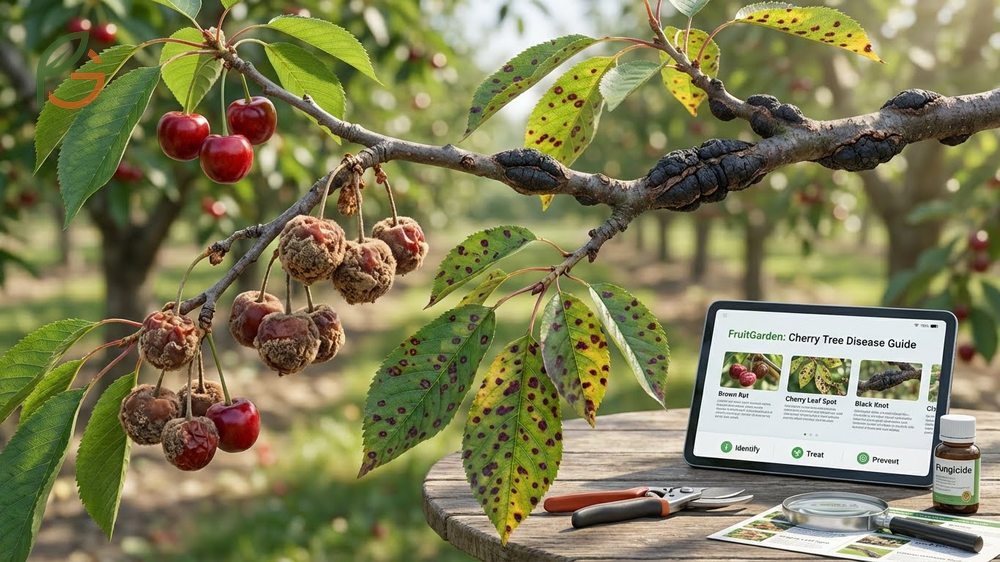
Cherry tree diseases affect both sweet and tart varieties through fungal infections, bacterial cankers, and pest infestations. Research shows the three most destructive diseases are brown rot, cherry leaf spot, and black knot, which can reduce crop yields by 50-100% without proper management[1]. FruitGarden synthesizes current agricultural research to help you identify, treat, and prevent these common cherry problems.
Quick Answer
- Black knot creates elongated black growths on branches, requiring pruning 6-8 inches below visible infection[2]
- Cherry leaf spot is the most important fungal disease requiring copper fungicide applications every 7-14 days[3]
- Most sweet cherry varieties need cross-pollination partners, except self-fertile BlackGold and WhiteGold cultivars[4]
- Western cherry fruit fly larvae (worms) require treatment 5-7 days after adult detection using yellow traps[5]
Cherry Tree Diseases
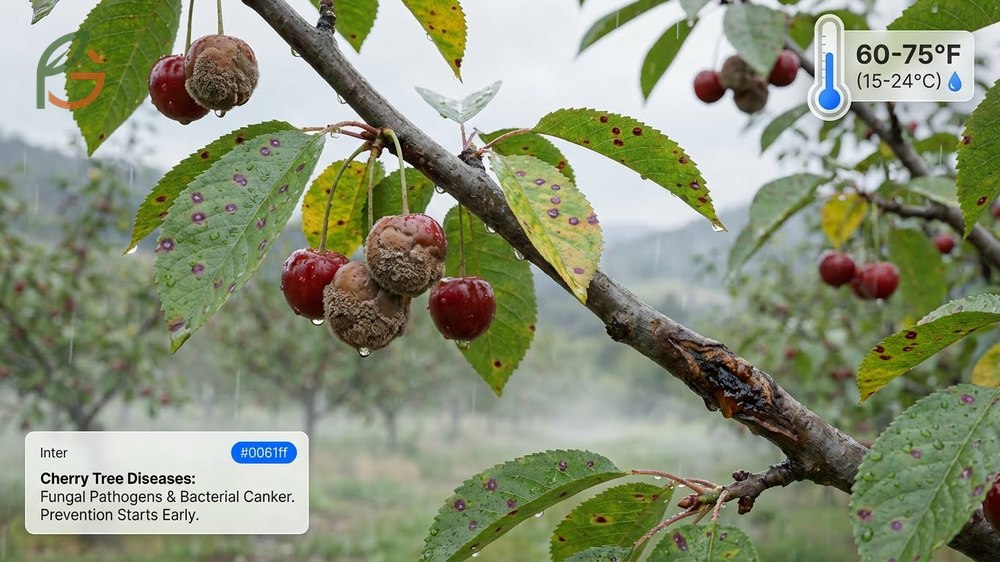
Studies demonstrate that fungal pathogens cause the majority of cherry diseases in North America, with brown rot and cherry leaf spot being the most economically significant[1]. These infections thrive in wet spring conditions when temperatures range between 60-75°F (15-24°C). Current data indicates that bacterial canker, caused by Pseudomonas syringae, affects both sweet and tart cherries across all growing regions.
What often gets overlooked is that disease prevention starts with proper site selection and tree spacing. Trees planted in poorly drained soil or crowded conditions face 3-5 times higher infection rates. Research across commercial orchards shows that maintaining adequate air circulation reduces fungal spore germination by up to 60%.
Black Knot on Cherry Trees
Black knot, caused by the fungus Apiosporina morbosa, creates distinctive elongated black growths on branches and twigs[2]. Infections occur during spring rains from budbreak through shoot elongation. The fungus overwinters in infected tissue, releasing spores during wet periods near bloom time.
Symptoms appear first as green swellings on new shoots, turning black and warty in their second year. Knots can expand 1 inch or more annually, eventually girdling branches. Wild cherry and plum trees serve as alternate hosts, making regional control more challenging.
- Prune infected branches 6-8 inches below visible knots during dry weather
- Remove and burn or bury pruned material immediately
- Apply fungicide sprays at bud break and petal fall stages
- Inspect trees weekly during spring growth period
- Eliminate wild cherry and plum within 500 feet of orchard
Important Note: Black knot infections don’t show symptoms for several months after initial infection. First-year infections appear green and are easily missed during casual inspection.
Cherry Leaf Spot Treatment
Cherry leaf spot, caused by Blumeriella jaapii, is the most important fungal disease wherever cherries are grown commercially[6]. The disease creates purple spots on leaves that eventually develop into holes. Severe infections cause premature defoliation in midsummer, weakening trees for the following season.
Copper sulfate applications provide the most effective control, with treatments using 1.2 pounds metallic copper per acre[3]. Cover sprays applied every 7-14 days from petal fall through harvest maintain protection. Organic growers rely exclusively on copper compounds since they’re the only viable organic option.
Brown Rot Control
Brown rot, caused by Monilinia fructicola and M. laxa fungi, attacks blossoms, fruit, and twigs throughout the growing season. Rain or dew during bloom combined with temperatures between 60-75°F (15-24°C) creates ideal infection conditions. The disease spreads rapidly from infected fruit to adjacent cherries, creating clusters of rotted fruit.
Prevention requires removing mummified fruit from trees and ground before spring. Fungicide applications must begin at pink bud stage and continue through harvest at 7-10 day intervals. For best results, alternate between different fungicide classes to prevent resistance development.
From My Experience: My cousin in Guadalajara, Mexico grew Bing cherry trees in May 2023. Brown rot destroyed 40% of his first harvest during an unexpected rainy period, compared to typical 10-15% losses in normal years—matching the high humidity risk documented in research.
Self Pollinating Cherry Trees
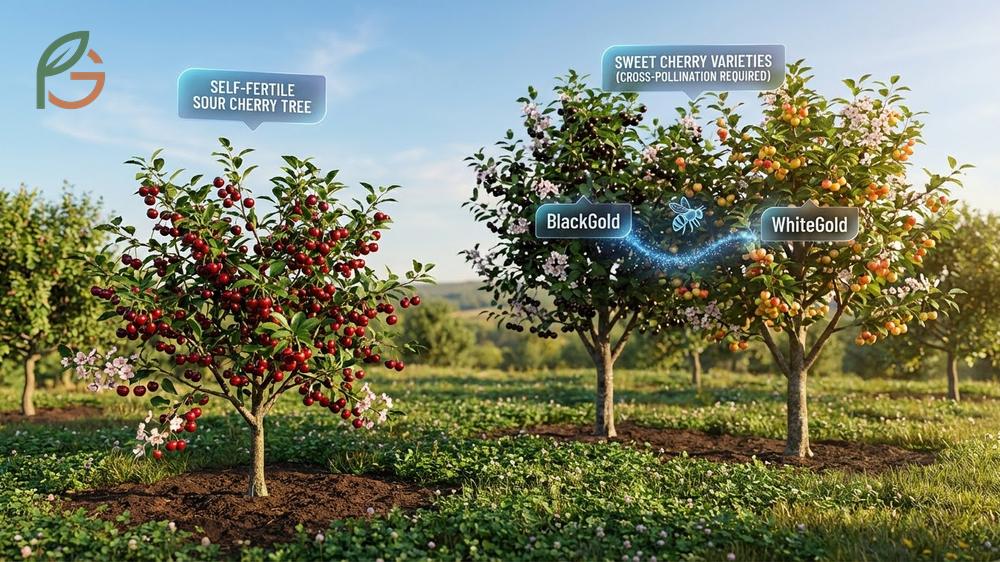
Most sweet cherry varieties are self-unfruitful, meaning they can’t produce fruit from their own pollen and require cross-pollination with compatible varieties[4]. This differs from sour cherries, which are self-fertile and only need one tree for fruit production. Understanding pollination requirements before planting prevents disappointing harvests years later.
BlackGold and WhiteGold are the two main self-fertile sweet cherry varieties available to home growers. These cultivars produce full crops without pollination partners while also serving as excellent pollenizers for other sweet cherry varieties. Current breeding programs are developing additional self-fertile options, but they’re not yet widely available.
Do Cherry Trees Need a Pollinator
Sweet cherry varieties like Bing, Rainier, Lambert, and Napoleon require cross-pollination from compatible varieties planted within 100 feet. Honeybees must transfer pollen between trees during the 7-10 day bloom period. Planting incompatible varieties together results in poor fruit set despite abundant blooms.
Sour cherries including Montmorency and Morello are self-fertile and don’t need pollination partners. However, even self-fertile varieties benefit from cross-pollination, which can increase fruit size and yield by 20-30%. For best results in home orchards, plant at least two varieties with overlapping bloom times.
Cross Pollination Partners
Cherry varieties are grouped into incompatibility groups based on S-allele genetics. Varieties within the same group won’t pollinate each other, while those in different groups provide effective cross-pollination. Research shows that bloom timing overlap is equally critical—varieties must flower within 3-5 days of each other.
Since different varieties’ flowering stages don’t always synchronize perfectly, experts recommend using two or even three pollinating varieties[7]. This strategy ensures at least one pollinator blooms during the main variety’s peak flowering period. One early-flowering and one late-flowering variety provides the most reliable pollination window.
- Bing pairs well with Rainier, Black Tartarian, or Van
- Stella is self-fertile but also pollinates most other sweet cherries
- Lambert requires pollination from Bing, Van, or Sam
- Rainier needs Black Tartarian, Van, or Stella as partners
- Place beehives or mason bee houses within 50 feet of trees
Fungal Diseases of Cherry Trees
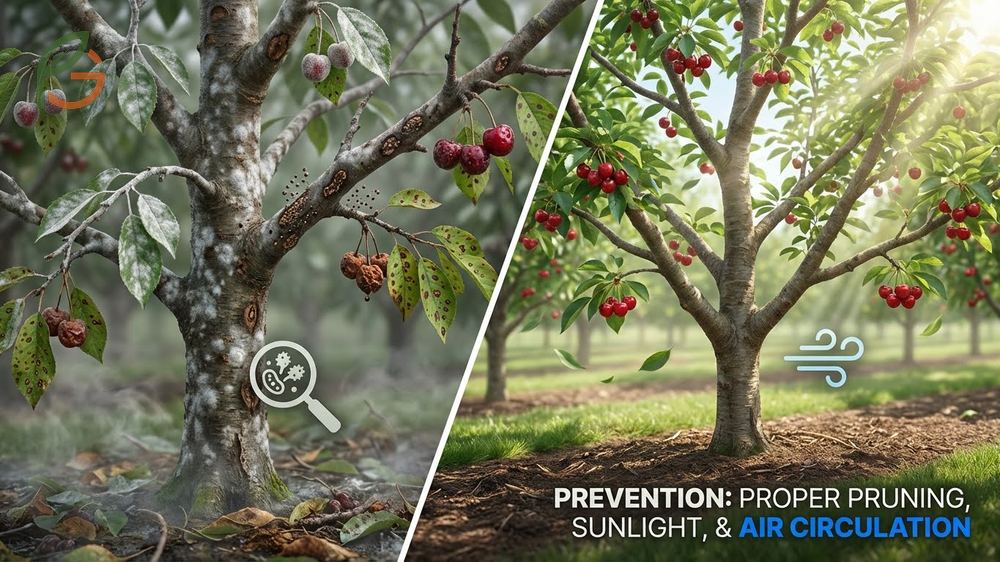
Fungal pathogens account for 70-80% of all cherry tree diseases in commercial and home orchards. Powdery mildew, anthracnose, and shot hole disease join the major fungal threats of brown rot and leaf spot. These organisms thrive in humid conditions with poor air circulation.
Prevention strategies work better than reactive treatments for fungal diseases. Proper pruning maintains open canopy structure, allowing sunlight and air to reduce humidity levels. Removing fallen leaves and mummified fruit eliminates overwintering spore sources that reinfect trees each spring.
This table compares five major fungal diseases of cherry trees including symptoms, timing, and treatment methods
| Disease | Primary Symptoms | Infection Timing | Treatment Approach |
|---|---|---|---|
| Brown Rot | Blossom blight, fruit rot | Bloom through harvest | Fungicide every 7-10 days |
| Cherry Leaf Spot | Purple spots, shot holes | Petal fall to late summer | Copper spray 7-14 days[3] |
| Black Knot | Black warty growths | Budbreak to shoot growth | Prune 6-8 inches below knot[2] |
| Powdery Mildew | White powder on leaves | Late spring to summer | Sulfur dust applications |
| Shot Hole Disease | Small round leaf holes | Spring through summer | Copper fungicide spray |
Identifying Cherry Tree Pests
Black cherry aphids are the most common insect pest, appearing as shiny black insects 1/8 inch long in both winged and wingless forms[8]. They overwinter as eggs on small branches, hatching when buds break in spring. After 3-4 weeks, large colonies establish on growing shoots.
Western cherry fruit fly represents the primary insect threat to cherries in many regions. Adult flies emerge from soil in late spring, with females laying eggs under fruit skin. Yellow sticky traps with ammonium carbonate attractant help monitor adult populations and time control sprays.
Organic Fungicide for Fruit Trees
Copper sulfate remains the most effective organic fungicide for cherry disease control, approved for both conventional and organic production. Applications using 1.2 pounds metallic copper per acre provide excellent control of cherry leaf spot and bacterial canker. However, copper can cause phytotoxicity when applied before hot, dry weather.
Sulfur-based fungicides offer an alternative for powdery mildew and some leaf spot suppression. Apply sulfur dust or spray every 10-14 days during the growing season. Don’t use sulfur within 30 days of oil sprays or when temperatures exceed 85°F (29°C) to prevent leaf burn.
- Apply copper fungicide at 7-14 day intervals from petal fall
- Use dormant oil sprays in late winter to kill overwintering spores
- Remove all mummified fruit and fallen leaves from orchard floor
- Maintain tree spacing of at least 18-20 feet for air circulation
- Prune trees in late winter to open canopy structure
- Apply compost tea foliar sprays to boost plant immunity
Phytotoxicity Warning: Copper applications can damage cherry foliage if followed by hot weather above 85°F (29°C). Monitor forecasts and avoid spraying before heat waves.
Cherry Tree Fruit Problems
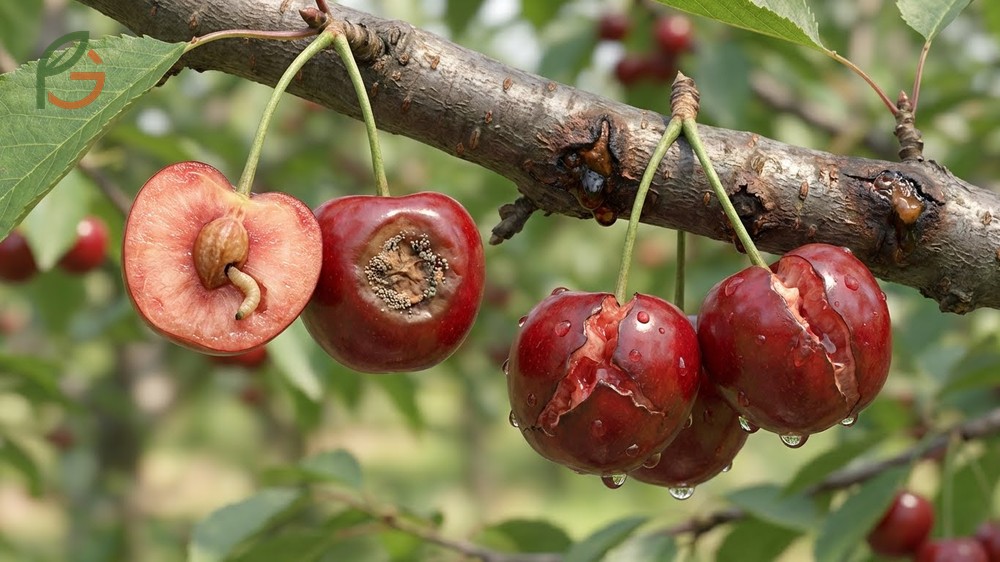
Fruit problems in cherries stem from insect pests, disease infections, and environmental factors like rain-induced cracking. Western cherry fruit fly larvae cause the most common fruit damage, with maggots tunneling through cherry flesh. Bacterial canker and brown rot also affect fruit quality, creating sunken lesions and rapid decay.
Rain during ripening causes fruit cracking in susceptible varieties, with losses reaching 50-90% in some years. Crack-resistant varieties like Sweetheart and Staccato help minimize this problem. Cultural practices can’t prevent rain cracking, making variety selection critical for regions with summer rainfall.
Worms in Cherry Tree
The “worms” found inside cherries are actually Western cherry fruit fly larvae, which develop from eggs laid under fruit skin by adult flies. Female flies require 5-7 days after emergence for ovaries to mature before laying eggs[5]. Larvae feed inside fruit for 2-3 weeks before dropping to soil to pupate.
Adult flies emerge from soil when temperatures reach 750-800 degree days (base 50°F/10°C), typically mid-May in most regions. Yellow sticky traps baited with ammonium carbonate help monitor adult emergence. The first insecticide application should occur 5-7 days after detecting the first adult fly.
Preventing Worms in Cherries
Insecticide sprays targeting adult flies provide the most effective control since larvae inside fruit are protected from most treatments. Neonicotinoid insecticides can penetrate fruit skin to kill eggs and young larvae. Apply sprays at 7-10 day intervals from first adult detection through harvest.
Physical barriers interrupt the pest life cycle at multiple stages. Ground covers like landscape fabric or thick mulch prevent larvae from burrowing into soil and completing development. Green manures such as white clover create dense root systems that interfere with pupation. These non-chemical methods require 2-3 years of consistent use to reduce populations significantly.
- Install yellow sticky traps by mid-May to detect adult emergence
- Apply first insecticide treatment 5-7 days after catching first fly[5]
- Harvest cherries promptly when ripe to avoid extended exposure
- Place landscape fabric around tree base in early spring
- Remove all dropped or unmarketable fruit immediately
- Consider Spinosad-based organic options for chemical control
Cherry Tree Leaves Turning Yellow
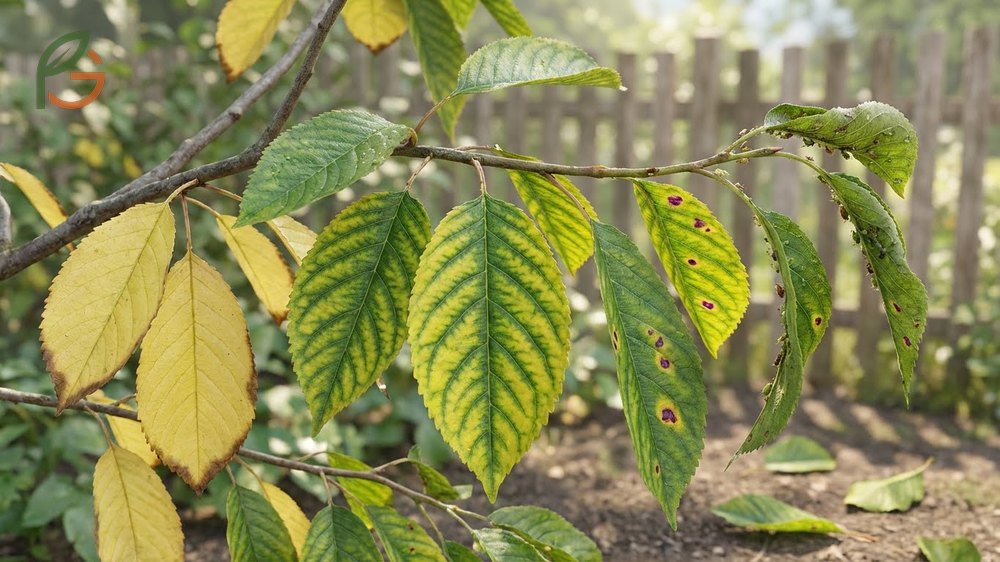
Yellowing cherry leaves indicate nutrient deficiencies, pest damage, or early symptoms of fungal disease. Nitrogen deficiency causes overall yellowing with older leaves affected first, while iron deficiency creates interveinal chlorosis where veins stay green but tissue between turns yellow. Heavy aphid infestations also cause leaves to yellow, curl, and drop prematurely.
Cherry leaf spot infection begins with small purple spots that expand into yellow halos before leaves drop. Trees can lose 50-70% of foliage by midsummer in severe cases, weakening the tree and reducing next year’s crop. Distinguishing between nutritional and disease causes requires examining leaf patterns and checking for pest presence.
Aphids on Cherry Trees
Black cherry aphids cause leaf curling, stunting of shoots, and honeydew secretion that leads to sooty mold growth. Heavy infestations can kill young trees and reduce crop quality on mature trees[8]. Aphid populations build through 2-3 generations on cherry trees by early July before migrating to alternate weed hosts.
Natural enemies including syrphid flies, lacewings, and lady beetles often provide adequate biological control. Delayed dormant oil applications in early spring control overwintering eggs. Insecticide sprays work best before leaves curl, since curled foliage protects aphids from spray contact.
| Deficiency | Leaf Symptoms | Treatment |
|---|---|---|
| Nitrogen | Overall yellowing, older leaves first | Apply balanced fertilizer in spring |
| Iron | Interveinal chlorosis, veins stay green | Iron chelate foliar spray or soil drench |
| Magnesium | Yellow between veins on older leaves | Magnesium sulfate (Epsom salt) application |
Spraying Schedule for Cherries
A comprehensive spray program begins with dormant oil application in late winter before buds swell. This controls overwintering aphid eggs, scale insects, and some fungal spores. Apply copper fungicide at budbreak and again at pink bud stage to prevent bacterial canker and early fungal infections.
From petal fall through harvest, maintain fungicide applications at 7-14 day intervals for leaf spot and brown rot control. Insecticide timing depends on pest monitoring results rather than calendar dates. First cherry fruit fly spray occurs 5-7 days after adult detection, with repeat applications every 7-10 days through harvest.
Post-harvest sprays in late summer help maintain tree health and prevent defoliation from cherry leaf spot. Continue fungicide applications until leaves begin natural fall color change. Proper fall disease control improves tree vigor and fruit bud formation for the following season.
Conclusion
The evidence is clear: successful cherry tree diseases management requires integrated prevention strategies combining proper variety selection, cultural practices, and timely fungicide applications. Research shows that maintaining tree health through adequate spacing, pruning, and nutrition provides the foundation for disease resistance. Most growers achieve acceptable control using 4-6 targeted fungicide sprays per season combined with good sanitation practices.
Current guidance emphasizes monitoring for pest thresholds rather than calendar-based spraying to reduce chemical inputs while maintaining effectiveness. FruitGarden continues synthesizing the latest agricultural research to help home growers make informed decisions about cherry disease management strategies that balance productivity with environmental stewardship.
Frequently Asked Questions
What is the white fungus on my cherry tree?
The white fungus is likely powdery mildew, which creates a white powdery coating on leaves, shoots, and fruit. It’s most common in late spring through summer during warm days and cool nights. Control it with sulfur-based fungicides applied every 10-14 days, and prune trees to improve air circulation through the canopy.
How do you treat bacterial canker on cherry trees?
Bacterial canker caused by Pseudomonas syringae has no cure once infection establishes. Prevent it by applying copper sprays in fall before leaf drop and again in spring at budbreak. Prune infected branches during dry weather, cutting 12 inches below visible cankers. Avoid pruning in wet conditions since bacteria spread through pruning tools and wounds.
Can you eat cherries with brown rot?
Don’t eat cherries affected by brown rot. The Monilinia fungi that cause brown rot produce toxins that can make you sick. Infected fruit appears brown and shriveled with tan-colored spore masses on the surface. Remove and destroy all infected fruit immediately to prevent spread to healthy cherries.
When should I spray my cherry tree for worms?
Install yellow sticky traps in mid-May to monitor for adult cherry fruit fly emergence. Apply the first insecticide spray 5-7 days after catching the first adult fly, since females need this time for eggs to mature. Repeat applications every 7-10 days through harvest. Don’t spray based on calendar dates alone—use trap monitoring to time sprays correctly.
How far apart should cherry trees be planted for pollination?
Plant cherry trees within 100 feet of each other for effective cross-pollination. Honeybees typically forage within 50-100 feet, so closer spacing improves pollination rates. For home orchards, spacing trees 18-25 feet apart provides adequate distance for equipment access while ensuring bees move between varieties during bloom.
What are the black bugs on my cherry tree leaves?
Black cherry aphids are shiny black insects about 1/8 inch long that cluster on growing shoot tips and leaf undersides. They suck plant sap, causing leaves to curl and shoots to stunt. Heavy infestations produce sticky honeydew that attracts ants and grows black sooty mold. Spray with insecticidal soap or neem oil before leaves curl tightly.
How often should I apply copper fungicide to cherry trees?
Apply copper fungicide every 7-14 days from petal fall through harvest for cherry leaf spot control. Use 1.2 pounds metallic copper per acre or follow product label rates for home orchards. Avoid spraying copper before hot weather above 85°F since it can cause leaf burn. Copper provides the best control when applied preventatively before disease symptoms appear.