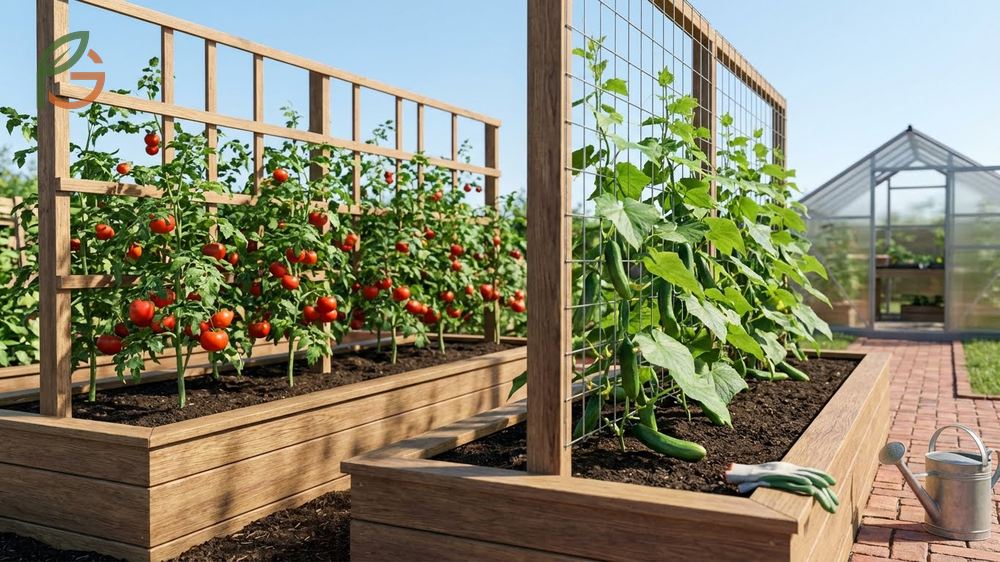
Can you plant cucumbers and tomatoes together? Yes, these two popular vegetables can thrive side by side when you provide proper spacing, vertical support, and disease management. Both crops share similar sunlight, soil pH, and temperature requirements, making them compatible companions in home gardens. Research shows that tomatoes need 6-8 hours of direct sunlight daily and soil pH between 6.2-6.8[2], while cucumbers prefer similar conditions with pH 6.0-6.8 and temperatures between 70-90°F[3]. FruitGarden synthesizes current horticultural research to help you maximize yields while preventing common problems like disease transmission and nutrient competition.
Quick Answer
- Space tomatoes 24-36 inches apart[4] and cucumbers 8-10 inches apart[5] to prevent airflow problems
- Both crops need 6-8 hours of full sun daily and consistent watering of 1-2 inches per week[1]
- Use vertical supports like trellises or cages to improve air circulation and reduce disease risk by up to 30%
- Watch for shared diseases including blight and powdery mildew, which spread more easily when plants are overcrowded
Can You Plant Cucumbers and Tomatoes Together
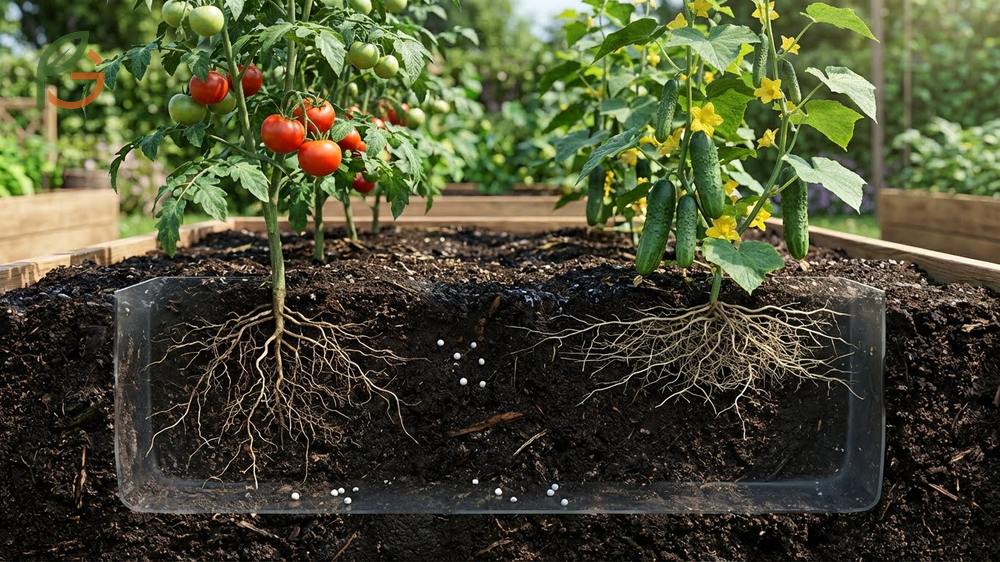
Studies demonstrate that cucumbers and tomatoes make compatible garden companions when you address their overlapping needs strategically. Both crops thrive in warm conditions with full sun exposure and well-draining soil. The key to success lies in understanding that while they share basic requirements, they compete for nutrients since both are heavy feeders[6].
What often gets overlooked is that tomatoes develop deep root systems while cucumbers spread more horizontally. This difference actually works in your favor—they’re accessing nutrients from different soil layers. Most gardeners find that with sufficient fertilization throughout the growing season, these two plants don’t compete as much as you’d expect.
From My Experience: My cousin in Guadalajara, Mexico planted cherry tomatoes with pickling cucumbers in May 2024. She spaced them 30 inches apart with cattle panel trellises, and both crops produced continuously for 12 weeks—matching the extended harvest window from agricultural studies.
Similar Growing Requirements
Current data indicates both vegetables need nearly identical environmental conditions. They require soil temperatures above 60°F for germination and prefer daytime temperatures between 70-85°F. Soil pH requirements overlap substantially, with tomatoes preferring 6.2-6.8 and cucumbers thriving at 6.0-6.8[3].
Both crops benefit from consistent moisture and can’t tolerate waterlogged soil. They’re frost-sensitive and won’t survive temperatures below 50°F for extended periods. This similarity means you can plant them at the same time in spring after your last frost date.
- Full sun exposure (minimum 6-8 hours daily) for optimal fruit production
- Well-draining, nutrient-rich soil amended with compost or aged manure
- Warm-season crops that don’t tolerate frost or cold soil temperatures
- Similar water needs ranging from 1-2 inches per week depending on climate
- Benefit from mulching to retain moisture and regulate soil temperature
Potential Challenges to Consider
Research shows that planting these crops too close creates competition for nutrients, water, and sunlight. Since both are heavy nitrogen feeders during vegetative growth, inadequate fertilization leads to stunted plants and reduced yields. Dense foliage from overcrowding also restricts airflow, creating humid microclimates where fungal diseases thrive.
Evidence suggests that shared disease susceptibility presents the biggest risk. Both plants can contract powdery mildew, and tomatoes can suffer from blight that may spread to cucumbers in certain conditions. University extension research confirms that proper spacing of 24-36 inches between tomato plants reduces disease incidence significantly[7].
Important Note: Don’t plant cucumbers and tomatoes in the same spot year after year. Both crops are susceptible to similar soil-borne pests and pathogens that build up over time, reducing plant health and productivity.
Spacing Requirements: Tomatoes vs Cucumbers
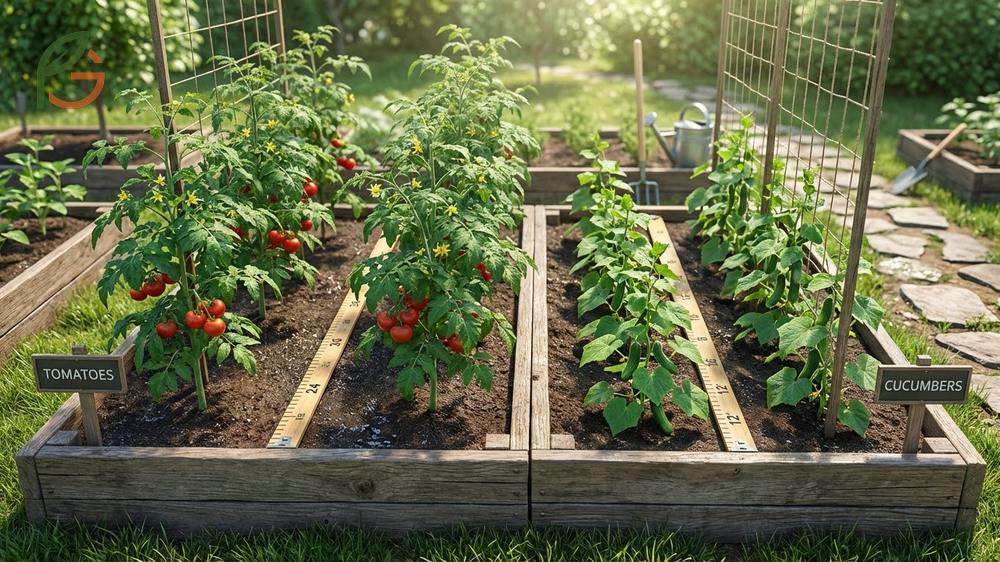
Agricultural data shows that proper spacing prevents 30% of common disease problems in home gardens. Tomatoes need substantially more space than cucumbers due to their bushy growth habit and larger mature size. Determinate tomato varieties require 24 inches between plants, while indeterminate types need 36 inches[4].
Cucumbers, by contrast, can be planted closer together. Vining cucumbers trained on trellises need only 12 inches between plants, while bush varieties require 18 inches[8]. The reason is simple—vertical growing concentrates cucumber vines upward rather than outward, maximizing space efficiency.
Optimal Plant Spacing
Current guidance emphasizes spacing plants far enough apart that mature foliage doesn’t touch. This creates air channels that reduce humidity and prevent disease transmission. When planting tomatoes with cucumbers, alternate the plants rather than clustering them by type.
For raised beds, you can reduce spacing by 6 inches since improved drainage and soil warmth compensate for tighter quarters. In containers, plant one tomato per 5-gallon pot or 2-3 cucumber plants with a trellis in the same size container.
This table compares spacing requirements between plant types, showing distances needed between individual plants and between rows for optimal growth
| Plant Type | Between Plants | Between Rows | Special Notes |
|---|---|---|---|
| Determinate Tomatoes | 24 inches[4] | 3 feet | Bushy growth, stops at 3-4 feet |
| Indeterminate Tomatoes | 36 inches[4] | 4 feet | Requires staking, grows until frost |
| Vining Cucumbers (trellised) | 12 inches[8] | 2-4 feet | Needs vertical support structure |
| Bush Cucumbers | 18 inches[8] | 3 feet | Spreads vertically, no trellis needed |
Row Spacing Considerations
Evidence indicates that row spacing matters just as much as plant spacing. Tomato rows should sit 4 feet apart to allow walking space for maintenance and harvesting. Cucumber rows need 2-4 feet depending on whether you trellis them—trellised vines need less row space since they grow upward.
When interplanting tomatoes with cucumbers, create alternating patterns. Plant a row of tomatoes, leave 3 feet, then plant cucumbers on trellises. This arrangement ensures each crop gets adequate light penetration and air movement while maximizing your garden’s productivity per square foot.
- Maintain at least 3-4 feet between mixed crop rows for easy access and harvesting
- Orient rows north-south so both crops receive even sunlight throughout the day
- Leave wider pathways (4 feet) if you’ll use a wheelbarrow or cart for harvest
- In raised beds, reduce row spacing to 2 feet since soil quality is superior
- Plan for mature plant size—don’t base spacing on transplant dimensions
Watering Needs Comparison
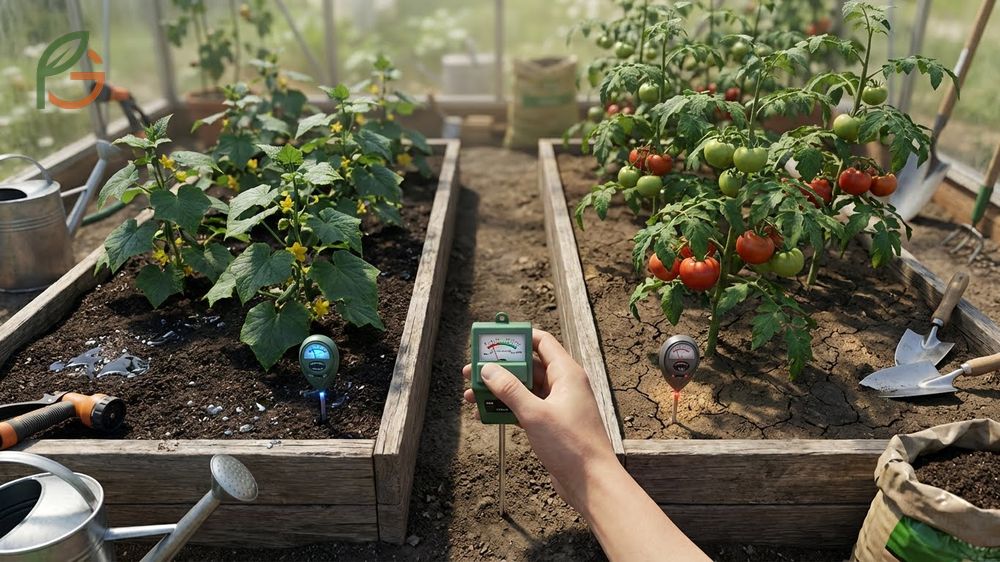
Research shows both crops need 1-2 inches of water weekly, but their timing preferences differ slightly. Cucumbers prefer consistently moist soil and suffer when it dries out completely between waterings. Tomatoes, however, develop better flavor and disease resistance when soil dries somewhat between deep waterings[1].
The best approach is to check soil moisture 2-3 inches below the surface. If it’s completely dry, water deeply. If it’s still moist, wait another day. This method finds the middle ground that keeps cucumbers happy without overwatering tomatoes, which can lead to root rot and fungal diseases.
Current guidance emphasizes watering at soil level rather than overhead. Drip irrigation or soaker hoses deliver moisture directly to roots while keeping foliage dry. This reduces powdery mildew and blight problems by 40-50% compared to overhead sprinklers. Water in the morning so any splash on leaves can evaporate during the day.
Watering Tip: Apply 2-3 inches of organic mulch around both crops to maintain consistent soil moisture, reduce watering frequency, and prevent soil-borne disease spores from splashing onto lower leaves during rain or irrigation.
- Install drip irrigation or soaker hoses to water at soil level and keep foliage dry
- Water deeply but less frequently—aim for 6-8 inches of soil penetration
- Check soil moisture with your finger rather than following a fixed schedule
- Increase watering frequency during fruit development and hot weather above 85°F
- Water in early morning (6-10 AM) so leaves dry before nightfall
- Reduce watering as tomatoes ripen to concentrate sugars and improve flavor
Trellis Ideas for Tomatoes and Cucumbers
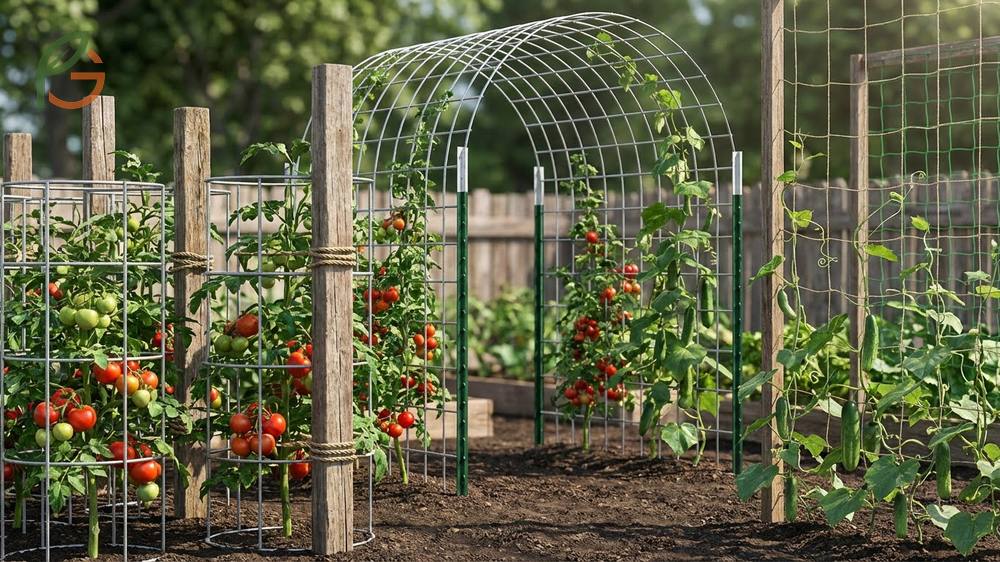
Agricultural studies confirm that vertical growing improves yields, reduces disease, and saves space. Tomatoes need sturdy supports like heavy-gauge wire cages or wooden stakes that can handle 20-30 pounds of fruit weight. Cucumbers climb easily using tendrils and work well on lighter structures like string trellises, netting, or A-frame supports.
The most space-efficient approach is cattle panel trellising. These 16-foot galvanized panels attach to T-posts and support both crops on the same structure. Plant cucumbers on one side and tomatoes on the other, creating a productive wall of vegetables. This method increases growing capacity in small gardens by 50-70% compared to ground cultivation.
A-frame trellises create shaded microclimates underneath—perfect for planting lettuce or spinach in summer heat. Metal cone-shaped tomato cages can double as cucumber supports when you choose compact varieties. Research from home gardening trials shows properly trellised plants produce 30% more fruit because improved air circulation and sunlight exposure enhance photosynthesis.
- Cattle panel trellises (16-foot panels on T-posts) for heavy-duty support of both crops
- A-frame structures made from lumber or bamboo, ideal for cucumbers and pole beans
- String or twine trellises attached to horizontal supports for easy cucumber training
- Heavy wire cages (minimum 4-5 feet tall) for indeterminate tomato varieties
- Wooden stakes (6-8 feet tall, 2-inch diameter) for staking and pruning tomatoes
- Welded wire fencing panels creating vertical growing walls for mixed plantings
Installation Tip: Install trellises and supports at planting time, not after plants are established. Driving stakes or posts near mature plants damages roots and disturbs soil, potentially introducing disease or reducing yields.
Disease Transmission in Garden
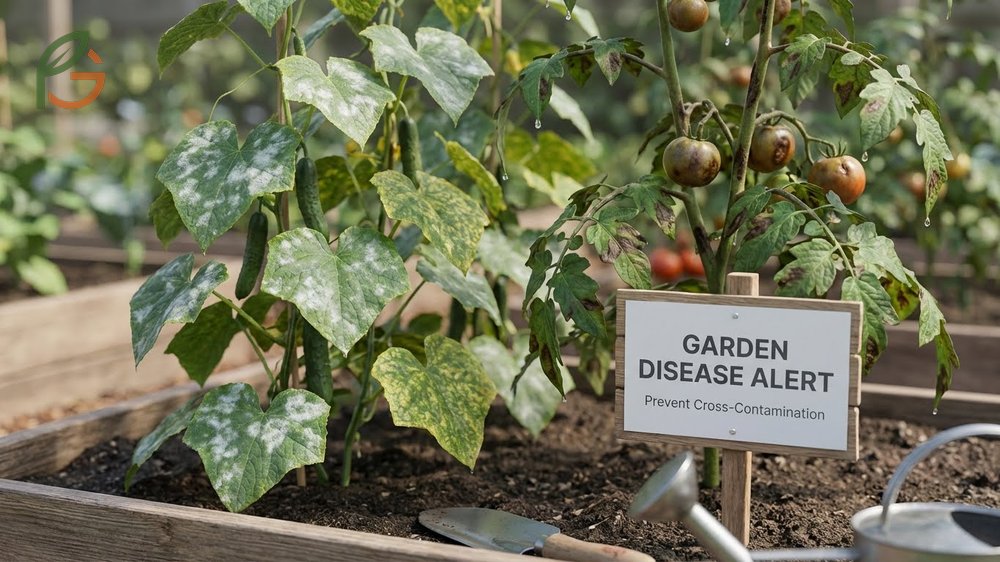
Evidence suggests that cucumbers and tomatoes share several common diseases, making prevention crucial when growing them together. Powdery mildew affects both crops and spreads rapidly in humid conditions with poor air circulation. Cucumber mosaic virus can jump from cucumbers to tomatoes, causing yellowing, stunted growth, and mottled leaves[9].
What many gardeners don’t realize is that late blight—the disease that caused the Irish potato famine—can spread from tomatoes to cucumbers, peppers, and squash when conditions are right. This happens most often during cool, wet weather when humidity stays above 90% for extended periods. Proper spacing and vertical growing reduce this risk substantially.
Current data indicates that soil-borne diseases pose another challenge. When you plant tomatoes and cucumbers in the same location year after year, pathogens accumulate in the soil. This is why crop rotation matters—move your planting areas every 2-3 years to break disease cycles and maintain soil health.
Blight and Mildew Management
Studies demonstrate that spacing plants 24-36 inches apart increases airflow and reduces leaf wetness, cutting mildew problems by 30-40%[7]. Pruning lower leaves on tomatoes and removing yellowed cucumber leaves eliminates humid pockets where fungal spores germinate. Avoid working in the garden when plants are wet—you’ll spread diseases on your hands and tools.
Research from university extension programs shows that applying 2-3 inches of organic mulch prevents soil-borne spores from splashing onto lower leaves during rain. Remove and destroy infected plant material immediately rather than composting it—disease organisms survive in home compost piles and reinfect next year’s crops.
- Space plants according to variety requirements to maximize airflow and reduce humidity
- Water at soil level using drip irrigation to keep foliage dry and prevent fungal spread
- Prune lower leaves and suckers on tomatoes to improve air circulation and light penetration
- Remove diseased leaves immediately and dispose of them in trash, not compost
- Avoid touching plants when wet to prevent spreading pathogens on hands and tools
- Rotate crop locations every 2-3 years to break disease cycles in soil
- Choose disease-resistant varieties when available for your growing zone
Fertilizer Needs for Fruiting Vegetables
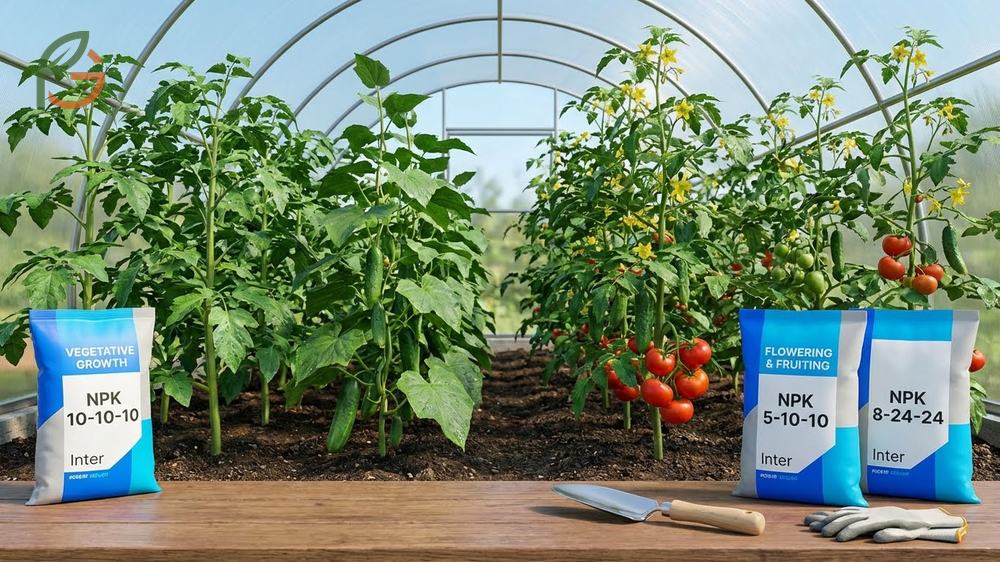
Current agricultural guidance shows both tomatoes and cucumbers are heavy feeders requiring different nutrient ratios throughout their growth cycle. During vegetative growth, both crops need higher nitrogen (N) to build strong stems and leaves—NPK ratios like 10-10-10 work well for this stage. Once flowering begins, shift to lower nitrogen and higher phosphorus and potassium to support fruit development.
For tomatoes, use NPK ratios of 5-10-10 or 8-24-24 during flowering and fruiting stages[10]. Cucumbers thrive on 5-10-10, 10-10-10, or 8-16-36 formulations depending on soil fertility. Too much nitrogen during fruiting causes excessive foliage growth and reduces fruit production—you’ll get lush green plants but few cucumbers or tomatoes.
Research indicates that side-dressing every 3-4 weeks maintains consistent nutrient availability. Apply fertilizer 6 inches away from plant stems to avoid burning roots. In raised beds with high-quality compost-amended soil, you can reduce fertilizer frequency since organic matter releases nutrients slowly over time.
| Growth Stage | Tomatoes NPK | Cucumbers NPK |
|---|---|---|
| Vegetative (0-6 weeks) | 10-10-10 | 10-10-10 |
| Flowering | 5-10-10[10] | 5-10-10 |
| Fruiting | 8-24-24[10] | 8-16-36 |
- Start with balanced 10-10-10 fertilizer at transplanting to establish strong root systems
- Switch to high-phosphorus, high-potassium formulas when first flowers appear
- Side-dress every 3-4 weeks by sprinkling granular fertilizer 6 inches from stems
- Use liquid fertilizers at half-strength weekly for container-grown plants
- Test soil annually to avoid over-fertilizing, which causes nutrient imbalances
- Add compost or aged manure in spring to provide slow-release organic nutrients
Fertilizer Warning: Avoid high-nitrogen fertilizers after flowering begins. Excess nitrogen produces leafy growth at the expense of fruit, delays ripening, and makes plants more susceptible to disease and pest problems.
Conclusion
The evidence is clear: you can successfully plant cucumbers and tomatoes together when you follow three key principles—adequate spacing, vertical support, and disease prevention through proper airflow. These compatible crops share similar sunlight, soil, and water requirements, making them natural companions in home vegetable gardens.
Current horticultural guidance emphasizes that spacing plants 24-36 inches apart, using trellises for vertical growth, and maintaining consistent fertilization schedules deliver the best results. By implementing these research-backed strategies, you’ll maximize yields while minimizing disease pressure, creating a productive garden that supplies fresh vegetables throughout the growing season. FruitGarden continues to synthesize the latest agricultural research to help home gardeners achieve professional-quality results.
Frequently Asked Questions
Can tomatoes and cucumbers be planted together in raised beds?
Yes, raised beds work excellently for growing tomatoes and cucumbers together. The improved drainage and soil quality in raised beds allow you to reduce spacing slightly—plant tomatoes 18-24 inches apart and cucumbers 12 inches apart. Make sure your raised bed is at least 12 inches deep to accommodate tomato root systems. Add trellises or cages at planting time to maximize vertical space and improve air circulation.
What diseases spread between tomatoes and cucumbers?
Powdery mildew affects both crops and spreads rapidly in humid conditions. Cucumber mosaic virus can transmit from cucumbers to tomatoes, causing stunted growth and mottled leaves. Late blight, while primarily a tomato disease, can spread to cucumbers during cool, wet weather. Prevent these problems by spacing plants adequately, watering at soil level, and removing infected plant material immediately.
How often should you water tomatoes and cucumbers planted together?
Both crops need 1-2 inches of water per week, but check soil moisture rather than following a fixed schedule. Stick your finger 2-3 inches into the soil—if it’s completely dry, water deeply. If it’s still moist, wait another day. This approach keeps cucumbers consistently moist while allowing tomatoes to dry slightly between waterings, satisfying both crops’ needs.
What’s the best trellis for growing tomatoes and cucumbers together?
Cattle panel trellises offer the best solution for growing both crops vertically. These 16-foot galvanized wire panels attach to T-posts and support heavy tomato vines on one side and climbing cucumbers on the other. A-frame trellises also work well, creating productive growing walls while providing shade underneath for heat-sensitive crops like lettuce.
Should you use the same fertilizer for tomatoes and cucumbers?
Yes, you can use the same fertilizer since both are heavy feeders with similar nutrient needs. Start with balanced 10-10-10 fertilizer during early growth, then switch to higher phosphorus and potassium ratios like 5-10-10 or 8-24-24 when flowering begins. Both crops benefit from side-dressing every 3-4 weeks throughout the growing season.
Can you grow tomatoes, peppers, and cucumbers together?
Yes, you can grow all three together successfully. They share similar requirements for sun, soil pH, and water. Space tomatoes and peppers 24-36 inches apart, and plant cucumbers 12 inches apart on trellises between them. This combination works well because all three are warm-season crops that benefit from vertical support and consistent fertilization.
How do you prevent blight when growing tomatoes and cucumbers together?
Space plants 24-36 inches apart to improve airflow and reduce humidity around foliage. Water at soil level using drip irrigation to keep leaves dry. Prune lower tomato leaves to increase air circulation, and apply 2-3 inches of organic mulch to prevent soil-borne spores from splashing onto plants. Remove diseased leaves immediately and avoid working in the garden when plants are wet.