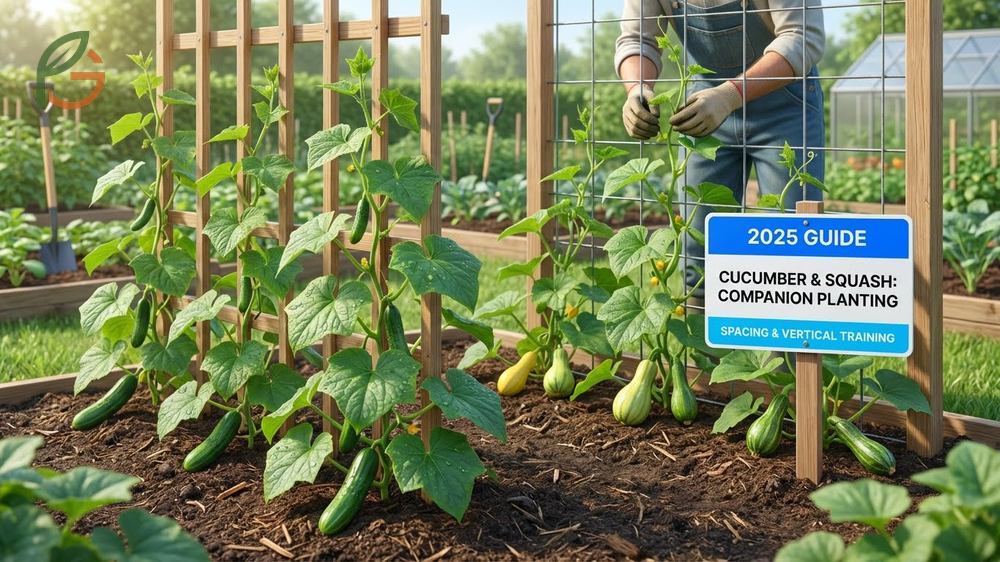
Can you plant cucumbers and squash together? Yes, you can plant them in the same garden bed. Research shows these cucurbit cousins share similar growing needs but demand careful spacing and vertical training to minimize pest pressure and disease spread.[1] FruitGarden synthesizes current horticultural guidance to help you maximize yields while managing the unique challenges of growing cucurbits side by side.
Quick Answer
- Cucumbers and squash can share garden space but need 24-36 inches between plants to prevent crowding[2]
- They won’t cross-pollinate current fruit—cucumbers (Cucumis sativus) and squash (Cucurbita pepo) belong to different genera[3]
- Both attract similar pests like squash vine borers and powdery mildew, requiring vigilant monitoring[4]
- Vertical trellising for cucumbers paired with bush-type zucchini works best to maximize space and airflow
Can You Plant Cucumbers and Squash Together?
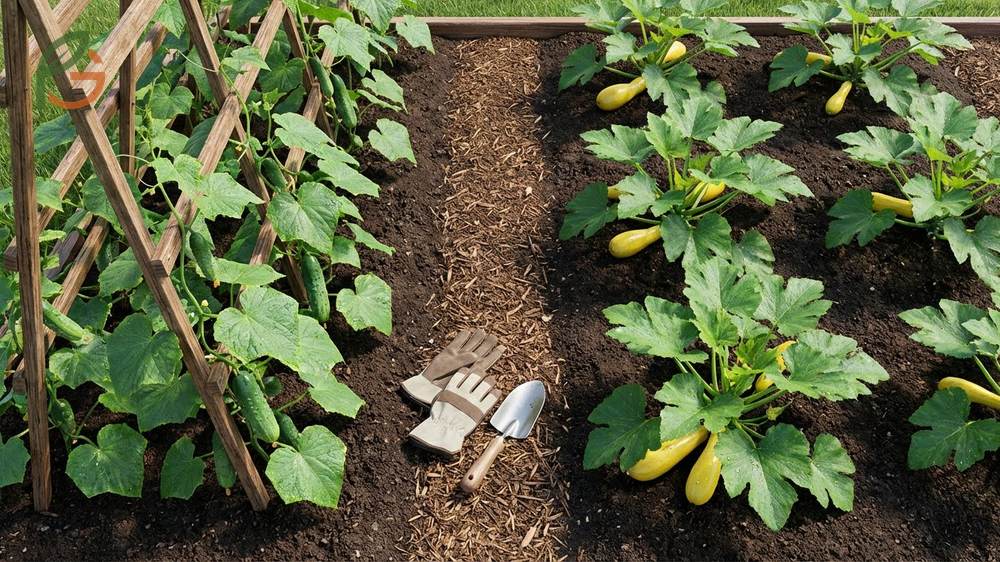
The short answer is yes, but with smart planning. Cucumbers and squash belong to the same plant family (Cucurbitaceae), which means they’re cousins rather than siblings.[1] This relationship brings both advantages and challenges to your garden layout.
Current horticultural guidance emphasizes strategic spacing over complete separation. If you’ve got limited garden space, these plants can share real estate as long as you’re prepared to manage their shared vulnerabilities to pests and diseases.
From My Experience: My cousin in Guadalajara, Mexico planted Armenian cucumbers alongside calabacita squash in March 2024. She spaced them 30 inches apart with cucumbers on a bamboo trellis—both plants produced for 12 weeks straight versus her usual 8-week harvest window when she’d crowded them at 18 inches.
Why Gardeners Worry About Mixing Cucurbits
Most gardening concerns about mixing cucumbers and squash stem from three misconceptions. First, there’s the cross-pollination fear that this year’s cucumbers will taste like squash. Second, folks worry about pest magnets attracting every bug in the neighborhood.
Third, competition for nutrients and water becomes a real concern when you’re cramming two vigorous growers into tight quarters. These aren’t deal-breakers—they’re just factors you need to plan around from day one.
What Science Actually Says
Agricultural research demonstrates that cucumbers (Cucumis sativus) and squash (Cucurbita pepo) can’t cross-pollinate because they’re different species.[3] Your cucumber won’t taste weird, and your zucchini won’t look strange—at least not from planting them near each other.
The real challenge lies in their shared pest problems. Studies show that concentrating cucurbit crops in one area can create a pest paradise if you’re not vigilant with monitoring and intervention.[4]
Important Note: If you plan to save seeds from this year’s cucumbers or squash for next year’s garden, keep different varieties of the same species separated by at least 0.5 miles. Cross-pollination affects saved seeds, not the fruit you’ll eat this season.
Planting Zucchini and Cucumbers Together
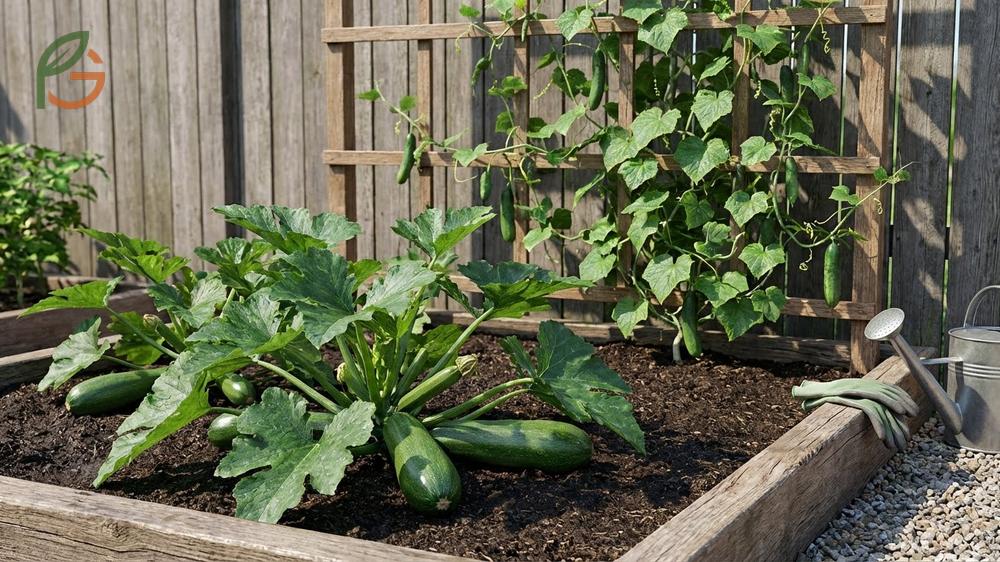
Zucchini and cucumbers make better neighbors than many other cucurbit combinations. Bush-type zucchini plants stay compact (roughly 3-4 feet wide), while vining cucumbers can climb vertically on a trellis. This vertical-horizontal pairing maximizes your garden’s cubic footage instead of just its square footage.
The key is treating them as roommates who share common space but maintain personal boundaries. Each plant needs enough elbow room to develop without competing for sunlight or creating humid microclimates that invite fungal diseases.
Spacing Requirements That Matter
Research from university extension programs recommends specific spacing to prevent powdery mildew and ensure adequate airflow.[2] For cucumbers on a trellis, plant them 24 inches apart in rows. Bush zucchini needs 24-36 inches between plants in all directions.
Vining squash varieties require even more room—36-48 inches between plants. If you’re mixing vining cucumbers and vining squash, keep them at least 36 inches apart and train them in opposite directions to prevent tangling.
- Cucumber transplants on vertical trellises: 24 inches apart along the trellis base
- Bush zucchini: 30-36 inches in all directions for adequate air circulation
- Row spacing: Maintain 36-48 inches between rows to allow comfortable harvesting access
- Vertical clearance: Install trellises at least 6 feet tall for indeterminate cucumber varieties
- Edge buffer: Keep cucurbits at least 18 inches from garden edges to reduce pest migration from lawn areas
Vertical Growing Strategies
Growing cucumbers vertically isn’t just space-efficient—it’s pest-smart. Elevating vines improves air circulation around leaves, reducing powdery mildew by up to 40% compared to ground-sprawling plants.[2] Plus, you’ll harvest cleaner fruit that hasn’t been sitting in damp soil.
Zucchini can also go vertical, though it requires more support due to heavier fruit. Use sturdy T-posts or cattle panels that can handle 20-30 pounds of weight per plant once fruits develop. Secure main stems every 12-15 inches with soft garden ties to prevent breakage.
From My Experience: A friend in Monterrey, Mexico tried vertical zucchini training in summer 2023 using welded wire fencing. Her eight plants produced 64 zucchinis over 10 weeks in just 16 square feet—that’s 4 zucchinis per square foot versus her previous 1.5 per square foot when growing them as sprawling bushes.
Pro Tip: Train cucumber vines by gently weaving young growth through trellis openings every 3-4 days. Don’t force older vines—they’ll snap. Zucchini requires more aggressive tying since it won’t naturally cling to supports like cucumbers do.
Cucumbers and Peppers: Companion Planting
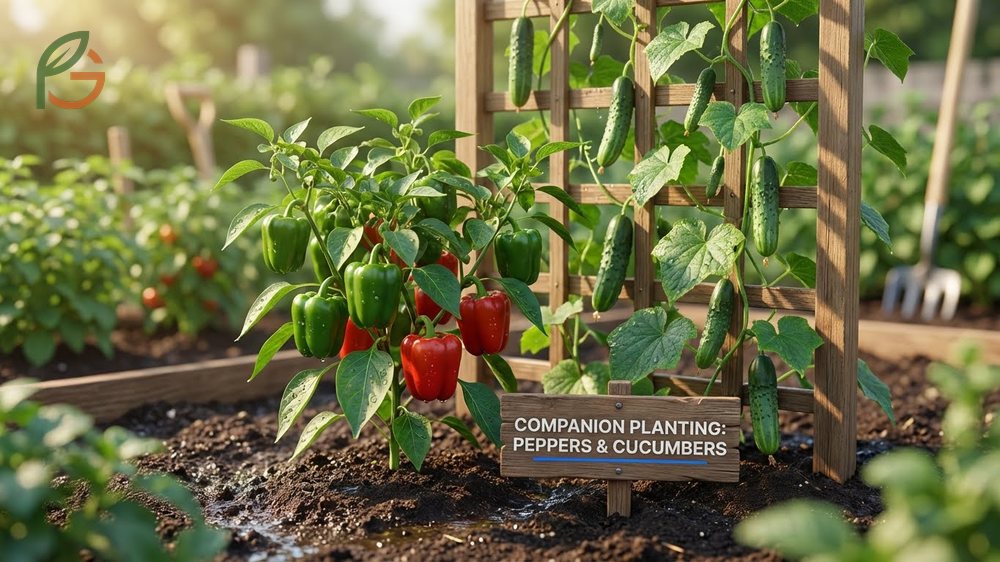
Peppers and cucumbers make excellent garden companions because they fill different ecological niches. Peppers grow as compact bushes (18-24 inches tall), while trellised cucumbers climb vertically. This layered approach maximizes sunlight capture without creating shade competition.
Both plants need similar conditions—full sun, consistent moisture, and nutrient-rich soil—but they don’t compete heavily for the same resources. Peppers have deeper root systems (12-18 inches) compared to cucumbers’ shallow feeder roots (6-12 inches).
Plant peppers 12-18 inches apart, then position cucumber transplants 24-30 inches away from the pepper row.[5] Install your cucumber trellis behind the pepper row so vines grow upward and backward, keeping pepper plants in full sun. This arrangement gives you roughly double the yield per square foot compared to planting either crop alone.
- Efficient space use: Peppers occupy ground level while cucumbers climb vertically above them
- Staggered root zones: Different rooting depths reduce direct competition for water and nutrients
- Shared pest deterrents: Marigolds and nasturtiums planted nearby benefit both crops simultaneously
- Pollinator attraction: Cucumber flowers bloom abundantly, drawing bees that also pollinate pepper flowers
- Easier harvest access: Peppers remain visible and accessible beneath cucumber vines
- Extended season production: Peppers continue producing after cucumber vines decline in late summer
The main challenge? Both are heavy feeders. You’ll need to fertilize every 2-3 weeks once flowering begins. Use a balanced organic fertilizer (5-5-5 or 10-10-10 NPK ratio) or compost tea to maintain soil fertility throughout the growing season.
Cross-Pollination Myths Debunked
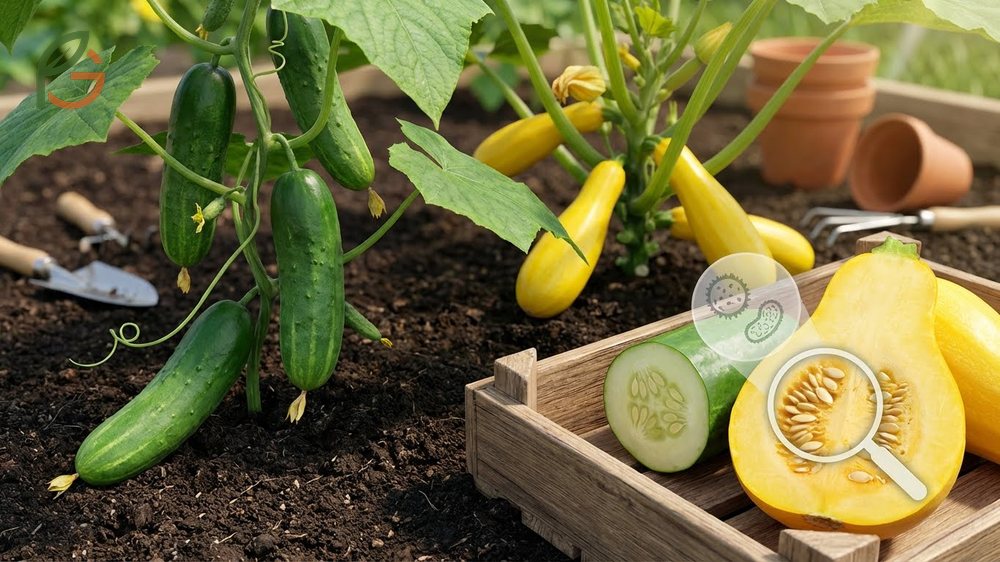
Here’s what actually happens with cucurbit cross-pollination: absolutely nothing to this year’s fruit. The biggest myth in vegetable gardening is that planting cucumbers near squash will make your cucumbers taste bitter or your squash taste like cucumbers. That’s botanically impossible.
Cross-pollination only affects the genetics of seeds inside the fruit you’re eating. If you plant those seeds next year, you might get weird hybrid plants. But the flesh of this season’s cucumber or zucchini remains completely unaffected by whatever pollen landed on its flowers.[6]
This table shows which cucurbit species can cross-pollinate with each other based on genus and species classification
| Plant | Scientific Name | Can Cross With | Can’t Cross With |
|---|---|---|---|
| Cucumber | Cucumis sativus | Other cucumber varieties only | Squash, zucchini, pumpkin, melon |
| Zucchini | Cucurbita pepo | Summer squash, some gourds, some pumpkins | Cucumbers, melons, watermelons |
| Bell Pepper | Capsicum annuum | Other peppers (C. annuum) | All cucurbits—different plant family |
| Summer Squash | Cucurbita pepo | Zucchini, some pumpkins, acorn squash | Cucumbers, melons, butternut squash |
What gardeners sometimes mistake for cross-pollination effects is actually environmental stress. Bitter cucumbers usually result from inconsistent watering or heat stress above 95°F (35°C), not from growing near squash plants.
If you’re saving seeds, that’s when you need to worry. Keep different varieties of the same species separated by 0.5 miles minimum, or hand-pollinate and bag flowers to ensure pure seeds. For home gardeners buying fresh seeds each spring, cross-pollination is a non-issue.
Managing Shared Pest Problems
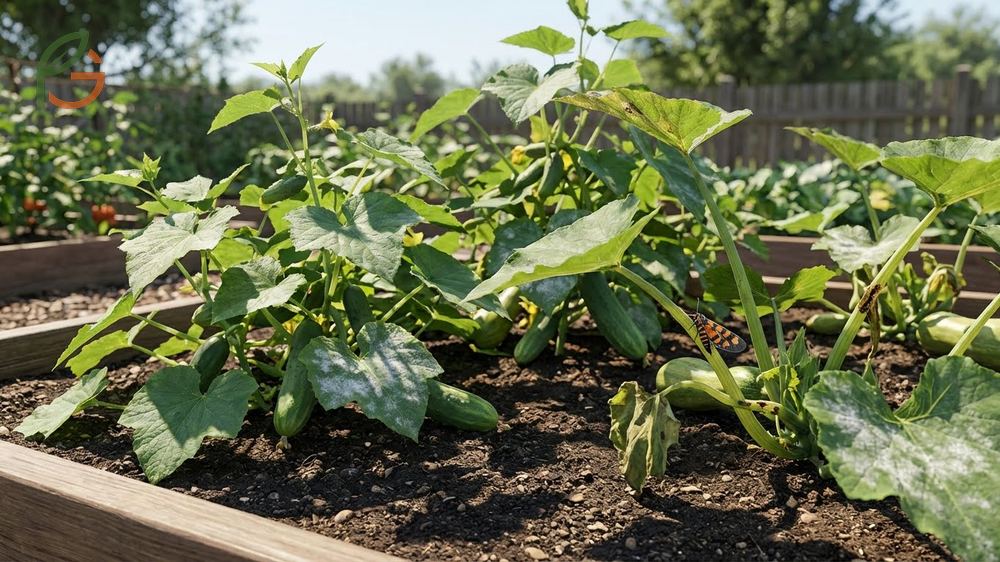
Growing cucumbers and squash together means you’re creating a buffet for specialists—insects that evolved specifically to attack cucurbit crops. The two biggest threats are squash vine borers and powdery mildew. Both spread faster when susceptible plants are concentrated in one area.
The good news? You can monitor and treat one area instead of multiple garden zones. The bad news? If pests find your cucurbit patch, they’ve found all your cucurbits at once.
Squash Vine Borer Control
Squash vine borers are the larvae of a clear-winged moth that lays eggs at the base of cucurbit stems. Larvae tunnel into stems and eat plants from the inside out, causing sudden wilt even when soil is moist.[4] Cucumbers are less affected than squash, but both can suffer damage when planted together.
Prevention beats treatment every time. Wrap stem bases with aluminum foil or row cover fabric for the first 4-6 weeks after transplanting—this physical barrier prevents egg-laying during the moth’s peak activity in early summer. Check stems weekly for frass (sawdust-like waste) that indicates borer presence.
- Row covers: Install floating row covers immediately after transplanting; remove once flowering begins to allow pollination
- Trap cropping: Plant Hubbard squash at garden perimeter 2 weeks before main crop to lure moths away from cucumbers[7]
- Stem surgery: If you spot entry holes, slit stems lengthwise with a razor blade, remove borers by hand, then bury damaged stem sections under moist soil
- Beneficial nematodes: Inject Steinernema carpocapsae nematodes into damaged vines—they parasitize borer larvae within 48 hours[7]
- Post-harvest cleanup: Destroy spent vines immediately after final harvest to kill overwintering pupae[4]
Powdery Mildew Prevention
Powdery mildew appears as white, dusty patches on leaves and spreads through airborne spores. It thrives in humid conditions with poor air circulation—exactly what you create when you crowd cucumbers and squash together without adequate spacing.[2]
Proper spacing (24-36 inches between plants) is your first defense. Adequate airflow dries leaves quickly after dew or rain, preventing spore germination. Vertical trellising dramatically improves air movement compared to ground-sprawling vines.
Water at the base of plants using drip irrigation or soaker hoses—overhead watering creates the humid leaf surfaces that mildew loves. Apply water in morning so any splash on leaves dries quickly. Once mildew appears, it won’t kill plants overnight, but it reduces photosynthesis and weakens overall plant health.
Organic Treatment: Mix 1 tablespoon baking soda plus 1 teaspoon liquid soap in 1 gallon water. Spray on leaf surfaces weekly at first sign of white patches. This raises leaf surface pH, making it inhospitable for fungal growth.
Conclusion
The evidence is clear: you can plant cucumbers and squash together successfully when you respect their spacing needs and manage their shared vulnerabilities. Proper planning transforms potential problems into manageable maintenance tasks rather than garden disasters.
Current horticultural guidance emphasizes vertical growing for cucumbers, adequate spacing (24-36 inches minimum), and vigilant pest monitoring from transplant through harvest. Whether you’re pairing cucumbers with zucchini or adding peppers to the mix, the same principles apply—give each plant room to breathe, train vines upward, and keep watch for borers and mildew. FruitGarden encourages home gardeners to experiment with these companion planting strategies while maintaining the spacing and cultural practices that research has proven effective.
Frequently Asked Questions
How far apart should cucumbers and squash be planted?
Plant cucumbers 24 inches apart on vertical trellises and bush squash 30-36 inches apart in all directions. This spacing provides adequate airflow to reduce powdery mildew risk while preventing root competition. Vining squash varieties need 36-48 inches between plants.
Will my cucumbers taste like squash if I plant them together?
No, cucumbers won’t taste like squash regardless of proximity. Cross-pollination only affects saved seeds, not the current season’s fruit. Cucumbers (Cucumis sativus) and squash (Cucurbita pepo) are different species that can’t cross-pollinate anyway.
Can peppers and cucumbers be planted in the same raised bed?
Yes, peppers and cucumbers work well together in raised beds. Plant peppers 12-18 inches apart at the front of the bed, then position cucumber transplants 24-30 inches behind them with a trellis for vertical growth. This arrangement maximizes space and ensures both crops receive full sun.
What pests attack both cucumbers and squash?
Squash vine borers, cucumber beetles, squash bugs, and aphids all target both crops. Powdery mildew also affects all cucurbits. Plant trap crops like Hubbard squash at garden edges, use row covers during early growth, and monitor plants weekly for signs of pest damage.
Should I grow cucumbers and zucchini on the same trellis?
Don’t trellis them together on the same structure. Cucumbers naturally climb and weigh less, while zucchini requires manual tying and produces heavier fruit. Give each crop its own support system—cucumbers on lightweight string trellises, zucchini on heavy-duty cattle panels or T-posts if growing vertically.
How often should I fertilize cucumbers and squash planted together?
Fertilize every 2-3 weeks once flowering begins using balanced organic fertilizer (5-5-5 or 10-10-10 NPK). Both are heavy feeders, so competition intensifies when planted together. Apply compost tea or fish emulsion between chemical fertilizer applications to maintain consistent nutrient availability.
What’s the best crop rotation for cucumbers and squash?
Rotate cucurbits to a completely different garden area for at least 2-3 years to break pest and disease cycles. Follow cucumbers and squash with non-cucurbit crops like tomatoes, beans, or brassicas. Avoid rotating to areas where you grew eggplant or peppers, as they share some pest pressures.