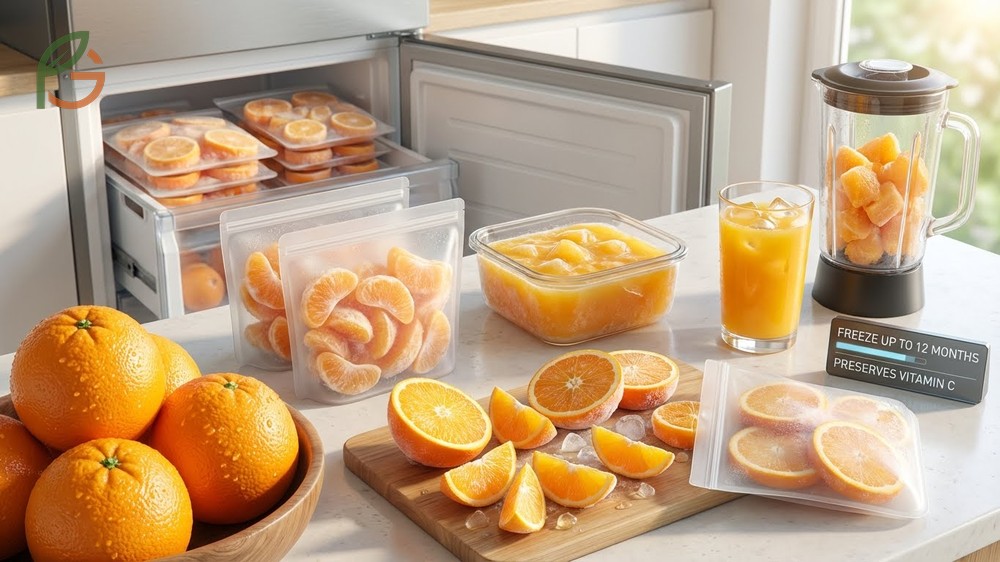
Can you freeze oranges? Yes, oranges freeze beautifully for up to 12 months using several methods. Research shows that freezing preserves vitamin C content while making juice extraction easier, though texture becomes softer when thawed[1]. Whether you’re freezing whole oranges, segments, slices, or juice, the process protects nutritional value for future use in smoothies, baking, and beverages. FruitGarden synthesizes current agricultural research and storage data to help you preserve citrus at peak freshness.
Quick Answer
Can You Freeze Oranges
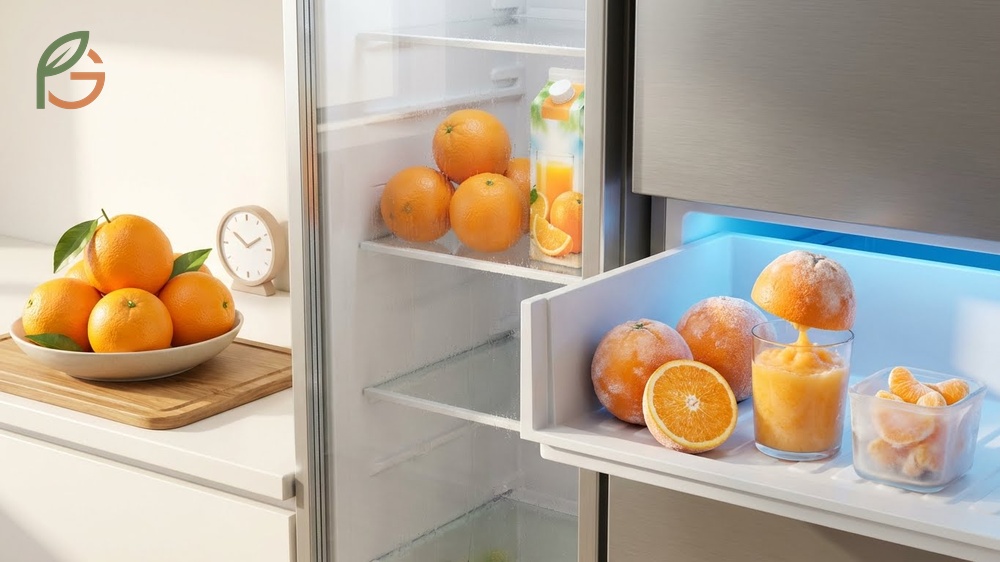
Oranges adapt remarkably well to freezing, maintaining their nutritional profile while changing texture. Studies demonstrate that frozen citrus retains vitamin C content effectively when stored at proper temperatures[1]. The freezing process breaks down cell walls, resulting in softer fruit that’s perfect for juicing but less ideal for fresh consumption.
Current data indicates oranges last about 1 week at room temperature and up to 36 days refrigerated[5][6]. Freezing extends this dramatically to 6-12 months depending on your method. Most people don’t realize that frozen oranges actually juice more efficiently than fresh ones because ice crystals rupture cell membranes.
You can freeze oranges whole, peeled, sliced with skin, or segmented. Each method serves different purposes. The choice depends on how much prep time you have now versus how you’ll use them later.
Nutritional Benefits Preserved
Research shows freezing maintains most vitamin content in citrus fruits. One medium orange (140g) provides 73 calories, 16.5g carbohydrates, and 2.8g fiber[3]. That same orange delivers 92% of your daily vitamin C requirement[4].
Evidence suggests that vitamin C remains stable during frozen storage when oranges are properly sealed. The water-soluble nutrient stays protected from oxidation in airtight packaging. You’ll get nearly identical nutritional benefits from frozen oranges compared to fresh ones when used within the recommended timeframe.
Texture Changes Explained
The biggest trade-off with freezing involves texture transformation. Ice crystals form within orange cells during freezing, puncturing membranes. When thawed, this makes oranges noticeably softer and mushier than fresh fruit[1].
This texture change becomes an advantage for certain uses. Frozen oranges blend into smoothies more easily without chunks. They release juice faster during squeezing because damaged cells give up liquid readily.
Important note: Don’t plan to eat frozen-then-thawed oranges fresh like regular oranges. Save frozen citrus for smoothies, baking, cooking, or juicing where texture doesn’t matter.
Freezing Whole Oranges
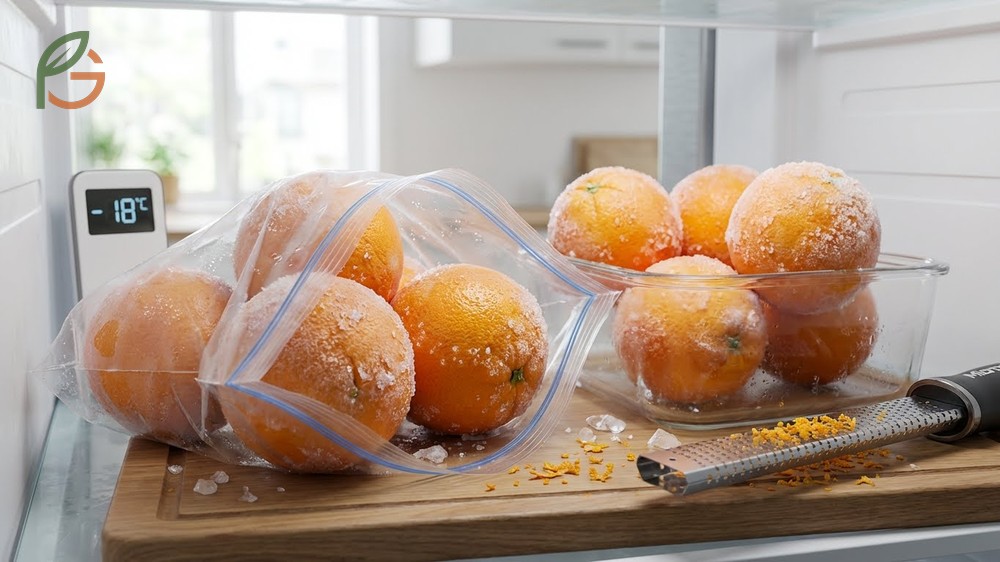
Whole orange freezing requires almost zero preparation. This method works brilliantly when you’re short on time but don’t want citrus to spoil. Agricultural data shows this approach preserves fruit effectively for juice extraction later[7].
The peel acts as natural protection during freezing. You can even zest frozen oranges directly from the freezer before thawing. What often gets overlooked is that leaving the peel on prevents freezer burn better than most wrapping methods.
Whole frozen oranges become juicing powerhouses after thawing. The freezing process essentially pre-breaks down the internal structure, making juice extraction effortless. If you’re someone who drinks fresh orange juice regularly, this method saves significant time.
Step by Step Process
Choose the ripest, freshest oranges available. Rinse them under cool water to remove any dirt or residue. Pat completely dry with a clean kitchen towel or paper towels[1].
Place dry oranges in freezer-safe bags. Squeeze out as much air as possible before sealing to prevent freezer burn. Creating a vacuum environment extends storage life significantly[7].
- Wash oranges thoroughly under running water
- Dry completely to prevent ice crystal formation on skin
- Place in heavy-duty freezer bags without overcrowding
- Remove excess air by pressing bag or using vacuum sealer
- Label bags with freezing date for tracking
- Store flat in freezer until solid (2-3 hours), then stack to save space
Best Uses for Whole Frozen
Frozen whole oranges excel at juice production. The thawed fruit yields more juice with less effort than fresh oranges. Simply thaw, cut in half, and squeeze.
They’re perfect for recipes requiring both zest and juice. You can grate frozen orange peel directly for zest, then thaw the fruit for juice extraction. This dual-purpose approach saves an extra orange.
Preserve Oranges Freezing
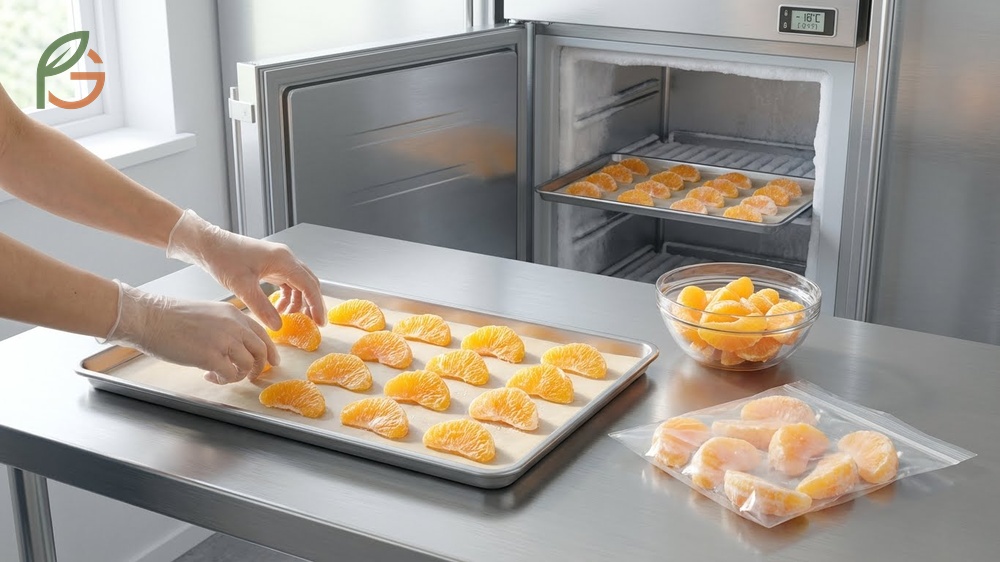
Peeled and segmented oranges offer maximum convenience for quick use. This preparation method takes more upfront work but pays dividends when you need orange pieces immediately. Current guidance emphasizes flash-freezing to prevent clumping[2].
Research across food preservation studies shows that individually frozen pieces maintain better quality than chunks frozen together in bags. The key lies in preventing segments from touching during initial freezing. This creates free-flowing pieces you can portion easily.
Peeled orange segments work wonderfully in breakfast routines. Toss frozen segments directly into oatmeal, yogurt, or smoothie blenders without thawing. They chill drinks naturally while adding flavor.
Orange Freezing Method: Segments
Peel oranges completely and remove as much white pith as possible. The bitter pith affects flavor when frozen. Separate oranges into individual segments by hand or knife, removing any remaining membrane[7].
Arrange segments in a single layer on parchment-lined baking sheets. Make sure pieces don’t touch each other. Freeze for 2-3 hours until completely solid[2].
- Remove all peel and white pith from oranges
- Separate into clean segments without membrane
- Pat segments dry with paper towels to reduce ice crystals
- Line baking sheet with parchment paper or silicone mat
- Space segments 1/2 inch apart to prevent sticking
- Flash-freeze for 2-3 hours until firm
- Transfer to labeled freezer bags immediately after freezing
Pro tip: Bend the parchment paper after freezing to release stuck segments easily. They’ll separate naturally without breaking.
Frozen Orange Slices
Orange slices with peel intact make stunning garnishes for beverages. Cut oranges into rounds approximately 1/4-inch thick. Keep the peel on for structural support during freezing[7].
Follow the same flash-freezing technique as segments. Arrange slices flat on baking sheets without touching, freeze for 4 hours, then transfer to storage bags. Frozen orange slices work perfectly in water pitchers, cocktails, or iced tea.
Frozen Orange Storage
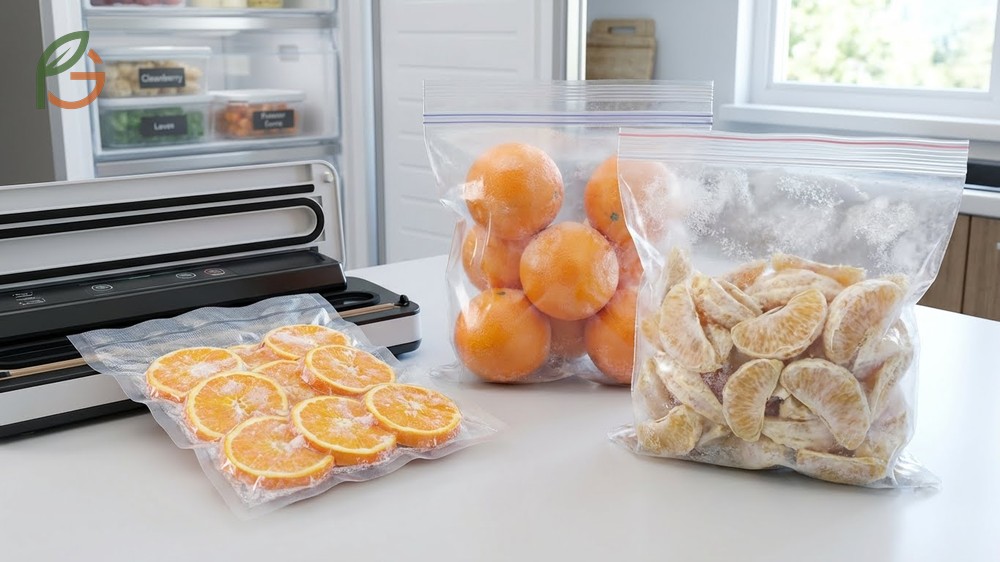
Proper packaging determines how long frozen oranges maintain quality. Evidence indicates that minimizing air exposure prevents freezer burn and preserves flavor[2]. Heavy-duty freezer bags outperform regular storage bags because they’re thicker and resist moisture penetration.
Vacuum sealing extends storage life beyond standard methods. This removes virtually all air, protecting vitamin C from oxidation. Most people find that vacuum-sealed oranges taste fresher even after 10-12 months.
Temperature consistency matters more than most realize. Store oranges in the back of your freezer where temperature fluctuates less. Front sections near the door experience warming cycles that degrade quality faster.
Proper Packaging Techniques
Label every package with contents and freezing date. This simple step prevents mystery packages six months later. Use permanent markers that won’t smudge or fade.
Portion oranges into quantities you’ll actually use. Freezing in meal-sized amounts means you won’t repeatedly thaw and refreeze portions. Once thawed, oranges shouldn’t be refrozen.
- Use heavy-duty freezer bags rated for long-term storage
- Remove all air by pressing from bottom to top before sealing
- Double-bag whole oranges for extra protection against freezer burn
- Vacuum seal for maximum storage life (up to 12 months)
- Label with specific date and preparation type
- Store bags flat initially, then stack after frozen to save space
- Keep oranges away from strong-smelling foods to prevent odor absorption
Storage Duration Guidelines
Different preparation methods affect storage timelines. Studies show properly frozen oranges maintain acceptable quality for varying durations. Whole and segment oranges last 10-12 months when vacuum sealed[7].
This table compares storage durations and quality retention for four orange freezing methods from whole oranges to fresh-squeezed juice
| Preparation Method | Maximum Duration | Best Quality Period | Packaging Requirement |
|---|---|---|---|
| Whole oranges | 6-12 months[1] | 0-6 months | Heavy-duty freezer bags |
| Peeled segments | 10-12 months[7] | 0-8 months | Vacuum-sealed preferred |
| Slices with peel | 10-12 months[7] | 0-8 months | Airtight containers |
| Fresh-squeezed juice | 6 months[1] | 0-4 months | Leave 1/3 headspace |
Thawing Frozen Oranges
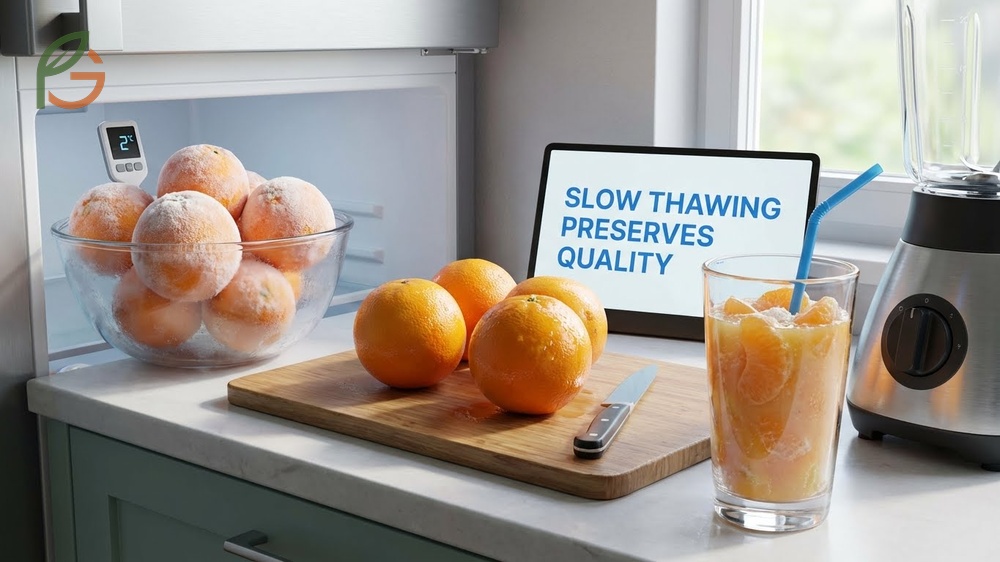
The thawing method dramatically impacts final texture and usability. Current data indicates slow refrigerator thawing preserves the most quality[2]. Rapid temperature changes cause excessive cellular damage beyond what freezing already creates.
Most smoothie and baking recipes don’t require thawed oranges. Use frozen segments directly from the freezer. This saves time and maintains colder drink temperatures. For juicing whole oranges, partial thawing often works better than complete thawing.
Agricultural guidance emphasizes patience with thawing. Rushing the process with heat damages vitamin content and creates uneven texture. Room temperature thawing works faster than refrigeration but increases bacterial growth risk.
Refrigerator Method
Transfer frozen oranges to a covered container and place in the refrigerator. This method takes 10-12 hours for complete thawing[2]. The slow, steady temperature increase minimizes texture degradation.
Use thawed oranges within 24-48 hours for best quality. Once thawed, treat them like fresh oranges nearing their expiration date. They won’t last another week in the fridge.
Quick Thawing Alternatives
Cold water submersion thaws oranges in 1-3 hours depending on size. Seal oranges in waterproof bags before submerging. Change water every 30 minutes to maintain cold temperature[8].
Microwave thawing works for immediate use. Transfer frozen oranges to microwave-safe dishes and use the defrost setting. Stir frequently to distribute heat evenly[2].
- Refrigerator: 10-12 hours, best texture preservation, plan ahead required
- Cold water bath: 1-3 hours, moderate quality, change water every 30 minutes
- Microwave defrost: 5-10 minutes, fastest option, use immediately after
- Room temperature: 2-4 hours, acceptable for juicing, higher bacterial risk
- No thawing needed: Smoothies, blended drinks, some baking recipes
Safety reminder: Never thaw oranges at room temperature for more than 4 hours. Bacteria multiply rapidly in the temperature danger zone between 40°F-140°F (4°C-60°C).
Freezing Fresh Oranges: Juice
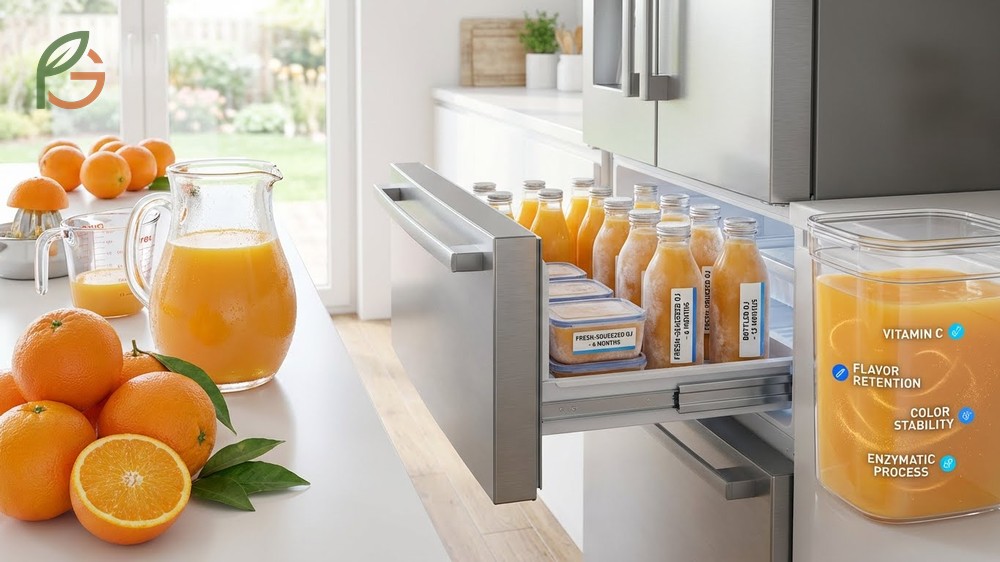
Orange juice freezes exceptionally well and might be the simplest preservation method. Research demonstrates that properly frozen juice maintains flavor and vitamin content for months[9]. Fresh-squeezed juice lasts up to 6 months frozen, while bottled juice extends to 12 months[1].
Studies show that freezing concentrated orange juice preserves color and cloud stability better than many expect. The enzymatic production process proves superior to mechanical squeezing for long-term frozen storage quality[9].
What’s often overlooked is the expansion factor. Liquids expand when frozen, potentially bursting containers. Leave adequate headspace to prevent messy freezer accidents.
Juice Freezing Methods
Pour fresh orange juice into freezer-safe bags, filling only two-thirds full. This leaves critical expansion room during freezing[1]. Squeeze out air before sealing to minimize oxidation.
Ice cube trays offer incredible versatility for portioning. Freeze juice in standard ice cube trays, then pop out cubes and transfer to freezer bags. Each cube equals roughly 2 tablespoons, making recipe measuring simple.
- Freezer bags: Fill 2/3 full, lay flat for space-efficient storage
- Ice cube trays: Portion control for smoothies, exact 2-tablespoon servings
- Silicone muffin cups: Larger portions (1/4 cup each) for breakfast recipes
- Mason jars: Leave 1-inch headspace, wide-mouth jars prevent cracking
- Original cartons: Bottled juice can freeze in unopened containers if space allows
Zest Preservation
Orange zest freezes beautifully without flavor degradation. The cold simply preserves aromatic oils without strengthening or dulling them[1]. Spread grated zest on a sheet pan and freeze briefly before transferring to small airtight containers.
Beyond flavor, orange peel offers significant nutritional benefits. The peel contains extra vitamin C and hesperidin, compounds known for antioxidant, anti-inflammatory, and cardiovascular-protective properties[1].
Conclusion
The evidence is clear: freezing oranges works exceptionally well for preservation when you match the method to your intended use. Whole oranges suit juicing, segments excel in smoothies, and frozen juice provides ultimate convenience. Each technique preserves the 73 calories and 92% daily vitamin C that make oranges nutritional powerhouses.
Current guidance emphasizes proper packaging and temperature consistency for maximum storage life of 6-12 months. FruitGarden synthesizes research showing that flash-freezing prevents clumping, vacuum-sealing extends freshness, and slow refrigerator thawing maintains the best quality. Don’t let surplus citrus spoil—freeze it using these proven methods to enjoy fresh orange flavor year-round.
Frequently Asked Questions
Can you freeze whole oranges without peeling them?
Yes, whole unpeeled oranges freeze perfectly with minimal preparation. Simply wash, dry thoroughly, and place in freezer bags after removing excess air. The peel protects the fruit and can be zested directly from frozen. This method works best for oranges you’ll juice later, as thawed whole oranges become too mushy for fresh eating.
How long do frozen oranges last in the freezer?
Frozen oranges maintain best quality for 6-12 months depending on preparation method. Whole and segmented oranges last 10-12 months when vacuum-sealed, while fresh-squeezed juice lasts 6 months. Bottled orange juice extends to 12 months frozen. For optimal flavor and texture, use frozen oranges within the first 6-8 months of storage.
What happens to orange texture when frozen?
Freezing makes oranges noticeably softer and mushier than fresh fruit. Ice crystals form inside cells during freezing, rupturing membranes and breaking down structure. This texture change actually benefits juicing and smoothie-making but makes thawed oranges unsuitable for fresh consumption. The nutritional content remains intact despite texture changes.
Can you use frozen oranges in smoothies without thawing?
Absolutely—frozen orange segments work perfectly in smoothies without thawing. They blend easily and keep your drink cold without needing extra ice. Use frozen segments directly from the freezer for breakfast smoothies, protein shakes, or blended drinks. This saves time and maintains ideal smoothie temperature and consistency.
What’s the best way to thaw frozen oranges?
Refrigerator thawing preserves the best quality, taking 10-12 hours for complete thawing. Transfer frozen oranges to a covered container and refrigerate overnight. For faster results, submerge sealed oranges in cold water for 1-3 hours, changing water every 30 minutes. Microwave defrosting works for immediate use but should be followed by prompt consumption.
Does freezing oranges destroy vitamin C?
No, freezing preserves most vitamin C content when oranges are properly sealed and stored. One medium orange provides 92% of daily vitamin C requirements, and this remains largely intact during frozen storage. The key is minimizing air exposure through proper packaging. Vacuum-sealed oranges maintain nutritional value best over long storage periods.
Can you freeze orange juice in ice cube trays?
Yes, ice cube trays offer excellent portion control for frozen orange juice. Each standard cube equals roughly 2 tablespoons, making recipe measurements simple. Freeze juice in trays for 4-6 hours, then transfer cubes to freezer bags for long-term storage. This method works perfectly for adding citrus flavor to smoothies, cocktails, or cooking recipes.