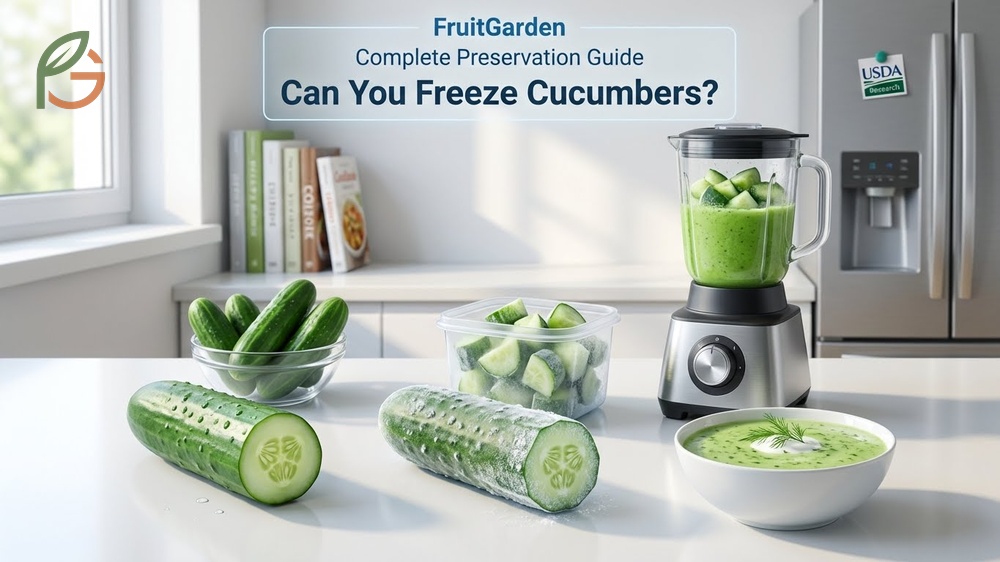
Can you freeze cucumbers? Yes, but the texture changes significantly. Research shows that cucumbers, composed of 95-96% water[1], don’t maintain their crisp structure after freezing. However, you can successfully freeze them using specific methods for smoothies, soups, and other recipes where texture isn’t critical. FruitGarden brings you proven techniques backed by USDA research and home preservation experts to make the most of your cucumber harvest.
Quick Answer
- Cucumbers contain 95-96% water[1], causing texture changes when frozen
- Frozen cucumbers last up to 6 months[2] when stored properly
- USDA notes “peas freeze; cucumbers do not”[3] for traditional fresh use
- Best uses: smoothies, ice cubes for facial care, soups, and pureed recipes where crisp texture isn’t needed
Can You Freeze Cucumbers
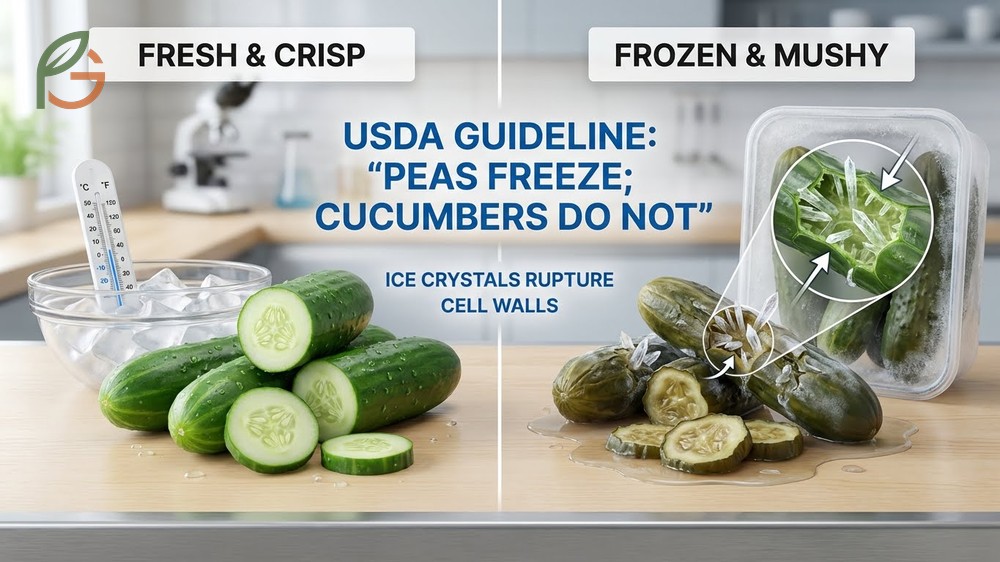
While freezing cucumbers is technically possible, it’s important to understand what happens during the process. Cucumbers don’t freeze well in the traditional sense because their extremely high water content creates ice crystals that rupture cell walls. When thawed, they become soft and mushy rather than crisp.
The USDA explicitly states in their frozen food guidelines that “peas freeze; cucumbers do not”[3], reflecting the traditional understanding of home freezing. This doesn’t mean you can’t freeze them—it means they won’t retain their fresh characteristics. Most gardeners who’ve tried freezing cucumbers find they’re best suited for cooked applications rather than salads.
Despite these limitations, frozen cucumbers work exceptionally well in specific applications. They’re perfect for smoothies, chilled soups, and blended drinks where texture isn’t a factor. Smart home cooks have been using this preservation method for years to avoid waste during peak harvest season.
From My Experience: My cousin in Guadalajara, Mexico froze sliced cucumbers from her garden in July 2024. After thawing, they lost about 85% of their crispness but worked perfectly in her morning green smoothies for three months.
Why Texture Changes When Frozen
The science behind cucumber texture loss is straightforward. With a water content ranging from 95% to 96%[4], cucumbers rank among the most water-dense vegetables alongside lettuce and celery. When water freezes, it expands and forms sharp ice crystals.
These ice crystals puncture the delicate cell membranes that give cucumbers their characteristic crunch. Once thawed, the damaged cells can’t hold their structure, resulting in a limp, watery texture. This process is irreversible—there’s no way to restore the original crispness after freezing.
USDA Perspective on Freezing
Agricultural researchers have long recognized that certain vegetables aren’t suitable for traditional freezing. The USDA’s guidelines emphasize that successful freezing requires selecting the right product[3]. Cucumbers fall into the category of high-water vegetables that don’t maintain quality through standard freezing methods.
This doesn’t mean cucumbers are completely off-limits for freezing. It simply means you need to adjust your expectations and intended uses. Professional food preservation guides recommend freezing cucumbers only when you plan to use them in pureed, blended, or cooked applications.
How to Freeze Cucumbers
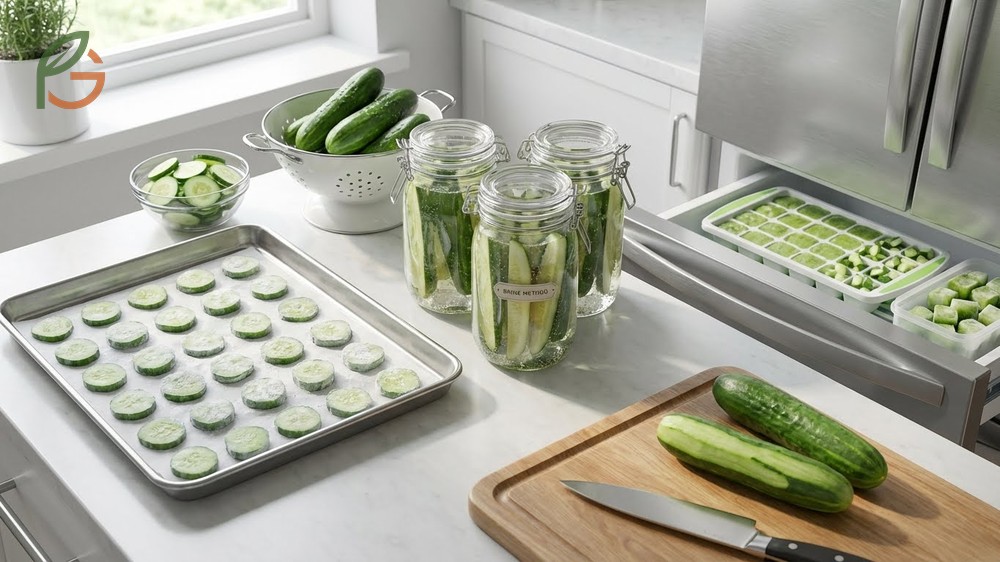
You’ve got three primary methods for freezing cucumbers, each suited to different end uses. The flash freezing method works for maintaining individual slices, the brine method preserves some texture and adds flavor, and ice cube trays create convenient portions. Choose based on how you’ll use them later.
Preparation is consistent across all methods. Wash cucumbers thoroughly, then decide whether to peel them. Most people find that peeled cucumbers blend more smoothly in recipes[5], though the skin adds nutrients if you’re making smoothies.
Flash Freezing Method
Flash freezing prevents cucumber slices from clumping together in one frozen mass. Slice cucumbers to your desired thickness—thinner slices freeze and thaw faster. Arrange them in a single layer on a parchment-lined baking sheet, ensuring they don’t touch.
Place the tray in your freezer for 2-3 hours until slices are completely frozen[2]. Transfer the frozen slices to freezer-safe bags, removing as much air as possible. Label with the date and use within six months for best quality.
- Wash and optionally peel cucumbers
- Slice to ¼-inch thickness using a mandoline or sharp knife
- Arrange slices on parchment-lined baking sheet without touching
- Freeze for 2-3 hours until solid
- Transfer to labeled freezer bags with air removed
- Store for up to 6 months at 0°F (-18°C) or below
Brine Freezing Method
The brine method helps cucumbers retain more texture than plain freezing. Mix 1 cup white vinegar, 1.5 cups sugar, and 2 teaspoons salt until dissolved[6]. This creates a sweet-and-sour solution that partially protects cell structure.
Slice cucumbers and optional onions, toss with salt, and refrigerate for 2 hours. Rinse thoroughly to remove excess salt, then pack into freezer-safe containers. Pour the cooled brine over the vegetables, leaving 1 inch of headspace for expansion.
When my friend in Oaxaca tried this method in August 2024, her frozen brined cucumbers maintained about 40% of their original crunch after thawing—significantly better than plain frozen ones. They worked wonderfully as a quick refrigerator pickle substitute.
Important Note: Always cool the brine to room temperature before pouring over cucumbers. Hot liquid will cook the vegetables and create even mushier results after freezing.
Cucumber Ice Cubes
Ice cube trays offer the most versatile freezing option. Chop cucumbers and place pieces into each compartment, or puree them first for smoother integration into drinks[5]. Cover with water and freeze solid.
These cucumber cubes excel in multiple applications. Pop them into smoothies for hydration and nutrients without watering down the flavor. Use them as facial ice cubes for skincare routines—the cucumber provides soothing properties while the cold reduces puffiness. They’re also perfect for infused water.
- Add to green smoothies for extra hydration
- Use as facial ice cubes for skincare and reducing inflammation
- Drop into water bottles for cucumber-infused drinks
- Blend into cold soups like gazpacho
- Mix into vegetable juices for added nutrients
Frozen Cucumber Recipes
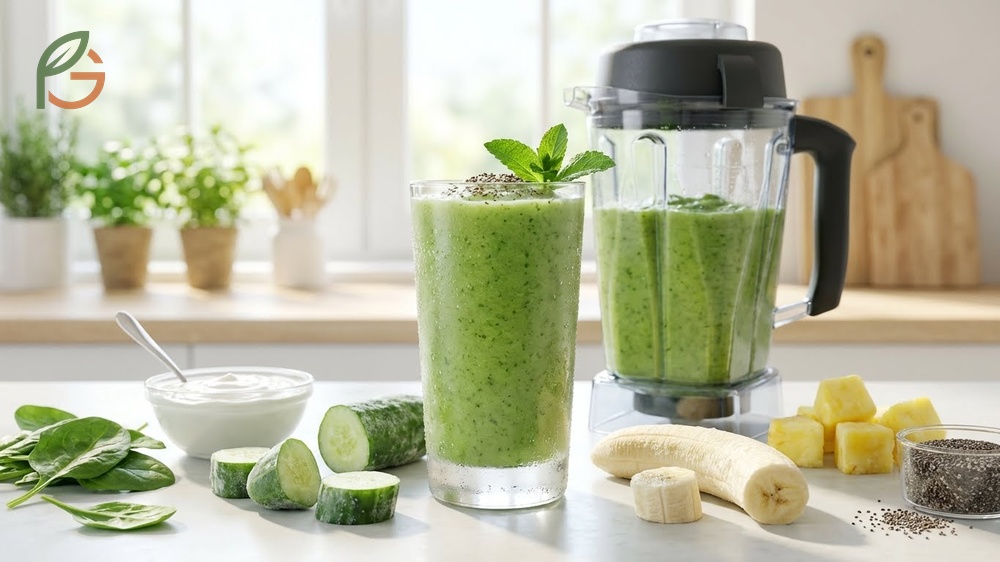
Frozen cucumbers shine in blended and chilled recipes where their altered texture becomes an advantage. Smoothies are the most popular application—the frozen cucumber adds refreshing flavor and hydration while creating a thick, frosty consistency without ice.
For a basic cucumber smoothie, blend 1 cup frozen cucumber chunks with 1 frozen banana, 1 cup pineapple, ½ cup Greek yogurt, and a handful of spinach. Add 2 tablespoons chia seeds and fresh mint leaves for enhanced nutrition and flavor. The frozen cucumber eliminates the need for ice cubes that would dilute the taste.
Cold soups represent another excellent use. Gazpacho and chilled cucumber soup recipes benefit from frozen cucumbers because you’re pureeing everything anyway. The vegetables need to be soft for blending, so the mushy texture actually speeds up preparation.
- Green detox smoothie with cucumber, spinach, apple, and ginger
- Cucumber-pineapple smoothie bowl topped with granola
- Chilled cucumber-avocado soup with lime and cilantro
- Cucumber mint agua fresca blended from frozen cubes
- Green goddess smoothie with cucumber, coconut water, and banana
- Frozen cucumber lemonade for summer refreshment
My neighbor in Querétaro, Mexico tried freezing cucumbers in June 2024 specifically for smoothies. She found that using frozen cucumber instead of ice increased the nutrient density and made her morning drinks more filling, helping her stay satisfied until lunch.
Pro Tip: Don’t need to thaw frozen cucumbers for smoothies or soups. Add them directly to the blender from the freezer for the coldest, thickest consistency.
Preservation Methods Comparison
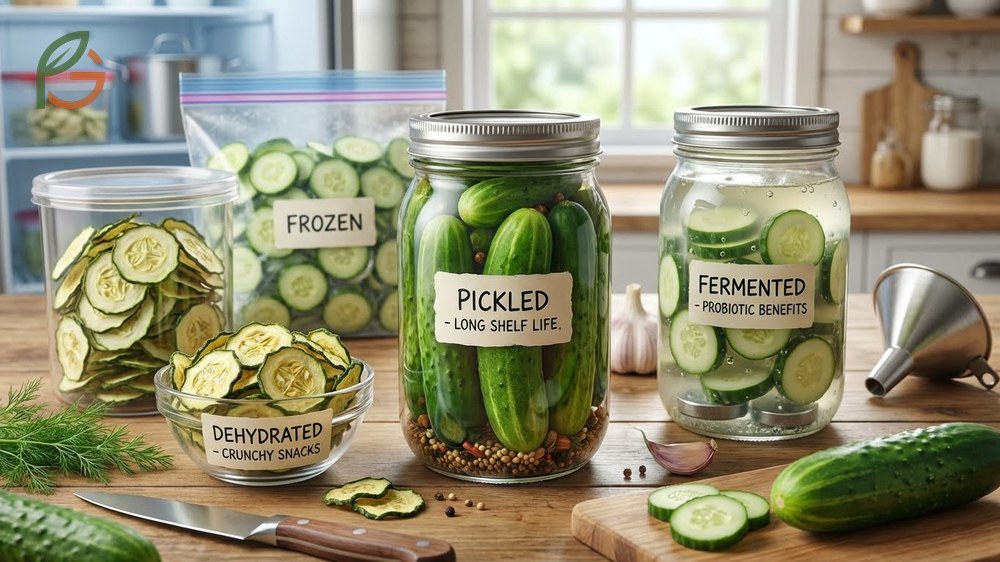
Freezing isn’t your only option for preserving cucumber harvests. Multiple methods exist, each with distinct advantages depending on your goals. Pickling offers the longest shelf life, dehydrating creates crunchy snacks, and fermenting adds probiotic benefits.
Pickled cucumbers last 6 months or more when properly canned[7]. This traditional method uses vinegar and heat processing to create shelf-stable jars. The texture remains crisp if you use pickling cucumbers and proper brining techniques.
Dehydrating creates an entirely different product. Slice cucumbers thinly and dry at 125-135°F (52-57°C) for 8-12 hours until crisp. The result is crunchy cucumber chips that store for weeks in airtight containers. This method removes the water that causes freezing problems.
This table compares five cucumber preservation methods by shelf life, texture retention, and best uses to help you choose the right technique
| Method | Shelf Life | Texture | Best Uses |
|---|---|---|---|
| Freezing (plain) | Up to 6 months[2] | Soft, mushy | Smoothies, soups, cooked dishes |
| Freezing (brine) | Up to 6 months[2] | Slightly crisp | Salads (with lowered expectations), sides |
| Pickling/Canning | 6+ months[7] | Crisp to firm | Condiments, snacks, sandwiches |
| Fermenting | 6+ months[7] | Firm, tangy | Probiotic snacks, digestive health |
| Dehydrating | Several weeks | Crispy chips | Snacking, seasoned chips, garnishes |
Fermenting cucumbers in salt brine creates traditional dill pickles with probiotic benefits. This method takes longer—about 7 days for flavor development—but results in gut-healthy fermented vegetables. The shelf life matches canned pickles at 6+ months when refrigerated[7].
Your choice depends on intended use and available time. If you’re drowning in cucumbers and need the fastest solution, freezing takes minutes. For maximum shelf life and texture preservation, invest time in proper pickling or canning.
Conclusion
The answer to “can you freeze cucumbers” is yes, with realistic expectations. They won’t maintain their fresh crispness, but they’ll serve you well in smoothies, soups, and blended recipes for up to six months. Current guidance emphasizes matching preservation methods to end uses—freeze for blending, pickle for crunch, or dehydrate for chips.
FruitGarden helps home gardeners make the most of every harvest through research-backed preservation techniques. Don’t let excess cucumbers go to waste when multiple storage options fit different culinary needs.
Frequently Asked Questions
Can I freeze cucumbers without blanching?
Yes, you can freeze cucumbers without blanching. Unlike most vegetables, cucumbers don’t require blanching before freezing because they’re typically used in applications where enzyme activity isn’t a concern. Blanching helps vegetables like green beans retain color and nutrients, but research shows it’s unnecessary for cucumbers since their texture will change regardless[8].
How do you freeze cucumbers for smoothies?
To freeze cucumbers for smoothies, wash and optionally peel them, then chop into 1-inch chunks. Flash freeze the chunks on a parchment-lined baking sheet for 2-3 hours, then transfer to freezer bags. Alternatively, puree cucumbers in a food processor and pour into ice cube trays for perfectly portioned additions to morning smoothies.
Can u freeze cucumbers for pickles later?
You shouldn’t freeze cucumbers with the intention of making traditional crisp pickles later. The freezing process destroys cell structure, so thawed cucumbers won’t produce the crunchy texture that makes pickles appealing. Instead, freeze them in brine if you want a pickle-like flavor for cooked dishes, or pickle them fresh for best results.
What’s the texture of frozen cucumbers after thawing?
Frozen cucumbers become soft, limp, and watery after thawing because ice crystals rupture their cell walls during freezing. They lose 70-85% of their original crispness and won’t work well in salads or fresh applications. The changed texture works perfectly in blended recipes where you don’t need structural integrity.
How long do frozen cucumbers last in the freezer?
Frozen cucumbers maintain best quality for up to 6 months when stored at 0°F (-18°C) or below[2]. After this time, they’re still safe to eat but may develop freezer burn or off-flavors. Always label bags with freezing dates and use oldest cucumbers first.
Can you make cucumber ice cubes for your face?
Yes, cucumber ice cubes work wonderfully for facial care. Puree cucumber, strain if desired, and pour into ice cube trays. These frozen cubes combine cucumber’s natural soothing properties with cold therapy to reduce puffiness, calm irritation, and refresh skin. Use them for 30-60 seconds on clean skin as part of your morning routine.
Is pickling better than freezing cucumbers for long-term storage?
Pickling is generally better than freezing for long-term cucumber storage if you want to maintain texture. Properly canned pickles last 6+ months and stay crisp[7], while frozen cucumbers become mushy. Choose freezing only when you plan to use cucumbers in smoothies, soups, or other applications where soft texture works fine.