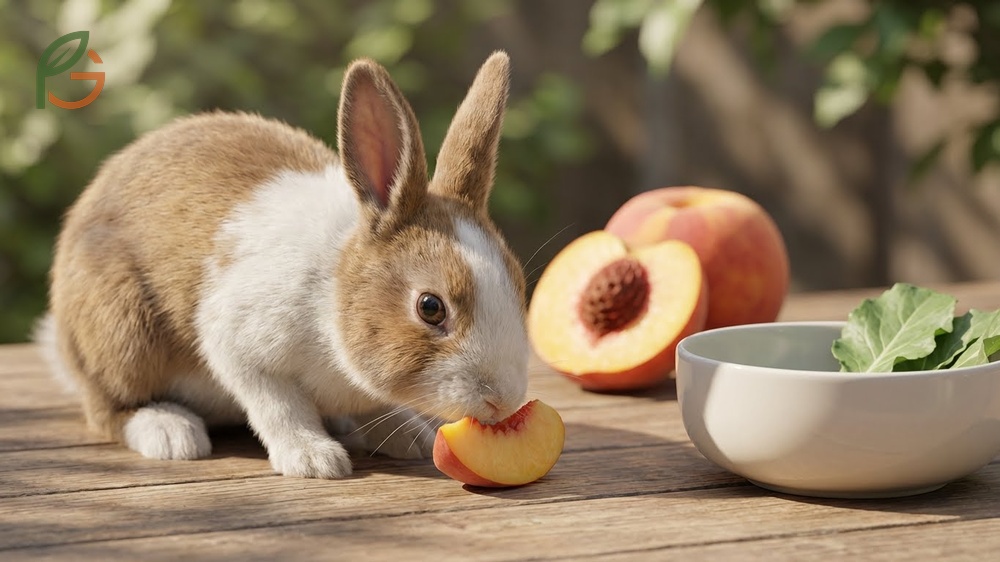
Can rabbits eat peaches? Yes, rabbits can safely enjoy peaches in small amounts as an occasional treat. Research shows that peaches provide fiber and vitamins but contain high sugar levels that can disrupt your rabbit’s digestive balance if overfed[1]. What many rabbit owners don’t realize is that the pit poses serious dangers beyond choking—it contains cyanide compounds that can poison your pet[2]. FruitGarden synthesizes current veterinary guidance and rabbit nutrition research to help you make informed decisions about your bunny’s diet.
Quick Answer
Can Rabbits Eat Peaches
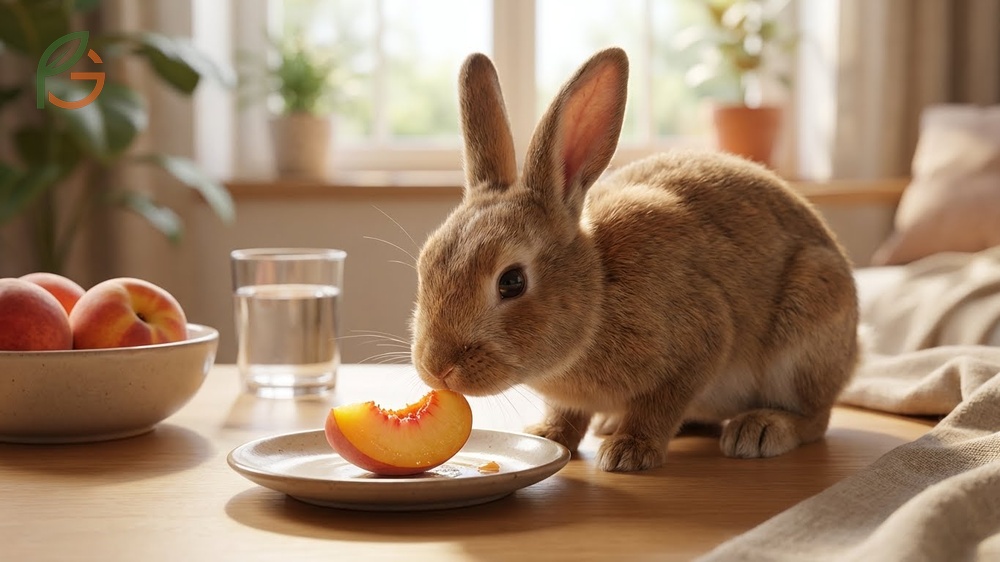
Peaches are safe for adult rabbits when served properly and in strict moderation. Studies demonstrate that rabbits’ small intestines can digest fructose efficiently, making fruit sugar easier to process than other sugars[6]. The soft, juicy texture makes peaches easy to chew and digest for healthy adult bunnies.
However, peaches aren’t everyday food. Their high natural sugar content can overwhelm your rabbit’s delicate gut microbiome if you’re too generous with portions. Rabbits depend on specific bacteria in their cecum to break down fiber, and too much sugar encourages harmful bacteria growth[1].
You’ll want to treat peaches like dessert—an occasional reward rather than a dietary staple. Most veterinarians recommend limiting all fruit treats to 1-2 times weekly to prevent digestive upset and obesity. When you do offer peaches, cut them into small pieces about the size of your rabbit’s paw.
Nutritional Benefits
Peaches pack vitamins A and C along with dietary fiber that supports your rabbit’s overall health. The water content helps with hydration, especially during warm weather. These nutrients complement your bunny’s primary hay-based diet without replacing it.
Current data indicates that while these vitamins are beneficial, rabbits get most of their nutritional needs met through timothy hay and fresh vegetables. Peaches work best as supplementary treats that add variety to your pet’s eating routine rather than essential nutrition sources.
Pit Dangers
The peach pit presents two serious threats to rabbits. First, it’s a choking hazard due to its size and hardness—rabbits can’t break it down like they do softer foods. Second, peach pits contain cyanogenic compounds that release cyanide when digested[2].
Always remove the entire pit before offering any peach to your rabbit. Don’t let your bunny nibble around it or play with it. Even small amounts of pit material can cause poisoning symptoms including difficulty breathing, weakness, and seizures.
Important Safety Note: If your rabbit accidentally ingests any part of a peach pit, contact your veterinarian immediately. Cyanide poisoning requires urgent medical intervention.
Can Rabbits Have Peaches
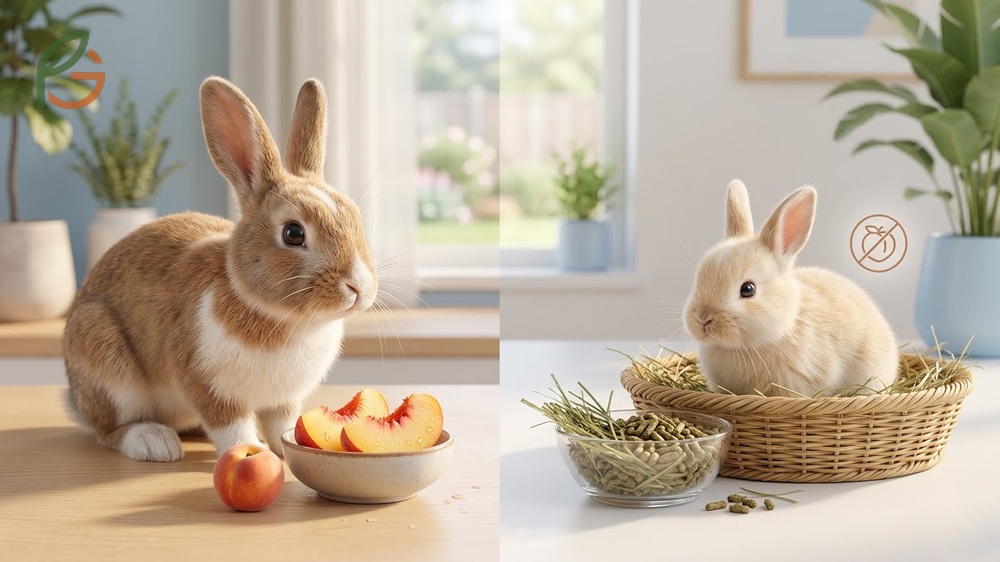
Adult rabbits can have peaches, but baby rabbits under 12 weeks should never receive them. Young rabbits have undeveloped digestive systems that can’t handle the sugar load[4]. Their gut bacteria colonies are still establishing, and fruit sugar can trigger dangerous bacterial overgrowth.
Research shows that young rabbits process sugars and starches differently than mature ones. While adult rabbit intestines adapt to digest fructose efficiently, young rabbits lack this capability and risk serious illness from fruit consumption[7].
Once your rabbit reaches adulthood (around 7 months), you can gradually introduce small amounts of peach. Start with a piece the size of your thumbnail and watch for any digestive changes over 24 hours. If your bunny’s droppings remain normal and they show no signs of discomfort, you can continue offering peaches occasionally.
Fresh vs Processed
Fresh peaches are the only safe option for rabbits. Dried peaches concentrate the sugar content to dangerous levels—what might be 10% sugar in fresh fruit becomes 60% or more when dried[5]. This concentrated sugar overload can cause immediate digestive problems.
Canned peaches are equally problematic due to added syrups, preservatives, and processing chemicals. These additives offer zero nutritional value and can harm your rabbit’s sensitive system. Frozen peaches might work if they’re plain and unsweetened, but you must thaw them completely and check for ice crystals before serving.
Proper Preparation
Wash the peach thoroughly under running water to remove pesticides and dirt. Cut it in half and remove the pit completely, checking for any pit fragments. Slice the flesh into small, manageable pieces—aim for chunks about half an inch across.
Don’t combine peaches with other high-sugar fruits in the same feeding session. Space out different fruit treats throughout the week to keep sugar intake balanced. You can pair a small peach piece with your rabbit’s regular vegetable serving, but keep the total fruit portion minimal.
- Rinse peach thoroughly under cool water
- Cut fruit in half and remove entire pit
- Inspect for any remaining pit fragments
- Slice into half-inch pieces or smaller
- Offer 1-2 small pieces maximum per feeding
- Store unused portions in refrigerator for up to 3 days
Pro Tip: Introduce peaches slowly if your rabbit hasn’t had them before. Some bunnies have more sensitive stomachs than others and may need smaller initial portions.
Safe Fruits for Rabbits
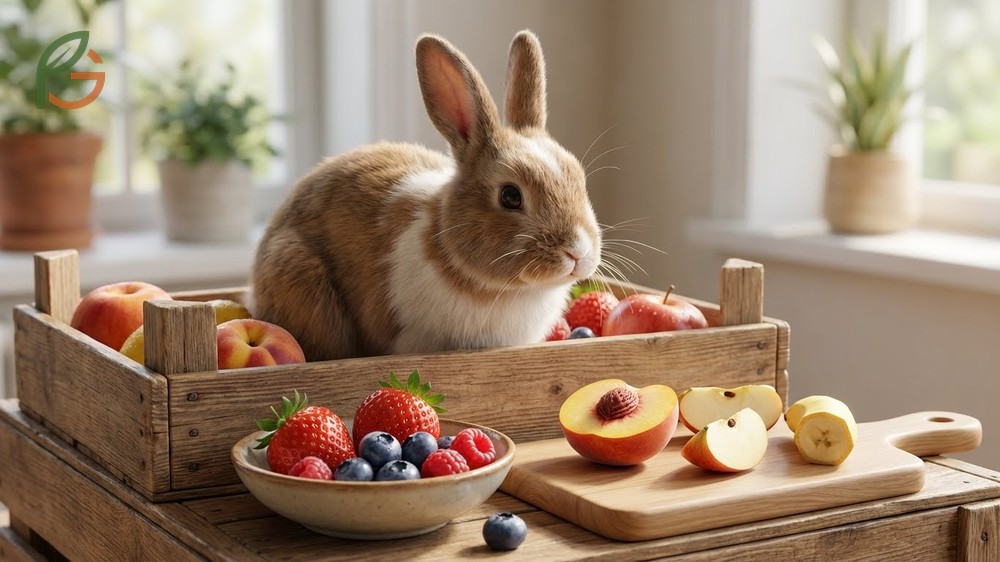
Beyond peaches, rabbits can enjoy a variety of fruits as occasional treats. Evidence suggests that diversity in fruit treats provides different nutrients while preventing boredom[8]. Always remove seeds, pits, and stems before serving any fruit to your bunny.
Berries work particularly well as rabbit treats because their small size makes portion control easier. Strawberries, blueberries, and raspberries contain antioxidants and lower sugar per serving compared to larger fruits. Your rabbit can enjoy 1-2 berries without overdoing the sugar intake.
Melons provide hydration along with sweetness, making them ideal for summer treats. Watermelon, cantaloupe, and honeydew are all safe—just stick to the flesh and avoid rinds and seeds. Apple slices (without seeds) and pear pieces (without seeds or core) round out the safe fruit options.
- Apples without seeds or stems
- Strawberries with green tops removed
- Blueberries, blackberries, and raspberries
- Watermelon, cantaloupe, and honeydew (flesh only)
- Bananas in very small amounts due to high sugar
- Pears without seeds, stems, or core
- Pineapple chunks without core
- Papaya without seeds
- Nectarines with pit removed
- Cherries with pits and stems completely removed
How Much Fruit for Rabbits
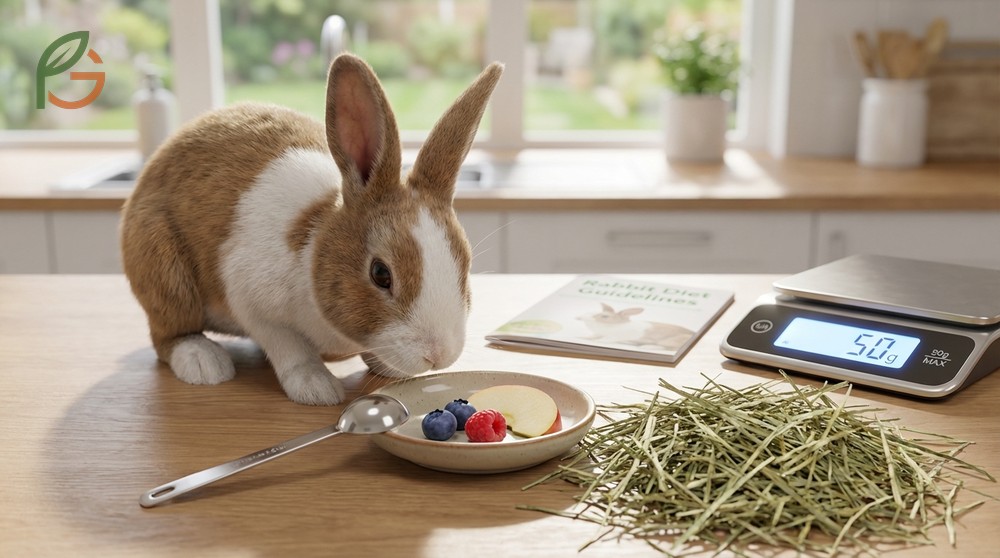
The rabbit diet pyramid places fruit at the very top—the smallest portion of your bunny’s daily intake. Current guidance recommends 1-2 tablespoons of fruit per 6 pounds of body weight, offered just 1-2 times weekly[3]. This translates to about 2-3 small peach pieces for an average adult rabbit per week.
Hay should make up 80-90% of your rabbit’s diet and must be available unlimited throughout the day. Fresh vegetables comprise the next layer at about 2 cups chopped greens per 6 pounds of body weight daily. Pellets come next at 1/4 to 1/2 cup per 6 pounds daily, depending on your rabbit’s age and activity level.
Most rabbit digestive problems trace back to too much fruit or treats and not enough fiber. Rabbits need constant fiber movement through their systems to stay healthy. When fruit replaces hay or vegetables, you’re setting up your bunny for serious health issues including gut stasis and obesity.
This table shows the rabbit diet pyramid with four levels from most important to least, including food types and daily portions based on body weight
| Priority Level | Food Type | Daily Amount (per 6 lbs body weight) | Frequency |
|---|---|---|---|
| 1 (Foundation) | Timothy hay, grass hay, oat hay | Unlimited | Available 24/7 |
| 2 (Essential) | Fresh vegetables (leafy greens) | 2 cups chopped[3] | Daily |
| 3 (Supplemental) | Quality pellets | 1/4 to 1/2 cup[3] | Daily |
| 4 (Treats) | Fresh fruits (including peaches) | 1-2 tablespoons[3] | 1-2 times weekly only |
Watch your rabbit’s weight and droppings to gauge whether you’re feeding appropriate amounts. Healthy rabbit droppings should be round, firm, and uniform in size. Soft, misshapen, or sticky droppings signal too much sugar or not enough fiber.
Foods to Avoid for Rabbits
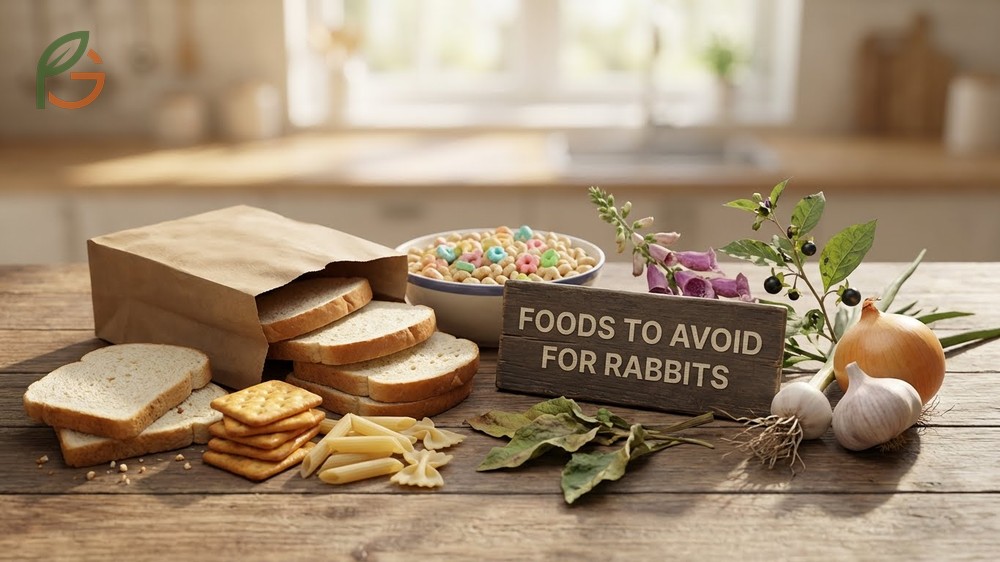
Certain foods are toxic to rabbits and can cause serious illness or death even in small amounts. Veterinary research identifies avocado as extremely dangerous due to persin, a compound that’s toxic to rabbits’ cardiovascular systems[2]. Chocolate contains theobromine, which rabbits can’t metabolize and which causes fatal reactions.
All fruit pits and seeds (except berry seeds) contain cyanogenic compounds. This includes apple seeds, cherry pits, apricot pits, and plum pits. Rhubarb contains dangerous levels of oxalic acid that damage rabbits’ kidneys[9].
Raw onions, garlic, and leeks contain compounds that destroy red blood cells in rabbits. Iceberg lettuce, while not toxic, offers zero nutrition and contains lactucarium, which can cause diarrhea. Processed human foods like bread, crackers, cookies, and pasta lack the fiber rabbits need and can cause dangerous digestive blockages.
- Avocado (all parts—highly toxic)
- Chocolate and caffeinated products
- All fruit pits and apple seeds
- Raw onions, garlic, shallots, and leeks
- Rhubarb leaves and stems
- Iceberg lettuce
- Raw potatoes and potato plants
- Broad beans and kidney beans
- Nuts and seeds (choking hazards)
- Processed foods (bread, pasta, cereals)
- Dairy products and eggs
- Meat and animal products
Emergency Warning: If your rabbit ingests any toxic food, contact your veterinarian immediately. Don’t wait for symptoms to appear—some toxins cause delayed reactions that are harder to treat.
Conclusion
The evidence is clear: can rabbits eat peaches? Yes, but with strict limitations. Peaches work as occasional treats when you remove the toxic pit, stick to fresh varieties, and limit portions to 1-2 teaspoons per 6 pounds of body weight weekly. Your rabbit’s health depends on maintaining a hay-based diet with vegetables as the primary supplement and fruit as rare treats.
Current veterinary guidance emphasizes that most rabbit health problems stem from too much sugar and not enough fiber. When you offer peaches, you’re giving your bunny a sweet reward—not meeting their nutritional needs. FruitGarden recommends prioritizing unlimited timothy hay, 2 cups of fresh vegetables daily, and saving those peach treats for special occasions that keep your rabbit healthy and happy.
Medical Disclaimer
Important Medical Disclaimer: This content is for informational and educational purposes only. It is not intended as a substitute for professional veterinary advice, diagnosis, or treatment. Always consult a qualified veterinarian before making any changes to your rabbit’s diet, especially if your pet has existing health conditions or shows signs of illness. Individual rabbits may have different dietary needs and sensitivities.
Frequently Asked Questions
Can baby rabbits eat peaches?
No, baby rabbits under 12 weeks old should never eat peaches or any fruit. Their digestive systems aren’t developed enough to handle the sugar content, which can trigger dangerous bacterial overgrowth and serious illness. Stick to hay and gradually introduce vegetables after 12 weeks, then wait until 7 months to offer fruit treats.
What happens if my rabbit eats a peach pit?
Peach pits contain cyanogenic compounds that release cyanide when digested, causing poisoning symptoms including difficulty breathing, weakness, seizures, and potentially death. The pit is also a serious choking hazard. If your rabbit ingests any part of a peach pit, contact your veterinarian immediately for emergency treatment.
How often can rabbits have peach treats?
Rabbits should receive peaches no more than 1-2 times per week at most. Limit the portion to 1-2 teaspoons per 6 pounds of body weight per feeding. Too frequent fruit treats can disrupt gut bacteria balance, cause obesity, and lead to digestive problems including soft droppings and gut stasis.
Can rabbits eat dried or canned peaches?
No, rabbits should only eat fresh peaches. Dried peaches concentrate sugar to dangerous levels (60% or higher vs. 10% in fresh fruit), causing immediate digestive upset. Canned peaches contain added syrups, preservatives, and chemicals that harm rabbits. Stick to fresh, ripe peaches with the pit completely removed.
What fruits are safer than peaches for rabbits?
Berries like strawberries, blueberries, and raspberries are safer options because their small size makes portion control easier and they contain less sugar per serving. Apple slices (without seeds), pear pieces (without core or seeds), and melon chunks also work well. Always remove seeds and pits from any fruit before serving.
Can peaches replace vegetables in my rabbit’s diet?
Absolutely not. Peaches are treats only and should never replace vegetables or hay. Rabbits need unlimited timothy hay (80-90% of diet) and 2 cups of fresh leafy vegetables per 6 pounds body weight daily. Fruit should make up less than 5% of total diet and serve as occasional rewards, not nutritional staples.
What are signs my rabbit ate too much peach?
Watch for soft or misshapen droppings, sticky cecotropes, reduced appetite for hay, lethargy, gas, or bloating. These symptoms indicate digestive upset from too much sugar. If your rabbit stops eating entirely for more than 12 hours or shows severe bloating, contact your veterinarian immediately as this may signal dangerous gut stasis.