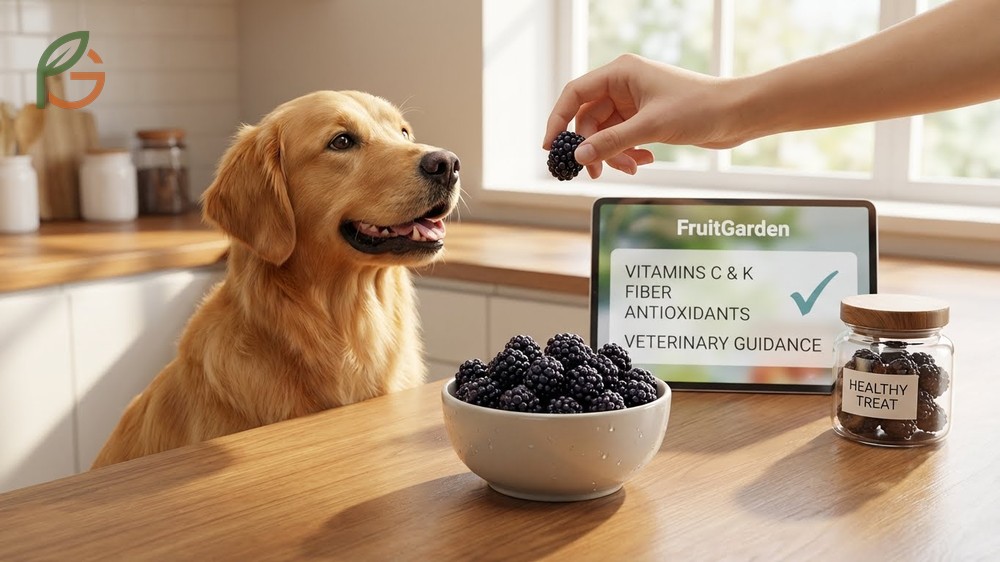
Can dogs eat blackberries? Yes, dogs can safely enjoy blackberries in moderation as a healthy treat. Research shows these berries provide valuable nutrients like fiber, vitamins C and K, and antioxidants that support your dog’s immune system and overall health[1]. FruitGarden synthesizes current veterinary guidance and nutritional research to help pet owners make informed decisions about fruit treats for their canine companions.
Quick Answer
- Dogs can eat fresh blackberries—they’re safe and nutritious when given in proper portions[1]
- Blackberries contain 43 calories per 100g[2] and 5g of fiber[2], making them low-calorie treats
- Treats should only make up 10% of your dog’s daily diet[1]—typically 1-8 berries depending on dog size
- Always wash berries thoroughly and avoid blackberry jam or preserves containing xylitol, which is toxic to dogs[3]
Can Dogs Eat Blackberries

Yes, blackberries are completely safe for dogs to eat when served fresh and in appropriate quantities. The American Kennel Club confirms that these sweet, juicy berries can be just as much of a treat for your dog as they are for humans[1]. Unlike grapes or raisins, which are toxic to dogs, blackberries don’t contain any compounds that pose serious health risks.
The key factor is moderation. While blackberries offer nutritional benefits, they should be treated as occasional rewards rather than meal replacements. Your dog’s primary nutrition should come from high-quality dog food formulated to meet their specific needs.
You can serve blackberries in various forms—whole, diced, mashed, or even pureed—depending on your dog’s size and preference. Just make sure to wash them thoroughly to remove any pesticide residue or dirt before offering them to your pet.
Why Blackberries Are Safe
Blackberries lack the toxic compounds found in dangerous fruits like grapes, cherries, or certain wild berries. They don’t contain persin (found in avocados) or cyanogenic glycosides in harmful amounts. This makes them a worry-free option when you’re looking for healthy snacks to share with your dog.
Wild blackberries are also safe, as long as you’re certain they’re actually blackberries and not lookalike plants. While no poisonous plants closely resemble blackberries, it’s always best to stick with store-bought berries if you’re not 100% confident in your plant identification skills[1].
Nutritional Profile
Blackberries pack impressive nutrition into a low-calorie package. A 100-gram serving contains just 43 calories[2], making them ideal for dogs on weight management plans. They provide 5g of fiber[2], which supports digestive health and helps dogs feel fuller longer.
These berries are also rich in essential vitamins and minerals. They contain 21mg of vitamin C per 100g[2], supporting immune function, and 20μg of vitamin K[2], which aids in blood clotting and bone health. The high water content also provides helpful hydration.
Important Note: Avoid frozen blackberries that contain added sugars or artificial sweeteners. Stick with fresh or plain frozen berries without additives to ensure your dog’s safety.
Are Blackberries Good for Dogs

Blackberries offer several health benefits that make them an excellent choice for an occasional treat. The nutrients they contain can complement your dog’s regular diet when given in appropriate amounts. However, they can’t replace balanced dog food formulated for your pet’s life stage and health needs.
The antioxidants in blackberries, particularly anthocyanins that give the berries their deep purple color, help fight free radicals in your dog’s body. Studies demonstrate these compounds can reduce inflammation, improve brain function, and potentially lower the risk of certain cancers[1].
The vitamin and mineral content supports multiple body systems. Vitamin C boosts immune health, vitamin K promotes proper blood clotting, and minerals like manganese and potassium support metabolic functions and heart health.
Digestive Health Benefits
The high fiber content in blackberries can significantly benefit your dog’s digestive system. Fiber helps prevent constipation by adding bulk to stools and promoting regular bowel movements[1]. This is especially helpful for dogs who occasionally experience digestive sluggishness.
However, too much fiber can backfire. If your dog eats too many blackberries at once, they might experience diarrhea, gas, or stomach upset. That’s why portion control matters so much—a few berries provide benefits, but a whole bowl can cause problems.
Immune System Support
The vitamin C and antioxidant content in blackberries supports your dog’s natural immune defenses. While dogs produce their own vitamin C (unlike humans), supplemental amounts from food sources can still provide additional support, particularly for senior dogs or those recovering from illness.
Antioxidants help neutralize cellular damage from oxidative stress, which accumulates over time. This protective effect is particularly valuable for aging dogs, whose bodies may not fight free radicals as efficiently as younger animals.
- Low-calorie treats that won’t disrupt weight management plans
- High fiber content promotes healthy digestion and regular bowel movements
- Antioxidants reduce inflammation and support brain health
- Vitamins C and K boost immune function and bone health
- Natural hydration from high water content
How Many Blackberries Can a Dog Eat

The right serving size depends entirely on your dog’s weight and size. Veterinary experts recommend treating blackberries as what they are—treats that should comprise no more than 10% of your dog’s daily calorie intake[1]. This ensures your pet gets most of their nutrition from complete, balanced dog food.
Start with smaller amounts than recommended when introducing blackberries for the first time. Watch your dog for 24-48 hours to ensure they don’t experience digestive upset or allergic reactions. If all goes well, you can gradually increase to the recommended portion size.
Feeding frequency matters too. Most veterinarians suggest offering blackberries no more than 2-3 times per week rather than daily. This prevents digestive issues and ensures your dog doesn’t develop overly picky eating habits.
This table shows recommended blackberry serving sizes based on five dog weight categories, from extra-small to extra-large dogs
| Dog Size | Weight Range | Serving Size |
|---|---|---|
| Extra-Small | 2-10 pounds | 1-2 blackberries[4] |
| Small | 11-20 pounds | 2-3 blackberries[4] |
| Medium | 21-50 pounds | 3-5 blackberries[4] |
| Large | 51-90 pounds | 5-6 blackberries[4] |
| Extra-Large | 91+ pounds | 7-8 blackberries[4] |
Serving Tip: For small dogs or senior pets with dental issues, consider mashing or pureeing blackberries to make them easier to eat and digest. You can also mix them with plain yogurt or regular dog food for added appeal.
Can Puppies Eat Blackberries

Puppies can technically eat blackberries, but you’ll need to exercise extra caution. Young puppies have more delicate digestive systems than adult dogs, and introducing new foods too early or too quickly can cause stomach upset. Wait until your puppy has successfully transitioned to solid food and established regular eating patterns before offering blackberries[5].
When you’re ready to introduce blackberries, start with just one berry, crushed or mashed. Watch your puppy closely for the next 24 hours for any signs of digestive problems like soft stool, bloating, gas, or decreased interest in regular food. If your puppy shows any of these symptoms, hold off on berries and consult your veterinarian.
Puppies need consistent nutrition for proper growth and development. Their diet should focus primarily on high-quality puppy food formulated for their specific breed size and age. Treats—including blackberries—should be minimal and occasional until they reach at least 6 months old.
- Wait until puppies are fully weaned and eating solid food consistently
- Crush or mash berries to prevent choking hazards
- Start with a single berry and monitor for 24-48 hours
- Keep treats under 5% of daily calories for puppies (stricter than adults)
- Consult your veterinarian before introducing any new foods to puppies
Blackberry Allergy in Dogs Symptoms

While uncommon, some dogs can develop allergic reactions to blackberries. Food allergies in dogs typically manifest as skin reactions rather than the respiratory symptoms humans experience. If your dog is allergic to blackberries, you’ll likely notice symptoms within a few hours to a couple of days after consumption[5].
The most common signs include excessive itching, skin redness, hives, or hot spots. Your dog might scratch obsessively, lick their paws repeatedly, or rub their face on furniture or carpet. Some dogs develop ear infections as a secondary symptom of food allergies.
Gastrointestinal symptoms can also indicate an allergic response or simple food intolerance. Watch for vomiting, diarrhea, excessive gas, or loss of appetite. If your dog eats too many blackberries, these symptoms might just mean digestive overload rather than true allergy—but either way, they warrant attention.
If you suspect your dog is having an allergic reaction, stop feeding blackberries immediately and contact your veterinarian. They can help determine whether it’s a true allergy or another issue, and they’ll advise you on next steps. Severe reactions like facial swelling, difficulty breathing, or collapse require emergency veterinary care.
- Excessive scratching, licking, or biting at skin
- Red, inflamed, or irritated skin patches
- Hives or raised bumps on the skin
- Chronic ear infections or excessive ear scratching
- Gastrointestinal upset including vomiting or diarrhea
- Facial swelling or paw swelling (rare but serious)
Emergency Warning: If your dog experiences facial swelling, difficulty breathing, weakness, or collapse after eating blackberries, seek emergency veterinary care immediately. These symptoms can indicate anaphylaxis, which requires urgent treatment.
Safe Fruits for Dogs

Blackberries aren’t the only fruit you can safely share with your dog. Many berries and fruits provide similar nutritional benefits and can add variety to your pet’s treat rotation. However, always research each fruit individually before offering it to your dog, as some common fruits are toxic to canines.
Blueberries are an excellent alternative to blackberries. They’re high in antioxidants, low in calories, and easy for dogs of all sizes to eat. Strawberries offer similar benefits with high fiber content and vitamin C, though you should remove the stems before serving. Raspberries provide antioxidants and are low in sugar, but they contain trace amounts of xylitol, so limit them to just a few berries per day.
Other safe options include watermelon (seedless, with rind removed), apples (core and seeds removed), bananas (in moderation due to sugar content), and cantaloupe. Avoid grapes, raisins, cherries, citrus fruits in large quantities, and any fruit with pits or seeds your dog might swallow.
| Safe Fruits | Key Benefits | Fruits to Avoid |
|---|---|---|
| Blueberries | High antioxidants, low calories | Grapes and raisins (toxic) |
| Strawberries | Fiber, vitamin C, high water content | Cherries (pits contain cyanide) |
| Raspberries | Low sugar, antioxidants (limit quantity) | Avocado (contains persin) |
| Watermelon | Hydration, vitamins A and C | Citrus in large amounts (causes upset) |
| Apples (no seeds) | Fiber, vitamins A and C | Any pitted fruits (choking hazard) |
Can Dogs Eat Jam
No, dogs shouldn’t eat blackberry jam or any fruit preserves. Commercial jams contain excessive amounts of added sugar that can lead to obesity, dental problems, and diabetes in dogs. More dangerously, some jams and preserves contain xylitol, an artificial sweetener that’s extremely toxic to dogs even in tiny amounts[3].
Xylitol poisoning is life-threatening and requires immediate veterinary attention. Even if a jam doesn’t contain xylitol, the sugar content makes it unsuitable for dogs. If your dog accidentally licks a small amount of jam off your plate, they probably won’t experience severe issues—but monitor them for signs of digestive upset and never intentionally feed jam to your pet.
Dog Ate Blackberry Bush
If your dog ate leaves, stems, or branches from a blackberry bush, don’t panic. Blackberry plants themselves aren’t toxic to dogs, though the thorns can cause mouth or throat injuries. The main concern is physical damage from the sharp thorns rather than poisoning.
Check your dog’s mouth for visible injuries or bleeding. If they’re drooling excessively, pawing at their mouth, or having trouble swallowing, they might have thorns stuck in their gums or throat. Contact your veterinarian if you notice these symptoms or if your dog seems uncomfortable. Large amounts of plant material can also cause intestinal blockage, so watch for vomiting, loss of appetite, or constipation over the next 24-48 hours.
Conclusion
The evidence is clear: can dogs eat blackberries? Absolutely—when you follow proper serving guidelines and preparation methods. These nutrient-rich berries offer antioxidants, fiber, vitamins, and hydration that can complement your dog’s regular diet as an occasional treat. Stick to fresh, washed berries in portions appropriate for your dog’s size, and always avoid jam or preserves containing added sugars or toxic xylitol.
Current veterinary guidance emphasizes treating fruits like blackberries as what they are—healthy supplements to balanced dog food, not meal replacements. Start small, watch for reactions, and keep treats under 10% of daily calories. When you do it right, sharing blackberries with your dog can be a safe, enjoyable experience for both of you. FruitGarden helps pet owners make informed decisions about nutrition by connecting the latest veterinary research with practical guidance for everyday care.
Medical Disclaimer
Important Medical Disclaimer: This content is for informational and educational purposes only. It’s not intended as a substitute for professional veterinary advice, diagnosis, or treatment. Always consult a qualified veterinarian before making any changes to your dog’s diet, especially if your pet has existing health conditions like diabetes, pancreatitis, or food sensitivities. If you suspect your dog is having an allergic reaction or has consumed something toxic, seek immediate veterinary care.
Frequently Asked Questions
Can Dogs Have Blackberries Every Day?
No, dogs shouldn’t eat blackberries daily. Veterinarians recommend offering them 2-3 times per week at most to prevent digestive issues and ensure your dog gets most nutrition from balanced dog food. Daily feeding can lead to stomach upset and picky eating habits.
Are Blackberries Bad for Dogs in Large Quantities?
Yes, too many blackberries can cause problems. The high fiber content that makes them beneficial in small amounts can trigger diarrhea, gas, vomiting, or stomach pain when dogs overindulge. Stick to the recommended serving sizes based on your dog’s weight to avoid these issues.
Can Dogs Eat Raspberries and Blackberries Together?
Yes, dogs can eat both raspberries and blackberries, but keep the total amount within the recommended serving size for treats. Remember that raspberries contain trace amounts of xylitol, so they should be limited to just a few berries even when mixing with blackberries.
Are Blackberries Safe for Dogs With Diabetes?
Blackberries are relatively low in sugar compared to many fruits, but diabetic dogs require careful carbohydrate management. Always consult your veterinarian before offering any fruit to a diabetic dog, as even natural sugars can affect blood glucose levels and insulin requirements.
Can My Dog Eat Frozen Blackberries?
Dogs can eat plain frozen blackberries without additives, and many dogs enjoy them as a cool summer treat. However, avoid frozen berries with added sugar or sweeteners. You can freeze fresh blackberries yourself to ensure they’re safe, or thaw commercial frozen berries before serving.
Are Blackberries Poisonous to Dogs?
No, blackberries aren’t poisonous to dogs at all. They’re one of the safe berries dogs can enjoy without risk of toxicity. Unlike grapes or cherries, blackberries don’t contain any compounds that pose serious health threats when consumed in appropriate amounts.
What Should I Do If My Dog Ate Too Many Blackberries?
Monitor your dog for digestive upset over the next 24 hours. Symptoms might include diarrhea, vomiting, gas, or loss of appetite. Provide plenty of fresh water and withhold treats temporarily. If symptoms are severe or persist beyond 24 hours, contact your veterinarian for guidance.